Category Archives: Making Of

Fixing and Expanding Sarge Hawk

Analysis: “Fixing” Sarge Hawk and the Power of the Static Hero

The “Plastic Soldier Problem” (The Boy Scout Archetype)
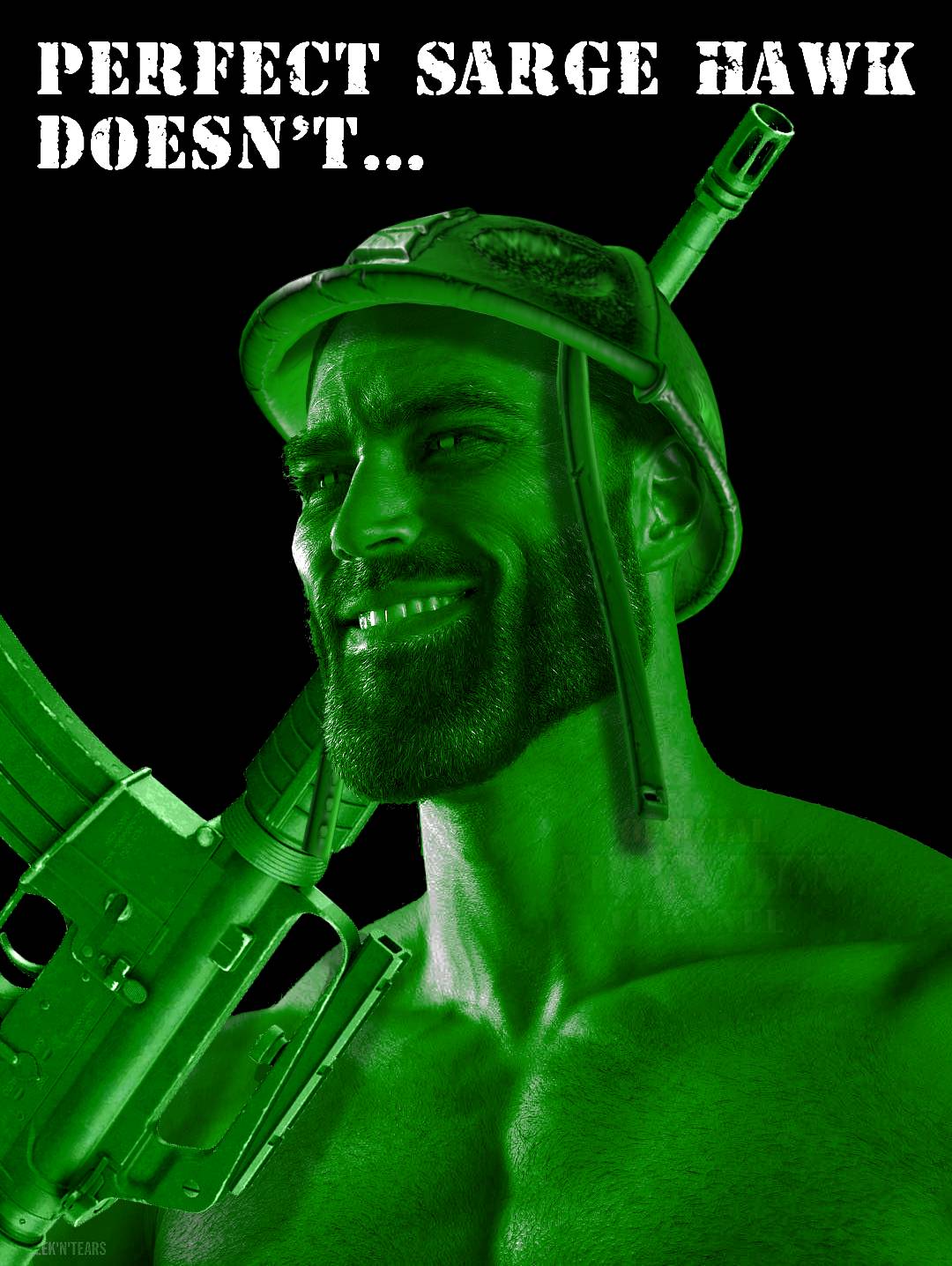
GigaHawk Army Men meme

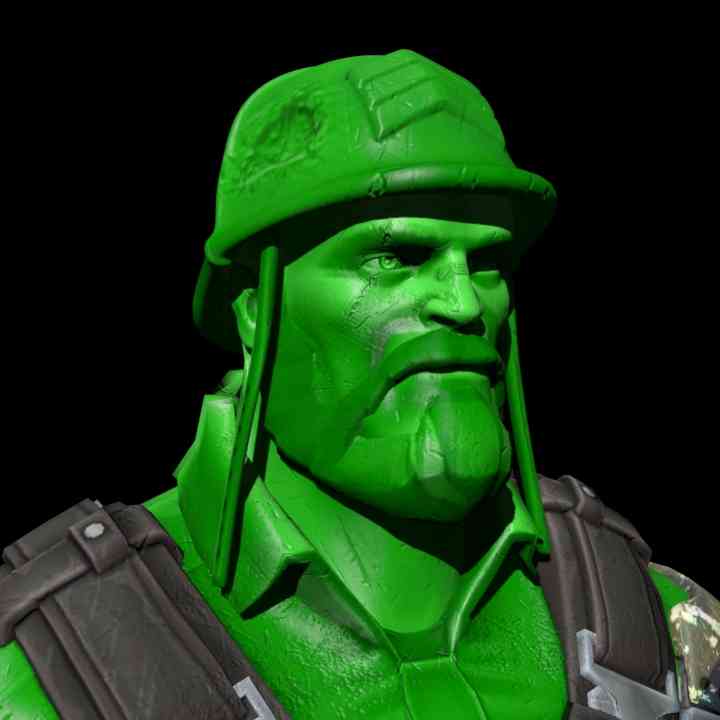
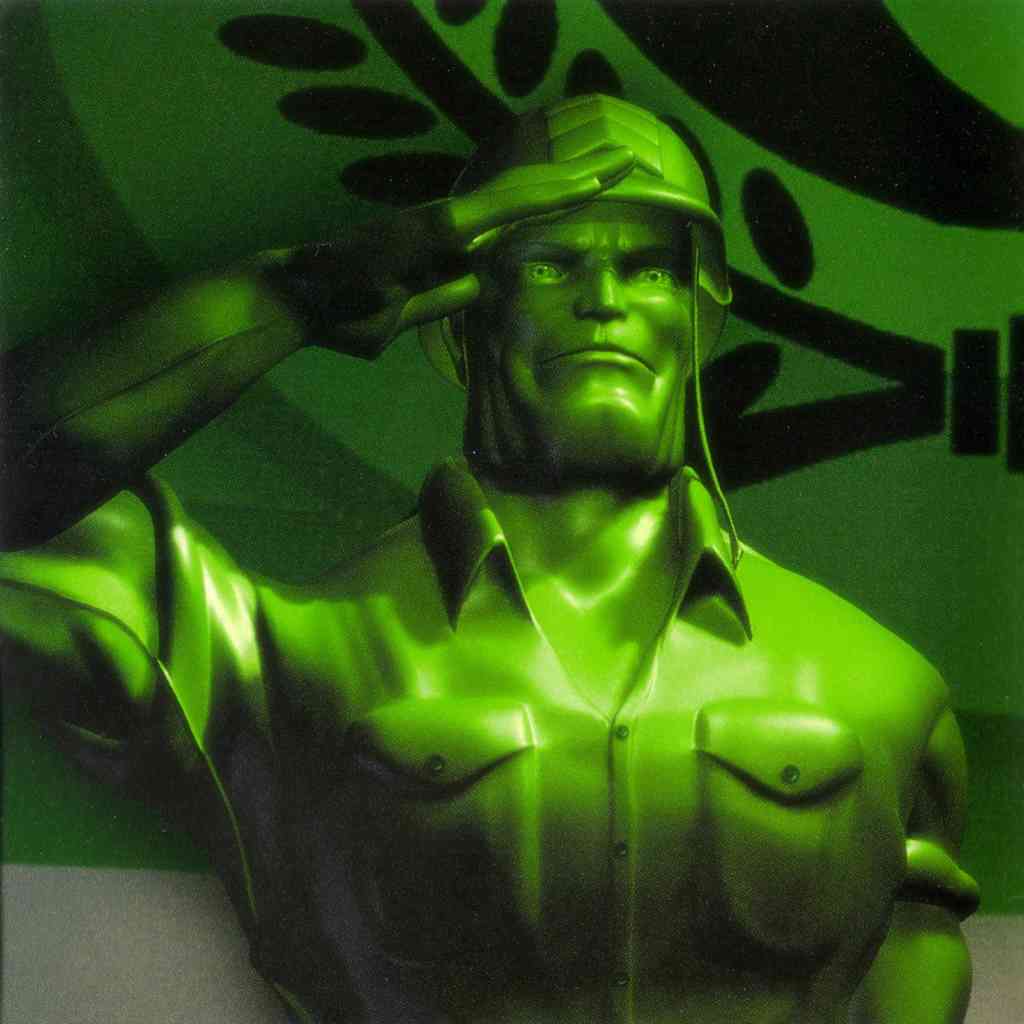
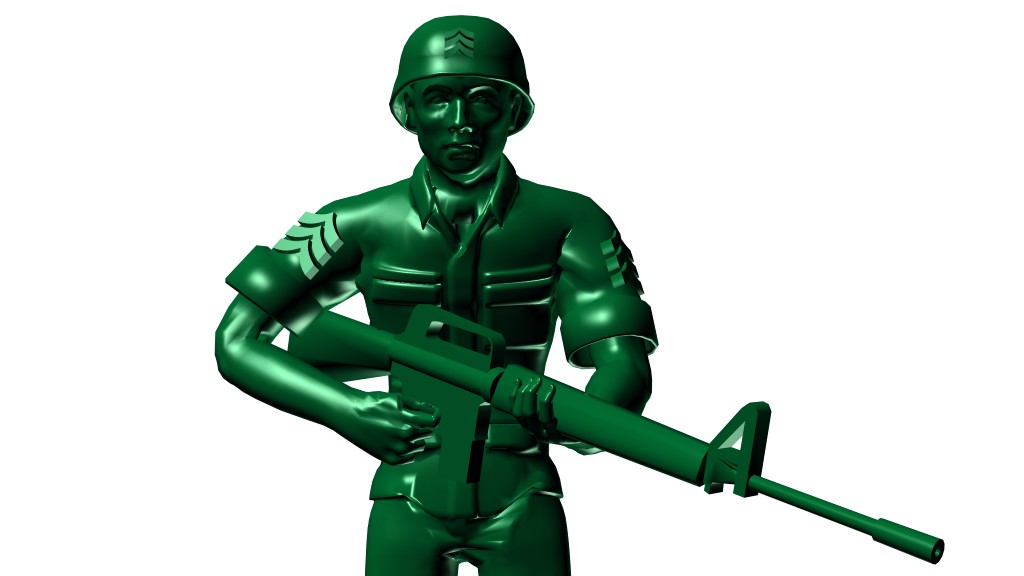
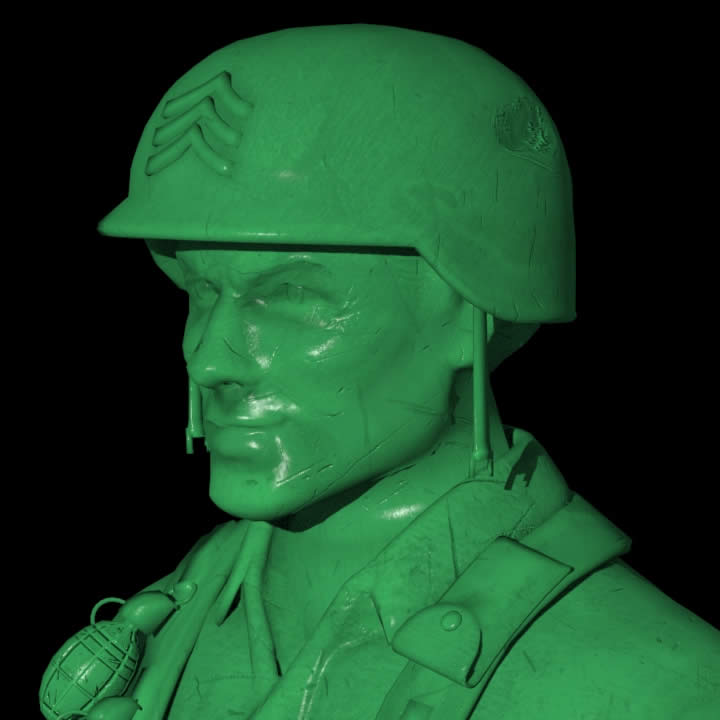
Just like Captain America in 2011 on “The First Avenger”, Sarge Hawk carries the burden of “uniformity.” He is a character designed to be a pure instrument of duty. In the classic Sarge’s Heroes era, Sarge Hawk is the ultimate “Good Soldier”: he has no existential crises, he doesn’t question the Green Nation Army’s hierarchy, and his moral compass is as rigid as the plastic he’s molded from.

In a modern gaming and cinematic landscape that demands “broken” protagonists with dark pasts or ambiguous morals, a character like Sarge Hawk risks becoming irrelevant. If the world is gray, a hero who sees only “Green and Tan” appears naive. The common writer’s temptation is to “gritty him up”… make him cynical, ultra-violent, or a traitor. But as we learned from Steve Rogers, doing so destroys what makes him iconic. Sarge Hawk isn’t special because of his rifle; he’s special because he was a leader before he was a legend.

The Flat Character Arc: Sarge as the Moral Mirror

The key to making Sarge Hawk work in a sophisticated narrative isn’t for him to change, but for him to force the world to change. This is known as a Flat Character Arc.

In most stories, the protagonist starts with a “Lie” (a trauma or false belief) and the world beats them until they learn the “Truth”. But Sarge Hawk already possesses the Truth: sacrifice, loyalty to the squad, and protecting the weak (whether they are civilians in the Plastic World or refugee toys in the Real World).

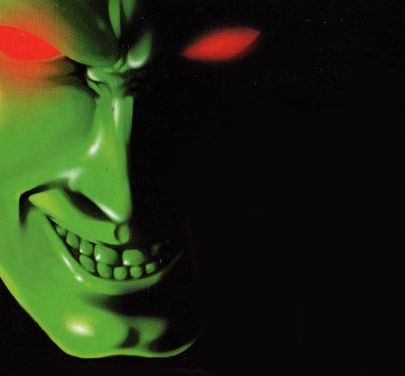
Sarge Hawk doesn’t need a redemption arc. The conflict arises from his refusal to bend. When Sarge Hawk enters a corrupt environment (like the intrigues of Lord Malice or the betrayals of Brigitte Bleu or General Plastro), his moral immovability becomes his most dangerous weapon. He isn’t boring; he is terrifying to villains because they cannot buy him, they cannot tempt him, and they cannot break his spirit… (until Sarge’s War)

The Breaking Point: Sarge’s War and the Trap of Darkness

Major Malfunction

The game Army Men: Sarge’s War was the franchise’s attempt to enter the “mature era.” By eliminating his squad and his girlfriend, the narrative tried to give Sarge Hawk a positive or negative change arc: trauma. Here, Sarge Hawk stops being the mirror and starts being affected by the world.

This time, the key to Sarge’s War working within a sophisticated narrative isn’t for Hawk to change the world (as before)… but in this case, for him to be changed by the world. In theArmy Men Toyverse narrative, this marks the beginning of change. But not a definitive change that would establish him as a totally different character… rather, an evolution: He will remain the archetype of the Boy Scout, but within a complex narrative that leaves him no option but to act differently, Like when Batman and Superman are forced to kill someone. Although it’s something they avoid doing, circumstances sometimes compel them. But that doesn’t change them.

If we apply the Russo Brothers’ logic, this is Sarge Hawk’s “Winter Soldier” moment. Lord Malice’s attack isn’t just an act of war; it’s an attack on Sarge Hawk’s ideology. Lord Malice represents chaos and nihilism, while Sarge Hawk represents order and hope. The narrative challenge here isn’t to left the “vengeful” Sarge Hawk from Sarge’s War redefine the character and become from there on as dark as his enemy, but to see a post Sarge’s War and Major Malfunction version of Sarge Hawk who, despite losing everything, refuses to stop being the hopeful Boy Scout Green Soldier. The true victory in the Army Men Toyverse narrative isn’t avenging his comrades destroying Malice (and itself to become a villain) it’s that Sarge Hawk doesn’t become another Malice in the process by forever (But if at least for a time, as part of the growth process. Although the reasons for his temporary transformation into a villain may be partly due to external influence).

Sarge in the Toyverse: The Formidable Hero

To make Sarge Hawk work in a broader, more complex ecosystem like the Toyverse, he must be treated as a moral heavyweight.

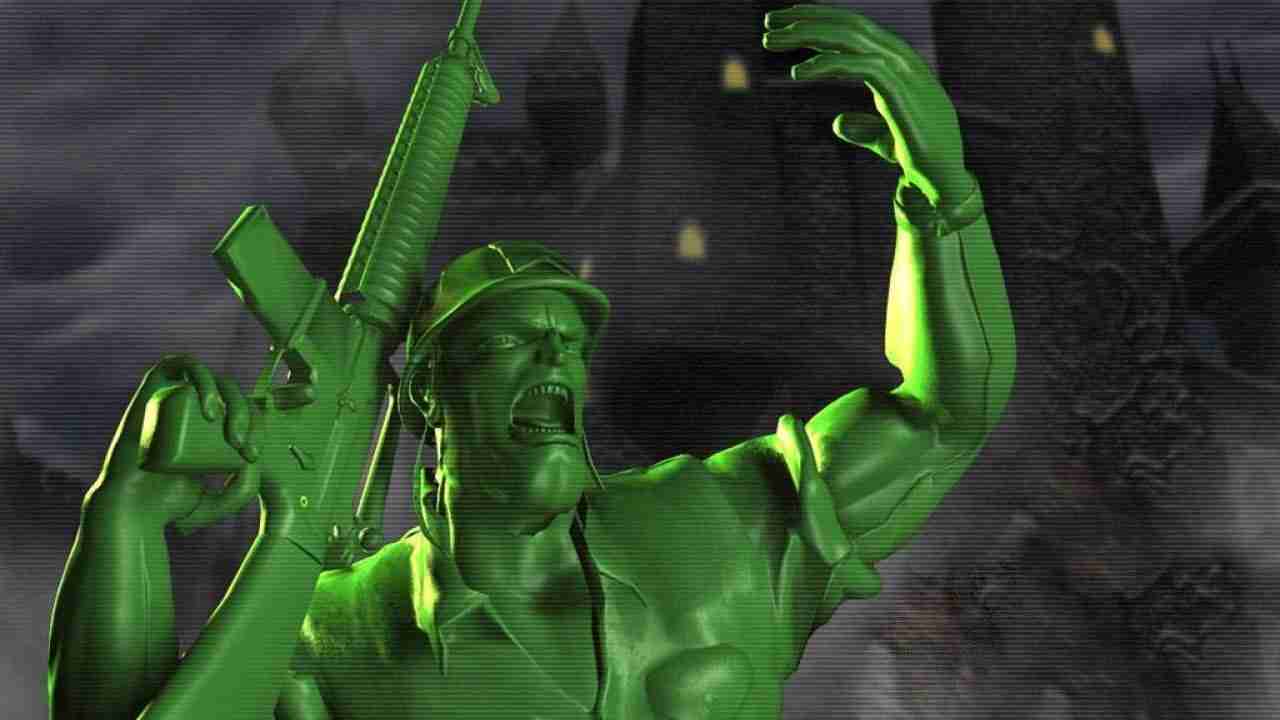
Hawk during the assault on Dr. Madd Castle
  • Ideologically Dangerous:
    In a world of conflicting factions, Sarge’s insistence on doing the right thing (regardless of brand borders or materials) makes him an anomaly. He isn’t just a soldier; he is a threat to any system that thrives on moral ambiguity.
  • The Catalyst for Change:
    More cynical or pragmatic characters (like Brigitte Bleu or mercenaries from other “Worlds”) must find themselves transformed by interacting with him. Not because Sarge Hawk gives them a lecture, but because his example proves that a more principled way of life is possible, even in an endless war. Something like Goku transformed Vegeta by example.
  • The Introduction of Doubt:
    For his flat arc to be compelling, Sarge Hawk must doubt. Not his values, but his ability to uphold them. “Is it worth fighting when my own generals are willing to sacrifice entire worlds for a plastic victory?” That doubt is what humanizes him without needing to “dirty” his character.

Conclusion: Goodness as Subversion

In conclusion, the way to “fix” or empower Sarge Hawk is to stop trying to make him “modern” through cynicism. In a landscape full of anti-heroes, a man who sincerely believes in duty and friendship is the most subversive thing imaginable. Furthermore, there will be no shortage of anti-heroes in this story…

Sarge Hawk is not a relic of the past; he is a warning for the present. If he stands firm while worlds (Prehistoric, Medieval, Space) collapse around him, he becomes the only stable point of reference. Sarge Hawk doesn’t change; he is the force that compels the Toyverse to decide which side of the line it wants to be on.

Sarge Hawk from Army Men franchise

Identity Under Fire

Change, Continuity, and the Fragility of Legacy in Long-Running Franchises

Every long-running franchise eventually faces the same moment: it must change or it must calcify.

Change invites backlash. Refusing to change invites irrelevance

What we are witnessing in contemporary media is not simply disagreement about creative direction. It is a deeper conflict over ownership of identity. Audiences who have lived with a franchise for decades often feel that they understand its essence — sometimes better than the creators currently steering it. When alterations arrive, the debate is rarely about a single character decision or plot twist. It is about the perceived erosion of core identity.

The question beneath the noise is simple and difficult:

What is the franchise?

Is it tone?
Is it characters?
Is it visual language?
Is it ideology?
Is it genre?
Is it emotional promise?

Most collapses happen when creators misidentify what the audience believes is sacred.

The Illusion of Surface Identity

One of the most common mistakes is confusing surface iconography with structural identity.

Logos, costumes, catchphrases, and legacy characters are visible markers. They are not the foundation. A franchise can preserve all recognizable elements and still feel alien if its internal logic changes.

Consider the tonal fracture that many fans felt in the Star Wars sequel trilogy beginning with The Last Jedi. The film was ambitious, visually confident, and thematically confrontational. For some, it deepened the saga. For others, it destabilized mythic structures that defined, particularly the treatment of legacy heroism and archetype continuity. The division was not primarily about plot mechanics. It was about philosophical tone. Was the saga fundamentally mythic optimism, or was it deconstructive introspection?

The iconography remained. The interpretive lens shifted.

When audiences feel that the interpretive lens has changed without permission, identity conflict begins.

When Change Feels Like Replacement

There is a difference between evolution and substitution.

Evolution preserves emotional DNA while allowing form to shift.
Substitution removes DNA and installs a new operating system.

The 2016 Ghostbusters reboot illustrates how tonal recalibration can fracture audience expectation. The original film balanced supernatural threat with grounded deadpan humor. The reboot leaned heavily into improvisational comedy and overt comedic energy. The issue for many viewers was not casting women or modernization alone… it was tonal displacement. The atmosphere shifted from dry absurdity inside a semi-serious paranormal framework to overt comedy driving the premise. The identity debate was not about representation. It was about tonal architecture.

When tonal architecture changes, audiences interpret it as identity erasure.

The Danger of Reactive Course Correction

A second trap emerges when backlash provokes overcorrection.

Following the Star Wars division around The Last Jedi, The Rise of Skywalker (the last sequel film) attempted to reconcile multiple factions of the audience simultaneously. The result, for many critics, felt structurally unstable: a narrative pulled in competing directions. In trying to restore perceived lost identity while also concluding a new arc, the film exposed how difficult it is to reverse philosophical shifts midstream.

Identity cannot be negotiated film by film without visible seams.

Consistency is not rigidity. But it does require internal conviction.

When Reinvention Works

Change is not inherently destructive. In many cases, reinvention has rescued or elevated franchises.

James Bond’s Casino Royale radically recalibrated the tone of the 007 series. It stripped away exaggerated gadget spectacle and reintroduced physical vulnerability, psychological interiority, and grounded brutality. Yet it preserved the essential pillars: espionage, sophistication, danger, and charisma. The aesthetic shifted; the emotional contract remained.

Similarly, Casino Royale redefined after the tonal excess of earlier entries. It did not replace the character’s moral framework. It intensified it. The darkness was not cosmetic… it was philosophical. Audiences accepted the shift because it felt like a deepening of identity rather than a rejection of it.

A more dramatic transformation occurred with God of War. The original series was operatic rage and mythological spectacle. The 2018 installment slowed the pace, introduced fatherhood as a thematic spine, and altered camera language entirely. Yet Kratos’ internal conflict (rage versus restraint) remained intact. The franchise matured without denying its past.

Reinvention succeeds when it reframes core identity rather than replacing it.

The Core Identity Principle

Franchises are not defined by plot events.
They are defined by emotional promises.

A western promises frontier morality and harsh landscapes.
A superhero saga promises mythic struggle and symbolic heroism.
A space opera promises scale and archetype.

When those promises shift, audiences feel betrayal… even if production quality improves.

Change must answer a central question:

What cannot be removed?

If removing an element collapses recognition at the thematic level, that element is structural.

Internet Amplification and Identity Policing

Modern discourse intensifies conflict because audiences now participate in identity negotiation publicly and constantly. Fandom spaces transform interpretation into battlegrounds. Canon becomes legal territory. Terms like “not real,” “not canon,” or “not my version” emerge as defensive strategies.

But identity is not static. It is sedimentary. Layers accumulate. Erasing previous layers destabilizes the base. Pretending previous layers never existed alienates long-term investment.

The most effective evolutions treat continuity as architecture, not obstacle.

How to Change a Franchise Effectively

1. Identify the Emotional Spine
Before altering tone, genre, or character roles, define what emotional response the franchise historically guarantees. Protect that spine.

2. Deepen Instead of Mock
Deconstruction must feel like expansion, not ridicule. Audiences tolerate darkness more easily than contempt.

3. Change Through Character, Not Around Them
Transformation should emerge from internal logic. Abrupt philosophical reversals without narrative groundwork feel imposed.

4. Preserve Internal Physics
Even in fantasy, rules matter. Breaking established mechanics to serve short-term spectacle damages trust.

5. Accept That Not All Audiences Will Follow
Every significant evolution sheds some viewers. Trying to satisfy mutually exclusive expectations often creates incoherence.

6. Commit
Half-measures are visible. If a franchise shifts direction, it must do so with clarity. Hesitation is louder than boldness.

The Paradox of Legacy

The longer a franchise exists, the heavier its accumulated identity becomes. Nostalgia freezes certain eras as definitive. New creators must decide whether they are curators, reformers, or revolutionaries.

Curators preserve.
Reformers refine.
Revolutionaries replace.

Conflict arises when revolution is marketed as preservation.

Audiences are remarkably open to change when it feels intentional, respectful of foundations, and internally coherent. They revolt when change feels cosmetic, opportunistic, or dismissive of what came before.

Identity is not fragile because it cannot evolve.
It is fragile because it is built from trust.

And once trust fractures, no amount of iconography can repair it.

Course Correction After Collapse

Repairing Tone, Continuity, and Trust in Army Men

There are moments in a franchise’s life that feel less like evolution and more like rupture. Not refinement. Not maturation. Rupture.

For Army Men, that rupture came in two waves.

First, the tonal detonation of Sarge’s War
Then, the structural dislocation of Major Malfunction.

Understanding how to move forward requires understanding precisely what happened. Not emotionally, but architecturally.

The Violent Turn

Sarge’s War did not simply darken the tone. It redefined the emotional contract.

Sgt Hawk Sarge's War

Army Men had always balanced stylized warfare with plastic logic, battlefield stakes with accessible structure. Even at its most intense, it retained an underlying readability: units mattered, heroes mattered, continuity mattered.

Like an old-school cartoon or TV series, Army Men, before Sarge’s War, relied on a somewhat humorous, familiar and friendly foundation, despite the conflict and warlike tone, and the fact that they were basically toys. But its core was, above all, positivism. Its characters and the positive tone were everything. Those were happygames.

And yes… we all know that at the beginning Army Men was more darker, warlike and lacked characters with personality. But that changed when they released Sarge’s Heroes and the subsequent sequels, achieving a resounding and successful shift. But that’s a story for another time…

Sarge’s War chose trauma as foundation

It killed legacy characters.
It dismantled familiar dynamics.
It stripped away tonal elasticity.

The violence was not merely aesthetic… it was narrative erasure. Characters who functioned as structural anchors were removed. The emotional scaffolding that long-term fans relied on was shattered in a single installment.

Darkness is not inherently destructive. But sudden tonal acceleration without transitional architecture destabilizes identity.

The issue was not maturity.

It was dislocation.

The Soft Reboot That Wasn’t

Then came Major Malfunction.

Marketed implicitly as continuation, structurally it behaved closer to replacement. It attempted to move forward with partial continuity while altering context, dynamics, and character logic. It tried to inherit the aftermath without rebuilding the foundation.

Anderson Major Malfunction

Worse, it introduced continuity inconsistencies and lack of visual identity, that signaled something more dangerous than creative disagreement: loss of internal control.

Once a franchise appears unsure of its own history, audience trust degrades rapidly.

It is one thing to take risks.
It is another to appear directionless.

When tone fractures and continuity becomes unstable, a franchise does not merely decline. It becomes narratively radioactive. Creators fear touching it. Audiences hesitate to invest.

Army Men did not slowly fade. It entered suspension.

The Risk of Reversal

Now comes the difficult part: undoing.

Reversing large-scale narrative damage is one of the most dangerous operations in franchise design.

Risks include:

  • Perceived Retcon Weakness: If past events are erased cheaply, stakes collapse permanently.
  • Continuity Fatigue: Excessive explanation alienates casual audiences.
  • Emotional Undermining: If death is reversible without cost, sacrifice loses weight.
  • Nostalgia Regression: Attempting to “go back” without growth can feel creatively stagnant.

However, the alternative (leaving a fractured identity intact) guarantees stagnation of another kind.

The goal is not to pretend the rupture never happened.

The goal is to metabolize it.

Respecting the Damage

In the case of the Army Men Toyverse project, the commitment is clear:

  • Sarge’s War happened.
  • Major Malfunction happened.
  • Characters were lost.
  • The tone shifted violently.
  • Hawk became Major Malfunction.

These (and more) are not to be erased.

They are to be explained, contextualized, and integrated into a larger structural plan.

This is critical.

If the restoration feels like denial, it fails.
If it feels like revelation, it succeeds.

Revival Without Cheap Resurrection

Bringing back legacy heroes (includfing Vikki) must not be cosmetic. Resurrection in a toy universe cannot function like biological revival. It must obey the plastic logic of the Army Men Toyverse.

Plastic can be melted, recast, repaired, replicated.
But material memory matters.

Possible structural approaches include:

  • Recovery of preserved molds or casts.
  • Reconstruction from damaged fragments.
  • Plastic-world technological intervention.
  • Parallel-theater continuity explanation.
  • Psychological or identity-based restoration tied to casting lineage.

The key is permanence with consequence.

If a hero returns, they are not untouched. They carry fracture. They carry alteration. Their revival expands the mythology instead of negating prior stakes.

Death must remain real.
Return must require cost.

Restoring Hawk Without Erasing Major Malfunction

Hawk’s transformation into Major Malfunction is narratively powerful… not because it replaced him, but because it fractured him. But Hawk was already fracturing during Sarge’s War.

The correction is not to pretend that transformation never occurred.
The correction is to complete the arc.

If Major Malfunction represents corruption, mechanical interference, psychological break, or imposed alteration, then restoring Hawk must involve confrontation with that fragmentation.

Redemption arcs only work when they move forward through damage, not backward over it.

The return to “who he was” cannot be regression.
It must be integration.

Hawk restored… but aware.
Tempered.
Changed by what he became.

That preserves both: continuity and character weight.

Rebuilding Tone Through Expansion

One of the strongest advantages the Toyverse has is scale.

Instead of shrinking back to a pre-rupture state, the universe can expand outward:

  • New worlds.
  • New factions.
  • New ideological divisions.
  • New theaters of war.
  • New material sciences within plastic civilization.

Expansion reframes restoration as growth rather than retreat.

The return of legacy heroes becomes stabilization within a broader, richer world. Their presence anchors continuity while new elements push the franchise forward.

This is not rewinding.

It is restoring structural integrity and then building higher.

The Advantages of a Planned Restoration

Correcting a franchise after collapse offers unique creative opportunities:

1. Mythic Weight
A fractured era becomes historical trauma within the lore. That period gains meaning instead of embarrassment.

2. Emotional Catharsis
Reviving lost heroes with narrative legitimacy can feel earned rather than nostalgic.

3. Audience Trust Rebuilding
Clear, long-term planning signals confidence… the opposite of the instability that caused erosion.

4. Identity Clarification
The process forces articulation of what Army Men truly is at its core.

The Central Principle

You cannot undo a violent tonal shift by pretending it was a mistake.

You undo it by revealing that it was part of a larger arc.

Army Men does not need to deny Sarge’s War or Major Malfunction.
It needs to contextualize them.

The Toyverse must demonstrate:
  • The tone can be serious without being nihilistic.
  • Violence can exist without erasing legacy.
  • Darkness can deepen mythology instead of replacing it.
  • Continuity can be repaired without becoming fragile.

If executed with discipline, the restoration becomes one of the most powerful narrative arcs the franchise has ever had… not because it resets the board, but because it proves the board survived impact.

The goal is not to return to the past.

The goal is to reclaim identity (with scars intact) and move forward deliberately, leaving the destructive events as past events, somehow returning to normality.

Plastic breaks.
But it can also be reforged.
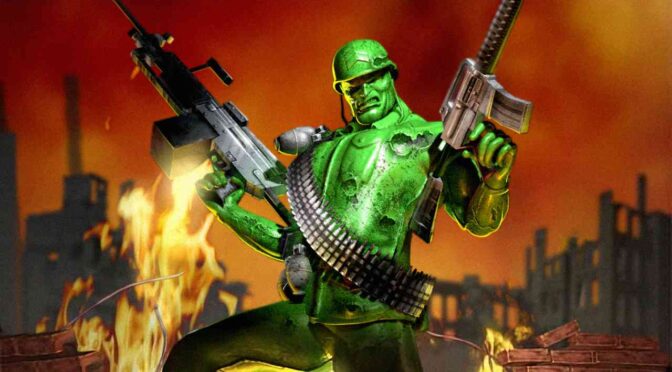
Plastic with Consequence: The dilemma of portraying toys as something serious

Making a Living Toy Universe Feel Serious

There is an inherent contradiction at the heart of any world built from toys. Plastic soldiers, molded smiles, bright colors, simplified anatomy… these elements are culturally coded as harmless. They belong to childhood, to imagination, to play. The moment they move, speak, and wage war, the premise risks collapsing into a parody.

The solution is not to fight that contradiction. It is to weaponize it.

A serious toy universe does not deny that its characters are toys. It refuses to treat that fact as a joke.

The material is plastic. The conflict is not.

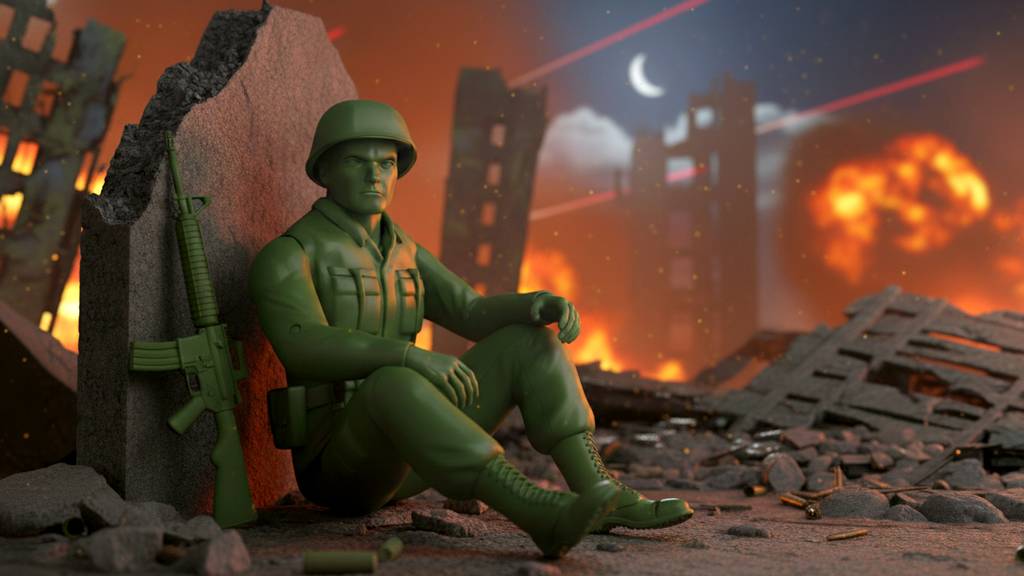
What creates seriousness is not realism in the biological sense, but consequence in the material sense. Plastic cracks. It splinters. It melts. It warps under heat. Like the real plastic, it does not bleed, yet it scars permanently. Damage is not only mere cosmetic. A gouge remains. A burn deforms. A limb once snapped does not regenerate unless rebuilt… and rebuilding changes the identity of the figure. Although they are toys, the conflicts (for them) are as dramatic, dystopian, chaotic, and emotional as the movie Saving Private Ryan.

On the other hand, the fact that the Army Men wonder where they come from and who made them, without knowing humans at first, gives the Toyverse a captivating air of mystery. They now know they are toys… but why they are alive?.

It is not satire. It is collision.

Violence, in this context, becomes strangely more disturbing than flesh-based violence. When a molded face designed to be eternally heroic is shattered, the dissonance is immediate. When a smiling infantry figure is left partially melted, its once-clean silhouette sagging and distorted, the visual contradiction does the emotional work. The horror is not gore. It is the corruption of permanence.

Imagine this scene, but with a plastic soldier half-melted by a flamethrower… same creepy disturbing effect

Childlike design placed in uncompromising situations generates a powerful, unsettling tone. A toy sculpted with simplified optimism (wide chest, bold stance, clean lines) suddenly reduced to fractured debris forces the audience to reconcile two incompatible readings at once. It is not satire. It is collision.

Plastic Irony

This is where irony becomes effective… not as humor, but as tension. The irony of a cheerful teddy bear functioning as a calculating war criminal. The irony of pastel-colored units enforcing brutal order. The irony of a soft plush antagonist whose stitched smile never changes while atrocities unfold around it. These contrasts destabilize expectation, and that destabilization produces seriousness.

Happy Three Friends is an example of this, or any bloody anime of 80′: They were a success because at the time nobody expected a cartoon to be bloody, let alone sexually suggestive with its portrayal of female sensuality. Even fewer expected important characters to die, as was the case with Optimus Prime at the end of Transformers G1.

If the world treats these characters as emotionally and politically real, the audience has no escape hatch. There is no wink to retreat into.

No escape

Violence, when used carefully, establishes stakes. It should not be constant spectacle. It should be sharp, visible, and transformative. A melted helmet fused to a figure’s head is not a shock moment… it is a reminder of vulnerability. A snapped arm replaced by a mismatched color limb tells history without exposition. The visual aftermath matters more than the impact itself.

The environment amplifies the tone

Scale must inspire awe rather than whimsy. A carpet is not “cute terrain”, it is an unstable fiber forest that swallows patrols. A kitchen counter is not a prop, it is a monolithic plateau of artificial stone. A staircase becomes a vertical siege campaign. When staging emphasizes height, depth, shadow, and mass, the toy scale dissolves. The audience stops thinking in centimeters and starts thinking in distance and danger.

Imposing scenography carries emotional weight. Strong silhouettes against vast domestic architecture. Harsh lighting cutting across molded surfaces. Smoke rising between oversized table legs like industrial pillars. When compositions are treated with the discipline of war cinema rather than children’s animation, tone shifts immediately.

Art direction is not decoration… it is argument

Color can function the same way. Bright, saturated plastic under cold, directional light becomes severe. Glossy surfaces reflecting firelight transform innocence into tension. A pristine green soldier under neutral light feels nostalgic. The same soldier half-shadowed, scratched, and standing before a towering appliance feels mythic.

Another essential choice is permanence

A toybox world often implies reset. Battles happen, figures are rearranged, and nothing truly changes. A serious universe cannot afford that elasticity. If a battalion is destroyed, its absence must be felt in later campaigns. If a faction loses territory, maps must shift. If a leader falls, instability must ripple outward. The sense that history accumulates (that nothing resets) converts play into chronology.

Even the concept of manufacturing can become existential. These beings are molded, cast, assembled. Does that define destiny? Is identity tied to batch, color, or purpose? Can a figure melted down and recast be considered the same individual? What does death mean in a world where bodies are objects? These questions deepen the premise beyond aesthetic novelty.

The greatest tonal risk is self-awareness. The moment a character reduces their own existence to a joke (“we’re just toys”) the illusion fractures. A serious toy universe must believe in itself completely. Its wars are not pretend. Its politics are not an elaborate game. Its casualties are not temporary.
Shrap dead
The contrast between innocence of form and severity of action is not a gimmick. It is the foundation

A molded grin shattered by artillery. A plush villain issuing cold strategic commands. A bright plastic platoon silhouetted against a towering, indifferent world of human-scale architecture.

When handled with discipline, the visual language does the heavy lifting. The audience feels the weight without being told to.

In the end, seriousness does not come from making toys more realistic.

It comes from making consequences unavoidable.

Plastic is not fragile because it is a toy.
It is fragile because it can break… and once broken, it never returns to what it was.

Army Men: Sarge’s Heroes (Cancelled GBA and GBC Versions)

Developed by: DC Studios (Game Boy Advance) and an unknown studio (Game Boy Color)
Development started: August 2000
Planned platforms: Game Boy Advance and Game Boy Color

Over the years, the Army Men franchise produced many titles, but one that remained largely unnoticed was a portable adaptation of Sarge’s Heroes for the Game Boy Advance, handled by DC Studios. This handheld project was meant to translate the experience of the N64, PlayStation, Dreamcast, and PC versions to Nintendo’s new portable system. Alongside it, another version for the Game Boy Color was reportedly in production by a different, currently unidentified developer.

Production was led by Karla Healy and Mark Greenshields, with Ian James serving as the main programmer. Menu and FMV sequences were handled by a contributor known simply as Gerry. Interestingly, Ian James would later work on Army Men: Advance, released the following year.

Visual design was managed by Kristi-Louise Herd, while Alan Macfarlane created early mockups and concept pieces. At that stage, no one had been assigned to sound design or music.

Development officially began in August 2000, with plans for release in January 2001. The project took its main inspiration from the PlayStation version, though DC Studios modified gameplay and interface elements to suit the portable hardware. The expected cartridge capacity was 32 megabits, with FMV scenes adapted from the PSX edition.

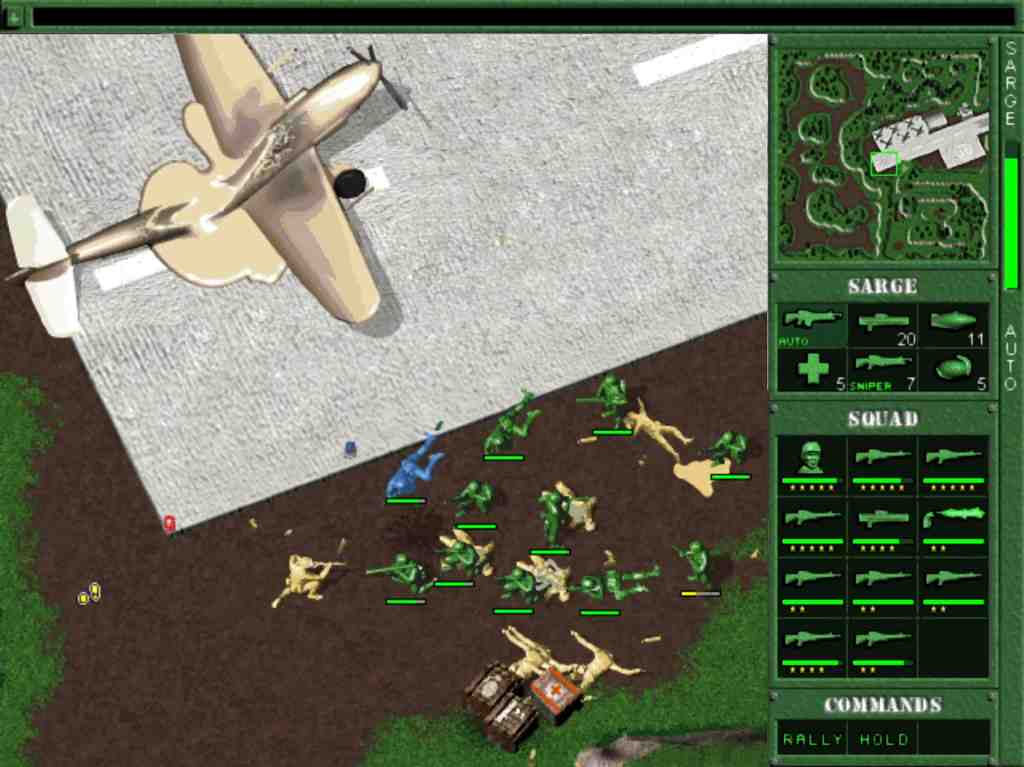
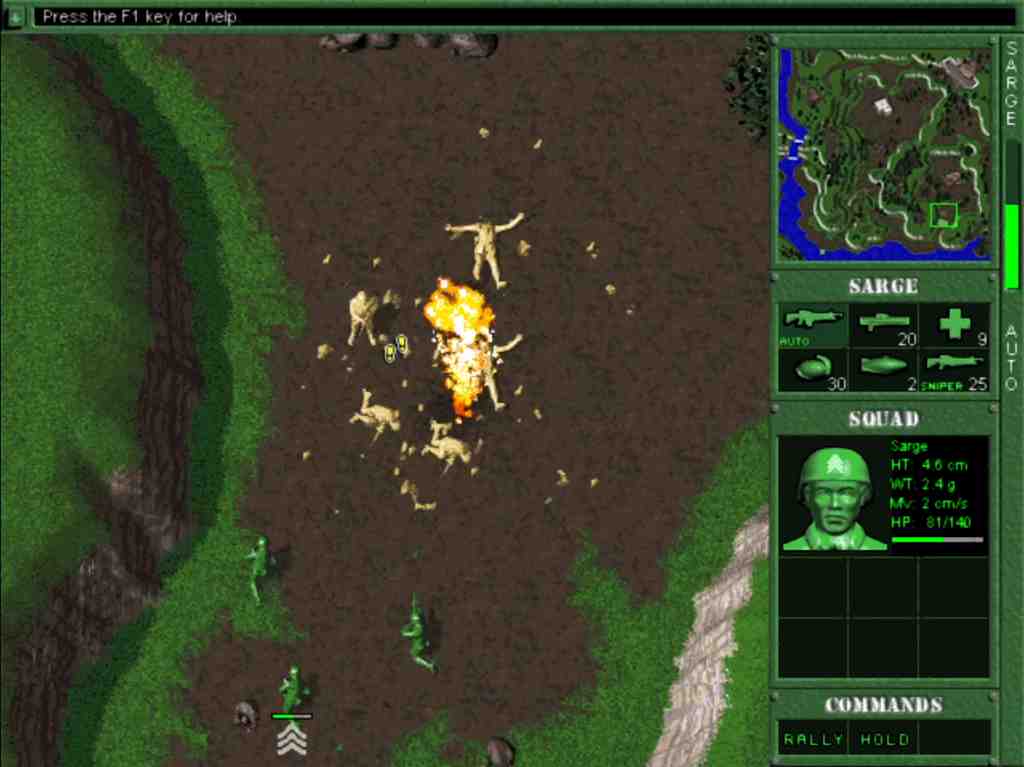
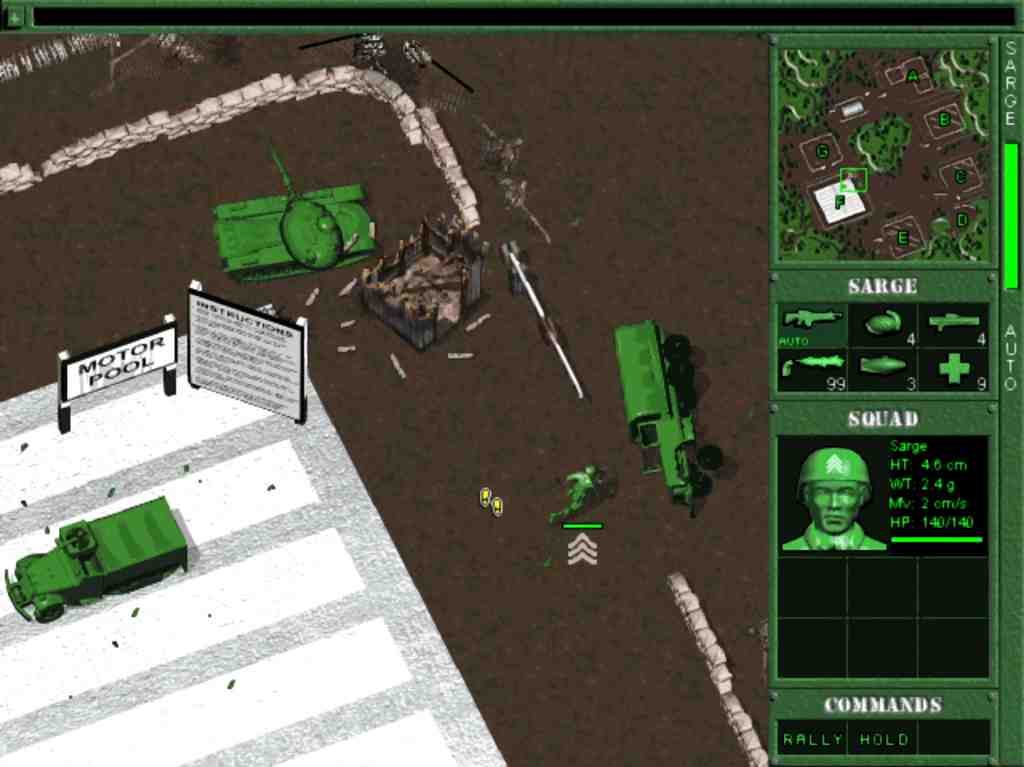
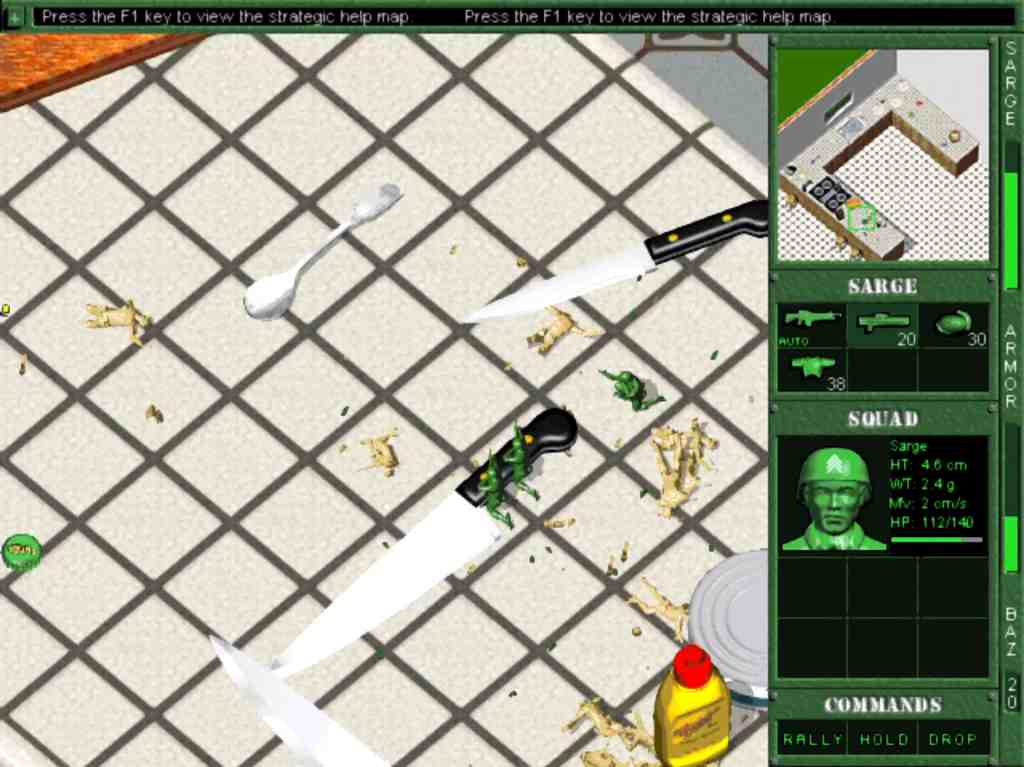
Due to the GBA’s lack of true 3D capabilities, the game was designed around a pseudo-3D isometric perspective, giving players a tilted 2.5D view of the battlefield. Players would be able to move behind objects, hide behind buildings or trees, and even enter certain structures and vehicles. But in some ways this would have been reminiscent of PC games: Army Men (1998), Army Men 2, Toys in Space, etc.

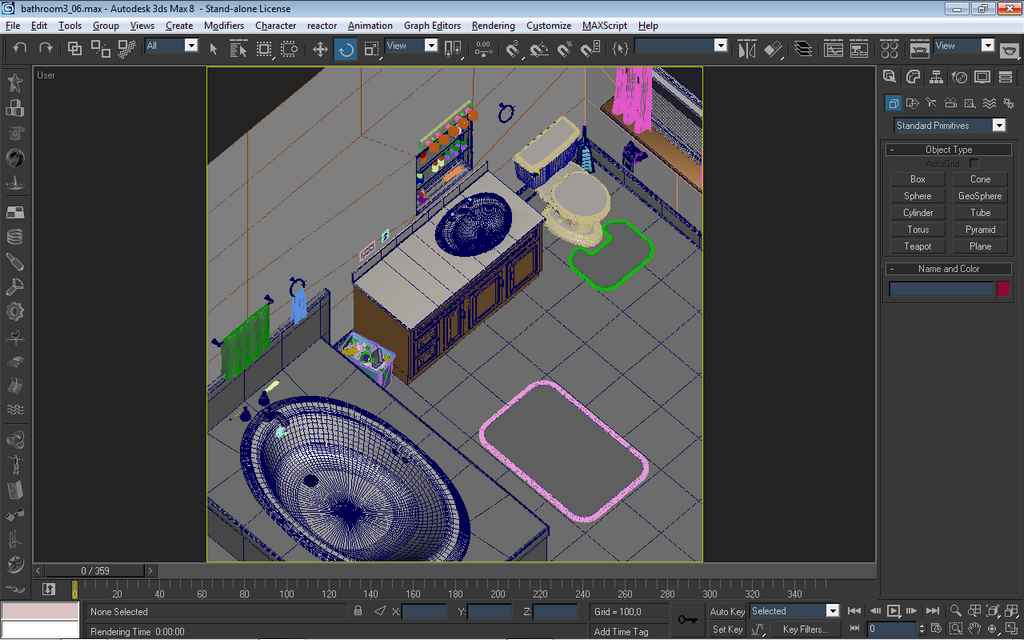
Planned levels included Kitchen, Bathroom, Garden, Fort Plastro, Sandbox, and Living Room, with additional stages such as the Garage and Bedroom under consideration.

The design also proposed environmental interaction, such as blowing up parts of the scenery to reveal hidden items or weapons. Destroyable barriers would expose new paths within each level. A map overlay could be activated at any time, and players were to choose between Sarge or Vicky as playable characters at the start of the game.

Unfortunately, the project ended after reaching its first milestone, which included a functional menu system, an early version of the main sprite, and a small portion of the barracks map. The exact reason for its cancellation remains unclear.

Thankfully, several early builds and design documents have survived, thanks to Mark Greenshields, who allowed these materials to be archived and shared. They provide a glimpse into an ambitious attempt to bring Sarge’s Heroes to handheld form, bridging console-scale gameplay with the limitations of the Game Boy Advance.
Making Concept Art a reality

Remember those great Concept Art pieces? Well, we started making them a reality (sort of).

There are some ideas in Concept Art pieces that never became reality (or, in fact, most of them never did). So here we’ll show you the process of how we make them a reality, one way or another.

Creating Concept Art for the Toyverse

From Sketch to Complete Concept Art

The process of creating an illustration does not end with the first stroke. Every visual piece goes through different stages of transformation, maturation, and refinement. What begins as a set of loose lines on paper can evolve into a complex digital scene with depth, color, textures, and three-dimensional elements.

Below, we explore step by step how a simple idea becomes a finished work of art.

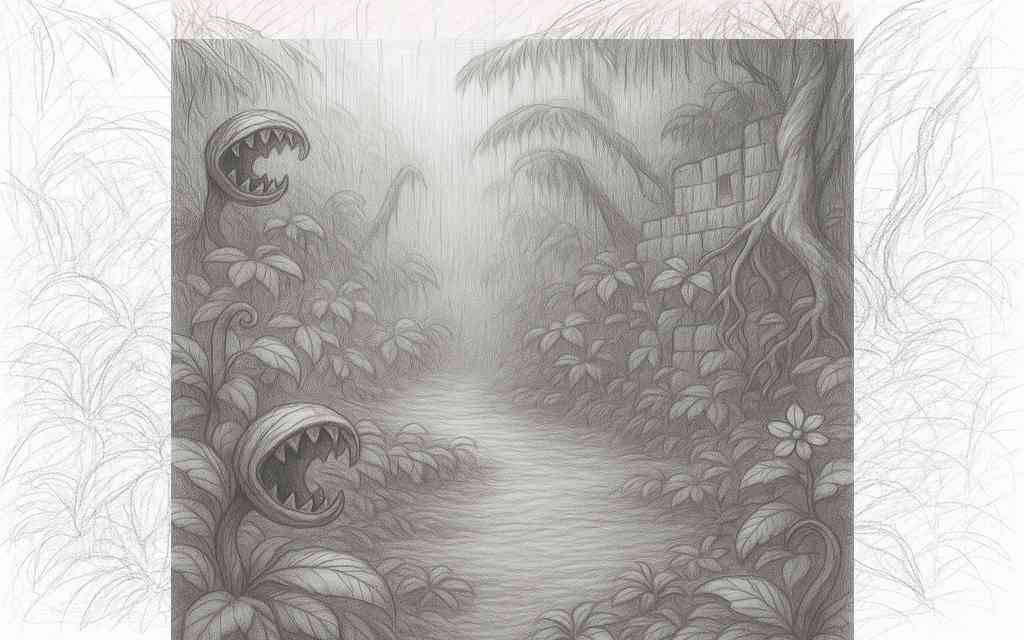
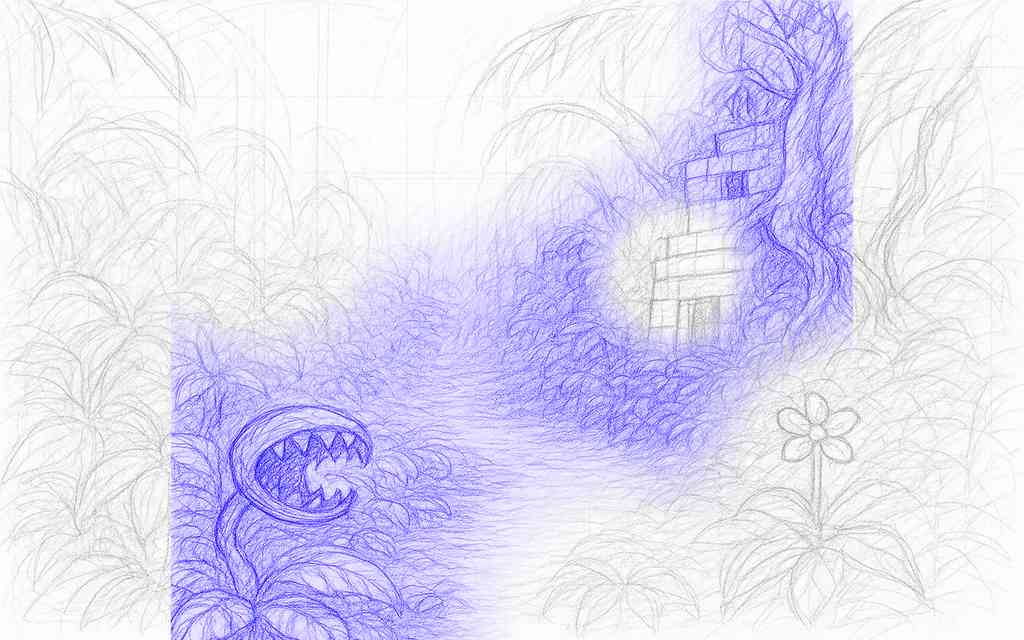
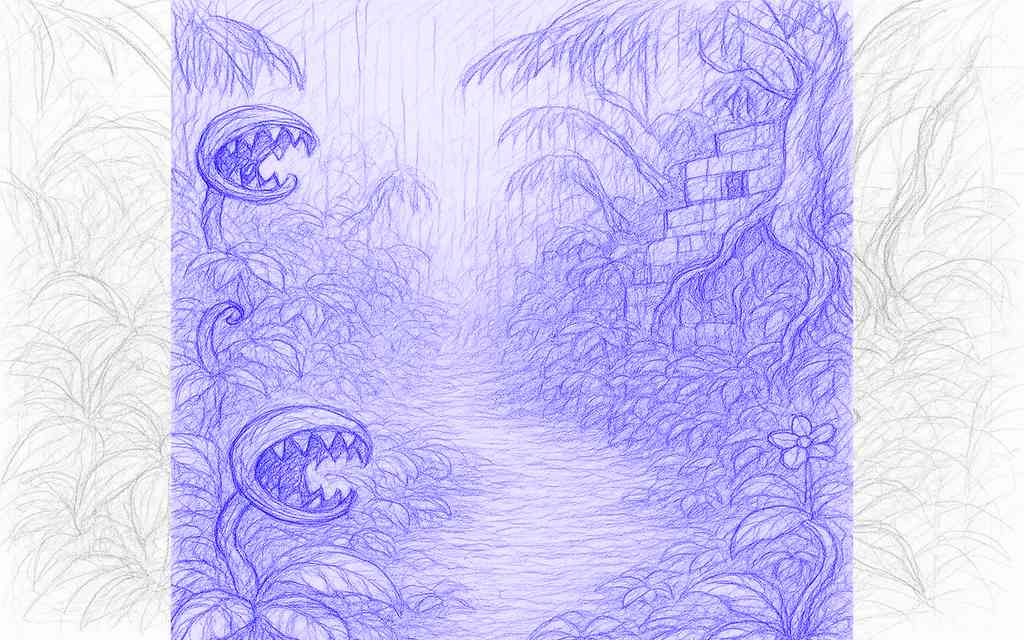
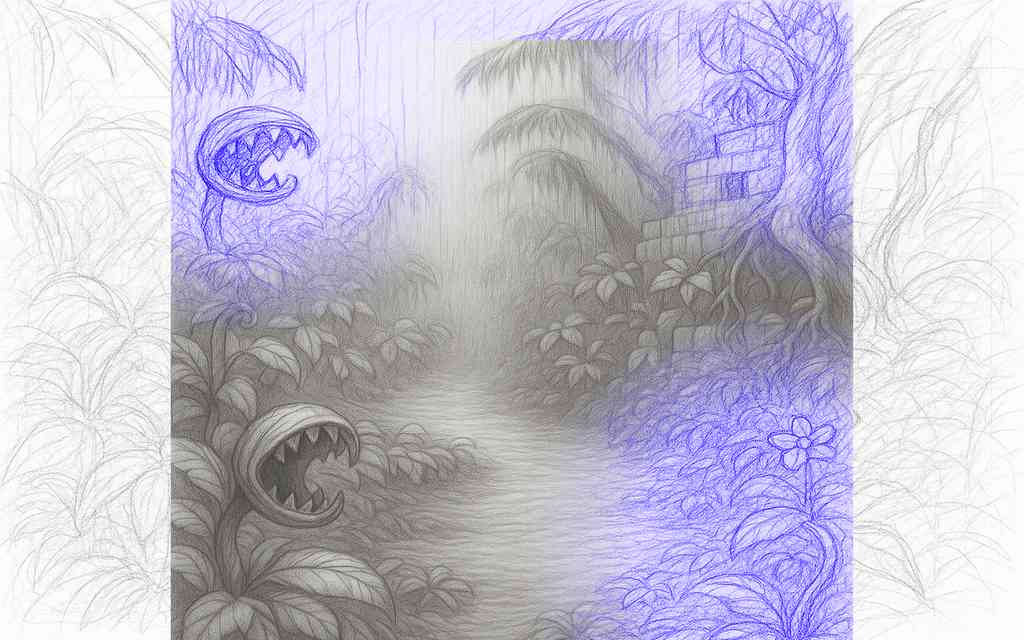
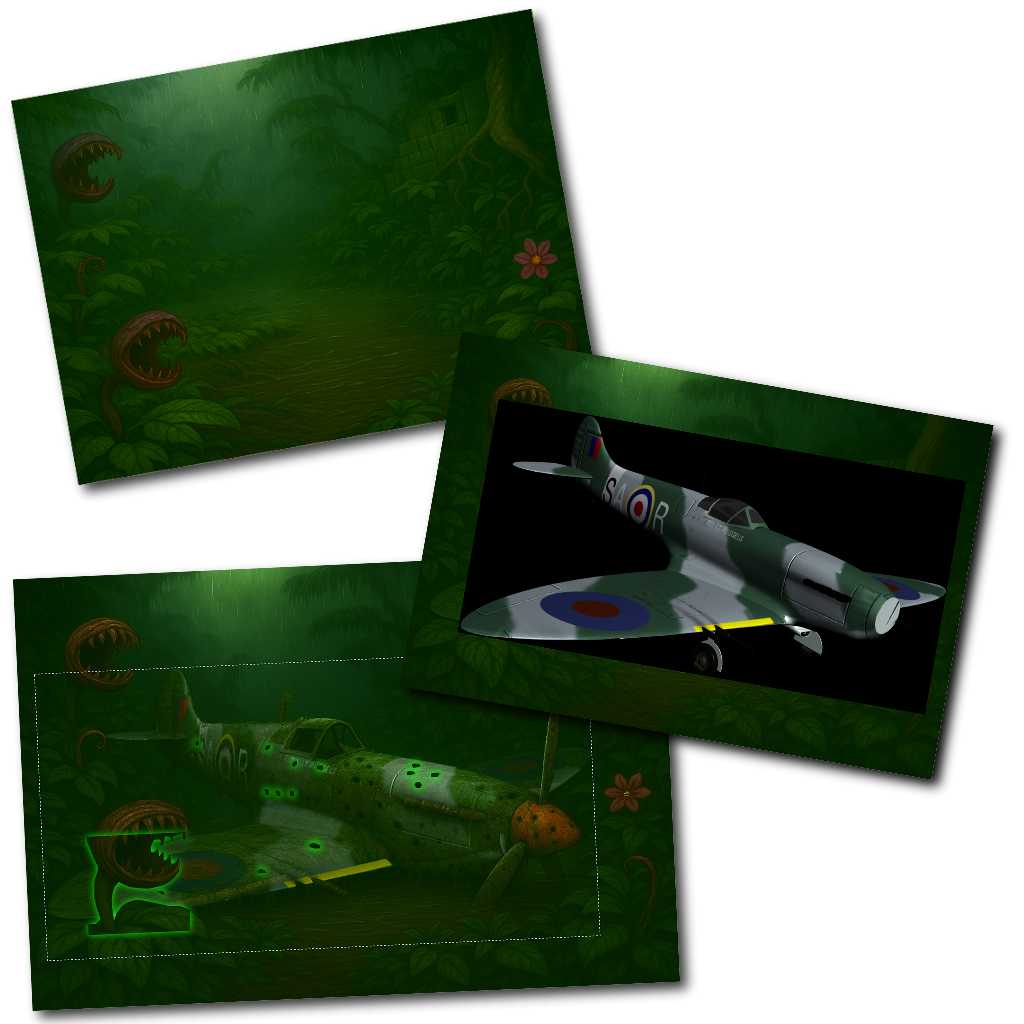
The Creation of a Forgotten Jungle

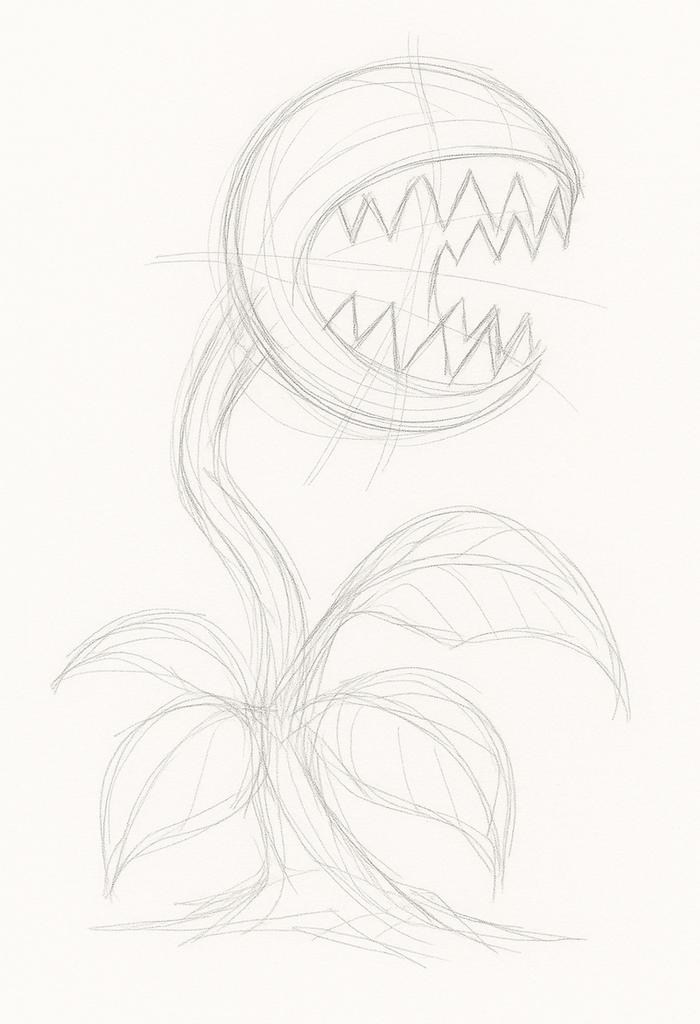
The process of this piece begins with the carnivorous plant, first conceived as a basic sketch with guiding lines. The initial strokes, just a skeleton of geometric shapes, captured the essence of its silhouette: the twisted stem, the oversized mouth, and the sharp teeth. Little by little, the drawing was refined until it gained volume, detail in the leaves, and a posture that conveys tension and aggressiveness. This creature became the central axis of the composition.

From Sketch to Complete Artwork: The Creative Journey of a Digital Illustration

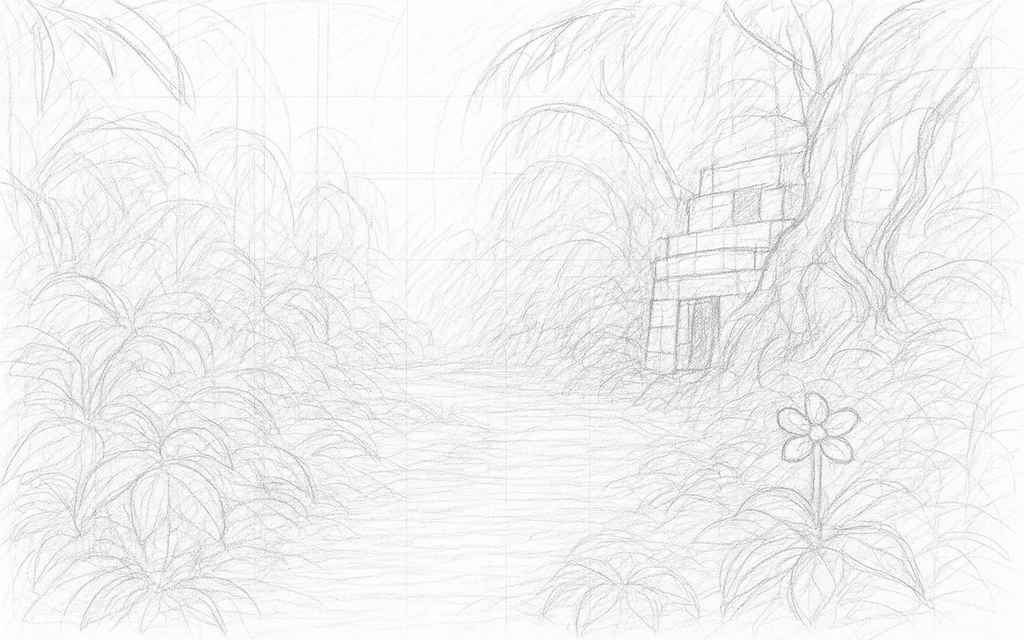
With the base defined, the work progressed to the construction of the narrative environment: a dense jungle crossed by a river or spring flowing through the center of the scene. The vegetation grew in complexity: scattered flowers, trees with exposed roots, and an ancient temple made of massive stone blocks, hidden among the undergrowth. This drawing stage served to establish the visual structure of the piece, defining the relationship between the elements and the balance of the composition.

Slide from one image to another to compare

The next step was digital painting, where the setting gained life and atmosphere. Through layers of color, a humid, dark, and greenish environment was created, typical of a dense and oppressive jungle. The contrast between filtered light and deep shadows added depth and drama, enveloping the carnivorous plant and the temple in a mysterious ambience.

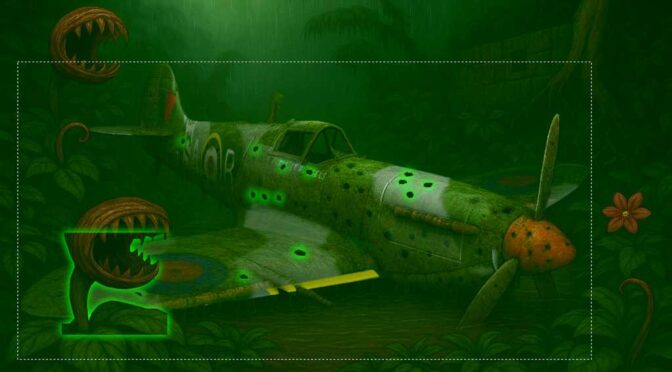
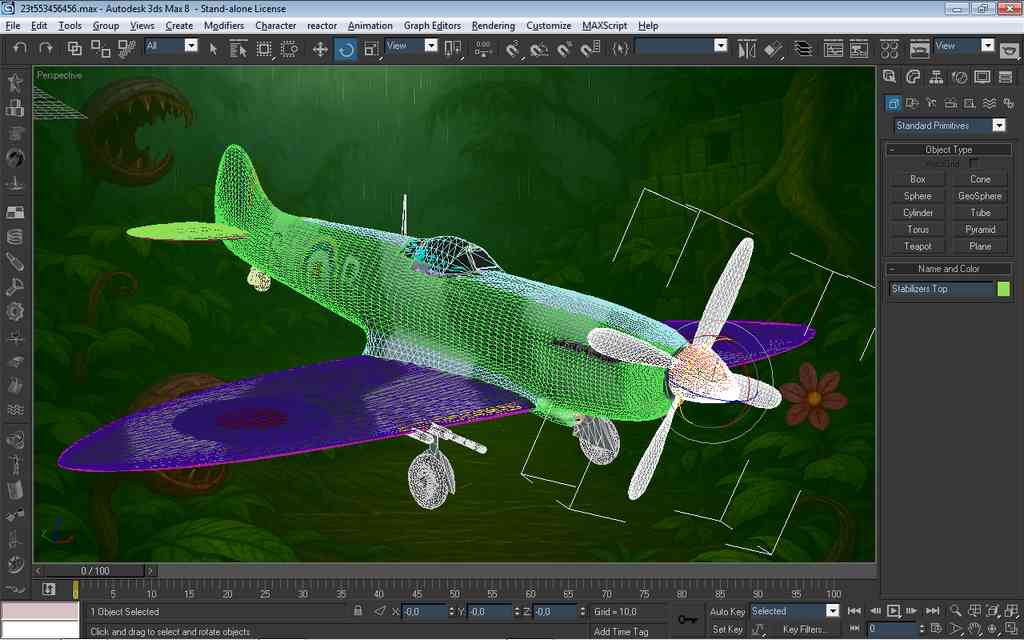
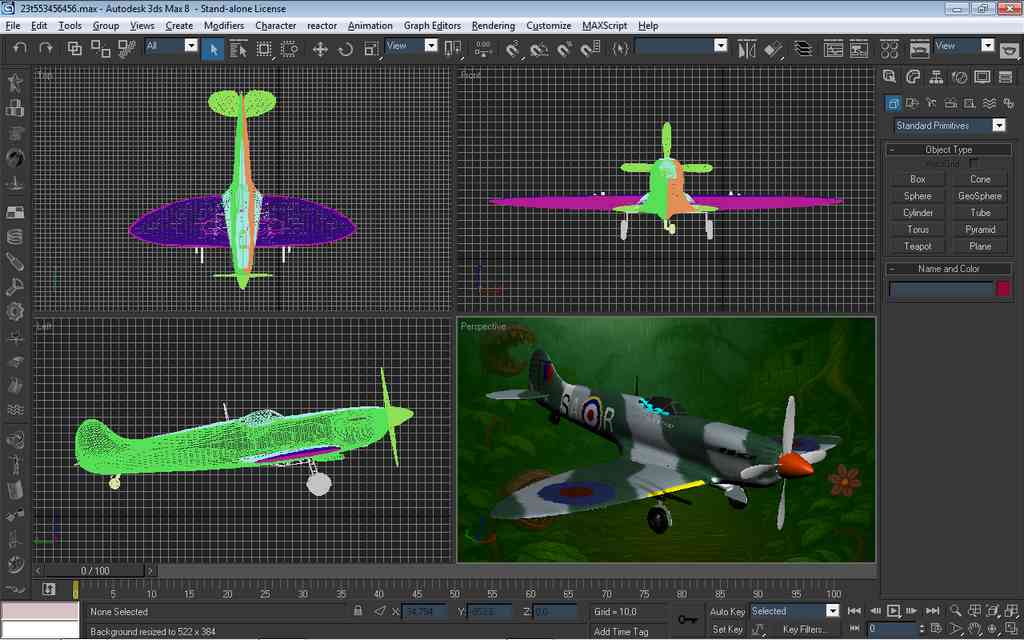
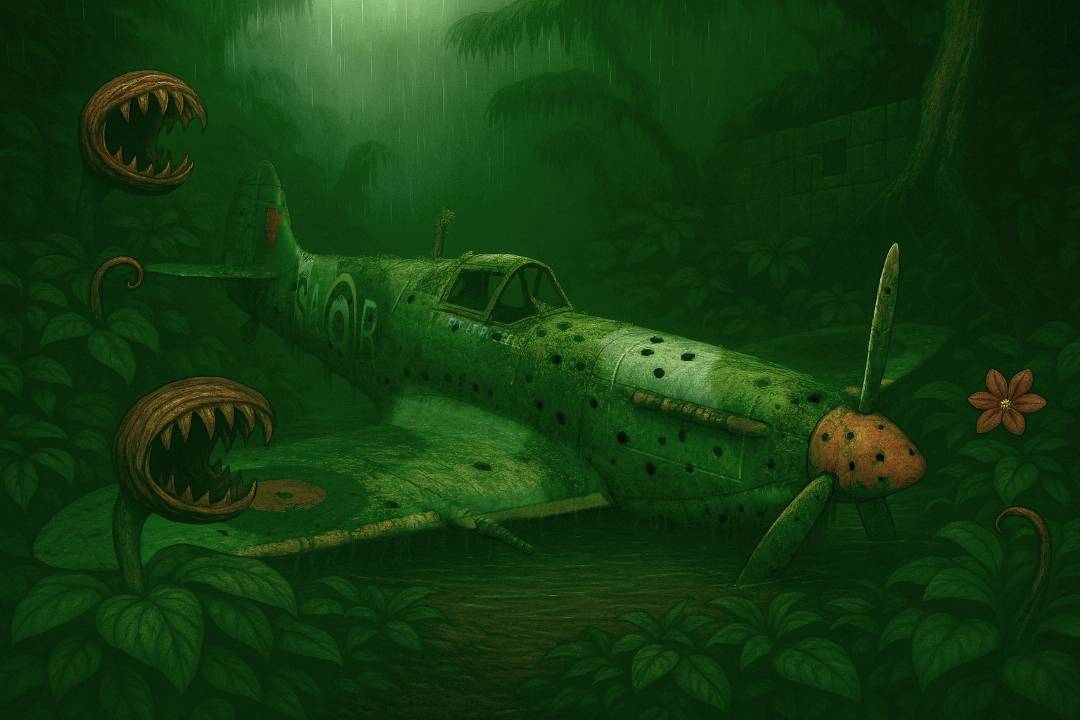
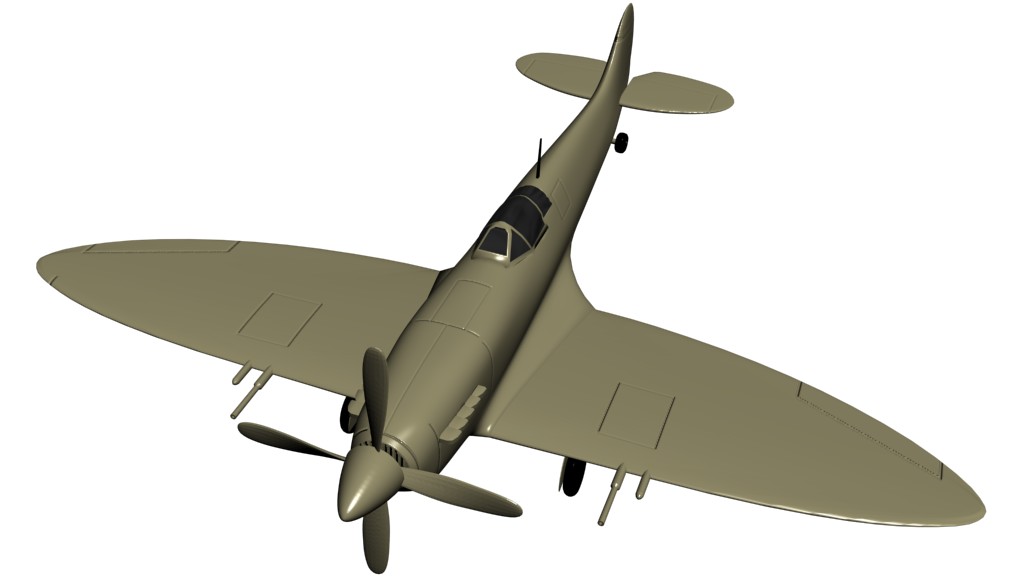
The piece evolved even further with the incorporation of a 3D model of the Spitfire of Flight Lieutenant Ruggels. Far from standing out as an external object, it was integrated into the visual narrative.

  • The fuselage was damaged by bullet holes, evidence of its violent fall.
  • Moss and vegetation had grown over its surface, symbols of the relentless passage of time.
  • The dents and metallic wear reinforced the idea of a war relic abandoned in the jungle.

In the post-production phase, plants in the foreground and overlapping vegetation were added to the 3D model, softening its outline so that it blended with the pictorial style of the illustration. Adjustments of color, texture, and line ensured that all the elements coexisted within a unified aesthetic.

The final result is a piece that tells a story without words: the confrontation between man’s destructive force and the resilience of nature. What began as simple sketch lines transformed into a cinematic and conceptual scene, where time, the jungle, and the remnants of the past interact in a visual balance full of mystery.

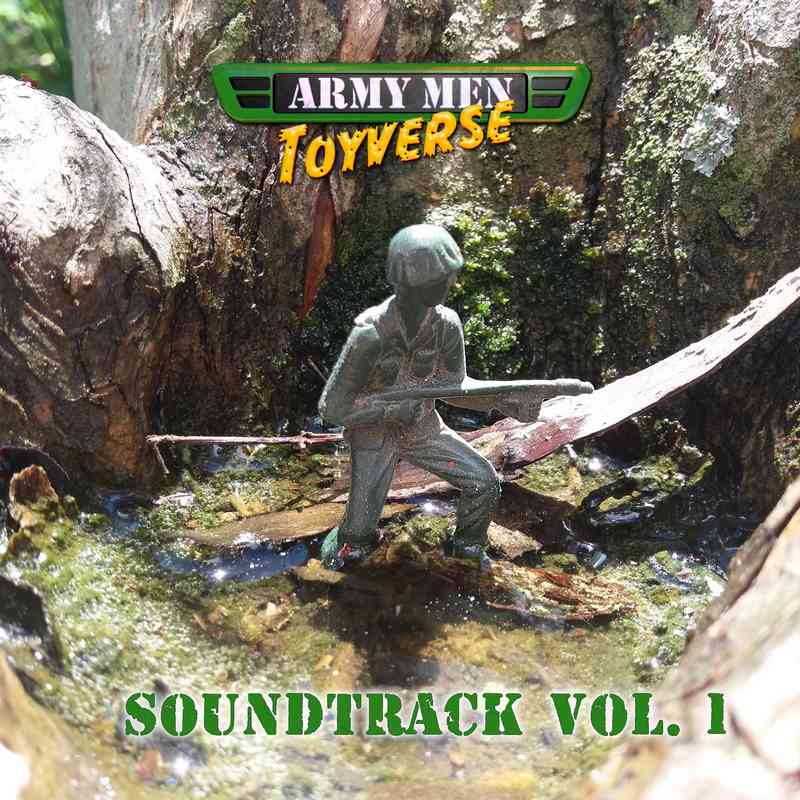
Army Men Toyverse Project Soundtrack

This is the work in progress of our first Soundtrack album, Volume 1.

Vol. 1

Album cover

These compositions are influenced by soundtracks from previous games, and the originals have elements of military marches, film soundtracks, orchestras, etc. In some cases, music with electric guitars, as in games like Sarge’s Heroes 1 and 2. On the other hand, there is a great influence of ambient music, or ambient sound.
Vol. 1 – Track 01 “All hope is lost for the Army Men / Hawk is back”
Vol. 1 – Track 02 “Green Alpine March”
Vol. 1 – Track 03 “Frankenstein”
Vol. 1 – Track 04 “Cowboys RTS”
Vol.1 – Track 05 “Omega Protocol”
Vol. 1 – Track 06 “Omega Arrives”
Vol. 1 – Track 07 “The Penitent’s March”
Vol. 1 – Track 08 “Plastic Soldiers March”
Vol. 1 – Track 09 “Good ol’ tank enters the battle”
Vol. 1 – Track 10 “Grey Pavement”
Vol. 1 – Track 11 “Metal from Above”

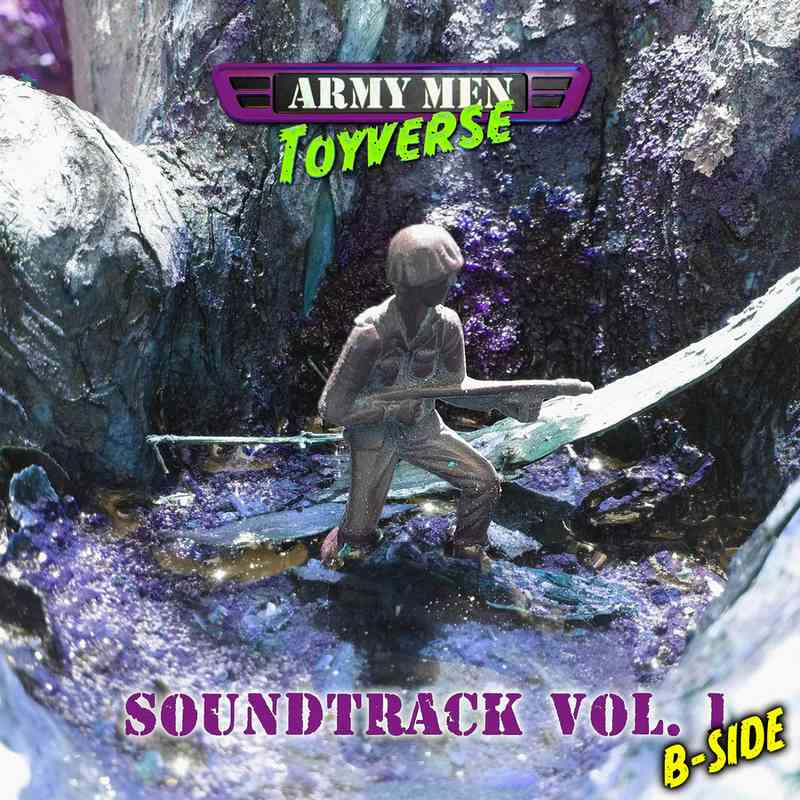
Vol.1 – B-Side

Side B cover

The B-side are variations of the soundtracks from volume 1, for alternate or themes scenes.

Vol. 1 Side B – Grack 03b “Frankenstein Castle”
Vol. 1 Side B – Grack 05b “Omega arrives to the Western World”
Vol. 1 Side B – Grack 06b “Omega arrives to the 8 bit world”
Vol. 1 Side B – Grack 07b “Omega arrives to the Medieval World”

How PC Army Men 2D games were made

Army Men 2.5D games: Step by Step

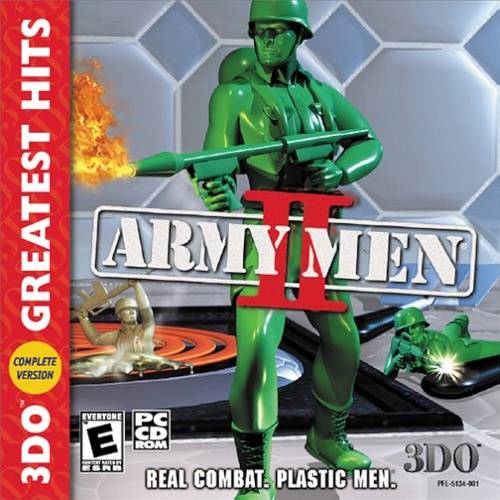
The first Army Men games, Army Men (1998), Army Men II (1999), Army Men: Toys in Space (1999), Army Men: World War (1999, PC version), and Army Men: Air Tactics (2000) were developed by The 3DO Company during the late ’90s. These titles were created for PC, though some would later be adapted to consoles.

At the time, 3DO’s internal development relied heavily on a mix of 3D modeling tools, custom engines, and asset pipelines tailored for low-end consumer hardware. Each game was built with a relatively short development cycle (often under a year) requiring assets reuse, modular design, and a streamlined production process.

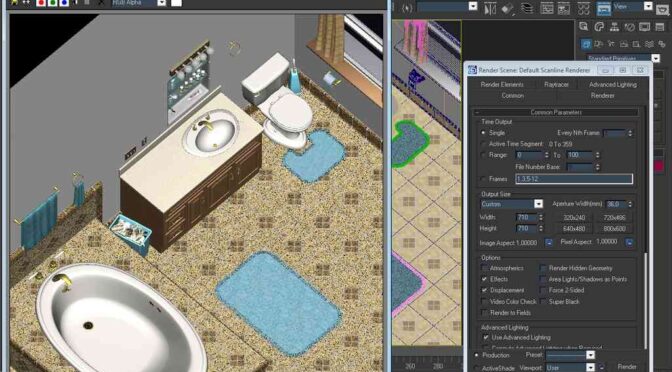
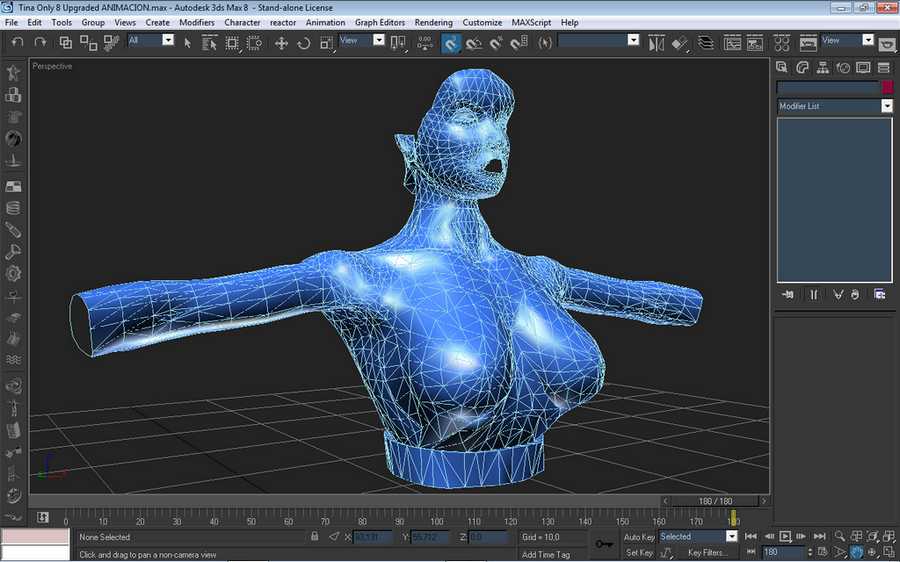
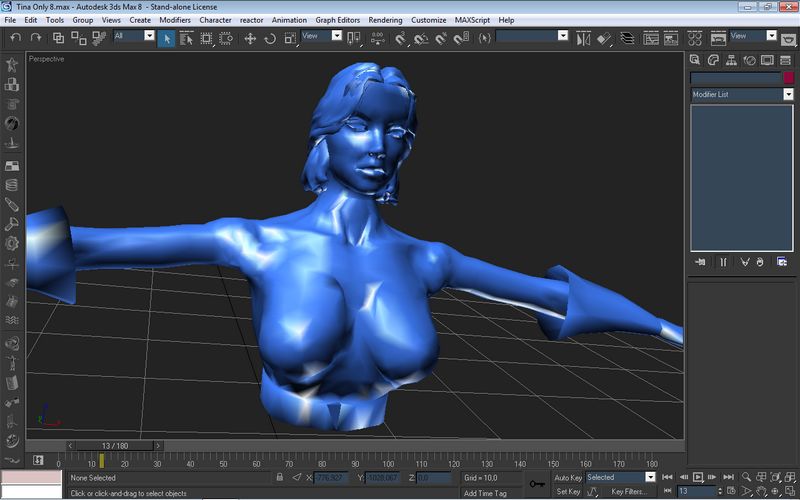
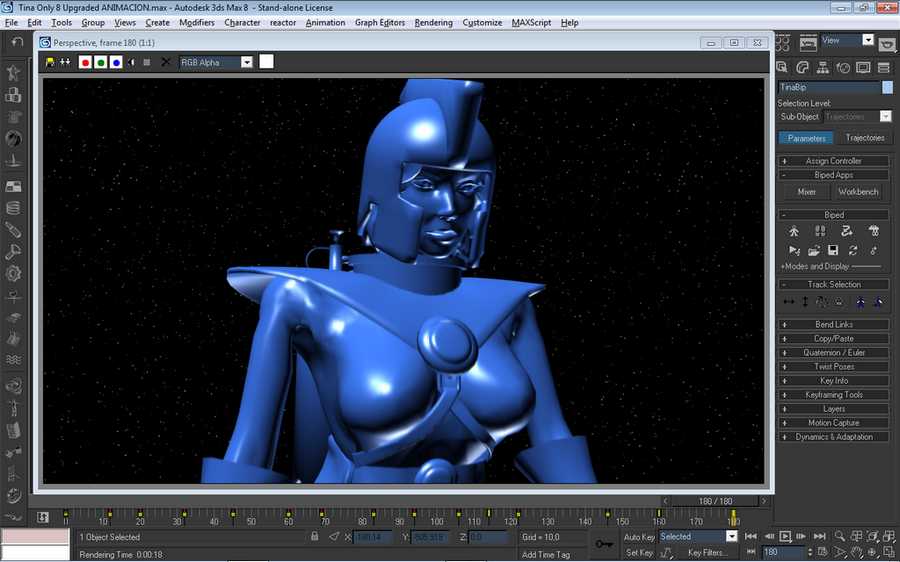
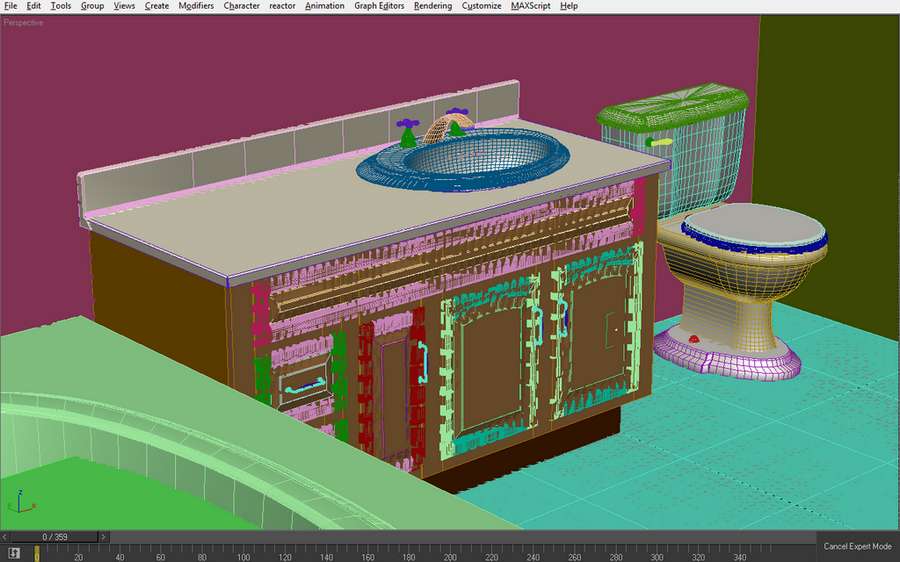
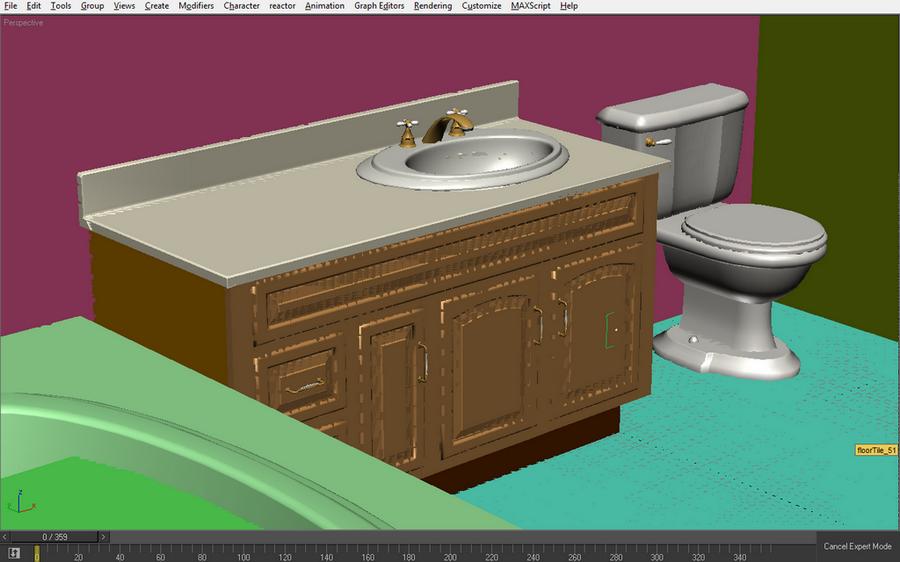
The visual style combined pre-rendered 3D elements (created in 3D Studio Max software) with in-game sprites and textures, carefully optimized to run within the memory and performance constraints of computers of the time. Meanwhile, cutscenes and promotional material often featured higher-quality renders that were directly representative of in-game graphics.

The combination of these production methods, rapid iteration, and the particular creative direction of 3DO’s art team gave the early Army Men titles their distinct aesthetic… halfway between miniature toy realism and stylized video game worlds.

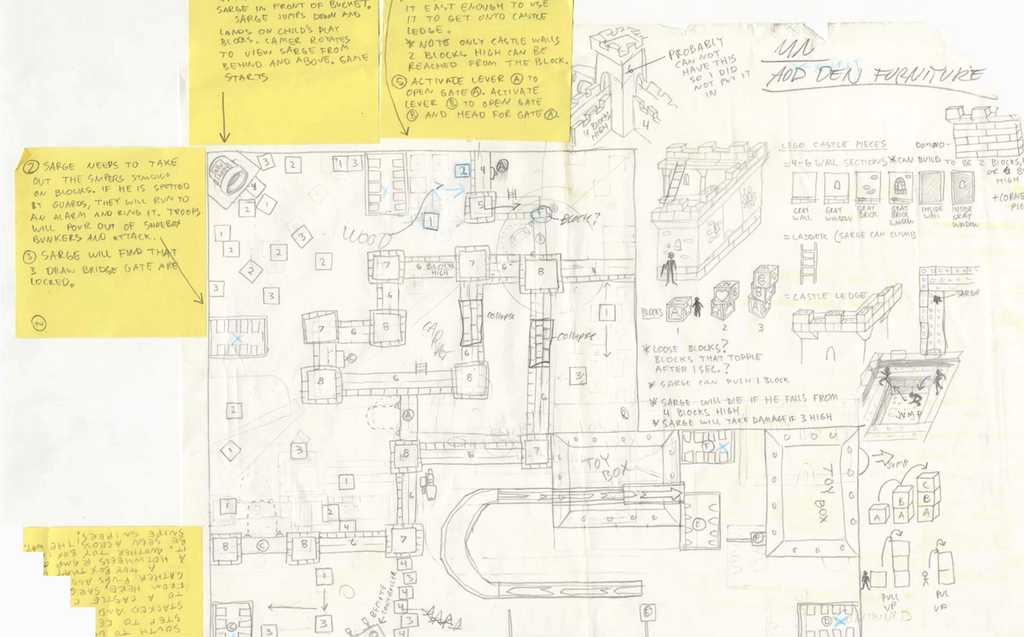
1. Concept and Scripting

Designers began with a concept document defining the environments, enemies, mission objectives, and available weapons.

These documents were usually very functional, focusing on mechanics before narrative (although Toys in Space and Air Tactics had more elaborate storylines).

The narrative script and dialogues were written in parallel with level planning so the story wouldn’t interfere with technical limitations.

2. Creation of 3D Assets

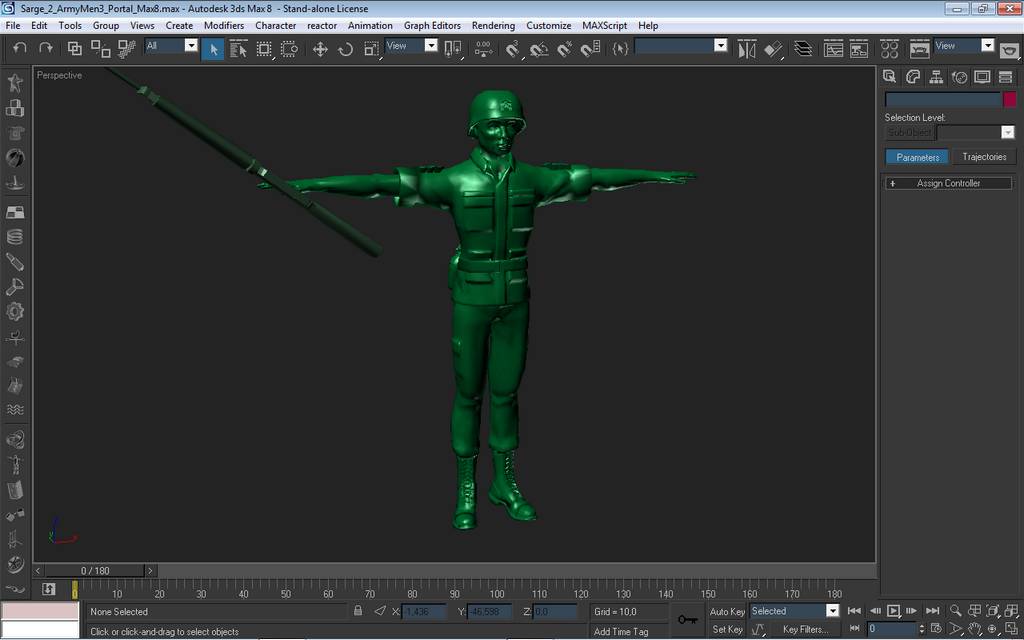
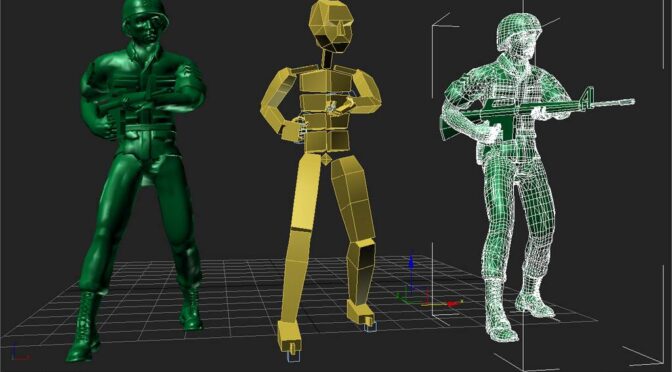
Models of soldiers, vehicles, and environments were made in 3D Studio Max.

Sarge 3D model from Army Men Toys in Space

Although the final game used highly simplified sprites, high-quality 3D model versions were created for marketing renders and cutscenes.

The models were “baked” into sprites or textures, trimming polygons and reducing color palettes to fit within RAM and VRAM limits at the time.

It’s important to note that the 2.5D Army Men games were developed exclusively for PC; console versions used different adaptations of the game engine and design approach.

So… how?

2.1 – 3D Modeling and Texturing

The visual production of the early Army Men titles was a meticulous and multi-step process that combined 3D modeling, detailed texturing, and careful sprite rendering. Development teams began by designing each character, vehicle, and object as a fully realized 3D model in 3D Studio Max. These models were built with more geometric detail than the final games would ever display, ensuring that the rendered sprites would look crisp and convincing even at the relatively low resolutions of late 1990s PC games.

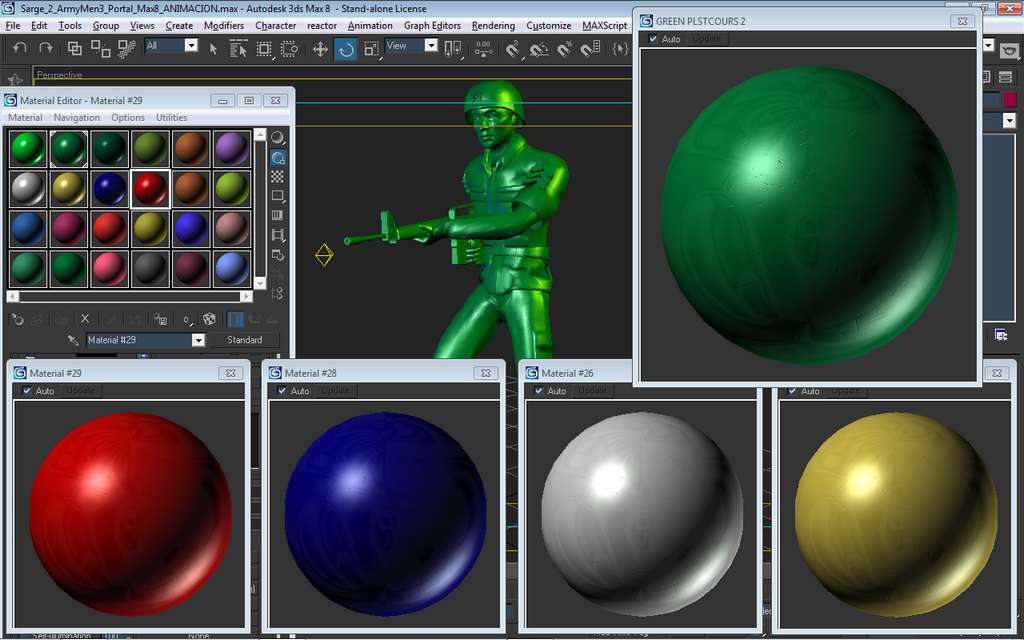
Textures were then painted by hand or derived from scanned materials, giving plastic surfaces their distinctive molded look. Special care was taken to simulate the subtle light diffusion and shading characteristics of plastic, which gave the Army Men their iconic, toy-like presence. Vehicles, buildings, and environmental props followed the same pipeline, often modeled with exaggerated proportions to read clearly from the game’s fixed viewpoint.

  • The process began in 3D Studio Max, where artists modeled soldiers, vehicles, weapons, and environmental props in full 3D.
  • Although the game ultimately used sprites (2D images), the models were initially built with full geometry, high-resolution textures, and realistic proportions for marketing renders and cutscenes.
  • Textures were painted by hand or generated from photographic references, then downscaled and palette-limited to fit the technical constraints of the game engine (often 256 colors per set).
  • Each model was rigged with basic skeletons in Max’s “Biped” system for posing, not for real-time animation. All movement was baked into pre-rendered sequences.

Once modeling and texturing were complete, the development team moved to the rendering stage. Instead of importing the 3D models directly into the game engine, they were pre-rendered into 2D sprites. This technique allowed for a higher level of visual fidelity than real-time 3D of the era could achieve on average home PCs. Animations (such as walking, firing, or rotating turrets) were rendered frame-by-frame in 3D Studio Max, then exported as sprite sheets to be used in-game. Special effects like muzzle flashes, smoke, and explosions were often created as separate rendered sequences and composited on top of the base sprites.

2.2 – Environment Creation

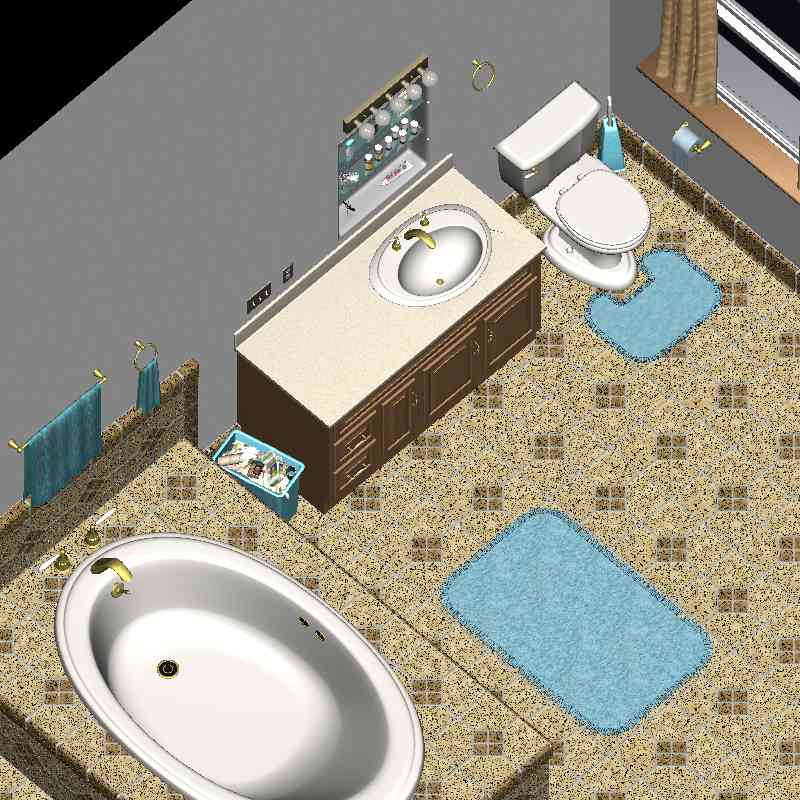
The environments followed a similar principle. Terrain tiles, buildings, and interactive objects were modeled and rendered in segments, allowing designers to piece together maps within the game editor. Lighting was baked into these renders, giving the illusion of complex shading without taxing the PC’s hardware.

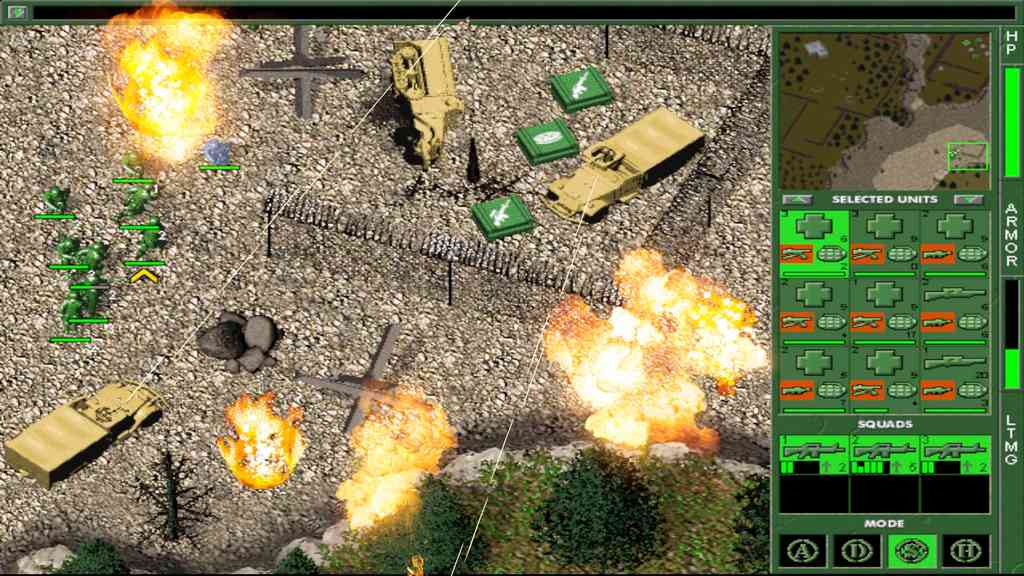
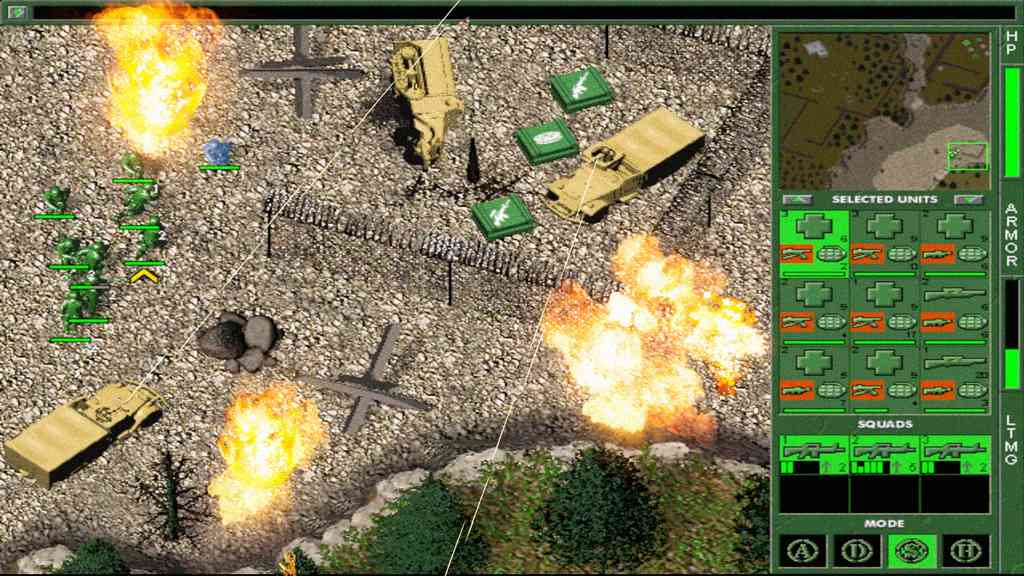
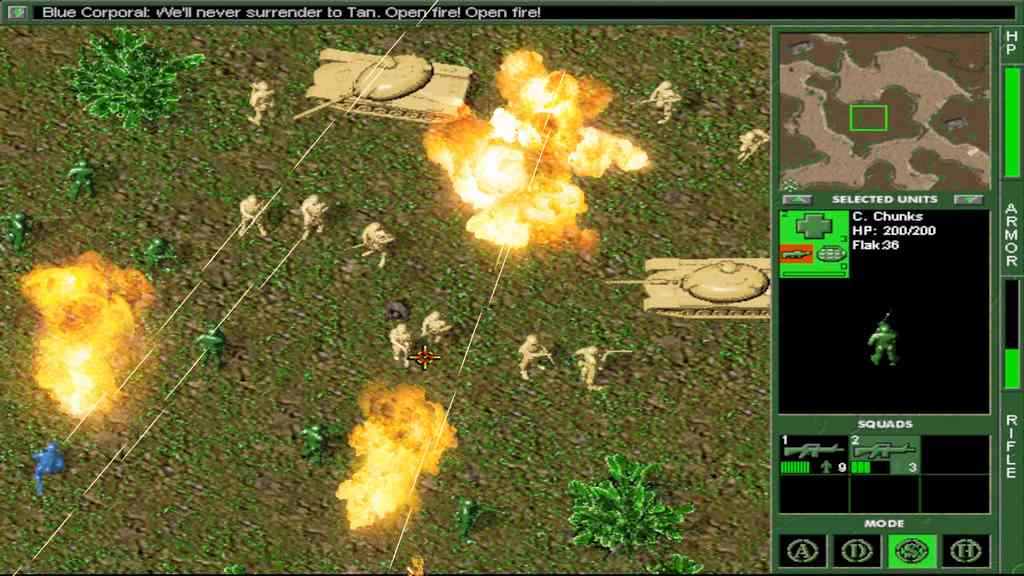
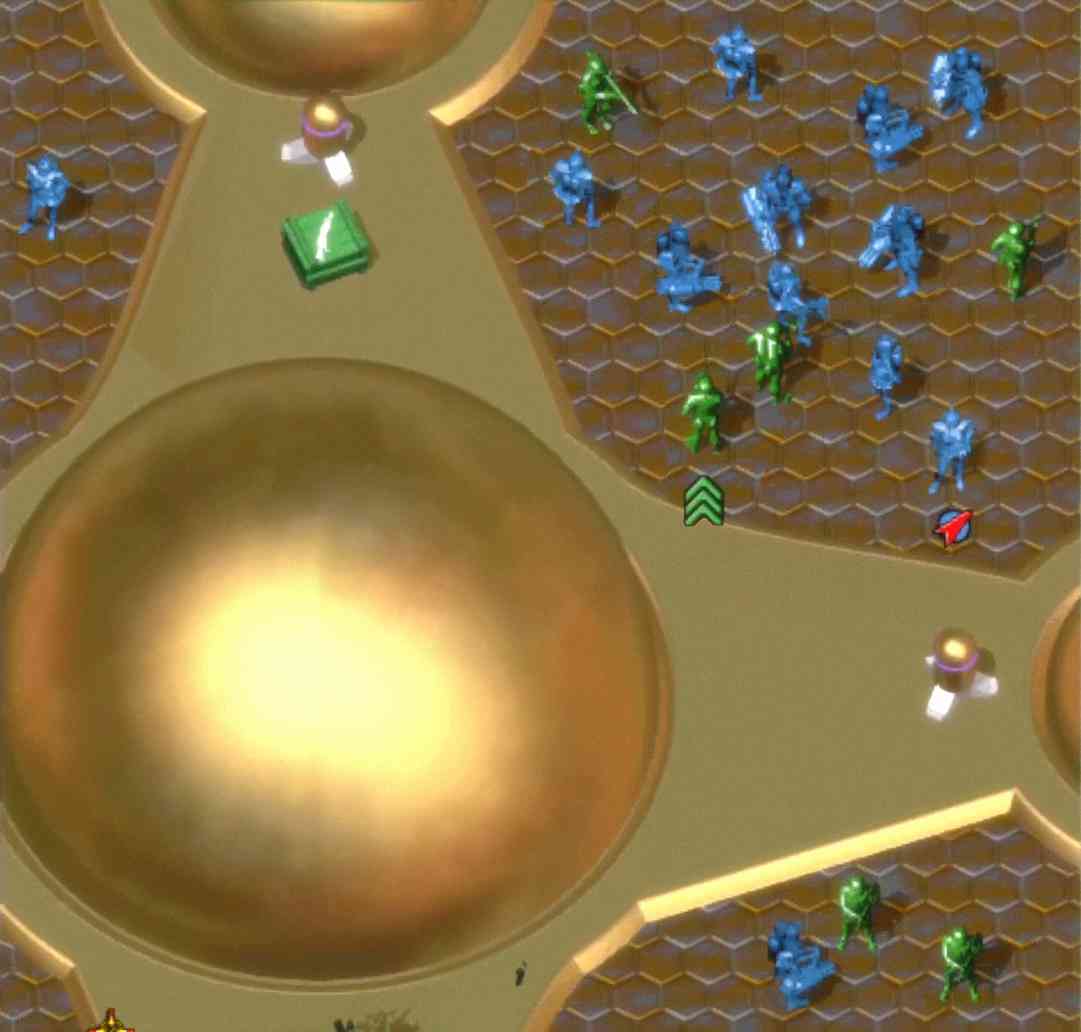
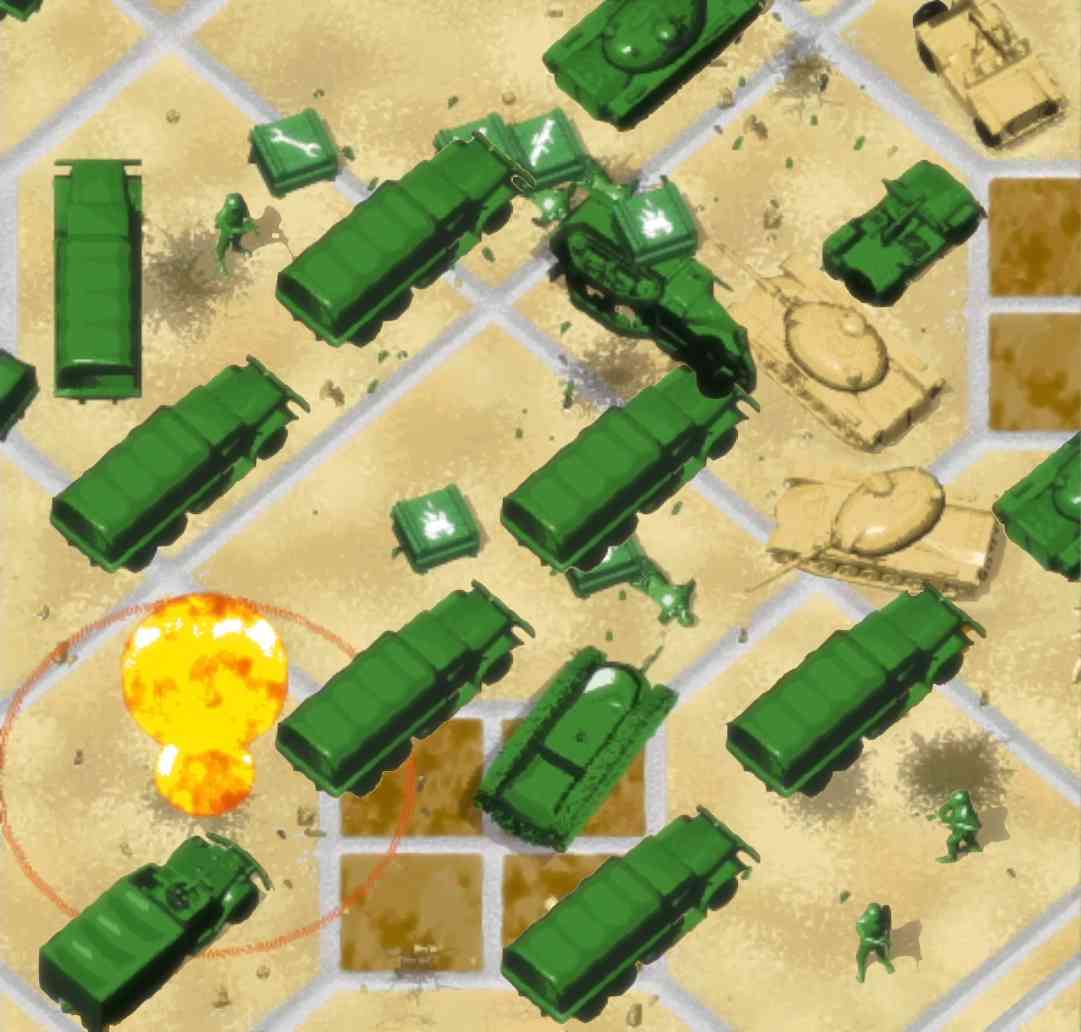
The gameplay itself was presented from a fixed isometric camera perspective, tilted at roughly a 45-degree angle. This viewpoint was carefully chosen to maximize the clarity of the battlefield while retaining a sense of three-dimensional depth. From this angle, players could easily distinguish elevation, obstacles, and the orientation of units. It also allowed artists to control exactly how models were rendered, ensuring consistent proportions and lighting across the entire game world.

The combination of high-quality pre-rendered graphics, baked lighting, and the stable isometric viewpoint gave the early Army Men games their distinctive “miniature war” aesthetic, striking a balance between technical limitations and the highly artistic ambition of 3DO’s Trip Hawkins.

  • Game environments were also modeled in 3D, but separated into terrain layers and static props.
  • Terrain tiles were rendered at fixed angles to match the isometric view, then stitched together in the in-house map editor.
  • Static objects (buildings, trees, fortifications) were rendered as isometric sprites with multiple damage states where applicable (e.g., intact, damaged, destroyed).
2.3 – Rendering Sprites
  • The 3D models were placed in a rendering scene with lighting and camera settings that matched the game’s perspective.
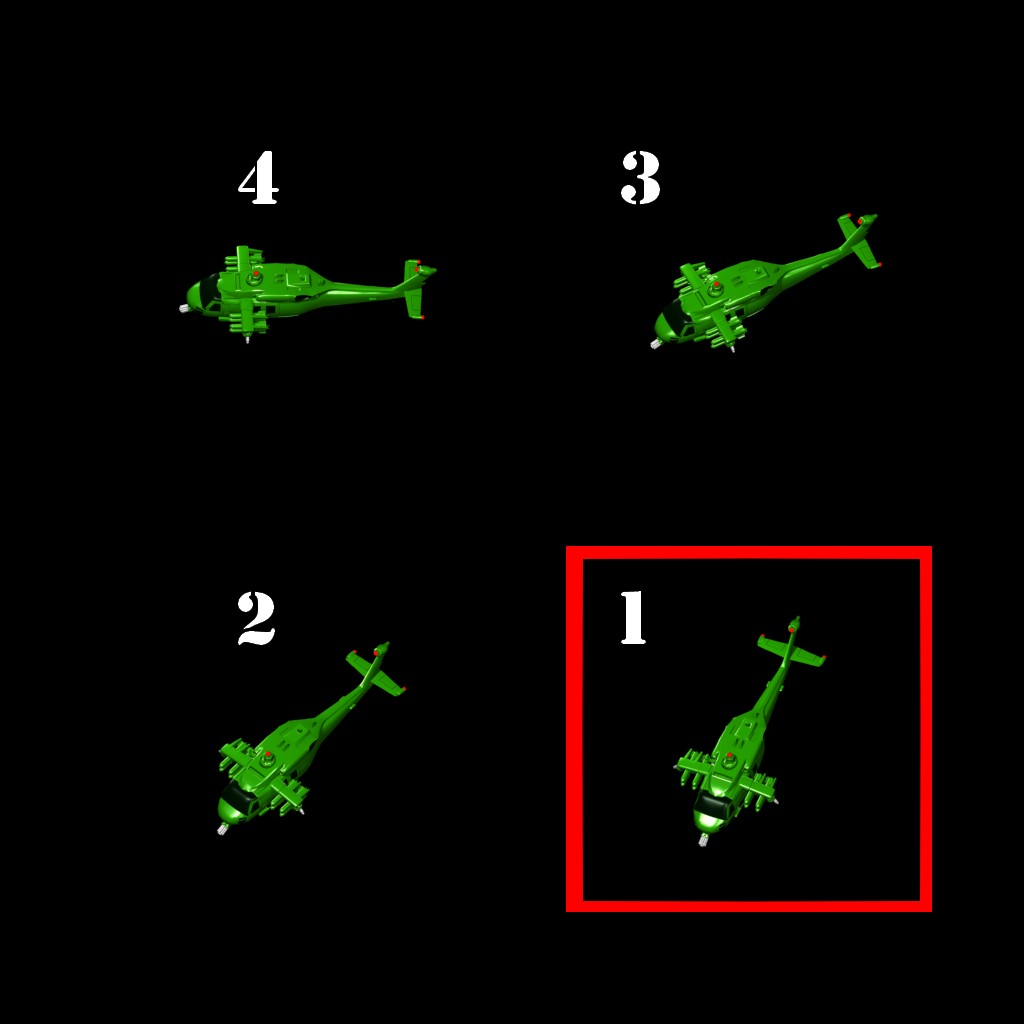
  • Soldiers and vehicles were rendered in 32 or 64 different angles, depending on their importance.
  • Animations (walking, shooting, reloading, turning) were rendered frame-by-frame into sprite sheets.
  • Each frame was then processed to remove the background, optimize colors, and align pivot points so the engine could rotate and move them smoothly.

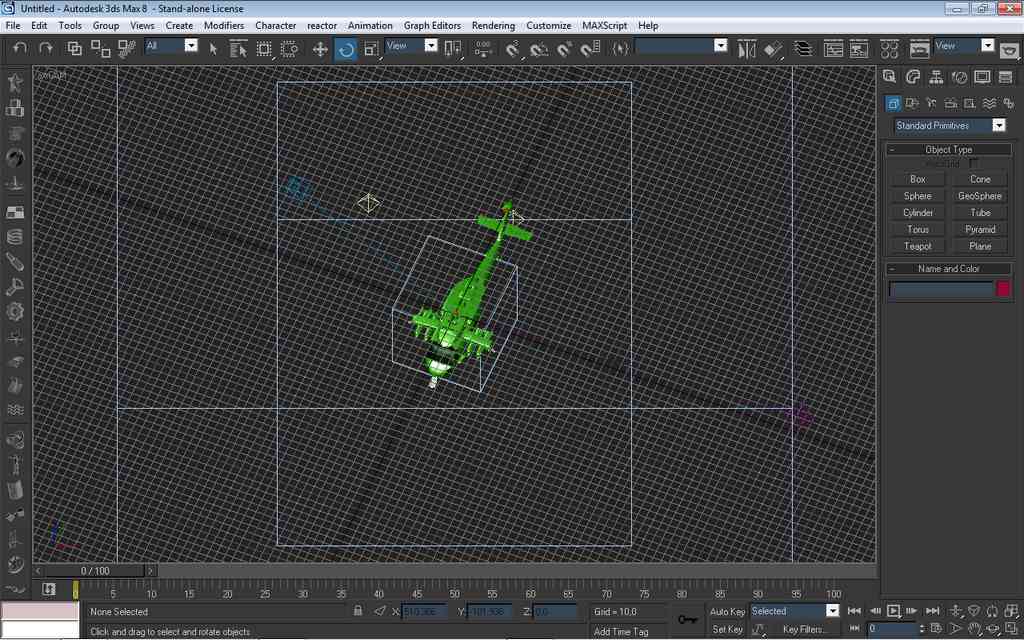
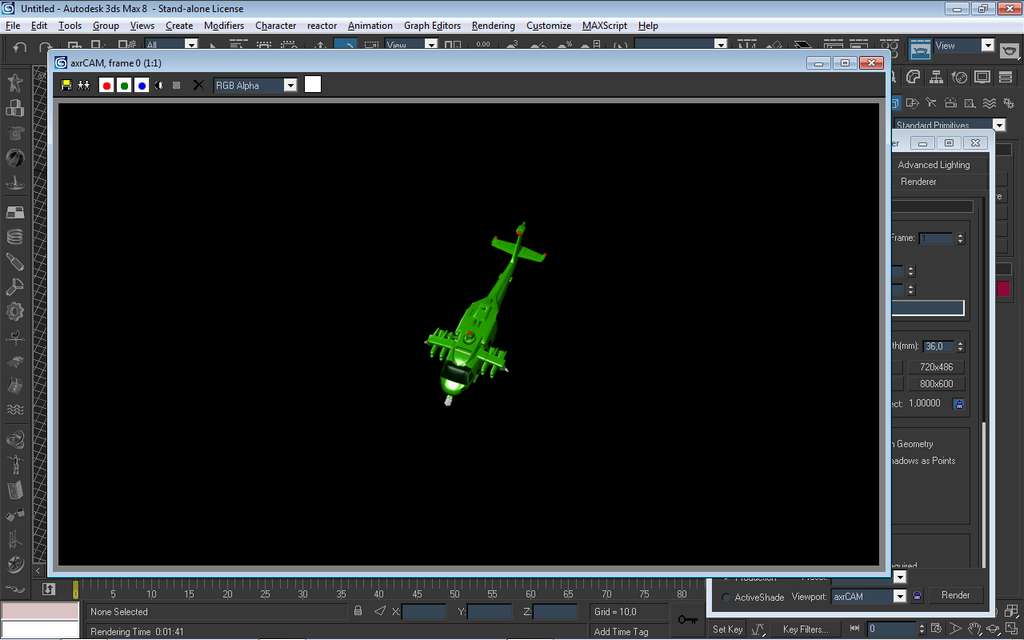
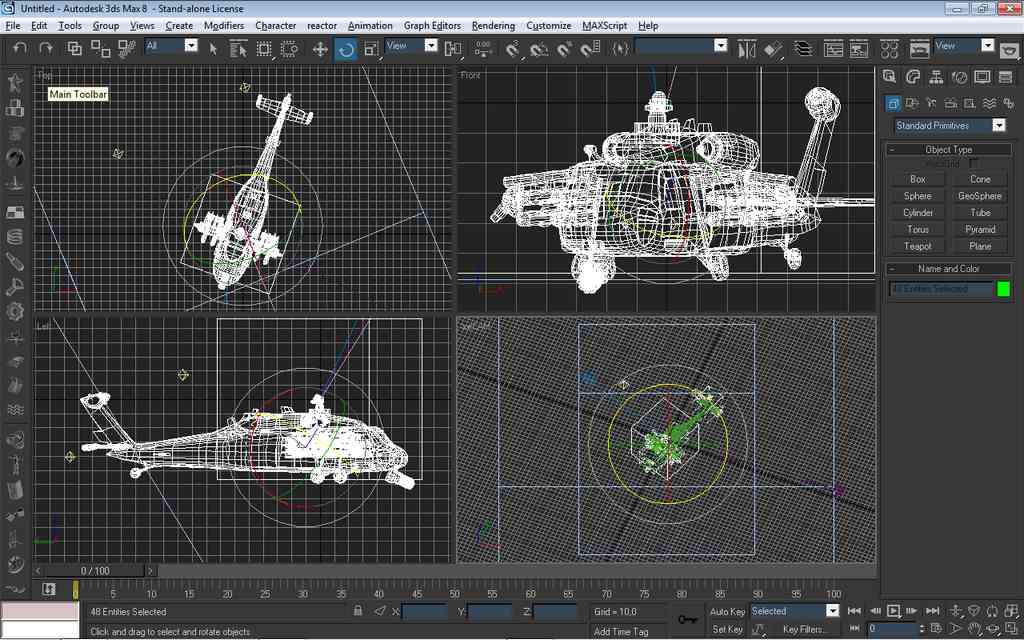
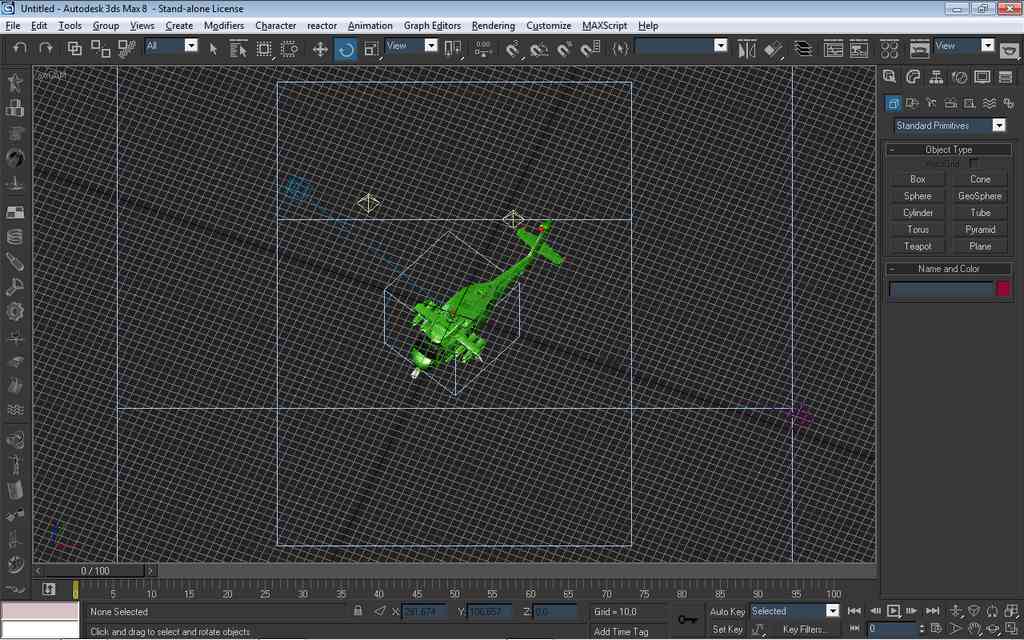
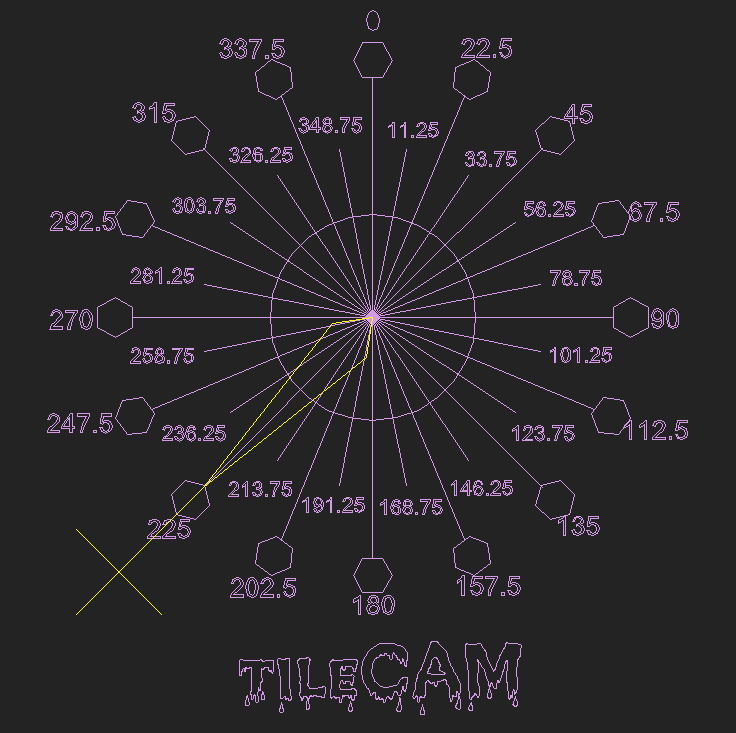
In the image below we can see the “Tile Cam,” or sprite capture position camera. A graphic that 3DO developers always kept in mind to know the angle of each of the multiple images they had to capture of each 3D model, to obtain the 360-degree motion effect of soldiers, vehicles, etc., in addition to each set of images carrying a weapon and the like. The yellow arrow, in addition to functioning as a clock hand indicating the angle of capture, also marks the height at which the camera should be positioned. The object/model goes in the center of the graphic.

2.4 – Special Effects
  • Explosions, muzzle flashes, smoke, and fire were usually hand-drawn frame-by-frame in a pixel art program to achieve a stylized look and keep file sizes small.
  • Some effects, like shadows and ambient lighting, were faked by rendering a semi-transparent dark shape beneath the units.
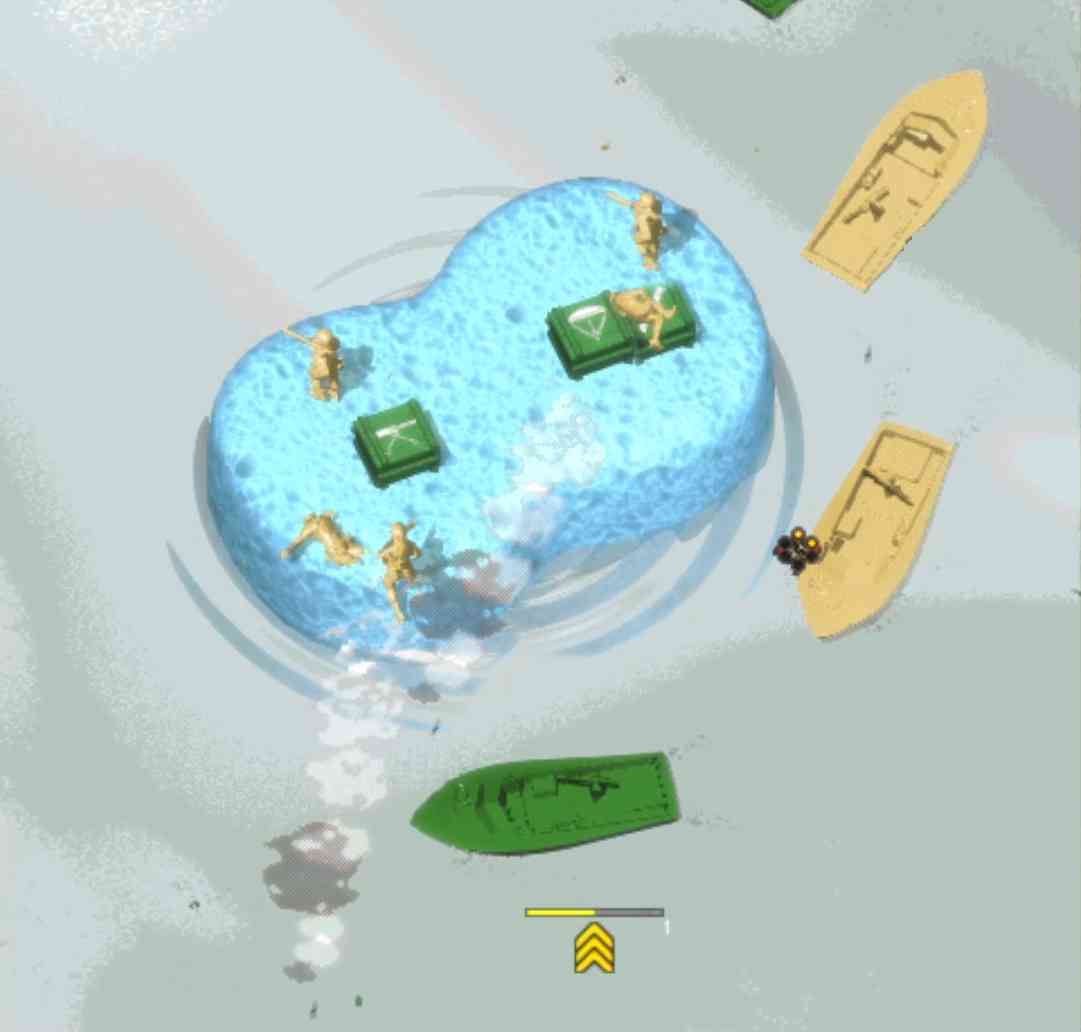
  • Transparent effects (glass, water, energy shields) were simulated with dithered patterns instead of true alpha blending, to ensure performance on lower-end hardware.
2.5 – Movement and Animation Systems
  • Despite being based on 3D models, all gameplay movement was sprite-based. Each unit had pre-rendered frames for each movement direction.
  • The engine swapped frames quickly to simulate animation, while changing the sprite set to match the direction of travel.
  • Rotation was not continuous but snapped between the pre-rendered angles, giving the characteristic “stepped” turning look.
  • Collision detection was based on simplified bounding boxes rather than the full shape of the sprite.
2.6 – Integration into the Engine
  • All assets (units, terrain, effects) were packed into proprietary resource files.
  • The engine combined terrain tiles and object sprites in real-time, overlaying animated units and effects according to their Z-order (depth).
  • Lighting changes were simulated with palette swaps, allowing entire environments to shift from day to night without rerendering the assets.

3. Maps and Levels

Environments were built using an in-house proprietary editor designed specifically for the Army Men engine.

This editor allowed placement of terrain, static objects, and “event points” (enemy spawns, mission scripts, sound triggers).

Maps were generally small to keep loading times low and were often connected through transition screens or cutscenes.

4. Programming and Engine

The Army Men engine was an evolution of a framework that 3DO had already used in other strategy and action games.

It supported:
  • Pseudo-3D sprites and pre-rendered rotations.
  • Multiple terrain layers to simulate elevation.
  • Basic AI scripting and enemy behavior.
  • The code was primarily written in C/C++, with auxiliary tools in Visual Basic for resource conversion and packaging.
4.1 – How camera, pathfinding, and depth sorting worked

Since that’s what made Army Men’s isometric view feel dynamic despite being built entirely from static sprites. That part connects directly to how the movement system was implemented.

The isometric camera itself was fixed in angle but could pan across the battlefield. Camera movement was tied to mouse edges or keyboard input, and it followed a smooth scrolling pattern to maintain player orientation. Since the camera never rotated, all sprites could be pre-rendered from the same set of angles, greatly reducing memory use and production time.

Pathfinding relied heavily on an A* (A-Star) algorithm adapted to the isometric grid. The system calculated optimal routes while accounting for terrain type, impassable objects, and unit collision. Because maps often featured elevation changes (ramps, cliffs, and bridges) the pathfinding system also factored in “height layers,” preventing units from attempting impossible routes. This was especially important for vehicles, which had stricter movement constraints than infantry.

Depth sorting (deciding which objects should appear in front of or behind others) was handled through a “Y-sorting” system. The engine drew objects in order of their Y-coordinate in world space, meaning that units lower on the screen (closer to the player’s viewpoint) would be rendered on top of those further back. This simple yet effective technique ensured consistent layering without the need for real-time 3D z-buffer calculations.

4.2 – Movement, Interaction, and Technical Implementation in the Isometric Engine

The fixed isometric perspective of the early Army Men titles was not just a visual choice.. it directly influenced how movement, interaction, and gameplay logic were implemented.

Unit movement was handled on a 2D coordinate grid that corresponded to the isometric map’s tile layout. Each tile represented a fixed unit of space, but because the camera was angled, the game had to apply a transformation to convert “world” coordinates into their isometric screen positions. This meant that while players saw units moving diagonally across the battlefield, the game internally calculated their positions in standard X-Y Cartesian space.

Interaction with the environment followed a “selection → command → execution” model. When the player selected a unit, the game temporarily highlighted its sprite and displayed its selection circle, a 2D ring projected onto the ground plane. Issuing a movement or attack order triggered an internal check: the game verified whether the destination tile was valid, whether the target could be reached, and whether line-of-sight was available (a simplified visibility check rather than true 3D ray tracing).

Together, these systems created a smooth and intuitive gameplay experience despite the limitations of late-90s PC hardware. The isometric rendering allowed for highly detailed graphics, while the underlying grid-based logic kept gameplay predictable, readable, and strategically satisfying.

5. Testing and Optimization

Testing was intensive because different PC systems required different optimizations to work. Back then, consoles were a single, unified system, but on PC, there are multiple different systems that require tweaking the game for proper universal operation. At that time, the game that was launched usually was the final version, with no DLC to fix the game post-launch. Although patches did exist, usually just one. Everything was always released in physical format…

On consoles, animation frames, polygonal 3D objects and texture details were reduced, and sometimes entire environmental elements were removed. But in this 2.5D games, usually was a matter of programming tweaking and fixing.

Testers reported bugs using printed screenshots (yes, on paper) with handwritten annotations.

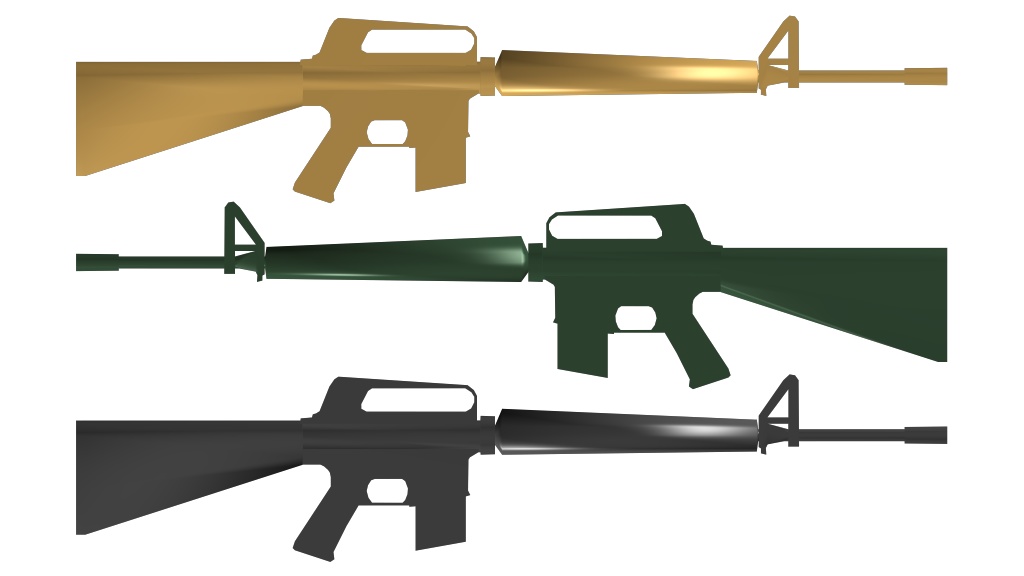
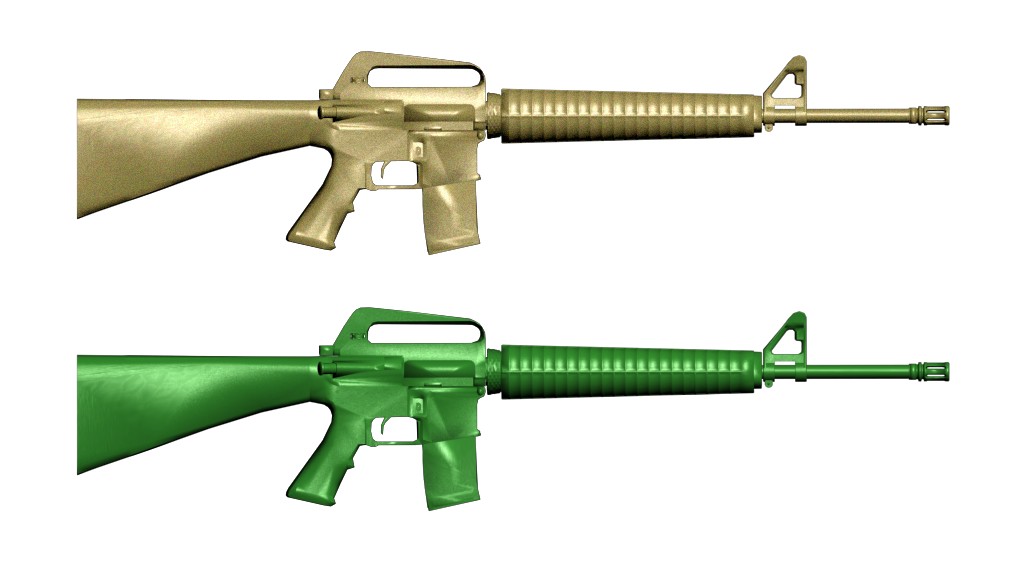
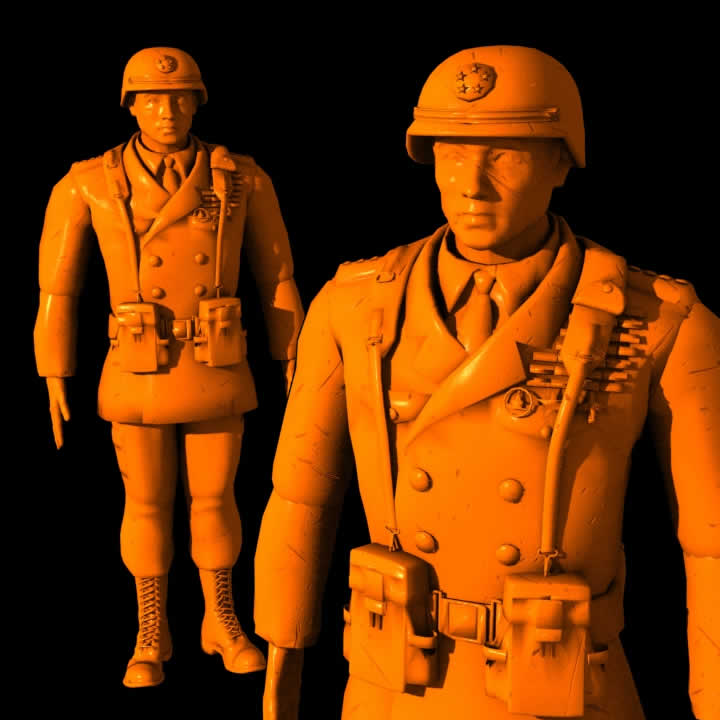
Army Men 3D models

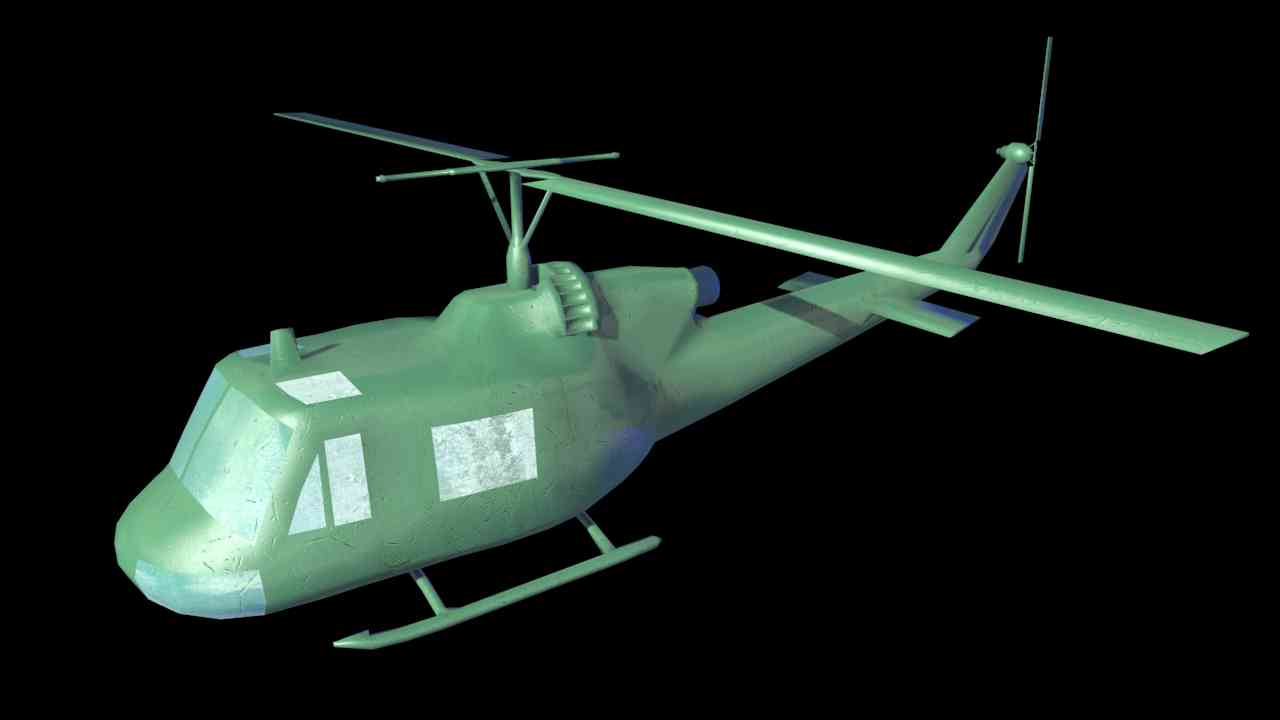
Several 3D models from the Army Men franchise have appeared over the years. Here’s a compilation of the ones the fandom have and the ones we’re missing…

Here you can find links to download some of the 3D models made or acquired by 3DO. All of them will be made available gradually.

1. Official but non-original Army Men 3D models used in the franchise, purchased to third party by 3DO and used as obtained, or modified by 3DO

Models used by 3DO in the Army Men video games, but which were acquired from third-party 3D model banks, used as acquired or with some modifications. In this case ViewPoint 3D models.

2. Official original Army Men 3D models used in the franchise made by 3DO

3D models created by 3DO.

3. New and non-official screen accurate copies of Army Men 3D models used in the franchise made by the Toyverse project

Some of these models are loosely or heavily based on the 3DO models seen on screen. Rather than making exact “screen accuarete” copies, we created these vehicles or characters as versions of themselves after what was seen in Army Men, as a sequel to the characters.

Non-official Original Army Men Toyverse Project 3D models made by the Toyverse project or third party

Some of these models are loosely or heavily based on the 3DO Army Men 3D model style. But also, rather than making an original 3D model, we have adapted 3rd party 3D models. In this case ViewPoint 3D models from the same model batches, also used by 3DO.

From Identical Soldiers to Individual Warriors

The Evolution of Plastic Soldiers in the Army Men Toyverse

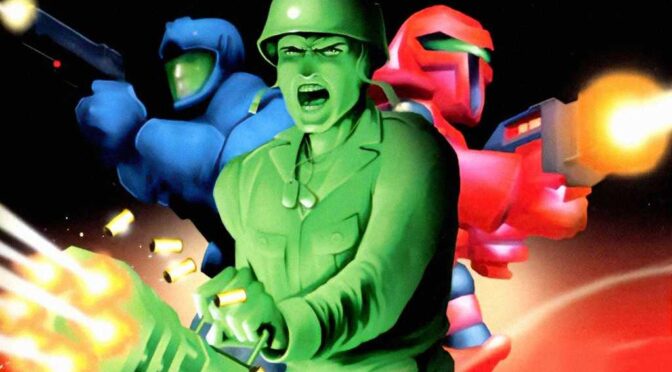
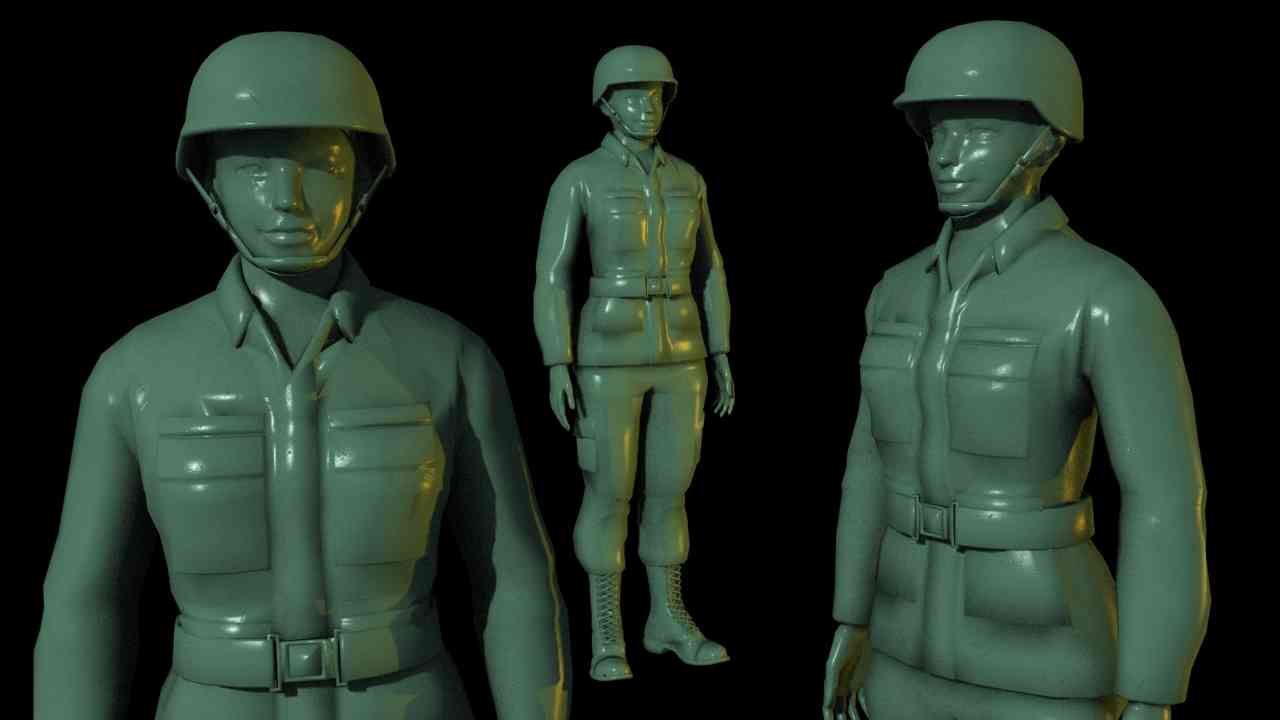
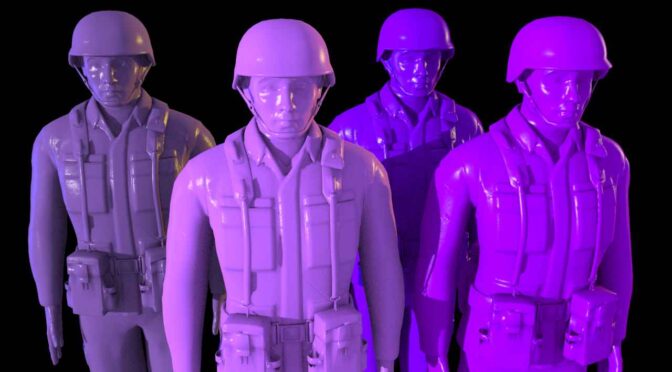
Like the clones in Star Wars, Plastic Soldiers are mass-produced with a single purpose: to fight. Fresh out of the mold, they are identical in appearance and function. They have no personal identity, no opinions, and no customization. Their abilities are the same, their uniforms are standard, and their mindset is programmed to obey orders without question.

Original Army Men
Initial Uniformity: Born from the Mold

Their existence is purely functional. They are replaceable, interchangeable, and in the chaos of war, individuality is not a priority.

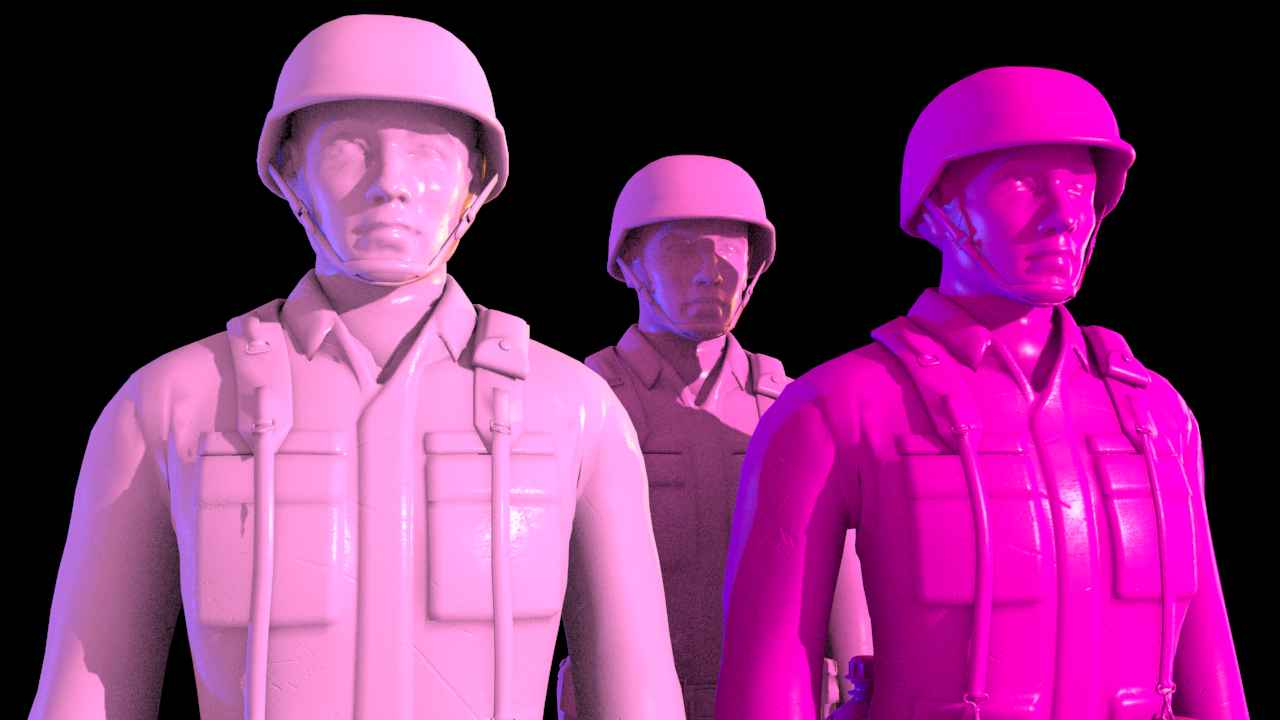
Shades of Pink
Battlefield Marks: Experience and Change

However, war is unforgiving, and no soldier remains the same after facing the reality of combat. With each mission, Plastic Soldiers begin to develop their own instincts. The scars of battle (cracks in the plastic, burns, improvised accessories) become marks of identity.

Sarge after Toys in Space

Just as the Star Wars clones adopted unique hairstyles, armor modifications, and personal emblems, Plastic Soldiers also find ways to stand out. Some reinforce their weapons with duct tape, others paint symbols on their helmets or adjust their posture, slightly bending their joints to differentiate themselves. These small adaptations become badges of veteran warriors.

The Awakening of Individuality: More Than Just Soldiers

Over time, the standardization of their existence begins to crumble. Those who survive long campaigns develop their own thoughts, question orders, reflect on their purpose, and adopt an identity beyond their initial function.

The Star Wars clones evolved from mere troops to individuals with distinct voices, such as Rex and Cody, who led with autonomy and genuine emotions. In the Toyverse, Plastic Soldiers follow a similar path. Once uniform figures on a battlefield, they become characters with distinct personalities, choosing how to fight, what to preserve, and how to leave their mark.

The Experienced and Enhanced: Beyond Natural Evolution

Not all Plastic Soldiers follow a progression solely based on combat experience. Some, whether through battlefield merit or strategic necessity, are selected for enhancement programs (similar to the Super Soldier project or cybernetic modifications seen in Star Wars with Clone Commando Echo, or even characters like Cable from X-Men and Bucky Barnes, Marvel’s “Winter Soldier).

These soldiers undergo physical and tactical upgrades that elevate them beyond their comrades. Some receive structural reinforcements, advanced armor, or bio-mechanical enhancements that increase their endurance and strength. Others are transformed into hybrids of machine and soldier, integrating advanced communication systems, improved sensors, or even prosthetics with specialized abilities.

However, the cost of these enhancements is not just physical. Like Echo in Star Wars: The Clone Wars Season 7, many of these upgraded soldiers face an identity crisis: Are they still Plastic Soldiers, or have they evolved beyond what they were created to be? Are they tools of war or individuals with their own purpose?

For some, enhancement is a blessing; for others, a curse. Their role in the Toyverse becomes a dilemma between utility and individuality, where war reshapes them not only physically but also spiritually.

Conclusion: Evolution Beyond the Mold: More Than Plastic, More Than Soldiers

A Plastic Soldier’s fate is not set at the time of its creation. Though they are born with a fixed purpose: war, experience gives them something invaluable: identity. Thus, what was once a homogeneous army transforms into a brotherhood of unique warriors, each with their own story sculpted in plastic.

The progression of Plastic Soldiers in the Army Men Toyverse mirrors the journey of Star Wars clones: from interchangeable units to unique individuals with their own stories. But in the case of the enhanced ones, a new element is at play: transformation not only as a result of war but also through deliberate intervention.

From mass-produced warriors to experienced soldiers who choose to forge their own destiny, each Plastic Soldier faces a different path. Whether shaped by battle or by technology that turns them into something more, their evolution defines the true weight of individuality in a world where they were created to be identical, and for war.