The Evolution of Plastic Soldiers in the Army Men Toyverse
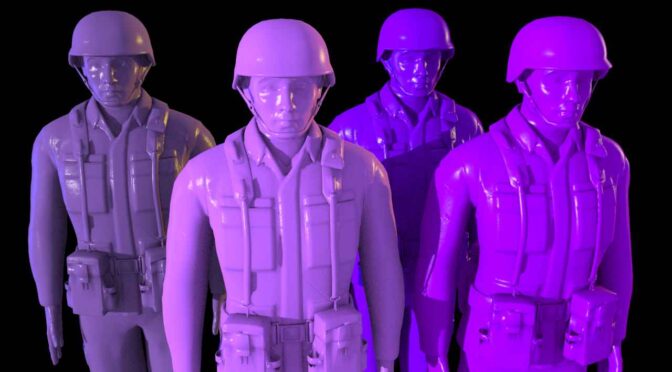
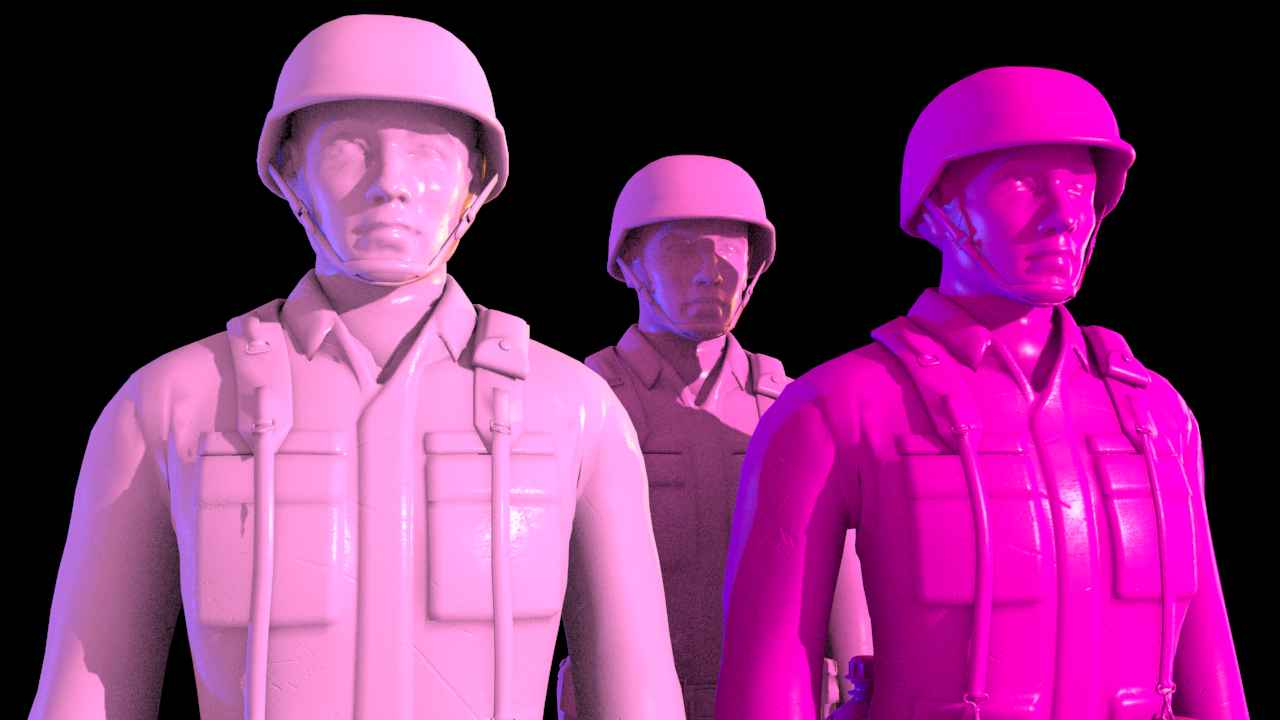
Like the clones in Star Wars, Plastic Soldiers are mass-produced with a single purpose: to fight. Fresh out of the mold, they are identical in appearance and function. They have no personal identity, no opinions, and no customization. Their abilities are the same, their uniforms are standard, and their mindset is programmed to obey orders without question.
Initial Uniformity: Born from the Mold
Their existence is purely functional. They are replaceable, interchangeable, and in the chaos of war, individuality is not a priority.
Battlefield Marks: Experience and Change
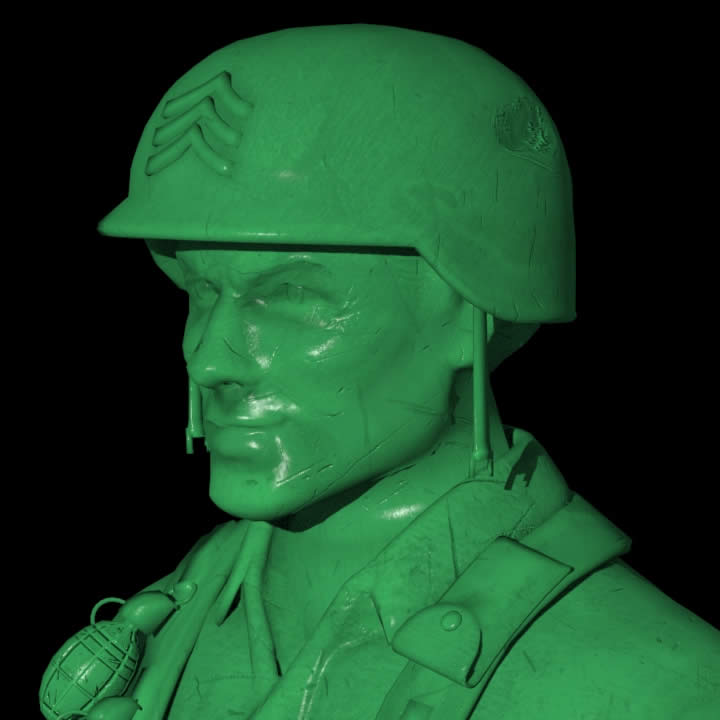
However, war is unforgiving, and no soldier remains the same after facing the reality of combat. With each mission, Plastic Soldiers begin to develop their own instincts. The scars of battle (cracks in the plastic, burns, improvised accessories) become marks of identity.
Just as the Star Wars clones adopted unique hairstyles, armor modifications, and personal emblems, Plastic Soldiers also find ways to stand out. Some reinforce their weapons with duct tape, others paint symbols on their helmets or adjust their posture, slightly bending their joints to differentiate themselves. These small adaptations become badges of veteran warriors.
The Awakening of Individuality: More Than Just Soldiers
Over time, the standardization of their existence begins to crumble. Those who survive long campaigns develop their own thoughts, question orders, reflect on their purpose, and adopt an identity beyond their initial function.
The Star Wars clones evolved from mere troops to individuals with distinct voices, such as Rex and Cody, who led with autonomy and genuine emotions. In the Toyverse, Plastic Soldiers follow a similar path. Once uniform figures on a battlefield, they become characters with distinct personalities, choosing how to fight, what to preserve, and how to leave their mark.
The Experienced and Enhanced: Beyond Natural Evolution
Not all Plastic Soldiers follow a progression solely based on combat experience. Some, whether through battlefield merit or strategic necessity, are selected for enhancement programs (similar to the Super Soldier project or cybernetic modifications seen in Star Wars with Clone Commando Echo, or even characters like Cable from X-Men and Bucky Barnes, Marvel’s “Winter Soldier).
These soldiers undergo physical and tactical upgrades that elevate them beyond their comrades. Some receive structural reinforcements, advanced armor, or bio-mechanical enhancements that increase their endurance and strength. Others are transformed into hybrids of machine and soldier, integrating advanced communication systems, improved sensors, or even prosthetics with specialized abilities.
However, the cost of these enhancements is not just physical. Like Echo in Star Wars: The Clone Wars Season 7, many of these upgraded soldiers face an identity crisis: Are they still Plastic Soldiers, or have they evolved beyond what they were created to be? Are they tools of war or individuals with their own purpose?
For some, enhancement is a blessing; for others, a curse. Their role in the Toyverse becomes a dilemma between utility and individuality, where war reshapes them not only physically but also spiritually.
Conclusion: Evolution Beyond the Mold: More Than Plastic, More Than Soldiers
A Plastic Soldier’s fate is not set at the time of its creation. Though they are born with a fixed purpose: war, experience gives them something invaluable: identity. Thus, what was once a homogeneous army transforms into a brotherhood of unique warriors, each with their own story sculpted in plastic.
The progression of Plastic Soldiers in the Army Men Toyverse mirrors the journey of Star Wars clones: from interchangeable units to unique individuals with their own stories. But in the case of the enhanced ones, a new element is at play: transformation not only as a result of war but also through deliberate intervention.
From mass-produced warriors to experienced soldiers who choose to forge their own destiny, each Plastic Soldier faces a different path. Whether shaped by battle or by technology that turns them into something more, their evolution defines the true weight of individuality in a world where they were created to be identical, and for war.
Before, human children dreamed of tin revolvers, tin soldiers or dolls with natural mammal hair. Many times they were impossible dreams: although some of those toys were made with good materials, few human parents could afford such expenses.
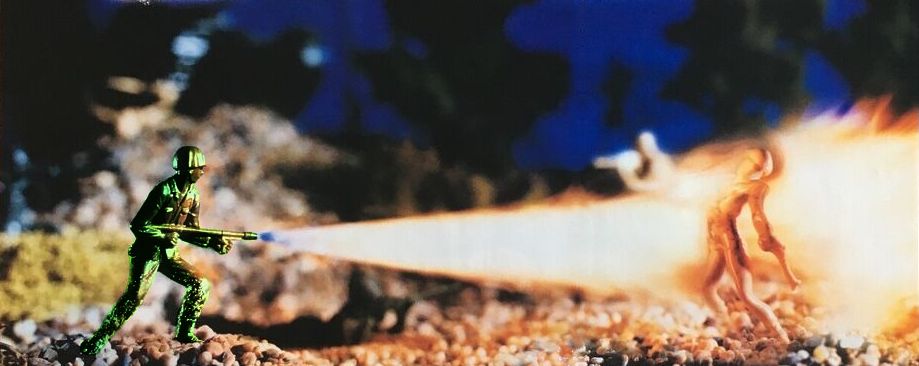
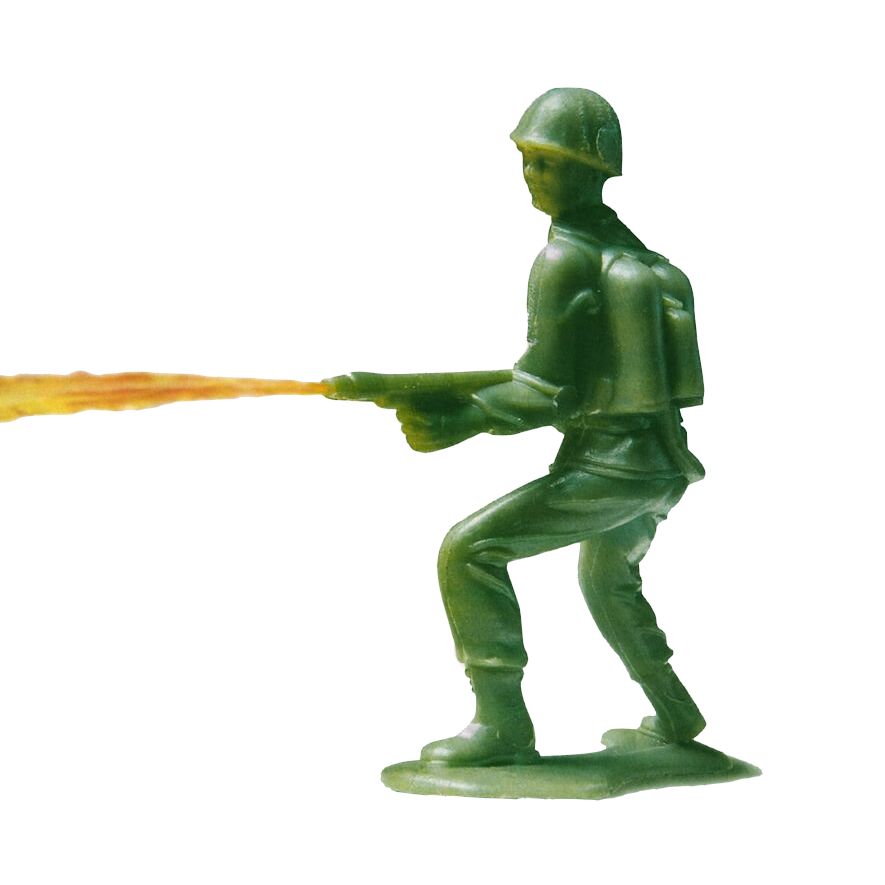
Green Army Men burning a Tan Soldier with a flamethrower
A toy story about humans
Knucklebones already forgotten and Marbles (a kind of glass ball toys) in the process of being forgotten by human kids, it was during the second half of the 20th century, when human children entered the stage of games to play sitting down, deepened near its end by the popularity of the computer (ended by their extinction).
Running, jumping and walking through the air on tree branches was a way of playing for humans that strengthened even their most hidden muscles; The little soldiers and the marbles, to be played on the ground, gave rise to an almost sedentary style of kneeling, which in turn developed the size of human children’s knees. And board games and later computerized ones finally gave way to a third way of entertaining themselves, without leaving their chairs, which caused a progressive enlargement of the gluteal area and deterioration of physical performance and health, one of the probable causes of the many ones that caused their extinction, because their bodies needed constant maintenance and energy by consuming carbon-based foods (like themselves). But towards the end of their existence, the facilities provided by their technological improvements caused them to expend less energy, consuming the same amount of nutritional supplements (and sometimes more), which caused an overload of excess fat and calories, the fuel for their bodies to create said energy. In fact, those who made an effort by exerting force and expending that energy with kinetic movements, benefited their health in general, making the body have to become stronger and more resistant to these uses of it. But that is a topic for another time… Here is a brief history of human childhood play, presented in three stages well differentiated by their shaping effects on their silhouettes before its abrupt end.
What happened in the meantime, in ancient times and then in its modern stage with the human brain is something much more difficult to know, since we find no intact human brains nor we have a way to study them (even though they supposedly work like a computer hard drive).
In any case, the general evolution of toys for humans shows at least that manufacturers were making their products increasingly imaginative and even fanciful, and that, on the contrary and consequently, their human customers seem to have had progressively less need to use their own imagination to play.
Until the end of World War II, there was not really a developed plastic toy industry. The great boost was received from then on, when European, American and Japanese war-style toys, which for a long time had supplied an almost elite market, stopped being manufactured and began to be copied even where they did not exist (or not could exist) because of the visceral rejection at that time of everything that exalted the war as that felt by those humans who had just suffered it firsthand. But of course, the Second Human World War did not take place on all continents of the Real World, so war toys evolved differently in some places.
Toys are not just about war
This article studies the evolution of toys in general (not just war toys) in what was considered by humans in the Real World as the continent “South America”, also called “Latin America” (which is strange since Latin language was not born or used on that continent).
A drop in prices justified by the copy significantly expanded the international market for human’s Real World in general. Manufacturers of other types of toys also entered the market, responding to the new importance of demand, especially outside the United States & Europe (like this case).
Until then and since the beginning of their last century, the human children of the Real World had stocked up on European toys.
Trip, a businessman and toy collector (who left behind a diary with his memories) at the age of eight, with a criterion of devastation typical of the Huns, ruined the garden of his house to reproduce the Maginot Line as he had seen it in the engravings of war magazines. On that occasion he used European brand soldiers. Trip remembers how expensive toys were back in his days of short pants. His father once gave him 3 dollars to buy a tin Luger pistol, he sight of which in the window of a certain toy store kept him awake. And his mother protested because that sum was then enough for a whole week’s human home meals.
As a boy, Trip also dreamed of buying a box of French semi-plane soldiers, brand Morris Toy Company. They never gave him the pleasure, probably because that toy would cost much more than 3 dollars. They gave him the new plastic soldiers, in a fruitless attempt to make him forget his fickleness.
Michael, another businessman and also a collector, remembers in his writings that his first box of little soldiers, back in 1934, was made of a metal alloy and was a “folklorically free version of the French line infantry soldier”.
Keith, a lawyer and collector of every toy ever made, suffered a long nostalgia for the forts and castles that were made in some European prisons after the Second World War for the children’s market. With time and effort, he was able to buy back the two models he had had at the time of his shorts. We found them in the same home we found his memories, and at the base of one of them you can see a prison seal.
Dan, a doctor and toy collector in general, remembers the profusion of graphic advertisements that toy stores published towards the end of the first half of their last century. He remembers that the most numerous were related to airplanes.
Loose, the little planes of the famous worldwide brand “Morris Toy Co.” cost between 0.55 cents and 1.50 dollars. In a box with five different models, the price was $3.25. Dan also remembers an airplane, whose propeller was powered by twisting an elastic band. It flew up to a distance of one hundred meters and always broke down a little more with each landing. It had been given to him as a gift when young and it was still part of his collection, before meting his ending.
Another country, another toy story
The world of humans and the things they left behind are so immense that they are currently very poorly explored. Out there there are many countries, in addition to Unites States, even some much larger than the latter.
Flint, a businessman and collector specializing in United States brand soldiers, says that the first ones he had of foreign origin were European, and had been a gift from a friend -Jim, he forgot his last name- who left them with him when he had to emigrate with his family to another territory. Like circumstantial neighbors they had played war every day for an entire heroic summer of the Real World. “Take it,” Jim told him when he left, “so that you never forget me.”
They were eight years old and never saw each other again. Flint keeps those toys. The national production was not, generally speaking, especially appreciated by collectors of his country. It would seem that only those humans who played with those “local toys” more than with others appreciated them and preferred them to foreign ones, largely for sentimental rather than aesthetic reasons.
Some human collectors from countries outside of Europe or the United States discriminated against the toys of their nations, considering them “profane” as they were copies or ideas based on other brands, or as simply something of less prestige, even though some of these copies were better than their inspirations. Something like the hatred that the Greens and the Tans had for each other, who after all were all mere plastic toykind, just different color. Topic to delve into another time…
Foreign humans collectors, however, paid good prices for the most characteristic toys from Flint’s nation. His Southern American local toy industry was, without a doubt, the most prolific and renowned in the continents of the Real World… until the end of humans, of course.
Mate Toy Company, a pioneer brand in South America, copied the Crazy Cowboy, a United States wind-up toy from Morris Toy Company, made of tin. It was a cowboy comically riding his bucking vehicle. Mate’s version, without losing grace, turned the character into a Creole Rancher who had exchanged the Texan hat for a Cowman hat. Later, Mate partnered with the Condor firm and together they produced new versions of the Crazy Cowboy, giving the character other identities that turned him into a soldier and a clown.
Condor Toys, for its part, was already famous for its production of bicycles, tricycles, skateboards and air rifles.
The “Condor-Mate” merger also produced several small planes; among these, models similar to the P51, the Fokker Triplane and the Boeing 707. In 1954they created the Andean Expreso, one of the first toy trains on this south part of the continent. The latest version of it, decorated with characters from fantasy stories, dates back to the 1970s.
The same firm produced other Crazy Cowboy style toys, the Monorail and several wind-up animals. All these toys made of tin, which would later be made (just as would happen with lead soldiers, a metal whose use was prohibited due to its toxicity towards humans) with plastic, a material that has once been considered “demonic” by humans because it does not belong to any of the three kingdoms of the nature of the Real World.
But the oldest manufacturer of South American plastic toys, it should be remembered, was Messia Toys, which specialized in cars equipped with powerful sirens.
Messia was the creator of the Sulky-cycle of the same name, a pedal-powered vehicle that seemed to move dragged by a pony or two, depending on the model. The little horses were convincingly constructed of paper mache and cowhide on an iron frame (Yes, they not only ate cows, but they used the leftover hides to make toys and other things). Along with that children’s vehicle, whose steering wheel, placed under the short toy’s belly, was governed with a system of reins. Messia also manufactured, always with the pedal system, a red tractor and a racing car that was intended to look like a sport car and that was usually painted in yellow and blue. Any of these toys could well represent the highest aspiration of a human boy in the decades of the 40s and 50s. They were expensive toys, whose prices did not appear in the graphic advertisements, surely so as not to scare off the clientele before the buy time.
The world-famous mega-toy store Mr. Taylors Toys included in his United States toy stores the Sulky-cycle in its 1957 catalogue. Its price was 125 dollars at that time.
Between 1921 and 1959, Messia manufactured a wide variety of excellent tin toys. Among his greatest successes are a wind-up DC-4 four-engine; a bus, a fire truck and a World War I tank that displayed an incongruous blue and white insignia on its sides. Morris Toy Company, which invaded the continent and established itself in this market to compete with those who copied it, from 1954 to 1992 reproduced cars such as the Rancher and the Cross Country to scale and in cast metal, and, in a much smaller size than these, a hundred other car models, all in their little box. Five editions were made of the latter.
Messia produced a manual projector of colored images, printed on a translucent paper tape, that illustrated arguments developed in the manner of a comic strip. By using a similar paper to draw on, it was possible to create or recreate other films.
Chickz was the brand and name of the most famous doll line. This doll was, according to the syrupy propaganda that was made in the 1950s, a sweet and delicious doll with expressive eyes and soft, fine features. She narrows his eyelids, walks and articulates himself, adopting all the positions that her mom wants to give her. Sold with shirt-shorts, socks and shoes, she makes his baby happy with a baby bottle too. The largest and most expensive model, measuring 55 centimeters and with natural hair, cost 230 dollars at the time. With artificial hair, the price was 158. Different dress models for the Chickz were worth between 15 dollars.
Many tin toy producing firms included in their catalogs the appropriate household items for playing with dolls.
There were several other toys from Messa like Stack toys, brass tops, wooden handles and cebita revolvers that imitated the impressive Colt Revolver are other names of toys manufactured, as well as Plastimetal toys (which used a unique metallic plastic) and the Duracars line (hard rubber cars, with a well-earned reputation for being unbreakable).
Among the educational toys of the time, it is worth remembering “The Magic Brain”, which dates back to 1948 and which in its early days worked with electric current and then with batteries, and Merlin, the magician who answers, a mechanism moved with magnets. Both games were designed on the basis of questions with several optional answers. The brain certified the successes by turning on a little lamp, and the magician did so by turning around to point them out with the wonderful wand of his profession.
Toy Lead & Plastic Soldiers
But, without a doubt, the favorite toy of all humans around the world was, until the 1960s, the universal little soldier, made of lead during its time of greatest splendor and then of plastic, the embodiment of its decadence among human conception of war. Perhaps they should be placed immediately behind the little soldier in children’s preferences, the farm and Zoo toys, which among them were also glorified in lead and that then decayed into plastic.
With few exceptions, during the long period in which these lead toys were merely toys and not human collector’s items as at the end of humanity, manufacturers copied (pirated, it is often said bluntly) their more original European colleagues. When they were not smooth and plain copies, they were rather slight adaptations, which rarely prevented us from recognizing, at first glance, the origin of the little soldier or the copied animal.
The greatest originality in South American production was carried out by Messia, which between 1947 and 1966 manufactured with its own matrices and with its brand German soldiers and sailors, cowboys and United States Indians (another strange denomination since India is on the other side of the Real World), Africans, Boers, Arabs, wild animals, circus figures, etc. His little soldiers (the term used generically to designate his entire production) were semi-flat, in a 35 millimeter scale.
Condor produced between 1950 and 1962, figures inspired by the style of the European toy soldier brands. In fact, the horses that Condor made were copies without mitigation. But not many other things, such as its characters and country accoutrements, its Spanish conquistadors and its Chinese from the Ming dynasty.
Messia created the matrices that gave rise to the main and most celebrated figures of La Granja de Don Alejandro. The farm became, eventually, a well-stocked ranch, where there were no shortage of ranches, the clay oven, the half beef on the spit, the cistern, the grill with meat, Cowman in the attitude of fighting with knifes and dancing zamba, tamers, herdsmen, insatiable matadors and many more things, without forgetting among these a fat champion bull and a tall horse with woolly hair, which looks to the side twisting its powerful neck.
The Mate firm made heavy soldiers on foot and grenadiers on horseback, in 90 millimeters, as well as figures for religion. They were remarkably heavy.
Morris Toy Co. marketed another of its very famous brand: “Real Combat”, which had a splendid array of United States troops from World War II advertised with the slogan “Real Combat, Plastic Men”.
At one point, Messia even managed to surpass, through magnificent painting, the quality of their United States Morris counterpart.
Messia reproduced the Morris circus figures with particular success and added to them a couple of very handsome Lilliputians: he was Frank, with cane and galley, and she was Matilda, in full length, with sparkling ruffles that descended in a cascade in the shade of a capeline.
For its part, Condor produced not only soldiers from the Second World War, but also a numerous series of accessories, such as landing craft, trenches, pocket parapets and harmless barbed wire fences. All this allowed the firm to assemble spectacular dioramas in the windows of its establishment, in those years strategically located in the center of the large human cities of this region.
The tour of molding dies
In the 1970s, United States molding dies arrived at other nations that were used for a certain period to supply the local market at a lower price than the import price, due to the lower cost of labor. Those dies were then returned to the factory of origin, like the Morris Toy Co.
So it happened with the basic part of the long series of characters from “Star Clashes” and the same thing happened years later, in the 80s, with the gallery of characters, also extremely extensive, from the television series Medieval Man, made in animated drawings and that would later be made into a live-action film with humans.
All of these toys were made of plastic, sometimes with rubber parts, as in the case of the heads of the articulated Medieval Man figures. At the end of the human era, the vast majority of toys were imported. The once thriving American and European toy industry had been left out of the game before the fall of humans, being replaced by video games, a kind of form of electronic entertainment using computers, some connected to their television sets.
To make an incredible video game sometimes you need to do a lot of research
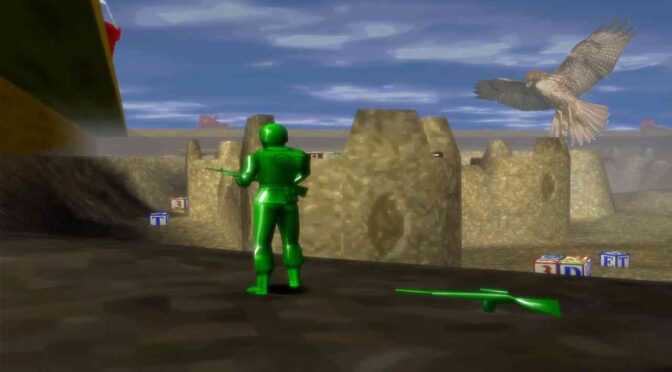
A Pigeon Fighting – Conceptual Video for Army Men Revolution
A pigeon fighting a plastic soldier sounds ridiculous, until you see it with your own eyes…
High speed. Precision. A weight of 250 Gr (9 ounces or 0.6 pounds). After watching this video, you don’t have to use much of your imagination to know that a pigeon would be a fierce warrior against a 2 inches lightweight Plastic Soldier.
Newton’s second law of motion states that F = ma, or net force is equal to mass times acceleration. A larger net force acting on an object causes a larger acceleration, and objects with larger mass require more force to accelerate. Therefore, the weight added to the high speed would be a tremendous force hitting a plastic soldier.
But of course, the resistance of the plastic would cause the soldier to simply fly away. The same with his beak (experienced directly with my finger in the video) bites a little hard for a human, and can even damage living tissue. But for a plastic soldier it would only cause some deep scratches or marks.
Animal combat investigation
A Cockroach can run at such high speed that it could appear to you so suddenly that it would surely cause you a jump scare, even if you hear his crackling sounds. But, even with its large size compared to a Cockroach, you would never hear a Cat until it is too late.
Like each of the Bravo Company Commandos or the members of Team Assault, each animal has a set of characteristics that makes it part of a diverse variety of formidable opponents. Anyway, this is the limit of our imagination and theoretical knowledge. Which is why we had to go out and look for real information.
The dove that could not live naturally…
When it comes to translating reality into the digital realm, such as animating a pigeon and providing the NPC with, although incredible, realistic characteristics, we have to go outside and look for these components of the Real World and observe them carefully, always thinking from the perspective of a plastic soldier.
On this occasion we were lucky enough to meet a healthy, 100% functional pigeon, which was domesticated by people who then abandoned it in a bird shelter. The first time we saw her, she allowed herself to be petted and stayed quite still, which allowed us to take photographs and measure her to make the 3D model. She had just arrived at the shelter where she was disconnected from all human relationships, staying to live alone with other pigeons, away from humans who only go to the shelter to leave them food and change their water supply. When we returned, months later, her taming level had already begun to disappear. It was at that moment that we took this video.
What is the problem with domesticating a wild animal? The problem is that it makes them useless when it comes to living in their wild environments. A domesticated bird will surely die because of its ignorance, lack of knowledge or because of its “brainwashing”. She will not know how to look for food and will be eaten by a predator or hit by a vehicle, deaths from which she will not flee because she will not even know what they mean. She will not run from a human because she will not known it’s dangerous… dying by slingshot.
Now she was not as comfortable with humans and although she did not escape with the terror of a normal pigeon, she no longer liked being petted, which indicates that her treatment to live in the wild was going well.
She had already chosen a partner, a Messenger (or Racing) Pigeon that was also abandoned, bigger, adult and more beautiful than her, whose wing fracture left him on the ground, never to be able to fly at a height that would allow him to have a normal wild life. With her he had already had 2 chicks, which when they became adults, the caregivers took them out of the shelter to release them and never see them again.
Maybe this story was too long, and away from what we were talking about, right?. Well, I went extended on purpose to prove my next point…
And it’s like that that by accident…
…nothing happened to the pigeon. She is still undergoing treatment with a possible early release. But anyway, all this that we learned accidently and unexpectedly led us not only to realize the real possibilities of a plastic soldier fighting a pigeon, but also the stories that an uninformed person does not even imagine are behind an animal which is considered a “rodent of the air”. Bapulated, ignored, despised and mass murdered, she also tells us (unintentionally) about human nature and his lack of responsibility with the other life forms that make his ecosystem. The difficulties animals must go through to survive, which we do not see, are worthy of admiration.
We humans tend to downplay everything that is small, but on the other hand we are fascinated and concerned about animals such as cats, dogs, lions, elephants, etc. Larger animals that we consider exotic because they are rare and we are not surrounded by them all the time. Therefore, from the Army Men plastic soldier’s perspective, a simple pigeon would be considered an impressive and exotic animal, from a world very different from their own: uncommon. On the other hand, the pigeon would ignore it due to its smaller size, not considering it a threat like if they were insects (unless the Army Men shoot her). It is for all these reasons that we assumed that they would protect a pigeon as much as we would protect an elephant.
Therefore, not only did we learn to admire an animal that we had never even thought of before, but it also opened the doors to an immensity of narrative possibilities for our story. That’s why the title “Animal Warriors” doesn’t just have the simple meaning you thought before reading all this.
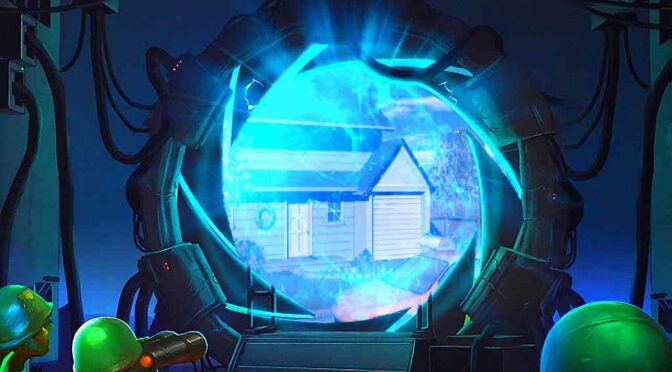
Plastic World’sDawn Land is an almost exact copy, a mirror, of a place of the same name, but in the Prehistoric World, or vice versa. Upon entering this place from the respective portal, the user arrive at an almost identical place, as if it were the same place, but with the original statues like new in the Prehistoric World and with the statues old, rusty and broken in the Plastic World, like if years passed.
This raises the question: Are the other worlds a version of the Plastic World, but from another time?, or in this case are they simply imitations of the same places?. Or are they like those tables of human modelers who made miniatures of their world? Is the Toyverse then a product of human modeling? Well, in some way, maybe…
Explorers have said that by taking this reference point, and heading to known places at certain coordinates from there, you can find ancient versions of the well known Plastic World locations, as if an Army Men base or city had never existed there. But this enters, for now, into the realm of mere speculation.
In this groundbreaking study, we explore the fascinating world of cockroaches and their mutant counterparts. Dr. Madd’s genetic tinkering has unleashed a perilous threat, endangering both Plastic World and the human realm. Our research sheds light on their behavior, adaptations, and potential consequences.
Introduction
Cockroaches, resilient survivors of Earth’s evolutionary history, have adapted to diverse environments. However, the emergence of mutant cockroaches —engineered by Dr. Madd— poses unprecedented challenges. These genetically altered creatures exhibit enhanced traits, threatening the delicate balance of ecosystems.
Methods
Field Observations: ◦ Disguised as ordinary plastic figurines, we infiltrated urban areas, laboratories, and abandoned buildings. ◦ Documented the behavior of regular cockroaches and their mutant counterparts. ◦ Noted differences in movement, aggression, and feeding patterns.
Laboratory Experiments: ◦ Collaborated with Dr. Madd’s captured lab notes (retrieved during a daring mission). ◦ Analyzed genetic modifications in mutant cockroaches. ◦ Investigated their resistance to common insecticides.
Results
Our findings reveal stark contrasts between regular cockroaches and the mutant variants:
Regular Cockroaches: ◦ Nocturnal scavengers: Hide in crevices, forage for food at night. ◦ Resilient: Survive extreme conditions, including nuclear fallout. ◦ Limited threat: Annoying pests but rarely dangerous to Army Men.
Mutant Cockroaches: ◦ Enhanced Aggression: Attack other insects, including regular cockroaches. ◦ Speed and Strength: Swift movements, can change direction as if breaking the laws of physics, capable of scaling walls. ◦ Resistance to Bullets: Dr. Madd’s modifications grant partial immunity to common weapons, like plastic weapons. Their armor is very resilient, but no so much to metal weapons and explosions. ◦ Resistance to Fire: Do not resist explosions, but fire. Common Flamethrower do not work on them. ◦ Resistance to Toxins: Dr. Madd’s modifications grant immunity to common insecticides.
Discussion
The mutant cockroaches pose a dual threat:
Plastic World: Their invasion disrupts ecosystems, endangering miniature habitats. If M.C. can’t eat lifeforms, they will eventually start eating plastic, from trees to Army Men.
Real World: Dr. Madd’s creations could escape containment, wreaking havoc on other worlds. During the reign of humans, common cockroaches spread throughout their world, reaching every corner of it. It is statistically probable that the mutants will somehow manage to reach other worlds.
Conclusion
As plastic Army Men, we must collaborate with scientists to contain this menace. Our shared survival depends on understanding these resilient creatures and countering Dr. Madd’s reckless experiments.
Note: Dr. Madd’s whereabouts remain unknown. We suspect he’s hiding in a forgotten corner of the Real World. Dr. Madd is a rogue scientist with a penchant for genetic experimentation.
Mutant Cockroach Threat Level: Classified as “High.” Handle with caution
The Army Men Videogames Website, home of the Army Men Toyverse
Manage Consent
To provide the best experiences, we use technologies like cookies to store and/or access device information. Consenting to these technologies will allow us to process data such as browsing behavior or unique IDs on this site. Not consenting or withdrawing consent, may adversely affect certain features and functions.
Functional
Always active
The technical storage or access is strictly necessary for the legitimate purpose of enabling the use of a specific service explicitly requested by the subscriber or user, or for the sole purpose of carrying out the transmission of a communication over an electronic communications network.
Preferences
The technical storage or access is necessary for the legitimate purpose of storing preferences that are not requested by the subscriber or user.
Statistics
The technical storage or access that is used exclusively for statistical purposes.The technical storage or access that is used exclusively for anonymous statistical purposes. Without a subpoena, voluntary compliance on the part of your Internet Service Provider, or additional records from a third party, information stored or retrieved for this purpose alone cannot usually be used to identify you.
Marketing
The technical storage or access is required to create user profiles to send advertising, or to track the user on a website or across several websites for similar marketing purposes.