Color Codes and the New Era of the Toykind

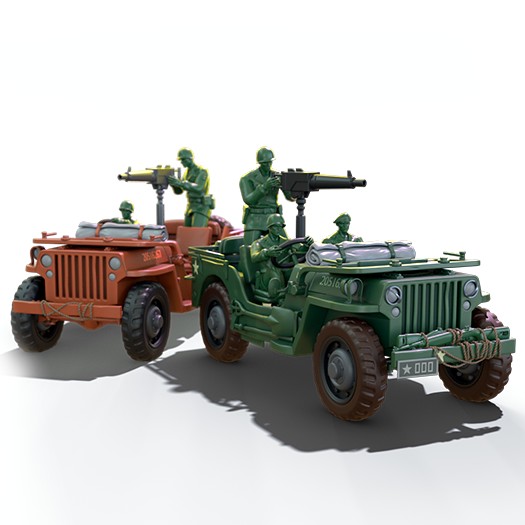
For generations, colors defined the plastic soldiers. Green, Tan, Blue, Gray, Orange, Cyan, Red… each shade represented a nation, a doctrine, and a cause. On the battlefield, the color of plastic was both a flag and destiny. War was constant: endless, destroyed, recycled, molded again and again in the same molds of conflict.

Colors were not mere pigments: they were hierarchies, cultures, and ways of thought. Each army had its customs, its insignias, its codes. The Greens were considered the ideal of the disciplined soldier; the Tans, tough and aggressive; the Grey, technical and strategic; the Blue, pragmatic and cold. Each tone believed it represented the true essence of the plastic soldier.
While there were variations in tones and saturations within each nation, these never strayed too far from the native color, much less came close to the colors of other nations (although in some cases of secondary colors, such as the Orange nation contrasting with the Tan or Red, this was somewhat difficult). It was always unthinkable to wear a color other than that of one’s own nation, and in some cases of disobedience or treason, this was punishable by excommunication or death.
But the Toyverse changed. And with it, the Army Men too.

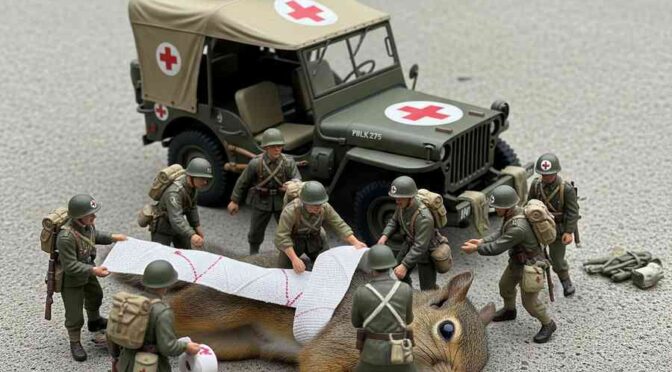
During 2004, Ironically, Malice’s Tans were one of the first to apply this aesthetic devoid of monochromatic identity.
But with the arrival of threats that surpass the borders of the Plastic World (enemies that do not distinguish between a Green or a Tan, that see all toys as a single species) the old nations weren’t forced to abandon their chromatic pride, but to adapt to the new enviorement. The old lines of battle were erased, and alliances once unthinkable became the only hope for survival.
From that necessity, the Great Army Men Alliance was born, an unprecedented coalition between soldiers of all colors, united under one single cause: the survival of their Toykind.
Although it is not necessarily an obligation, a direct order (and in fact those who change their chromatic identity are the fewest) for the first time, color no longer dictated allegiance or Nation. What mattered was function, loyalty, and the will to keep fighting when their entire world seemed to be falling apart around.
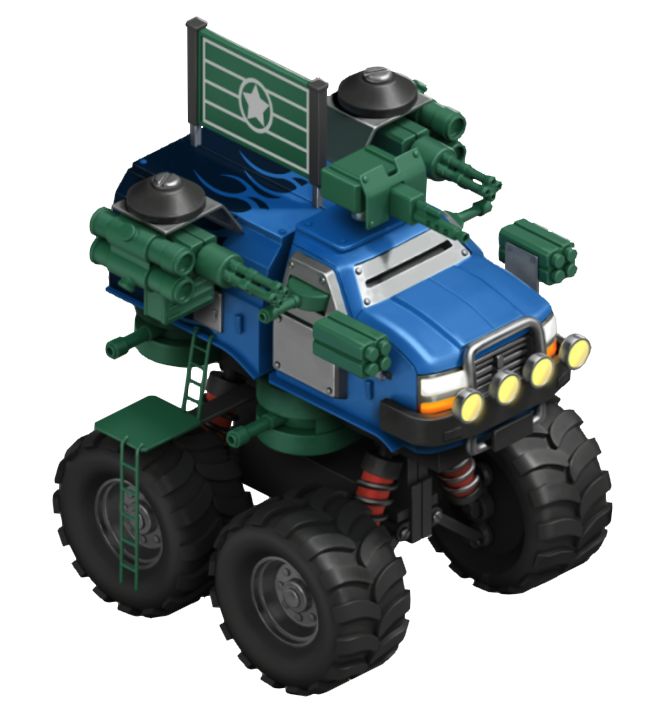
Today, a tank showing several shades is not a factory error: it is a symbol.
The mixtures of color (a green helmet, a gray vest, a blue arm, or a tan leg) signify brotherhood among armies that once would have shot each other without hesitation (unless you are a damn zombie). No longer is a color, lightning mark, or emblem needed to identify an ally; the multicolored plastic itself tells the story of a union forged in battle.
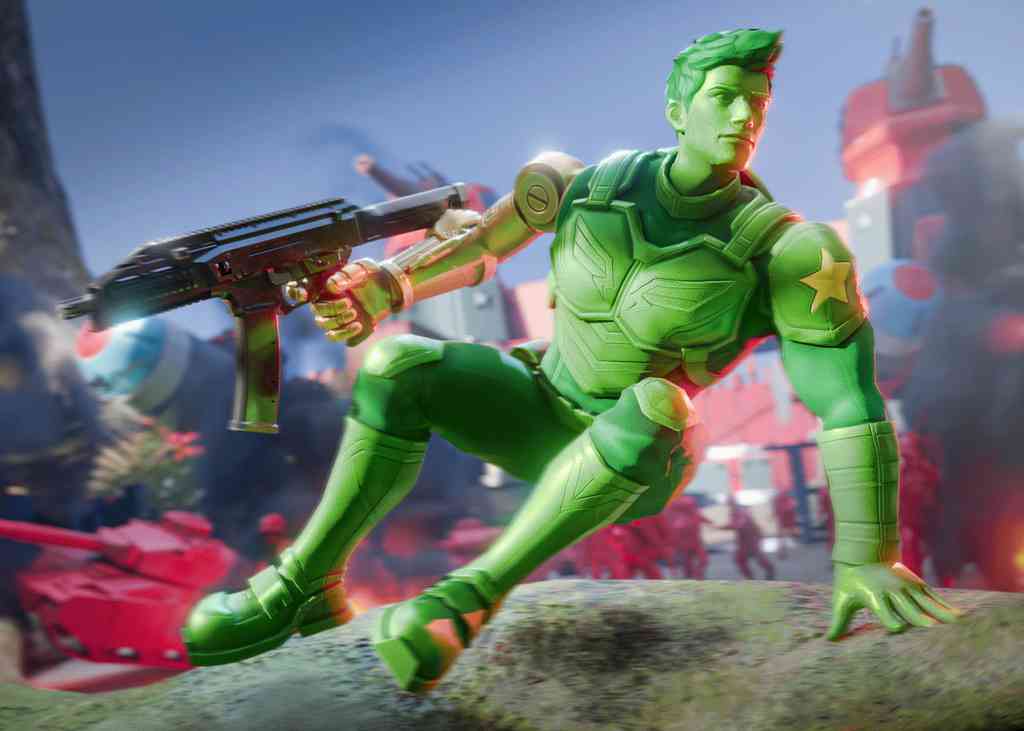
That diversity is not accidental: each different piece is a memory, a fragment of another front, a promise of unity. Some even paint themselves as a representation of their heritage from the Real World, imitating humans. They apply camouflage, stripes, patches, even insignias copied from old manuals found in human factories. They do it not only for aesthetics, but out of respect, as if with each brushstroke they remembered where the first molds came from.

However, not everyone accepted this new era.
In the oldest corners of the Plastic World and the unknown locations of the Real World, there still exist entire companies that continue to swear loyalty to their original colors. Old Tans who do not trust the Greens, Grays acting as mercenaries, and even fanatic Reds who believe that plastic miscegenation is a heresy against the original mold. For them, color is still purity, and to mix it is betrayal. Even so, they are few, and each day more irrelevant in the face of the Alliance’s advance.
Reports from the Toy Command speak of small hidden factions, self-proclaimed “legitimate” ones, operating from forgotten zones: petrified battlefields, abandoned workshops, ancient display cases. Places where time stopped, and pride still matters more than the common cause.

Among modern ranks, personalization has become a form of identity and expression.
Some soldiers dye parts of their bodies with improvised pigments, others exchange pieces between fallen comrades or from different fronts, and some almost perfectly imitate representations of the soldiers & vehicles of the vanished humans. It is a way of saying: “I am no longer just one color, I am part of the whole.”

Each mix of tones is a visual manifesto, a biography that can be read at first glance. A Tan arm may have belonged to an enemy, a Blue leg to a fallen friend… and that contrast is now a source of pride. Veterans often say that “the new soldier is not born from the mold, but from the mosaic,” referring to how true worth lies in the pieces that are joined, not in the purity of the plastic.
Thus, what was once a code of war, identity, and belonging, became a language of unity.
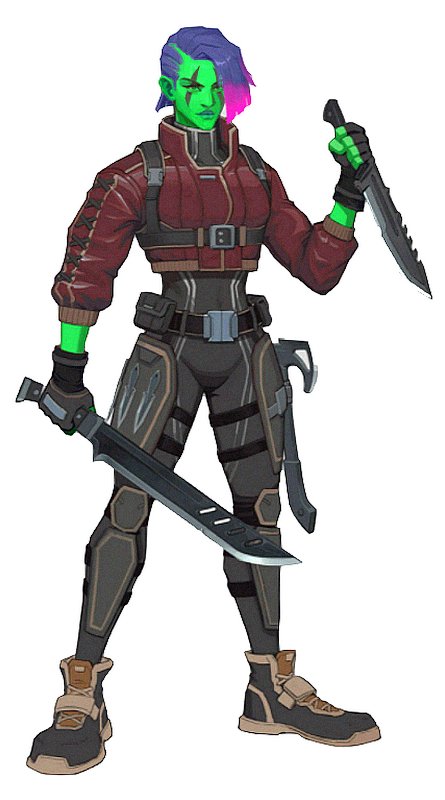
Colors no longer divide: now they tell stories.
Stories of impossible alliances, of shared battles, and of an uncertain future where every soldier carries upon their surface the map of a new era.
An era where color no longer defines the soldier, but the memory of everything Toykind was capable of leaving behind to survive.