
The best-known city in the Future World, homeworld of the Space Republic
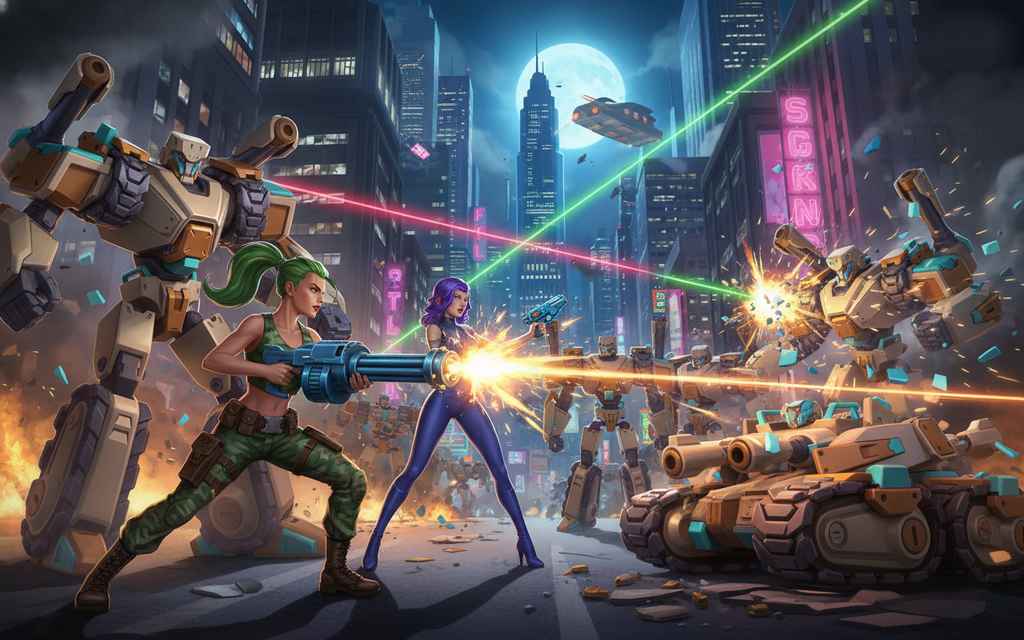
Future City is the best-known and cosmopolitan city in the Space World (also known as Future World), technically located in the namesake of planet Earth in this reality. It’s the third city built over other old cites from the past.

It’s known as “Future City,” but it’s actually the entire planet. The city expanded so much that it now covers the whole planet. It’s no longer just a city… or a megacity: now it’s the entire planet.
Future City is one of the most recognizable and stable population centers within the Space World. While it exists far from the Plastic World in terms of technology and scale, it maintains a subtle but notable connection to it, similar to the relationship observed between the Plastic World and the Western World.
The Reality Below
Future City never sleeps. It never ages. It is constantly updated. It is an artificial organism that expands, repairs, and redesigns itself endlessly.
Future City is built in vertical layers:
Future City, a city that spans the entire planet, is old enough to house multiple versions of the city beneath.
The supercity is a futuristic, high-tech cyberpunk metropolis, somewhat chaotic, yet vibrant, with a largely pristine, minimalist appearance. But beneath the surface, a relentless war has raged for years… between the city government and a faction demanding “absolute freedom.”
Urban Structure
Future City is not a single city in the traditional sense. It is a layered vertical megastructure, expanding upward, outward, and inward simultaneously. Districts overlap, rotate, detach, and reconnect. Entire sections may go dark or be sealed for decades, while new ones are assembled in orbit and integrated seamlessly.
Movement through the city is largely three-dimensional. Streets are optional. Gravity is conditional.
Society and Mentality
Citizens of Future City rarely identify themselves by origin world or past allegiance. Identity is tied to current function, not history. What you were matters far less than what you can do now.
Individual freedom exists, but it is secondary to system efficiency. Emotional attachment to old worlds is often viewed as a weakness, though some figures quietly preserve relics, colors, or symbols from where they came.
Relationship with the Space World
Home of the Mobile Space Infantry, Future City is not the capital of the Space World, nor does it claim to be. It is simply one of the few places capable of sustaining long-term toy civilization at this technological level.
Many who arrive in the Space World pass through Future City at least once. Some stay. Some are upgraded and reassigned. Others vanish into deeper space, never to be recorded again.
What is certain is this: If the Space World represents infinity, Future City is where infinity becomes livable.
The Mega-Structure of Future Mega-City
Future City is the absolute heart of the Space Republic. It is not only its political capital, but also its cultural, symbolic, and administrative center. Over time, the city grew without limits until it occupied the entire planet, turning it into a single continuous megacity.
There are no original oceans, mountains, or jungles. The entire planet has been covered, modified, or encapsulated. “Nature” exists only as simulation: artificial parks, controlled climate reserves, carefully designed historical recreations meant to remind citizens what the universe was like before the total dominance of engineering.
- The upper layers are luminous, orderly, and monumental. This is where government buildings, academies, scientific centers, and symbolic districts stand, expressing the republican ideal.
- The middle layers sustain everyday life: housing, commerce, transportation, advanced manufacturing. It is a functional city—clean, quiet, almost too perfect.
- The deep layers contain ancient infrastructure, obsolete systems, abandoned or repurposed districts. The past persists there, buried beneath centuries of progress.
Future City never sleeps. It never ages. It is constantly updated. It is an artificial organism that expands, repairs, and redesigns itself endlessly.
Meggagrid, best-known as the old city of the Future World

Meggagrid was built over the first city of Future World. But over time, it was overrun by criminals… a long, long time ago. The city was reclaimed and freed from organized crime, but years later, large corporations took over as its namesake, becoming independent dictatorships, causing wars that destroyed many of the major cities. Meggagrid was one of them.

So it was destroyed by conflicts and subsequently abandoned with no hope. But once the big corporations of the Future World were defeated, a new city was rebuilt over the old one, being the last one the third city to be built over the old.

Behind the scenes:
Meggagrid was the city featured in the videogame BLADE FORCE, made for the 3DO console by the 3DO Company in 1995. It will be the Future City of the past.
Behind the scenes:
At first glance, this connection is visible in the facial design of its inhabitants. Many plastic figures in Future City share the same base facial mold seen in Plastic World Army Men. This detail is never officially acknowledged in-universe, but it is widely assumed that both worlds may originate from the same toy line or manufacturing lineage. The implication is left intentionally unresolved.
But in the case of the colors, each color represents a specialty, task, or type of individual. Something like in Star Trek, where red is for Starfleet Tactical and Command officers, ochre for engineering and operations officers, and finally cyan for science or medical officers.