
The plastic Spitfire, the other most used airplane in the history of the Plastic World


Before the skies belonged to drones, helicopters, and experimental aircraft, there was the Spitfire: one of the first true combat fighters to ever take the skies of the Plastic World. Contemporary to the P-51 and the Wildcat, Spitfire’s a name spoken with reverence by Army Men pilots, engineers, and veterans alike. Though its design draws inspiration from the legendary Human’s Spitfire, the Toyverse’s Spitfire is no mere replica. It is a product of imagination, war, and necessity. One of the very first attempts by plastic armies to dominate the skies.
Origins and Design
First Generation Toyverse Fighter
Constructed during the earliest days of Toyverse aviation, the Spitfire was born at a time when aerial warfare was little more than theory among plastic strategists, the Spitfire proved that flight was not only possible: it was essential.
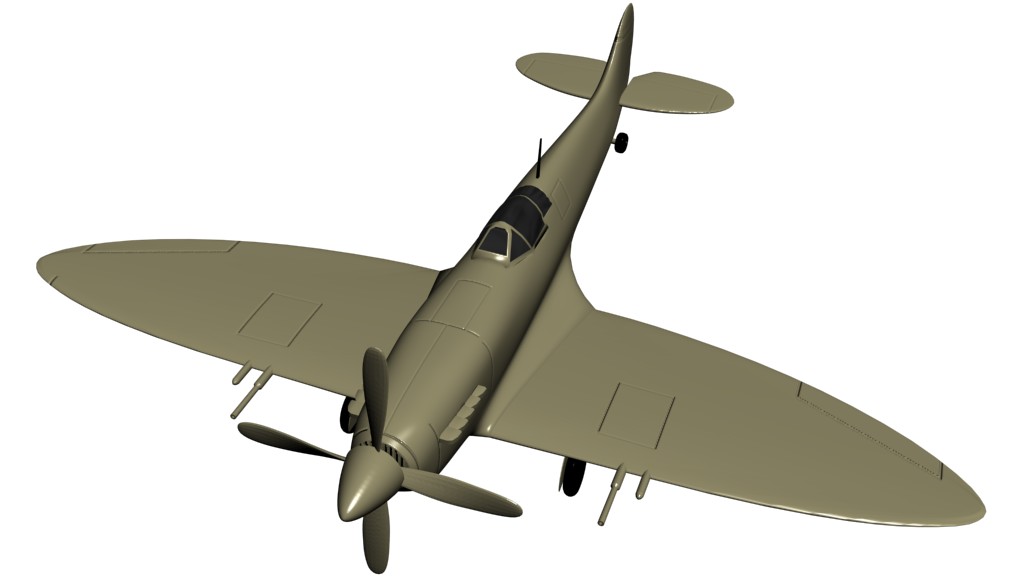

Designed by the Blue Army, which, despite its poor reputation for technological innovation, has very little to envy of other plastic armies aviation.
Whatever the mystery behind the Blues achieving such a feat in the air, one undeniable fact is that, although more difficult to manufacture, the Spitfire was superior to counterparts such as the P-51.
Invented by the Blues, but used on a large scale by the Tans, its design matches many recognizable features of its Human World counterpart: a long nose, elliptical wings, and a bubble canopy. But like all Toyverse machines, it carries sometimes a distinct visual twist: proportions slightly exaggerated, seams visible where two halves of the fuselage were molded together, and a finish that sometimes shows that plastic is not perfect. This is not a plane built only in a factory… it is a plane built by toys, with the urgency of war pressing at their backs.

Combat Role
The Spitfire is a lightweight, high-speed interceptor and air superiority fighter. It was designed to engage enemy aircraft, defend forward bases, and conduct rapid-response missions. While its frame lacks the heavy armor of modern Real World metal alloy craft, its agility and straightforward engineering made it easy to repair and modify in the field.
Pilots favored the Spitfire for its tight turns, reliable performance, and clean lines of sight, making it a favorite in dogfights against the Green Army and other Toyverse factions. Even when more advanced fighters were introduced later, many Army Men squadrons held on to their Spitfires, trusting the machine they knew best.
In short, the P-51 and the Spitfire were both excellent fighter aircraft, but with different strengths and weaknesses. The P-51 was superior in terms of range and speed at high altitude, while the Spitfire was more maneuverable at low speeds. The superiority of one or the other, in reality, depended on the context and the specific mission, like all the tools of war in the Toyverse.


Legacy and Cultural Impact
Though largely retired from the Real World frontline duty, the Spitfire still serves in the Plastic World, and in Real World training roles, ceremonial flights, and reserve air wings. Some elite pilots even restore and customize old Spitfires as personal fighters, preferring the raw experience over the automation of newer models. The most iconic Spitfire to this day was the one of Flight Liutenant Ruggels, painted over plastic using Real World model kit paint.
To this day, no Toyverse air parade or museum is complete without a Spitfire on display: wings outstretched, paint chipped, and cockpit proudly open.
The First and the Forever
The Blue Spitfires, at the time of their creation, balanced the air war against the Grey and Tan during the Great World War, curbing the latter’s unmeasured superiority over the rest.
In many ways, the Spitfire was more than a fighter: it was the birth of the best aerial warfare for the plastic armies. Its invention marked a shift in how wars were fought, strategies formed, and victories claimed. Every aircraft that came after, from the Fighter Jet to the Super ‘Copter, flies in the wake of the Spitfire.


