All posts by Sarge Green

Fixing and Expanding Sarge Hawk

Analysis: “Fixing” Sarge Hawk and the Power of the Static Hero

The “Plastic Soldier Problem” (The Boy Scout Archetype)
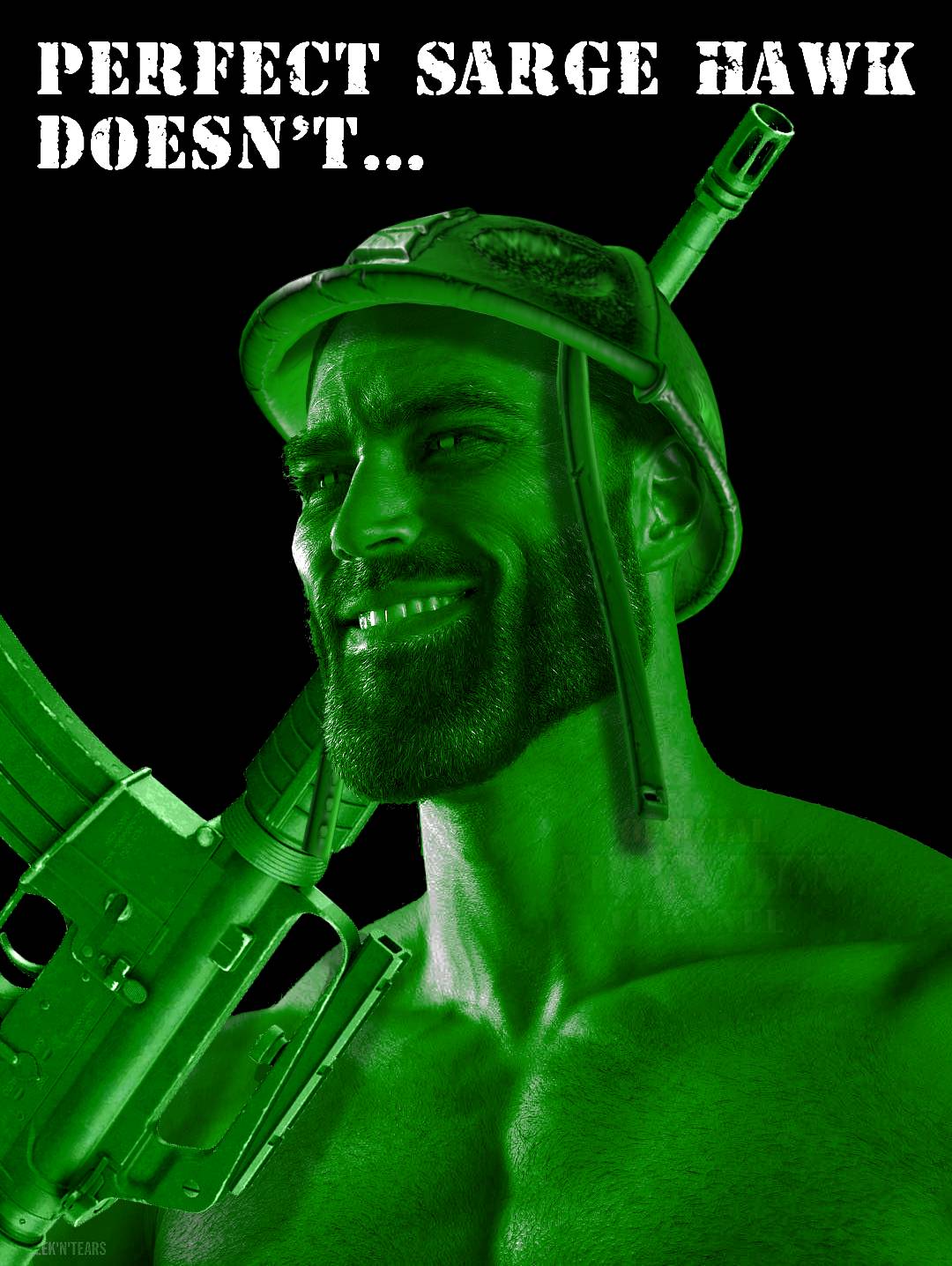
GigaHawk Army Men meme

Just like Captain America in 2011 on “The First Avenger”, Sarge Hawk carries the burden of “uniformity.” He is a character designed to be a pure instrument of duty. In the classic Sarge’s Heroes era, Sarge Hawk is the ultimate “Good Soldier”: he has no existential crises, he doesn’t question the Green Nation Army’s hierarchy, and his moral compass is as rigid as the plastic he’s molded from.

In a modern gaming and cinematic landscape that demands “broken” protagonists with dark pasts or ambiguous morals, a character like Sarge Hawk risks becoming irrelevant. If the world is gray, a hero who sees only “Green and Tan” appears naive. The common writer’s temptation is to “gritty him up”… make him cynical, ultra-violent, or a traitor. But as we learned from Steve Rogers, doing so destroys what makes him iconic. Sarge Hawk isn’t special because of his rifle; he’s special because he was a leader before he was a legend.

The Flat Character Arc: Sarge as the Moral Mirror

The key to making Sarge Hawk work in a sophisticated narrative isn’t for him to change, but for him to force the world to change. This is known as a Flat Character Arc.

In most stories, the protagonist starts with a “Lie” (a trauma or false belief) and the world beats them until they learn the “Truth”. But Sarge Hawk already possesses the Truth: sacrifice, loyalty to the squad, and protecting the weak (whether they are civilians in the Plastic World or refugee toys in the Real World).

Sarge Hawk doesn’t need a redemption arc. The conflict arises from his refusal to bend. When Sarge Hawk enters a corrupt environment (like the intrigues of Lord Malice or the betrayals of Brigitte Bleu or General Plastro), his moral immovability becomes his most dangerous weapon. He isn’t boring; he is terrifying to villains because they cannot buy him, they cannot tempt him, and they cannot break his spirit… (until Sarge’s War)

The Breaking Point: Sarge’s War and the Trap of Darkness
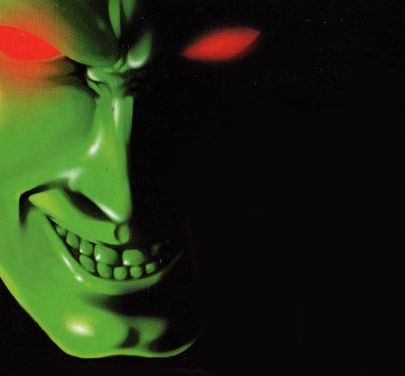
Major Malfunction

The game Army Men: Sarge’s War was the franchise’s attempt to enter the “mature era.” By eliminating his squad and his girlfriend, the narrative tried to give Sarge Hawk a positive or negative change arc: trauma. Here, Sarge Hawk stops being the mirror and starts being affected by the world.

This time, the key to Sarge’s War working within a sophisticated narrative isn’t for Hawk to change the world (as before)… but in this case, for him to be changed by the world. In theArmy Men Toyverse narrative, this marks the beginning of change. But not a definitive change that would establish him as a totally different character… rather, an evolution: He will remain the archetype of the Boy Scout, but within a complex narrative that leaves him no option but to act differently, Like when Batman and Superman are forced to kill someone. Although it’s something they avoid doing, circumstances sometimes compel them. But that doesn’t change them.
If we apply the Russo Brothers’ logic, this is Sarge Hawk’s “Winter Soldier” moment. Lord Malice’s attack isn’t just an act of war; it’s an attack on Sarge Hawk’s ideology. Lord Malice represents chaos and nihilism, while Sarge Hawk represents order and hope. The narrative challenge here isn’t to left the “vengeful” Sarge Hawk from Sarge’s War redefine the character and become from there on as dark as his enemy, but to see a post Sarge’s War and Major Malfunction version of Sarge Hawk who, despite losing everything, refuses to stop being the hopeful Boy Scout Green Soldier. The true victory in the Army Men Toyverse narrative isn’t avenging his comrades destroying Malice (and itself to become a villain) it’s that Sarge Hawk doesn’t become another Malice in the process by forever (But if at least for a time, as part of the growth process. Although the reasons for his temporary transformation into a villain may be partly due to external influence).

Sarge in the Toyverse: The Formidable Hero

To make Sarge Hawk work in a broader, more complex ecosystem like the Toyverse, he must be treated as a moral heavyweight.
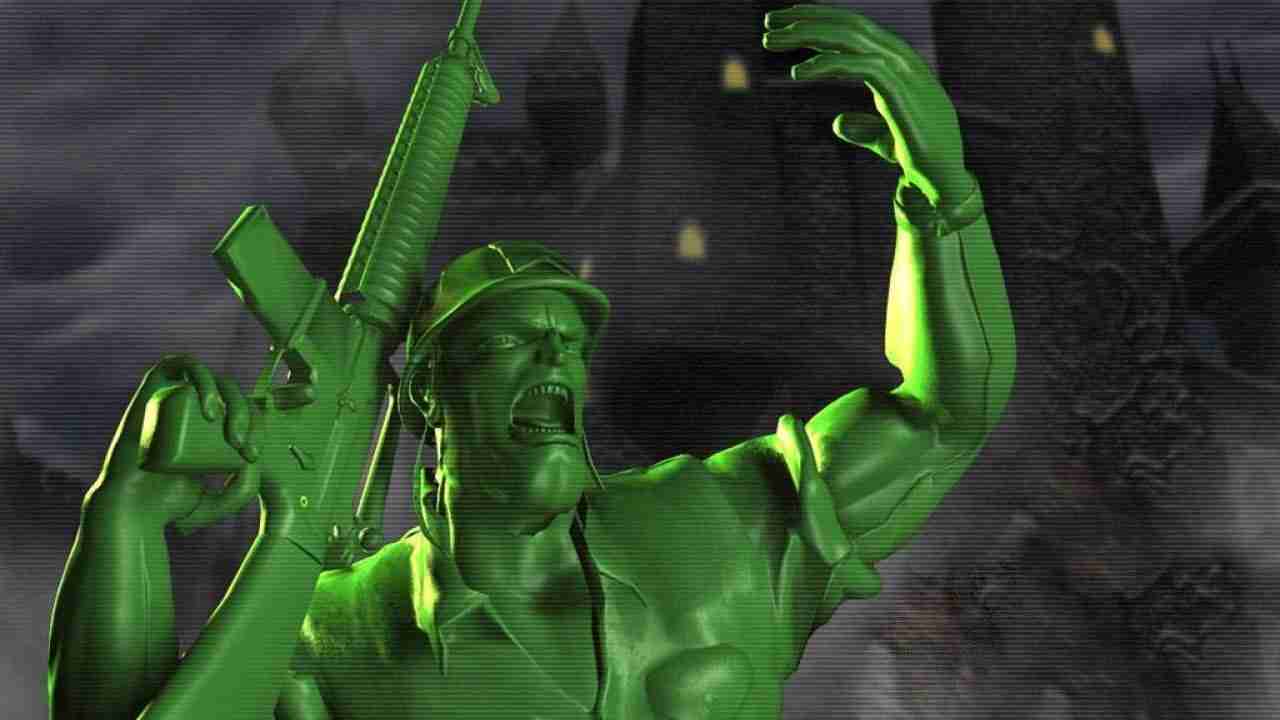
Hawk during the assault on Dr. Madd Castle
  • Ideologically Dangerous:
    In a world of conflicting factions, Sarge’s insistence on doing the right thing (regardless of brand borders or materials) makes him an anomaly. He isn’t just a soldier; he is a threat to any system that thrives on moral ambiguity.
  • The Catalyst for Change:
    More cynical or pragmatic characters (like Brigitte Bleu or mercenaries from other “Worlds”) must find themselves transformed by interacting with him. Not because Sarge Hawk gives them a lecture, but because his example proves that a more principled way of life is possible, even in an endless war. Something like Goku transformed Vegeta by example.
  • The Introduction of Doubt:
    For his flat arc to be compelling, Sarge Hawk must doubt. Not his values, but his ability to uphold them. “Is it worth fighting when my own generals are willing to sacrifice entire worlds for a plastic victory?” That doubt is what humanizes him without needing to “dirty” his character.

Conclusion: Goodness as Subversion

In conclusion, the way to “fix” or empower Sarge Hawk is to stop trying to make him “modern” through cynicism. In a landscape full of anti-heroes, a man who sincerely believes in duty and friendship is the most subversive thing imaginable. Furthermore, there will be no shortage of anti-heroes in this story…

Sarge Hawk is not a relic of the past; he is a warning for the present. If he stands firm while worlds (Prehistoric, Medieval, Space) collapse around him, he becomes the only stable point of reference. Sarge Hawk doesn’t change; he is the force that compels the Toyverse to decide which side of the line it wants to be on.
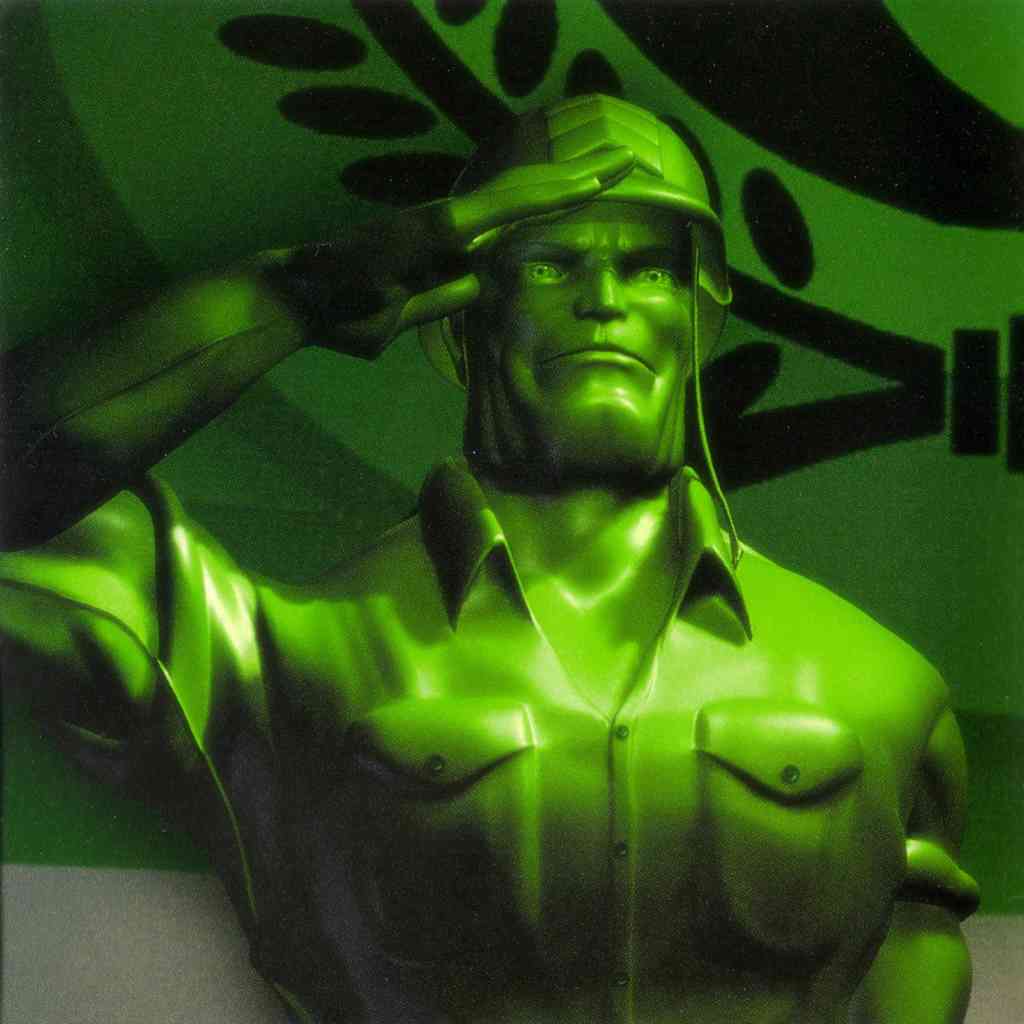
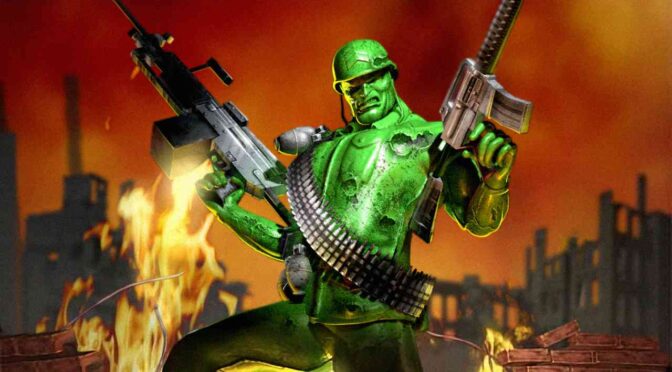
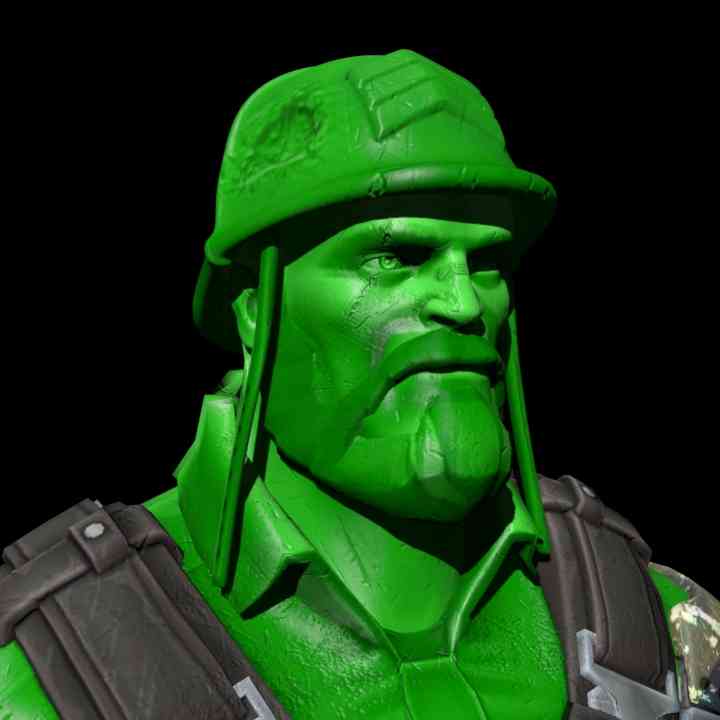
Sarge Hawk from Army Men franchise

Plastic with Consequence: The dilemma of portraying toys as something serious

Making a Living Toy Universe Feel Serious

There is an inherent contradiction at the heart of any world built from toys. Plastic soldiers, molded smiles, bright colors, simplified anatomy… these elements are culturally coded as harmless. They belong to childhood, to imagination, to play. The moment they move, speak, and wage war, the premise risks collapsing into a parody.

The solution is not to fight that contradiction. It is to weaponize it.

A serious toy universe does not deny that its characters are toys. It refuses to treat that fact as a joke.

The material is plastic. The conflict is not.

What creates seriousness is not realism in the biological sense, but consequence in the material sense. Plastic cracks. It splinters. It melts. It warps under heat. Like the real plastic, it does not bleed, yet it scars permanently. Damage is not only mere cosmetic. A gouge remains. A burn deforms. A limb once snapped does not regenerate unless rebuilt… and rebuilding changes the identity of the figure. Although they are toys, the conflicts (for them) are as dramatic, dystopian, chaotic, and emotional as the movie Saving Private Ryan.

On the other hand, the fact that the Army Men wonder where they come from and who made them, without knowing humans at first, gives the Toyverse a captivating air of mystery. They now know they are toys… but why they are alive?.

It is not satire. It is collision.

Violence, in this context, becomes strangely more disturbing than flesh-based violence. When a molded face designed to be eternally heroic is shattered, the dissonance is immediate. When a smiling infantry figure is left partially melted, its once-clean silhouette sagging and distorted, the visual contradiction does the emotional work. The horror is not gore. It is the corruption of permanence.

Imagine this scene, but with a plastic soldier half-melted by a flamethrower… same creepy disturbing effect

Childlike design placed in uncompromising situations generates a powerful, unsettling tone. A toy sculpted with simplified optimism (wide chest, bold stance, clean lines) suddenly reduced to fractured debris forces the audience to reconcile two incompatible readings at once. It is not satire. It is collision.

Plastic Irony

This is where irony becomes effective… not as humor, but as tension. The irony of a cheerful teddy bear functioning as a calculating war criminal. The irony of pastel-colored units enforcing brutal order. The irony of a soft plush antagonist whose stitched smile never changes while atrocities unfold around it. These contrasts destabilize expectation, and that destabilization produces seriousness.

Happy Three Friends is an example of this, or any bloody anime of 80′: They were a success because at the time nobody expected a cartoon to be bloody, let alone sexually suggestive with its portrayal of female sensuality. Even fewer expected important characters to die, as was the case with Optimus Prime at the end of Transformers G1.

If the world treats these characters as emotionally and politically real, the audience has no escape hatch. There is no wink to retreat into.

No escape

Violence, when used carefully, establishes stakes. It should not be constant spectacle. It should be sharp, visible, and transformative. A melted helmet fused to a figure’s head is not a shock moment… it is a reminder of vulnerability. A snapped arm replaced by a mismatched color limb tells history without exposition. The visual aftermath matters more than the impact itself.

The environment amplifies the tone

Scale must inspire awe rather than whimsy. A carpet is not “cute terrain”, it is an unstable fiber forest that swallows patrols. A kitchen counter is not a prop, it is a monolithic plateau of artificial stone. A staircase becomes a vertical siege campaign. When staging emphasizes height, depth, shadow, and mass, the toy scale dissolves. The audience stops thinking in centimeters and starts thinking in distance and danger.

Imposing scenography carries emotional weight. Strong silhouettes against vast domestic architecture. Harsh lighting cutting across molded surfaces. Smoke rising between oversized table legs like industrial pillars. When compositions are treated with the discipline of war cinema rather than children’s animation, tone shifts immediately.

Art direction is not decoration… it is argument

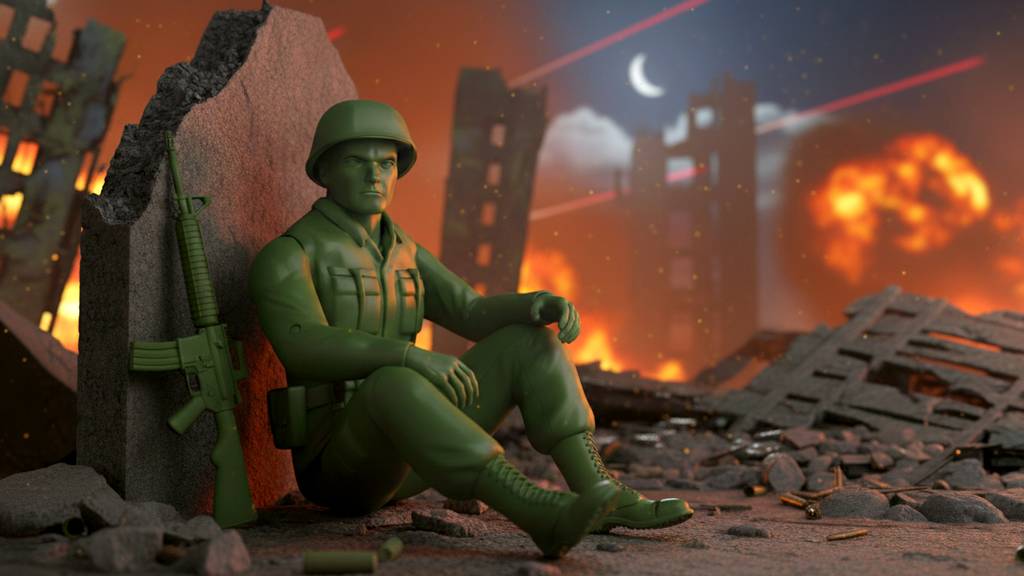
Color can function the same way. Bright, saturated plastic under cold, directional light becomes severe. Glossy surfaces reflecting firelight transform innocence into tension. A pristine green soldier under neutral light feels nostalgic. The same soldier half-shadowed, scratched, and standing before a towering appliance feels mythic.

Another essential choice is permanence

A toybox world often implies reset. Battles happen, figures are rearranged, and nothing truly changes. A serious universe cannot afford that elasticity. If a battalion is destroyed, its absence must be felt in later campaigns. If a faction loses territory, maps must shift. If a leader falls, instability must ripple outward. The sense that history accumulates (that nothing resets) converts play into chronology.

Even the concept of manufacturing can become existential. These beings are molded, cast, assembled. Does that define destiny? Is identity tied to batch, color, or purpose? Can a figure melted down and recast be considered the same individual? What does death mean in a world where bodies are objects? These questions deepen the premise beyond aesthetic novelty.

The greatest tonal risk is self-awareness. The moment a character reduces their own existence to a joke (“we’re just toys”) the illusion fractures. A serious toy universe must believe in itself completely. Its wars are not pretend. Its politics are not an elaborate game. Its casualties are not temporary.

Shrap dead
The contrast between innocence of form and severity of action is not a gimmick. It is the foundation

A molded grin shattered by artillery. A plush villain issuing cold strategic commands. A bright plastic platoon silhouetted against a towering, indifferent world of human-scale architecture.

When handled with discipline, the visual language does the heavy lifting. The audience feels the weight without being told to.

In the end, seriousness does not come from making toys more realistic.

It comes from making consequences unavoidable.

Plastic is not fragile because it is a toy.
It is fragile because it can break… and once broken, it never returns to what it was.

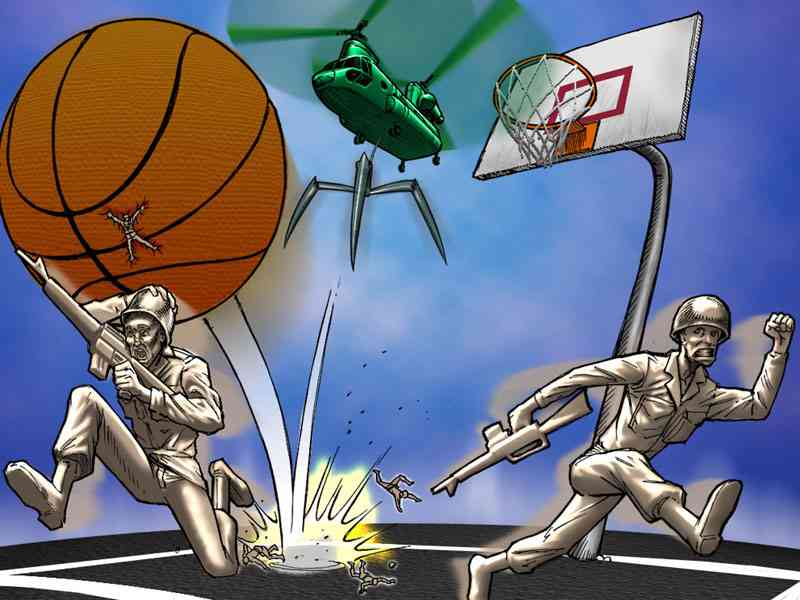
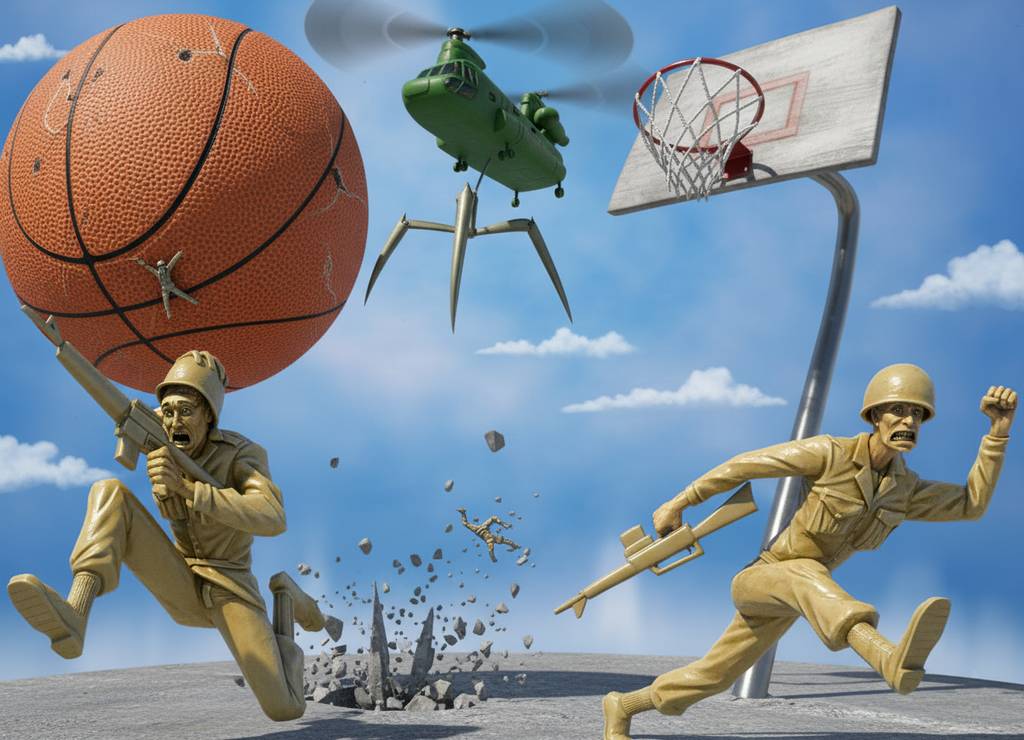
Making Concept Art a reality

Remember those great Concept Art pieces? Well, we started making them a reality (sort of).

There are some ideas in Concept Art pieces that never became reality (or, in fact, most of them never did). So here we’ll show you the process of how we make them a reality, one way or another.