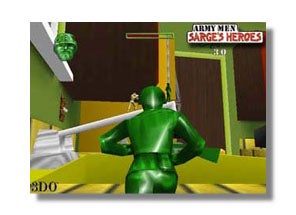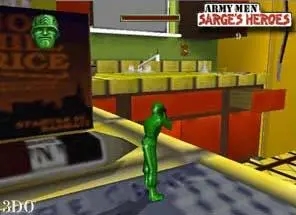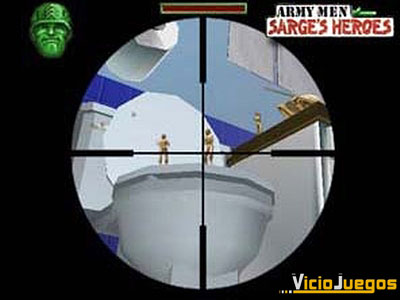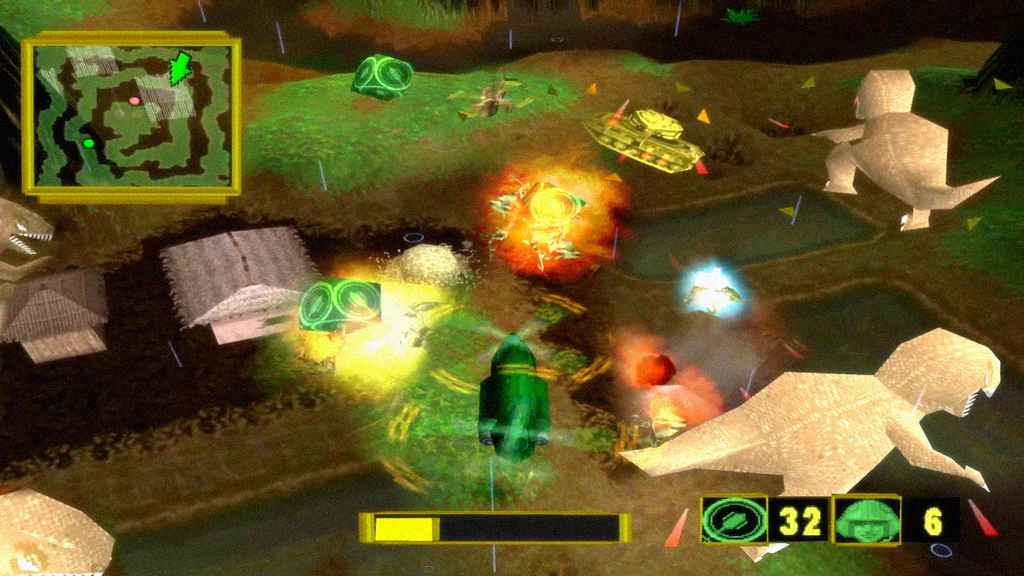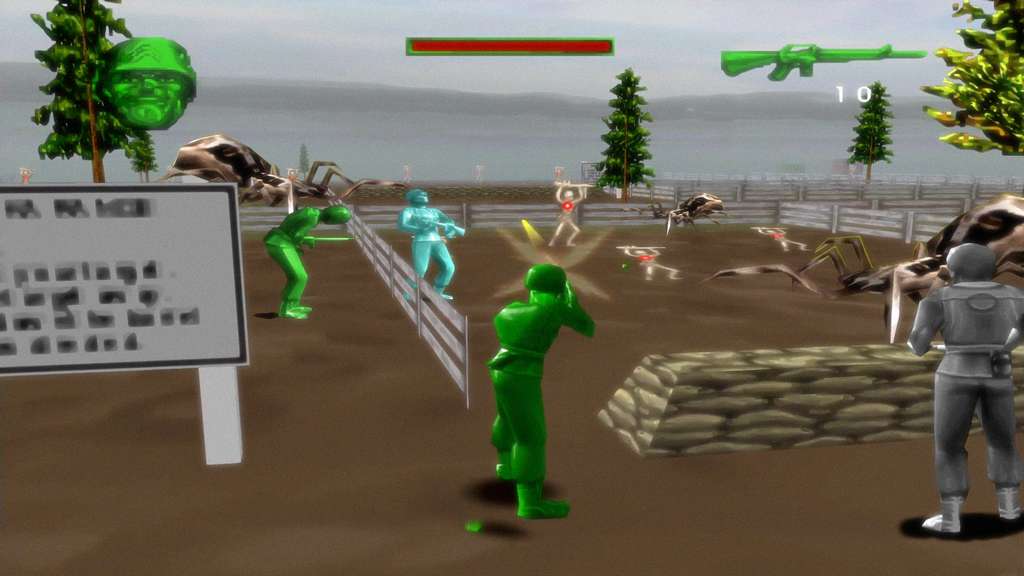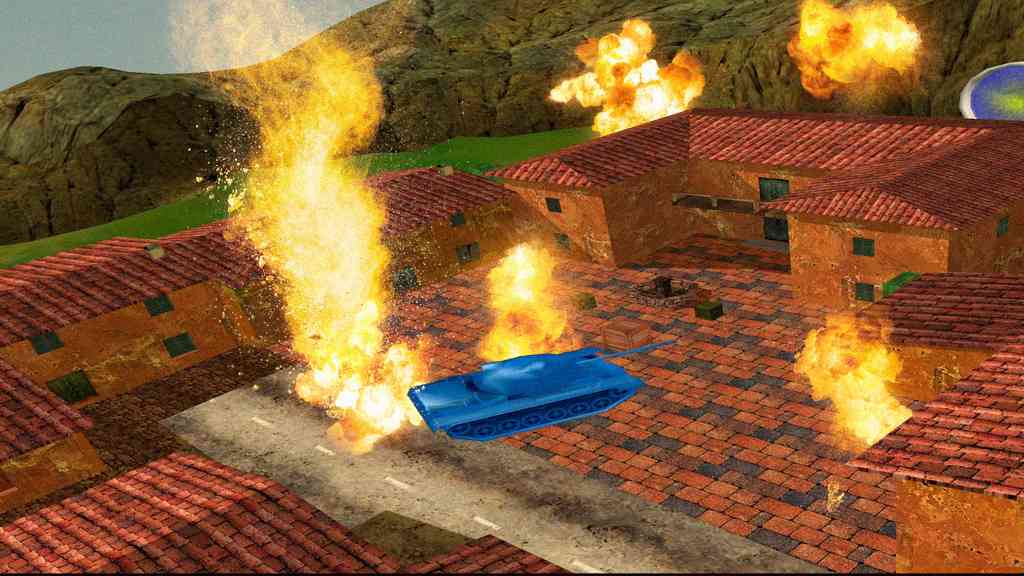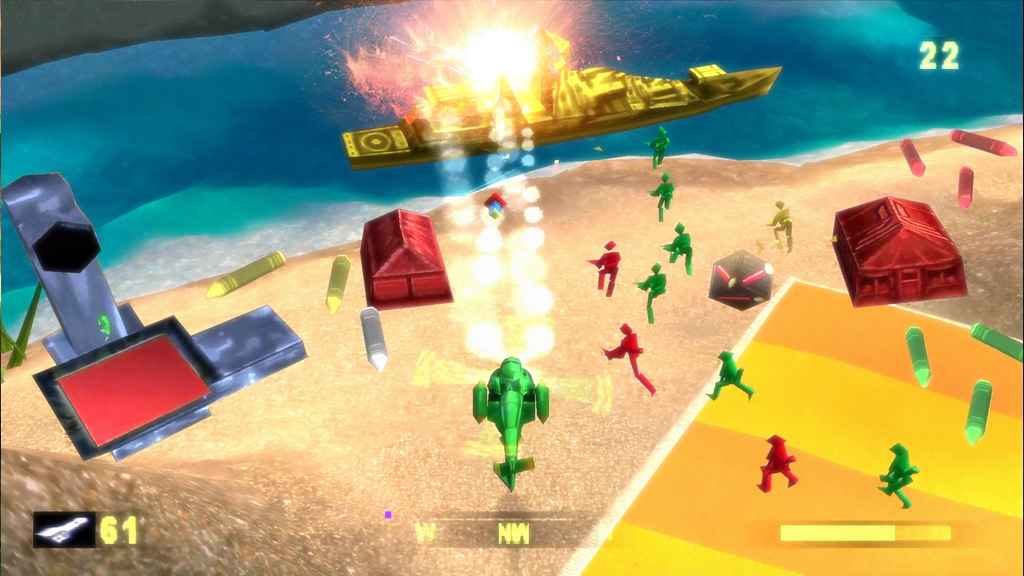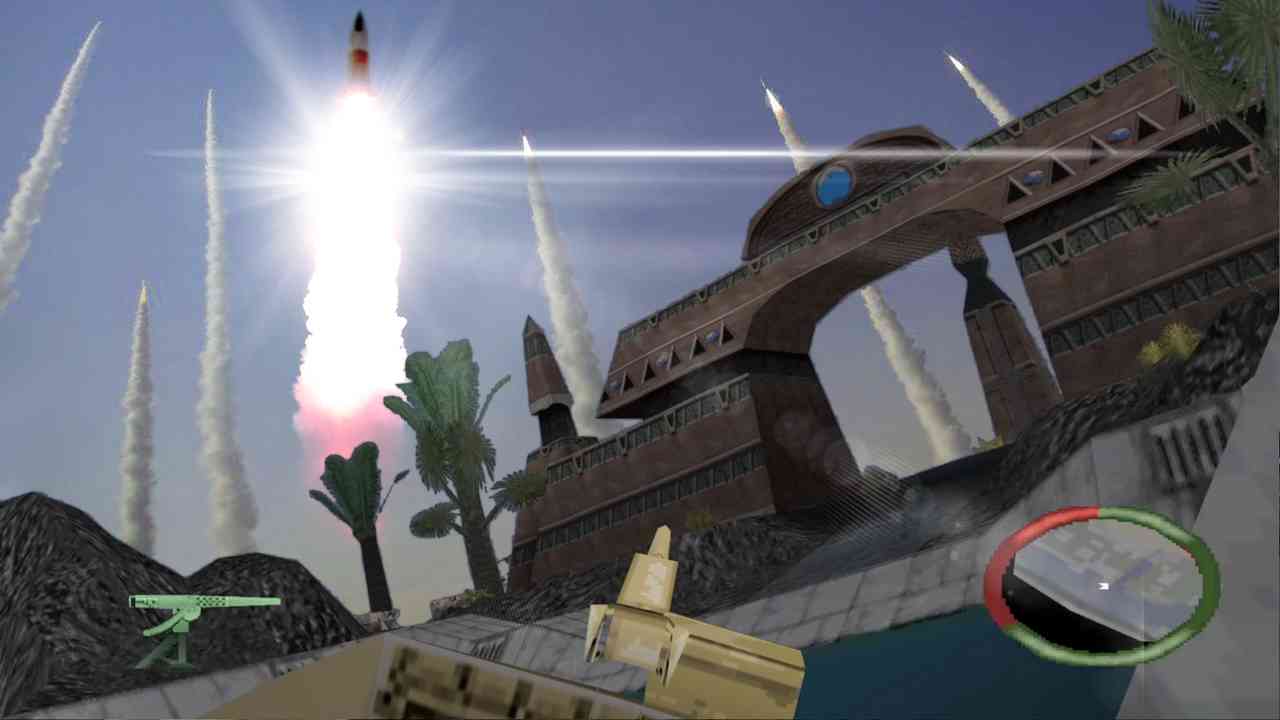
Category Archives: Army Men History

Identity Under Fire

Change, Continuity, and the Fragility of Legacy in Long-Running Franchises

Every long-running franchise eventually faces the same moment: it must change or it must calcify.

Change invites backlash. Refusing to change invites irrelevance

What we are witnessing in contemporary media is not simply disagreement about creative direction. It is a deeper conflict over ownership of identity. Audiences who have lived with a franchise for decades often feel that they understand its essence — sometimes better than the creators currently steering it. When alterations arrive, the debate is rarely about a single character decision or plot twist. It is about the perceived erosion of core identity.

The question beneath the noise is simple and difficult:

What is the franchise?

Is it tone?
Is it characters?
Is it visual language?
Is it ideology?
Is it genre?
Is it emotional promise?

Most collapses happen when creators misidentify what the audience believes is sacred.

The Illusion of Surface Identity

One of the most common mistakes is confusing surface iconography with structural identity.

Logos, costumes, catchphrases, and legacy characters are visible markers. They are not the foundation. A franchise can preserve all recognizable elements and still feel alien if its internal logic changes.

Consider the tonal fracture that many fans felt in the Star Wars sequel trilogy beginning with The Last Jedi. The film was ambitious, visually confident, and thematically confrontational. For some, it deepened the saga. For others, it destabilized mythic structures that defined, particularly the treatment of legacy heroism and archetype continuity. The division was not primarily about plot mechanics. It was about philosophical tone. Was the saga fundamentally mythic optimism, or was it deconstructive introspection?

The iconography remained. The interpretive lens shifted.

When audiences feel that the interpretive lens has changed without permission, identity conflict begins.

When Change Feels Like Replacement

There is a difference between evolution and substitution.

Evolution preserves emotional DNA while allowing form to shift.
Substitution removes DNA and installs a new operating system.

The 2016 Ghostbusters reboot illustrates how tonal recalibration can fracture audience expectation. The original film balanced supernatural threat with grounded deadpan humor. The reboot leaned heavily into improvisational comedy and overt comedic energy. The issue for many viewers was not casting women or modernization alone… it was tonal displacement. The atmosphere shifted from dry absurdity inside a semi-serious paranormal framework to overt comedy driving the premise. The identity debate was not about representation. It was about tonal architecture.

When tonal architecture changes, audiences interpret it as identity erasure.

The Danger of Reactive Course Correction

A second trap emerges when backlash provokes overcorrection.

Following the Star Wars division around The Last Jedi, The Rise of Skywalker (the last sequel film) attempted to reconcile multiple factions of the audience simultaneously. The result, for many critics, felt structurally unstable: a narrative pulled in competing directions. In trying to restore perceived lost identity while also concluding a new arc, the film exposed how difficult it is to reverse philosophical shifts midstream.

Identity cannot be negotiated film by film without visible seams.

Consistency is not rigidity. But it does require internal conviction.

When Reinvention Works

Change is not inherently destructive. In many cases, reinvention has rescued or elevated franchises.

James Bond’s Casino Royale radically recalibrated the tone of the 007 series. It stripped away exaggerated gadget spectacle and reintroduced physical vulnerability, psychological interiority, and grounded brutality. Yet it preserved the essential pillars: espionage, sophistication, danger, and charisma. The aesthetic shifted; the emotional contract remained.

Similarly, Casino Royale redefined after the tonal excess of earlier entries. It did not replace the character’s moral framework. It intensified it. The darkness was not cosmetic… it was philosophical. Audiences accepted the shift because it felt like a deepening of identity rather than a rejection of it.

A more dramatic transformation occurred with God of War. The original series was operatic rage and mythological spectacle. The 2018 installment slowed the pace, introduced fatherhood as a thematic spine, and altered camera language entirely. Yet Kratos’ internal conflict (rage versus restraint) remained intact. The franchise matured without denying its past.

Reinvention succeeds when it reframes core identity rather than replacing it.

The Core Identity Principle

Franchises are not defined by plot events.
They are defined by emotional promises.

A western promises frontier morality and harsh landscapes.
A superhero saga promises mythic struggle and symbolic heroism.
A space opera promises scale and archetype.

When those promises shift, audiences feel betrayal… even if production quality improves.

Change must answer a central question:

What cannot be removed?

If removing an element collapses recognition at the thematic level, that element is structural.

Internet Amplification and Identity Policing

Modern discourse intensifies conflict because audiences now participate in identity negotiation publicly and constantly. Fandom spaces transform interpretation into battlegrounds. Canon becomes legal territory. Terms like “not real,” “not canon,” or “not my version” emerge as defensive strategies.

But identity is not static. It is sedimentary. Layers accumulate. Erasing previous layers destabilizes the base. Pretending previous layers never existed alienates long-term investment.

The most effective evolutions treat continuity as architecture, not obstacle.

How to Change a Franchise Effectively

1. Identify the Emotional Spine
Before altering tone, genre, or character roles, define what emotional response the franchise historically guarantees. Protect that spine.

2. Deepen Instead of Mock
Deconstruction must feel like expansion, not ridicule. Audiences tolerate darkness more easily than contempt.

3. Change Through Character, Not Around Them
Transformation should emerge from internal logic. Abrupt philosophical reversals without narrative groundwork feel imposed.

4. Preserve Internal Physics
Even in fantasy, rules matter. Breaking established mechanics to serve short-term spectacle damages trust.

5. Accept That Not All Audiences Will Follow
Every significant evolution sheds some viewers. Trying to satisfy mutually exclusive expectations often creates incoherence.

6. Commit
Half-measures are visible. If a franchise shifts direction, it must do so with clarity. Hesitation is louder than boldness.

The Paradox of Legacy

The longer a franchise exists, the heavier its accumulated identity becomes. Nostalgia freezes certain eras as definitive. New creators must decide whether they are curators, reformers, or revolutionaries.

Curators preserve.
Reformers refine.
Revolutionaries replace.

Conflict arises when revolution is marketed as preservation.

Audiences are remarkably open to change when it feels intentional, respectful of foundations, and internally coherent. They revolt when change feels cosmetic, opportunistic, or dismissive of what came before.

Identity is not fragile because it cannot evolve.
It is fragile because it is built from trust.

And once trust fractures, no amount of iconography can repair it.

Course Correction After Collapse

Repairing Tone, Continuity, and Trust in Army Men

There are moments in a franchise’s life that feel less like evolution and more like rupture. Not refinement. Not maturation. Rupture.

For Army Men, that rupture came in two waves.

First, the tonal detonation of Sarge’s War
Then, the structural dislocation of Major Malfunction.

Understanding how to move forward requires understanding precisely what happened. Not emotionally, but architecturally.

The Violent Turn

Sarge’s War did not simply darken the tone. It redefined the emotional contract.

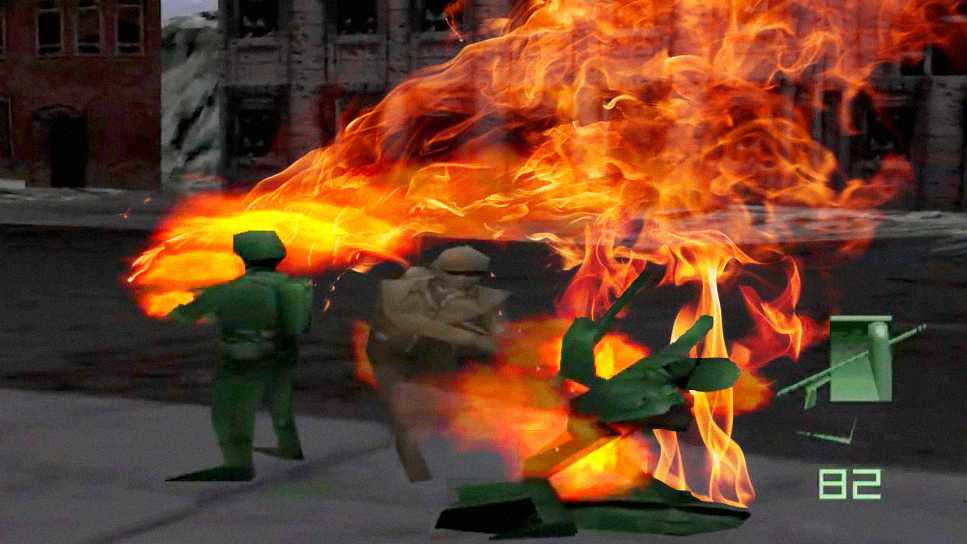
Sgt Hawk Sarge's War

Army Men had always balanced stylized warfare with plastic logic, battlefield stakes with accessible structure. Even at its most intense, it retained an underlying readability: units mattered, heroes mattered, continuity mattered.

Like an old-school cartoon or TV series, Army Men, before Sarge’s War, relied on a somewhat humorous, familiar and friendly foundation, despite the conflict and warlike tone, and the fact that they were basically toys. But its core was, above all, positivism. Its characters and the positive tone were everything. Those were happygames.

And yes… we all know that at the beginning Army Men was more darker, warlike and lacked characters with personality. But that changed when they released Sarge’s Heroes and the subsequent sequels, achieving a resounding and successful shift. But that’s a story for another time…

Sarge’s War chose trauma as foundation

It killed legacy characters.
It dismantled familiar dynamics.
It stripped away tonal elasticity.

The violence was not merely aesthetic… it was narrative erasure. Characters who functioned as structural anchors were removed. The emotional scaffolding that long-term fans relied on was shattered in a single installment.

Darkness is not inherently destructive. But sudden tonal acceleration without transitional architecture destabilizes identity.

The issue was not maturity.

It was dislocation.

The Soft Reboot That Wasn’t

Then came Major Malfunction.

Marketed implicitly as continuation, structurally it behaved closer to replacement. It attempted to move forward with partial continuity while altering context, dynamics, and character logic. It tried to inherit the aftermath without rebuilding the foundation.

Anderson Major Malfunction

Worse, it introduced continuity inconsistencies and lack of visual identity, that signaled something more dangerous than creative disagreement: loss of internal control.

Once a franchise appears unsure of its own history, audience trust degrades rapidly.

It is one thing to take risks.
It is another to appear directionless.

When tone fractures and continuity becomes unstable, a franchise does not merely decline. It becomes narratively radioactive. Creators fear touching it. Audiences hesitate to invest.

Army Men did not slowly fade. It entered suspension.

The Risk of Reversal

Now comes the difficult part: undoing.

Reversing large-scale narrative damage is one of the most dangerous operations in franchise design.

Risks include:

  • Perceived Retcon Weakness: If past events are erased cheaply, stakes collapse permanently.
  • Continuity Fatigue: Excessive explanation alienates casual audiences.
  • Emotional Undermining: If death is reversible without cost, sacrifice loses weight.
  • Nostalgia Regression: Attempting to “go back” without growth can feel creatively stagnant.

However, the alternative (leaving a fractured identity intact) guarantees stagnation of another kind.

The goal is not to pretend the rupture never happened.

The goal is to metabolize it.

Respecting the Damage

In the case of the Army Men Toyverse project, the commitment is clear:

  • Sarge’s War happened.
  • Major Malfunction happened.
  • Characters were lost.
  • The tone shifted violently.
  • Hawk became Major Malfunction.

These (and more) are not to be erased.

They are to be explained, contextualized, and integrated into a larger structural plan.

This is critical.

If the restoration feels like denial, it fails.
If it feels like revelation, it succeeds.

Revival Without Cheap Resurrection

Bringing back legacy heroes (includfing Vikki) must not be cosmetic. Resurrection in a toy universe cannot function like biological revival. It must obey the plastic logic of the Army Men Toyverse.

Plastic can be melted, recast, repaired, replicated.
But material memory matters.

Possible structural approaches include:

  • Recovery of preserved molds or casts.
  • Reconstruction from damaged fragments.
  • Plastic-world technological intervention.
  • Parallel-theater continuity explanation.
  • Psychological or identity-based restoration tied to casting lineage.

The key is permanence with consequence.

If a hero returns, they are not untouched. They carry fracture. They carry alteration. Their revival expands the mythology instead of negating prior stakes.

Death must remain real.
Return must require cost.

Restoring Hawk Without Erasing Major Malfunction

Hawk’s transformation into Major Malfunction is narratively powerful… not because it replaced him, but because it fractured him. But Hawk was already fracturing during Sarge’s War.

The correction is not to pretend that transformation never occurred.
The correction is to complete the arc.

If Major Malfunction represents corruption, mechanical interference, psychological break, or imposed alteration, then restoring Hawk must involve confrontation with that fragmentation.

Redemption arcs only work when they move forward through damage, not backward over it.

The return to “who he was” cannot be regression.
It must be integration.

Hawk restored… but aware.
Tempered.
Changed by what he became.

That preserves both: continuity and character weight.

Rebuilding Tone Through Expansion

One of the strongest advantages the Toyverse has is scale.

Instead of shrinking back to a pre-rupture state, the universe can expand outward:

  • New worlds.
  • New factions.
  • New ideological divisions.
  • New theaters of war.
  • New material sciences within plastic civilization.

Expansion reframes restoration as growth rather than retreat.

The return of legacy heroes becomes stabilization within a broader, richer world. Their presence anchors continuity while new elements push the franchise forward.

This is not rewinding.

It is restoring structural integrity and then building higher.

The Advantages of a Planned Restoration

Correcting a franchise after collapse offers unique creative opportunities:

1. Mythic Weight
A fractured era becomes historical trauma within the lore. That period gains meaning instead of embarrassment.

2. Emotional Catharsis
Reviving lost heroes with narrative legitimacy can feel earned rather than nostalgic.

3. Audience Trust Rebuilding
Clear, long-term planning signals confidence… the opposite of the instability that caused erosion.

4. Identity Clarification
The process forces articulation of what Army Men truly is at its core.

The Central Principle

You cannot undo a violent tonal shift by pretending it was a mistake.

You undo it by revealing that it was part of a larger arc.

Army Men does not need to deny Sarge’s War or Major Malfunction.
It needs to contextualize them.

The Toyverse must demonstrate:
  • The tone can be serious without being nihilistic.
  • Violence can exist without erasing legacy.
  • Darkness can deepen mythology instead of replacing it.
  • Continuity can be repaired without becoming fragile.

If executed with discipline, the restoration becomes one of the most powerful narrative arcs the franchise has ever had… not because it resets the board, but because it proves the board survived impact.

The goal is not to return to the past.

The goal is to reclaim identity (with scars intact) and move forward deliberately, leaving the destructive events as past events, somehow returning to normality.

Plastic breaks.
But it can also be reforged.

Army Men Action Figures by Playing Mantis (2000-2001)

Army Men – Real Combat (Playing Mantis)

In the early 2000s, the toy company Playing Mantis released a short-lived action figure line called Army Men – Real Combat, directly based on the 3DO’s Army Men Videogames franchise. The figures were around 6 inches tall and designed with a military theme, clearly inspired by the Army Men characters of Army Men: Sarge’s Heroes, but produced as articulated collectible toys.

Overview

Playing Mantis produced a licensed action-figure line based on The 3DO Company’s Army Men video games (notably the Sarge’s Heroes era). Contemporary materials explicitly state that Playing Mantis and 3DO teamed up to release six figures from the games.

Release window

Packaging and checklists place the line around 2000–2001. Listings show 2000 manufacture dates, while hobby write-ups and checklists tag the series as 2001.

Lineup (6 figures).

  • Sergeant Hawk (Team Leader)
  • Vikki Grimm (Lovely Soldier)
  • Colonel Grimm (Commander-in-Chief of the Greens)
  • General Plastro (Tyrannical Tan Leader)
  • Riff (Bazooka Specialist)
  • Hoover (Mine Sweeper)

Scale & features. Figures are roughly 6–7 inches tall with around 10 points of articulation, packed with weapons/accessories. Packaging commonly included a dog-tag style display base and a trading card, and used the franchise tagline “Real Combat, Plastic Men.” Some packaging/ads also used “Hyper Action!” branding.

Branding. Item specifics and packaging references connect the toys directly to the Sarge’s Heroes sub-brand and 3DO license.

Availability today

The run was short; figures surface mainly on the secondary market and collector blogs/checklists. Collectors remember this line as an unusual and somewhat obscure branch of military-themed toys from the early 2000s.

Video reviews of every Army Men action figure

Sources for this informacion:

figurerealm.com
Now And Then Collectibles
eBay

How PC Army Men 2D games were made

Army Men 2.5D games: Step by Step

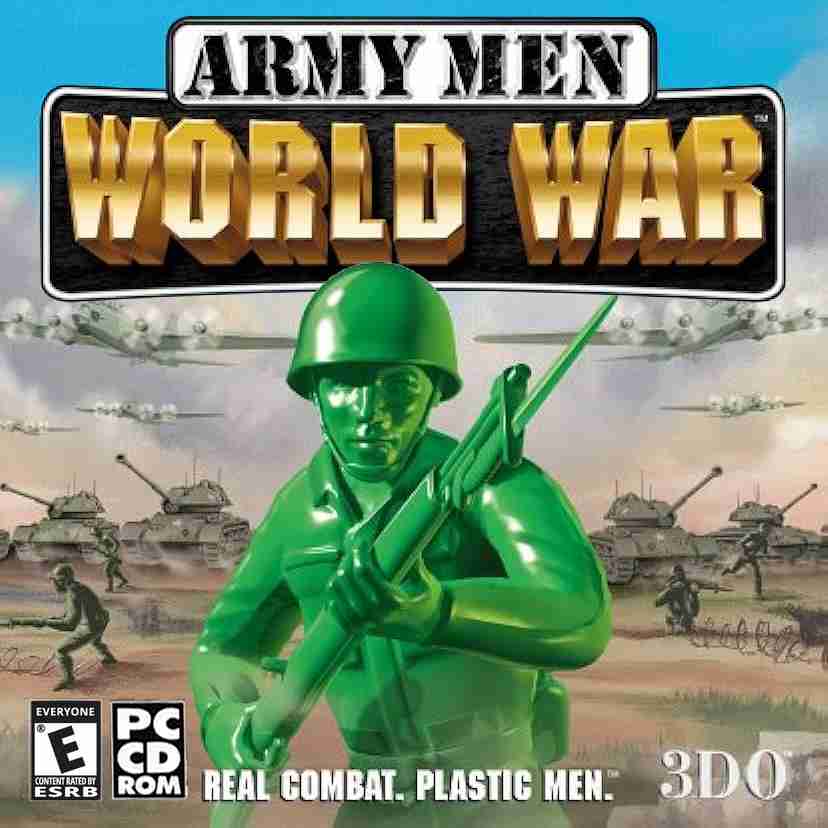
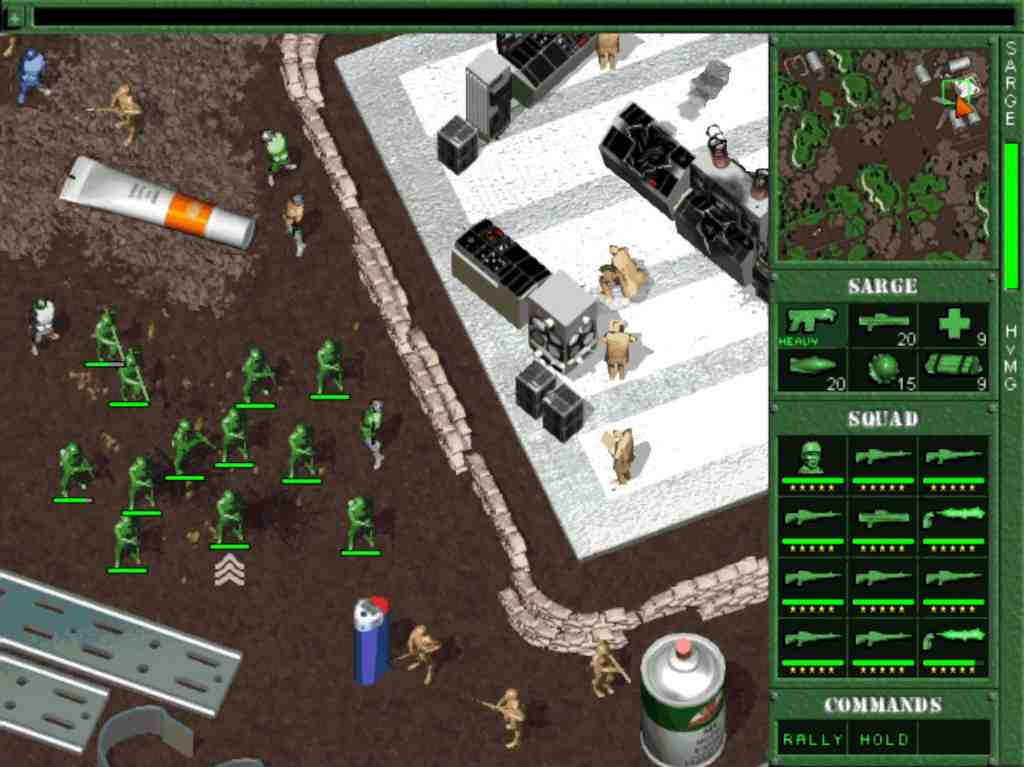
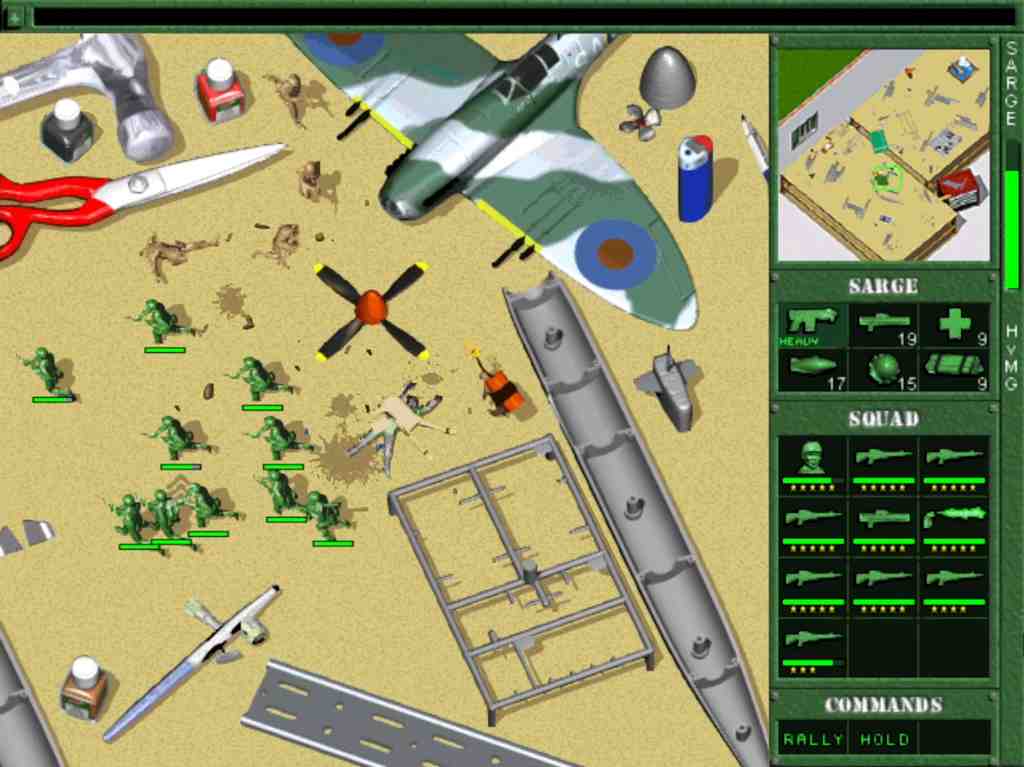
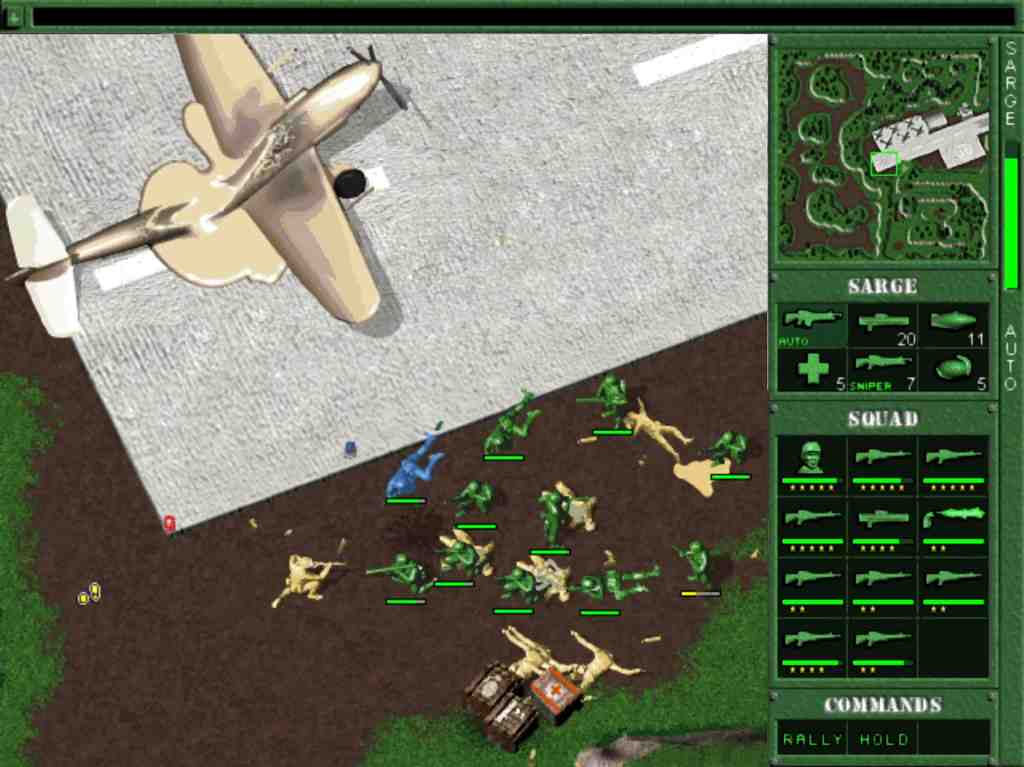
The first Army Men games, Army Men (1998), Army Men II (1999), Army Men: Toys in Space (1999), Army Men: World War (1999, PC version), and Army Men: Air Tactics (2000) were developed by The 3DO Company during the late ’90s. These titles were created for PC, though some would later be adapted to consoles.

At the time, 3DO’s internal development relied heavily on a mix of 3D modeling tools, custom engines, and asset pipelines tailored for low-end consumer hardware. Each game was built with a relatively short development cycle (often under a year) requiring assets reuse, modular design, and a streamlined production process.

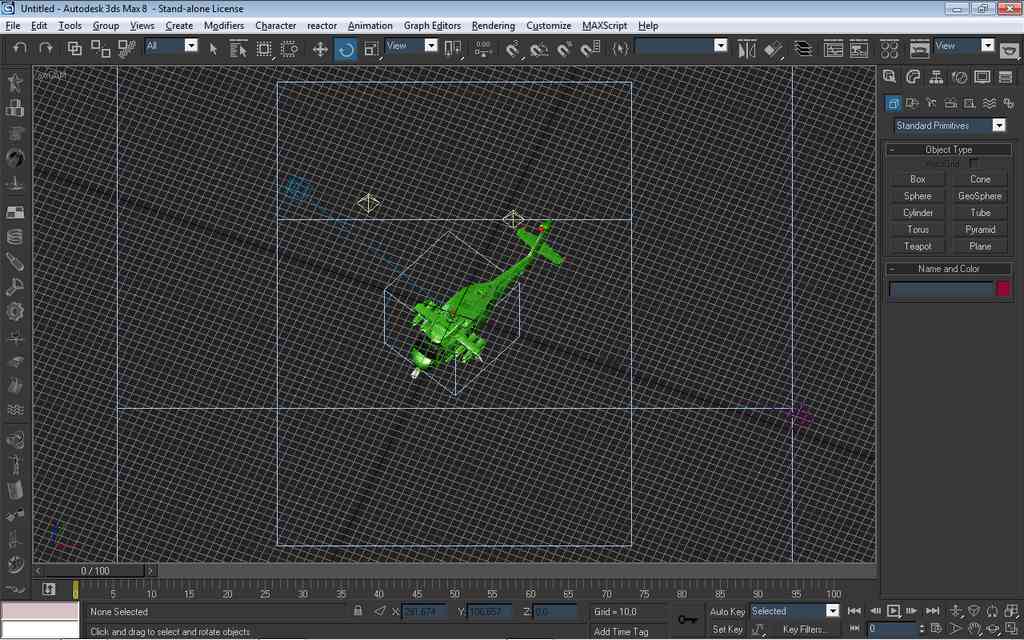
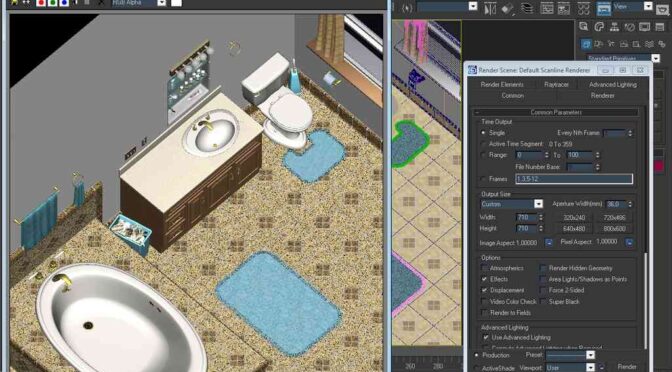
The visual style combined pre-rendered 3D elements (created in 3D Studio Max software) with in-game sprites and textures, carefully optimized to run within the memory and performance constraints of computers of the time. Meanwhile, cutscenes and promotional material often featured higher-quality renders that were directly representative of in-game graphics.

The combination of these production methods, rapid iteration, and the particular creative direction of 3DO’s art team gave the early Army Men titles their distinct aesthetic… halfway between miniature toy realism and stylized video game worlds.

1. Concept and Scripting

Designers began with a concept document defining the environments, enemies, mission objectives, and available weapons.

These documents were usually very functional, focusing on mechanics before narrative (although Toys in Space and Air Tactics had more elaborate storylines).

The narrative script and dialogues were written in parallel with level planning so the story wouldn’t interfere with technical limitations.

2. Creation of 3D Assets

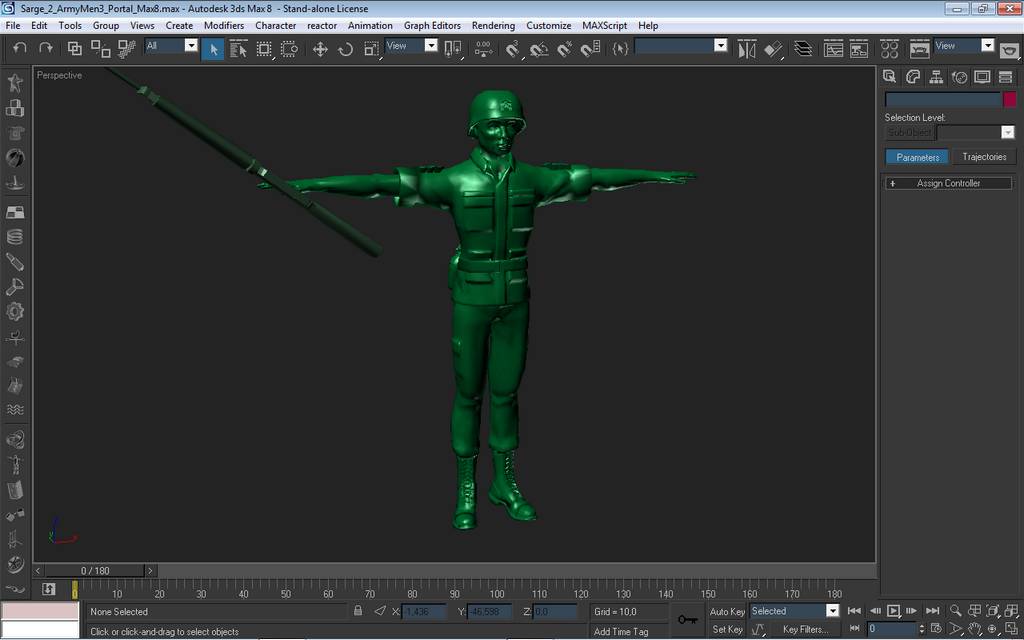
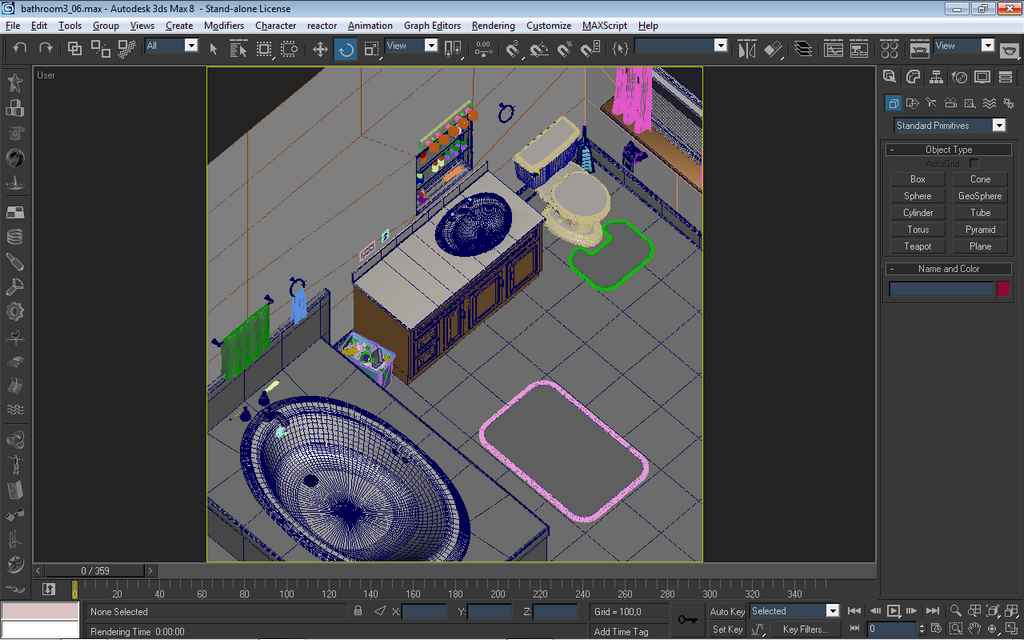
Models of soldiers, vehicles, and environments were made in 3D Studio Max.

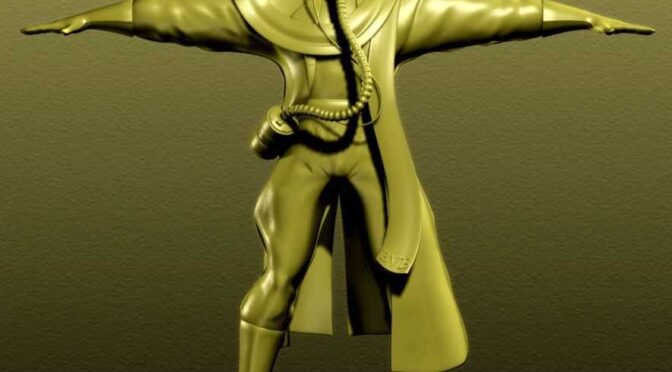
Sarge 3D model from Army Men Toys in Space

Although the final game used highly simplified sprites, high-quality 3D model versions were created for marketing renders and cutscenes.

The models were “baked” into sprites or textures, trimming polygons and reducing color palettes to fit within RAM and VRAM limits at the time.

It’s important to note that the 2.5D Army Men games were developed exclusively for PC; console versions used different adaptations of the game engine and design approach.

So… how?

2.1 – 3D Modeling and Texturing

The visual production of the early Army Men titles was a meticulous and multi-step process that combined 3D modeling, detailed texturing, and careful sprite rendering. Development teams began by designing each character, vehicle, and object as a fully realized 3D model in 3D Studio Max. These models were built with more geometric detail than the final games would ever display, ensuring that the rendered sprites would look crisp and convincing even at the relatively low resolutions of late 1990s PC games.

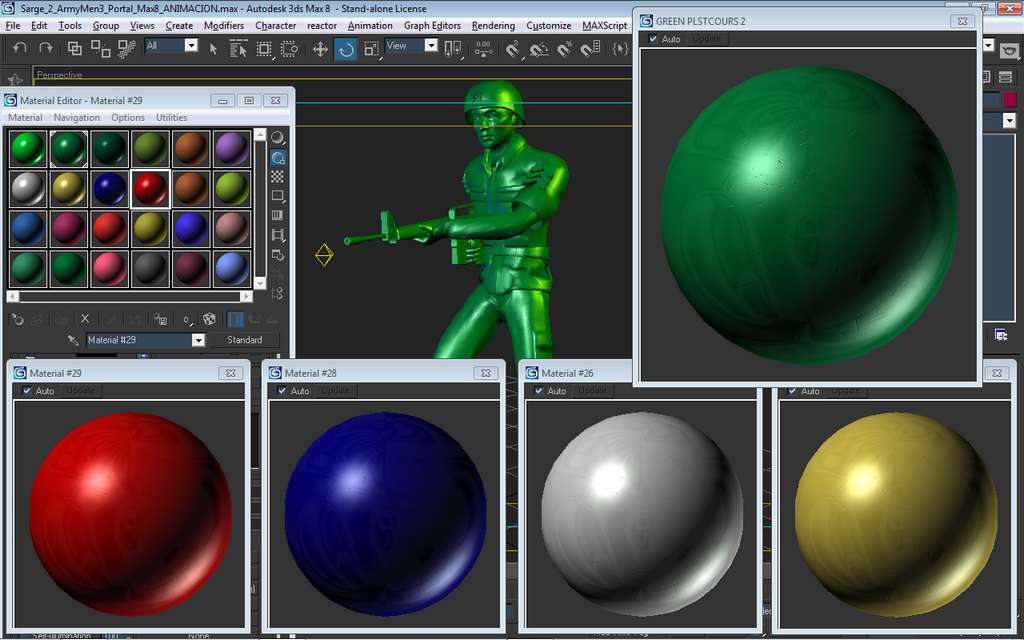
Textures were then painted by hand or derived from scanned materials, giving plastic surfaces their distinctive molded look. Special care was taken to simulate the subtle light diffusion and shading characteristics of plastic, which gave the Army Men their iconic, toy-like presence. Vehicles, buildings, and environmental props followed the same pipeline, often modeled with exaggerated proportions to read clearly from the game’s fixed viewpoint.

  • The process began in 3D Studio Max, where artists modeled soldiers, vehicles, weapons, and environmental props in full 3D.
  • Although the game ultimately used sprites (2D images), the models were initially built with full geometry, high-resolution textures, and realistic proportions for marketing renders and cutscenes.
  • Textures were painted by hand or generated from photographic references, then downscaled and palette-limited to fit the technical constraints of the game engine (often 256 colors per set).
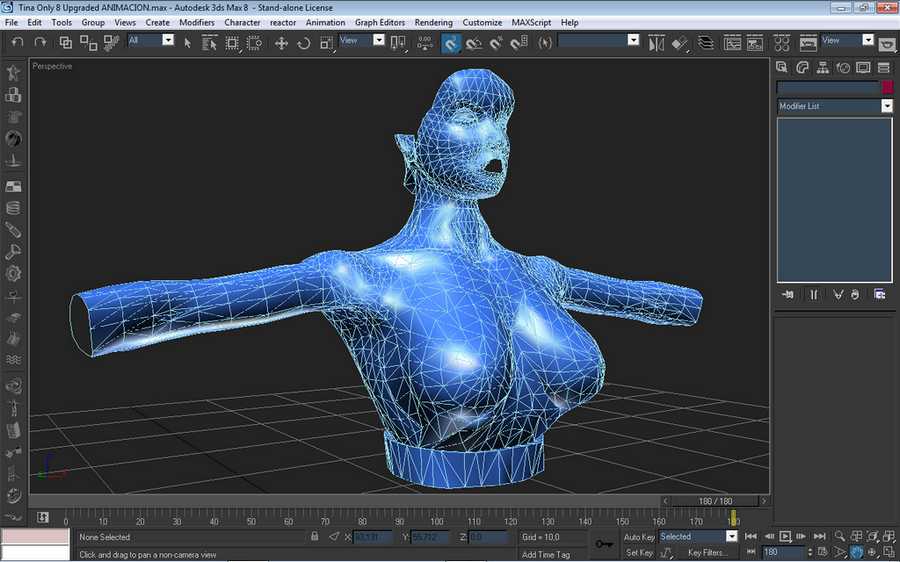
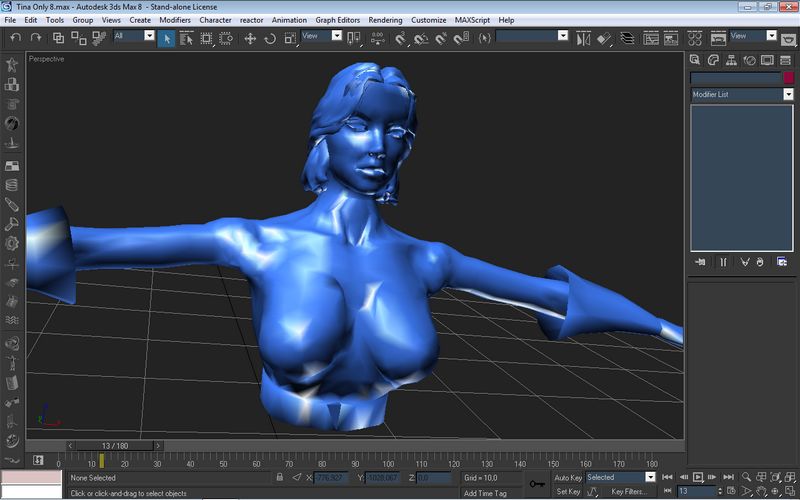
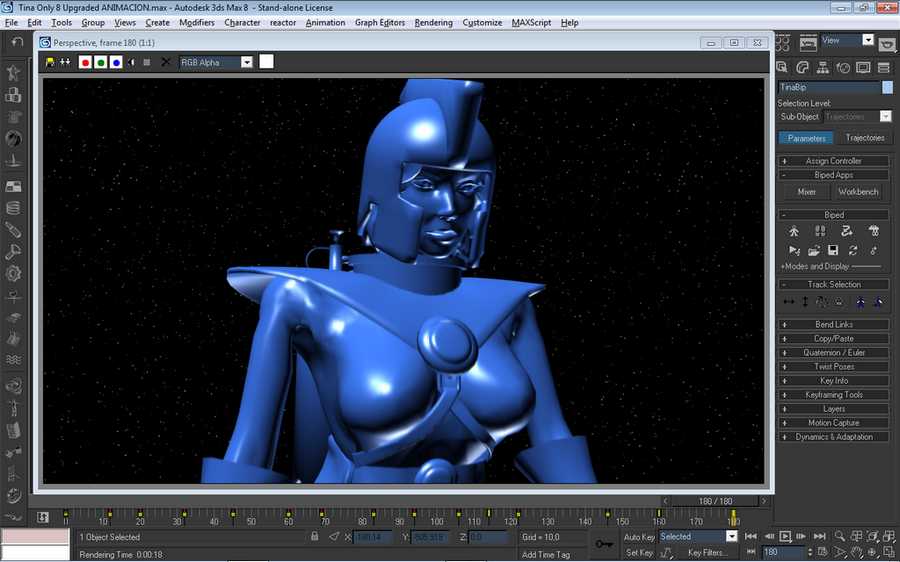
  • Each model was rigged with basic skeletons in Max’s “Biped” system for posing, not for real-time animation. All movement was baked into pre-rendered sequences.

Once modeling and texturing were complete, the development team moved to the rendering stage. Instead of importing the 3D models directly into the game engine, they were pre-rendered into 2D sprites. This technique allowed for a higher level of visual fidelity than real-time 3D of the era could achieve on average home PCs. Animations (such as walking, firing, or rotating turrets) were rendered frame-by-frame in 3D Studio Max, then exported as sprite sheets to be used in-game. Special effects like muzzle flashes, smoke, and explosions were often created as separate rendered sequences and composited on top of the base sprites.

2.2 – Environment Creation

The environments followed a similar principle. Terrain tiles, buildings, and interactive objects were modeled and rendered in segments, allowing designers to piece together maps within the game editor. Lighting was baked into these renders, giving the illusion of complex shading without taxing the PC’s hardware.

The gameplay itself was presented from a fixed isometric camera perspective, tilted at roughly a 45-degree angle. This viewpoint was carefully chosen to maximize the clarity of the battlefield while retaining a sense of three-dimensional depth. From this angle, players could easily distinguish elevation, obstacles, and the orientation of units. It also allowed artists to control exactly how models were rendered, ensuring consistent proportions and lighting across the entire game world.

The combination of high-quality pre-rendered graphics, baked lighting, and the stable isometric viewpoint gave the early Army Men games their distinctive “miniature war” aesthetic, striking a balance between technical limitations and the highly artistic ambition of 3DO’s Trip Hawkins.

  • Game environments were also modeled in 3D, but separated into terrain layers and static props.
  • Terrain tiles were rendered at fixed angles to match the isometric view, then stitched together in the in-house map editor.
  • Static objects (buildings, trees, fortifications) were rendered as isometric sprites with multiple damage states where applicable (e.g., intact, damaged, destroyed).
2.3 – Rendering Sprites
  • The 3D models were placed in a rendering scene with lighting and camera settings that matched the game’s perspective.
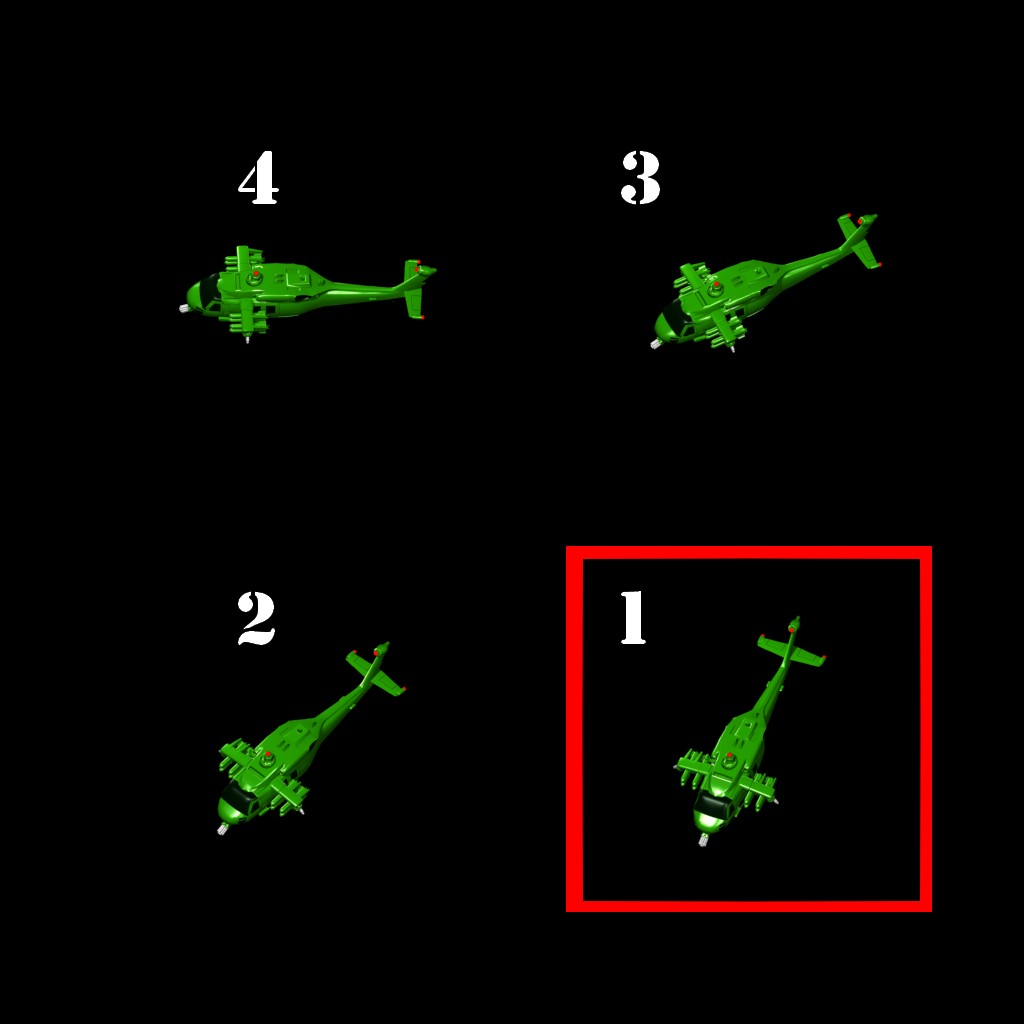
  • Soldiers and vehicles were rendered in 32 or 64 different angles, depending on their importance.
  • Animations (walking, shooting, reloading, turning) were rendered frame-by-frame into sprite sheets.
  • Each frame was then processed to remove the background, optimize colors, and align pivot points so the engine could rotate and move them smoothly.

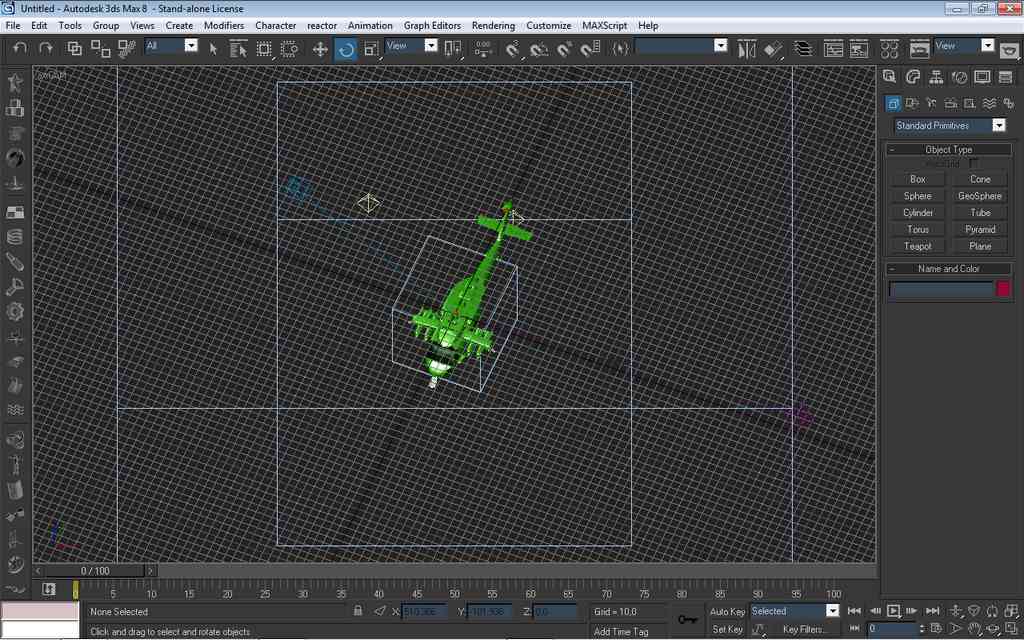
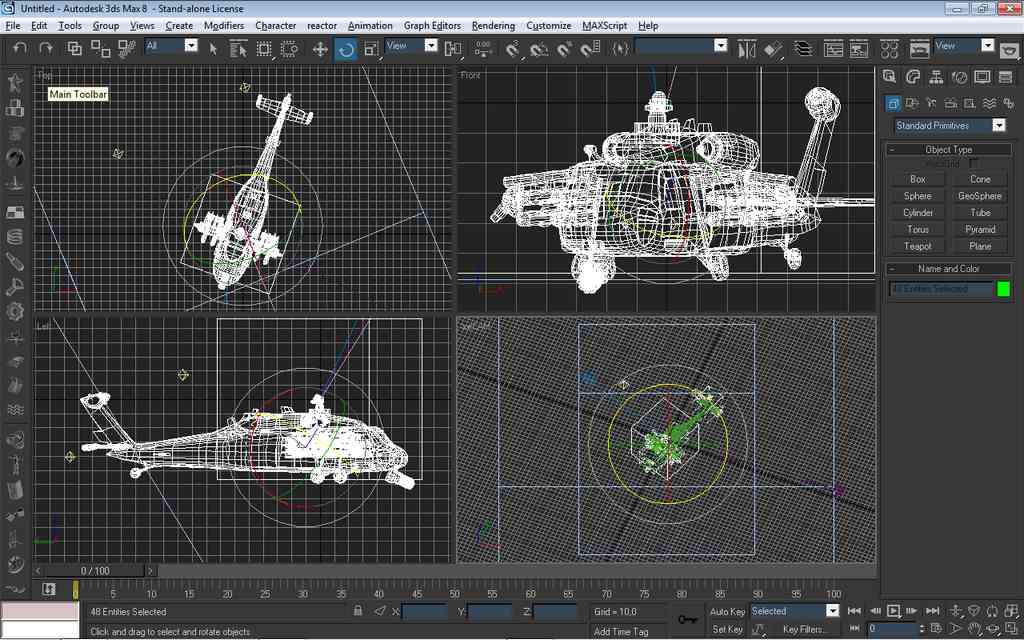
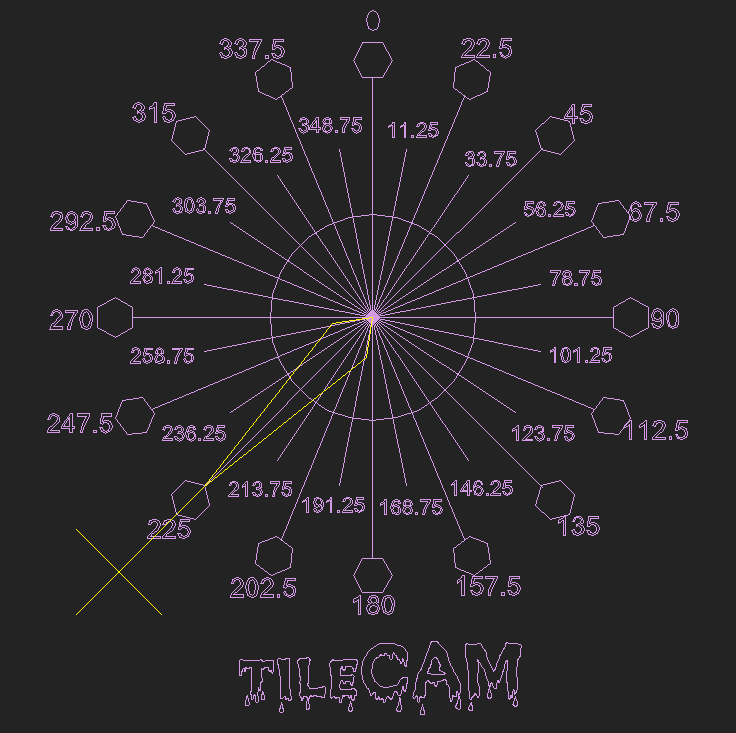
In the image below we can see the “Tile Cam,” or sprite capture position camera. A graphic that 3DO developers always kept in mind to know the angle of each of the multiple images they had to capture of each 3D model, to obtain the 360-degree motion effect of soldiers, vehicles, etc., in addition to each set of images carrying a weapon and the like. The yellow arrow, in addition to functioning as a clock hand indicating the angle of capture, also marks the height at which the camera should be positioned. The object/model goes in the center of the graphic.

2.4 – Special Effects
  • Explosions, muzzle flashes, smoke, and fire were usually hand-drawn frame-by-frame in a pixel art program to achieve a stylized look and keep file sizes small.
  • Some effects, like shadows and ambient lighting, were faked by rendering a semi-transparent dark shape beneath the units.
  • Transparent effects (glass, water, energy shields) were simulated with dithered patterns instead of true alpha blending, to ensure performance on lower-end hardware.
2.5 – Movement and Animation Systems
  • Despite being based on 3D models, all gameplay movement was sprite-based. Each unit had pre-rendered frames for each movement direction.
  • The engine swapped frames quickly to simulate animation, while changing the sprite set to match the direction of travel.
  • Rotation was not continuous but snapped between the pre-rendered angles, giving the characteristic “stepped” turning look.
  • Collision detection was based on simplified bounding boxes rather than the full shape of the sprite.
2.6 – Integration into the Engine
  • All assets (units, terrain, effects) were packed into proprietary resource files.
  • The engine combined terrain tiles and object sprites in real-time, overlaying animated units and effects according to their Z-order (depth).
  • Lighting changes were simulated with palette swaps, allowing entire environments to shift from day to night without rerendering the assets.

3. Maps and Levels

Environments were built using an in-house proprietary editor designed specifically for the Army Men engine.

This editor allowed placement of terrain, static objects, and “event points” (enemy spawns, mission scripts, sound triggers).

Maps were generally small to keep loading times low and were often connected through transition screens or cutscenes.

4. Programming and Engine

The Army Men engine was an evolution of a framework that 3DO had already used in other strategy and action games.

It supported:
  • Pseudo-3D sprites and pre-rendered rotations.
  • Multiple terrain layers to simulate elevation.
  • Basic AI scripting and enemy behavior.
  • The code was primarily written in C/C++, with auxiliary tools in Visual Basic for resource conversion and packaging.
4.1 – How camera, pathfinding, and depth sorting worked

Since that’s what made Army Men’s isometric view feel dynamic despite being built entirely from static sprites. That part connects directly to how the movement system was implemented.

The isometric camera itself was fixed in angle but could pan across the battlefield. Camera movement was tied to mouse edges or keyboard input, and it followed a smooth scrolling pattern to maintain player orientation. Since the camera never rotated, all sprites could be pre-rendered from the same set of angles, greatly reducing memory use and production time.

Pathfinding relied heavily on an A* (A-Star) algorithm adapted to the isometric grid. The system calculated optimal routes while accounting for terrain type, impassable objects, and unit collision. Because maps often featured elevation changes (ramps, cliffs, and bridges) the pathfinding system also factored in “height layers,” preventing units from attempting impossible routes. This was especially important for vehicles, which had stricter movement constraints than infantry.

Depth sorting (deciding which objects should appear in front of or behind others) was handled through a “Y-sorting” system. The engine drew objects in order of their Y-coordinate in world space, meaning that units lower on the screen (closer to the player’s viewpoint) would be rendered on top of those further back. This simple yet effective technique ensured consistent layering without the need for real-time 3D z-buffer calculations.

4.2 – Movement, Interaction, and Technical Implementation in the Isometric Engine

The fixed isometric perspective of the early Army Men titles was not just a visual choice.. it directly influenced how movement, interaction, and gameplay logic were implemented.

Unit movement was handled on a 2D coordinate grid that corresponded to the isometric map’s tile layout. Each tile represented a fixed unit of space, but because the camera was angled, the game had to apply a transformation to convert “world” coordinates into their isometric screen positions. This meant that while players saw units moving diagonally across the battlefield, the game internally calculated their positions in standard X-Y Cartesian space.

Interaction with the environment followed a “selection → command → execution” model. When the player selected a unit, the game temporarily highlighted its sprite and displayed its selection circle, a 2D ring projected onto the ground plane. Issuing a movement or attack order triggered an internal check: the game verified whether the destination tile was valid, whether the target could be reached, and whether line-of-sight was available (a simplified visibility check rather than true 3D ray tracing).

Together, these systems created a smooth and intuitive gameplay experience despite the limitations of late-90s PC hardware. The isometric rendering allowed for highly detailed graphics, while the underlying grid-based logic kept gameplay predictable, readable, and strategically satisfying.

5. Testing and Optimization

Testing was intensive because different PC systems required different optimizations to work. Back then, consoles were a single, unified system, but on PC, there are multiple different systems that require tweaking the game for proper universal operation. At that time, the game that was launched usually was the final version, with no DLC to fix the game post-launch. Although patches did exist, usually just one. Everything was always released in physical format…

On consoles, animation frames, polygonal 3D objects and texture details were reduced, and sometimes entire environmental elements were removed. But in this 2.5D games, usually was a matter of programming tweaking and fixing.

Testers reported bugs using printed screenshots (yes, on paper) with handwritten annotations.

How Marvel’s Missteps Mirror the Fall of Army Men: A Lesson in Creative Oversaturation

When James Gunn (now the creative head of DC Studios) was recently asked what he believed had hurt Marvel, his words were both honest and damning: “Too much content. Not enough planning. It killed them.” His remarks, aimed at the overextension of Marvel Studios in the wake of Avengers: Endgame, could just as easily describe what happened to the Army Men franchise in the early 2000s.

Back in the late ’90s, Army Men stormed the gaming world with a simple yet irresistible premise: toy soldiers brought to life in an imaginative, war-torn plastic world. The original titles stood out with charming aesthetics, quirky humor, and solid gameplay. But the publisher, 3DO, quickly turned that initial success into a production frenzy. From 1998 to 2003, they pushed out over a dozen Army Men titles—a pace that left little room for refinement or reinvention.

Back in the heyday of 3DO’s rapid-fire release strategy, even those of us in the The Army Men videogames channel were caught off guard. Titles arrived so frequently that not even the fans seemed fully aware of what was launching (or when). By the time a new game crossed our radar, it was often already out in the wild, too late. In an industry where annual sports releases were considered the norm, Army Men shattered expectations by flooding the market with an unrelenting stream of entries. No amount of pre-release buzz could keep up. The public wasn’t just underprepared: they were overwhelmed.

Much like Marvel’s recent deluge of films and Disney+ series, 3DO’s Army Men games began to feel rushed, repetitive, and disconnected. Without a clear long-term narrative or gameplay evolution, fans began to lose interest. By the time fresh ideas were needed most, the brand had burned out… and 3DO filed for bankruptcy in 2003.

James Gunn’s criticism of Marvel’s strategy (greenlighting projects without finished scripts and saturating the audience with underdeveloped content) perfectly echoes the pitfalls of 3DO. Both cases show how creative properties, no matter how beloved, can collapse under the weight of rushed schedules and corporate overreach.

The Lesson? Sustainability in storytelling matters more than ever. The audience craves meaningful worlds, not just more content. In the age of ever-growing universes (cinematic, gaming, or otherwise) the smartest path forward is one paved with vision, patience, and purpose. Part of what was missing in those years was the breathing room—a chance for the audience to anticipate, absorb, and get excited. Great franchises don’t just drop content; they build moments. But with Army Men, there was rarely time to prepare the public or give each title its spotlight. Without that crucial window to inform and engage players, even solid ideas were lost in the noise.

Fake Army Men images

The Truth Behind the Famous “In-Game Screenshots” of the First Army Men Games

There are phrases that have become part of gaming folklore. One of the most common (and persistent) is:

“It was from a beta version…” —said with the tone of someone convinced they’ve uncovered a hidden development secret.

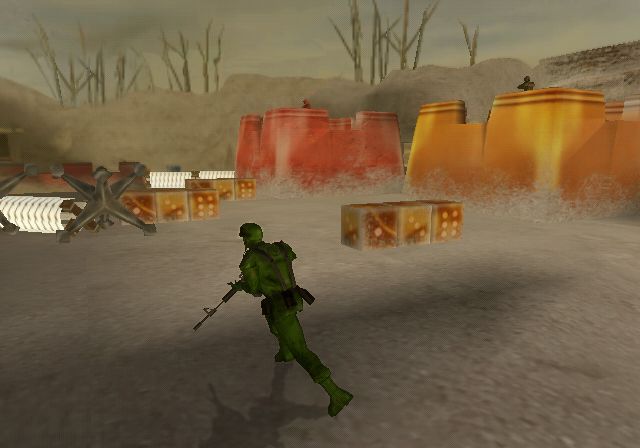
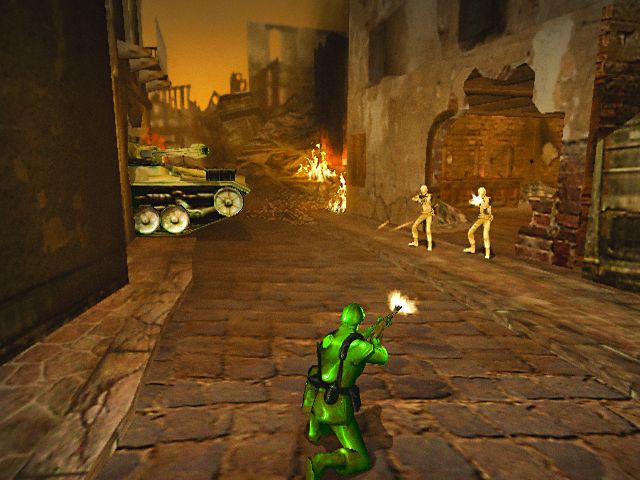
But when it comes to Army Men, many of those promotional screenshots were not beta versions of anything. In fact… they weren’t even screenshots.

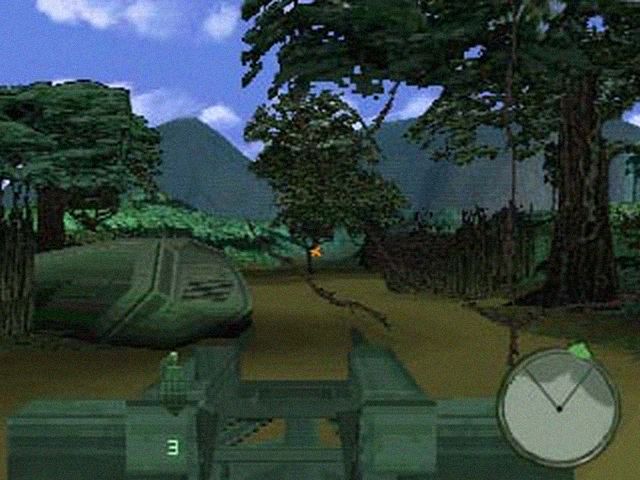
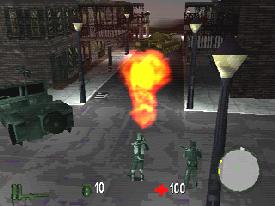
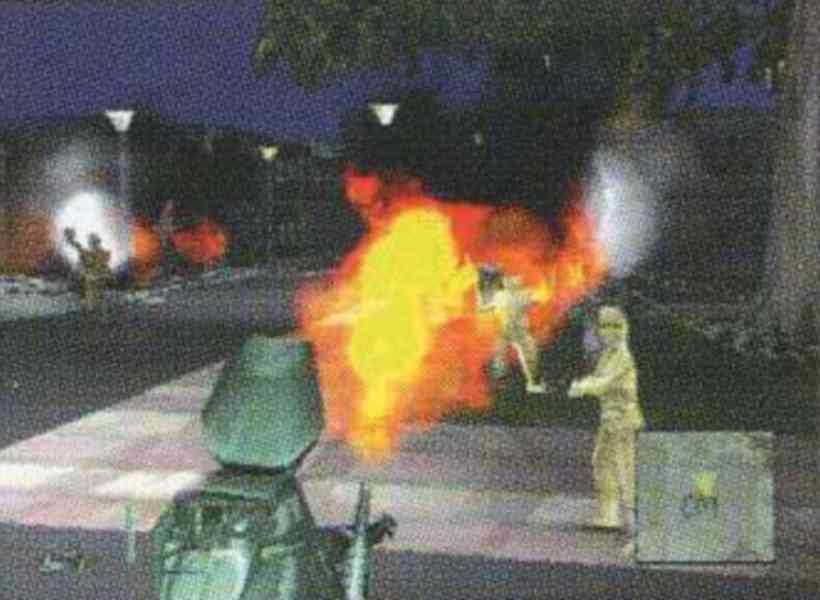
Slightly modified screenshot of PS1 Army Men: World War used in ads all over the internet at the time

What Looked Like In-Game… Wasn’t

Back in the golden age of 3DO, when Army Men was just beginning to take shape as a franchise, the creative team had a challenge: They needed a visual way to pitch the idea before the game was even fully designed.

Veteran developer Michael Mendheim, who played a crucial role in conceptualizing the Army Men universe, would put together digitally composed images to present the tone and feel of the project.

These images were a mix of:

  • Independently rendered 3D models.
  • Partial engine screenshots, when available.
  • Added effects like smoke, fire, and lighting.
  • And of course, a healthy dose of Photoshop.

They were never meant to be real gameplay footage: they were visual mockups, created to evoke the style, mood, and action the final product was aiming for.

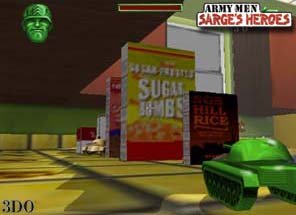
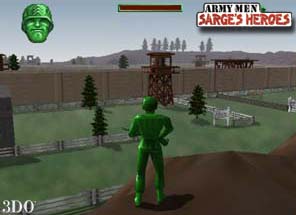
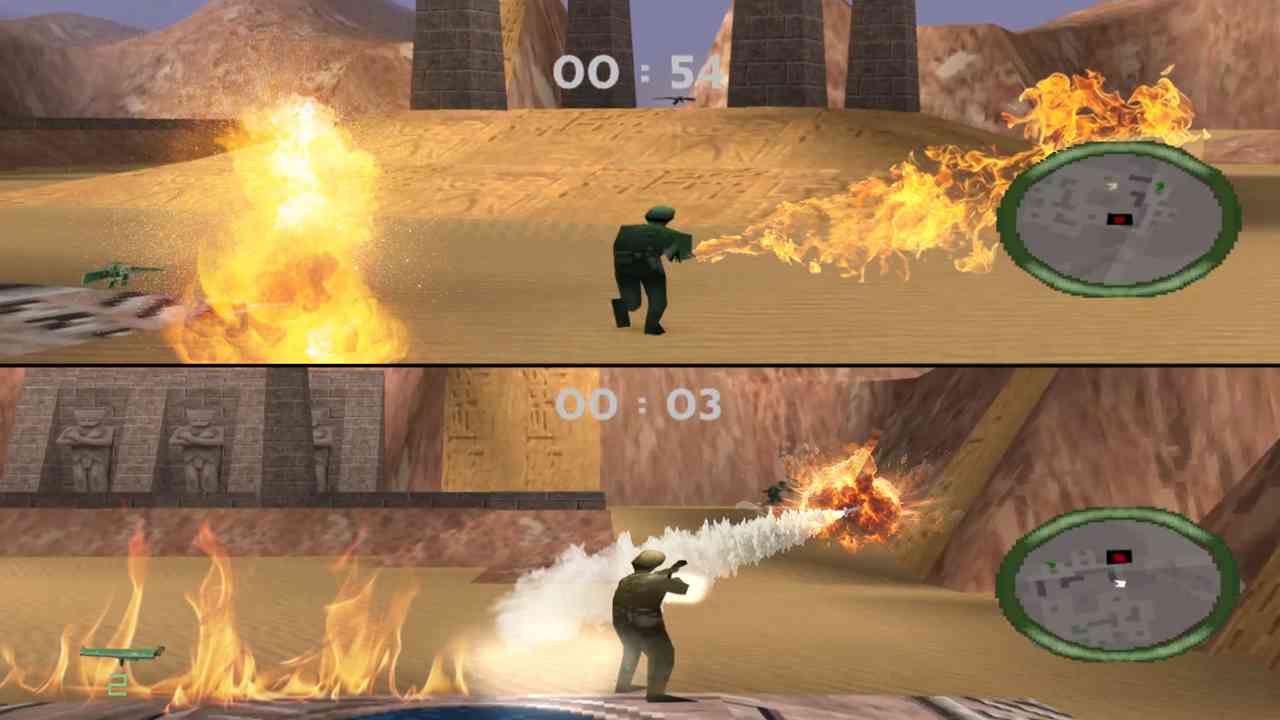
Slightly modified screenshot of N64 Army Men: Sarge’s Heroes used in ads all over the internet at the time

Although with minor modifications to the images, these are surely from the Army Men: Sarge’s Heroes engine for the Nintendo 64, but before going through the final version for the N64, it was actually a beta version of the levels and functions, not very different from the final version.

When Marketing Takes Creative Liberties

What’s interesting is that, even though the developers understood these images were purely conceptual, 3DO’s marketing team used them in advertisements as if they were actual in-game screenshots.

These images showed up in:

  • Magazines
  • Game boxes
  • Promotional flyers
  • Manuals
  • And even official press kits

The result? Players thought that’s how the game would look. And while that wasn’t exactly true… it worked. The hype exploded. The visual concept of Army Men (green plastic soldiers fighting battles in real-world environments) instantly captured players’ imaginations, long before the games were even finished, even a few years before 1998 Army Men.

The Speculation That Never Died

Even today, many fans still insist that those images came from early builds or beta versions of the games.

You’ll still hear comments like:

“This must be from a lost prototype…”

Or comments like:

“They had to downgrade the graphics later due to hardware limitations.”

And while it’s true that Army Men underwent plenty of visual changes during development (and yes, they had to scale things down to run on systems like the PlayStation 1 and Nintendo 64) those promo shots were not captured from actual working versions of the game.

People who worked with Photoshop or 3D Studio Max back then can clearly recognize the techniques used in these composites. If anything, they were stunning examples of concept art disguised as gameplay.

In a way, we wish they were real beta shots… it would’ve added an extra layer of mystique to the franchise’s development history. But no, it was just clever marketing. Fake… but effective.

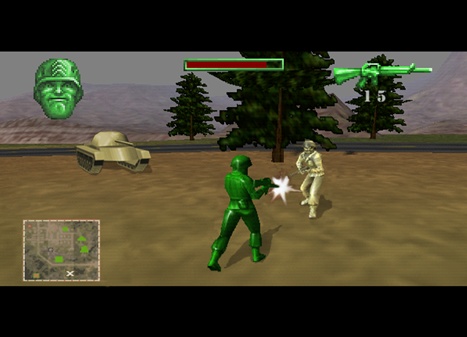
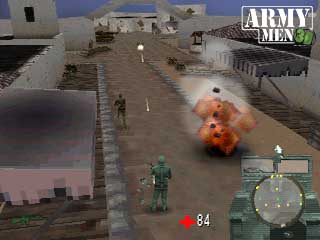
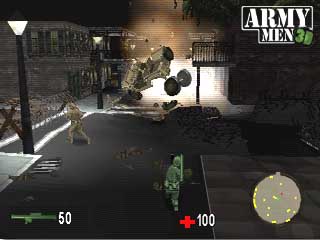
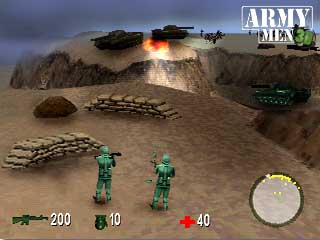
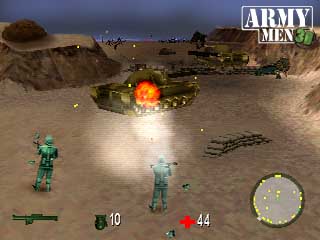
Modified screenshots of the “supposed” Army Men 3D beta version for PS1, used in promotional content all over the internet at the time

Deception or Strategy?

Today, in the era of frame-by-frame breakdowns and mandatory “not actual gameplay” disclaimers, this kind of tactic would get you dragged online in seconds. But in the ‘90s, with a franchise as visually unique as Army Men, it was a legitimate (and successful) marketing tool.

Some might call it deceptive. Others see it as an effective way of presenting an evolving creative vision.

Either way, those images weren’t beta builds, they weren’t unreleased versions, and they weren’t screenshots from a hidden dev console.

They were Photoshop. Plain and simple. And in context… they were brilliant.

What Does This Say About the Toyverse?

Like many good stories in the Toyverse, this one also carries a lesson. Just as molded toys become soldiers with names, stories, and purpose, a fake image can become the spark that brings an entire world to life.

Those visuals (however artificial) were the first real representations of the Army Men franchise. Before missions, before bugs, before battlefield chaos… there was a carefully crafted picture. And it worked.

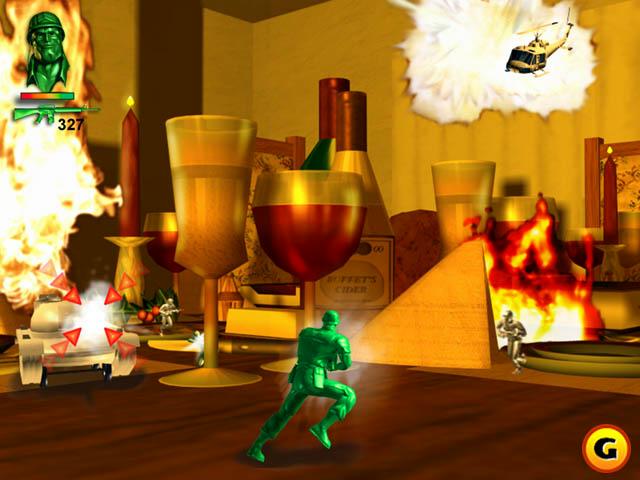
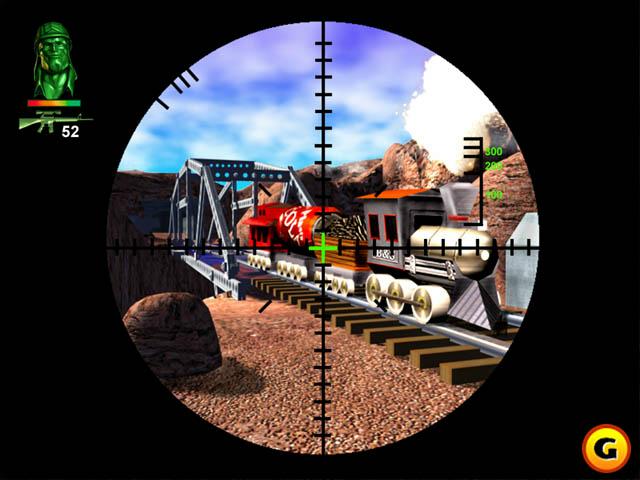
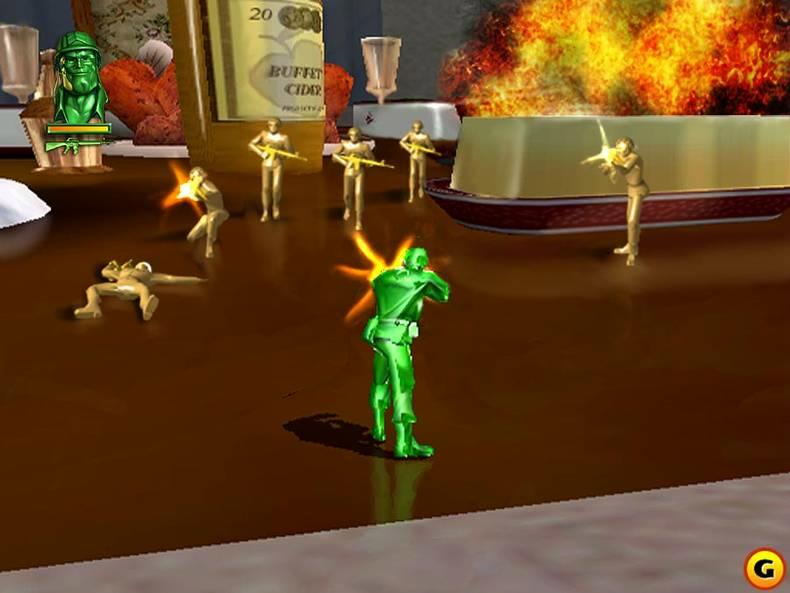
Heavily fake screenshots of Portal Runner (PS2) where they used heavy 3D CGI models to make concept screenshots that 3DO used in promotional content on magazines and all over the internet at the time

Bonus: Where to See These Images Today?

Many of these fake-but-iconic visuals still survive today in:

  • Archived game magazines (GamePro, EGM, etc.)
  • Scanned promotional material
  • Original manuals
  • The official 3DO websites via the Wayback Machine
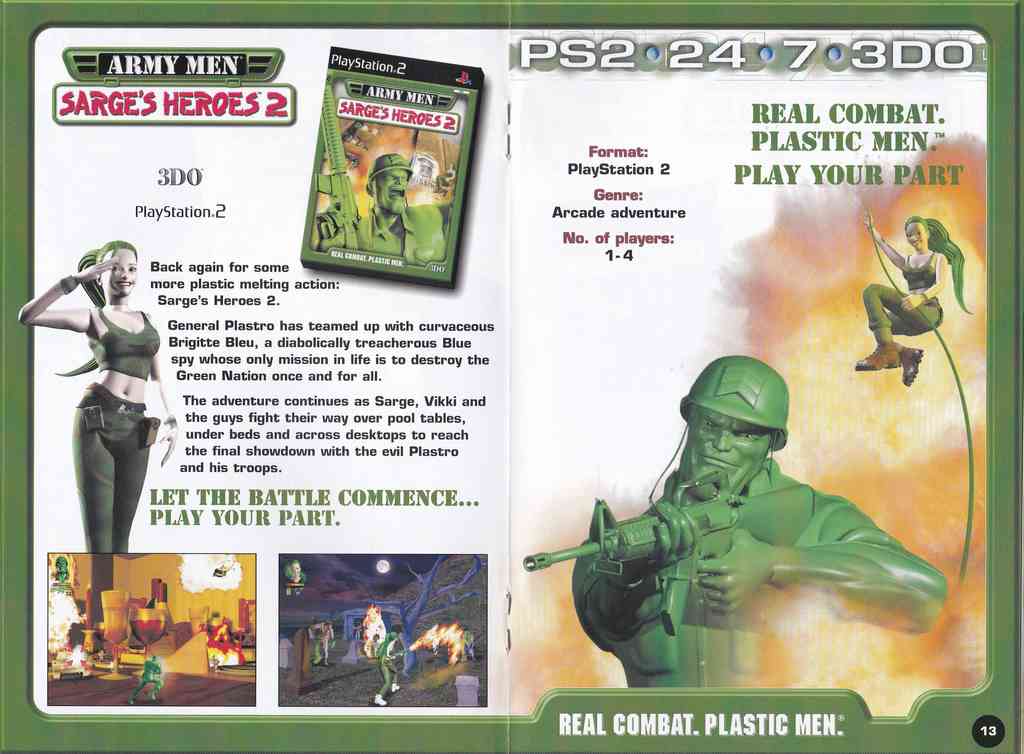
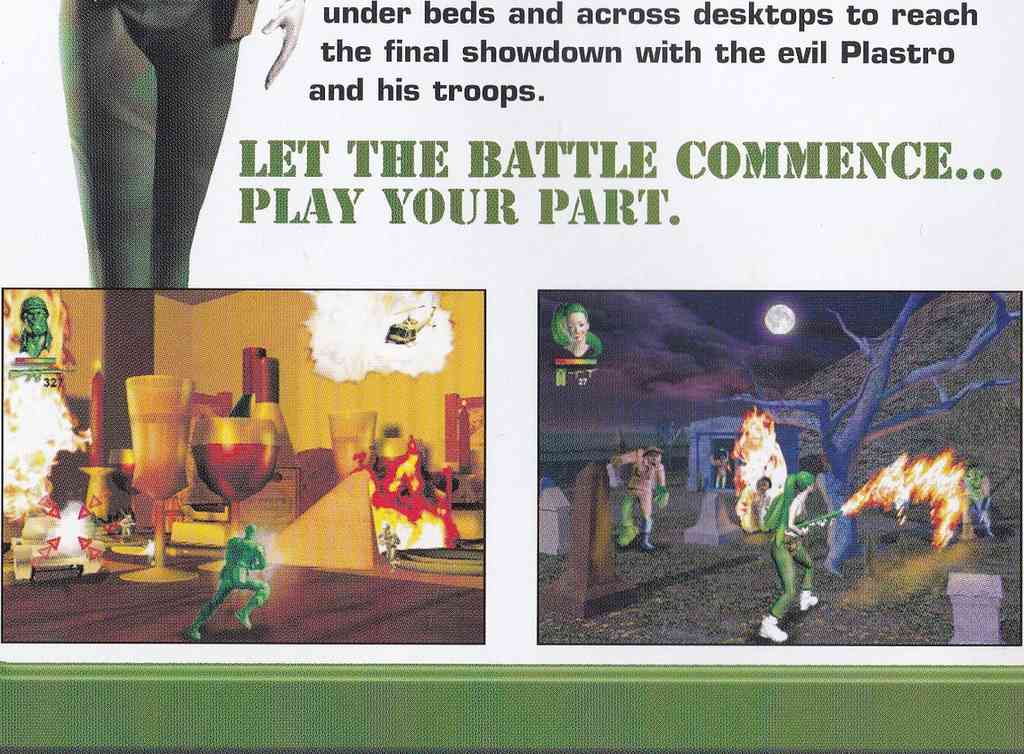
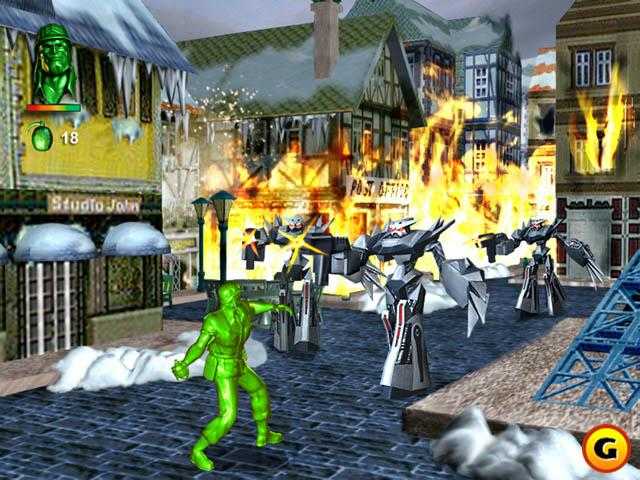
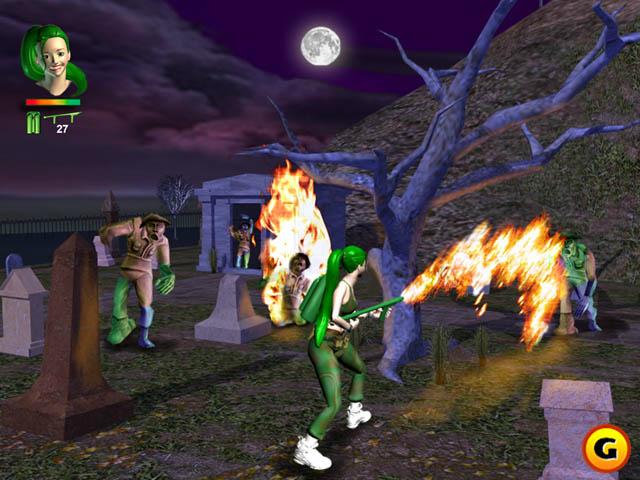
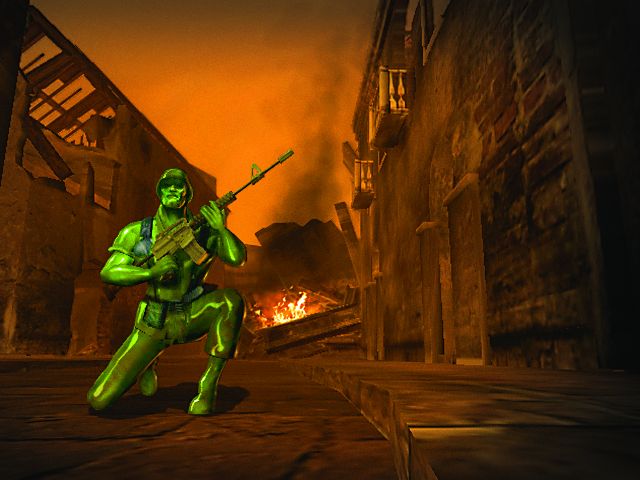
Heavily fake screenshots of the “supposed” Army Men Sarge’s Heroes 2 for PS2, used in promotional content on magazines and all over the internet at the time

In the game’s different media promotional contents, these screenshots were used to show off the game in its Playstation 2 version. In reality, they are composites using partial images of the game’s actual stages generated in a different engine or stage editing program, along with CGI models of the protagonists and a lot of added effects, something impossible to do for the Playstation 2. These were most likely images made as concept art of how the game should have looked for its development.

And of course, at ArmyMen.com.ar, where fans are still collecting and preserving all official documentation and rare media.

True BETA with minor modifications

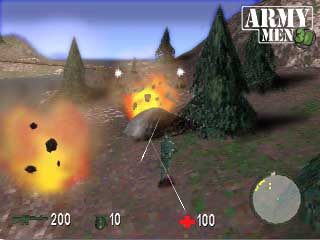
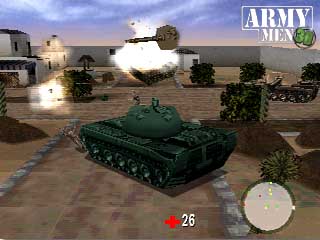
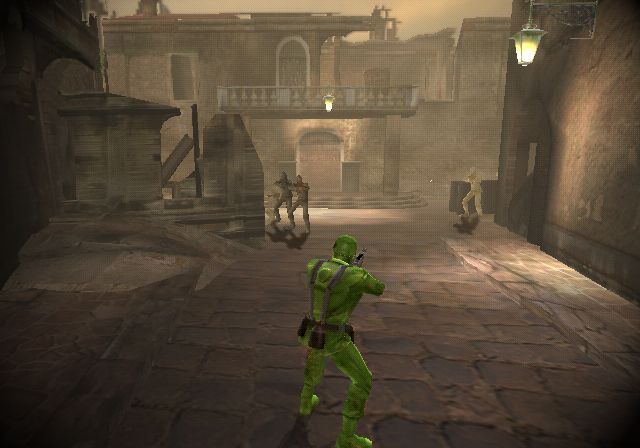
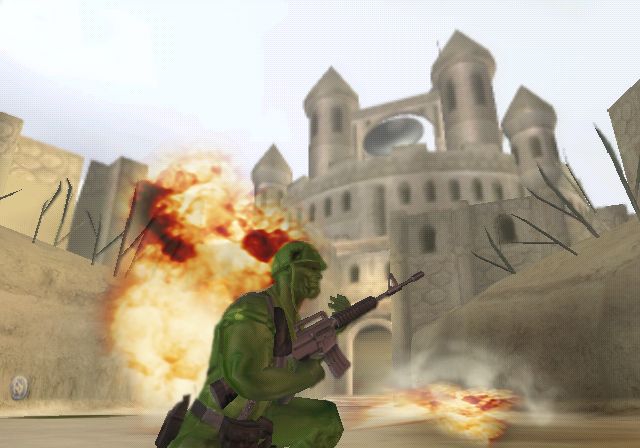
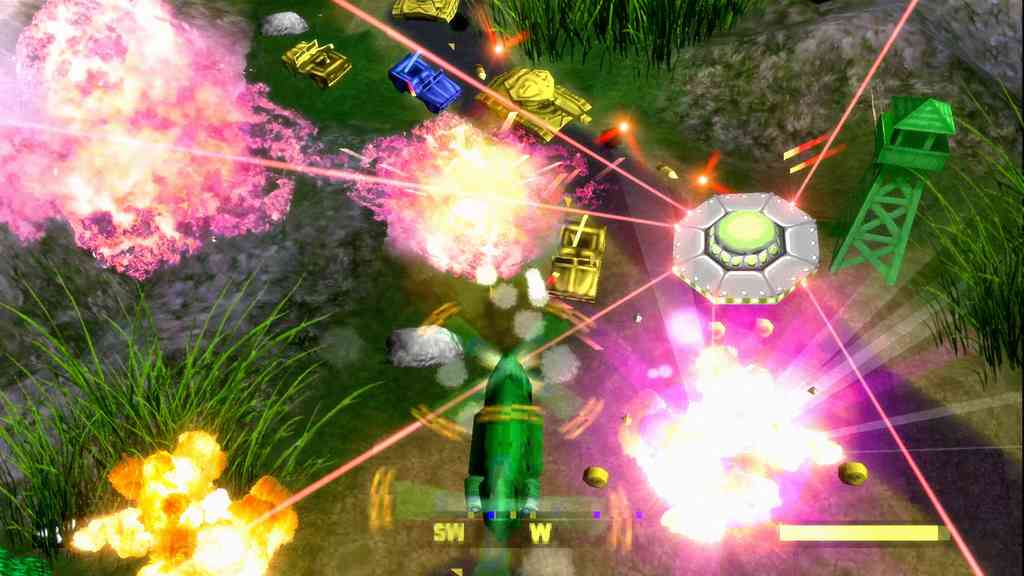
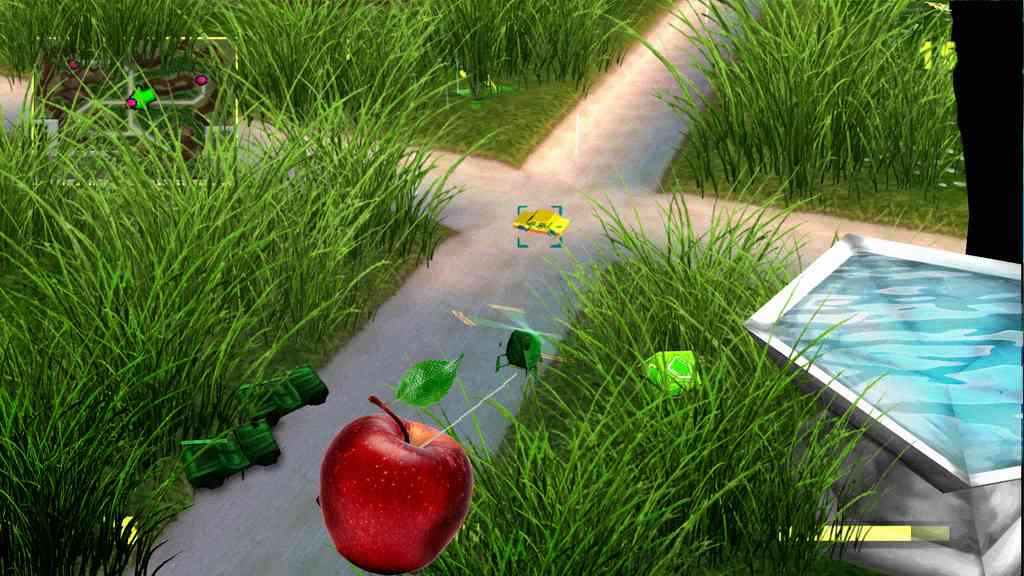
The last 3DO game wasn’t exempt from 3DO tactics. Although these are real in-game images from the game engine (Zero Engine), they have minor additions, such as some soldiers, tanks, and explosions. And these, as they didn’t report, are images from the actual beta, up to the point where 3DO worked on it, before Global Star Software took over and finished the game.

Epilogue: Not Real Gameplay, But Still Part of the Game

And óo players ever got to take control of Sarge.Because sometimes, a fake image contains a very real truth: The spirit of a franchise that helped shape an entire generation’s imagination.

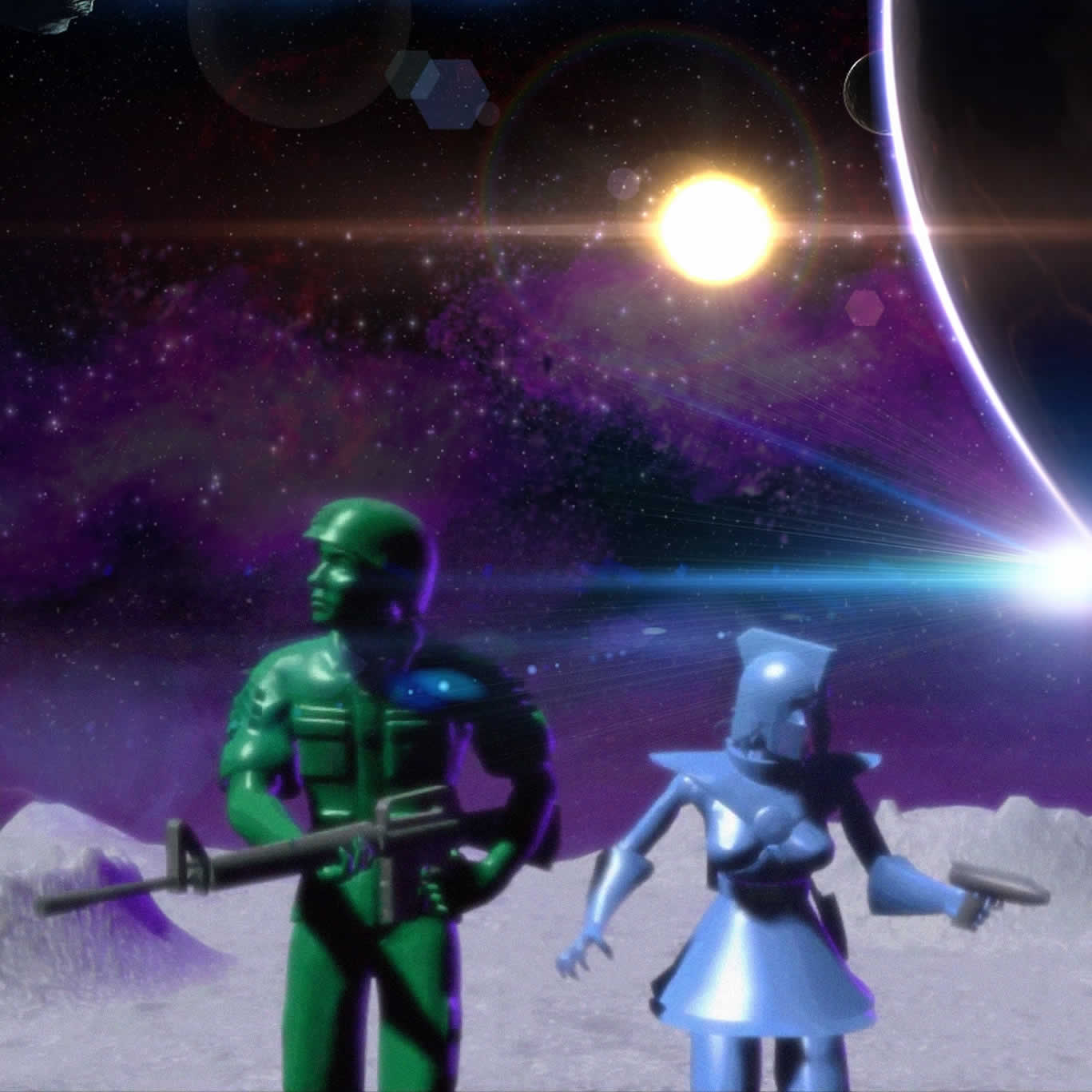
This are some of our own “fake” promotional images. We usually use them for our video thumbnails… but from now on we’ll be using them to promote older 3DO games a little… excessively.

The Whiskey Convention

Army Men Alliance Whiskey Convention

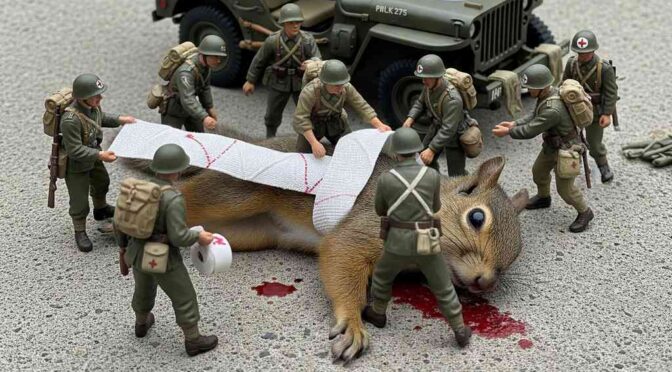
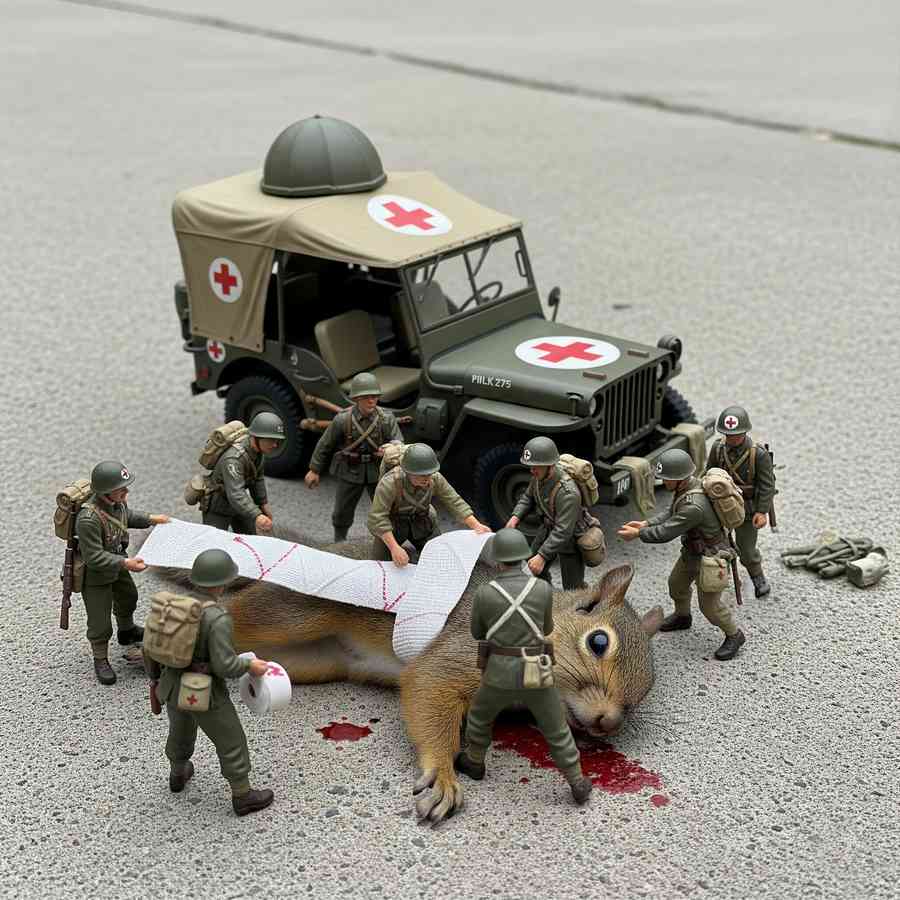
The Whiskey Convention is a toy convention that govern toy law in the Toyverse (also known as Whiskey Law) that aim to protect victims of toy conflicts, including not only Toykind, but other life forms such as animals in the Real World. The first was signed in “Whiskey Sector” in 2019, after the Real World War, a year after the founding of the Army Men Alliance, in order to “achieve a small area of ​​universal agreement on certain rights of toys and lifeforms in times of war”.

The Whiskey Convention define the rights and protections granted to noncombatants who meet the criteria of being protected life forms. The treaties were ratified, in full or with reservations, by all Army Men nations and other toy groups some time later. The Whiskey Convention refer only to protected noncombatants in war. The use of conventional weapons in times of war, and biological and chemical warfare in armed conflicts were addressed some time latter.

Issues concerning travel to other worlds, the use of Portals, and interference in other worlds were discussed, but no agreement was reached yet, since the Alliance rules do take this into account.

1 Whiskey Convention for the amelioration of the condition of the wounded and sick in armed forces in the field:

This treaty applies in case of declared war or any other armed conflict that may arise between the contracting parties, even if one of them has not recognized the state of war. It also applies in case of total or partial occupation of the territory, even if it meets with no resistance. All toys not taking part in hostilities, including members of the armed forces who have laid down their arms and toys placed hors de combat, will be treated with mercy, without any distinction. Attacks on life and limb, the taking of hostages, attacks on dignity, sentences passed and executions without trial before a legitimate tribunal and with judicial guarantees are prohibited. The wounded and the sick will be collected and cared for. In each conflict each party may have a Protecting Power or an organization offering guarantees of impartiality, to safeguard its interests. Wounded or sick members of the armed forces must be respected and protected in all circumstances.

2 Whiskey Convention for the amelioration of the condition of the wounded, sick and shipwrecked members of armed forces at sea:

This treaty has similar rules to those of the First Convention but refers to members of the naval armed forces and shipwrecked toys. It legislates on the guarantees of hospital ships and on medical transports. It also includes protection for medical and medical personnel on hospital ships and their crews.

3 Whiskey Convention on the treatment of prisoners of war:

It has the same General Provisions as the two previous conventions. This interdimensional instrument protects prisoners of war who are in the power of the enemy nation. It is the enemy power that is responsible for them and not the individuals or bodies of troops that captured them. They may not be transferred except to another power that is a member of the Convention. Prisoners of war must be treated fairly in all circumstances. Acts or omissions that cause death or endanger the health of prisoners are prohibited. Prisoners have the right to respect as individuals and their honour. Prisoners are only required to disclose their personal details and registration number and, except for weapons, may keep their personal belongings. Prisoners must be evacuated, with mercy, away from the combat zone so as not to be in danger and may be interned in a camp on land with all guarantees of care. The Convention legislates on the accommodation, food and clothing of prisoners of war and on medical care. Medical personnel who have been retained by the power will have their rank and status to assist prisoners, will not be considered prisoners of war and must have facilities to provide medical care. Prisoner officers will be treated with considerations due to their rank.

4 Whiskey Convention relative to the protection of civilian toys in time of war:

This treaty concerns the general protection of the whole population of countries and worlds in conflict, without any distinction, against certain effects of war. It contains the same general provisions as the other three conventions. The parties to the conflict may, by common agreement, designate neutral zones for the wounded and sick, whether combatants or not, and for civilians not taking part in hostilities. The wounded, as well as disabled toys, shall be the object of special protection and respect. Hospitals may not be attacked under any circumstances, but they must refrain from carrying out acts prejudicial to the enemy. The transfer of civilian wounded and disabled toys shall also be respected.

Sources for this article:

https://wikipedia.org/wiki/Convenios_de_Ginebra

Who was Baron Von Beige in the past?

Von Beige’s origin is unknown. It is only known that he appeared at the same time as William Blade, both fighter pilots during the Tanic-Greeno World Wars.

Much like William Blade, this nameless pilot wore the same type of cowboy hat with the mark of the Union Cavalry, but without glasses. Blade’s provenance is classified, if searched in the Green Army archives, therefore it is most likely that the same will happen with Beige. Although currently, having access to the Tan classified files, there is no mention of the Baron until shortly before Air Attack 2 (maybe they were destroyed).

Both Blade and Von Beige (at that time an unnamed pilot) were pilots who did not go out of the ordinary until they found their ideal vehicle. In Beige’s case it was his biplane, “The Beige”.

Although over time his biplane fell far behind the streamlined monoplanes, he was still a great pilot thanks to the biplane’s superior maneuverability. But his greatest weakness, his stubbornness and the air resistance that made him maneuverable but slower, ended up condemning him. Shot down by William Blade’s father, a Green naval officer, his stubbornness to leave the battleground in time left him on the ground with burns that keep him out of combat for a few years.
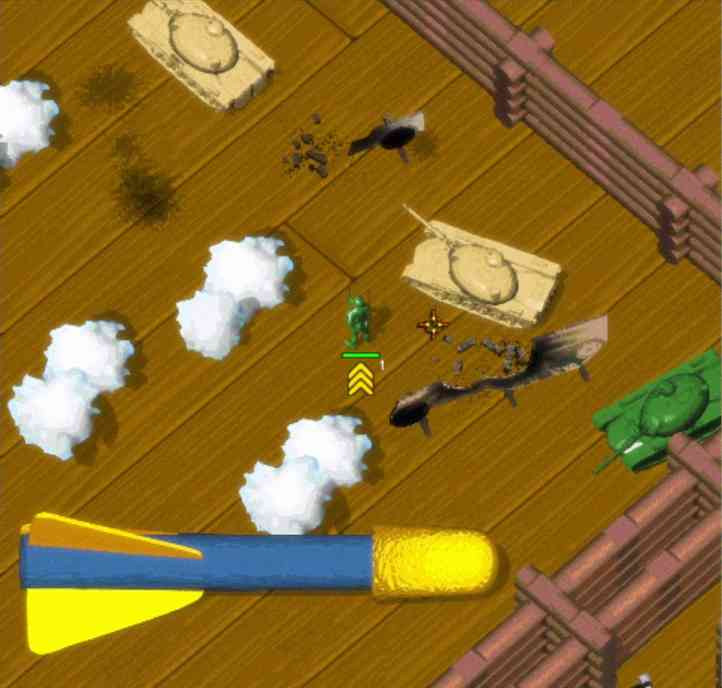
When he returned to active service, some time after Air Attack, he found that helicopters were in fashion, even combat airplanes falling behind. So he tried his luck piloting choppers and stood out, winning his name: Baron Von Beige, the Ace Pilot on Airplanes & Choppers, when he killed the plastic man who left him on the ground on the past: William Blade’s father. But this not lasted to long. He was ambushed by the entire Alpha Wolf Battalion of the Green Army in retaliation for Blade’s father death, who this time make sure to not only roast Von Beige completely, but also finish him off. But still, Von Beige did not die.

Von Beige logo

The cost to defeat Von Beige was high: Lieutenants James Marshall “Woodstock” and Dave Parker “Rawhide” were killed in action (KIA). And on top of that, unfortunately a short time later it was learned that, although in very bad condition, Von Beige survived. From that moment on Beige had to live with a special mask that covers his entire face. He was completely disfigured and burned to the inside, to the point that no one understands how he could have survived.

It was only for Army Men: Air Attack 2 that he found his true love… the Triplane: A fighter that had the capabilities of both, a fighter airplane and a helicopter, which ended up surpassing the Green Army helicopters.

And Army Men: Air Attack 2 is where Von Beige got his second chance not only against Blade, but against all of the Alpha Wolf pilots.

The creation of Plastro

Plastro in his beginnings was a young Yellow military leader molded directly to be one, coming out of special molds for it. But he was thrown into the toughest battles of the latter part of the Great Gray War, which caused him to become discolored from staying on the front lines for so long.

Plastro from Army Men

The yellow color of his body became pale, whitish… like a half-baked plastic soldier, similar to all those soldiers molded from recycled plastic, commonly assigned to lower ranks and thrown to the front like cannon fodder. Among the officers, everyone laughed at him, calling him “a sad and different color”, which generated an idea in his head: Make all that Yellow workforce, exploited by their nation, independent, under a single flag: The Tan color.

The color of these second-class soldiers was due to the recycling process, which with each recycling the yellow saturation was lost.

There came a time when the war spread so much that it became somewhat strenuous for the Yellows, and without realizing it there came a time when these “second-rate yellow soldiers” were more than the pure saturation Yellows, and the bad treatment never change.

Plastro moved his cards and conspired against the Yellow Army, wanting to take control of it to overthrow the Yellow government, organizing a coup d’état… which ultimately was unsuccessful.

Plastro’s rise to power

Plastro was imprisoned since the crowds that followed him at that time, who were already derogatorily called “Tannic” instead of Yellow, would have caused more problems to the already war-hit Yellow Nation. But unfortunately for the Yellows, Plastro did nothing more than be the flame that started a fire in an ammunition depot soaked in fuel.

Little time passed, and as Plastro wrote in his memoirs: “A few months later, isolated from all information outside my cell, I began to hear all kinds of sounds of confrontations inside the base, and then some Tannic soldiers arrived to take me out of there, calling me ‘Leader.'”

By the time Plastro was freed, he left the prison facility being greeted by a thousand Tannic soldiers raising their weapons and celebrating, with fire, debris and dead Yellow soldiers everywhere, shouting “Plastro, Plastro, Plastro”.

The Genocide

Having taken advantage of his time in prison to plan his new intention to take power, adapting to the new circumstances, Plastro made the yellow government and the armed forces believe that despite considering him dangerous, he actually had the power to appease the insurgency to end the civil war.

Given the situation of the war against the Grays, the Yellow government had no choice but to accept it and thanks to this Plastro gained the trust of the Yellow Army, and over time he climbed through the high ranks, achieving an important position despite his “Tannic” condition. This even began to change society’s opinion about these second-class citizens, becoming more respected. At the same time, the Tannic of the Yellow Army became one of the most experienced and hardened divisions in the army, being sent to the toughest battles not out of contempt, but because they were the most capable.

Being led and strategically commanded by Plastro, these forces became unstoppable, and after patiently waiting a few years, Plastro achieved the perfect context for his final blow on the Yellow.

On a date around 1954, the “Tannic”, now respectfully called “Tan”, deceived the Yellow higher-ups into believing that they would win the war against the Grays by cornering them in the Thermopiles, making them fall into deception due to the fact that having managed to make the Grays move there. But it was all a trap…

In reality, the Tans had been secretly allied with the Grays for some time. In exchange for destroying the Yellows, the Grays promised power and glory to the Tan. Plastro accepted… and between them they made the Yellows fall.

But Plastro did not trust the Grays, and distracted, worn out and trusting, the Grays near the end of the war were betrayed by Plastro, who kept almost all of his production power, leading to the end of the War. The Reds and the Greens, along with the Blue remnants decided to leave things as they were. The chances of losing a new war were high.

The surviving Gray remnants retreated and managed to survive. Although neither they nor the Blues were ever able to fully recover. The offpring of the Red, the Oranges, took the opportunity to become independent without much resistance from the Reds, who were quite plasticophobic themselves, they allowed it. Lo Tan remained the greatest power almost forever, until they were worn down by Plastro’s conquering greed. The Greens, although very inferior, remained the second most powerful nation. The Reds closed themselves in and nothing more was ever heard of them, except that they still exist.

How the Green Nation was created?

The few remaining Yellow leaders found by the Blues, at that time greatly diminished by suffering the worst of the Gray attacks on their practically conquered continent, reached an agreement that changed the course of history: Create the Greens.

The remaining Blue forces that managed to escape from their nation, fighting from the outside, were a great force that had been fighting in this way for a long time. But unable to replenish themselves, they were lacking important resources. They were the ones who found more than half of the Yellow plastic reserves abandoned (approximately 2/3), along with the hopeless Yellow leaders and 15% of the remaining Yellow armed forces. Those who found the rest were the Reds.

The Blues and Yellows somehow and for some reason that is difficult to explain reached a secret agreement: Create the Greens. The plan was basically to create a new hybrid army in a secret location, remote and unlikely to be found. The place would be some remote and of little use location, so that neither the Grays nor the Reds would go there by accident and find them. Their hope was that the Reds, the most powerful force resisting the Grays, would keep them busy long enough for this new army to grow without hesitation.

The Blues and Yellows’ prediction was correct: The Reds found the rest of the Yellow plastic reserves and created the Orange Army, diluting the Red with the Yellow to obtain a greater number of fighters. This made even the Reds twist the fight and just before being conquered they pushed the Grays, exhausted by the large size of the Red territory and by maintaining a war on so many fronts, the Reds taking a position on the offensive, although slow.

This situation gave the Greens enough time to grow, to the detriment of the Yellows consciously melting themselves, becoming extinct, and the Blues sacrificing most of their remaining resources, barely making it, taking shelter and hiding, to survive the end of the war. This is how they learned to be the best spies, only performing this task to minimize the use of their surviving soldiers, but achieving great and useful strategic achievements: information.

Thus, with a few years and without interference, the Greens were created en masse, to enter the war by surprise, twist the balance of the conflict and thus win the war. No one would suspect its existence until it was too late.

For this reason the Greens were never a conquering nation, and were never aggressive against the Blues, except for the mercenary species who worked on their own for the Tan in the Tannic-Green war. And it is also for this reason that the Greens always helped the Blues without any type of condition.

Files from 30 years of work at 3DO found!

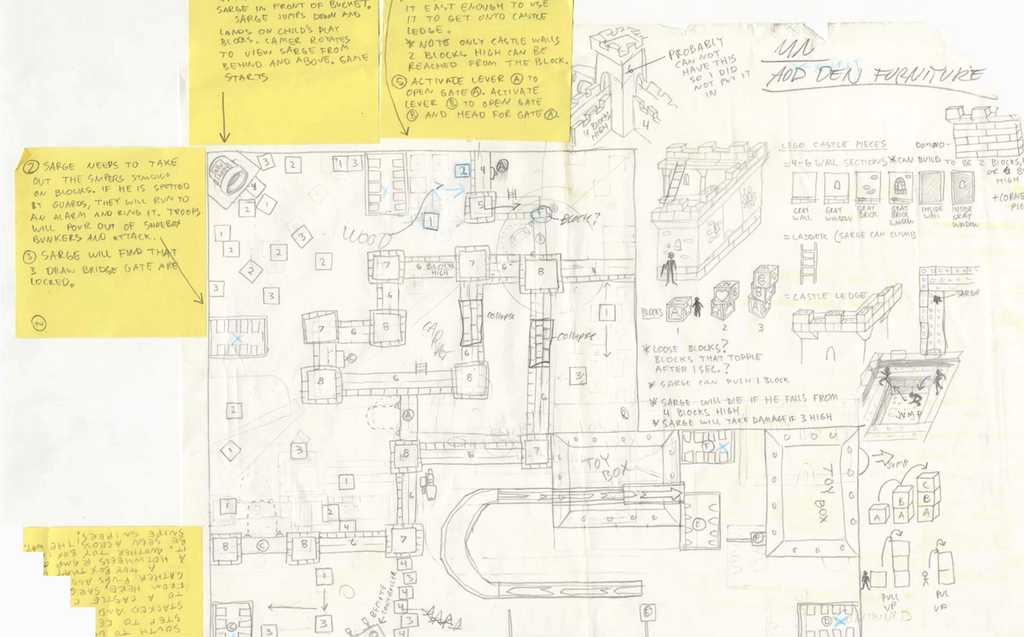
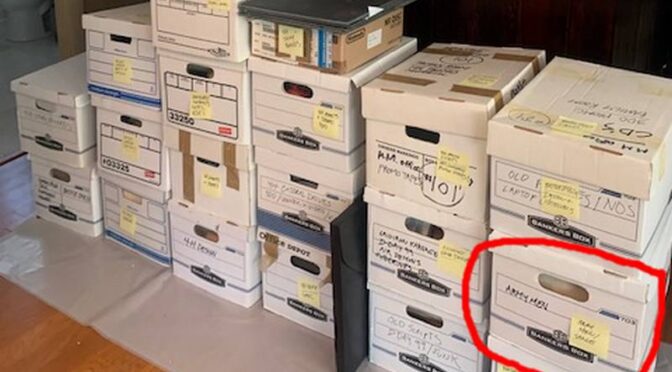
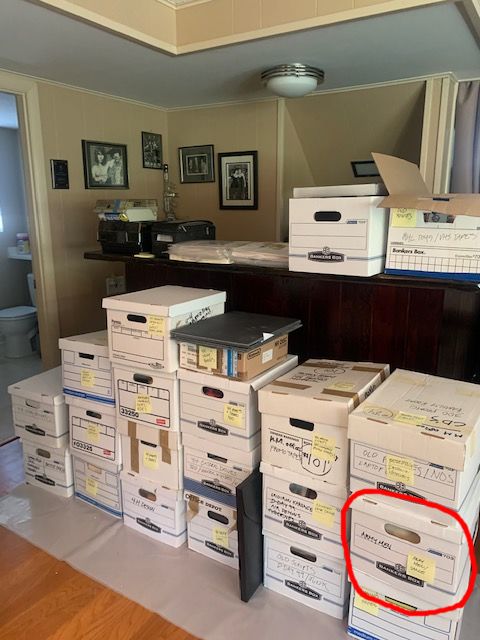
We learned from Michael Mendheim’s Twitter account that there are a series of files on paper and, possibly, on some digital medium, of Army Men, as can be read in one of the photos. We’ll keep you posted if any of that ever comes to light.

3DO files
3DO files at the Game History Archive, where we can read Army Men in a box!