Category Archives: Reviews and opinion

Army Men: Battleground

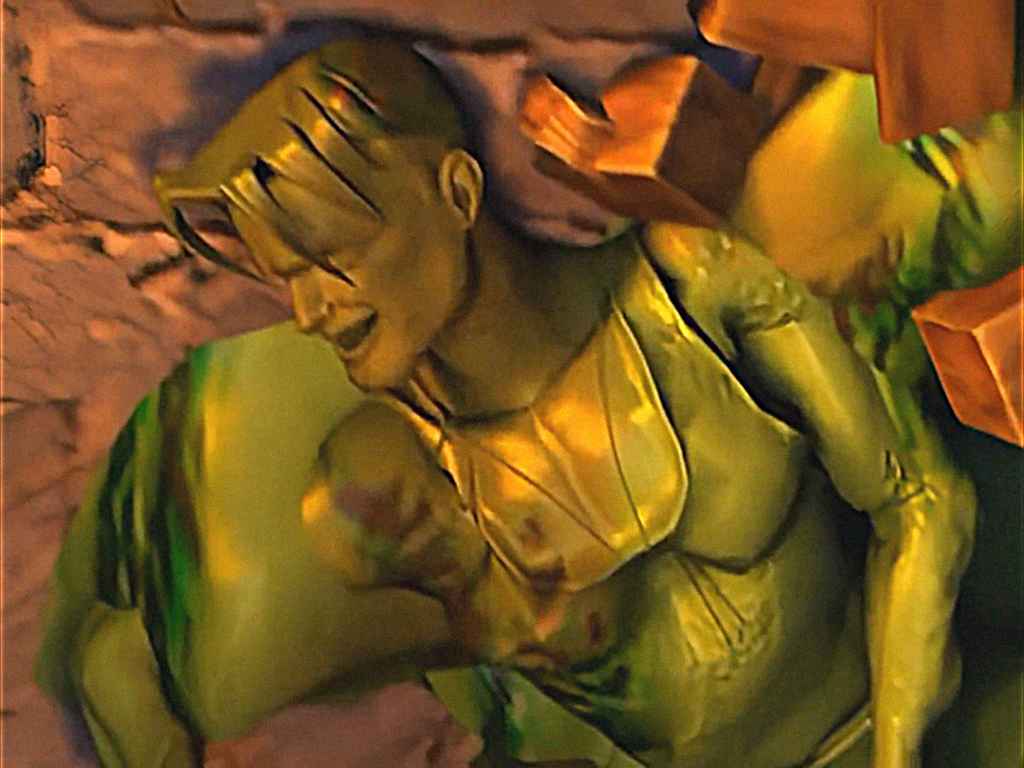
“Battleground”: The Day Stephen King Made His Own Army Men Movie

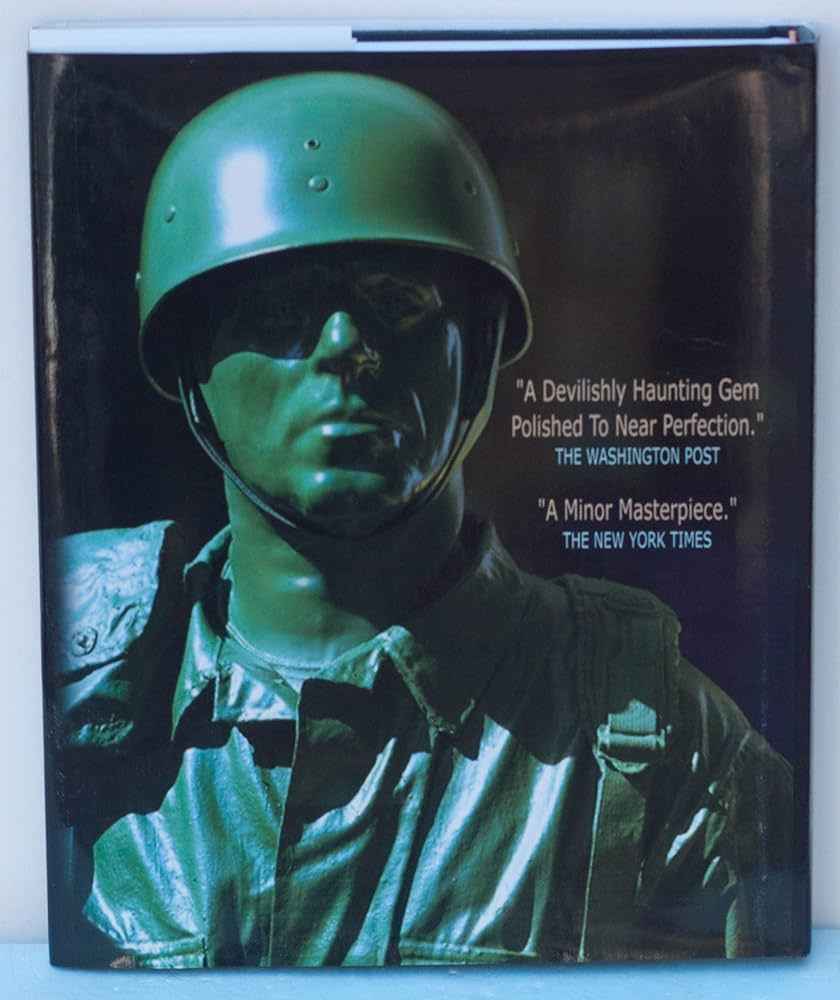
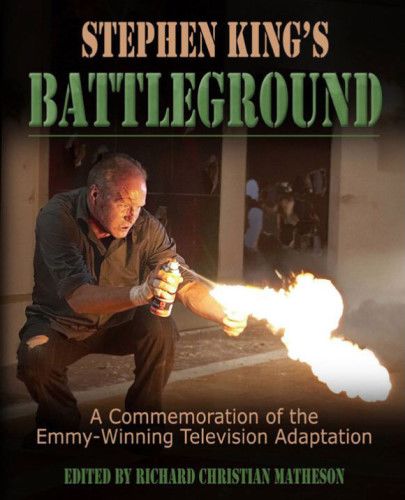
DVD back cover
DVD back cover

In 2006, fans of Stephen King’s stories and Army Men enthusiasts were treated to a curious and surprising gem: the miniseries “Nightmares and Dreamscapes”, a TV anthology based on some of King’s most memorable short stories. But within that collection, there was one episode that stood out in a unique way, one that, for those of us who love the Army Men universe, is simply impossible to ignore. And it was the first episode…

That episode is called “Battleground” and it’s basically an Army Men movie, but with Stephen King’s unmistakable touch.

!!! SPOILER ALERT !!!

From this point forward, we reveal key plot details about the episode. If you haven’t seen it and want to enjoy it fully, we recommend watching it first and then returning to this article.

The Plot: Miniature War, Terror on a Human Scale

The story follows Jason Renshaw (brilliantly played by William Hurt), a cold and meticulous hitman who, after eliminating the founder of a powerful toy company, returns to his luxury apartment.

What he doesn’t imagine is that the founder’s mother, seeking revenge for her son’s death, sends him a very special package: a box of toy soldiers… but these are no ordinary toys.

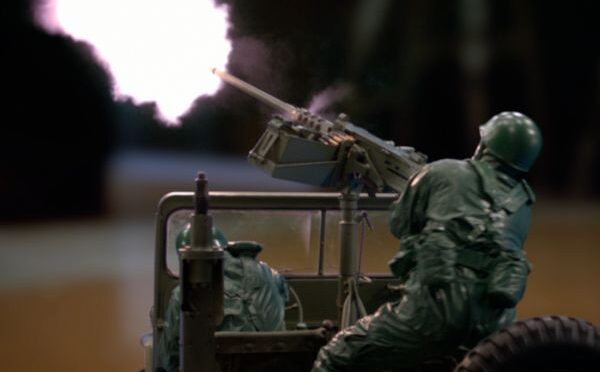
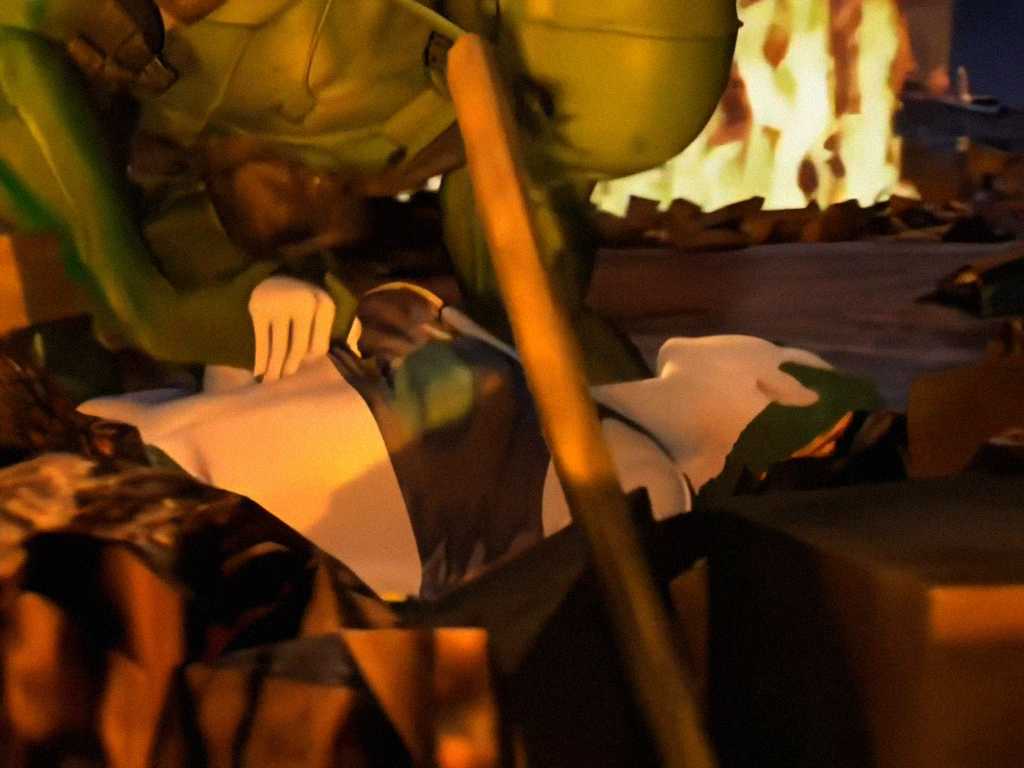
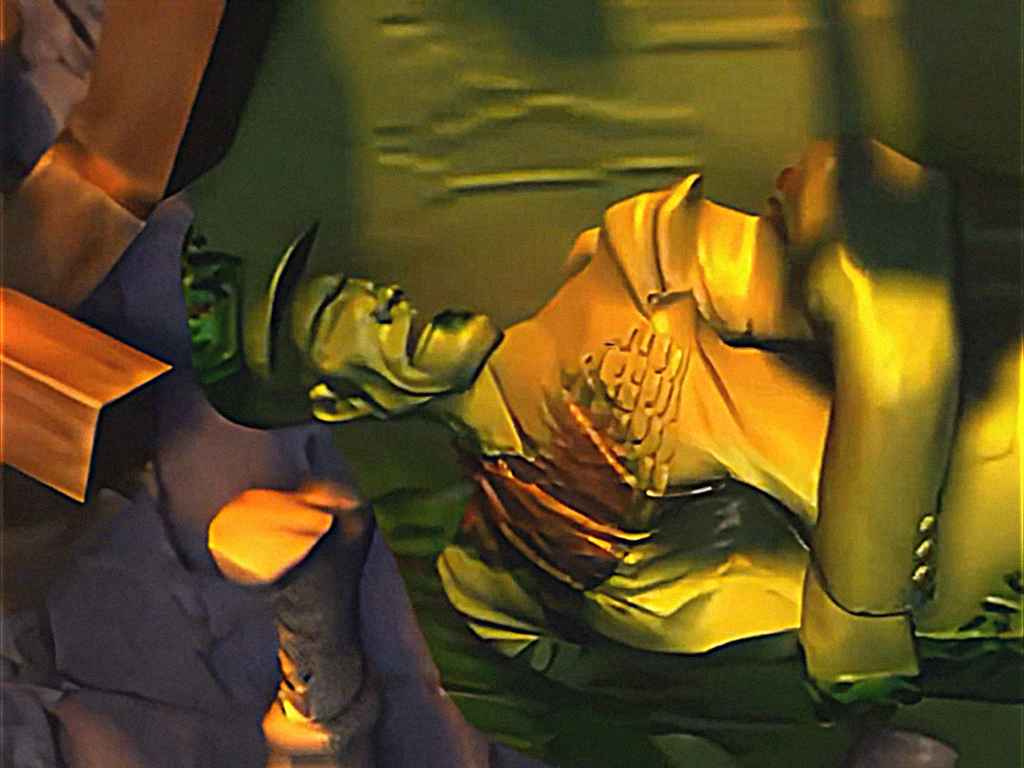
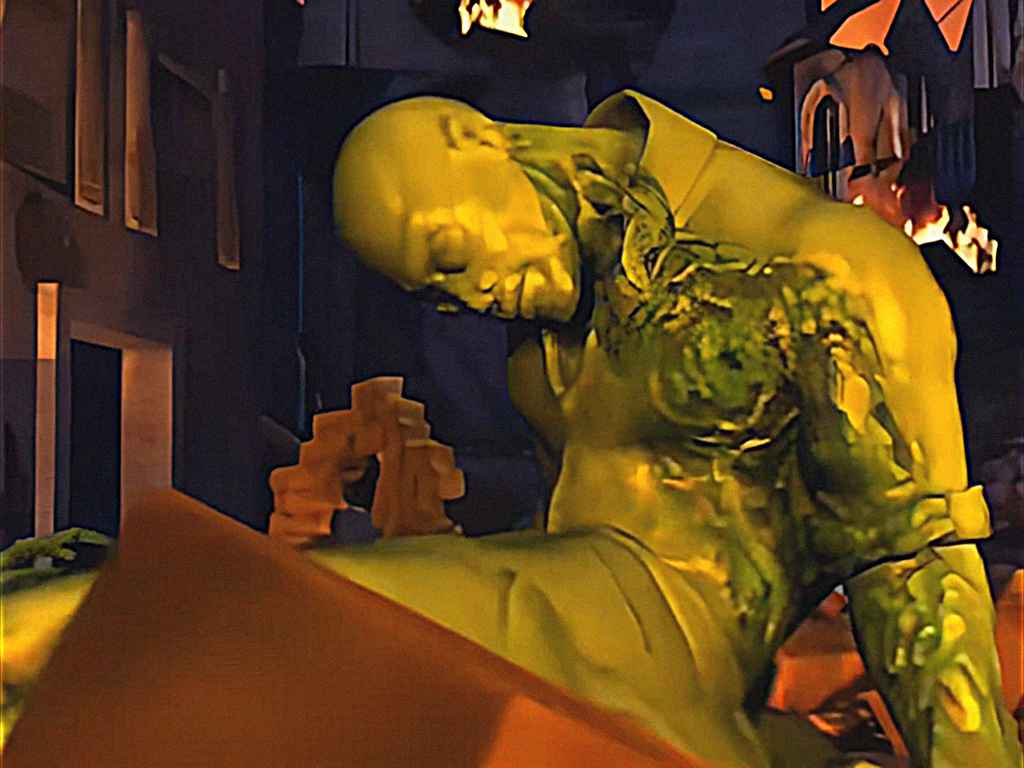
Inside is a fully armed platoon of plastic soldiers, fully mobile, ruthless, and deadly, accompanied by miniature vehicles, jeeps, attack helicopters, and portable artillery. What follows is a brutal, relentless battle where the soldiers do everything possible to kill Renshaw, using real military tactics adapted to their scale, while he, a professional hitman, fights to survive in what becomes a life-or-death war… inside his own spectacular apartment.

No Dialogue, Pure Visual Storytelling

One of the most striking aspects of this episode is that it has absolutely no dialogue. Not a word. Everything is told visually, through actions, expressions, and clever staging. This was no accident: it was a deliberate decision by director Brian Henson (yes, the son of Jim Henson, creator of The Muppets).

As Henson explained in interviews, he chose not to use any spoken lines to preserve the purity of the story, focusing solely on the tension, the fight, and the brutality of the encounter. This choice turns “Battleground” into a deeply immersive experience… almost like a cinematic experiment made for television. And no need of translation to any language!!!.

Production: Perfect Blend of Practical Effects, Miniatures, and CGI

Filming took place mainly in Australia, where the crew built an almost exact replica of the protagonist’s apartment on an enormous elevated set. This allowed the camera to capture every angle — even from below — creating a strong sense of scale both for the human and the plastic soldiers.

The mix of practical effects (miniatures, small-scale, plastic soldier suits, explosions) and CGI was considered top-notch for its time. The little Army Men are incredibly detailed, with precise movements, military discipline, body language and gestures that bring them to life (because their plastic faces show no emotions).

Recognition and Awards

Without a doubt, “Battleground” was the most successful and celebrated episode of the miniseries. It was nominated for three Emmy Awards, including Outstanding Visual Effects, and rightfully so. The care put into every frame, how the soldiers use tactics, cover, formations, and vehicles, is truly impressive.

The Plastic Army as the Perfect Villain

What makes this episode so fascinating (especially for Army Men fans) is how it takes the classic elements of toy soldiers (vehicles, weapons, miniaturization) and turns them into a legitimate, lethal, and fully believable threat within its own internal logic.

These soldiers are not cartoonish: They are perfectly organized, disciplined, and ruthless. They use grenades, missiles, helicopters, artillery and light vehicles with terrifying efficiency, proving that size doesn’t matter when the will to fight is absolute.

Similarities with Army Men: Not Few at All

For any fan of the Army Men franchise, watching this episode feels like seeing a hyper-realistic live-action version of what we always imagined when playing with our plastic figures. There are assault strategies, defense tactics, reconnaissance, siege and even encirclement maneuvers.

But beyond aesthetic similarities, the core idea connecting both works is the same: when toys come to life within their own universe, they stop being harmless objects and become players in their own war drama.

In Army Men, the troops are protagonists with agency. Here, they are villains with a clear goal and an efficiency bordering on the supernatural.

Bonus Facts and Curiosities

  • The original story was published in Cavalier (1972) and later in Night Shift (1978).
  • The director added the opening assassination scene to give more characterization to Renshaw on screen.
  • The adaptation includes an extra Rambo-style commando figure, serving as a mini-epilogue before the final nuclear detonation.

A fun Easter egg appears: the famous Zuni doll from Trilogy of Terror can be seen, a tribute to screenwriter Richard Christian Matheson and his father Richard Matheson.

There’s also a Soviet animated version from 1986, called Srazhenie (“Battle”), using rotoscoping while keeping the core plot intact.

Differences from the Original Short Story (King’s Short Story / TV Episode)

Protagonist’s Name:

John Renshaw / Jason Renshaw (played by William Hurt).

Opening Scene:

Wakes up after the assassination / Shows the assassination in real-time.

Dialogue:

Includes brief spoken lines / Completely silent, no dialogue.

Final Scene:

Immediate nuclear explosion / Elevator fight with a commando, then nuclear blast.

Easter Eggs:

None / Zuni Doll (from Trilogy of Terror).

Length and Pacing:

Around 10 pages, highly condensed / 55-minute episode with expanded development.

Epilogue: When Horror and Toy Soldiers Collide

“Battleground” is a short, precise masterpiece that mixes horror, action, and dark humor with impeccable execution. For Army Men fans, it’s more than just a wink… it’s an alternative version of our fantasy world, darker, more brutal, and stripped of the comedy or adventure that usually surrounds the Toyverse.

A story where small doesn’t mean weak. Where harmless becomes lethal. And where the battlefield fits (quite literally) inside an apartment.

“Battleground” is a narrative experiment that fuses small-scale military strategy with suspense and terror. It may not be the heroic vision of Army Men, but it captures that same warlike fantasy from another angle: that of the relentless adversary who won’t hesitate to annihilate.

For the Army Men community, it’s a dark tribute (and just as tactical) as our own plastic wars.

Recommendation:

Not only essential for King or horror fans… this episode is a masterclass on how to turn the small into genuine strategic horror. Absolutely unmissable for Army Men fans and anyone who ever dreamed of their toy soldiers coming to life… and fighting for real.

Fun Fact:

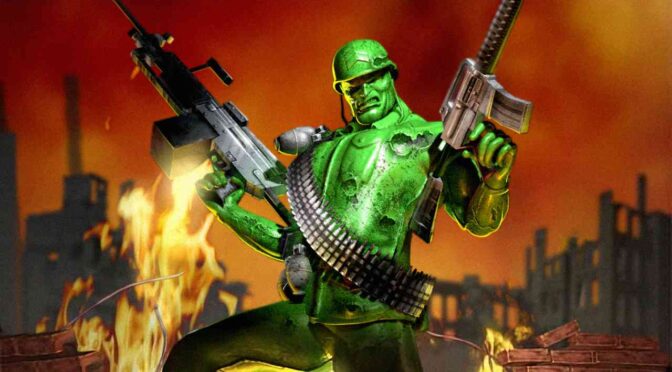
The latest game released by the franchise, Army Men: Mobile Ops, used the image of one of the soldiers from this production as the main image of the game’s main menu (we don’t know if it was used legally or not).

How Marvel’s Missteps Mirror the Fall of Army Men: A Lesson in Creative Oversaturation

When James Gunn (now the creative head of DC Studios) was recently asked what he believed had hurt Marvel, his words were both honest and damning: “Too much content. Not enough planning. It killed them.” His remarks, aimed at the overextension of Marvel Studios in the wake of Avengers: Endgame, could just as easily describe what happened to the Army Men franchise in the early 2000s.

Back in the late ’90s, Army Men stormed the gaming world with a simple yet irresistible premise: toy soldiers brought to life in an imaginative, war-torn plastic world. The original titles stood out with charming aesthetics, quirky humor, and solid gameplay. But the publisher, 3DO, quickly turned that initial success into a production frenzy. From 1998 to 2003, they pushed out over a dozen Army Men titles—a pace that left little room for refinement or reinvention.

Back in the heyday of 3DO’s rapid-fire release strategy, even those of us in the The Army Men videogames channel were caught off guard. Titles arrived so frequently that not even the fans seemed fully aware of what was launching (or when). By the time a new game crossed our radar, it was often already out in the wild, too late. In an industry where annual sports releases were considered the norm, Army Men shattered expectations by flooding the market with an unrelenting stream of entries. No amount of pre-release buzz could keep up. The public wasn’t just underprepared: they were overwhelmed.

Much like Marvel’s recent deluge of films and Disney+ series, 3DO’s Army Men games began to feel rushed, repetitive, and disconnected. Without a clear long-term narrative or gameplay evolution, fans began to lose interest. By the time fresh ideas were needed most, the brand had burned out… and 3DO filed for bankruptcy in 2003.

James Gunn’s criticism of Marvel’s strategy (greenlighting projects without finished scripts and saturating the audience with underdeveloped content) perfectly echoes the pitfalls of 3DO. Both cases show how creative properties, no matter how beloved, can collapse under the weight of rushed schedules and corporate overreach.

The Lesson? Sustainability in storytelling matters more than ever. The audience craves meaningful worlds, not just more content. In the age of ever-growing universes (cinematic, gaming, or otherwise) the smartest path forward is one paved with vision, patience, and purpose. Part of what was missing in those years was the breathing room—a chance for the audience to anticipate, absorb, and get excited. Great franchises don’t just drop content; they build moments. But with Army Men, there was rarely time to prepare the public or give each title its spotlight. Without that crucial window to inform and engage players, even solid ideas were lost in the noise.

Fake Army Men images

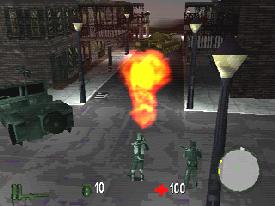
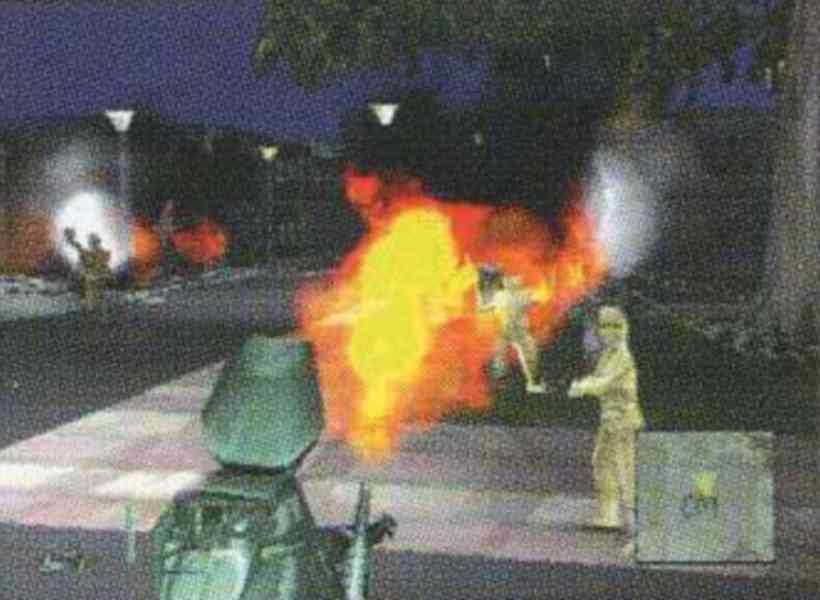
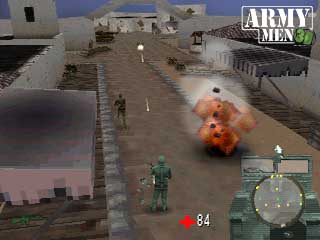
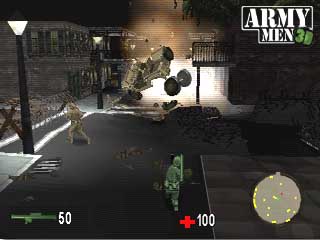
The Truth Behind the Famous “In-Game Screenshots” of the First Army Men Games

There are phrases that have become part of gaming folklore. One of the most common (and persistent) is:

“It was from a beta version…” —said with the tone of someone convinced they’ve uncovered a hidden development secret.

But when it comes to Army Men, many of those promotional screenshots were not beta versions of anything. In fact… they weren’t even screenshots.

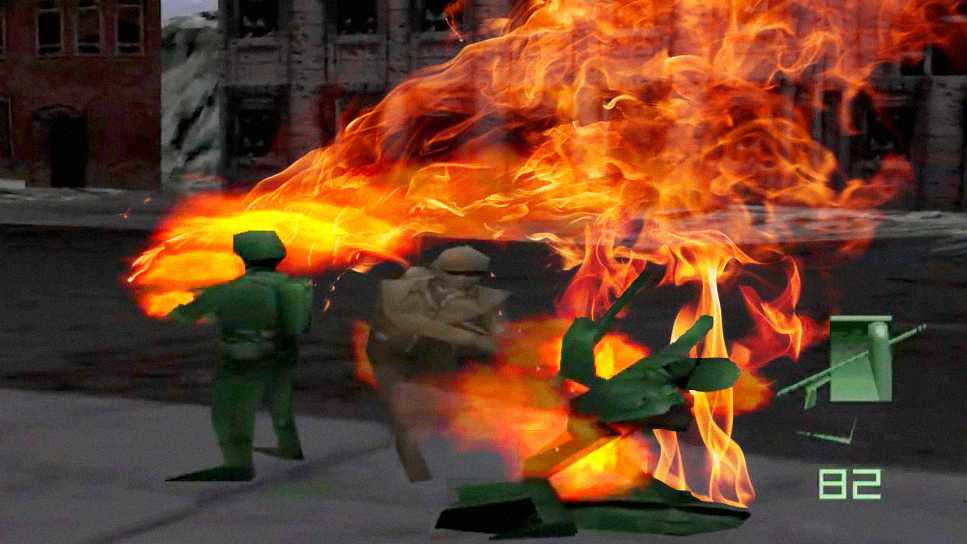
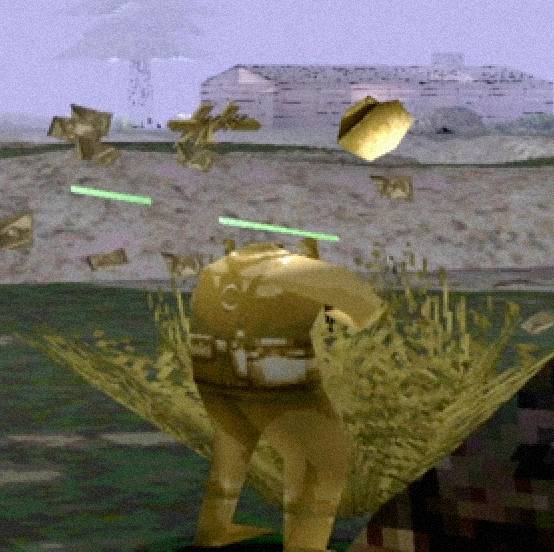
Slightly modified screenshot of PS1 Army Men: World War used in ads all over the internet at the time

What Looked Like In-Game… Wasn’t

Back in the golden age of 3DO, when Army Men was just beginning to take shape as a franchise, the creative team had a challenge: They needed a visual way to pitch the idea before the game was even fully designed.

Veteran developer Michael Mendheim, who played a crucial role in conceptualizing the Army Men universe, would put together digitally composed images to present the tone and feel of the project.

These images were a mix of:

  • Independently rendered 3D models.
  • Partial engine screenshots, when available.
  • Added effects like smoke, fire, and lighting.
  • And of course, a healthy dose of Photoshop.

They were never meant to be real gameplay footage: they were visual mockups, created to evoke the style, mood, and action the final product was aiming for.

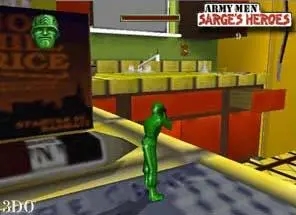
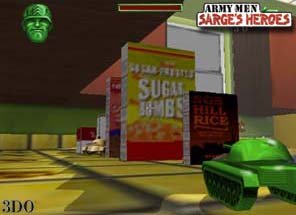
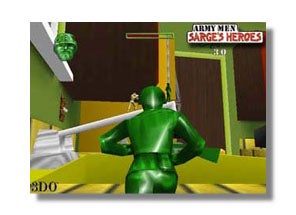
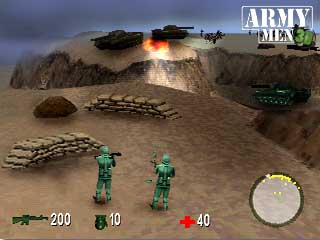
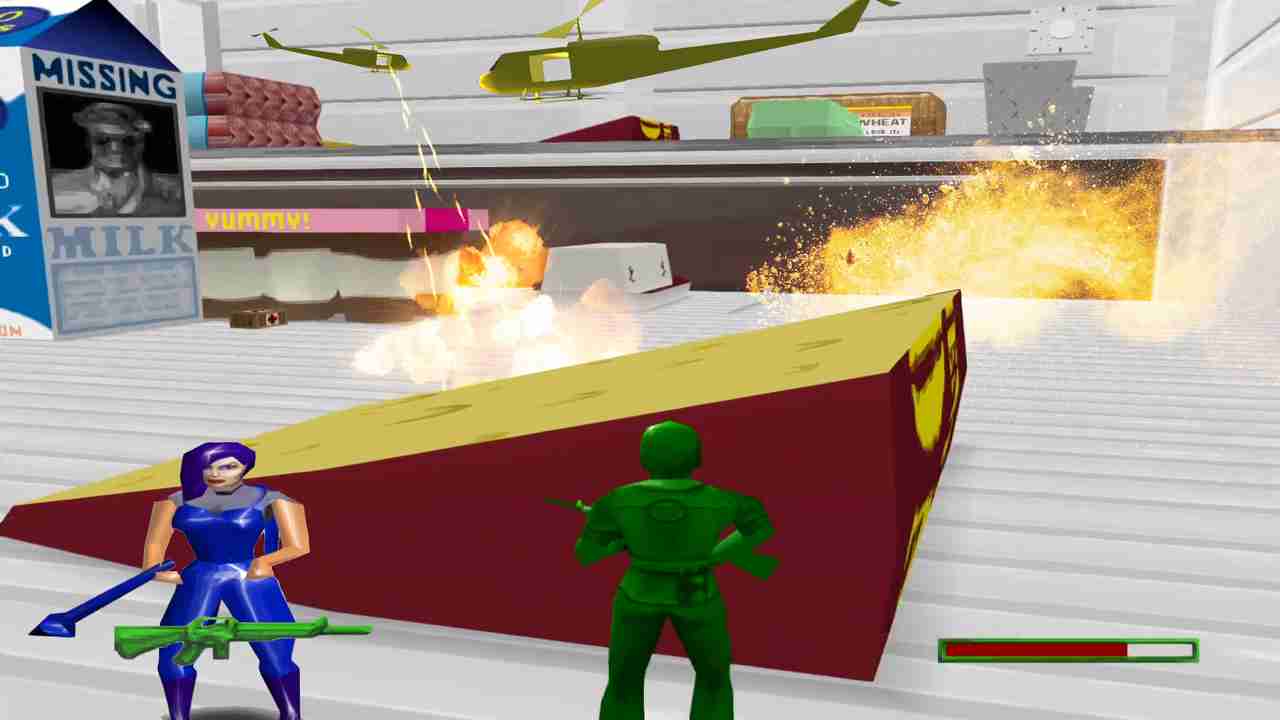
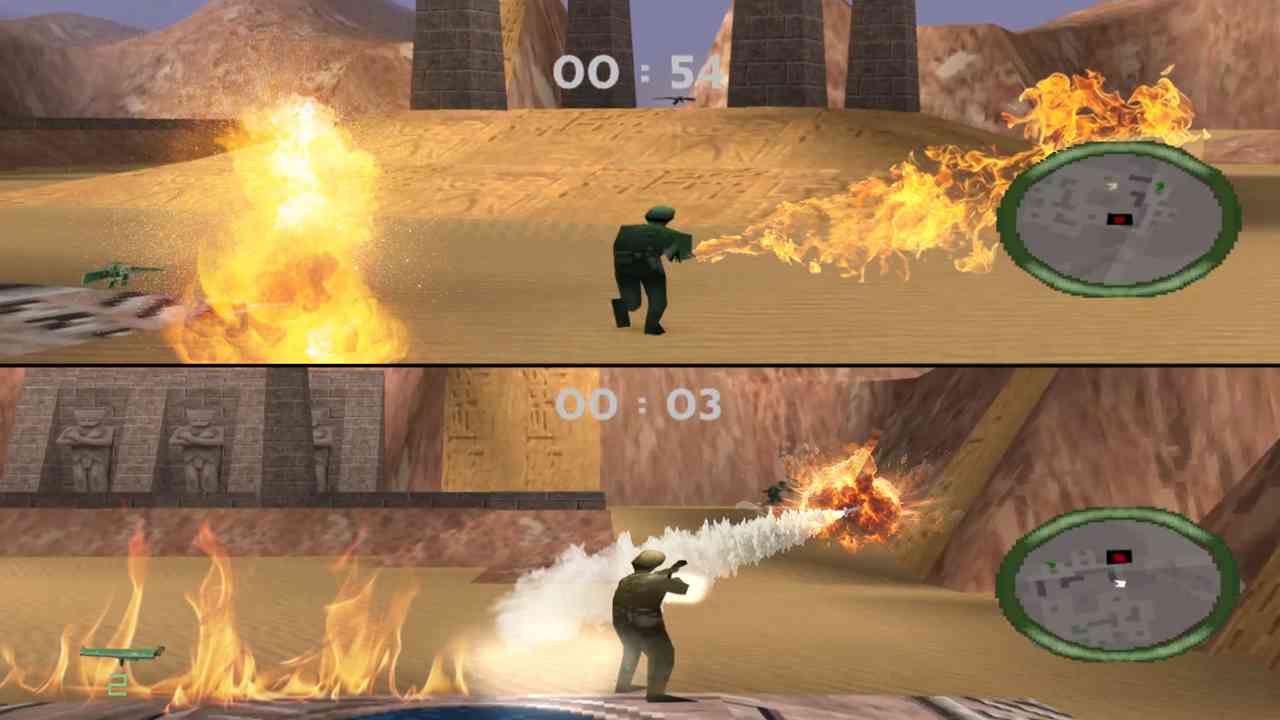
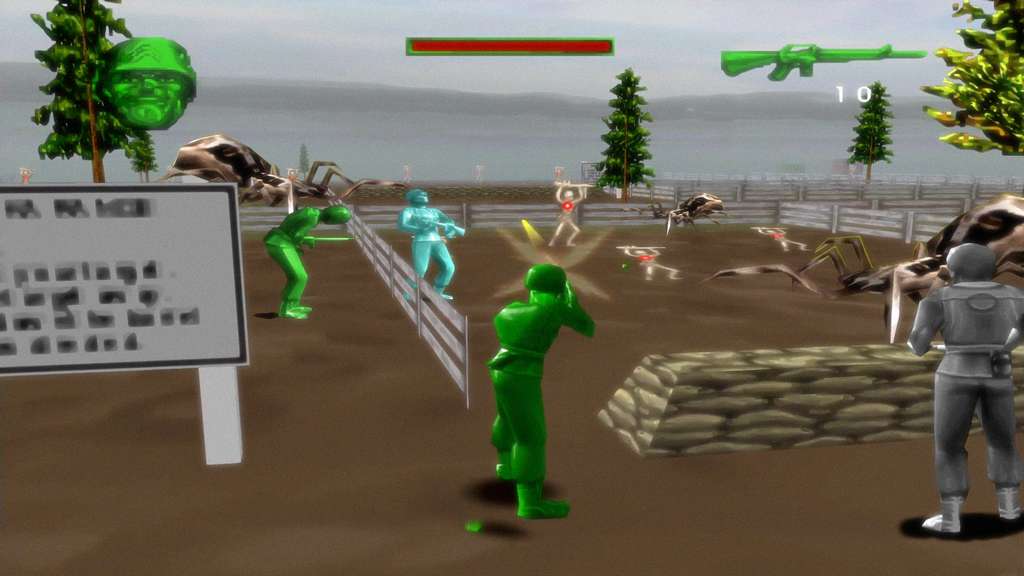
Slightly modified screenshot of N64 Army Men: Sarge’s Heroes used in ads all over the internet at the time

Although with minor modifications to the images, these are surely from the Army Men: Sarge’s Heroes engine for the Nintendo 64, but before going through the final version for the N64, it was actually a beta version of the levels and functions, not very different from the final version.

When Marketing Takes Creative Liberties

What’s interesting is that, even though the developers understood these images were purely conceptual, 3DO’s marketing team used them in advertisements as if they were actual in-game screenshots.

These images showed up in:

  • Magazines
  • Game boxes
  • Promotional flyers
  • Manuals
  • And even official press kits

The result? Players thought that’s how the game would look. And while that wasn’t exactly true… it worked. The hype exploded. The visual concept of Army Men (green plastic soldiers fighting battles in real-world environments) instantly captured players’ imaginations, long before the games were even finished, even a few years before 1998 Army Men.

The Speculation That Never Died

Even today, many fans still insist that those images came from early builds or beta versions of the games.

You’ll still hear comments like:

“This must be from a lost prototype…”

Or comments like:

“They had to downgrade the graphics later due to hardware limitations.”

And while it’s true that Army Men underwent plenty of visual changes during development (and yes, they had to scale things down to run on systems like the PlayStation 1 and Nintendo 64) those promo shots were not captured from actual working versions of the game.

People who worked with Photoshop or 3D Studio Max back then can clearly recognize the techniques used in these composites. If anything, they were stunning examples of concept art disguised as gameplay.

In a way, we wish they were real beta shots… it would’ve added an extra layer of mystique to the franchise’s development history. But no, it was just clever marketing. Fake… but effective.

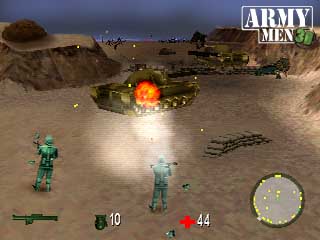
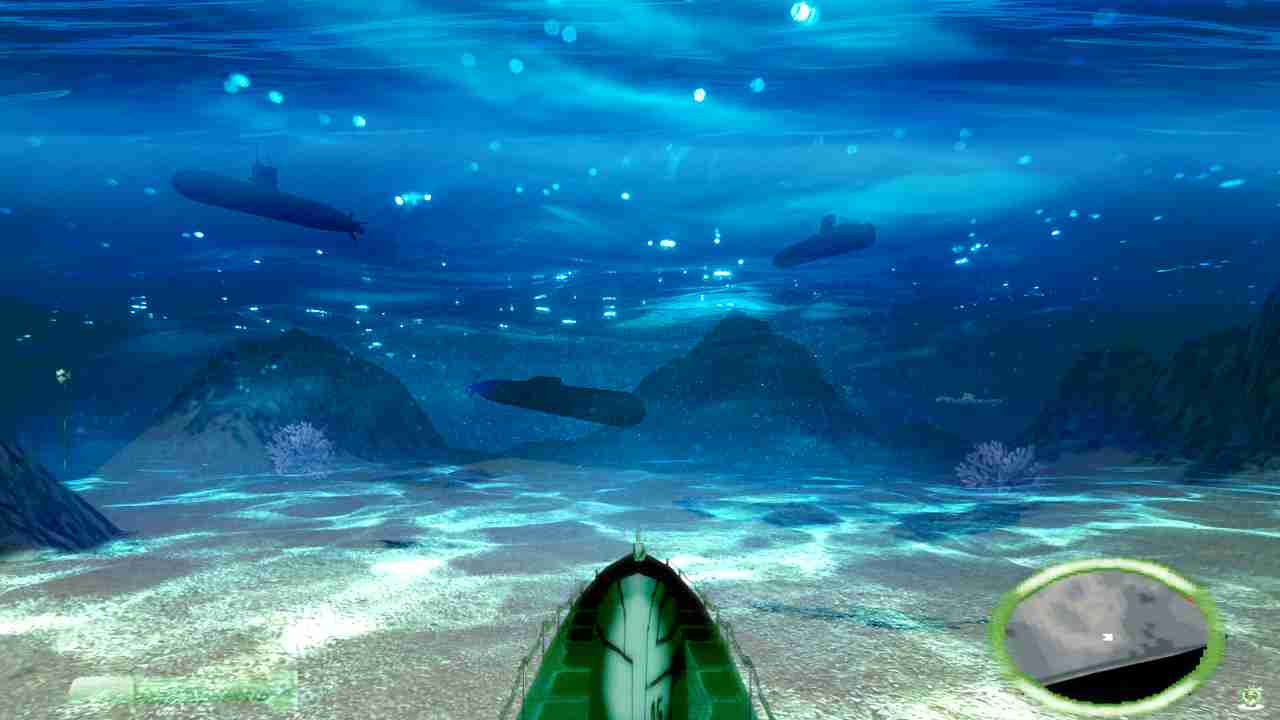
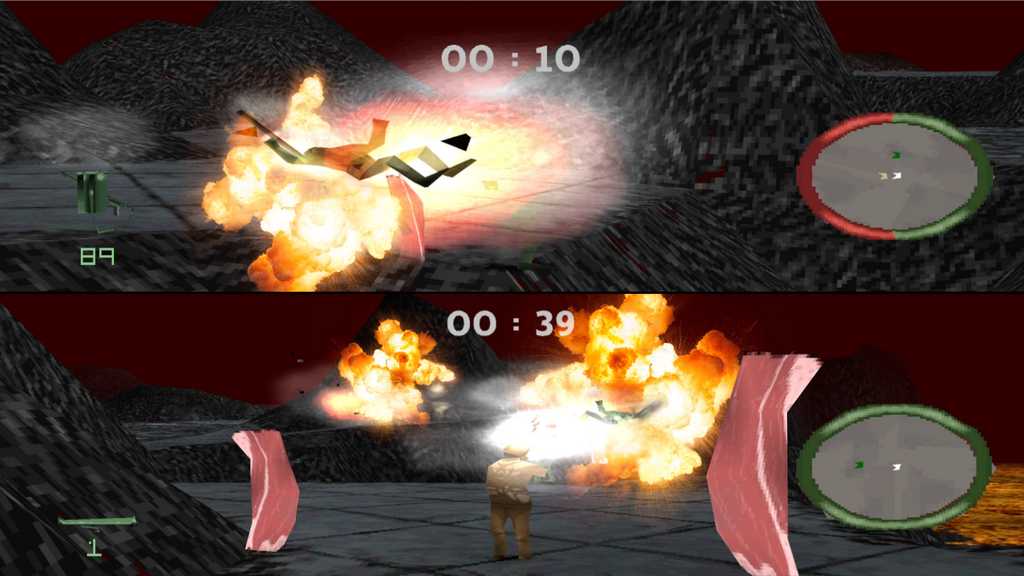
Modified screenshots of the “supposed” Army Men 3D beta version for PS1, used in promotional content all over the internet at the time

Deception or Strategy?

Today, in the era of frame-by-frame breakdowns and mandatory “not actual gameplay” disclaimers, this kind of tactic would get you dragged online in seconds. But in the ‘90s, with a franchise as visually unique as Army Men, it was a legitimate (and successful) marketing tool.

Some might call it deceptive. Others see it as an effective way of presenting an evolving creative vision.

Either way, those images weren’t beta builds, they weren’t unreleased versions, and they weren’t screenshots from a hidden dev console.

They were Photoshop. Plain and simple. And in context… they were brilliant.

What Does This Say About the Toyverse?

Like many good stories in the Toyverse, this one also carries a lesson. Just as molded toys become soldiers with names, stories, and purpose, a fake image can become the spark that brings an entire world to life.

Those visuals (however artificial) were the first real representations of the Army Men franchise. Before missions, before bugs, before battlefield chaos… there was a carefully crafted picture. And it worked.

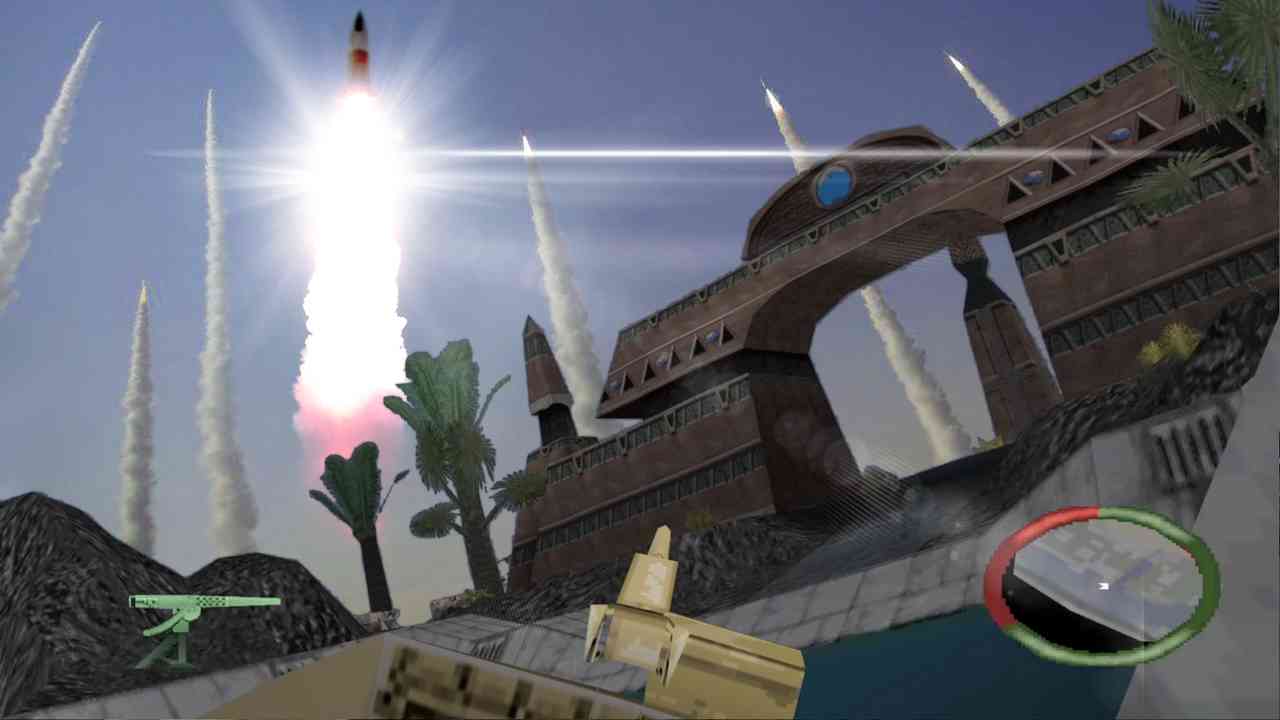
Heavily fake screenshots of Portal Runner (PS2) where they used heavy 3D CGI models to make concept screenshots that 3DO used in promotional content on magazines and all over the internet at the time

Bonus: Where to See These Images Today?

Many of these fake-but-iconic visuals still survive today in:

  • Archived game magazines (GamePro, EGM, etc.)
  • Scanned promotional material
  • Original manuals
  • The official 3DO websites via the Wayback Machine
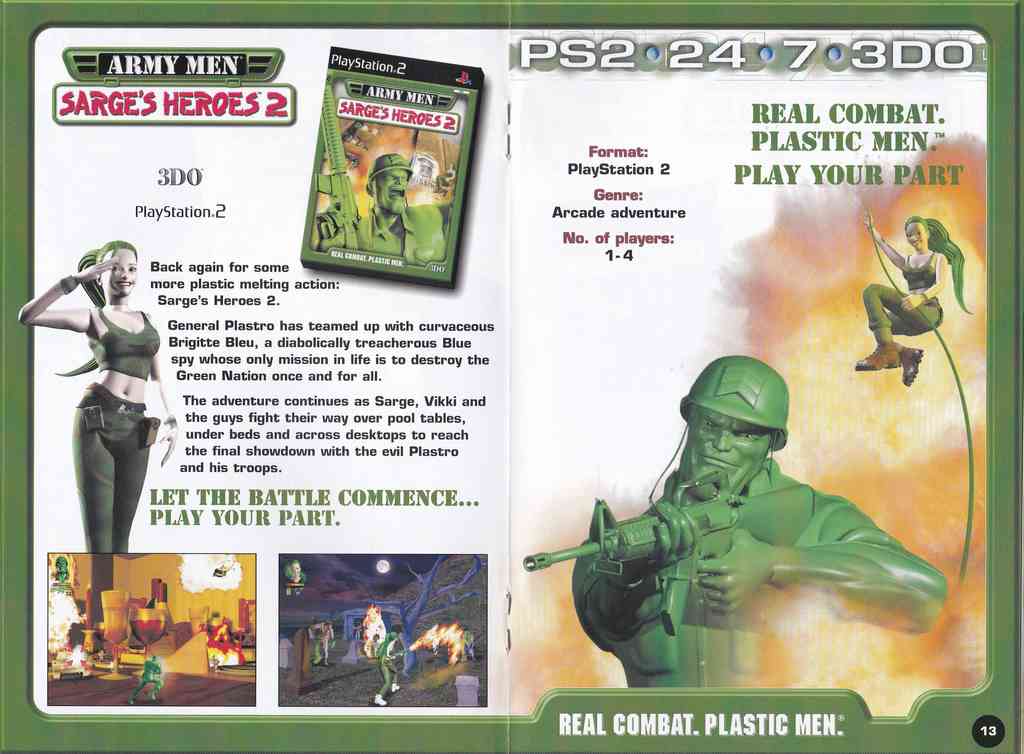
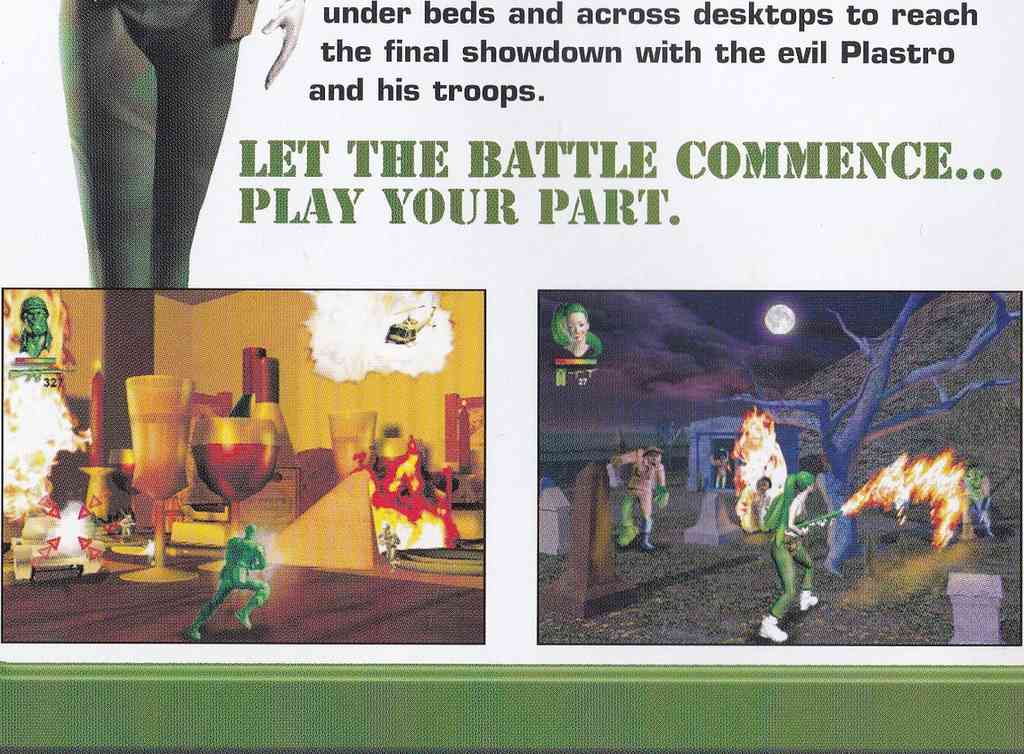
Heavily fake screenshots of the “supposed” Army Men Sarge’s Heroes 2 for PS2, used in promotional content on magazines and all over the internet at the time

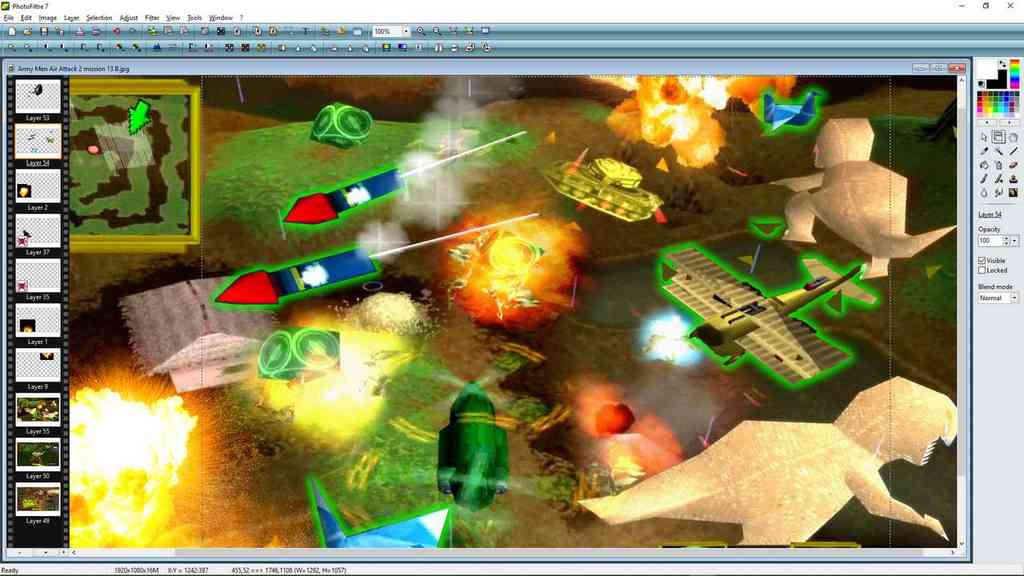
In the game’s different media promotional contents, these screenshots were used to show off the game in its Playstation 2 version. In reality, they are composites using partial images of the game’s actual stages generated in a different engine or stage editing program, along with CGI models of the protagonists and a lot of added effects, something impossible to do for the Playstation 2. These were most likely images made as concept art of how the game should have looked for its development.

And of course, at ArmyMen.com.ar, where fans are still collecting and preserving all official documentation and rare media.

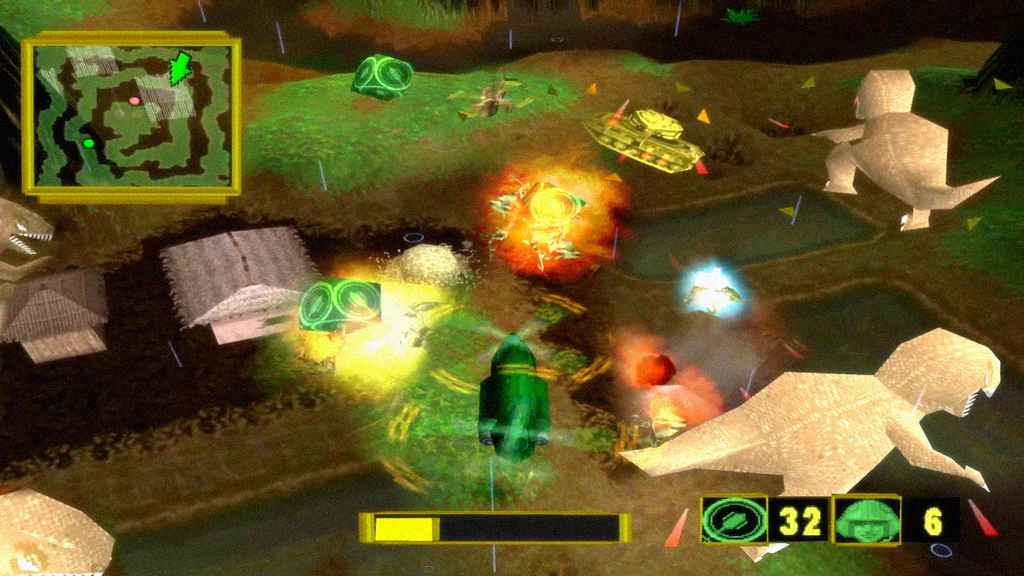
True BETA with minor modifications

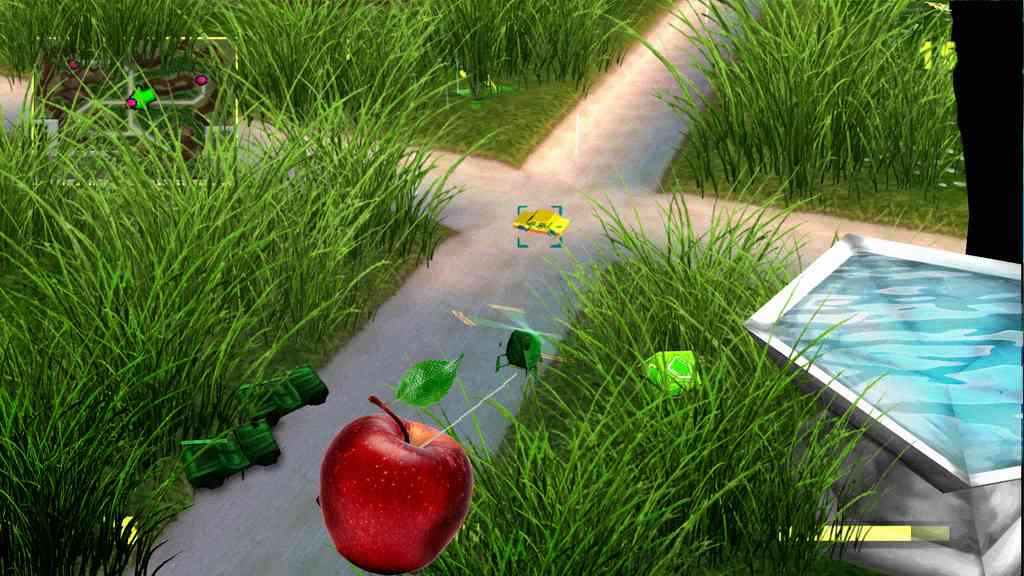
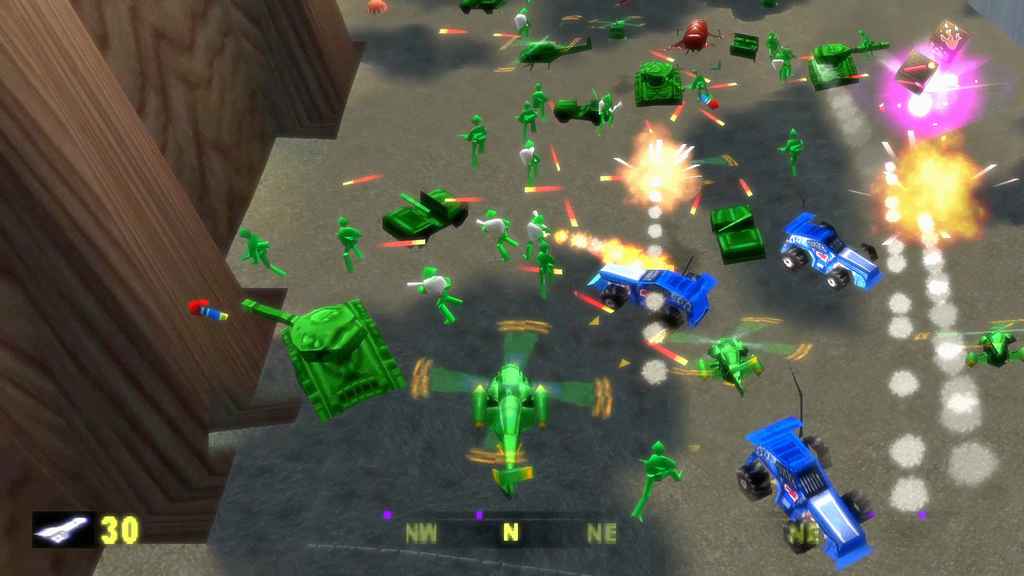
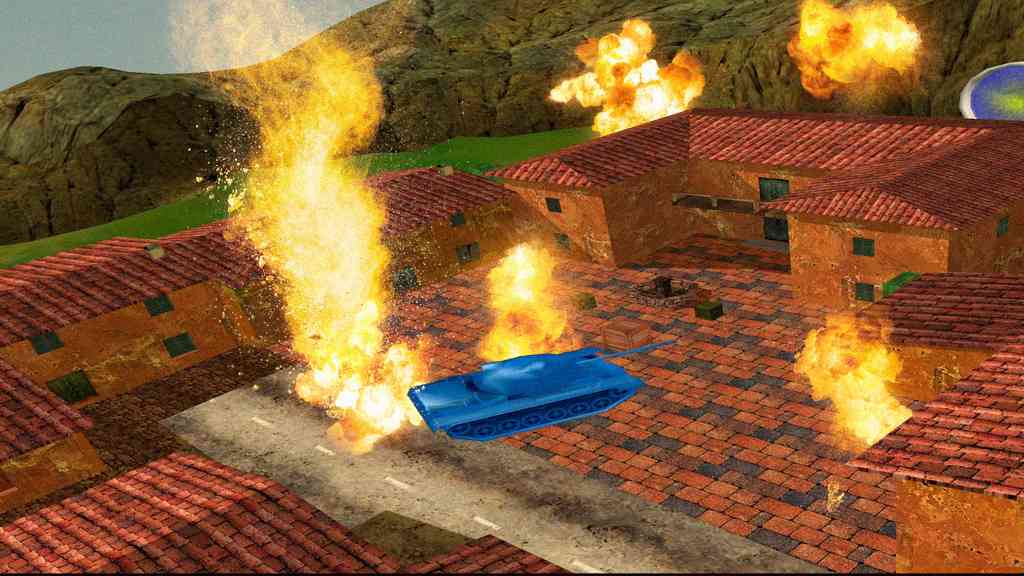
The last 3DO game wasn’t exempt from 3DO tactics. Although these are real in-game images from the game engine (Zero Engine), they have minor additions, such as some soldiers, tanks, and explosions. And these, as they didn’t report, are images from the actual beta, up to the point where 3DO worked on it, before Global Star Software took over and finished the game.

Epilogue: Not Real Gameplay, But Still Part of the Game

And óo players ever got to take control of Sarge.Because sometimes, a fake image contains a very real truth: The spirit of a franchise that helped shape an entire generation’s imagination.

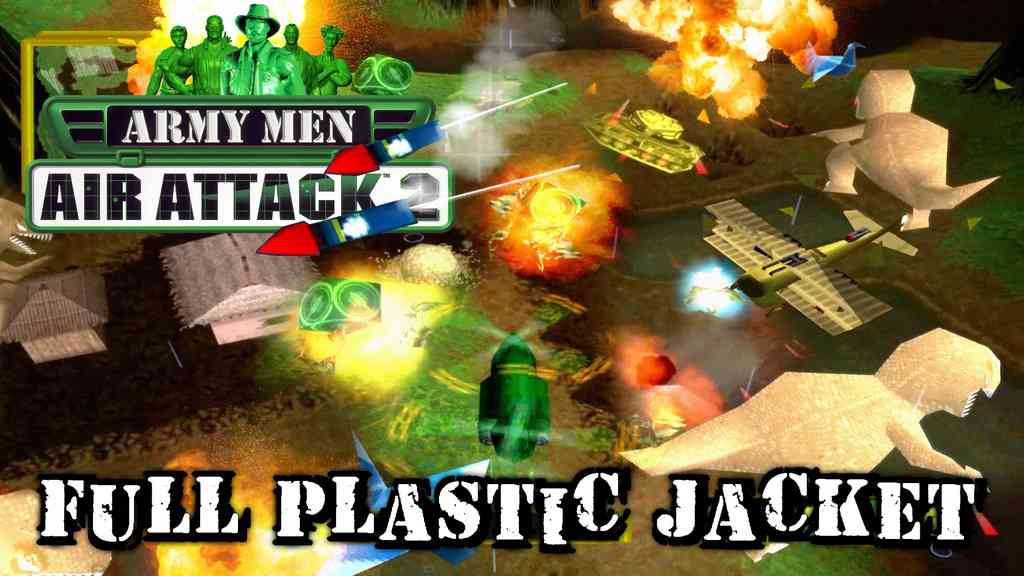
This are some of our own “fake” promotional images. We usually use them for our video thumbnails… but from now on we’ll be using them to promote older 3DO games a little… excessively.

Army Men video games: Manuals, Guides, Magazines, Printed Advertisements

Army Men is from a time before the Internet, a time of print ads, guide books, and physical games with instruction manuals (yes, believe it or not, they came with instructions!). The Internet was relatively new and not the main target market for consumers. So there was also TV advertising… imagine watching your favorite show or MTV and suddenly an Army Men game commercial comes on!

Manuals:

The manuals that came with all the games, CDs, DVDs, cartridges. Each and every one with their game instruction manuals.

Download Army Men PC Manual PDF

Download Army Men Official Strategies & Secrets PDF

Download Army Men Game Boy Color Manual PDF

Download Army Men 3D PS1 Manual PDF

Download Army Men 3D Prima’s Official Strategy Guide PDF

Download Army Men 2 PC Manual PDF

Download Army Men 2 PC Prima’s Official Strategy Guide PDF

Download Army Men 2 Gameboy Color Manual PDF

Download Army Men: Toys in Space Manual PDF

Download Army Men: Air Tactics PC Manual PDF

Download Army Men World War PC Manual PDF

Download Army Men: World War PS1 Manual PDF

Download Army Men: World War PS1 Prima’s Official Strategy Guide PDF

Download Army Men: World War: Land Sea Air Manual PDF

Download Army Men: World War: Final Front PS1 Manual PDF

Download Army Men: World War: Team Assault PS1 Manual PDF

Download Army Men: Air Attack PS1 Manual PDF

Download Army Men: Air Attack PC Manual PDF

Download Army Men: Air Combat N64 Manual PDF

Download Army Men: Air Combat N64 Prima’s Official Strategy Guide PDF

Download Army Men: Air Combat Game Boy Color Manual PDF

Download Army Men: Air Attack 2 (Blade’s Revenge) PS2 Manual PDF

Download Army Men: Air Attack 2 PS1 Manual PDF (Spanish Versión en Español)

Download Army Men: Air Combat: The Elite Missions GameCube Manual PDF

Download Army Men: Sarge’s Heroes PC Manual PDF

Download Army Men: Sarge’s Heroes N64 User Manual PDF

Download Army Men: Sarge’s Heroes N64 Prima’s Official Strategy Guide PDF

Download Army Men: Sarge’s Heroes PS1 Manual PDF

Download Army Men: Sarge’s Heroes PS1 Prima’s Official Strategy Guide PDF

Download Army Men: Sarge’s Heroes Sega Dreamcast Manual PDF

Download Army Men: Sarge’s Heroes 2 PS2 Manual PDF

Download Army Men: Sarge’s Heroes 2 N64 Manual PDF

Download Army Men: Sarge’s Heroes 2 PS1 Manual PDF

Download Army Men: Sarge’s Heroes 2 N64 PS1 PS2 Prima’s Official Strategy Guide PDF

Download Army Men: Sarge’s Heroes 2 Game Boy Color Manual PDF

Download Army Men: Green Rogue PS1 Manual PDF

Download Army Men: Green Rogue PS2 Manual PDF

Download Portal Runner PS2 Manual PDF

Download Portal Runner GameBoy Color Manual PDF

Download Army Men: RTS PC Manual PDF

Download Army Men RTS PS2 Manual PDF

Download Army Men: RTS GameCube Manual PDF

Download Army Men Advance Gameboy Advance Manual PDF

Download Army Men Operation Green Gameboy Advance Manual PDF

Download Army Men Turf Wars Gameboy Advance Manual PDF

Download Army Men: Sarge’s War PC Manual PDF

Download Army Men: Sarge’s War PS2 Manual PDF

Download Army Men: Sarge’s War XBoX Manual PDF

Download Army Men: Major Malfunction PS2 Manual PDF

Download Army Men: Major Malfunction XBOX Manual PDF

Download Army Men: Soldiers of Misfortune PS2 Manual PDF

Download Army Men: Soldiers of Misfortune Wii Manual PDF

Download Army Men: Soldiers of Misfortune Nintendo DS Manual PDF

Magazines: Reviews, editor guides, ads!

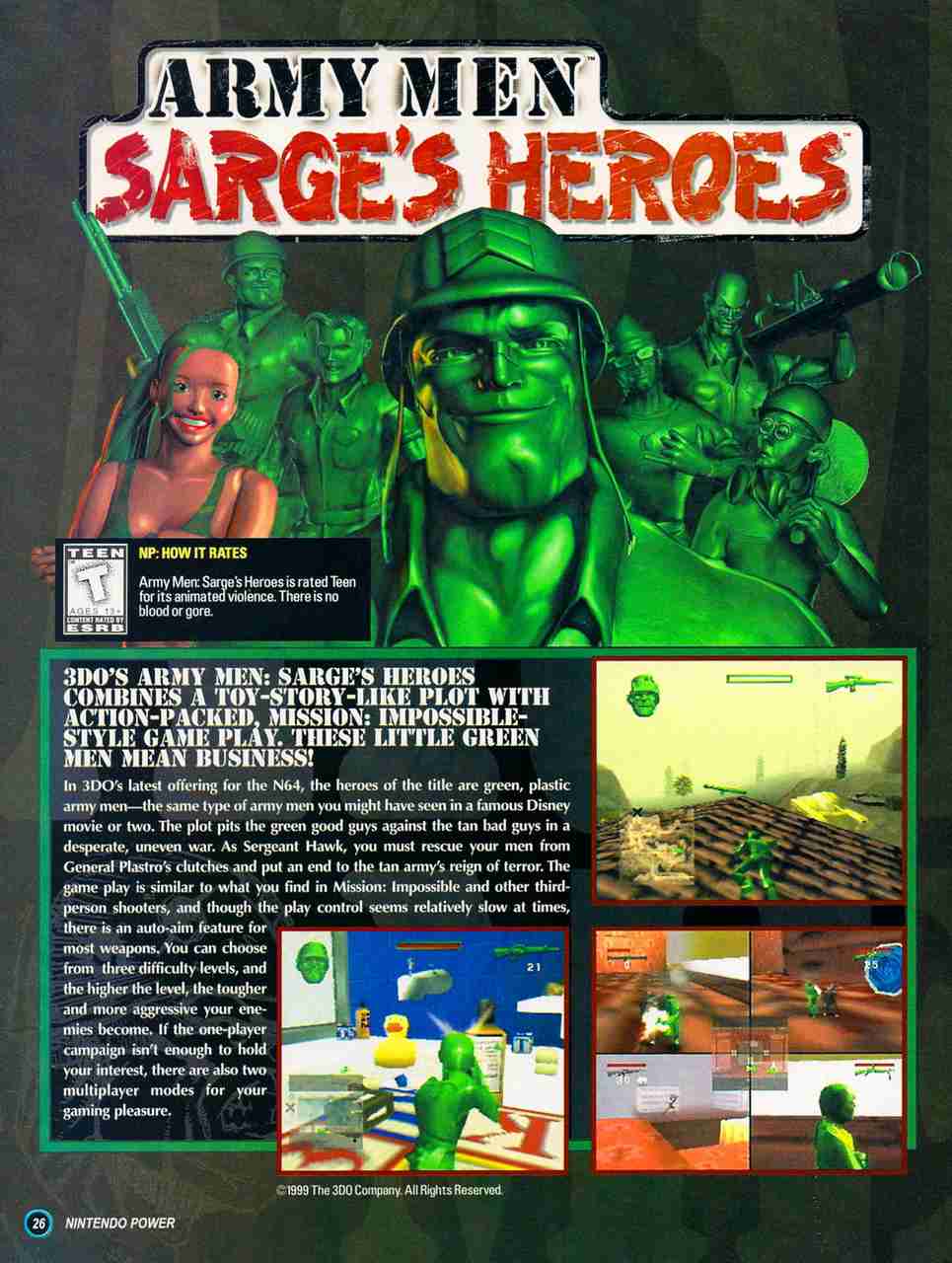
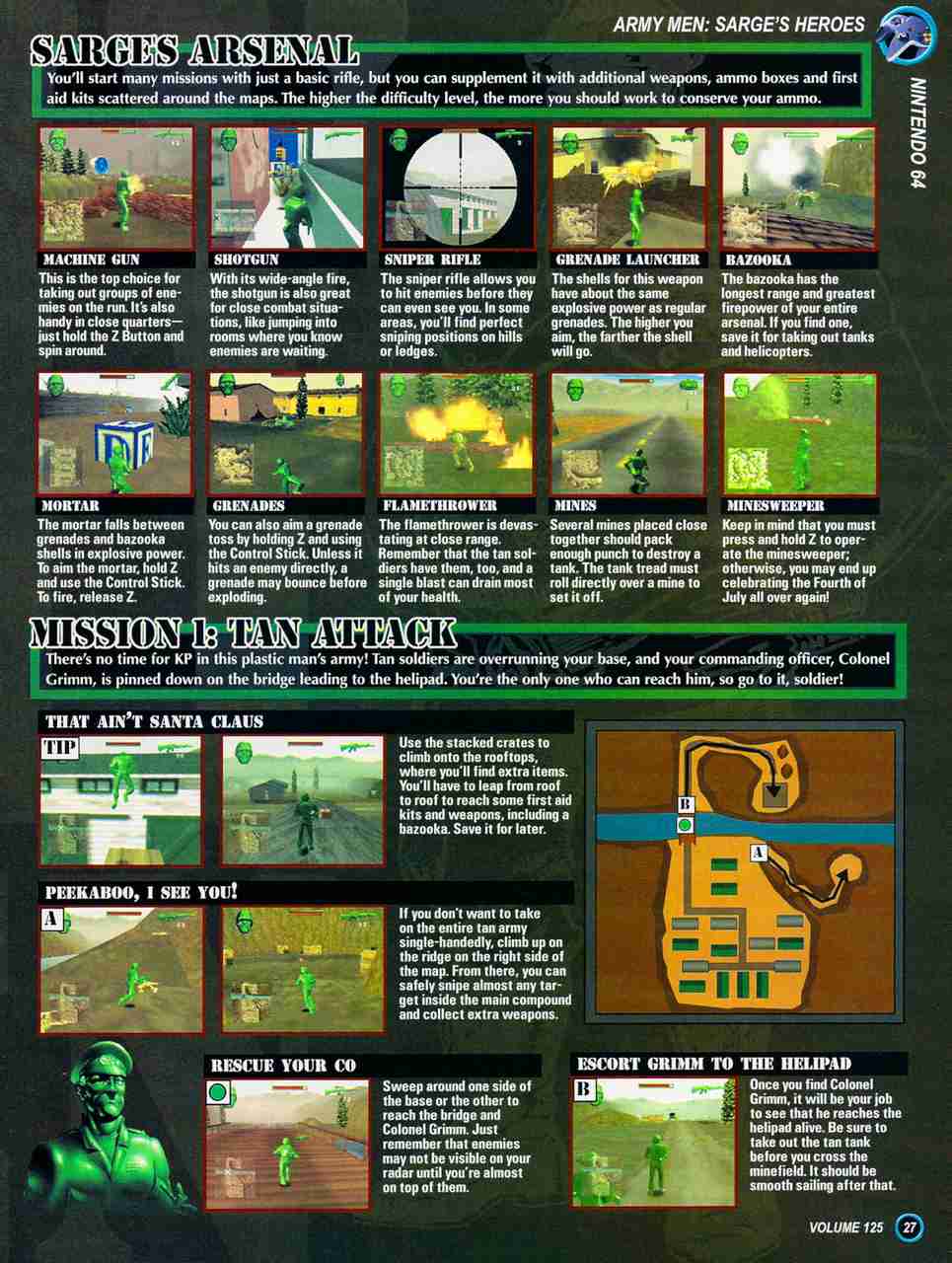
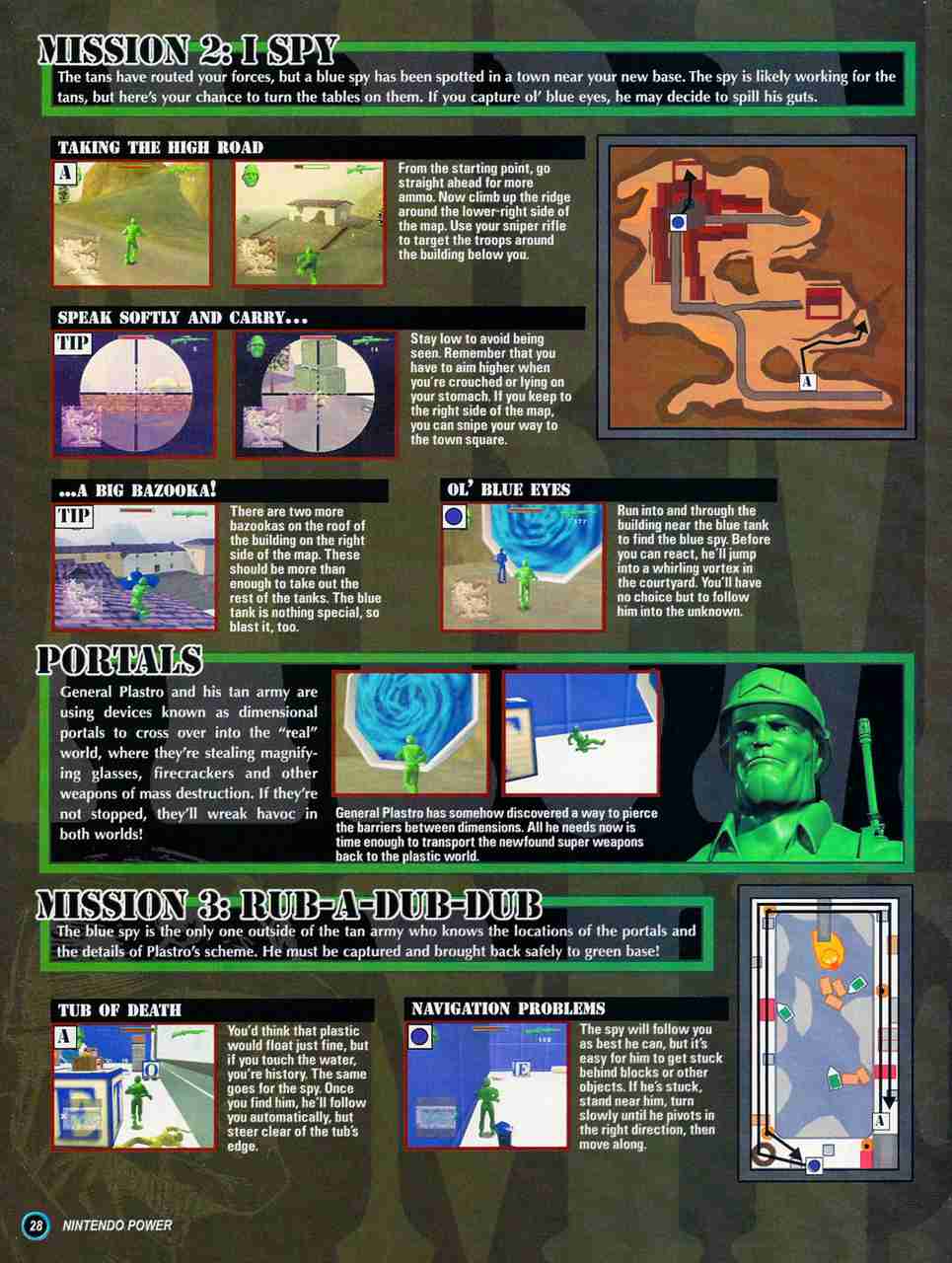
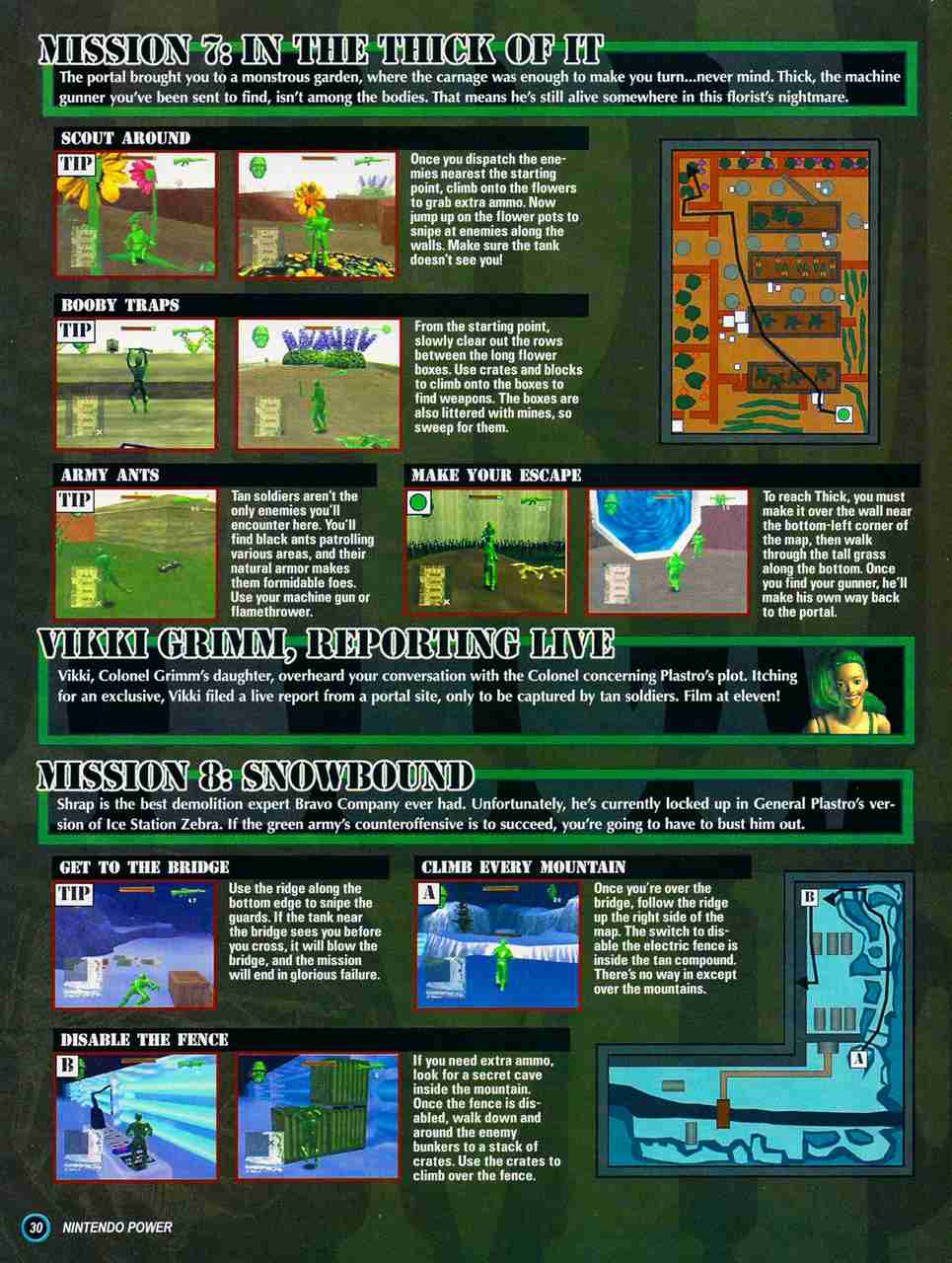
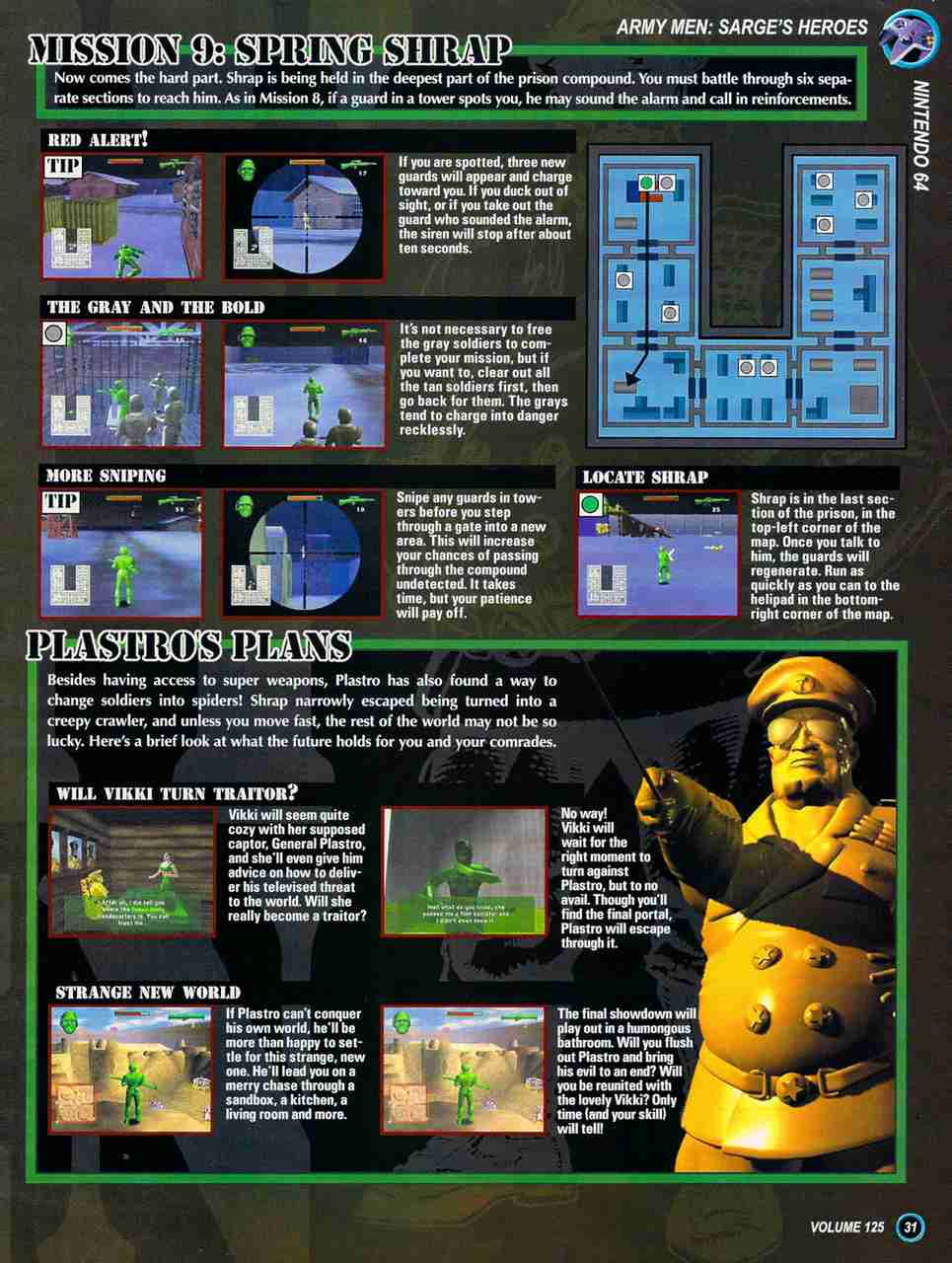
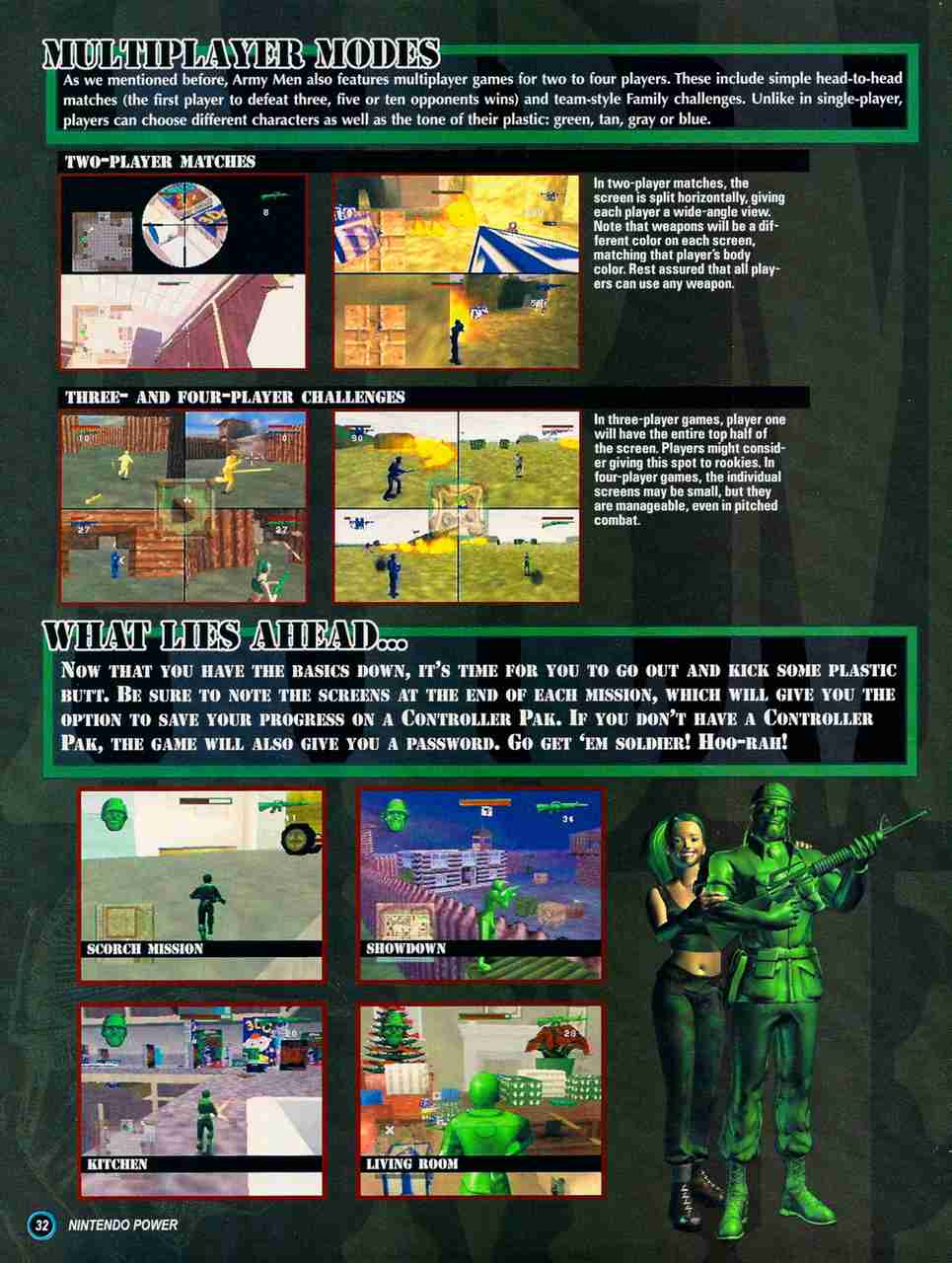
Army Men: Sarge’s Heroes (N64) section from the Nintendo Power magazine, issue #125 (October 1999)

One of the iconic video game magazines of the time, focused on Nintendo only and of course, mainly Nintendo 64, the console of the moment. Nintendo Power was a magazine dedicated to video game news and strategies, launched by Nintendo of America in July/August 1988. Initially, it served as Nintendo’s official print magazine for North America. The publication started as a monthly release by Nintendo of America and later became independent. In December 2007, Future US, a subsidiary of the British publisher Future plc, took over its publication.

In this case, a section with a guide to the first missions of Sarge’s Heroes for Nintendo 64, with some extras, such as tips for multiplayer mode.

Download Army Men: Sarge’s Heroes (N64) section from the Nintendo Power magazine, issue #125

The magazine had a remarkable 24-year run, making it one of the longest-running video game magazines in the United States and Canada. However, on August 21, 2012, Nintendo announced that it would not renew its licensing agreement with Future Publishing, leading to the magazine’s closure in December 2012. The final issue, volume 285, was published on December 11, 2012.

All Nintendo Power Magazines from Archive.org

In addition, a podcast version of Nintendo Power was launched on December 20, 2017, hosted by former Editor-in-Chief Chris Slate. The podcast continued until 2023 and is currently on hiatus as of 2024.

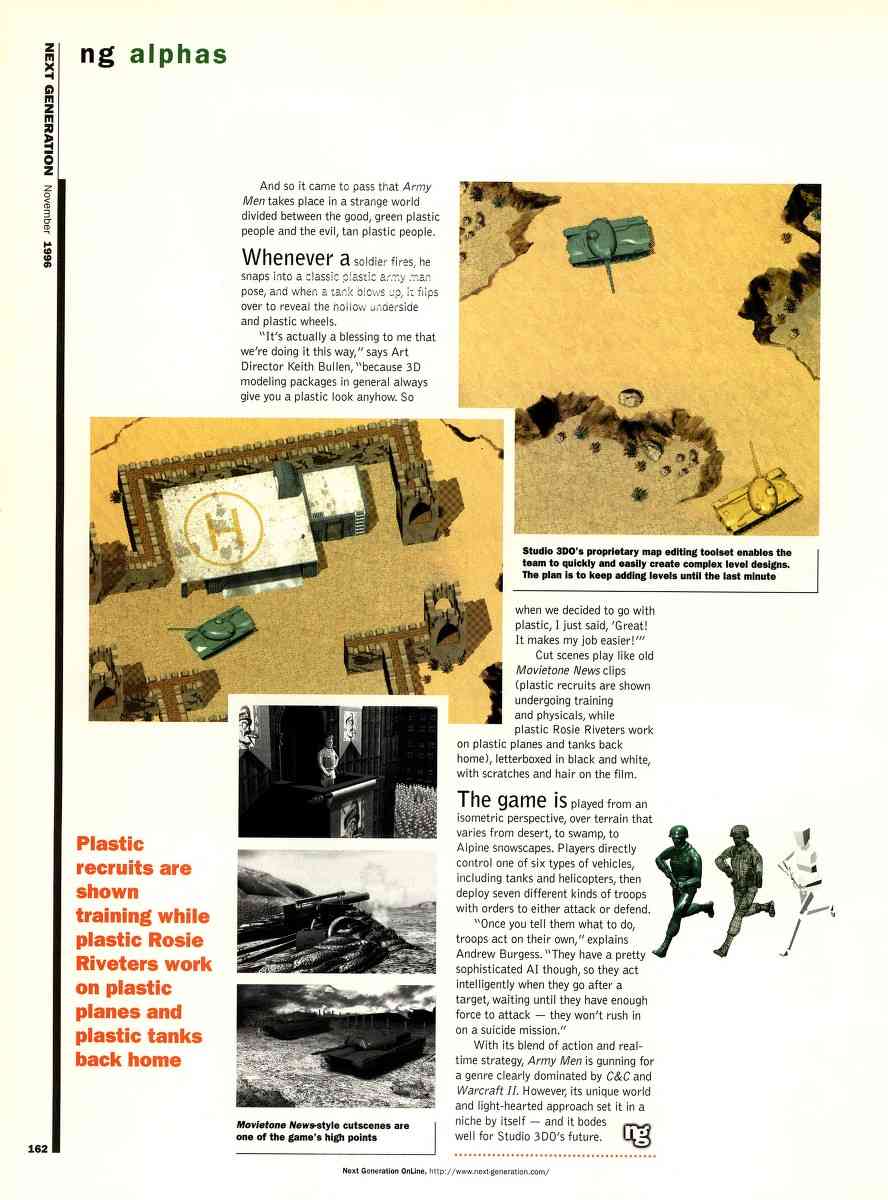
Army Men (PC) section from the Next Generation magazine, November 23, 1996 issue

Next Generation was a video game magazine published by Imagine Media from 1995 to 2002. It focused on the gaming industry, offering in-depth articles, interviews with developers, and reviews of upcoming games and hardware. The magazine was known for its professional tone and emphasis on the business and technical aspects of gaming, rather than just game reviews and cheats. It provided readers with insights into the future of gaming technology and trends.

Download Next Generation Magazine issue from 23 Nov 1996

In this case a sneak peek of Army Men, the then new 3DO game in progress, a year and a half before its release…

Next_Generation Magazine issue from_23_Nov_1996 in Archive.org

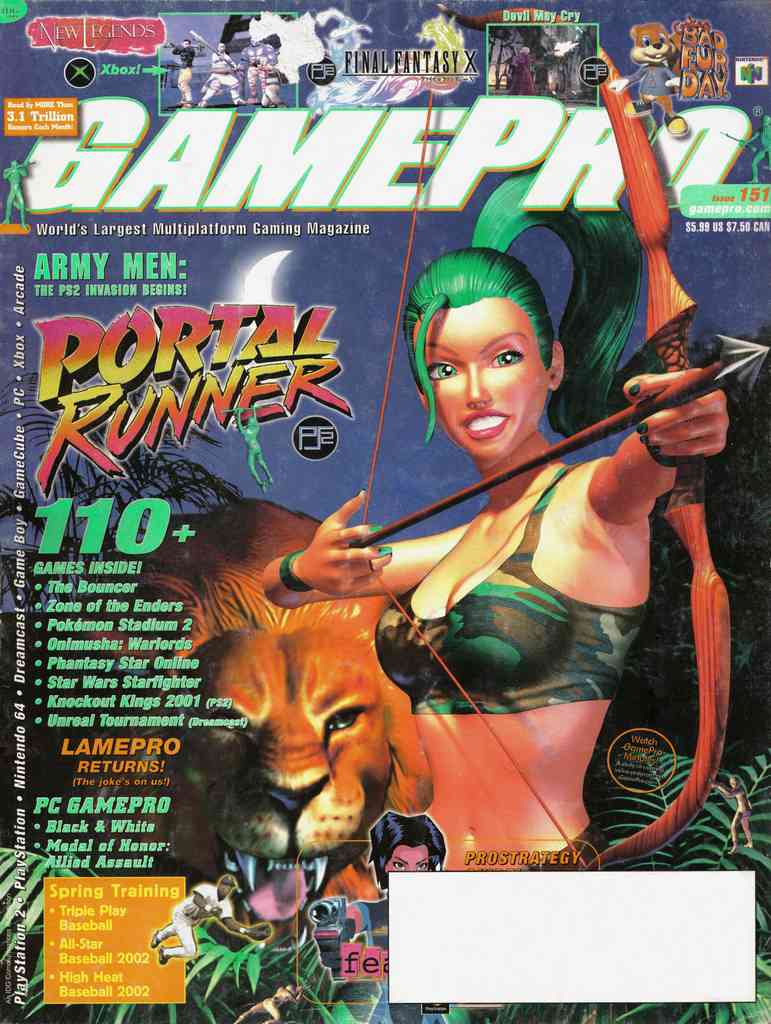
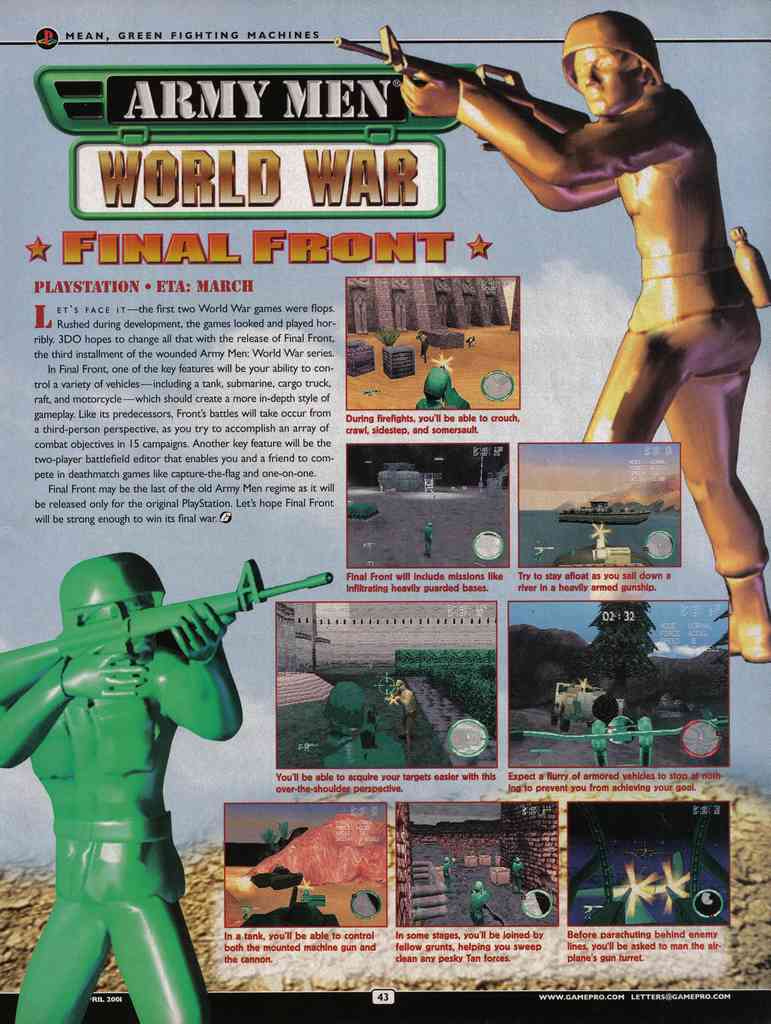
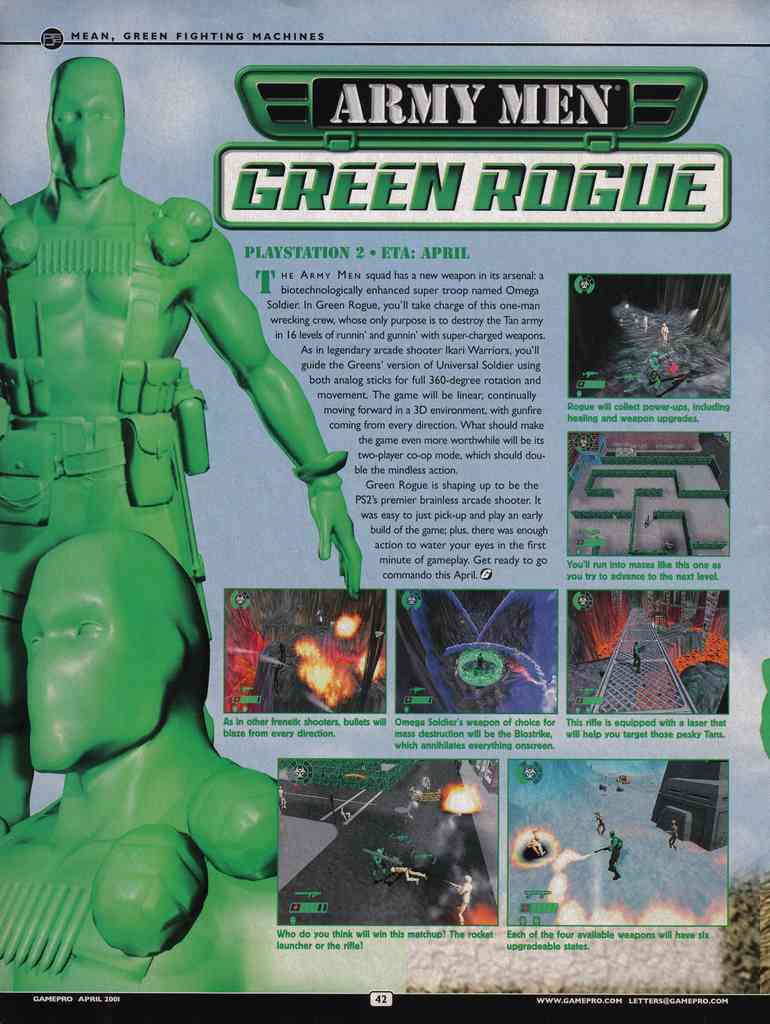
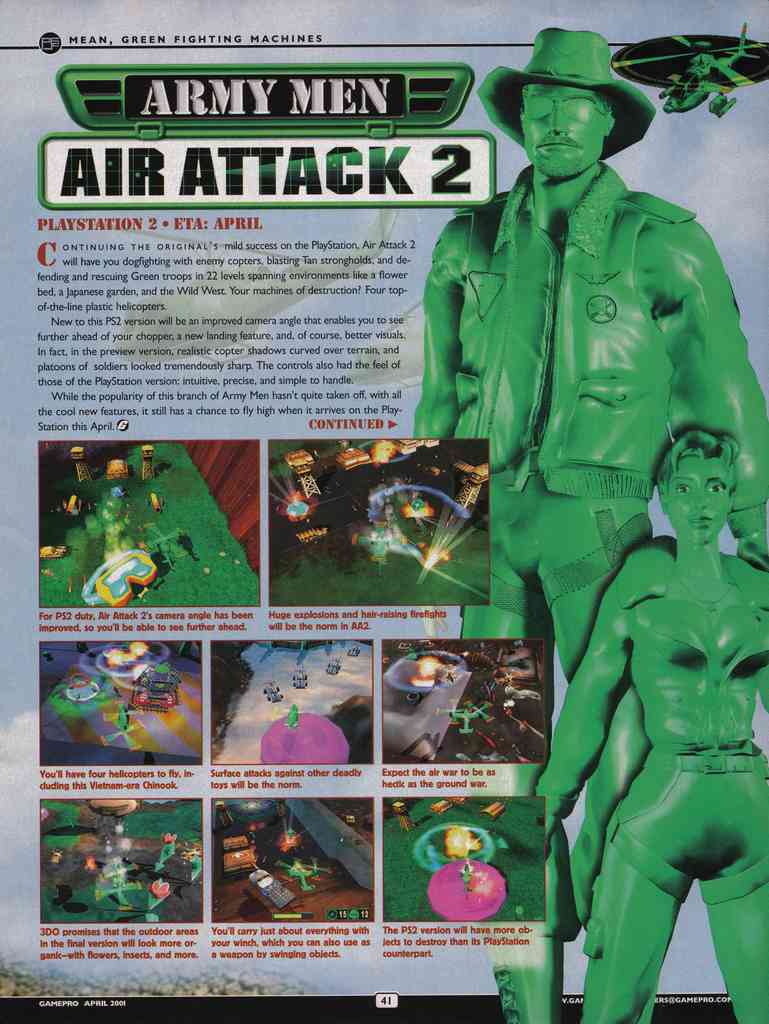
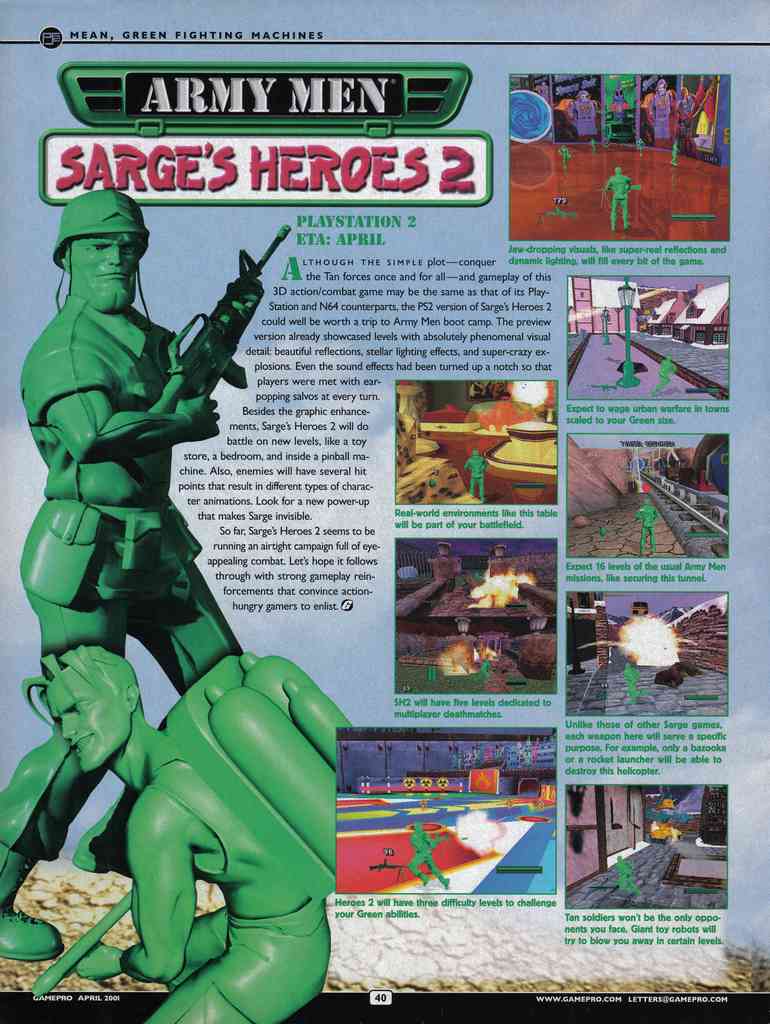
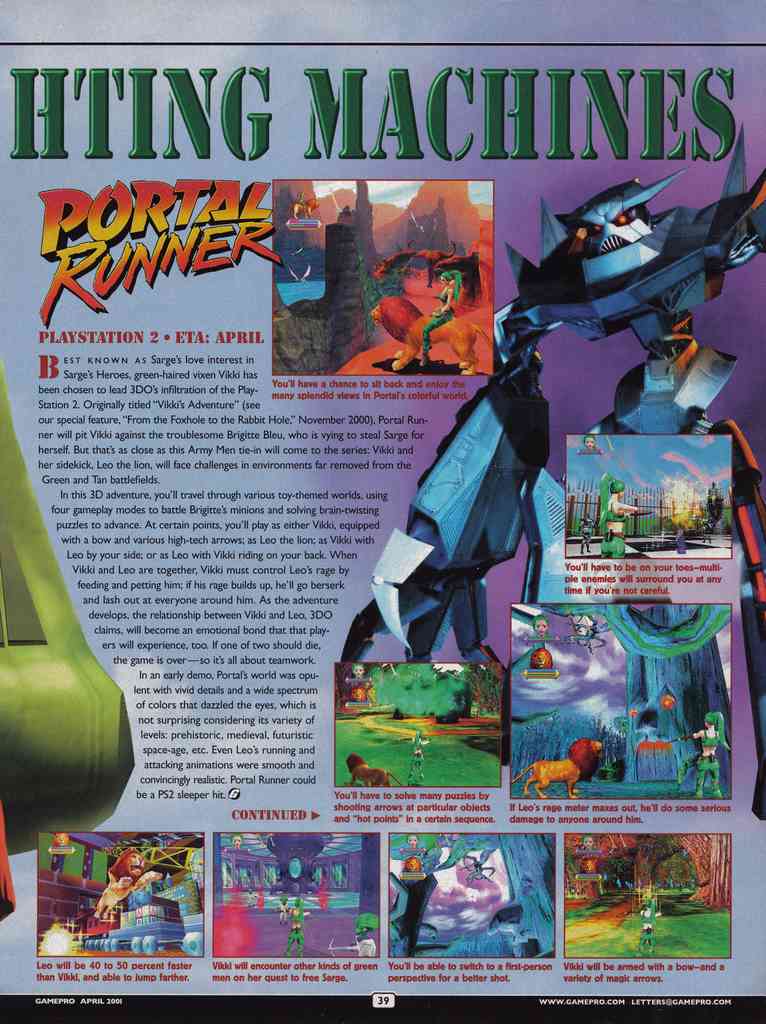
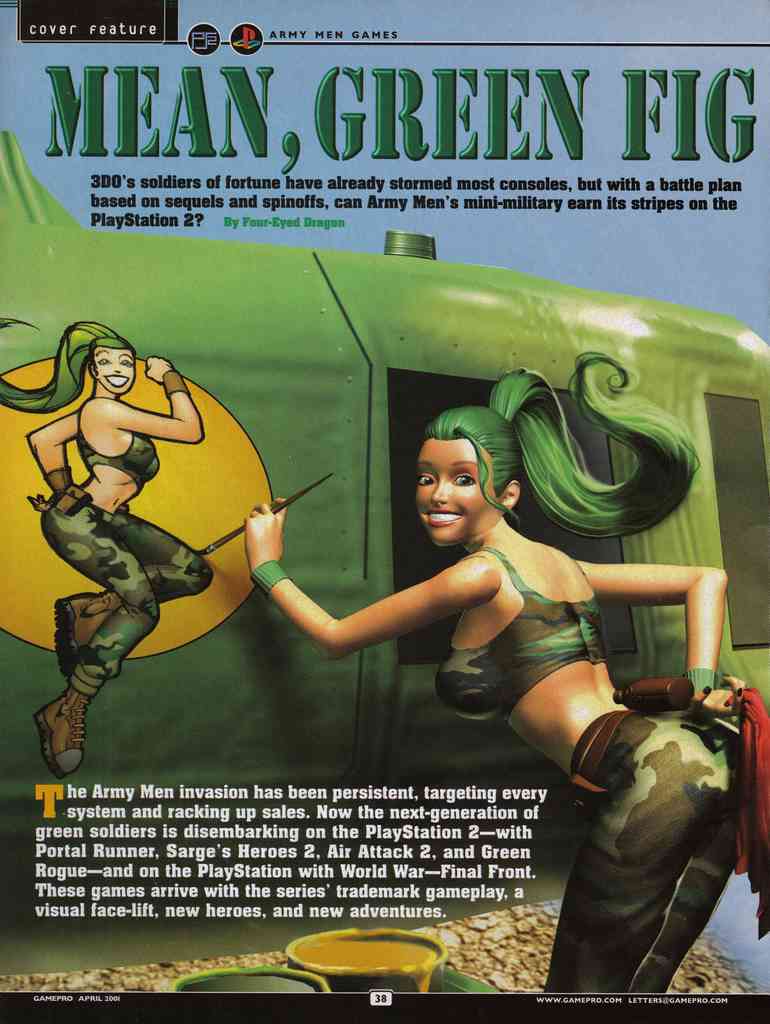
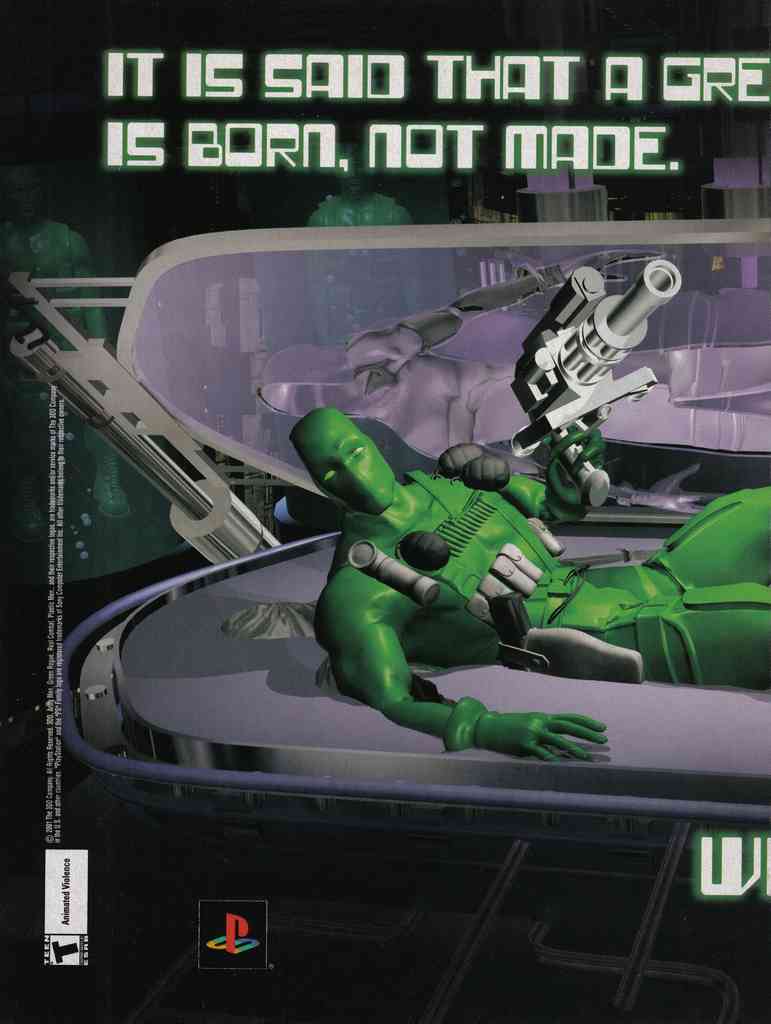
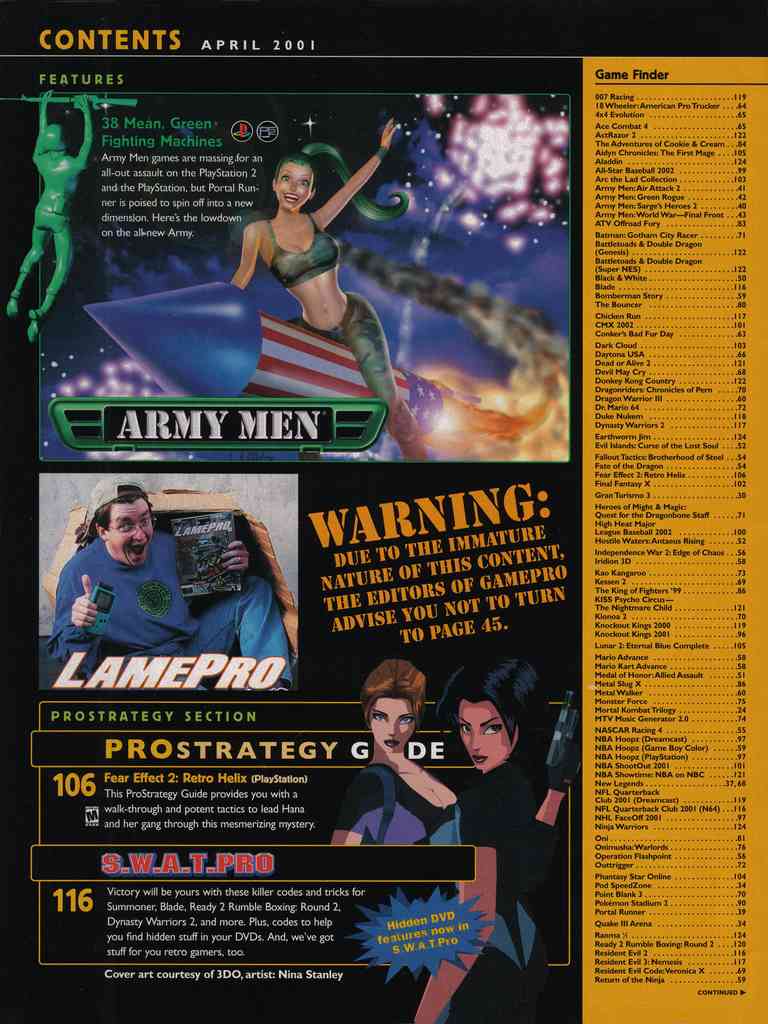
Army Men games on the GamePro Magazine Issue 151 (April 2001)

GamePro was a well-known video game magazine that ran from 1989 to 2011. It provided gamers with reviews, previews, tips, and strategies across various gaming platforms. The magazine was recognized for its vibrant layout and engaging content, including a unique rating system and helpful “ProTips” for improving gameplay. GamePro was a key source of gaming news and information during its publication years.

Download complete GamePro Magazine Issue 151 (April 2001)

In this case a sneak peek of the Army Men Playstation 2 launches: Sarge’s Heroes 2, Air Attack 2, Green Rogue & Portal Runner. And for the Playstation 1, Army Men: World War: Final Front.

Army Men canon wars!

“Well, Portal Runner is no longer considered canon, with this situation that you say (PR is canon), we should add Superman and Batman to the game because it adds new things to the game.” – A particular Army Men die-hard fan

Everything this guy said have no sense. Who said Portal Runner is not considered canon?, and what does Batman have to do with it? I get it, it’s a metaphor. It doesn’t make sense anyway.

Portal Runner is canon (whoever likes it or not)

“head canon” it’s a personal thing, not the real thing.

It’s VERY strange that some fans have that “I like this so it’s canon. But I don’t like this so it’s not canon” with things that don’t really bother them, but it seems to hurt their sensitivities. You may not like Portal Runner, that’s legal. But it is exaggerated that if it offends you to such a degree that you hate it.

I really don’t understand it. I mean, it’s not that I like Portal Runner, but it doesn’t bother me either. It’s like Teletubbies annoy me just for existing lol

“I’m not a fan, but I know it brought interesting things to the Army Men canon. Because it is a game from the Army Men franchise. That is unavoidable.” – Thanos

What rules said that Portal Runner isn’t canon?. Be careful with imagining something so strongly that you believe it to be true. Because there is no such rules. There are only presumptions by some fans who believe that some things are not canon, others are from another continuity, etc etc etc. But no one said anything about Portal Runner lol.

Sarge’s War clones!

Another debate in the Army Men community is about Army Men: Sarge’s War: the Heroes, Vikki Grimm and Colonel Grimm who died in the Peace Treaty terrorist attack were all clones… because many refuse to accept that that happened. And while the ending shows us those tubes with names, the reality is that it remains somewhat ambiguous… unless you listen to the father of the Army Men canon, Michael Mendheim: he himself said in an interview that he wanted to kill them, as a metaphor for the bad time they were going through during the development of Sarge’s War, the bankruptcy of 3DO, between layoffs, cancellations and warnings of a bleak future for the company and its employees. On the other hand, it is understandable that the childhood of many has been marked by this… but that is the truth. ALTHOUGH, it does not mean that it has to be the end… since despite their intentions, they left us some elements to reverse that bitter ending (the tubes with names).

Holders of the truth

The only ones who knew the truth about these “canon” & “inconsistencies” things no longer exist, the 3DO team from that time, behind the Army Men games. And I’m not even really sure about that, since I don’t think they were that involved with it to the point of being obsessive about it.

By the way, before someone does it: It is not valid if a former 3DO employee say something today and for that reason it will be considered the truth, because years passed and those who decided that, were an entire group with bosses who had the last word. Anyway in these years since that, we have never seen anyone on the internet talking about it. So, point for this theory!

But then… how?

The only way I think we can bring some light to this “canon” matter is to gather the entire old group, together, and ask them. But anyway, a LOT of time passed and more than sure they no longer even remember, because of this, or because it was simply a job and they were never that interested in it.

Or on the other hand they can be gathered by someone and made them to say whatever he wants them to say, which is why I think it is no longer possible to get REAL answers today.

What should perhaps be accepted is the suggestion or ideas of an old member of the team. That couldn’t be ignored!

But with all my years in video game development I can tell you one REAL thing that few or no one can tell you here…

Because of how storytelling works, most of the biggest inconsistencies were actually left, on purpose, with AMBIGUITY. That is, without really defining it. And that’s totally on purpose. When you don’t know how to solve something or fix something that is difficult to fix, but that should be a necessary change, you leave it poorly defined, open to interpretation, ambiguous. That can be understood in various ways or admit different interpretations and, consequently, give rise to doubts, uncertainty or confusion. But also a certain level of satisfaction on each side of the debate.

I’ll give you an example… Sarge VS Sarge Hawk. It was NEVER defined, and that’s on purpose. Surely, according to what I personally assume given my knowledge, for the developers Sarge Hawk was supposed to be the same protagonist of the previous games. The clearest clue is the similarity between Sarge’s original voice and Hawk’s voice, as well as their personalities. And of course, that Sarge disappeared from continuity with Hawk appearance lol.

Here is the solution: SOFT REBOOT

You have a classic property (Army Men), one that’s made money hand over fist for you for years, perhaps decades, but now, it’s getting a little long in the tooth. Maybe it’s dated, maybe recent installments have tarnished their name, maybe it’s just bogged down in “Continuity Lockout”. Perhaps you’ve just finished the story you wanted to tell, or you’re still telling that story and don’t want to ruin it yet. Or maybe you’ve finally been given the budget to make the entry in the franchise you’d wanted to make years ago but couldn’t afford.

That’s what happens with good ol’ franchises. But in this case I know for a source that was the dev’s bosses who want a different approach, a more “mainstream” product, or just what they need to upgrade their approach.

Resetting the thing to bring in new fans sounds like a good idea, but maybe the core storyline is still interesting if you can get rid of the bad superficial elements that accumulated around it over the years, or peel back the exaggeration of its problems over time; maybe you’re about to release it into a wider market where they never got the previous entry while pleasing existing fans; maybe you want to make a straight sequel but have to take a new direction because of drastic creative team changes; or maybe you’re simply afraid of the backlash to a Continuity Reboot.

In the case of the Army Men franchise, I think YES OR YES they needed a change. What else could they do after AM1, 2, TIS, WW and AT that was new using exactly the same elements without going away from that? It would have worked with the die-hard fans and bigots, but not with the general public from whom they need the money.

Yes, Army Men 1 was a success… but when could they replicate that success with exactly the same thing? It was a one-time win.

What to do? Well, perhaps a “softer” approach will serve. Instead of starting over, dip into the Troper Well and pull out a way of explaining you’re not really tossing away the classic stories the fans love. There are many ways to accomplish this:

  • It could take place after a lengthy Time Skip, allowing you to make a Same Plot Sequel with a new generation of characters and a few old favorites popping in for a Continuity Cameo.
  • It could be an Alternate Timeline that diverges from the “main” timeline thanks to time travel shenanigans, so you can do a fresh, modern take on iconic scenarios while the main timeline exists in parallel.
  • It could start with a Retool where the setting and scenario are significantly changed and the cumbersome or outdated aspects are dropped.
  • It could be a prequel with younger actors where all the things the old audience knows are hinted at, without being burdened by excessive continuity that will drive off new audiences.
  • It could be a side story taking place in the same universe that coincidentally features characters or situations the old audience is familiar with.
  • It could treat the original with Broad Strokes, so that the things the old audience liked happened for sure, but the things they didn’t like didn’t happen.

Essentially, a Soft Reboot. It has many elements of a reboot, and feels a lot like one, without actually getting rid of the old continuity.

Contrast the “hard” Continuity Reboot, in which the old story and continuing plotlines are explicitly kept, but minimally/mostly copied and started over from Day 1. Also not to be confused with a Soft Reset or Canon Discontinuity.
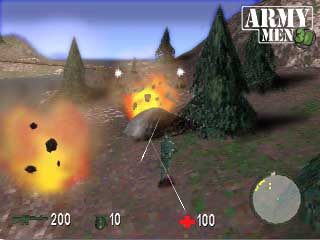
In the case of Army Men and what came after with the big changes made with Sarge’s Heroes, Air Attack, etc. was a kind of Soft Reboot, where they introduced everything new with a great future ahead, a lot of room to expand a develop (or at least that’s what they thought), without removing many of the elements that fans were familiar with, such as the plastic soldier original design.

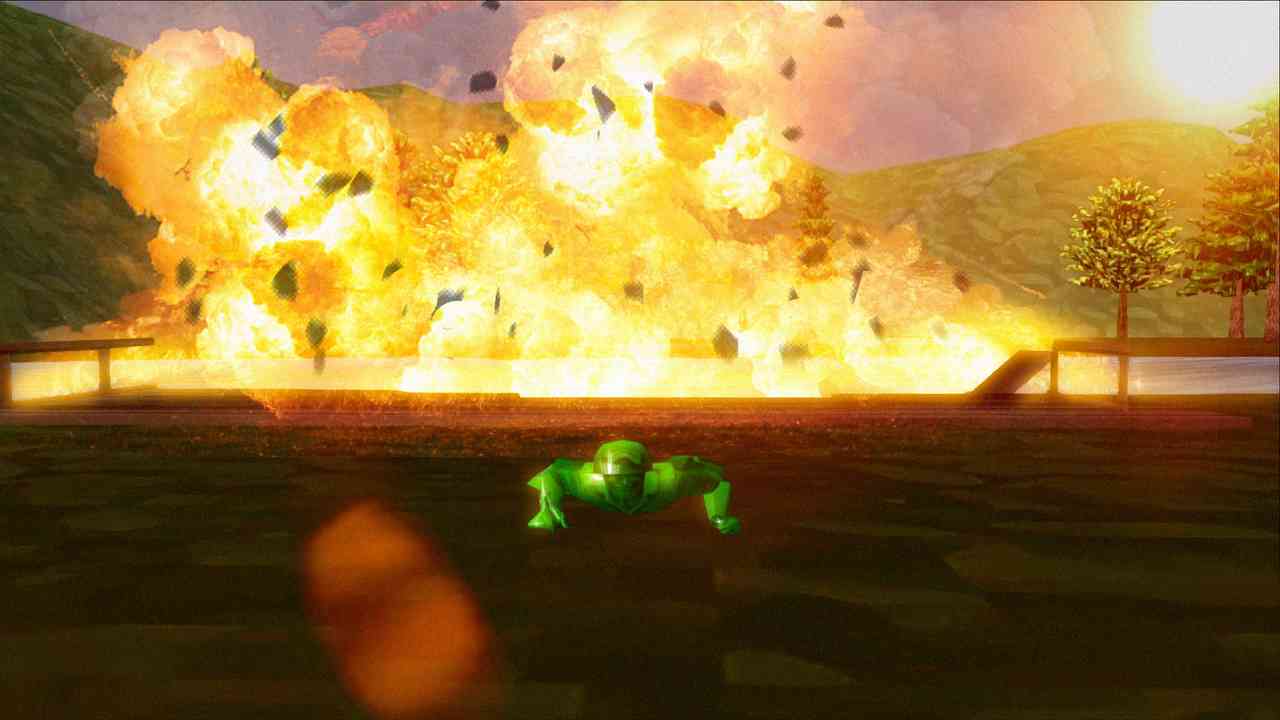
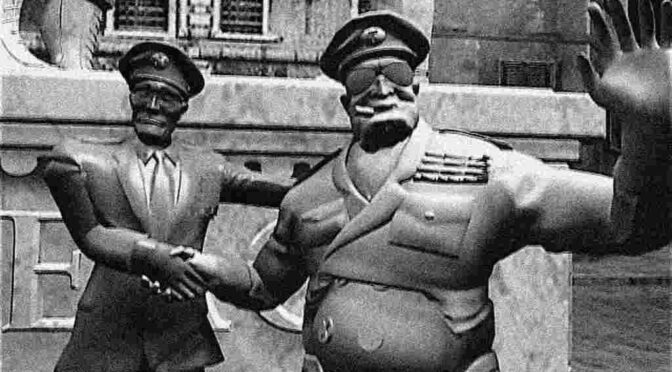
Something very symbolic to represent this change and say goodbye to the old continuity, and that NO ONE has talked about, is the first scene of the Sarge Heroes campaign, this one…

Saying goodbye to the old Army Men, welcome to the new one!

This is LITERALLY the developers sending you the message of the change, to you and for them, like a “farewell” tribute. You go from the Sarge continuity to the new. It shows you the classic soldier, as always was, who suddenly leaves the scene, drastically, to make way for Plastro’s new design with everything that is coming behind with him, and the next scene shows you the new protagonist, Sarge Hawk.

To finish with my words…

They NEVER clarified anything because from the beginning they didn’t want to. They wanted it to be open to interpretation so that everyone would be satisfied with their interpretations of the events. Those who want to believe that Sarge Hawk and all that continuity is something different have nothing to contradict them. And those who want to believe that it is a sequel and that Sarge is now somehow Sarge Hawk, have nothing to contradict them either (au contraire). In short, everyone is happy. And Portal Runner is canon.
Original source

https://tvtropes.org/pmwiki/pmwiki.php/Main/SoftReboot

Heroes may die, but plastic lasts forever. By Zoey Handley – destructoid.com – including some words from Michael Mendheim – Jun 27, 2021

Original source

https://destructoid.com/sarges-war-eulogy/

Army Men: Sarge’s War: The eulogy for an entire series

It’s a complicated subject, the Army Men series. The 3DO Company released somewhere in the realm of 25 games between 1998 and 2002. When you consider some of the ports were made from the ground up and entirely distinctive to the platform they were released on, the actual number of unique games is probably around 35 or more. I’m sure you can already see the problem.

Army Men Vikki Dead
Army Men Sarge’s War Vikki Dead

“The problem was with all the early success of these Army Men games, the executives at 3DO thought they could ship an Army Men game (or bundle) every quarter and be successful,” Michael Mendheim, creative director of Battletanx and the Sarge’s Heroes subseries, told me. It’s obvious. The output was stunning, putting even history’s most prolific market spammers, like Guitar Hero, to shame. What started as a promising series with a few hits on its hands quickly declined into one that was treated with scorn and derision by players and the press.

The result is that the Army Men games are poorly remembered. I’ve previously compared the series to a shotgun blast: a sudden and abrupt spread, sometimes causing a lot of agony. Few mourned the loss of the franchise, but I still visit to place flowers on its grave.

Col Grimm dead
Army Men Sarge’s War Col Grimm dead

The 3DO Company was founded by Trip Hawkins, who previously founded Electronic Arts years earlier. Hawkins dreamt of a console that would become the universal medium for games. Licensing fees would be almost non-existent, so developers and publishers would jump aboard with little risk, abandoning frontrunners Nintendo and Sega. Hawkins left EA to pursue this dream, but by 1996, the 3DO Interactive Multiplayer flopped under the weight of FMV game ports, and the company had to pivot to purely making software. Hawkins even took on a creative role to help out his teams.

Army Men started out quietly enough in 1998. The first game on PC, merely titled Army Men, was a reasonable success. Early the next year, Army Men II came out alongside a PlayStation remake of the first game called Army Men 3D. Again, these were pretty successful. By the end of 1999, however, a second PC title, Army Men: Toys in Space, the 3D action title Army Men: Sarge’s Heroes, and the top-down helicopter game Army Men: Air Attack were all released. Five titles in its second year, and the snowball had only just begun rolling.

Riff dead
Army Men Sarge’s War Riff dead

That’s where Michael Mendheim comes in. In 1998, he was creative director on Battletanx, which was a hit for 3DO. He was then given creative license on his own Army Men title and envisioned a character-driven game with more of a story, and that became Sarge’s Heroes.

Once again, Sarge’s Heroes was a hit. If I can wade into the story for a moment, it’s where I was introduced to the series, and it’s one that still holds a place in my heart. It had its rough spots, but a lot of its design, especially when it came to its levels, was fantastic. I remember following it through Nintendo Power up to its release and playing the hell out of it.

While I’ve trudged through a great deal of the Army Men series since then and could give you the full and detailed history, that’s quite a detour. We’re going to hurry the story along here.

Scorch dead
Army Men Sarge’s War Scorch dead

The important fact is that not only did the quality of Army Men titles start to plummet almost immediately, but the public’s appetite for the games declined just as fast. I’d say that the four PlayStation Army Men: World War games are pretty consistent fun, but by the release of the last two titles, the press was practically ignoring them.

It became something of a laughing stock. In 2001, Portal Runner was released to harsh reception. After a particularly scathing review in Gamepro Magazine, Trip Hawkins even went as far as writing to the Editor-in-Chief to defend the title in an almost comical fashion. He described the staff as “angry young men” and threatened to reduce their advertising. I can understand him wanting to defend his creation, but the letter wasn’t a good look.

Around 2002, the pace of releases from 3DO had slowed and the writing was on the wall. “We already had a round of layoffs; everyone was nervous about the company’s future,” said Mendheim. He had a team working on a game called Four Horsemen of the Apocalypse. “It was an edgy, gritty, post-apocalyptic nightmare, based on the Book of Revelation.” Mendheim also believed this to be the best chance at saving 3DO, but it wasn’t to be. “I was called into a meeting and told that I could keep a small team working on Horsemen but everyone else, including myself, would need to make another Army Men game. That Army Men game would be Sarge’s War.”

Thick dead
Army Men Sarge’s War Thick dead

Sarge’s War would be the last 3DO developed Army Men game, put together in haste as the company took on water. “Honestly, it was like developing the game on the Titanic and it took 9 months for the ship to sink,” described Mendheim.

If you’ve played Sarge’s War, you may have been stricken with how tonally different it was from previous games. The series’ standard features were there, but a lot of the color was washed out of it. In its place was a grittier veneer, even over its more cartoonish elements. The entire supporting cast of the Sarge’s Heroes sub-series–all of them–were killed in an explosion, sending Sergeant Hawk into an avenging rage.

This was the sound of a series dying. There are plenty of franchises that have disappeared from the face of the planet, never to be heard from again. Jazz JackrabbitTop GearF-Zero; there are many easy examples of games that have just…gone away. Sarge’s War was a game on its deathbed, one last defiant scream before the embrace of oblivion. It was a deliberate move to put the final nail in the coffin and bring closure to the series.

Hoover dead
Army Men Sarge’s War Hoover dead

I think Michael Mendheim put it best. “There are certain games that you just put your heart and soul into because you love the content, they are your babies. Sarge’s Heroes was one of those games for me. Every character in the game was developed with love and passion. Sarge’s Heroes was fun, positive, and hopeful. It was a game that made you laugh and feel some magic.”

Sarge’s War was the opposite of that. It was grim and dark. The story in Sarge’s War was about loss. Losing everything that you love and care about. In the plotline, the entire cast and crew – Sarge’s Heroes died with 3DO. Everyone except for Sarge.”

“When I killed off Sarge’s Heroes, I also killed my desire to ever design another Army Men game. I designed the first and last game in the Sarge’s Heroes product line.”

By the end of development, 3DO had already breathed its last, and Sarge’s War wound up getting released by Global Star Software, a subsidiary of Take-Two and the new home of the Army Men license. Some sources credit Tactical Development for completing the game, but according to Mendheim, “Our orders were to finish the game and that is what we did…the game was delivered completed as the ship went down.”

Shrap dead
Army Men Sarge’s War Shrap dead

In comparison to the Army Men games that came before it, Sarge’s War was less rickety. It’s obvious that some of 3DO’s best remaining talent had worked on it, though under less than ideal constraints. It doesn’t reach the height of the series, but knowing the story behind it underlines it with melancholy. It’s a surreal experience.
“There are no bad guys in this story; everyone did their absolute best to try and keep the company alive,” explains Mendheim. “No one sets out to make a bad game. No one worked harder than Trip Hawkins, who even put his own money on the line to try and save the company. Unfortunately, not every story has a happy ending.”

Global Star made a token effort at continuing the Army Men series. Their first attempt was Team 17’s Army Men: Major Malfunction in 2006, which I’ve previously covered, and it’s awful. Later they’d try another reboot with Army Men: Soldiers of Misfortune in 2008, which is similarly terrible. There was a mobile game for pre-smart phones, and then that’s it. Aside from a few re-releases, the series has been left to rest peacefully.

Army Men: Sarge's War Hawk
Army Men: Sarge’s War Hawk

Whether or not it deserved that fate is a matter of opinion. On one hand, it was unwise and intrusive to flood the market with those titles. Releasing games of questionable quality to bank on a brand should never be commended. But on the other hand, they weren’t without merit or appeal. The best games were just buried under the worst. It could have been straightened out. It didn’t have to end this way.

Or, as Michael Mendheim put it: “I always look back at my time at 3DO and think what could have been if we had managed the brand better by releasing only one Army Men game a year and each year releasing a different type of Army Men game with cool innovations and game mechanics…maybe, just maybe Army Men and 3DO might still be alive.”