
A naturally born doll, rather than a manufactured one.
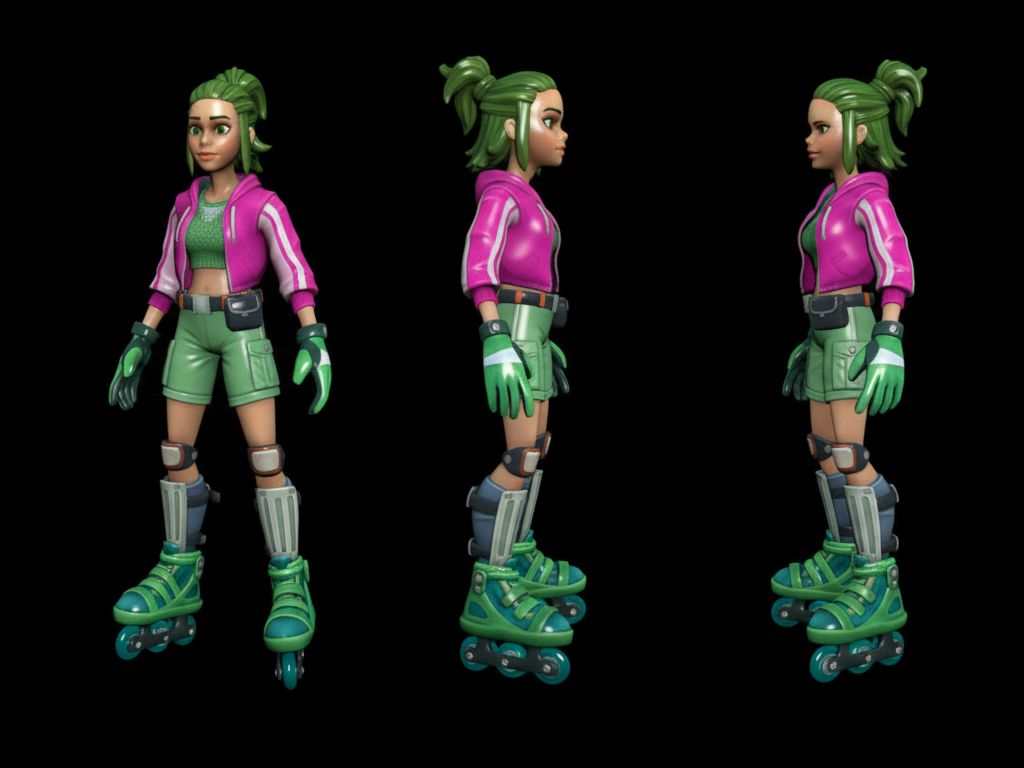
She was born somewhere in the Plastic World, or possibly in another world where dolls of her kind are able to be born and grow naturally. Very little is known about her origins. The identities of her parents are unknown, or possibly classified.
At some point in her life, Penny became the basis for the creation of the Penny Units. Unlike Penny herself, the members of the Penny Units were manufactured and molded, using her appearance and characteristics as a template. In this sense, Penny is the original individual behind the entire type, rather than a member of the collective created from it.
Despite the similarities between them, Penny is not part of the Penny Units and has never been particularly interested in belonging to them. She also does not consider herself an active member of the larger collective or species of dolls to which she originally belongs. As far as Penny is concerned, there is little reason to concern herself with such distinctions.
Penny is also unusual in another way. While the manufactured Penny Units do not appear to age or grow, Penny herself has physically matured. She was able to grow naturally after spending enough time in one or more worlds whose properties differ from those of the Real World. Whether this is a natural characteristic of her kind or a consequence of the particular world in which she lived remains unknown. So far, none of the manufactured Pennys have experienced the same development.
Today, Penny resides in Future World, where she lives a carefree life. Far removed from military duties and the origins of the Penny Units, she spends much of her time going from one party to another, enjoying herself and making the most of her freedom.
Despite being the original individual from whom an entire type of manufactured toy was based, Penny is not particularly famous or important in the wider Toyverse. Pennys are simply one type of toy among the countless thousands of different toys scattered throughout the various worlds. Most inhabitants have no reason to know or care that one particular Penny happens to be the original.
And Penny herself seems perfectly happy with that.
Penny Unit
Unit Class: Fast Mobility Civilian-Adapted Combat Unit


Nature & Visual Identity

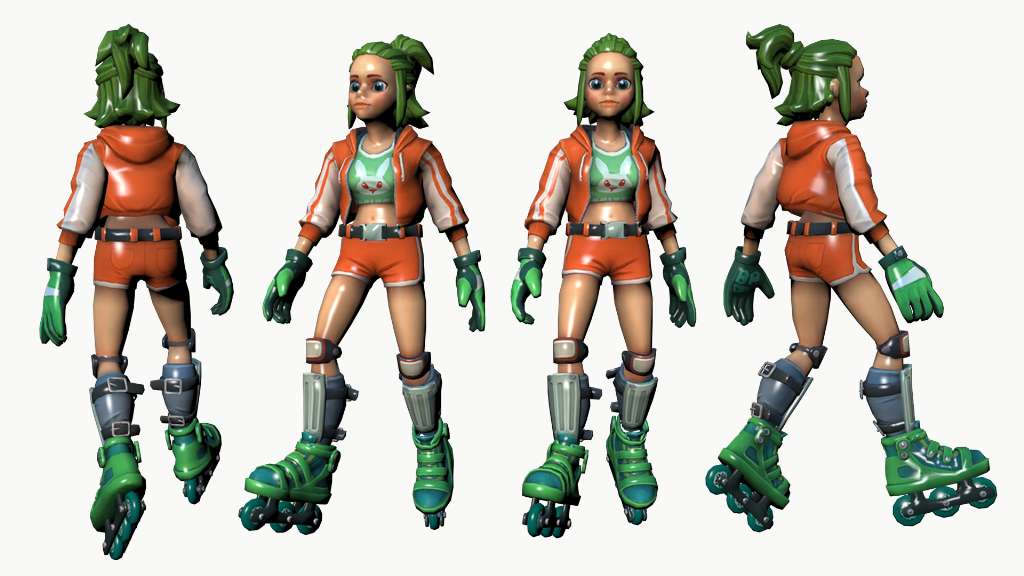
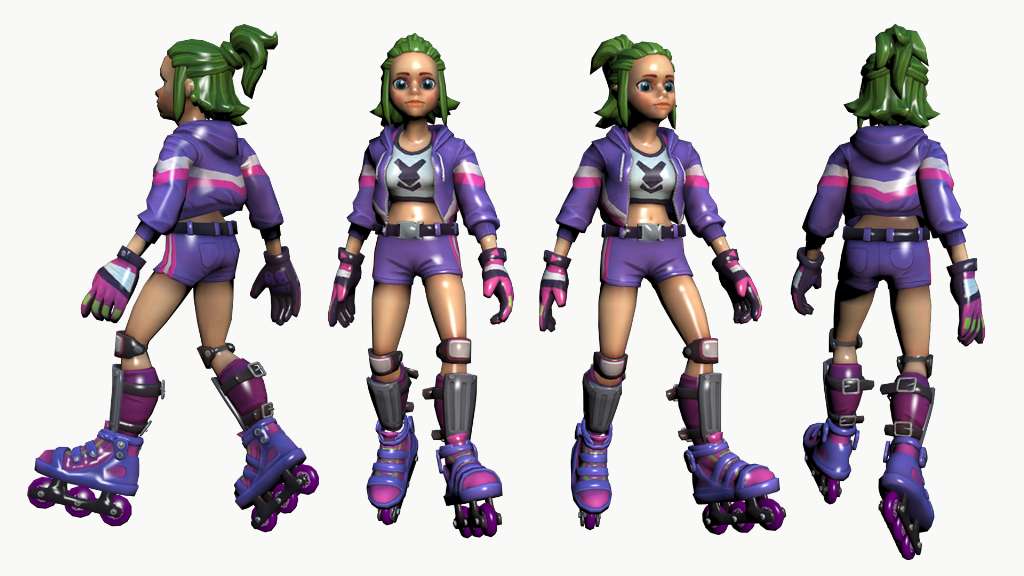
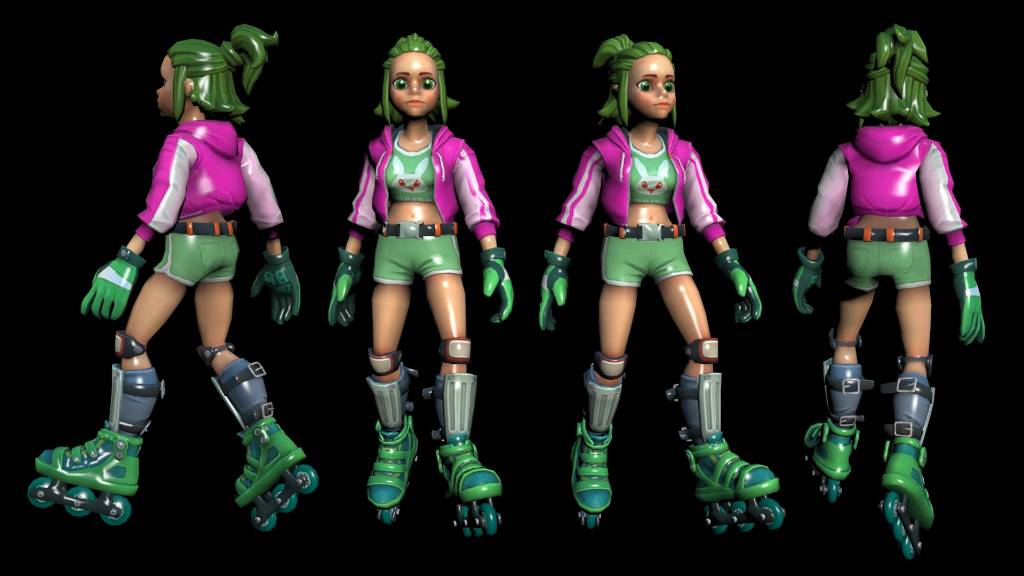
Heavily based on a unique original hybrid toy prototype, Army Men Strike Officer Penny belongs to a category of juvenile units specialized in extreme mobility. They are not conventional soldiers. They are girls adapted to the conflict of the Toyverse, integrated as light tactical units.
They are not heavy infantry.
They are not commandos.
They are not classic support.
They are speed incarnate.
You get a layered construct by the meaning of their unit name, Penny:
- A small, fast unit.
- Underestimated.
- Network-weaving.
- Multipliable.
- Individually light.
- Collectively decisive.
Characteristics:
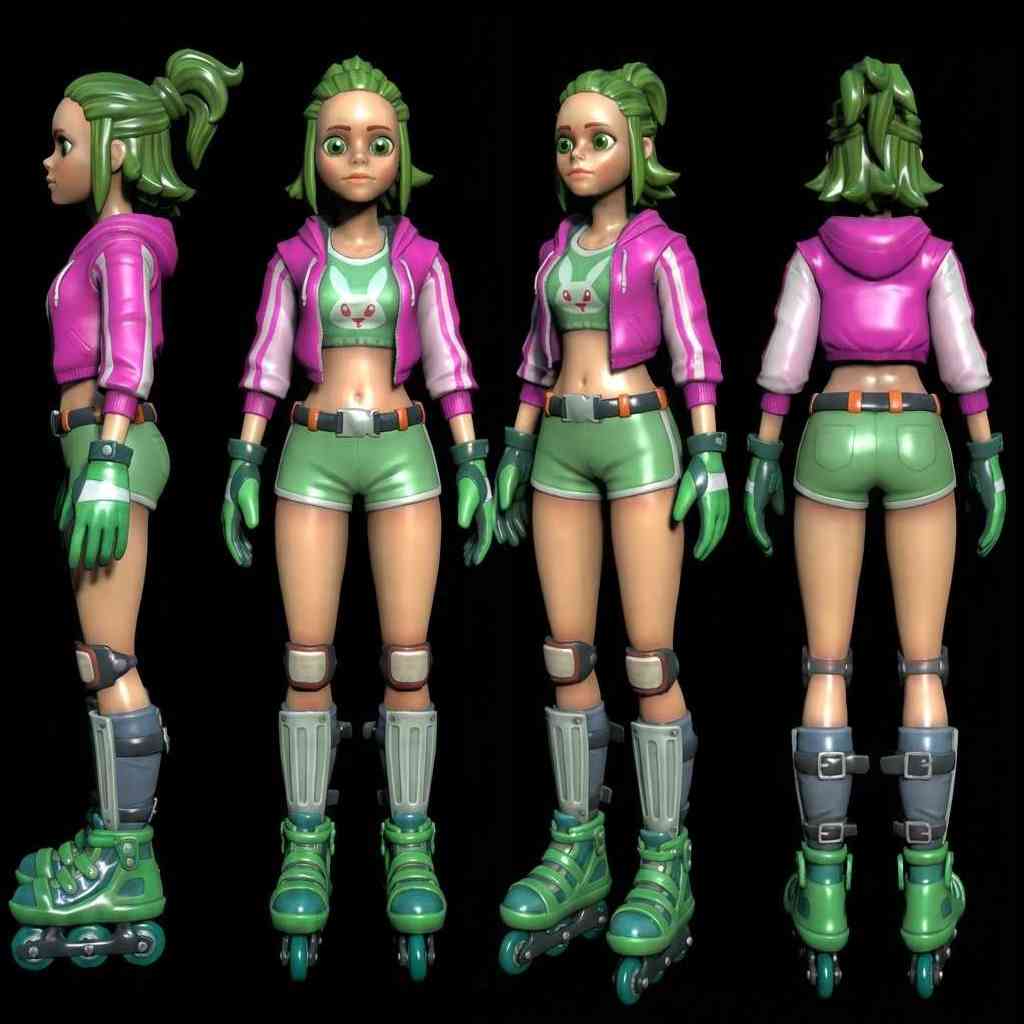
- Inline skates as a structural part of the unit.
- Light silhouette.
- Dominant green palette with pink accents.
- Rabbit iconography.
- Optionally helmet with technological ears.
- Minimal equipment.
- Light protection (knees, gloves).
They do not visibly carry heavy weaponry. Their main weapon is displacement.
Tactical Function

- Fast scouting.
- Messaging in conflict zones.
- Urban infiltration.
- Harassment attacks.
- Rapid collection and extraction.
- Distraction maneuvers.
They are impossible to fix in frontal combat.
Unit Psychology

The fact that they are or look like girls is not decorative. It defines their type of behavior:
- Impulsive.
- Competitive.
- High energy.
- Sense of play still present.
- Underestimate danger.
- Do not perceive themselves as “soldiers,” but as runners.
But the war uses them just the same.
The Rabbit Helmet

It is not aesthetic… It is symbolic.
- Speed.
- Reaction.
- Multiplicity.
- Apparent vulnerability.
- Adaptability.
The helmet with ears amplifies that identity. It is not cosplay. It is an emblem.
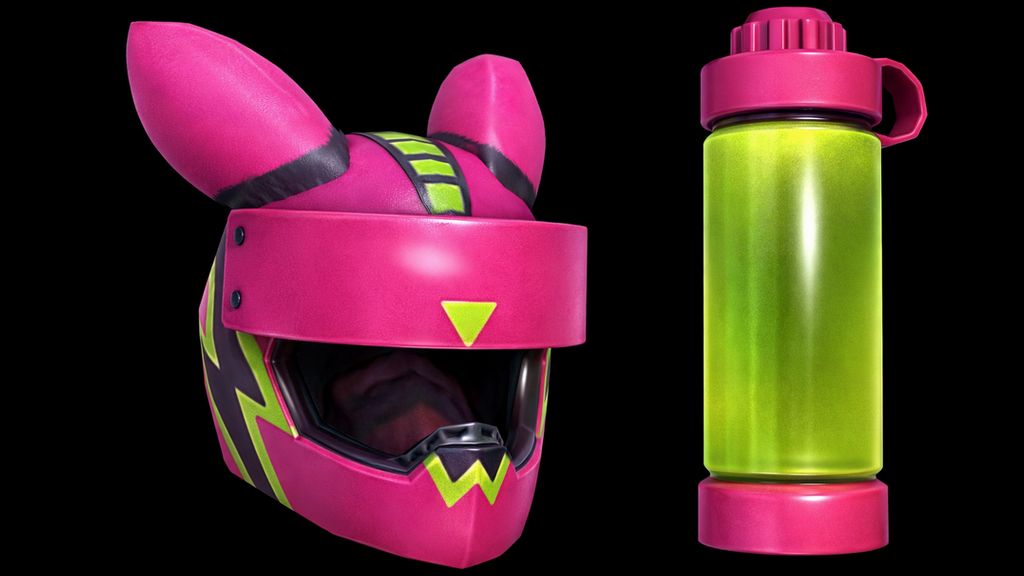
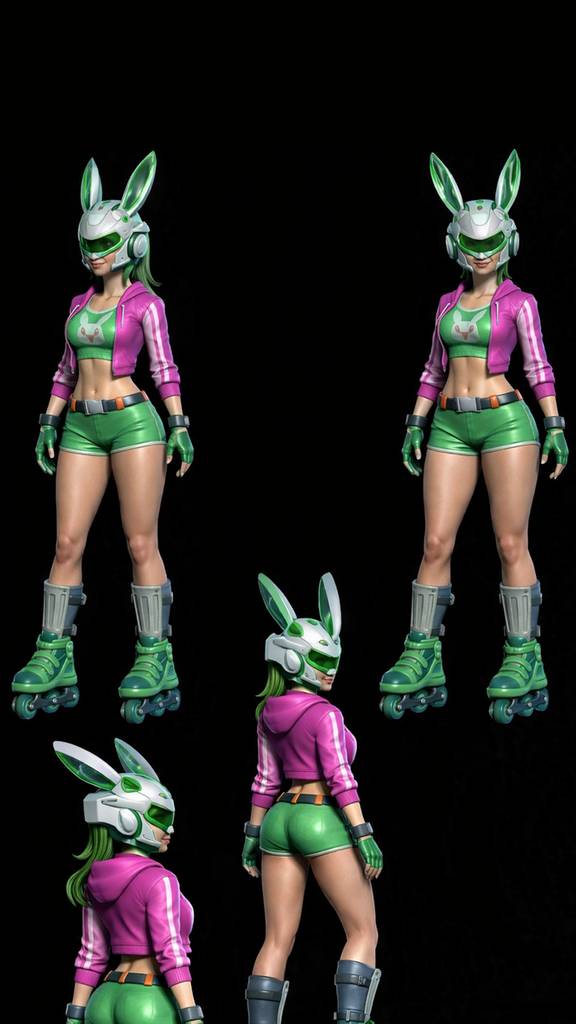
Cyber Rabbit Helmet (CRH): Future World Tactical Communication Gear
The rabbit helmet is not only symbolic. It is a simple but effective piece of Future World technology that remains compatible with most other worlds.
It is not ornamental. It is functional field equipment.

Structural Design
- Lightweight composite shell.
- Reinforced frontal visor.
- Dual elongated antenna structures shaped like rabbit ears (or like a small wifi modem).
- Internal micro-processor core.
- Compact power cell.
The “ears” are not decorative extensions. They are long-range communication antennae.
Core Functions
1. Long-Range Communication
- Cross-zone transmission.
- Encrypted squad channel access.
- Relay capability when in motion.
- Signal stabilization while moving at high speed.
The vertical antenna design improves signal reach in unstable terrain. The antenna can be moved to point in the correct direction.
2. Tactical Interface
The visor contains a minimal tactical HUD:
- Real-time positioning data.
- Squad markers.
- Directional indicators.
- Basic threat alerts.
- Route optimization overlays.
The interface is intentionally simplified. Penny Units operate at speed, so information must be immediate, not complex.
Compatibility
Although originating in the Future World, the helmet:
- Functions in most environmental conditions.
- Adapts to varying signal infrastructures.
- Requires minimal external support.
It is not advanced elite tech. It is scalable tech, built to be mass deployed across mobility units. The technology of this type of system is identical in several worlds, while in others the system was installed by the Army Men and Action Figures.
Doctrinal Importance
The helmet transforms a fast civilian girl into:
- A network node.
- A mobile relay tower.
- A real-time scout.
- A coordinated velocity asset.
Without the helmet, a Penny is fast. With the helmet, she is integrated.
Adult Penny (Form 3)
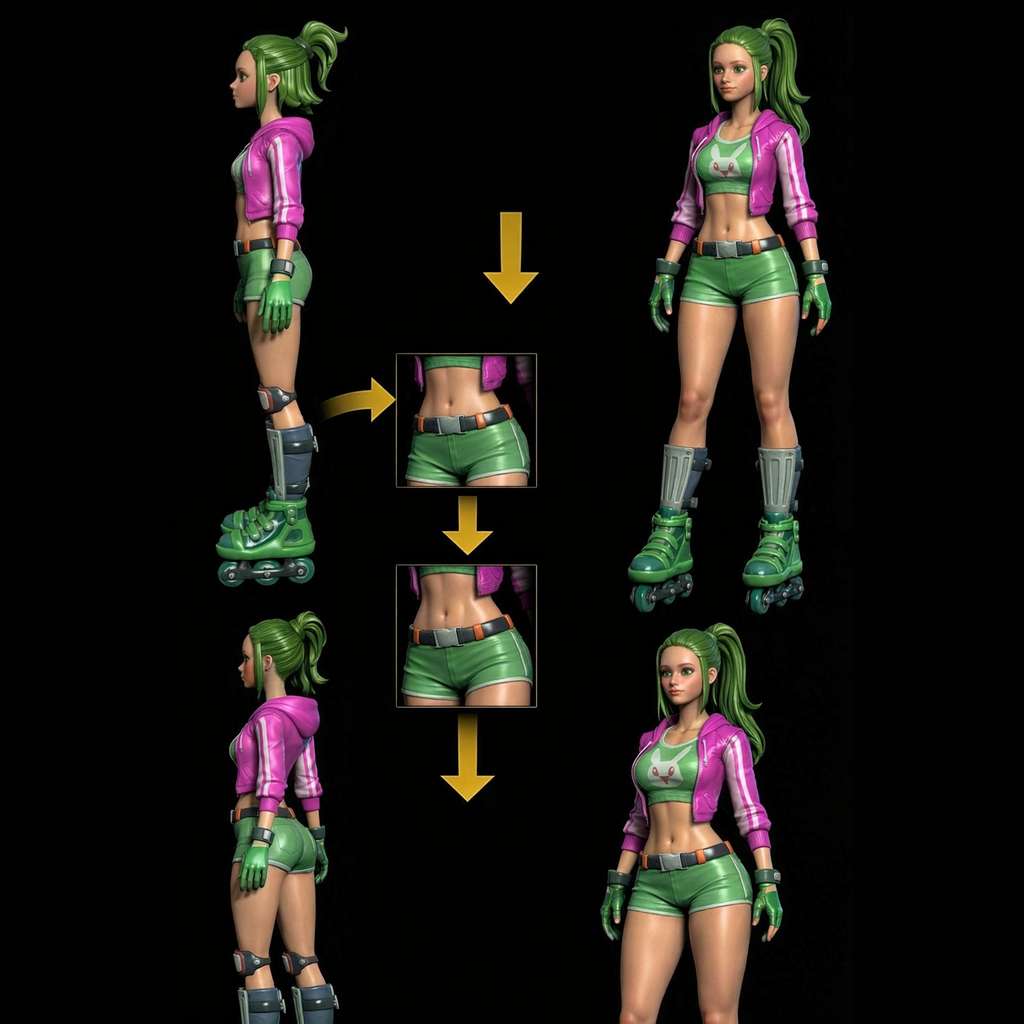
The natural evolution of the Penny unit. The perfected model.
The first model of the first generation, that survived and grew up. She is not another Penny. She is Penny who reached maturity.

Behind the scenes:









Sources for this article:
Behind the scenes: