The process of creating an illustration does not end with the first stroke. Every visual piece goes through different stages of transformation, maturation, and refinement. What begins as a set of loose lines on paper can evolve into a complex digital scene with depth, color, textures, and three-dimensional elements.
Below, we explore step by step how a simple idea becomes a finished work of art.
The Creation of a Forgotten Jungle
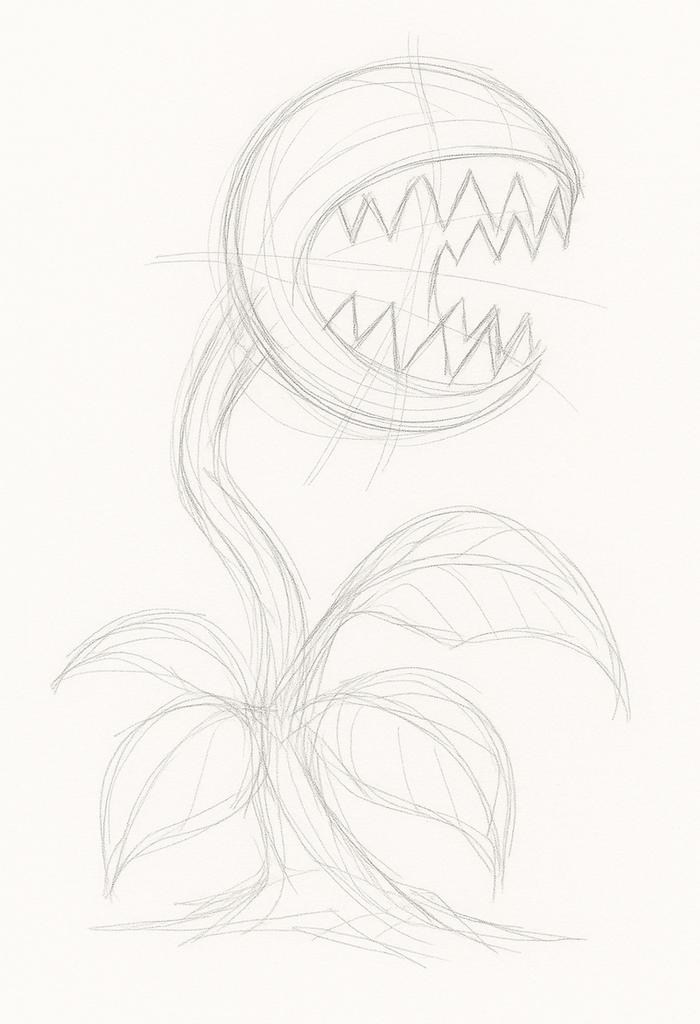
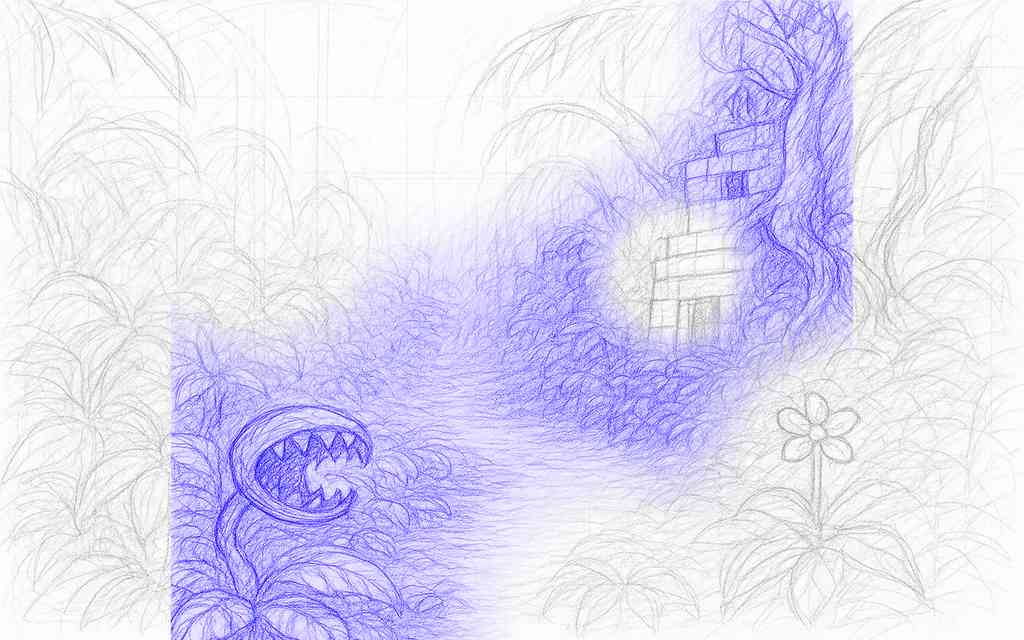
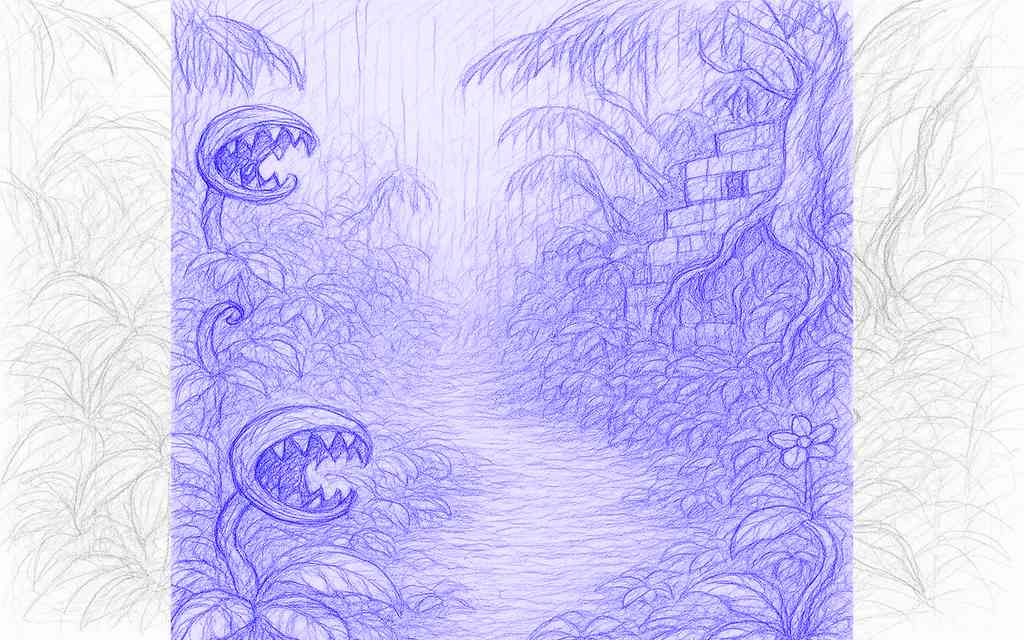
The process of this piece begins with the carnivorous plant, first conceived as a basic sketch with guiding lines. The initial strokes, just a skeleton of geometric shapes, captured the essence of its silhouette: the twisted stem, the oversized mouth, and the sharp teeth. Little by little, the drawing was refined until it gained volume, detail in the leaves, and a posture that conveys tension and aggressiveness. This creature became the central axis of the composition.
From Sketch to Complete Artwork: The Creative Journey of a Digital Illustration
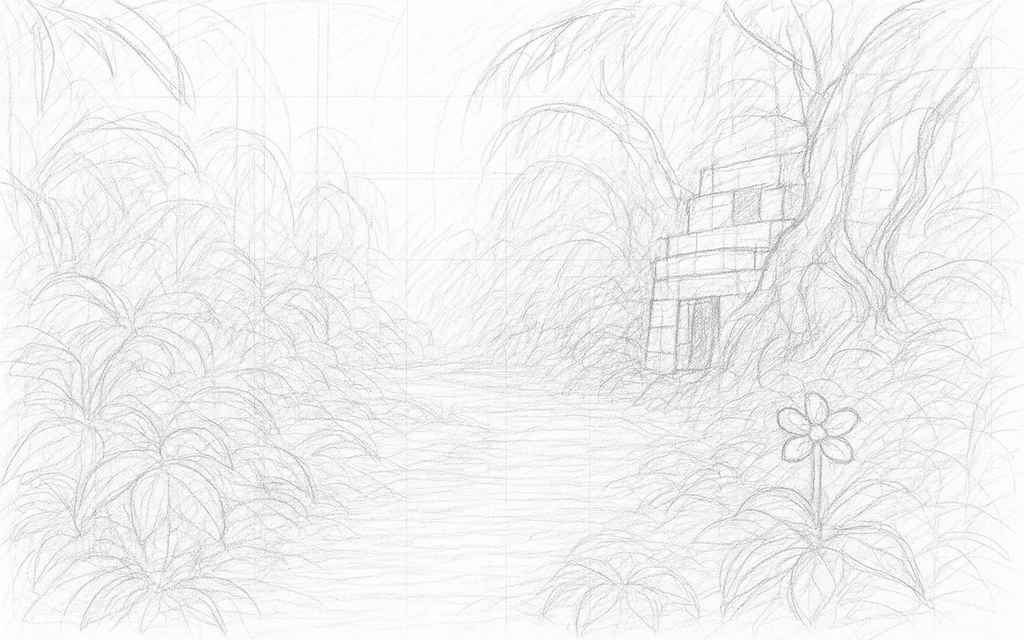
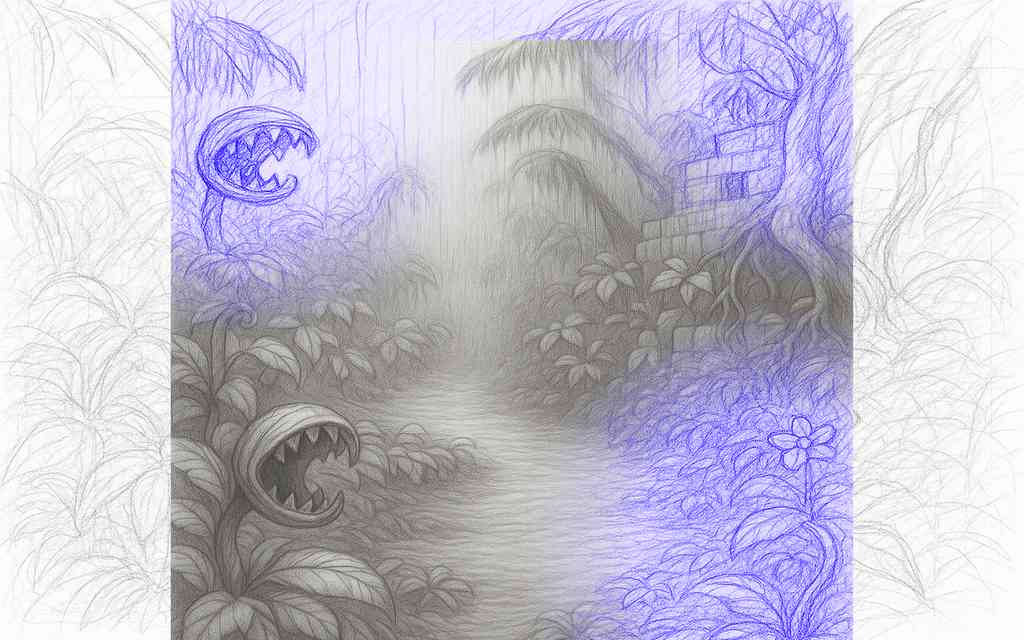
With the base defined, the work progressed to the construction of the narrative environment: a dense jungle crossed by a river or spring flowing through the center of the scene. The vegetation grew in complexity: scattered flowers, trees with exposed roots, and an ancient temple made of massive stone blocks, hidden among the undergrowth. This drawing stage served to establish the visual structure of the piece, defining the relationship between the elements and the balance of the composition.
Slide from one image to another to compare
Slide from one image to another to compare
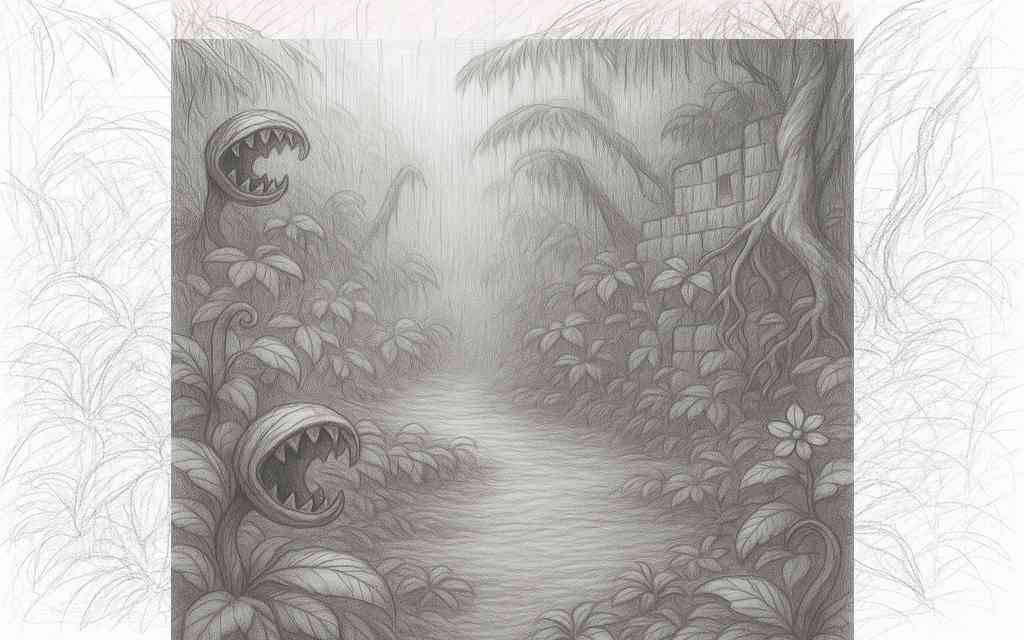
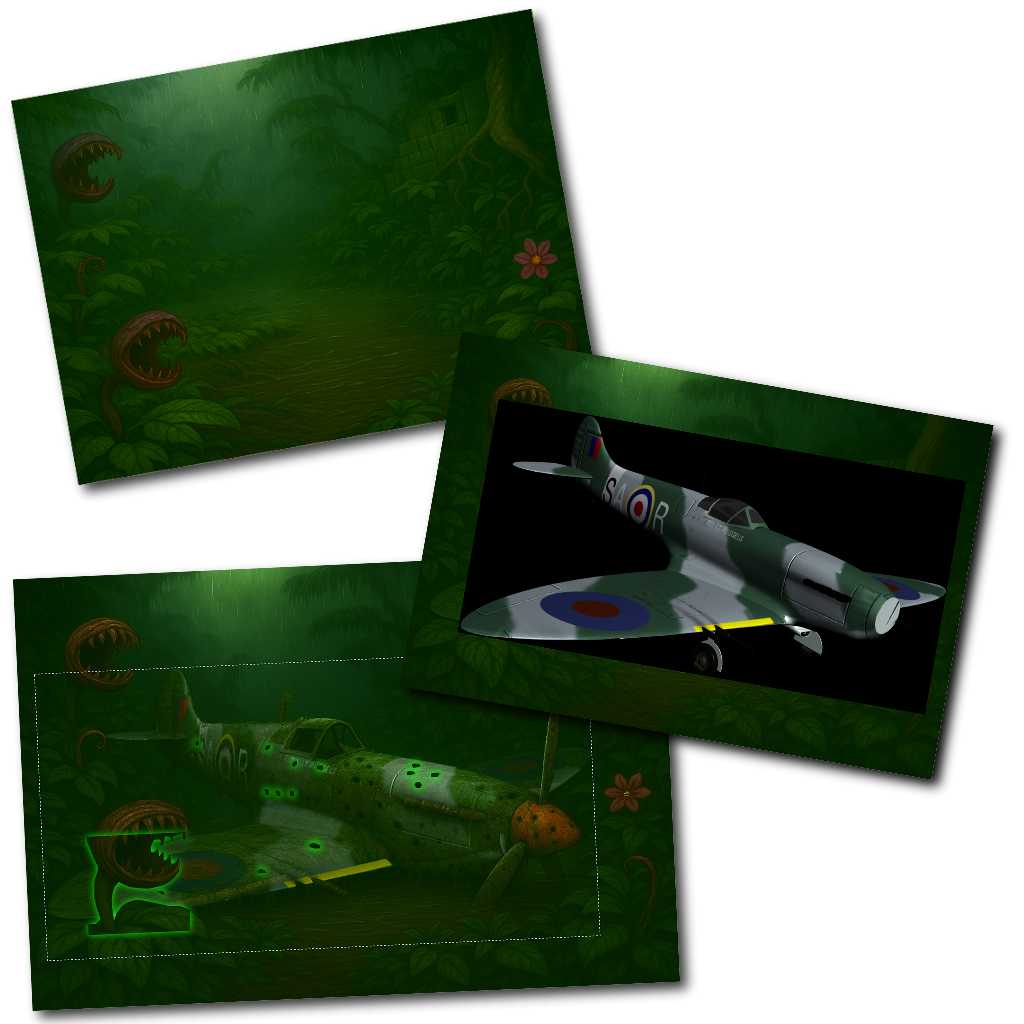
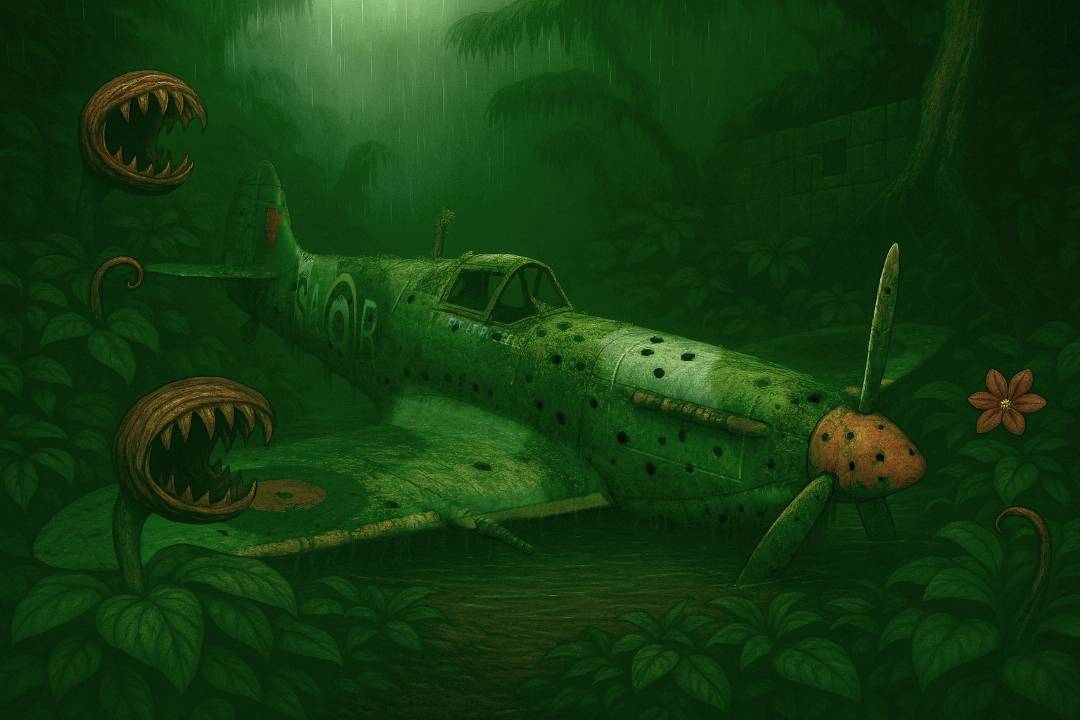
The next step was digital painting, where the setting gained life and atmosphere. Through layers of color, a humid, dark, and greenish environment was created, typical of a dense and oppressive jungle. The contrast between filtered light and deep shadows added depth and drama, enveloping the carnivorous plant and the temple in a mysterious ambience.
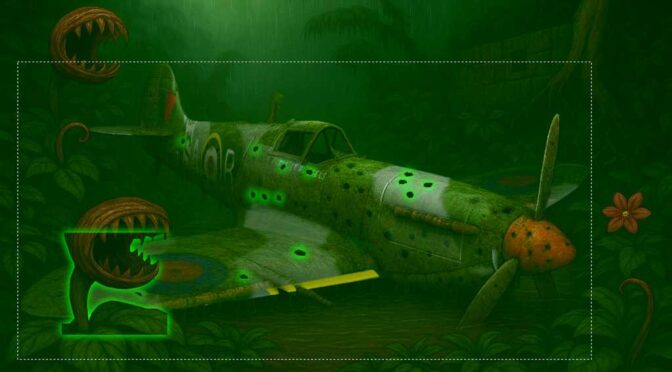
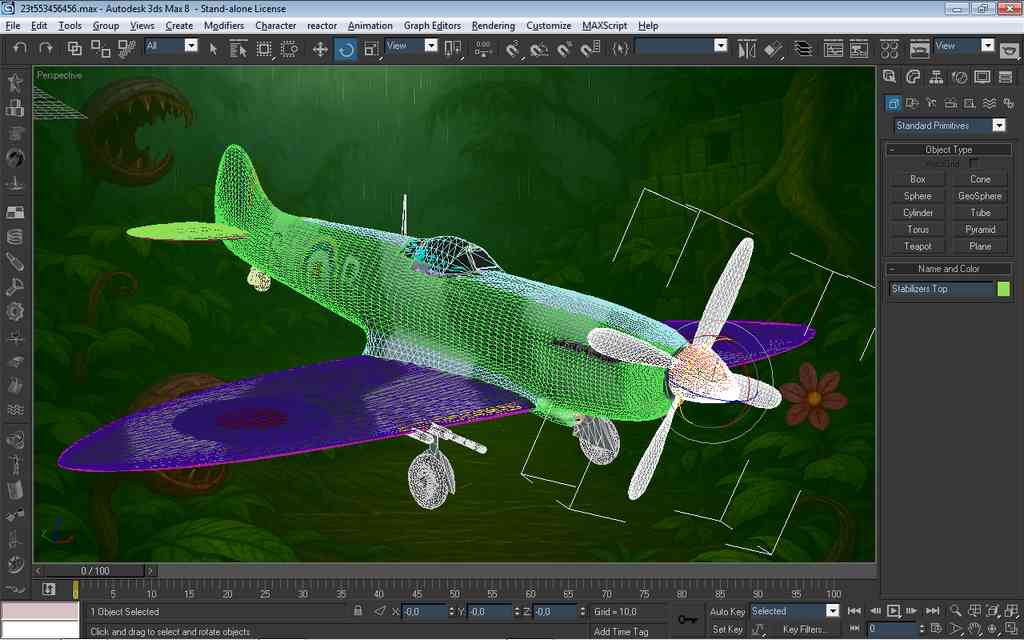
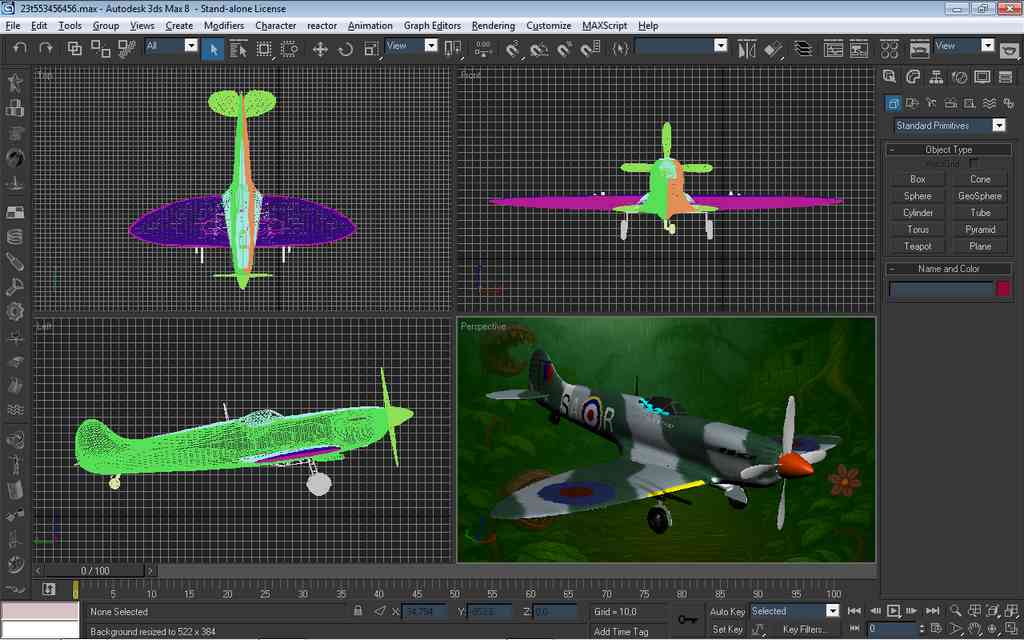
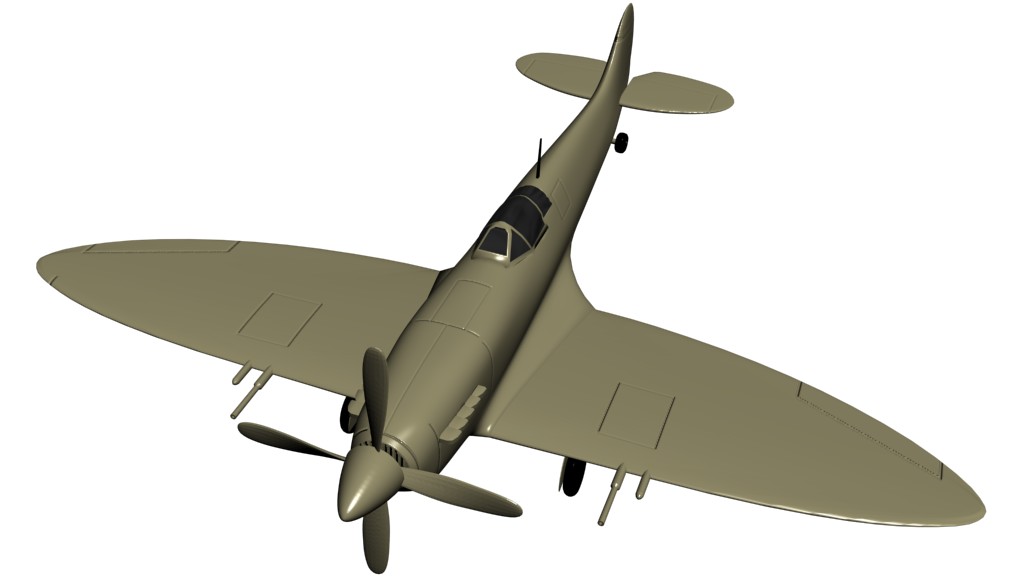
The piece evolved even further with the incorporation of a 3D model of the Spitfire of Flight Lieutenant Ruggels. Far from standing out as an external object, it was integrated into the visual narrative.
The fuselage was damaged by bullet holes, evidence of its violent fall.
Moss and vegetation had grown over its surface, symbols of the relentless passage of time.
The dents and metallic wear reinforced the idea of a war relic abandoned in the jungle.
In the post-production phase, plants in the foreground and overlapping vegetation were added to the 3D model, softening its outline so that it blended with the pictorial style of the illustration. Adjustments of color, texture, and line ensured that all the elements coexisted within a unified aesthetic.
The final result is a piece that tells a story without words: the confrontation between man’s destructive force and the resilience of nature. What began as simple sketch lines transformed into a cinematic and conceptual scene, where time, the jungle, and the remnants of the past interact in a visual balance full of mystery.
The Truth Behind the Famous “In-Game Screenshots” of the First Army Men Games
There are phrases that have become part of gaming folklore. One of the most common (and persistent) is:
“It was from a beta version…” —said with the tone of someone convinced they’ve uncovered a hidden development secret.
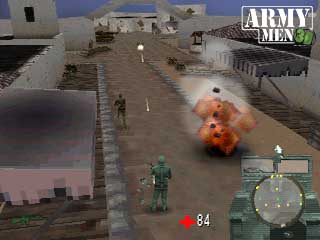
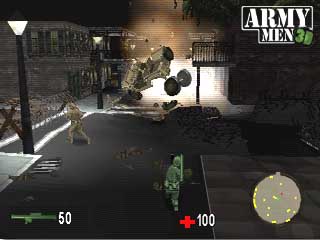
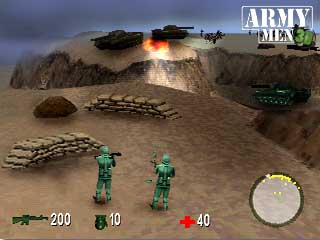
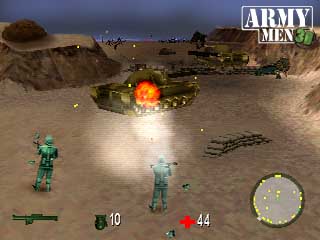
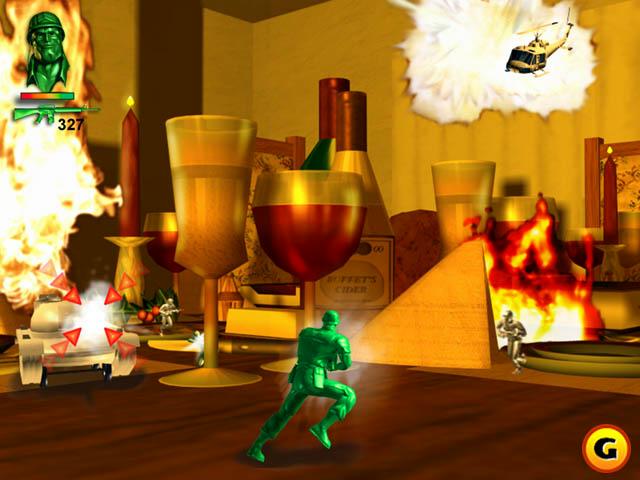
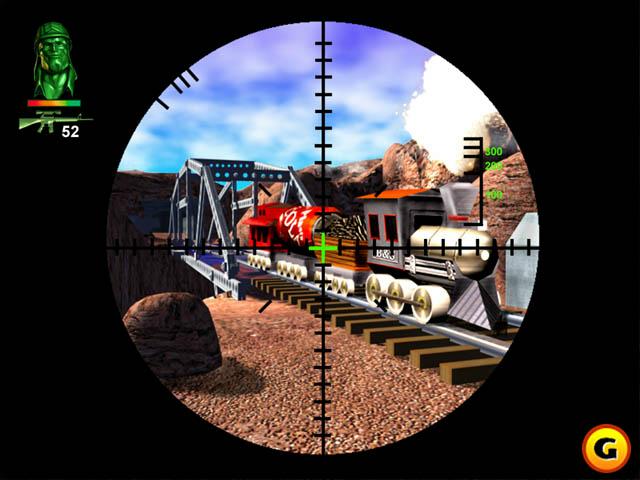
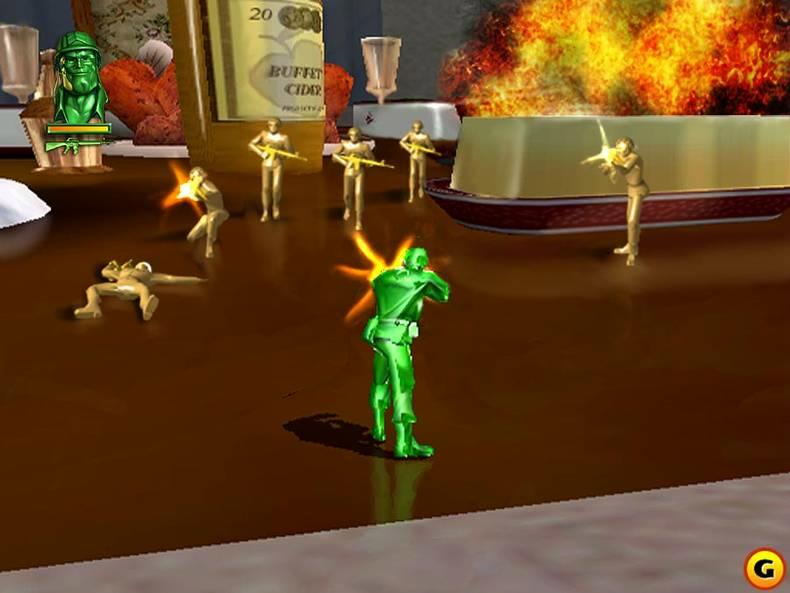
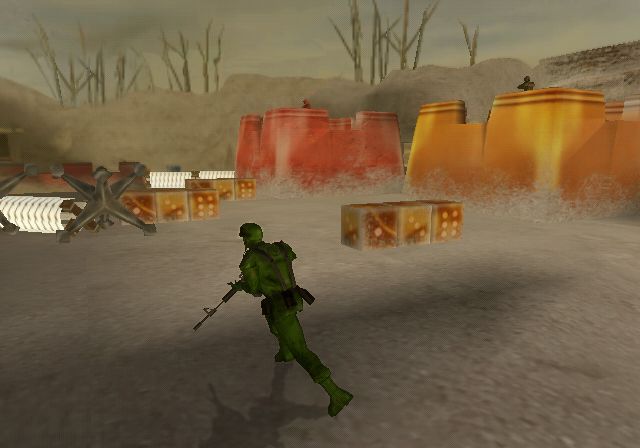
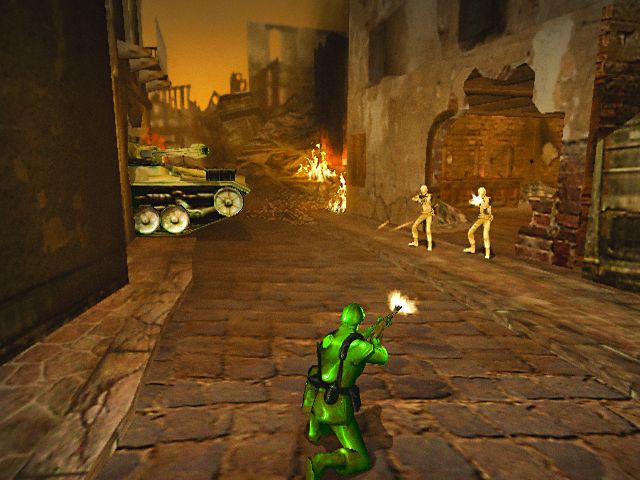
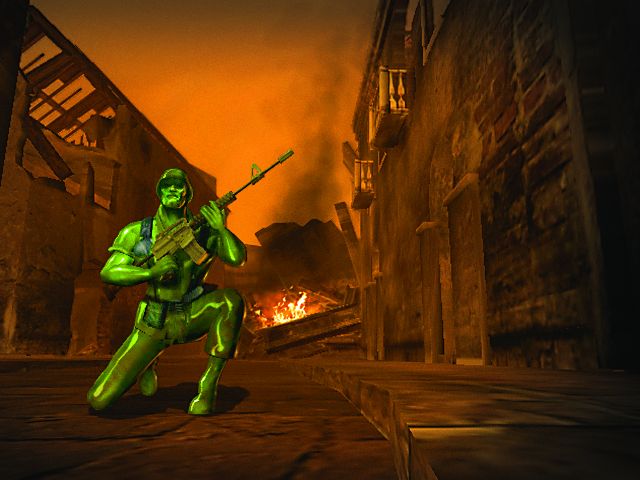
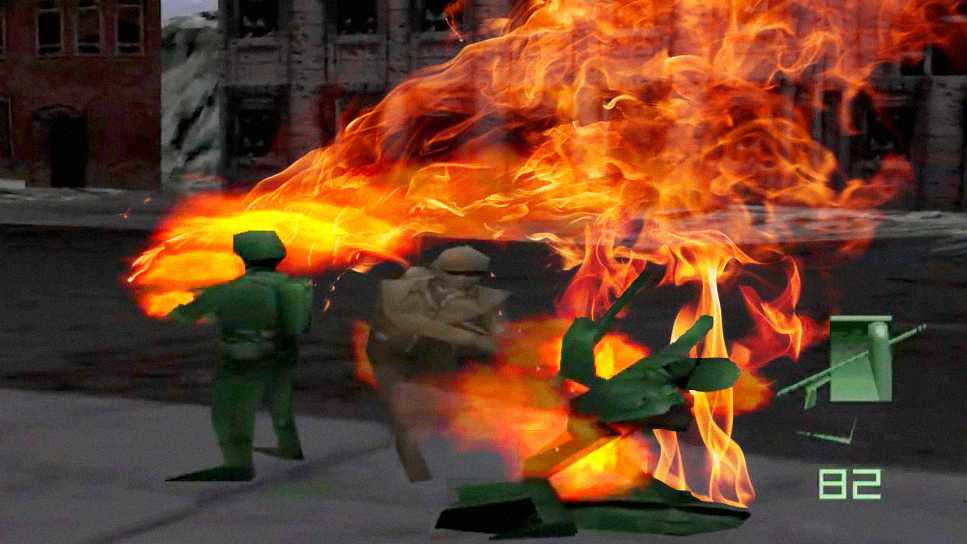
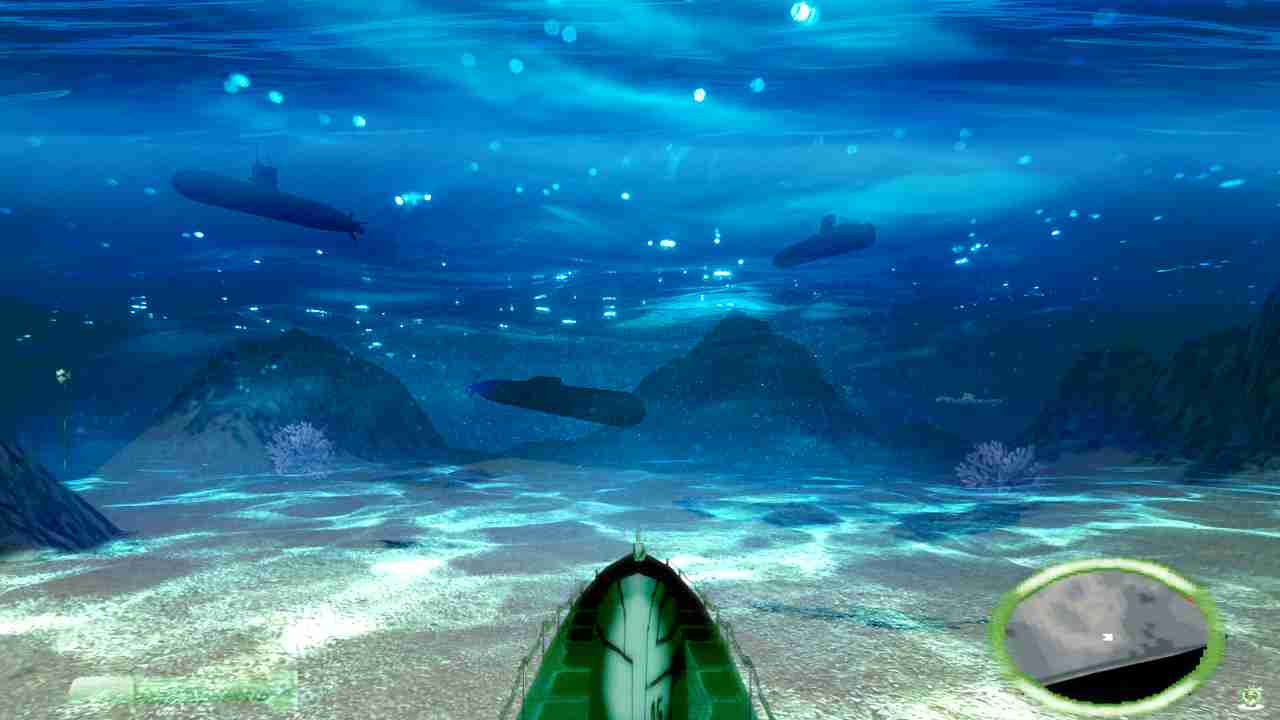
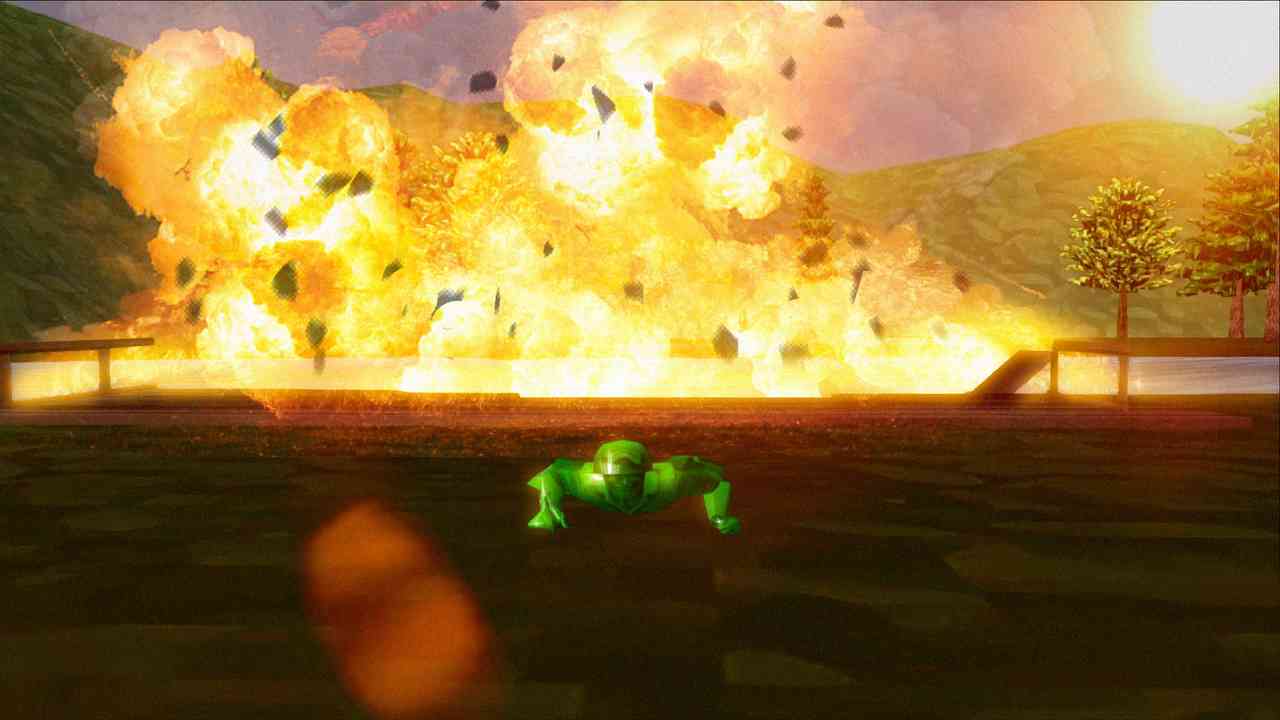
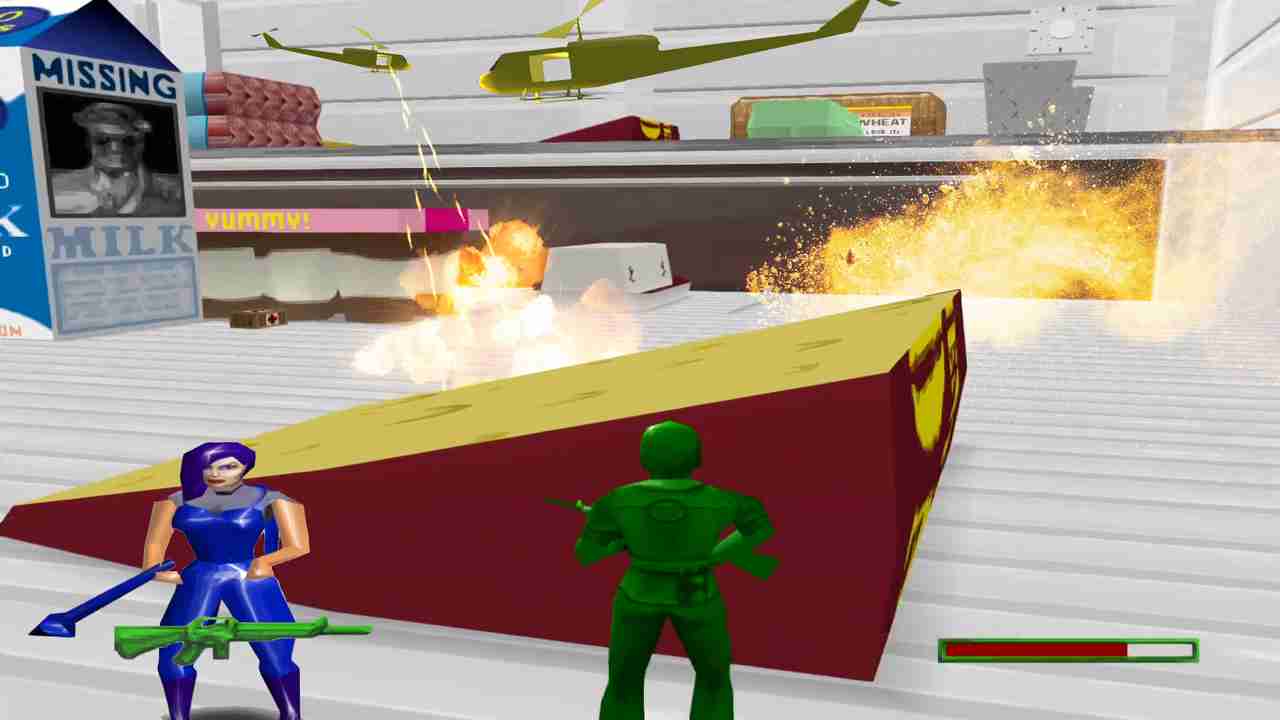
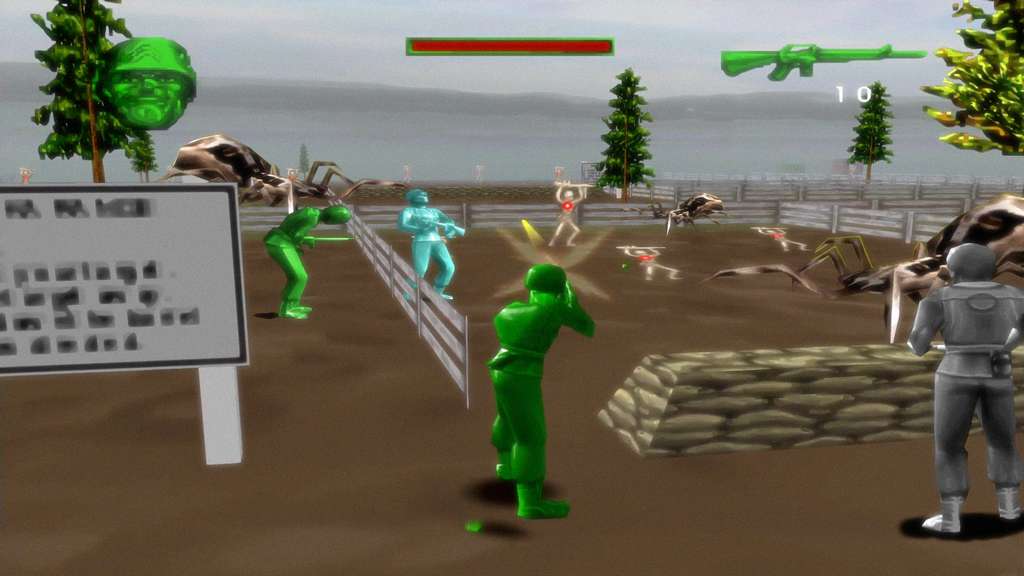
But when it comes to Army Men, many of those promotional screenshots were not beta versions of anything. In fact… they weren’t even screenshots.
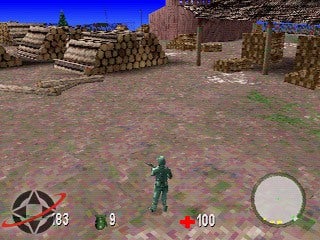
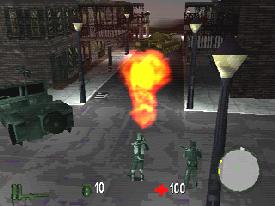
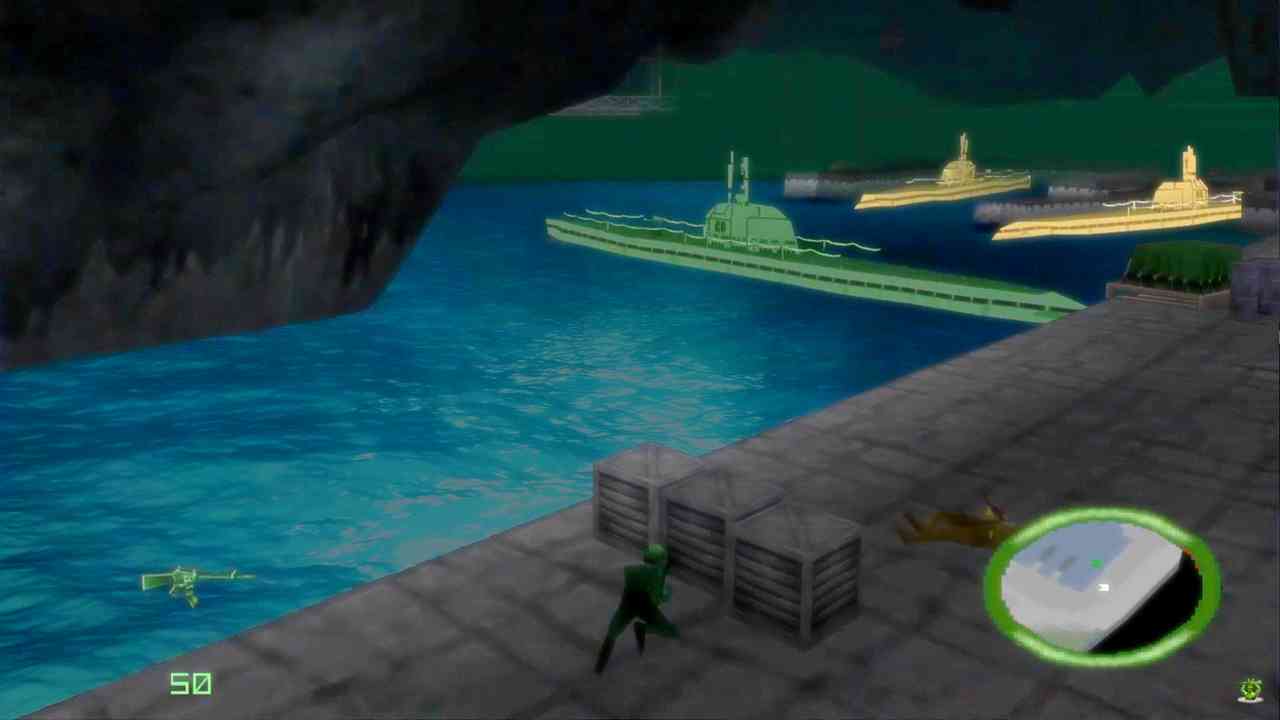
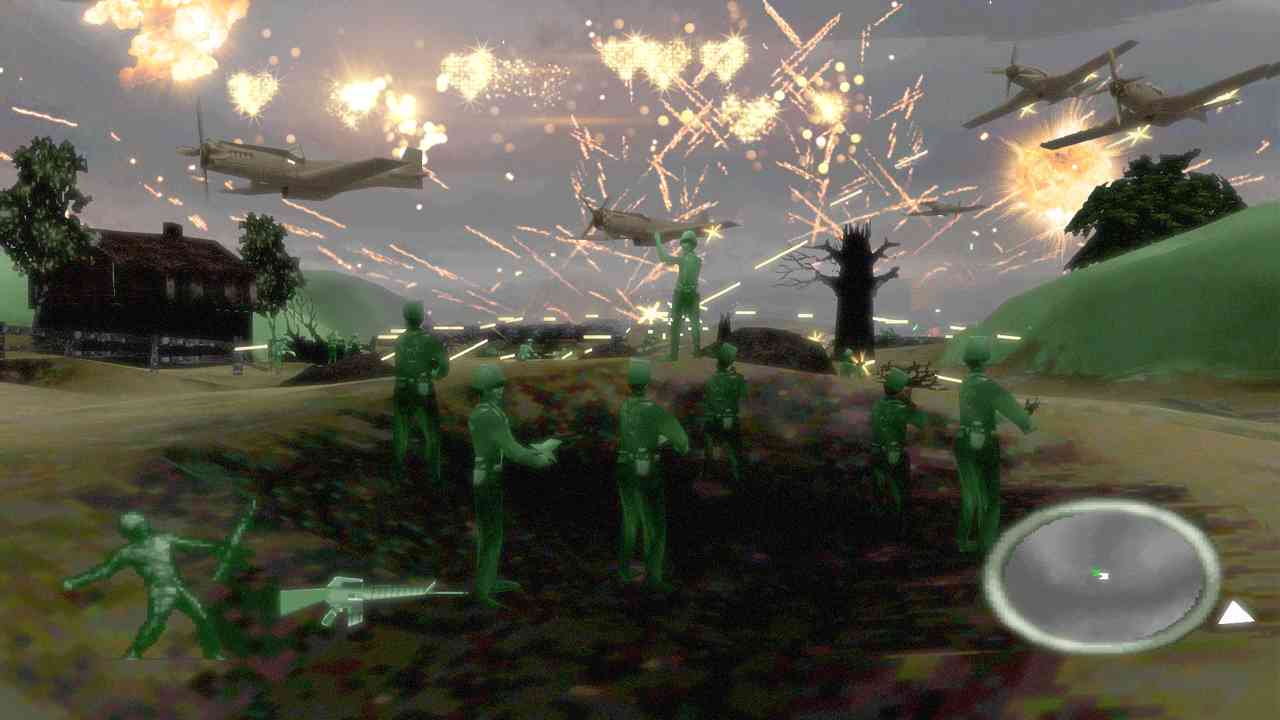
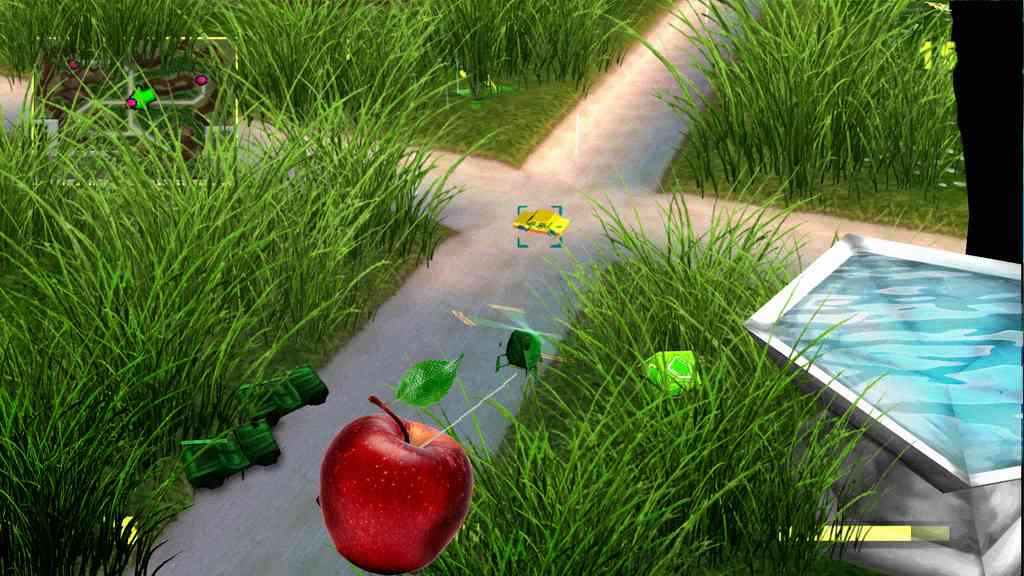
Slightly modified screenshot of PS1 Army Men: World War used in ads all over the internet at the time
What Looked Like In-Game… Wasn’t
Back in the golden age of 3DO, when Army Men was just beginning to take shape as a franchise, the creative team had a challenge: They needed a visual way to pitch the idea before the game was even fully designed.
Veteran developer Michael Mendheim, who played a crucial role in conceptualizing the Army Men universe, would put together digitally composed images to present the tone and feel of the project.
These images were a mix of:
Independently rendered 3D models.
Partial engine screenshots, when available.
Added effects like smoke, fire, and lighting.
And of course, a healthy dose of Photoshop.
They were never meant to be real gameplay footage: they were visual mockups, created to evoke the style, mood, and action the final product was aiming for.
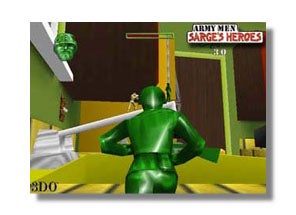
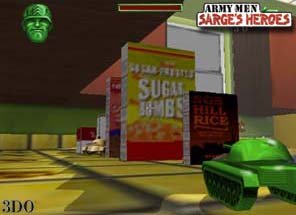
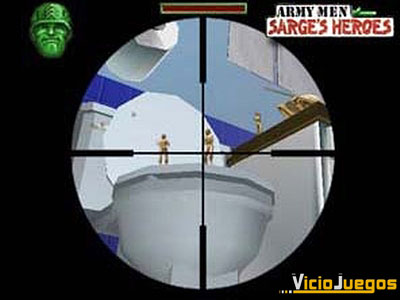
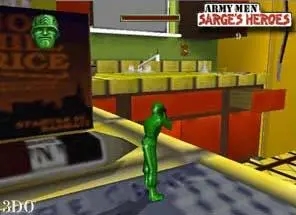
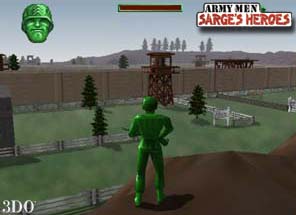
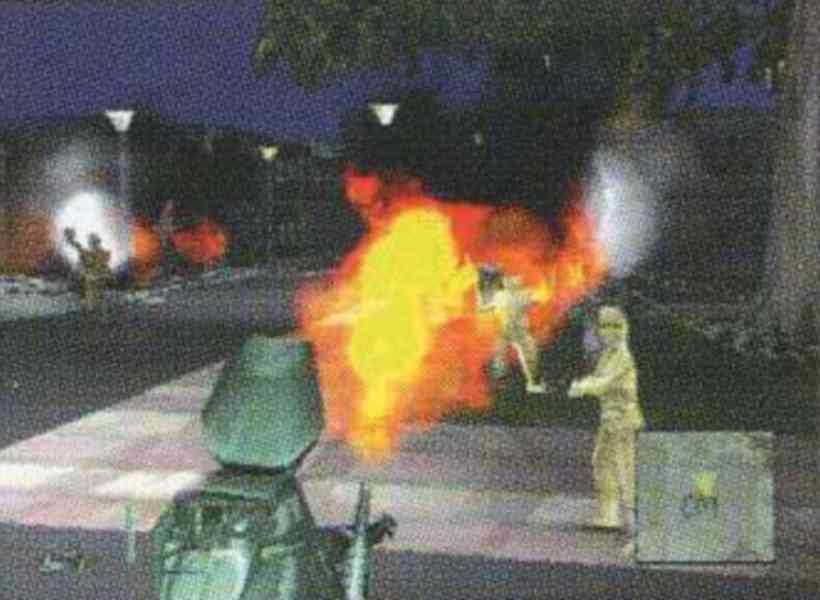
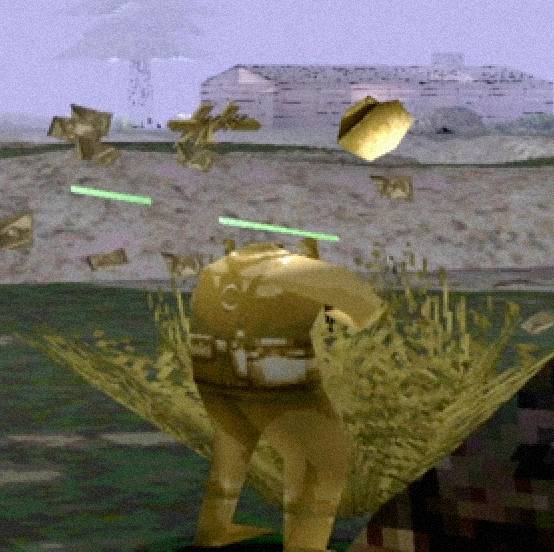
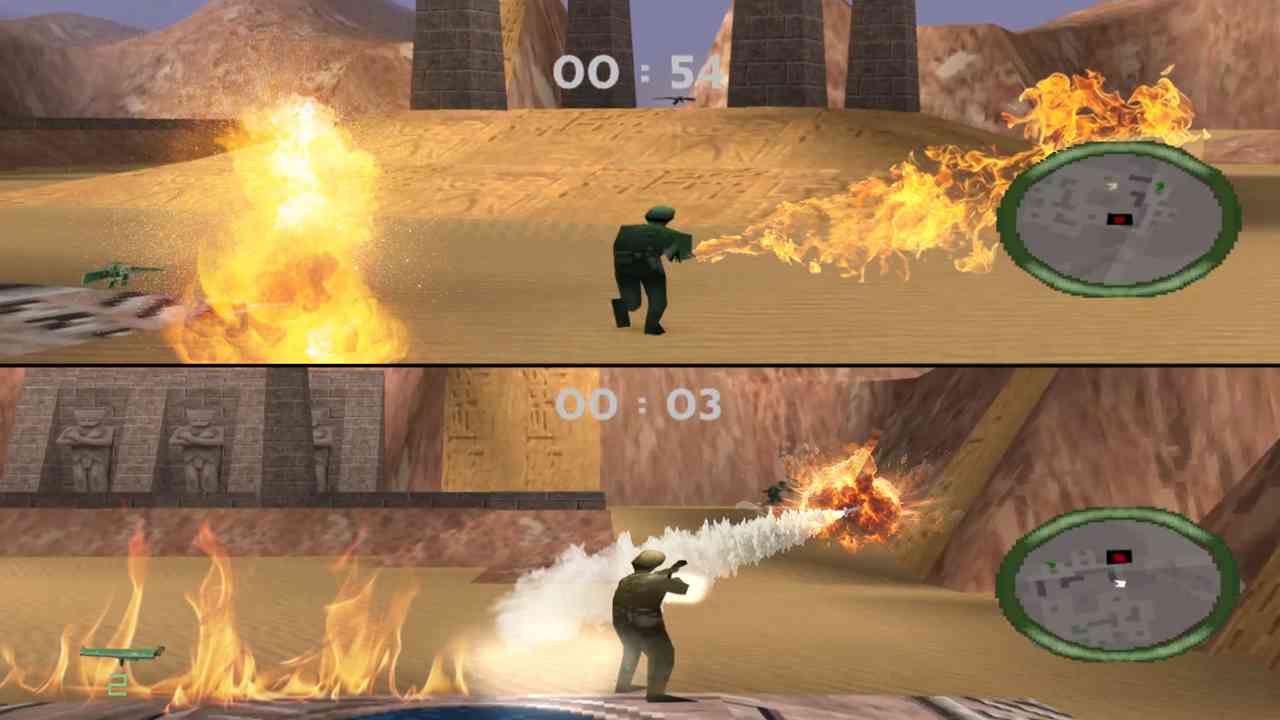
Slightly modified screenshot of N64 Army Men: Sarge’s Heroes used in ads all over the internet at the time
Although with minor modifications to the images, these are surely from the Army Men: Sarge’s Heroes engine for the Nintendo 64, but before going through the final version for the N64, it was actually a beta version of the levels and functions, not very different from the final version.
When Marketing Takes Creative Liberties
What’s interesting is that, even though the developers understood these images were purely conceptual, 3DO’s marketing team used them in advertisements as if they were actual in-game screenshots.
These images showed up in:
Magazines
Game boxes
Promotional flyers
Manuals
And even official press kits
The result? Players thought that’s how the game would look. And while that wasn’t exactly true… it worked. The hype exploded. The visual concept of Army Men (green plastic soldiers fighting battles in real-world environments) instantly captured players’ imaginations, long before the games were even finished, even a few years before 1998 Army Men.
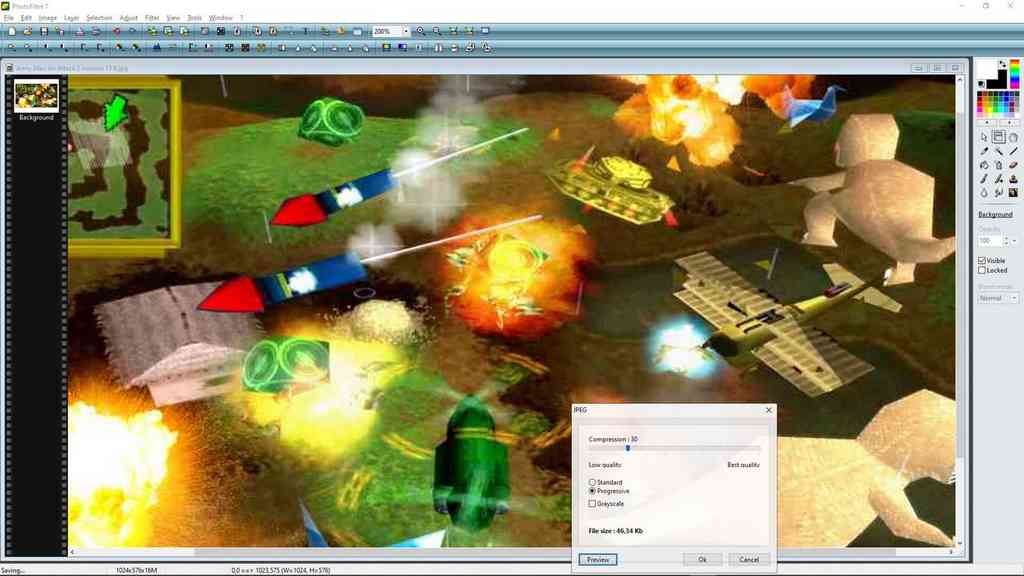
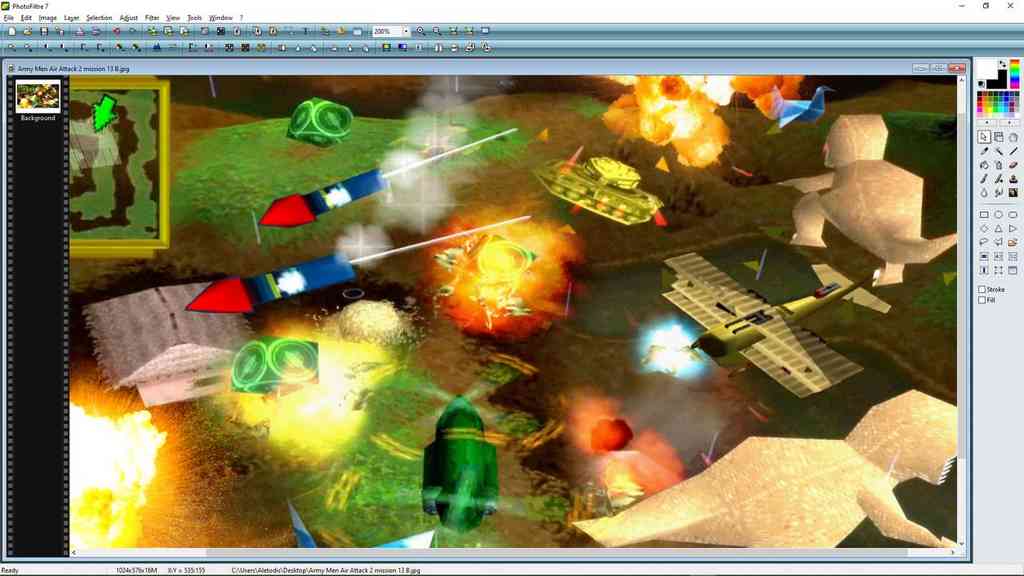
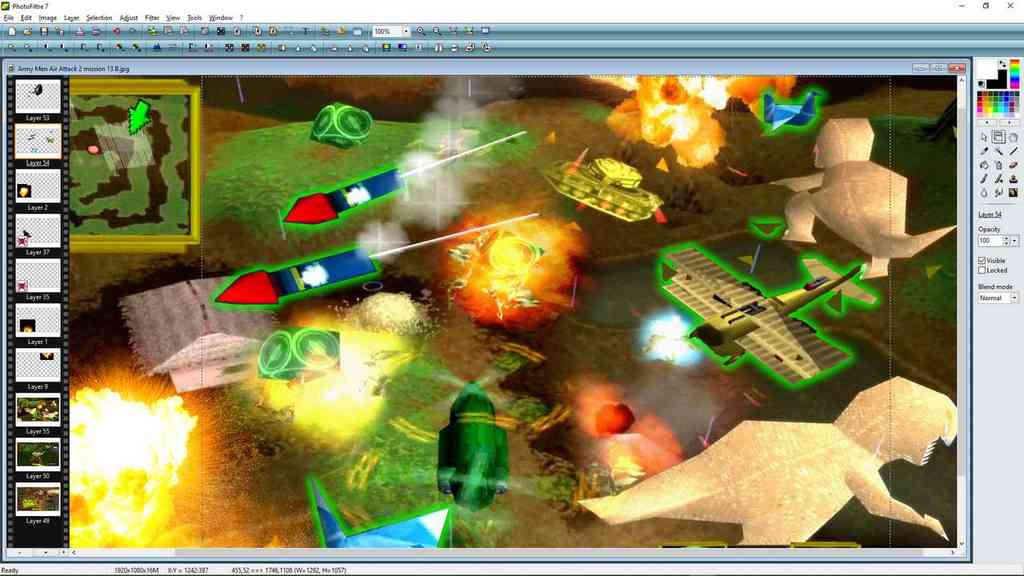
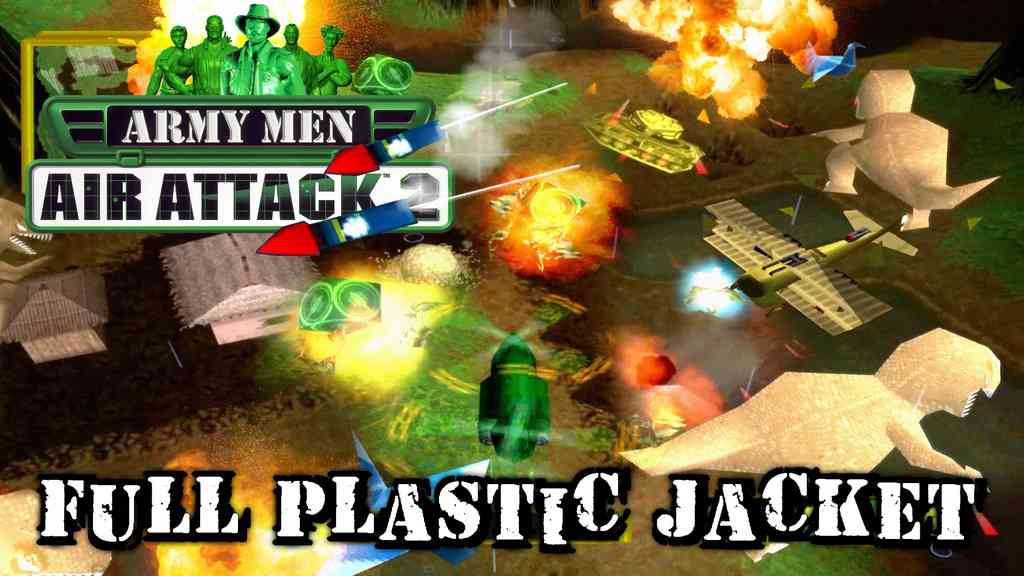
Unmodified screenshotScreenshot with extra objectsAdding compression noise……to blend the new objects convincinglyThe added objects highlightedOther uses for fake screenshots (video thumbnail)
The Speculation That Never Died
Even today, many fans still insist that those images came from early builds or beta versions of the games.
You’ll still hear comments like:
“This must be from a lost prototype…”
Or comments like:
“They had to downgrade the graphics later due to hardware limitations.”
And while it’s true that Army Men underwent plenty of visual changes during development (and yes, they had to scale things down to run on systems like the PlayStation 1 and Nintendo 64) those promo shots were not captured from actual working versions of the game.
People who worked with Photoshop or 3D Studio Max back then can clearly recognize the techniques used in these composites. If anything, they were stunning examples of concept art disguised as gameplay.
In a way, we wish they were real beta shots… it would’ve added an extra layer of mystique to the franchise’s development history. But no, it was just clever marketing. Fake… but effective.
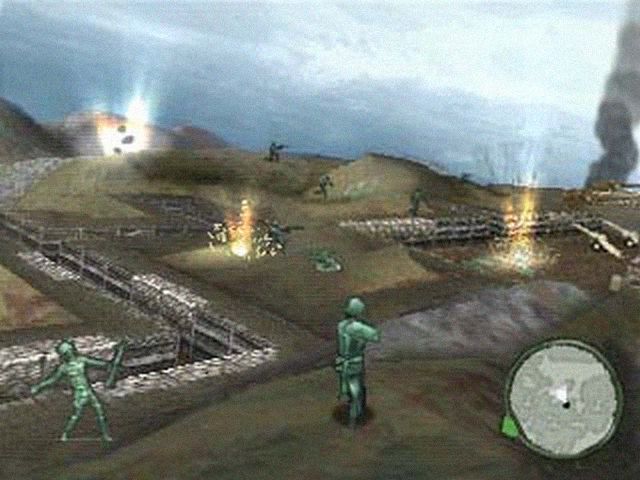
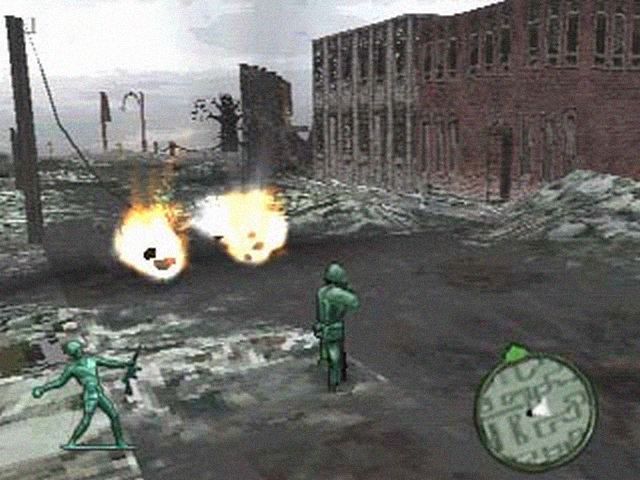
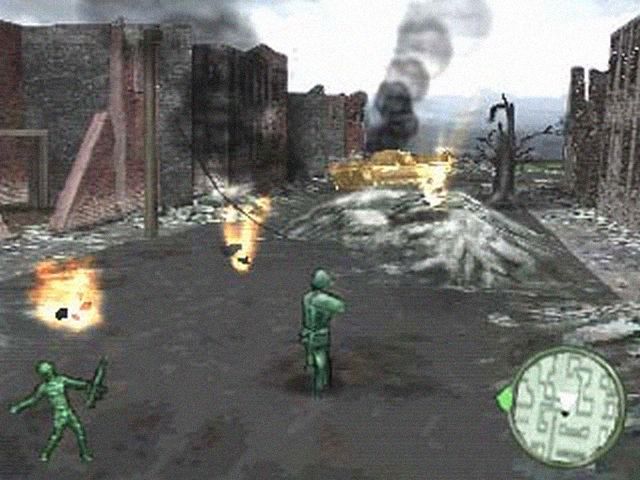
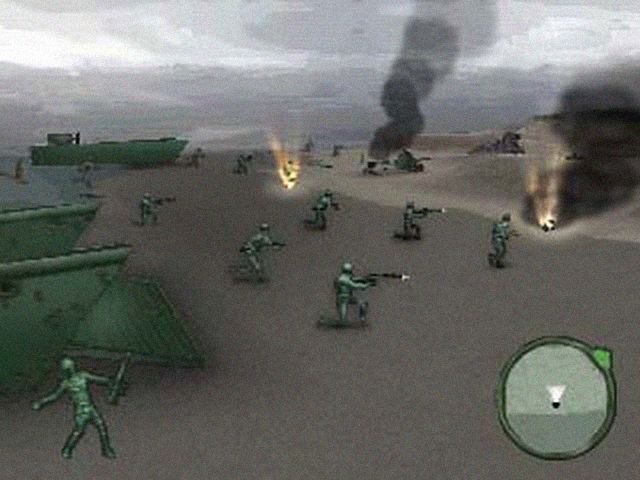
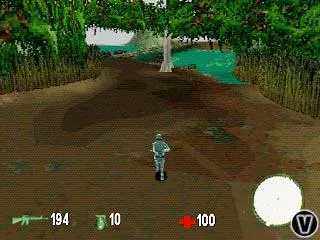
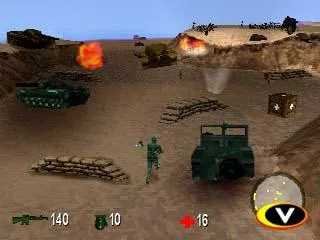
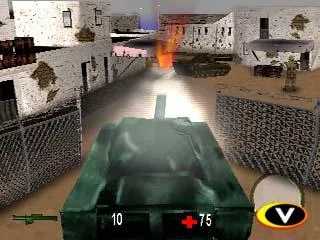
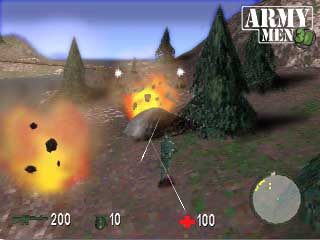
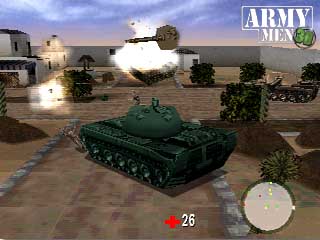
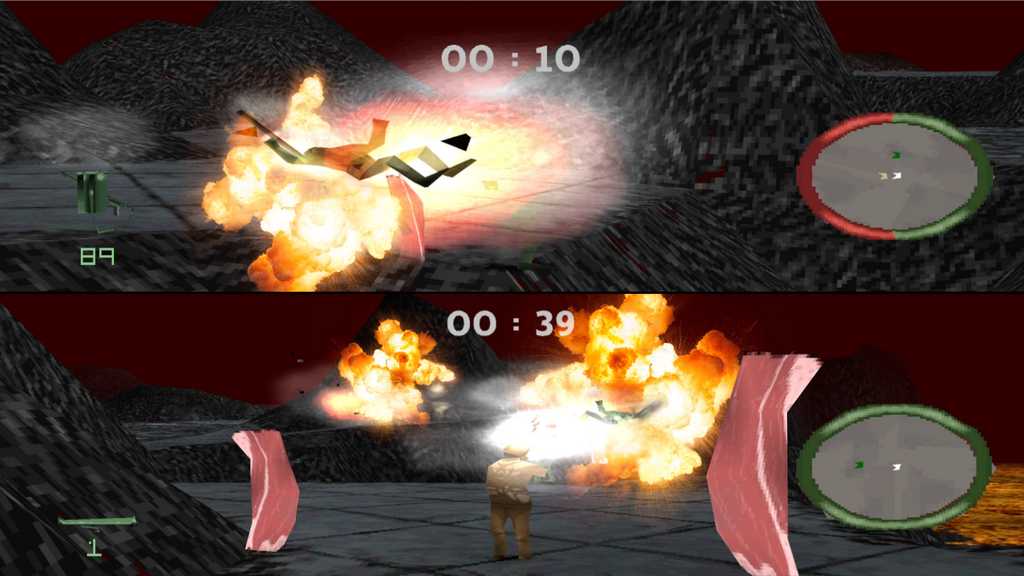
Modified screenshots of the “supposed” Army Men 3D beta version for PS1, used in promotional content all over the internet at the time
Deception or Strategy?
Today, in the era of frame-by-frame breakdowns and mandatory “not actual gameplay” disclaimers, this kind of tactic would get you dragged online in seconds. But in the ‘90s, with a franchise as visually unique as Army Men, it was a legitimate (and successful) marketing tool.
Some might call it deceptive. Others see it as an effective way of presenting an evolving creative vision.
Either way, those images weren’t beta builds, they weren’t unreleased versions, and they weren’t screenshots from a hidden dev console.
They were Photoshop. Plain and simple. And in context… they were brilliant.
What Does This Say About the Toyverse?
Like many good stories in the Toyverse, this one also carries a lesson. Just as molded toys become soldiers with names, stories, and purpose, a fake image can become the spark that brings an entire world to life.
Those visuals (however artificial) were the first real representations of the Army Men franchise. Before missions, before bugs, before battlefield chaos… there was a carefully crafted picture. And it worked.
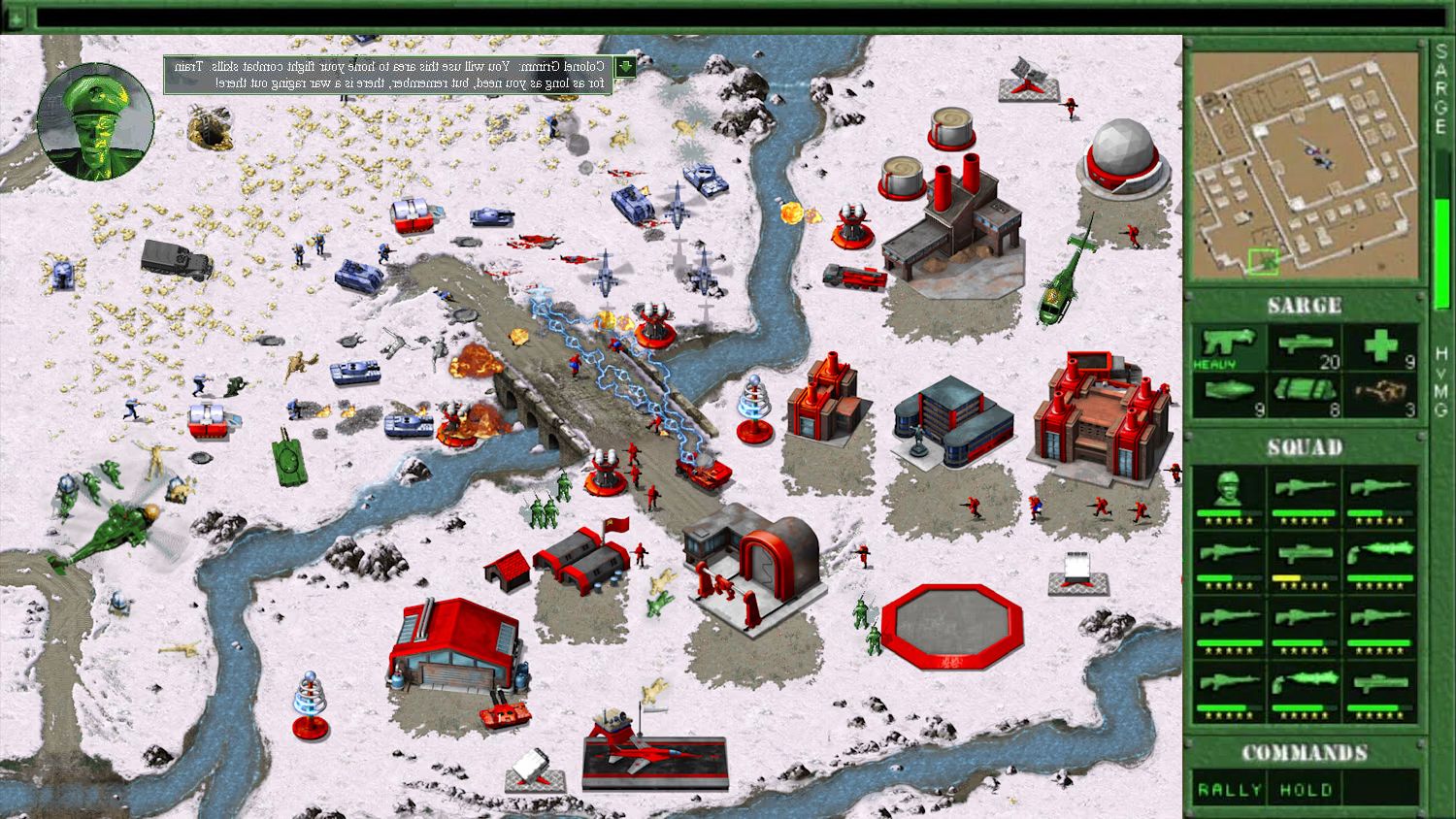
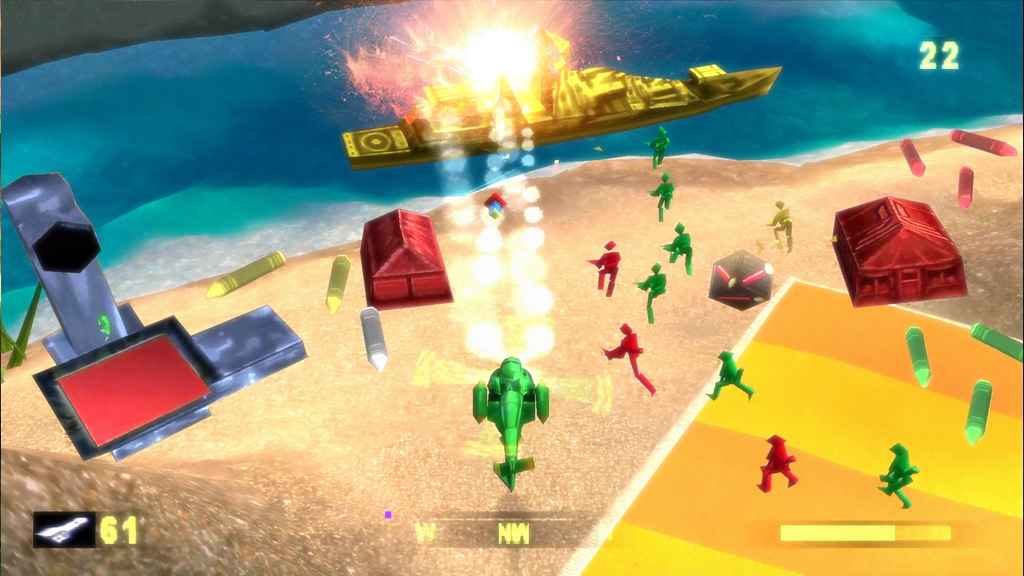
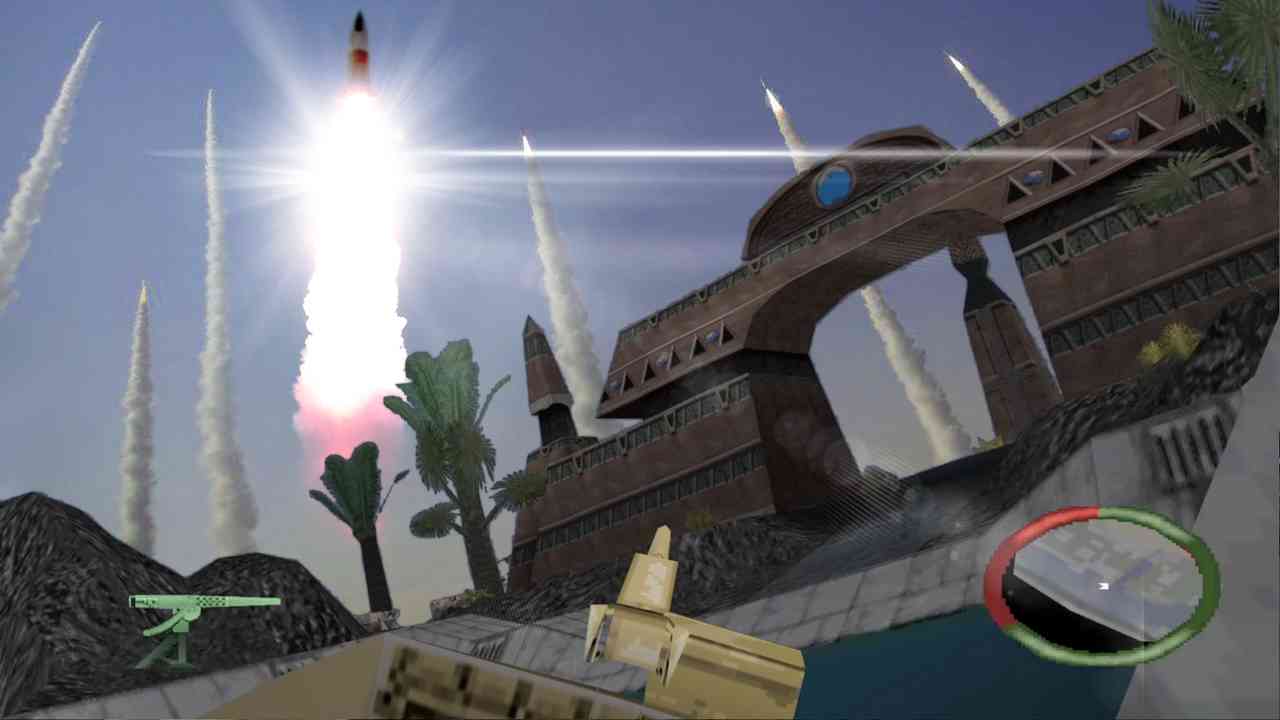
Heavily fake screenshots of Portal Runner (PS2) where they used heavy 3D CGI models to make concept screenshots that 3DO used in promotional content on magazines and all over the internet at the time
Bonus: Where to See These Images Today?
Many of these fake-but-iconic visuals still survive today in:
Archived game magazines (GamePro, EGM, etc.)
Scanned promotional material
Original manuals
The official 3DO websites via the Wayback Machine
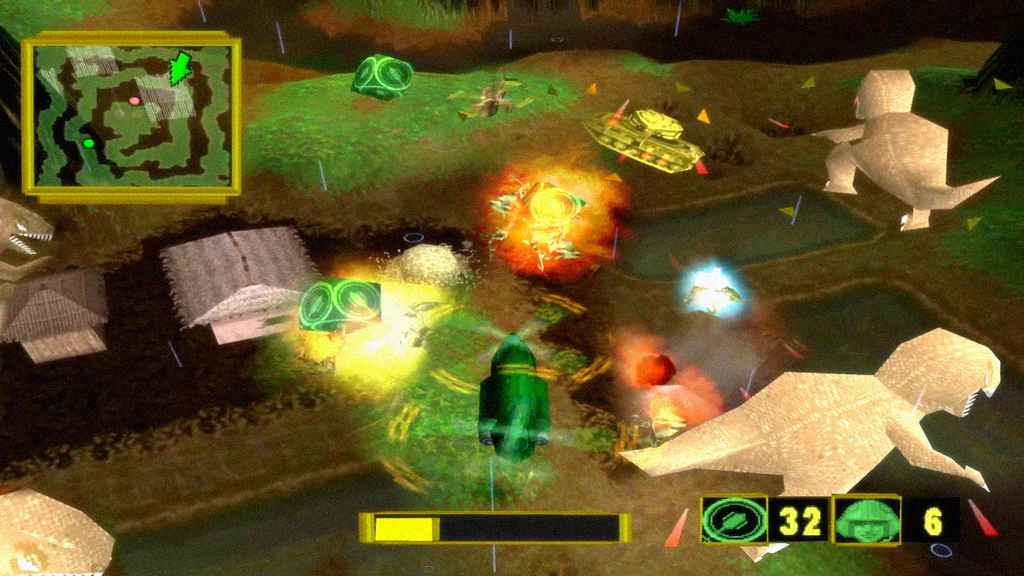
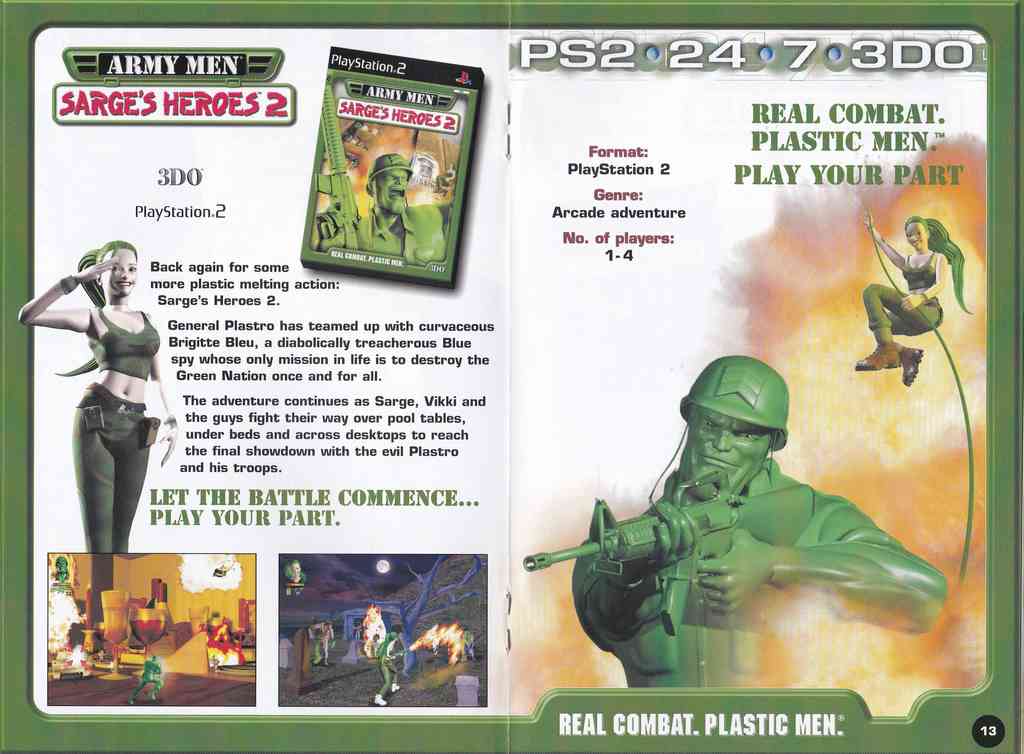
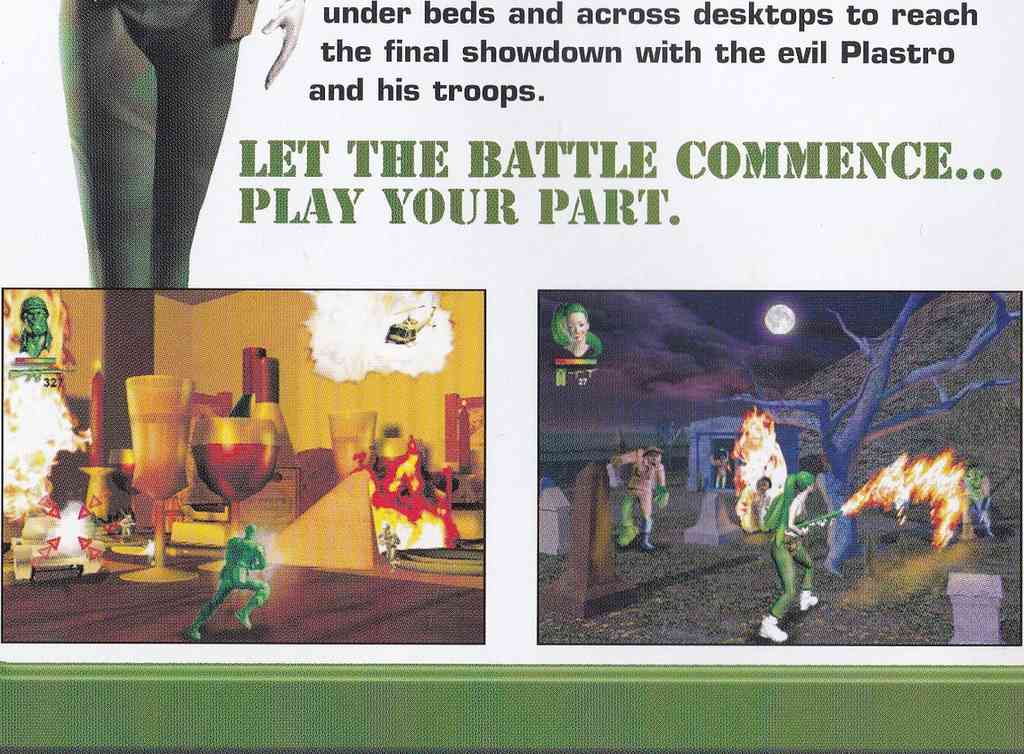
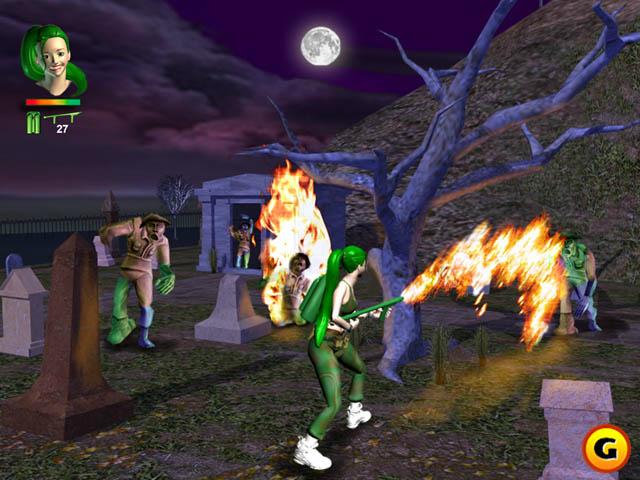
Heavily fake screenshots of the “supposed” Army Men Sarge’s Heroes 2 for PS2, used in promotional content on magazines and all over the internet at the time
In the game’s different media promotional contents, these screenshots were used to show off the game in its Playstation 2 version. In reality, they are composites using partial images of the game’s actual stages generated in a different engine or stage editing program, along with CGI models of the protagonists and a lot of added effects, something impossible to do for the Playstation 2. These were most likely images made as concept art of how the game should have looked for its development.
And of course, at ArmyMen.com.ar, where fans are still collecting and preserving all official documentation and rare media.
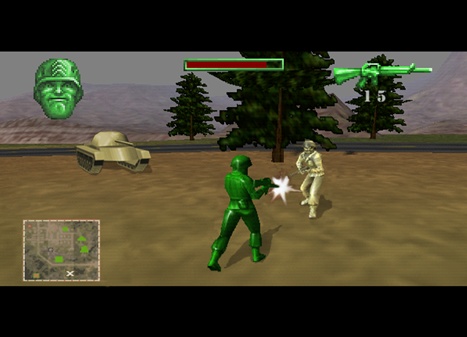
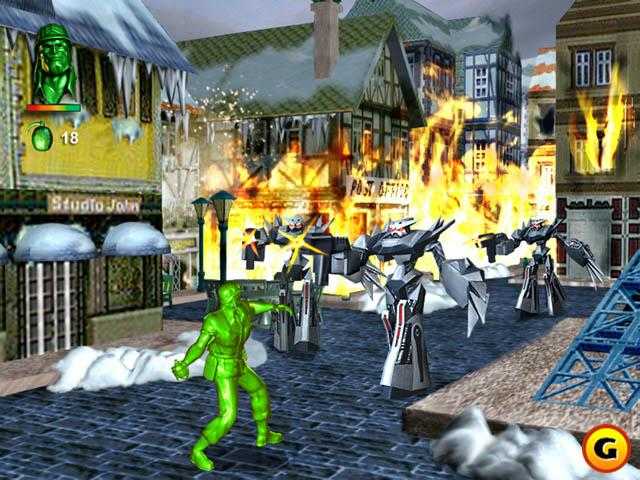
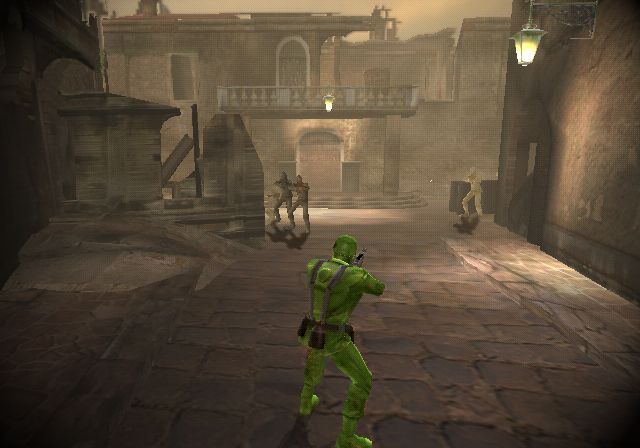
True BETA with minor modifications
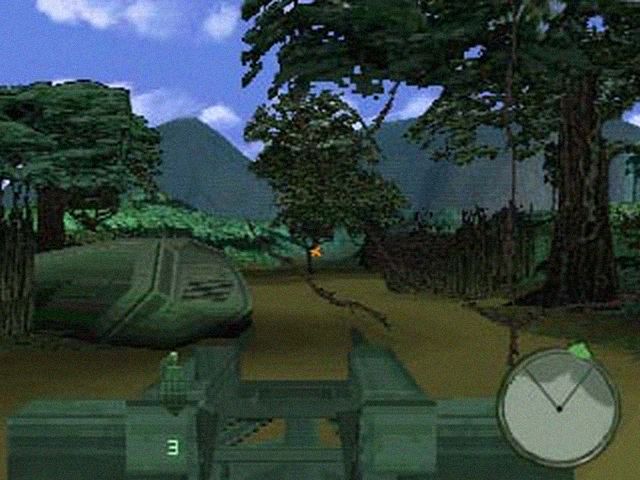
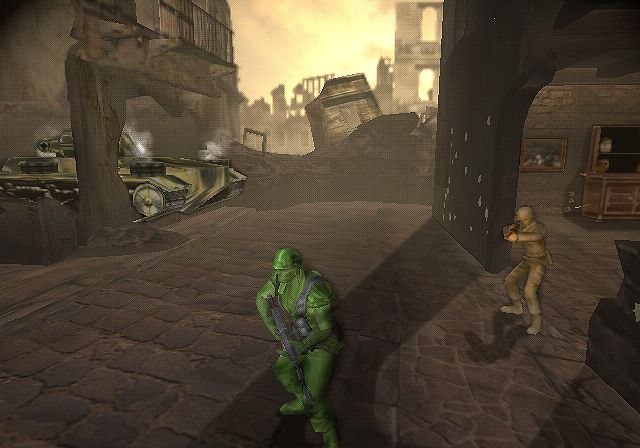
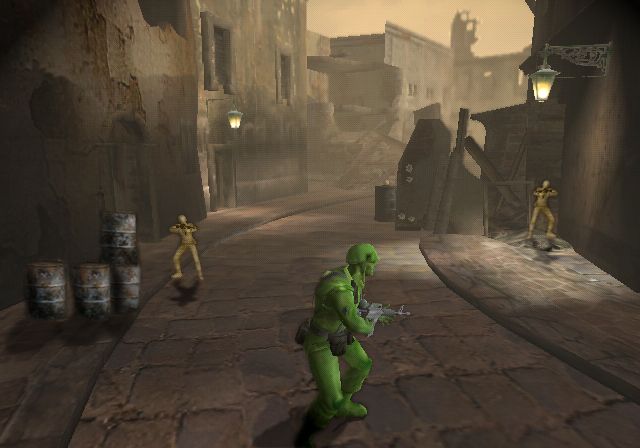
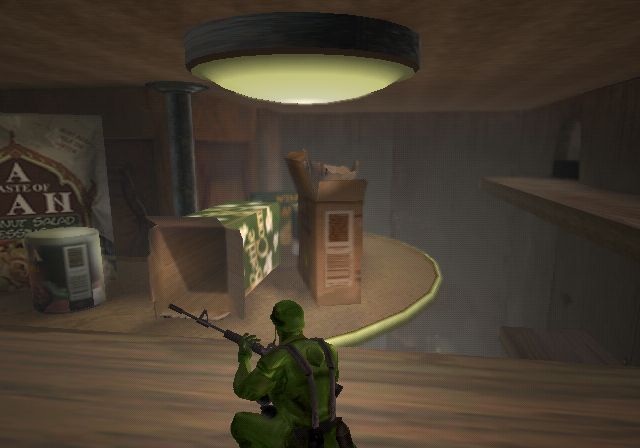
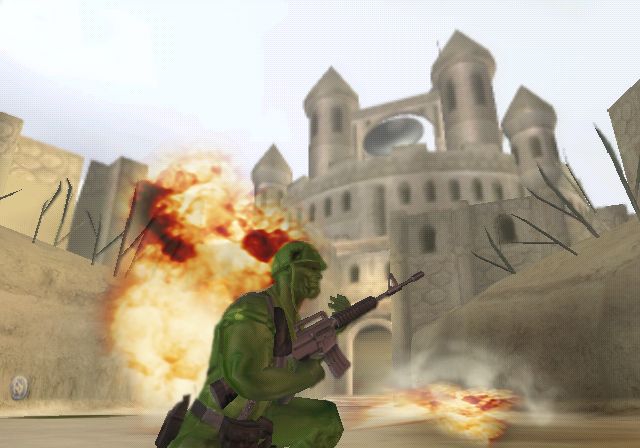
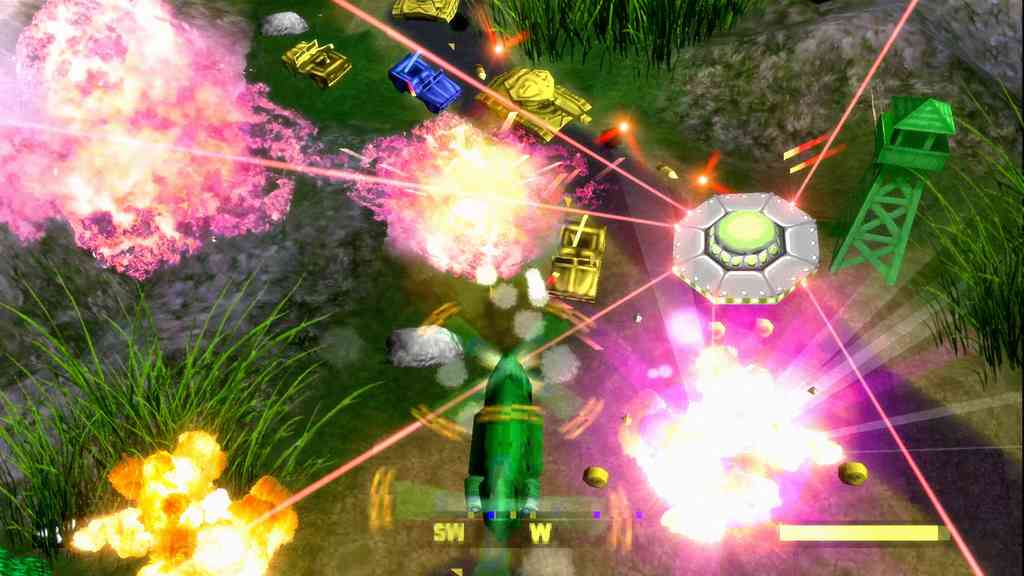
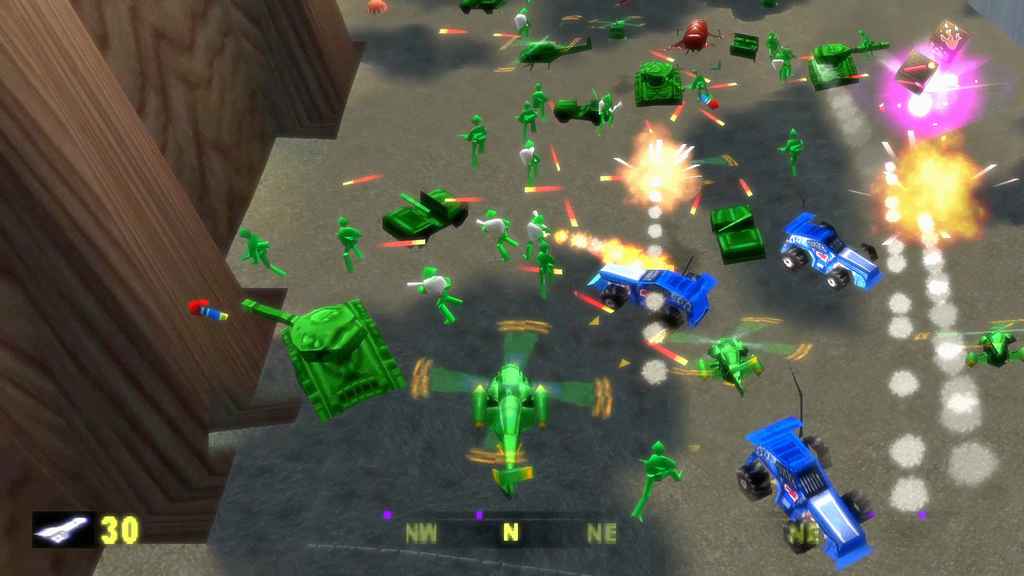
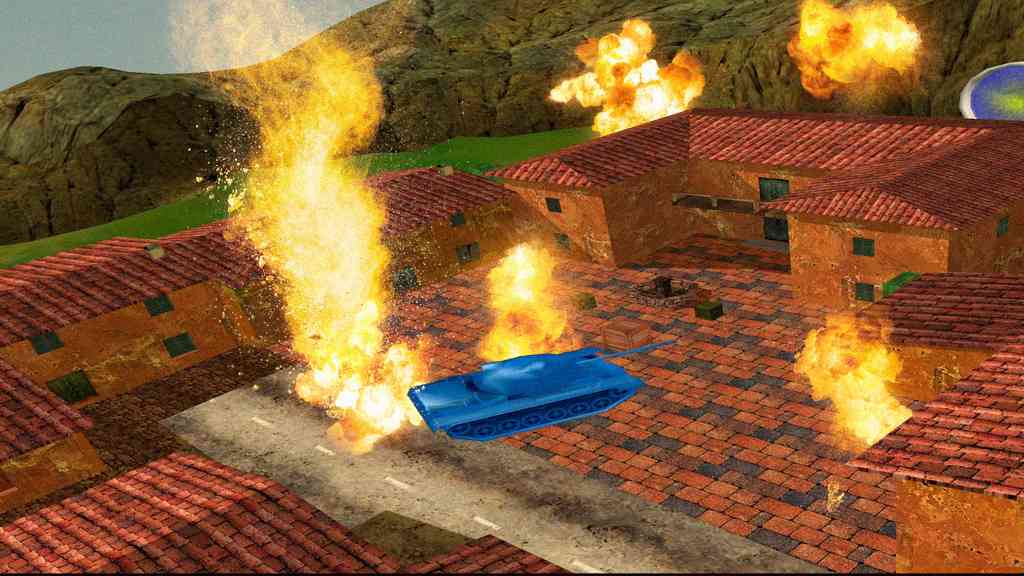
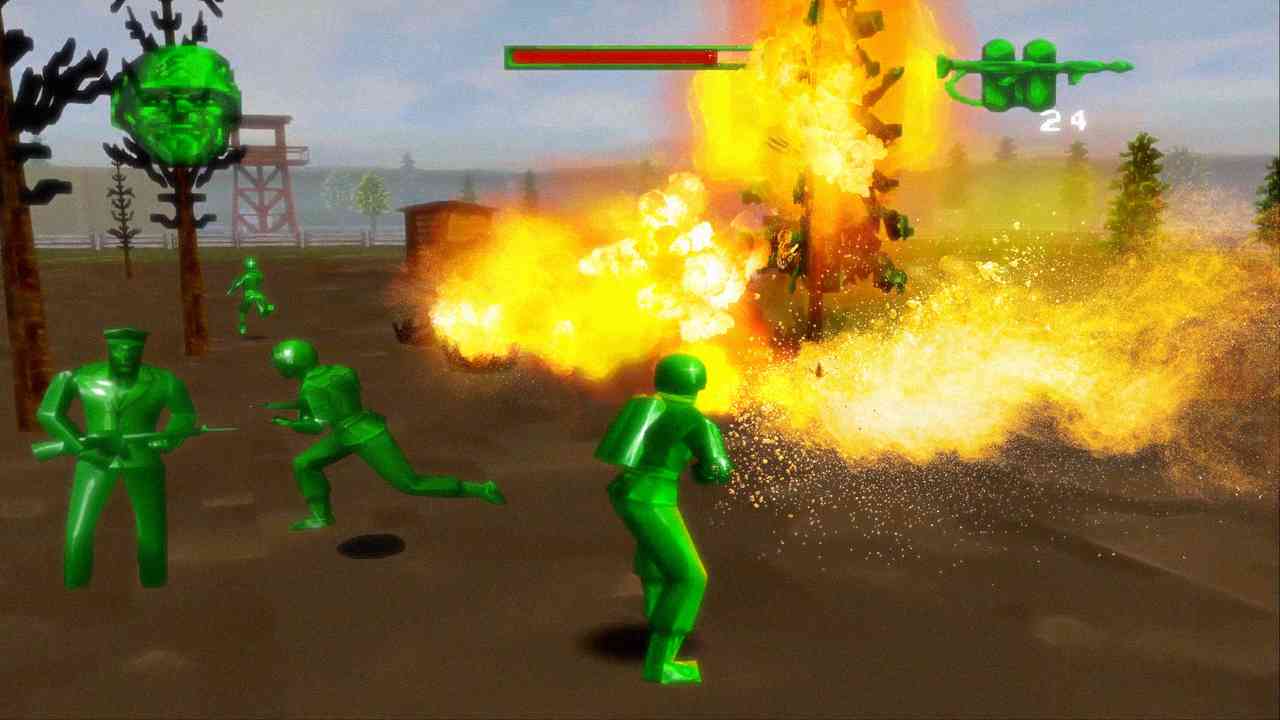
The last 3DO game wasn’t exempt from 3DO tactics. Although these are real in-game images from the game engine (Zero Engine), they have minor additions, such as some soldiers, tanks, and explosions. And these, as they didn’t report, are images from the actual beta, up to the point where 3DO worked on it, before Global Star Software took over and finished the game.
Epilogue: Not Real Gameplay, But Still Part of the Game
And óo players ever got to take control of Sarge.Because sometimes, a fake image contains a very real truth: The spirit of a franchise that helped shape an entire generation’s imagination.
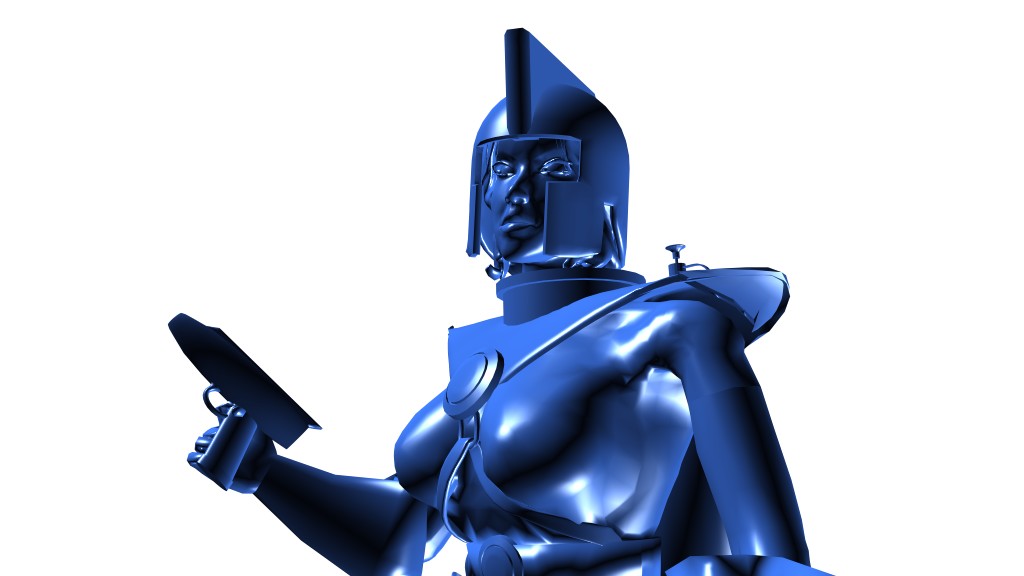
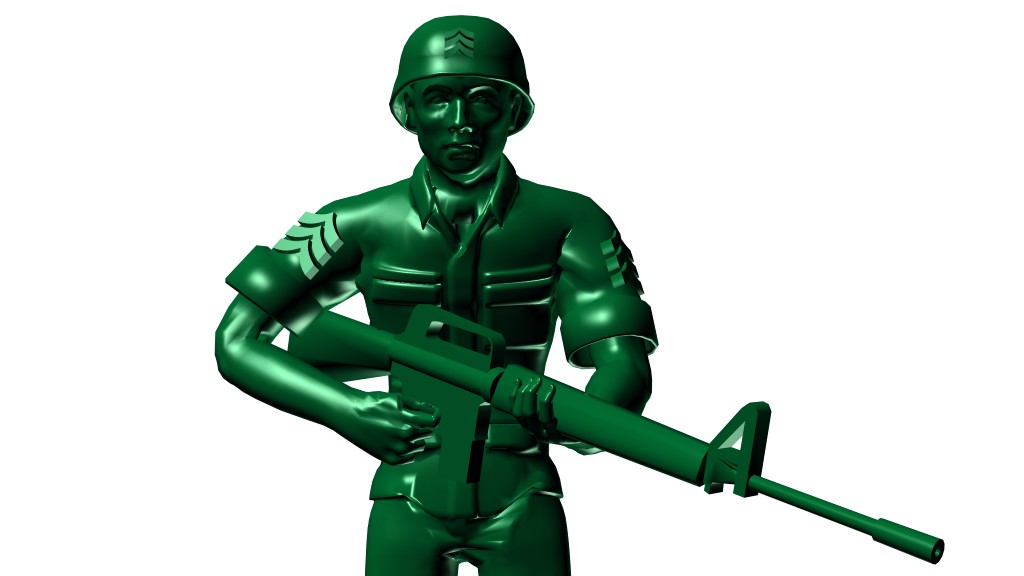
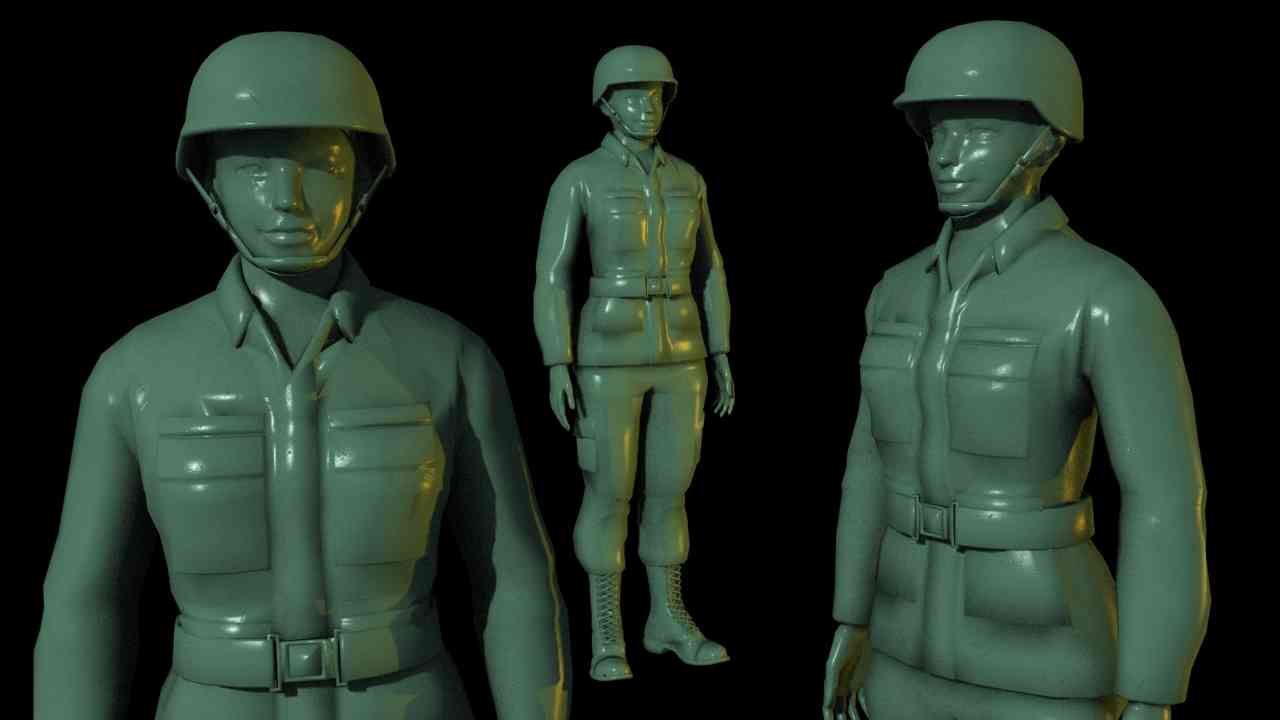
This are some of our own “fake” promotional images. We usually use them for our video thumbnails… but from now on we’ll be using them to promote older 3DO games a little… excessively.
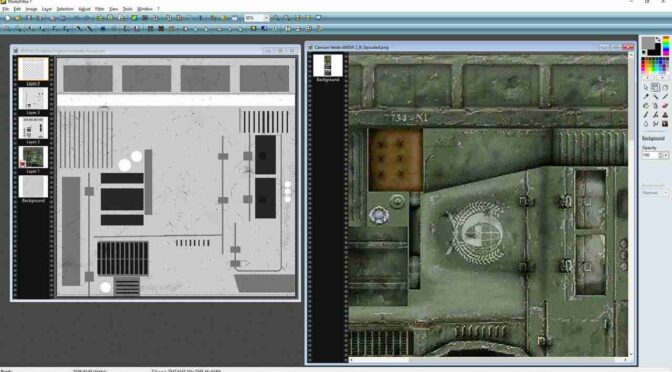
The assets of the game will be a lot, but for the most part they will be the same three-dimensional geometry with different textures, as in the case of the Real World assets.
We will try to make each door, each wall, each window and each wooden furniture different, using an algorithm that will modify the location of the textures so that even if they have the same assigned texture, will be different, using mirror and rotated coordinates.
But the most important feature of these 3D assets will be that they will be made up of 2 layers of textures, not just one. And we are not referring to the different images that make a texture (diffuse specular map, opacity map, bump, reflection, self illumination, etc.) but will be made up of 2 textures, one on top of the other, with a system of opacity that will allow the texture from above to show certain characteristics of the texture from below, always talking about the order in which they will be positioned.
A texture will be the one that will have the details of the object, such as depth or any inescapable characteristic such as the hole for the key. The other texture will fulfill the function of color, surface texture and imperfections.
3D models in the Toyverse project vault
We have a mix of original 3D models, new ones and recreated. Below we detail what we’re collecting.
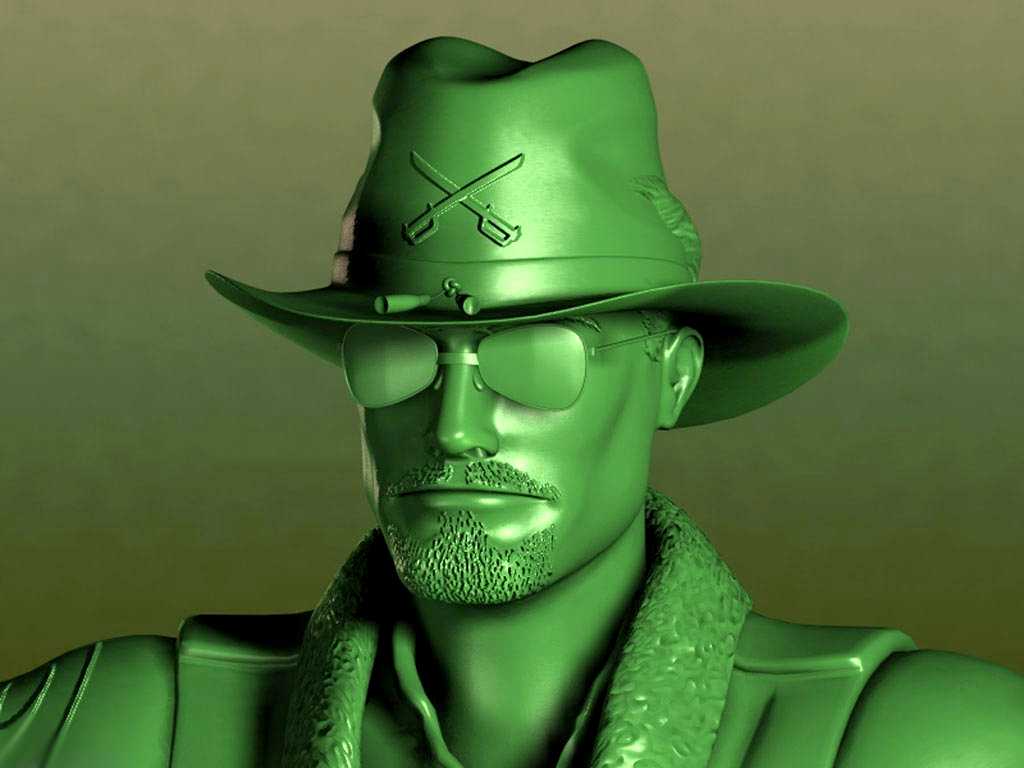
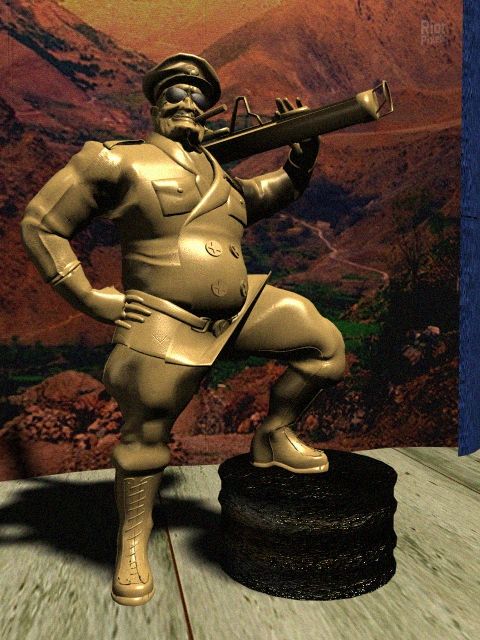
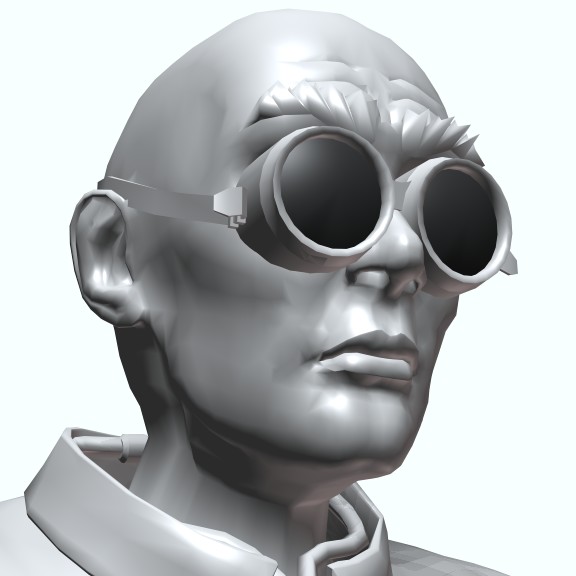
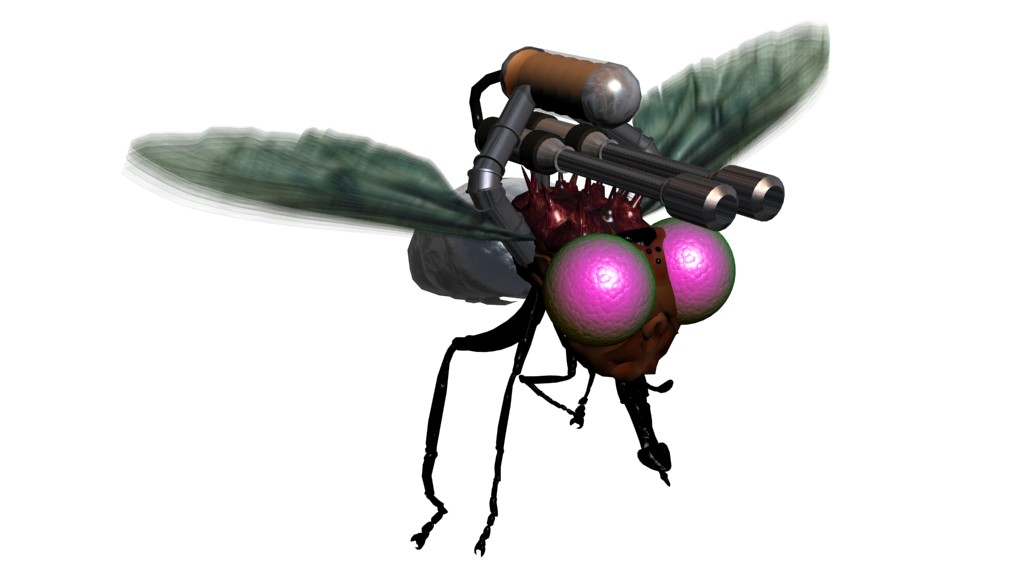
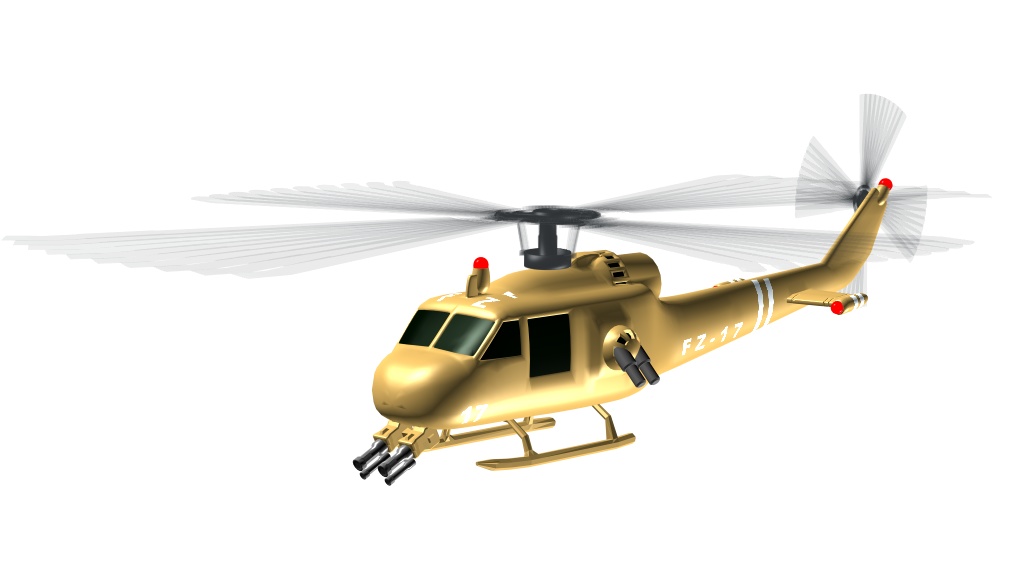
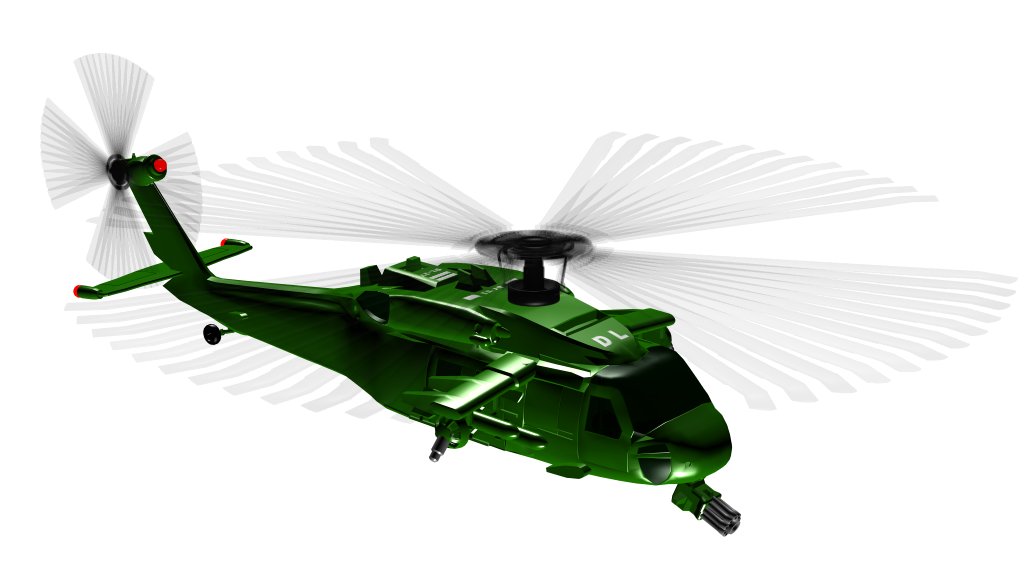
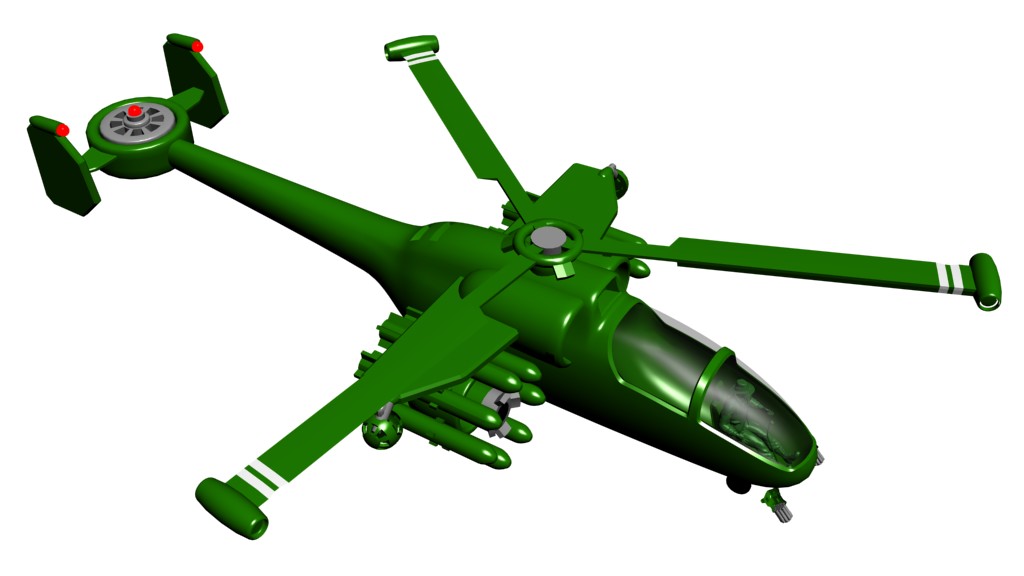
Several 3D models from the Army Men franchise have appeared over the years. Here’s a compilation of the ones the fandom have and the ones we’re missing…
Here you can find links to download some of the 3D models made or acquired by 3DO. All of them will be made available gradually.
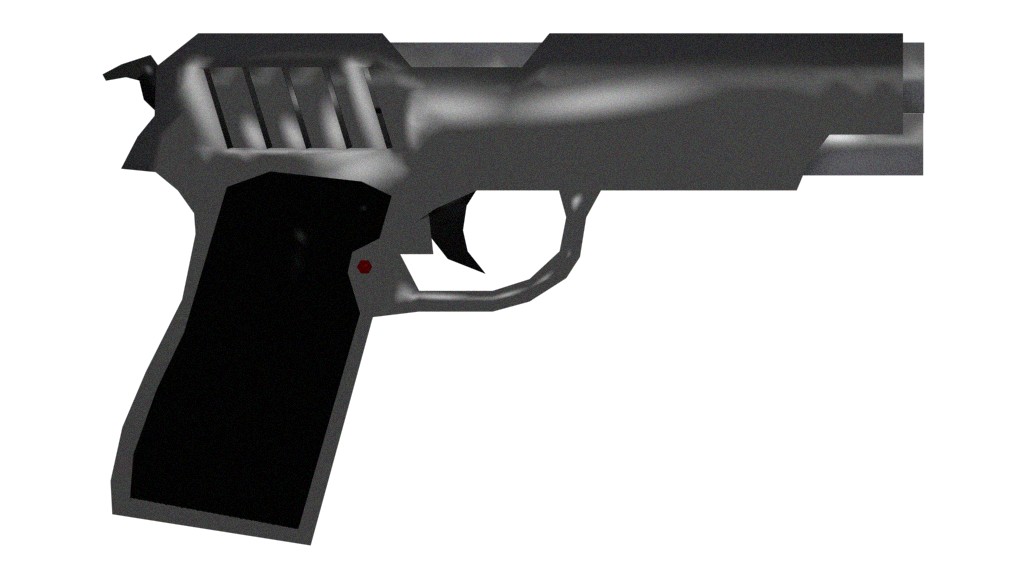
1. Official but non-original Army Men 3D models used in the franchise, purchased to third party by 3DO and used as obtained, or modified by 3DO
Models used by 3DO in the Army Men video games, but which were acquired from third-party 3D model banks, used as acquired or with some modifications. In this case ViewPoint 3D models.
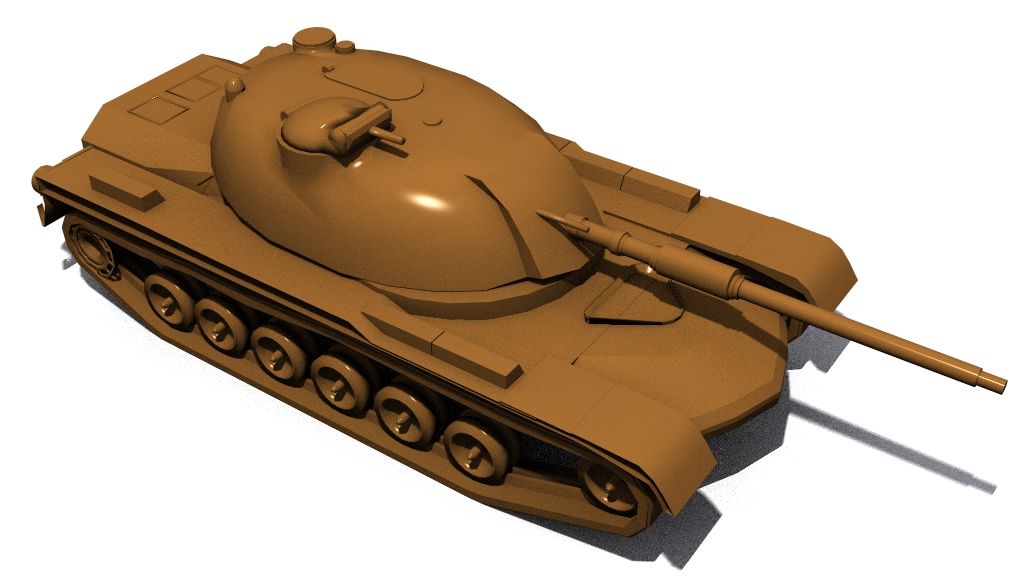
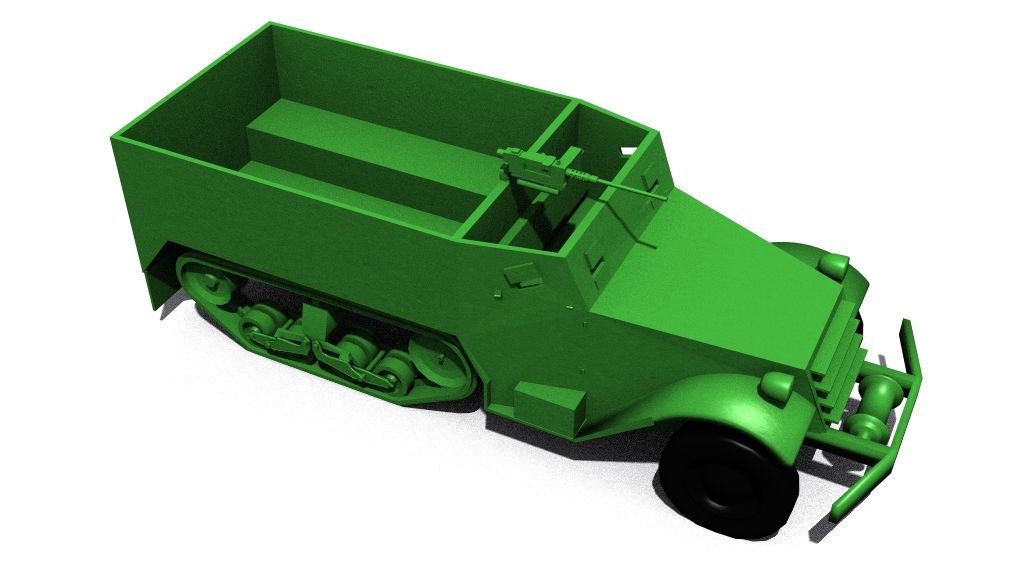
3. New and non-official screen accurate copies of Army Men 3D models used in the franchise made by the Toyverse project
Some of these models are loosely or heavily based on the 3DO models seen on screen. Rather than making exact “screen accuarete” copies, we created these vehicles or characters as versions of themselves after what was seen in Army Men, as a sequel to the characters.
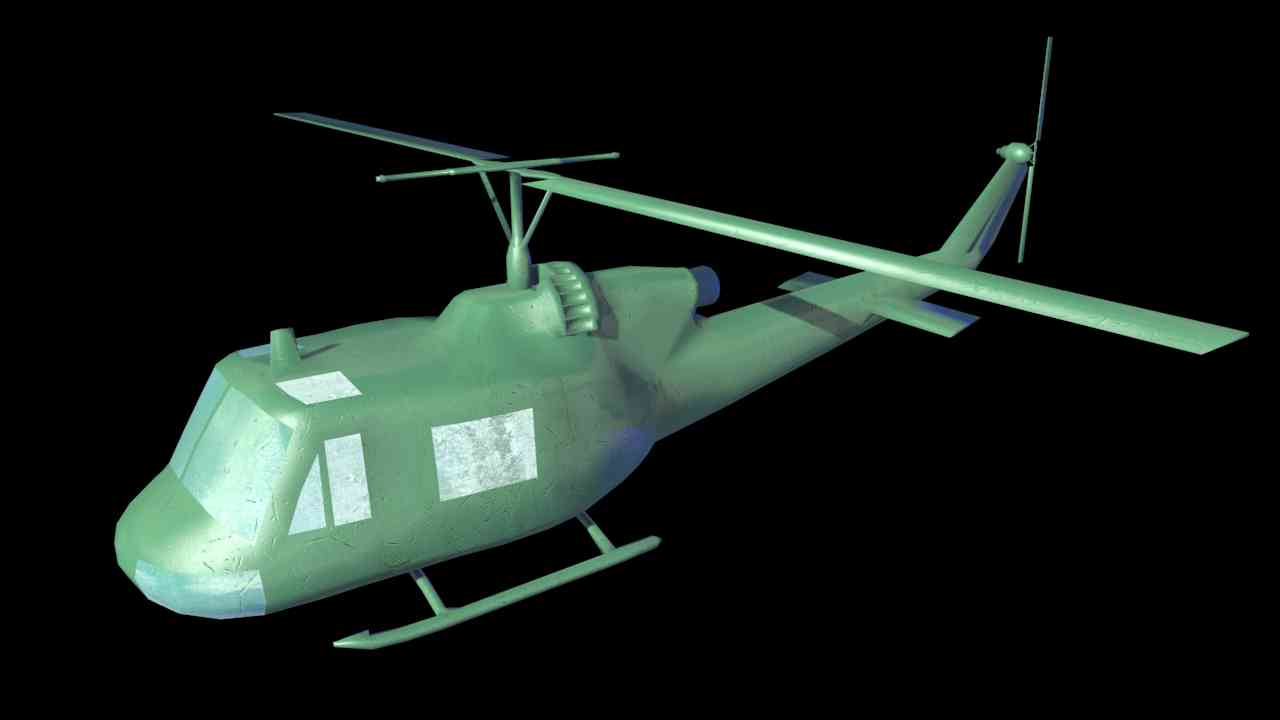
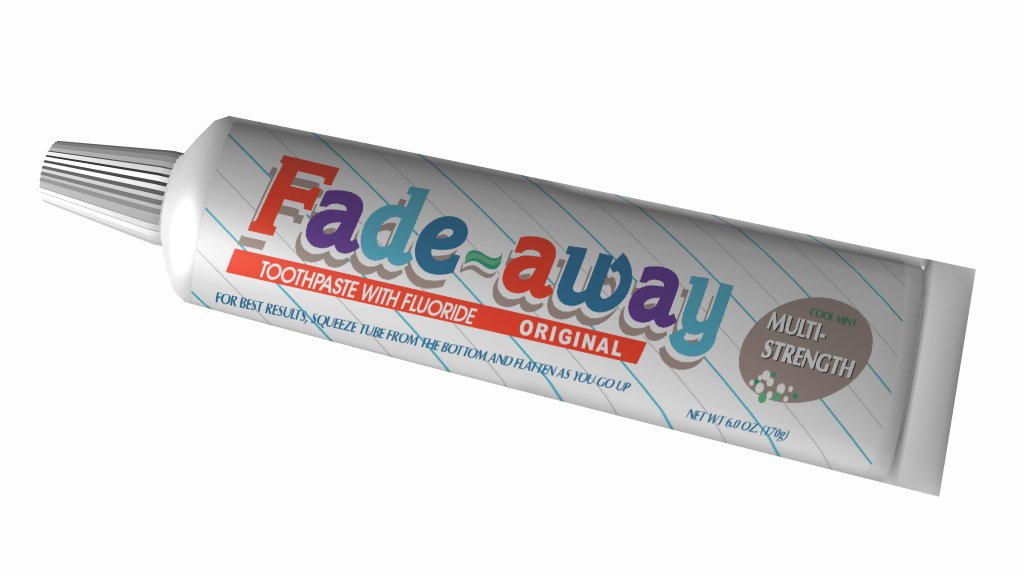
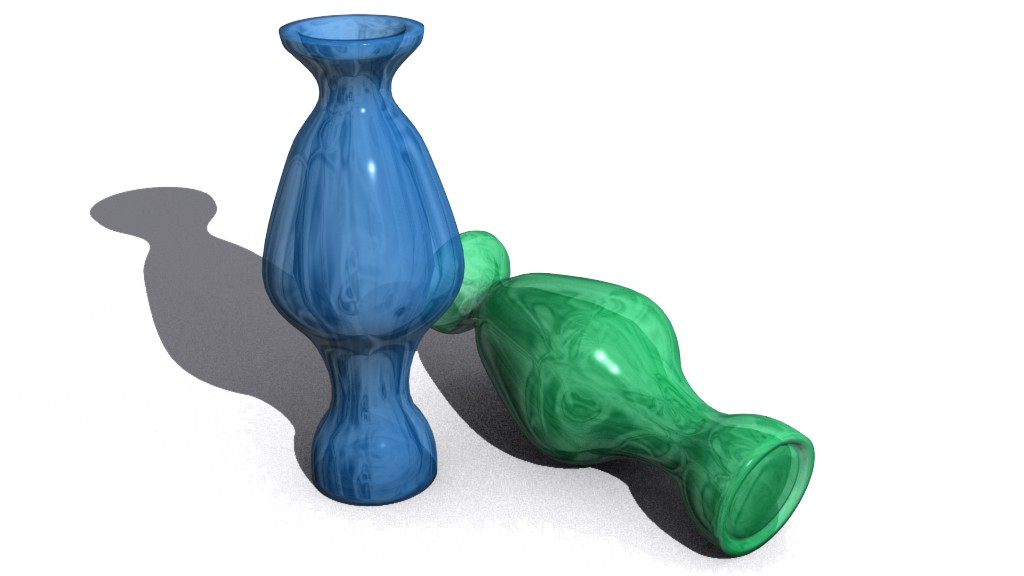
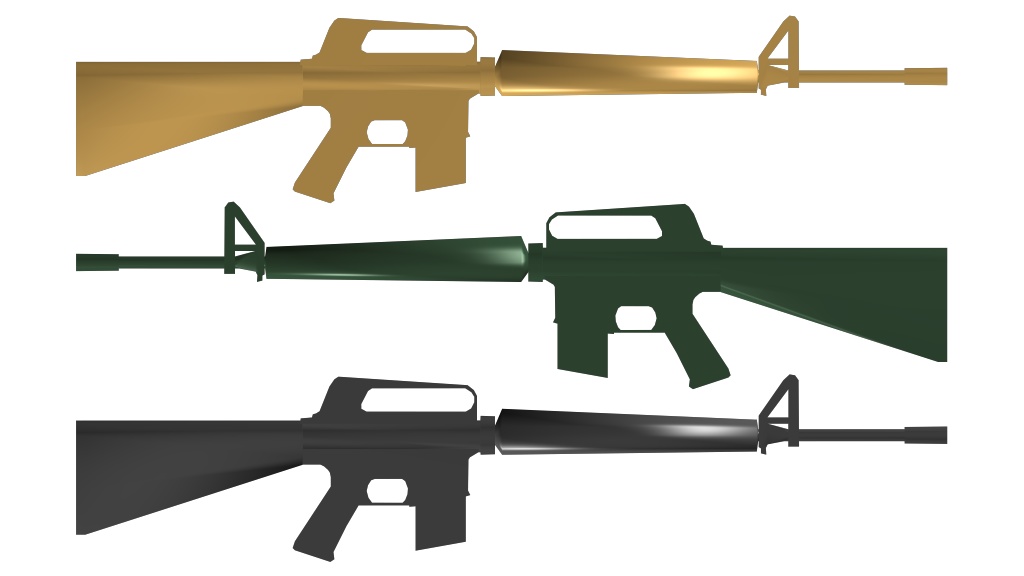
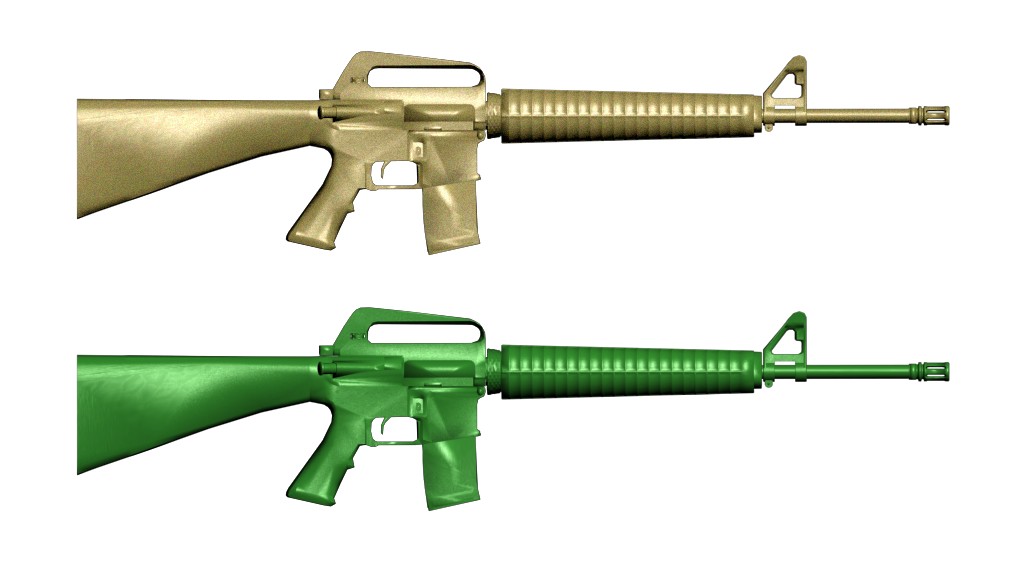
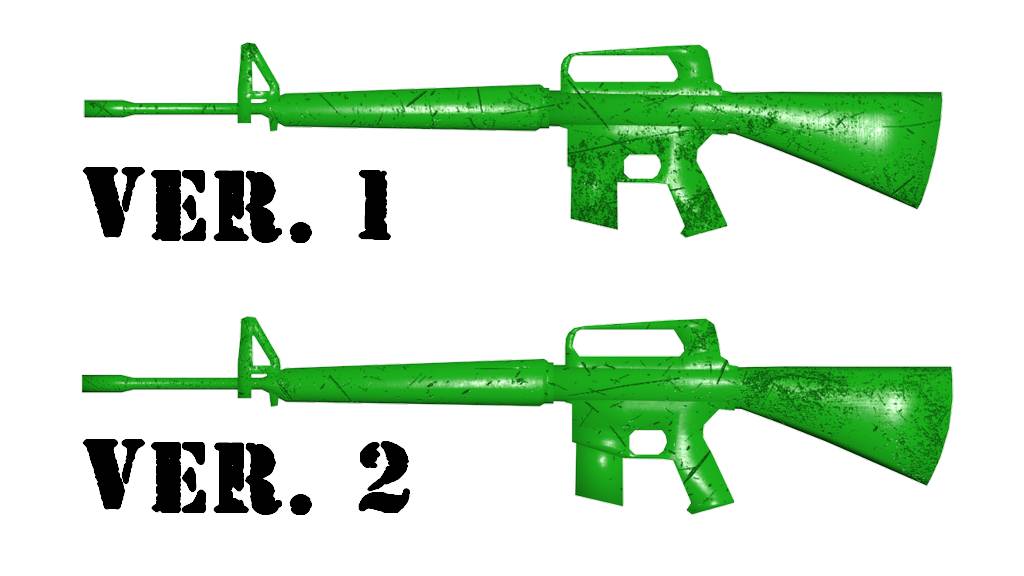
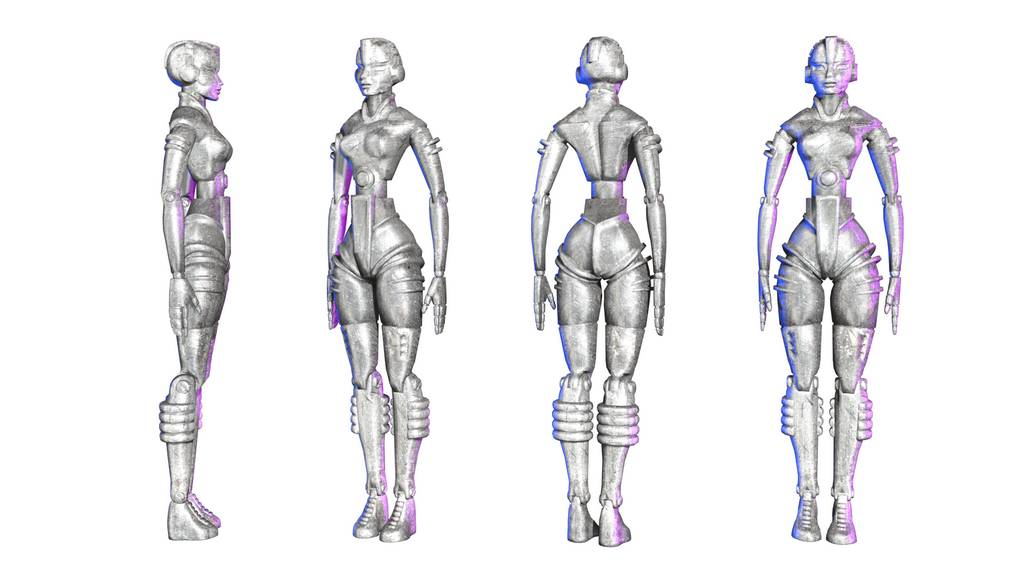
CGI HQ Toyverse OriginalCGI V-Bot Toyverse OriginalCGI Dump Truck Toyverse OriginalArmy Men logo V2 (2000)Remake of M48 Tank Toyverse originalRemake M16A1 Toyverse original
Non-official Original Army Men Toyverse Project 3D models made by the Toyverse project or third party
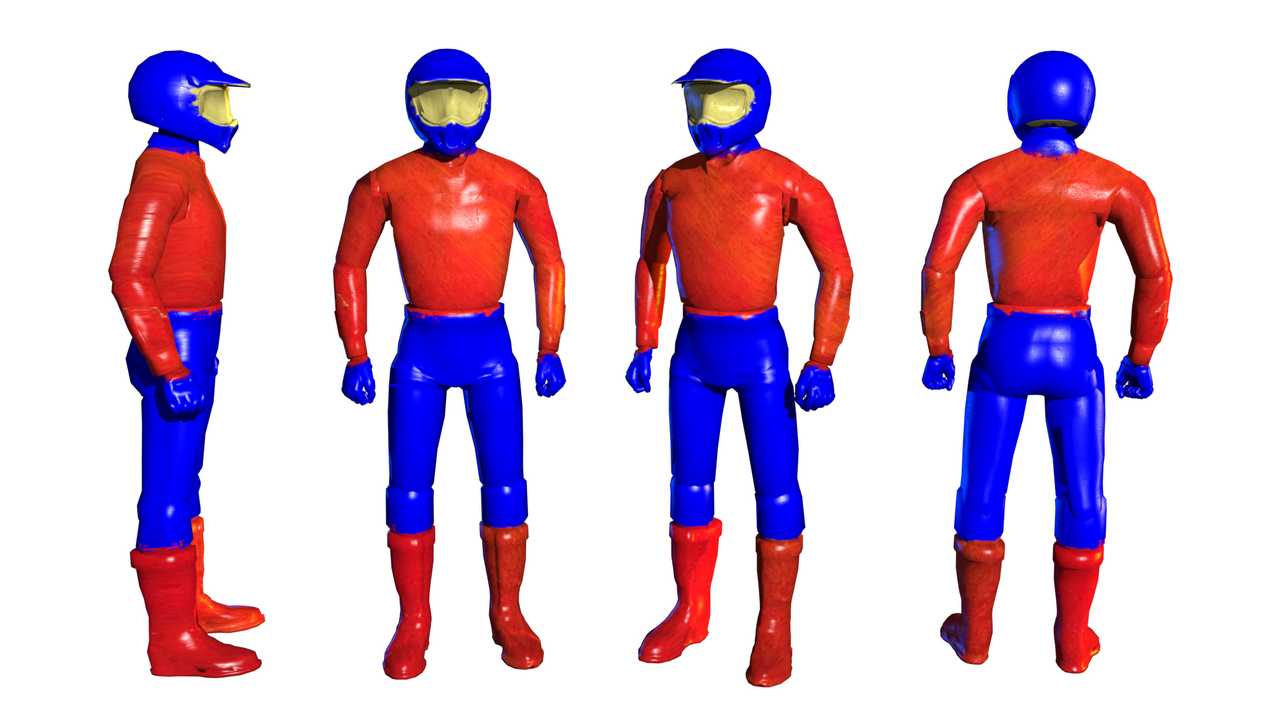
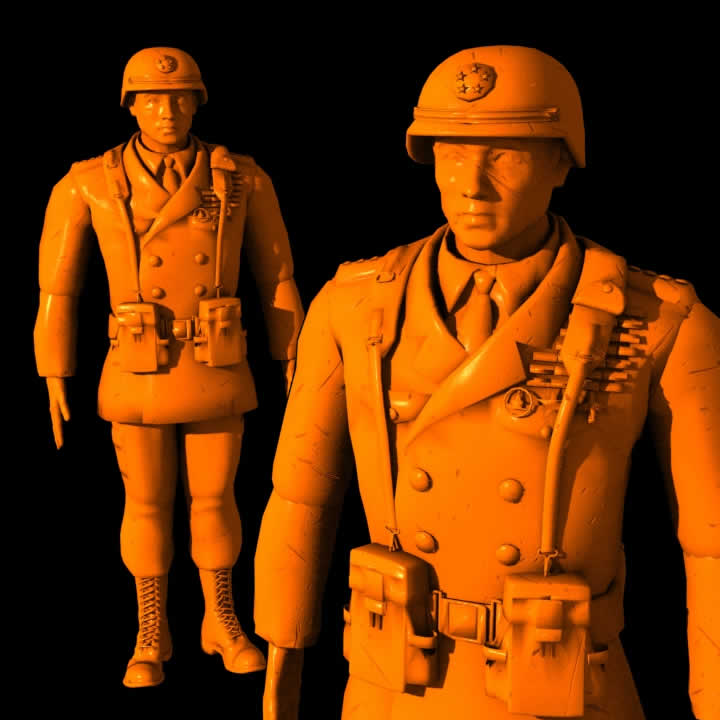
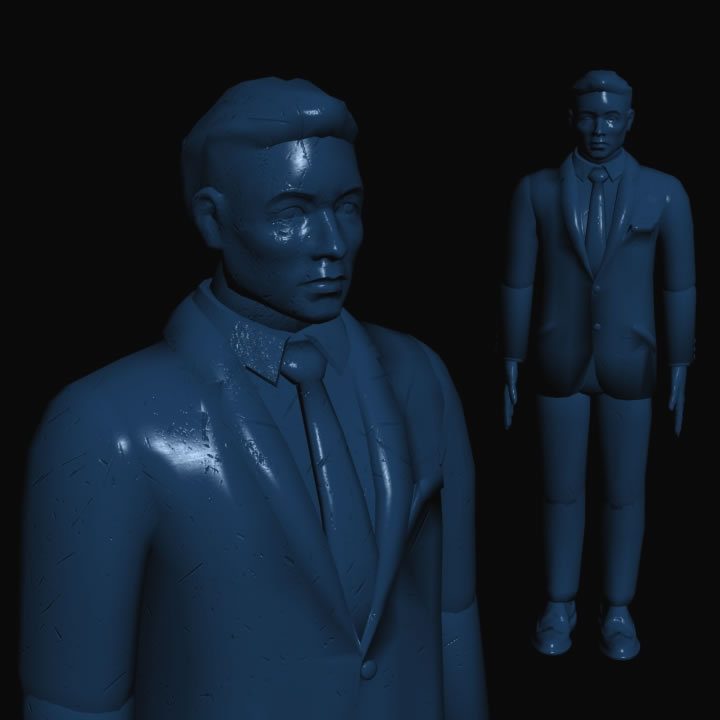
Some of these models are loosely or heavily based on the 3DO Army Men 3D model style. But also, rather than making an original 3D model, we have adapted 3rd party 3D models. In this case ViewPoint 3D models from the same model batches, also used by 3DO.
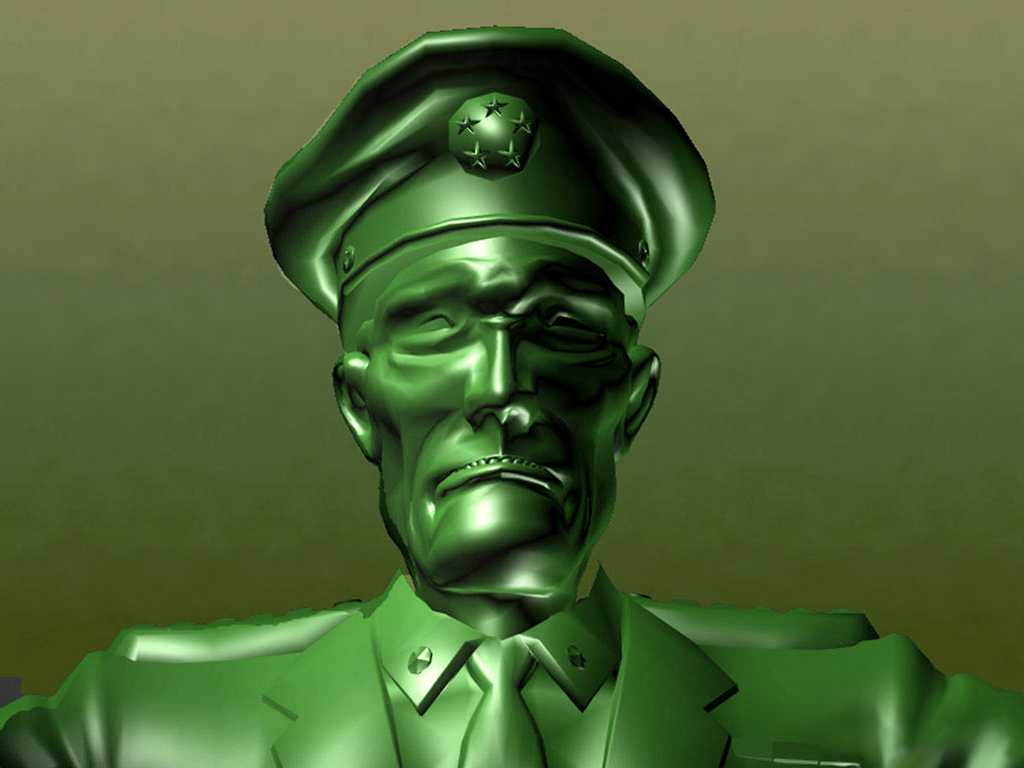
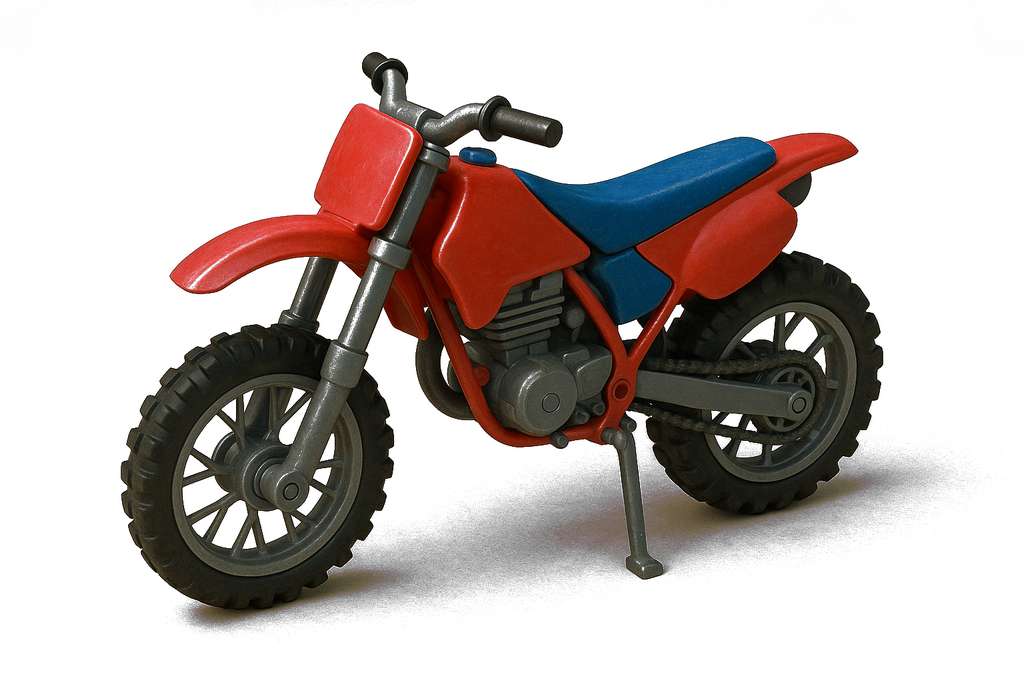
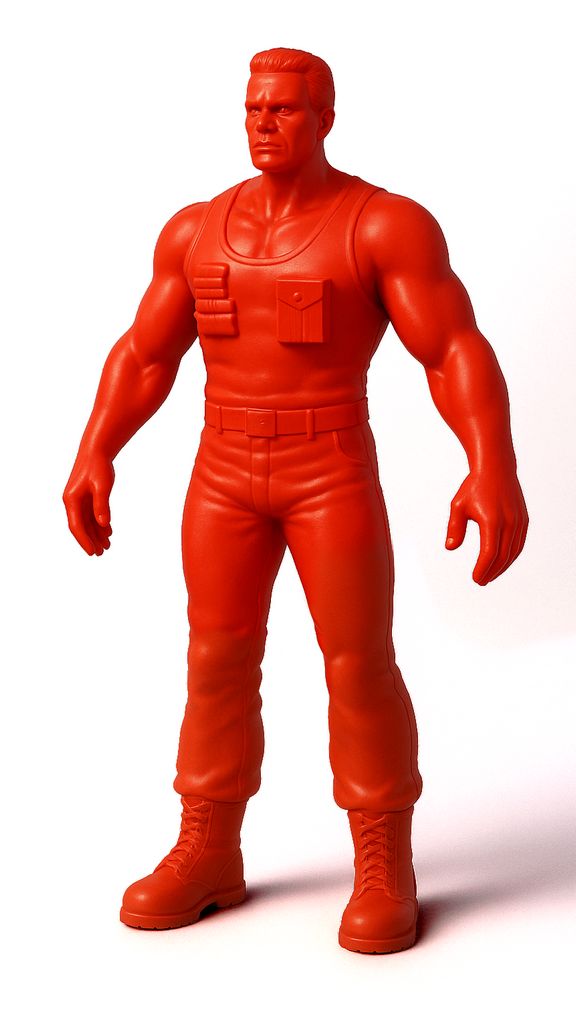
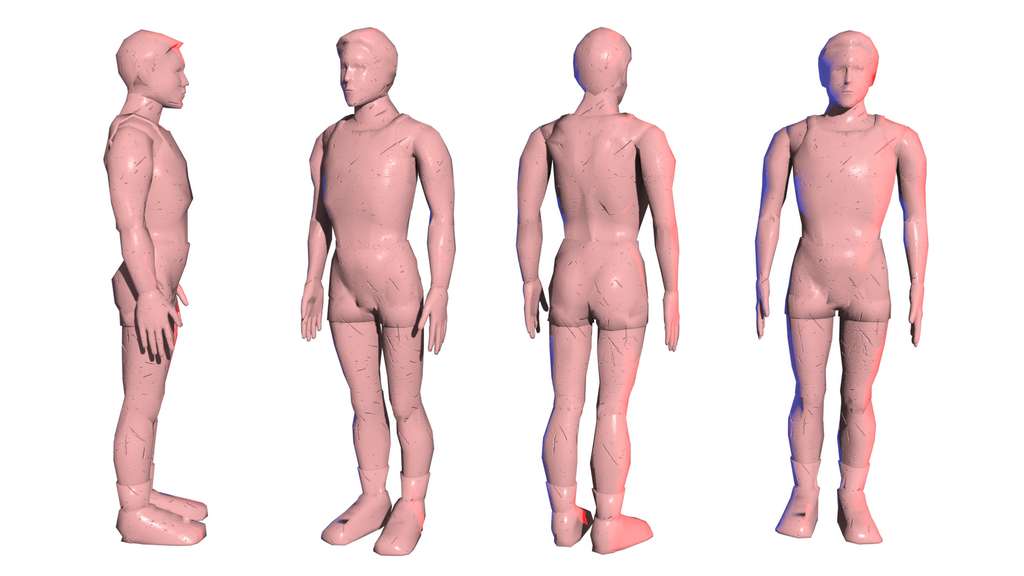
Toyverse Original CGI MotocrossToyverse Original CGI characterGymnast Original VP ModelAmazonas V1 Original VP ModelC3-R34L Original VP ModelBiker Original VP ModelFire Modified VP ModelOriginal VP Model (Agent Blue 001)Modified VP Model Sarge post TISLight Blue Artic Modified VP ModelImperial Greys Modified VP ModelUnnamed Colonel Modified VP ModelModified VP Model (zombies)Unnamed Violet General Modified VP ModelOriginal VP Model
The Army Men Videogames Website, home of the Army Men Toyverse
Manage Consent
To provide the best experiences, we use technologies like cookies to store and/or access device information. Consenting to these technologies will allow us to process data such as browsing behavior or unique IDs on this site. Not consenting or withdrawing consent, may adversely affect certain features and functions.
Functional
Always active
The technical storage or access is strictly necessary for the legitimate purpose of enabling the use of a specific service explicitly requested by the subscriber or user, or for the sole purpose of carrying out the transmission of a communication over an electronic communications network.
Preferences
The technical storage or access is necessary for the legitimate purpose of storing preferences that are not requested by the subscriber or user.
Statistics
The technical storage or access that is used exclusively for statistical purposes.The technical storage or access that is used exclusively for anonymous statistical purposes. Without a subpoena, voluntary compliance on the part of your Internet Service Provider, or additional records from a third party, information stored or retrieved for this purpose alone cannot usually be used to identify you.
Marketing
The technical storage or access is required to create user profiles to send advertising, or to track the user on a website or across several websites for similar marketing purposes.