
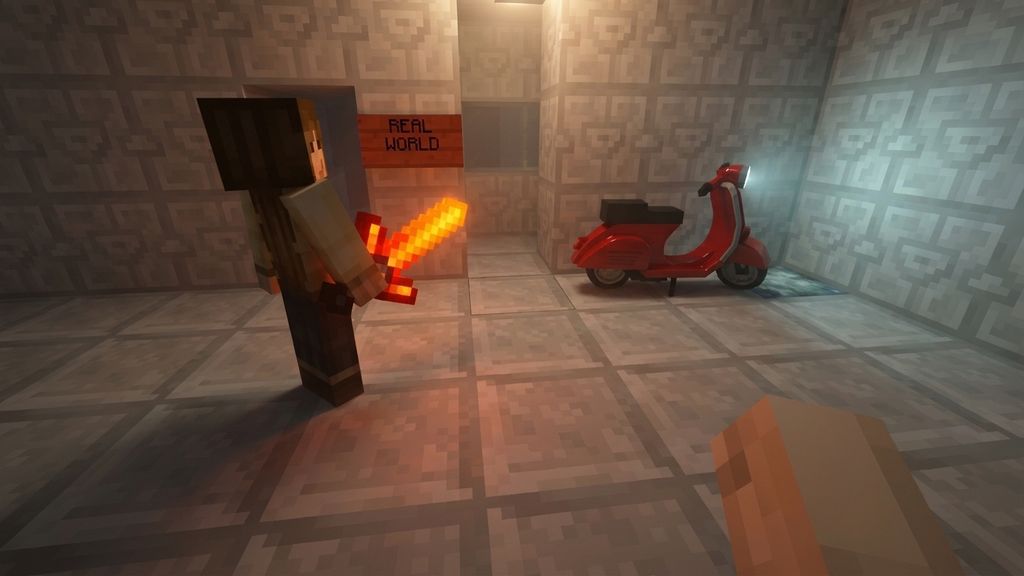
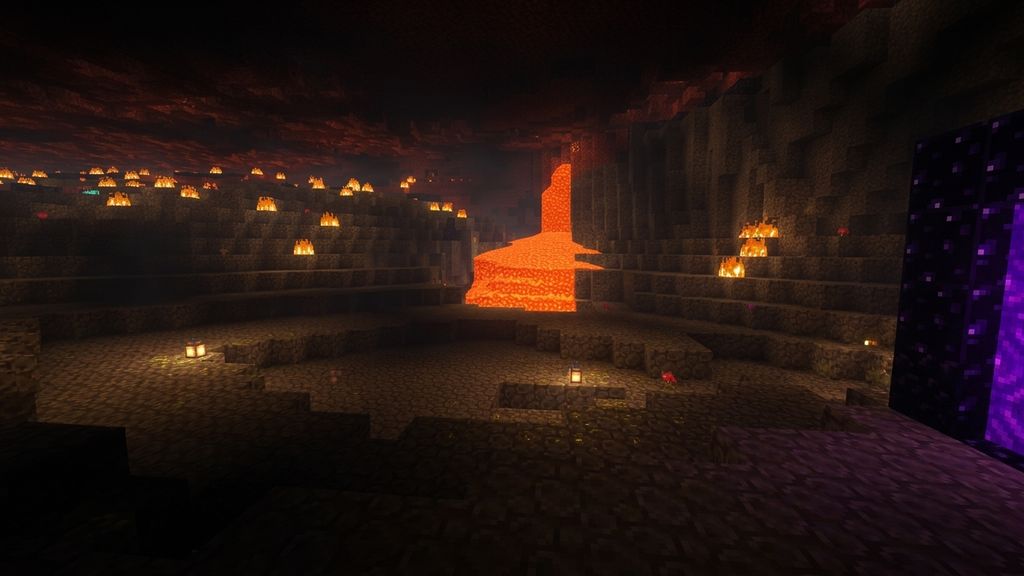
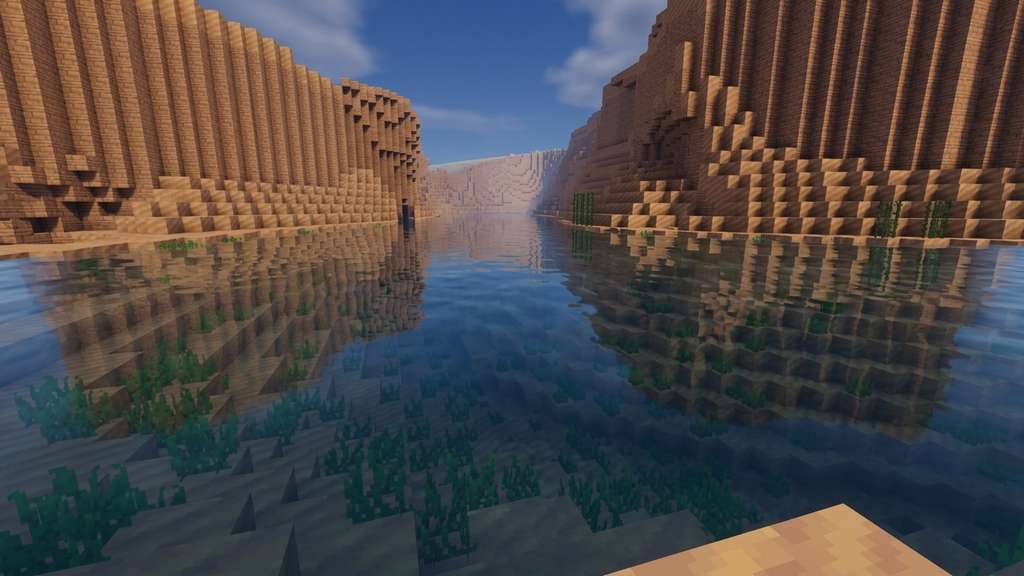
Difficult to define as such, this world is sometimes referred as the “Videogames Worlds” or “The Network”
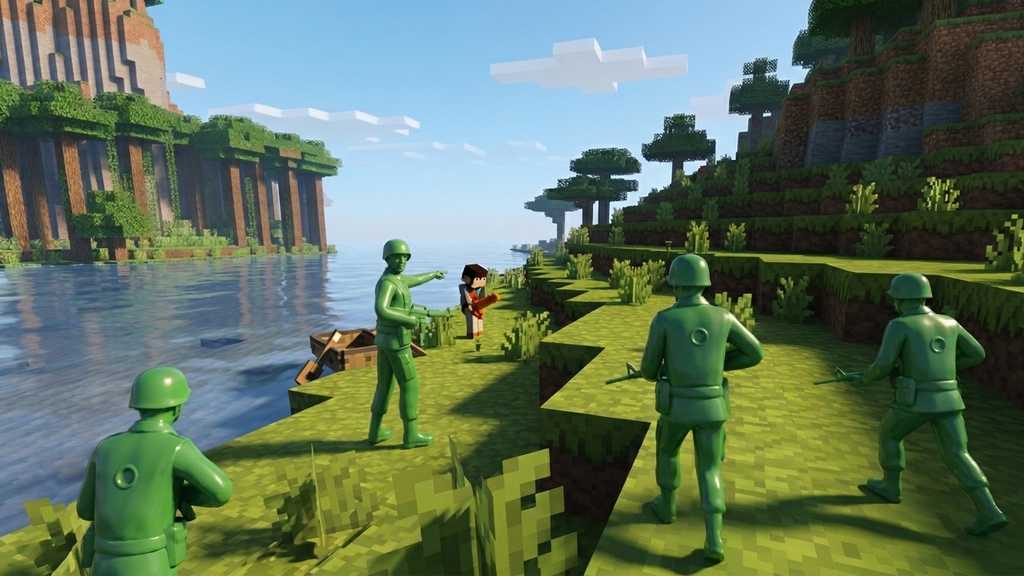
The Digital World, also known as the Videogames World or simply “The Internet” by the Army Men, is a unique and intriguing realm within the Toyverse. Unlike the other worlds, the Digital World is not a physical place but a vast, interconnected digital landscape. This realm is composed of multiple sub-worlds, each representing different video games, websites, and digital environments.
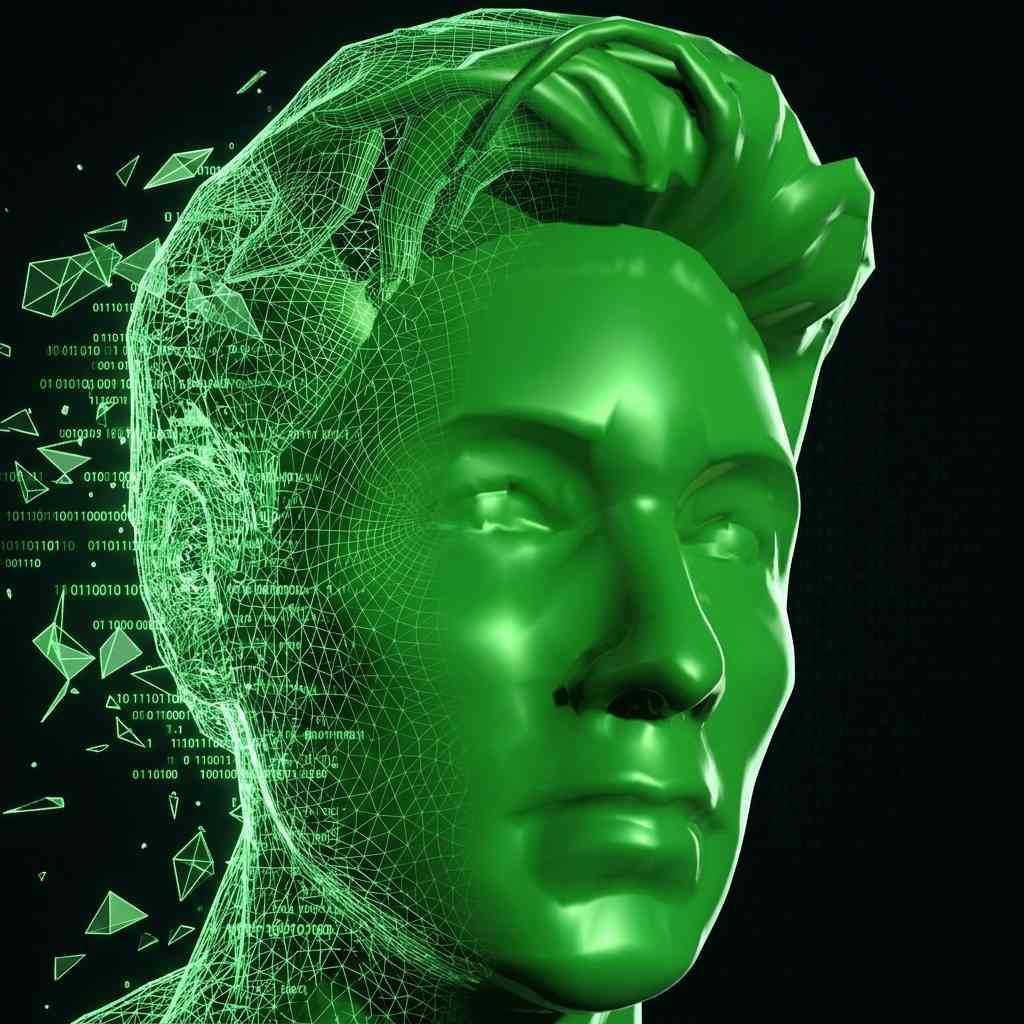
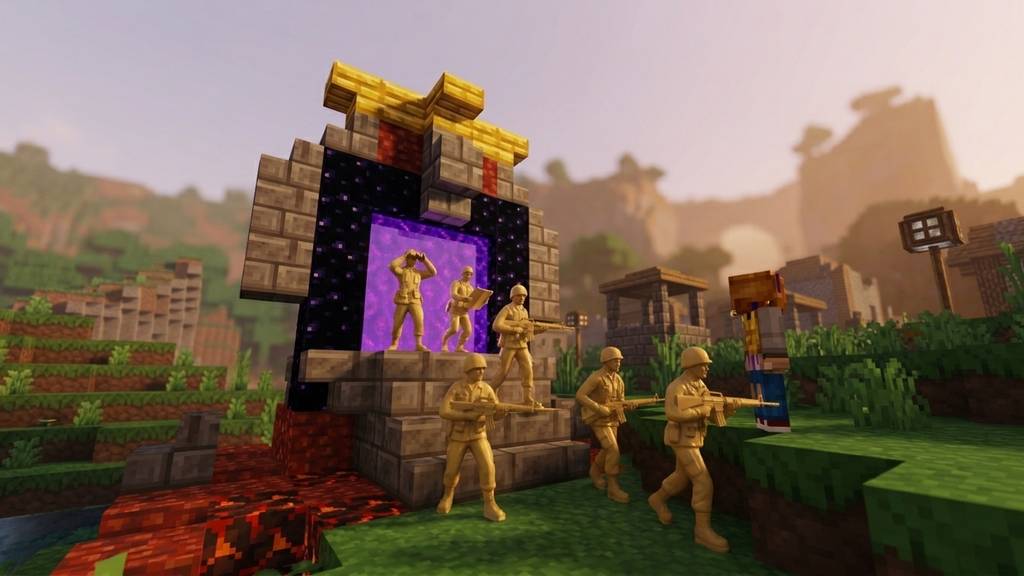
This world (or worlds) are accessible via the late Human’s Videogame Console Portals and computers, like Toys in Space 3DO console which took Sarge & Tina Tomorrow to the Space World. So, as well as other unverified stories about other consoles in the past, in this case they can function as simple portals to physical spaces and not only to digital spaces.
Concept and Theories
The existence of the Digital World has led the toys to question the nature of their own reality. As they explore this realm, they encounter various clues and anomalies that suggest they might be living in a simulation. This idea sparks endless speculation and theories among the toys, adding a layer of mystery and intrigue to te toy existence.
In fact, Humans left behind theories on the subject, recorded and captured in various formats, as well as works of fiction centered around these beliefs.
Digital worlds, or video game worlds, can exist independently on each cartridge, CD-ROM or Console, although at the same time if these are connected to the “Internet”, each device connected to this network can communicate with the rest of the connected devices around the world.
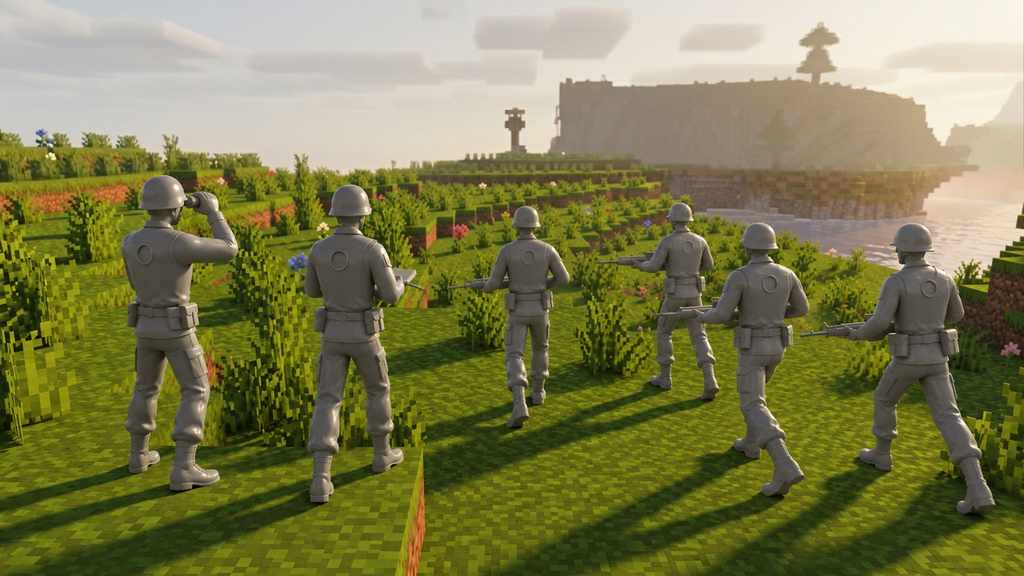
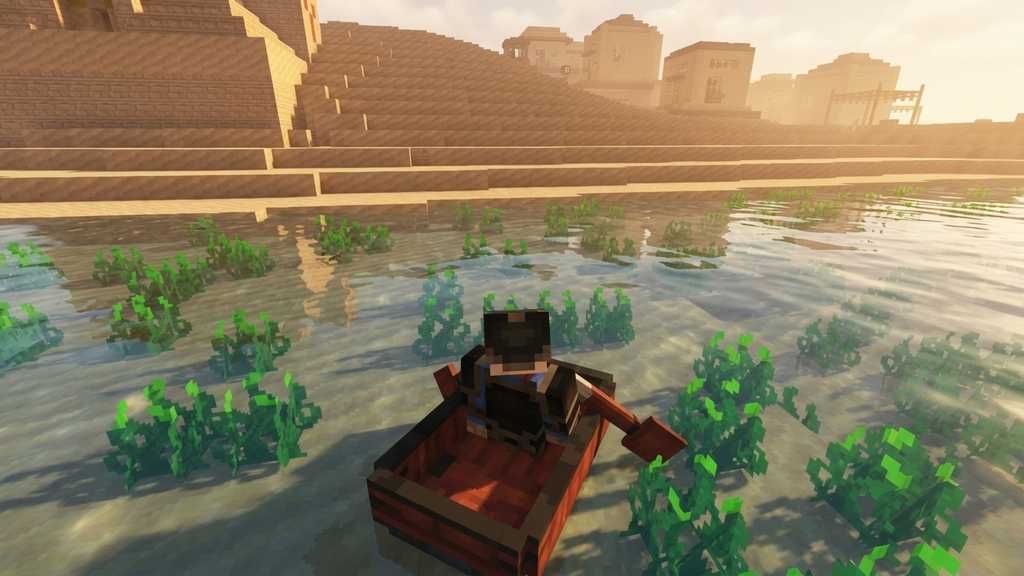
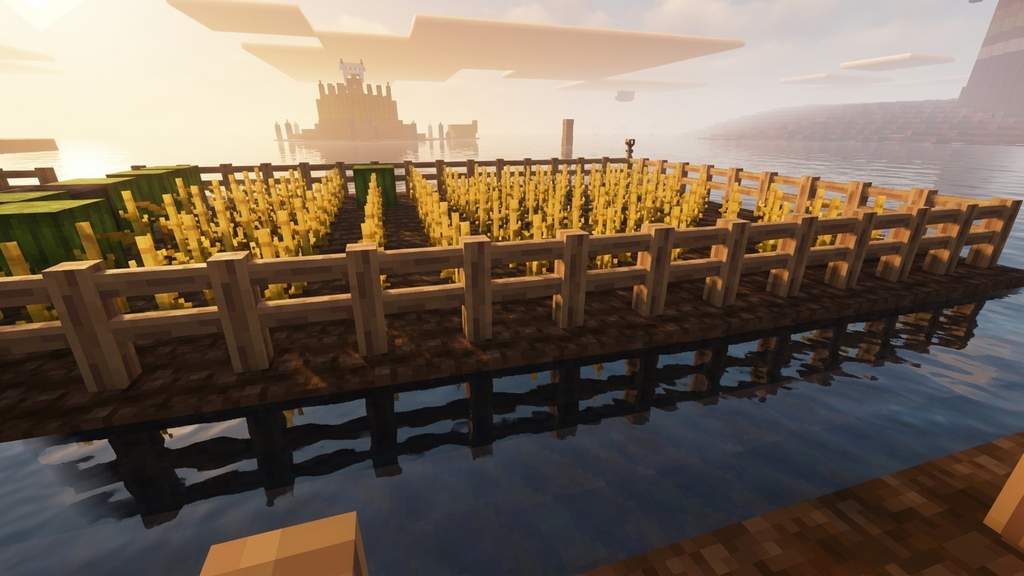
The Network
The Network, also called “The Internet” could be defined as a global computer network whose purpose is to allow the exchange of digital information between all its Users. Consoles are technically a different form of computer, so we must think in consoles iike if they where computers.
In this case the Internet would be a great source of information. It’s a powerful parallel universe that is difficult to define in simple words, where all kinds of things can be done, both common and unimaginable. It must be taken into consideration that all the resources that can be found on the Internet exist because some Humans in the past had voluntarily dedicated their time to generating them and storing them.
While there are no verified Army Men or Toykind trips to a Videogame World, videogames are a specific information format that contains universes within this universe. Although in reality several different types of files are required to make each of this video games worlds work, not just one file. In a single cartridge can be stored several files, all written in binary code, the language of Human computation.
Green Army scientists have verified that it’s possible to travel to this realities sending matter through a 3DO Interactive Player console, round trip. But it is considered very dangerous, in addition to not knowing the implications of being broken into pieces and then being rebuilt. Does the original individual die and the one that is returned is a copy? is the returned toy the original toy? No one in their right mind wants to try it for themselves.
How it works
Putting the Videogames discs or cartridges in the consoles and activating them, can transport individuals, one by one, to those worlds. In fact, it’s like a 3D Print reverse engineering, which decompose the Toykind composition and transforms them into digital data, which can then be reprinted later by the Portal when getting back to the physical world the toy come from (something like Sci-Fi transporters). So this way, in theory, videogame characters can be brought to the physical world via 3D Printing. But nobody tried this.
Portals in general are believed to work this way, taking all the information that makes up the toy, transporting it, and translating it into the world you are traveling to.
It can be one world by Videogame, or one world by Console. This is unknown and unexplored.
Methods of Entry into the Digital World
Toys can enter the Digital World through various methods, each with its own unique process:
1. Dimensional Portals:
Similar to the portals that transport toys to the Real World, Plastic World, Prehistoric World, Western World, Medieval World, and other realms, there are specific portals that lead to the Digital World. In theory these portals can be found in various locations within the Toyverse and allow toys to seamlessly transition between the physical and digital realms. But so far none have been found.
2. Essence Digitization:
In this method, a device digitizes the toy’s essence, leaving its physical body inanimate in the physical world. The toy’s essence travels to the Digital World, where it can interact with the digital environment. Upon returning, the essence is downloaded back into the toy’s physical body, reanimating it.
3. Disintegration and Reprinting:
Similar to the transporters in Science Fiction, this method involves the toy entering a portal and being disintegrated. The toy’s data is then transmitted to the Digital World. When the toy returns, it is reprinted into the third dimensional existence using a 3D printer, restoring it to its physical form. This method ensures that the toy can travel back and forth between the physical and digital realms without any loss of continuity.
One theory behind this method is that one could technically save the digital information of the toy’s configuration, which would allow the toy to be reprinted giving back any limbs the toy may have lost after saving its original configuration, and even printing infinite clones of the toy… but for security reasons, according to the conventions of the Army Men Alliance, after each re-entry into the physical world, this information must be destroyed (deleted or erased).
Powerful devices that are said to be able to transport you into the Digital World
The Videogame Console Portals can function as simple portals to physical spaces and to the digital spaces of the digital world. A 3DO Console in Toys in Space took Sarge & Tina Tomorrow to the Space World. As well as other unverified stories about other consoles in the past.
But consoles were generally known for telling the story of the Army Men in different formats. It is unknown how exactly this happens, if it was humans who did it and therefore if it is actually humans who rule the fate of the toys, in some way. All of this is beyond the understanding of the toys.
Known console examples


Although from reliable sources, all evidence and witnesses of these “console travel” events are merely stories from the perspective and experiences of the protagonists, and the scientific facts are merely speculative. Everything depends on the perspective and interpretation of the protagonists of the events, therefore the truth can be very different from reality.
Dangers and Ethics of Toys
This was not explored further more for the dangerous possibilities, and was prohibited for all Army Men and other Toykinds.
In theory, there are many Worlds/Universes, as well as alternative realities for each of them. So the same for every video game or video game version, making the possibilities almost infinite.
“Digital travel” could be a powerful weapon, digitizing the toy on one continent and reprinting it on another in a short amount of time. But of course, we obviously know that anyone in the Real World could be doing these activities and it won’t be known until it’s too late.
Using this system, in theory, videogame characters can be brought to the physical world via 3D Printing.
Even the barriers of time could be erased… saving the essence of a toy today to reprint it 1000 years in the future.
There are so many dangerous possibilities that toys in general have agreed to ban this technology.
Possible Reality Concepts & Explanations
Virtual Reality (VR):
Modern VR technology allows Users to immerse themselves in digital environments. The mechanics of VR can be used to explain how toys experience the Digital World.
Augmented Reality (AR):
AR overlays digital information onto the real world. This concept can be used to create hybrid experiences where toys interact with both physical and digital elements.
Quantum Computing:
The potential of quantum computing to process vast amounts of data quickly can be a basis for the advanced technology that powers the Digital World.
Digital Twins:
The concept of digital twins, where a digital replica of a physical object exists, can be used to explain how toys have digital counterparts in the Digital World. In theory, once you have the “recipe” for an object or toy, you can “cook” it as many times as you want, if you have the necessary ingredients. but only the toy, not the “soul” the toys call “essence”. Anti-Plastrification serum will make that job
Neural Interfaces:
Technologies that connect the Human brain to computers, can inspire the idea of toys interfacing directly with the Digital World through advanced technology.
User
From the perspective of a plastic soldier navigating the digital frontier, a User is any living being or toykind operating an avatar from beyond the screen. They are the external commanders residing in the physical world who project their will into the machine through physical hardware.
Defining the External Commander
- Physical Origin: Unlike NPCs and Bots born from lines of code, a User exists in the tactile realm of plastic, metal, wood, and flesh. They manipulate VR, buttons, keys, and joysticks to translate their real-world intentions into digital movement.
- The Puppet Master: A User is an unseen pilot occupying a virtual shell. While the digital body obeys the physics of the game, its spirit and tactical decisions come from outside the monitor.
- Unbound Creativity: Because they do not run on pre-written scripts or heuristic algorithms, Users possess true free will. They can ignore mission objectives, invent new rules, or act out of pure emotion, chaos, or curiosity.
In short, while NPCs and Bots are native citizens of the machine, a User is a visiting consciousness crossing the threshold from the physical universe into the digital battlefield.
BOTs and NPC
From the perspective of a Digital World architecture and artificial intelligence, NPCs and Bots are not identical entities, though they share the same foundational code. Both exist within virtual environments without User input, yet programming assign them entirely different purposes, processing priorities, and behavioral loops.
System Architecture and Purpose
- NPCs (Non-Player Characters): These entities function as structural components of a game world’s narrative and economy. Their code focuses on state machines, scripted dialogue trees, and fixed spatial routines to maintain the illusion of a living environment.
- Bots (Software Robots): These entities function as autonomous agents designed to emulate Human input and decision-making. Their algorithms prioritize real-time spatial awareness, pathfinding, and tactical execution to compete with or assist the late Human Users.
Processing and Behavioral Differences
| Computational Attribute | NPC (World Entity) | Bot (Player Emulator) |
|---|---|---|
| Core Objective | Execute narrative scripts, provide services, and populate environments. | Simulate Human mechanics, adapt to dynamic threats, and complete match objectives. |
| Decision Logic | Deterministic triggers, conditional flags, and pre-written dialogue branches. | Heuristic evaluation, neural networks, and real-time reaction matrices. |
| Environmental Interaction | Bound to specific zones, patrol routes, or static shop counters. | Navigates entire competitive maps using dynamic navmeshes and line-of-sight checks. |
| Resource Allocation | Optimized for low CPU overhead so thousands can exist simultaneously. | Requires higher processing power per unit to calculate aim, cover, strategy, etc. |
The Overlap in Digital Taxonomy
- Technical Hierarchy: Within the engine’s hierarchy, every Bot is technically a subclass of an NPC because neither receives input from a physical controller or keyboard.
- Functional Divergence: The distinction emerges at the runtime level. An NPC serves the world state by waiting for a User to trigger an event, whereas a Bot actively alters the match state by pursuing victory conditions independently.
- Modern Convergence: Advanced machine learning models are beginning to merge these two categories. Modern systems now deploy hybrid entities that maintain narrative roles while utilizing Bot-level tactical intelligence to react unpredictably to User disruption.
Difficulties in distinguishing them
From the trench of a plastic soldier crossing the monitor into digital realms, distinguishing between an NPC, a Bot, and a real User has become a high-risk, nearly impossible mission. Advances in artificial intelligence have erased the visual and behavioral borders on the virtual battlefield.
Camouflage on the Digital Battlefield
- The Evolution of Bots: They used to walk in straight lines and crash into walls, but modern systems mimic the mistakes, reaction times, and cover tactics of a real soldier.
- Unpredictable NPCs: They no longer repeat three looped phrases or stand frozen behind a counter. Now they react to the environment, flee from crossfire, and hold improvised conversations.
- The Undercover User: To make reconnaissance even harder, many Users deliberately walk in circles, stare at walls, or imitate robotic movements to deceive the enemy and launch a surprise attack.
On this digital terrain, the only way to know who is behind the weapon is to wait and see if they react with the cold logic of code or the chaotic cunning of a User.