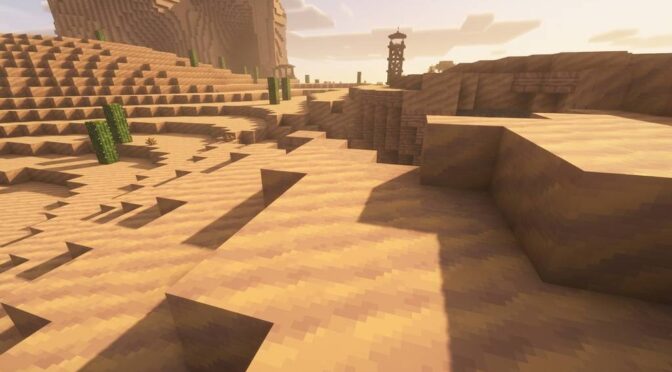
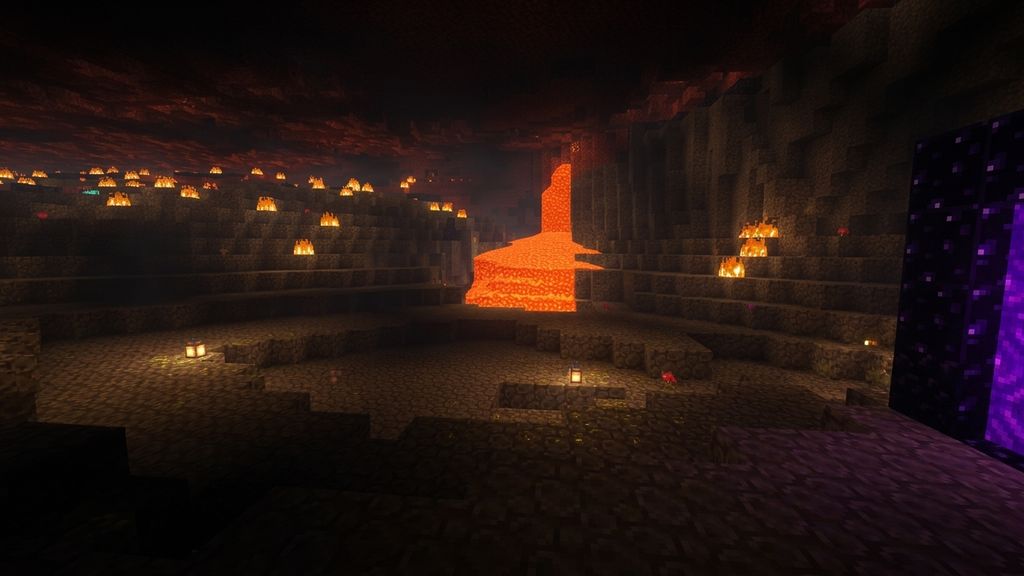
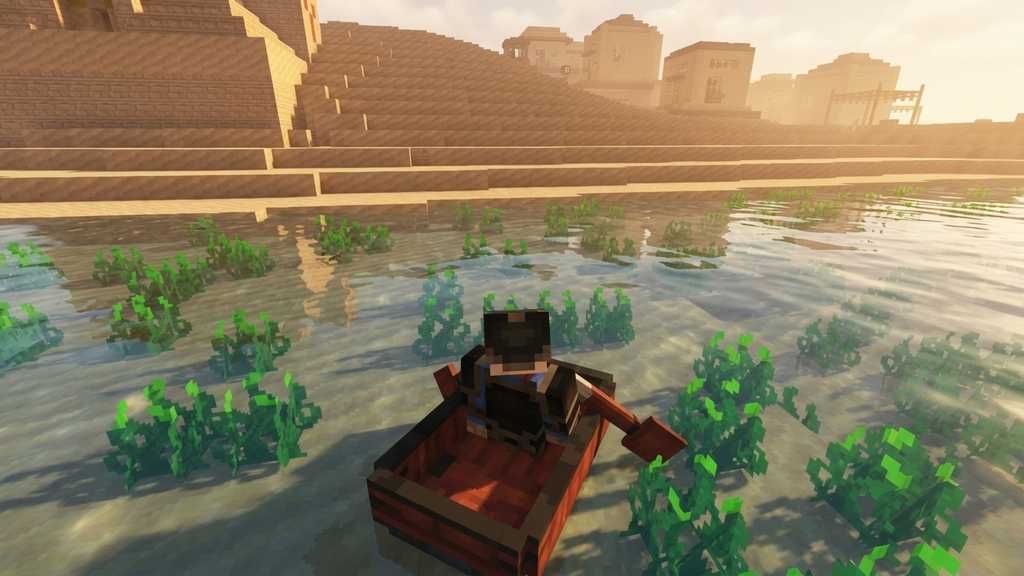
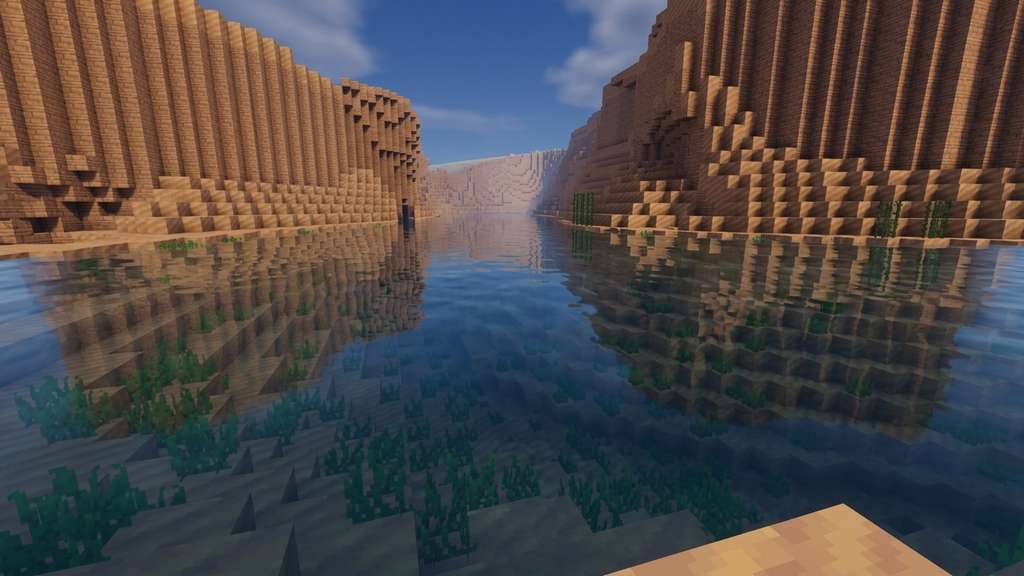
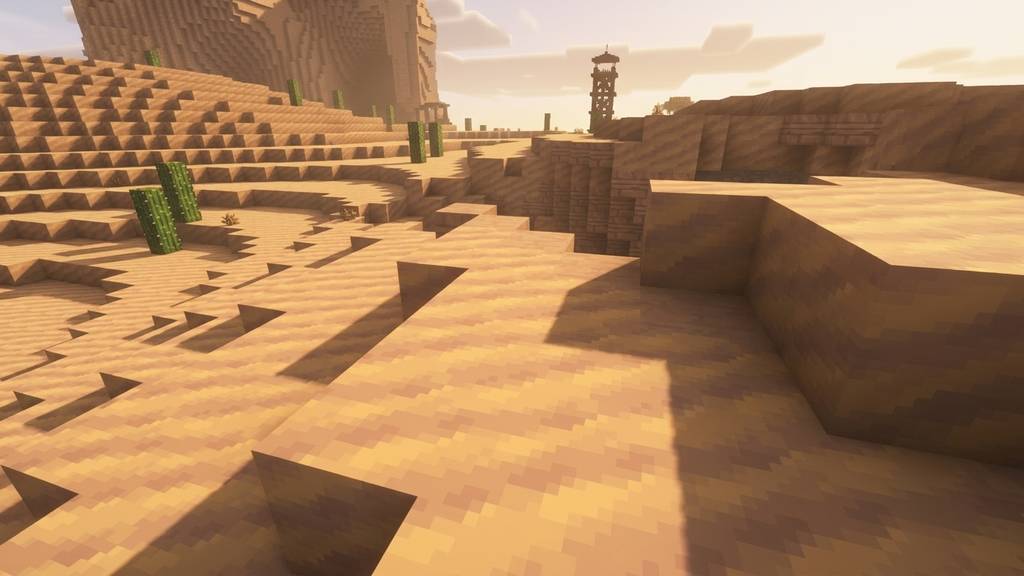
One of the most peculiar environments in the Digital World: a vast reality composed almost entirely of discrete, cubic units of matter known as voxels.
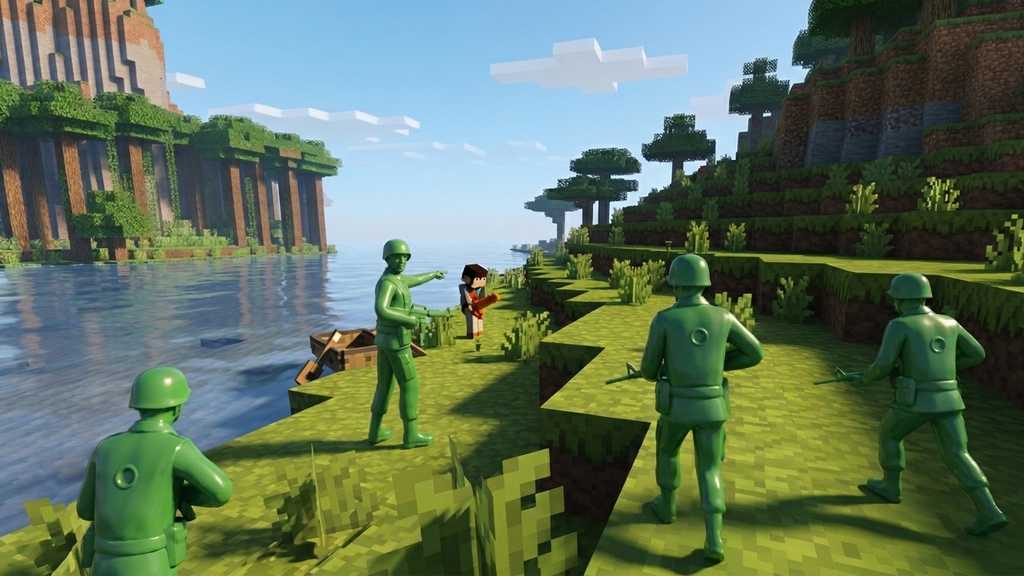
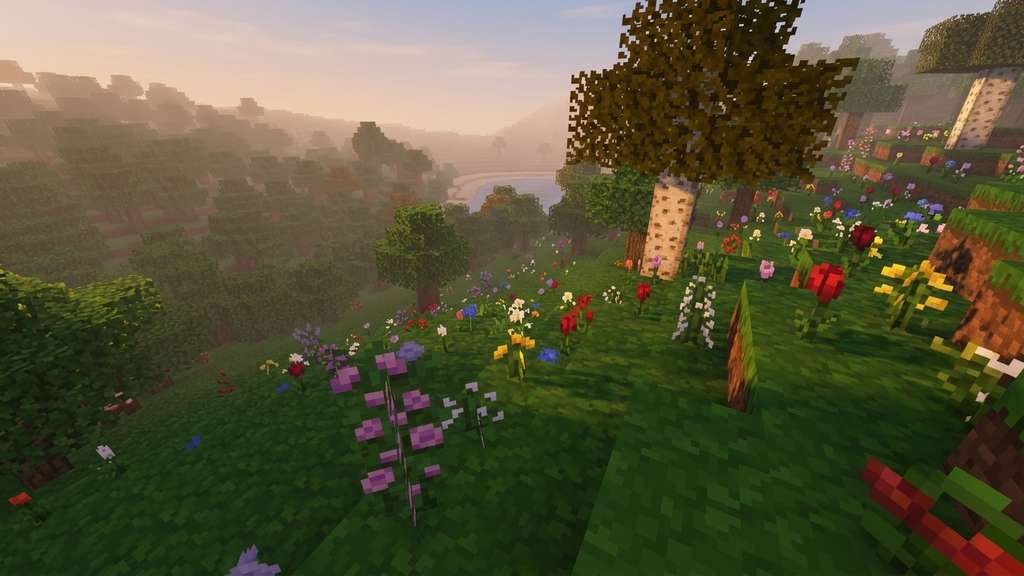
At first glance, it resembles a primitive fantasy world. Vast forests cover rolling hills, mountains rise from enormous plains, rivers flow toward oceans, villages and fortifications are scattered across the landscape, and countless creatures inhabit the wilderness. Its inhabitants live through farming, exploration, mining, construction, trade, combat, and survival.
Yet beneath this familiar appearance lies a physical system fundamentally different from that of RW or the PW.
In the Voxel World, voxels appear to be the fundamental building blocks of both the environment and, in some cases, life itself.
They are not merely visual representations or decorative cubes. They are the actual units from which the physical world is constructed.
- A tree is made of voxels.
- A mountain is made of voxels.
- The ground beneath a person’s feet is made of voxels.
- A house is made of voxels.
- A mine, a road, a fortress, and an entire landscape are all arrangements of voxels.
The world therefore possesses an unusual quality: almost anything can be taken apart and rearranged into something else.
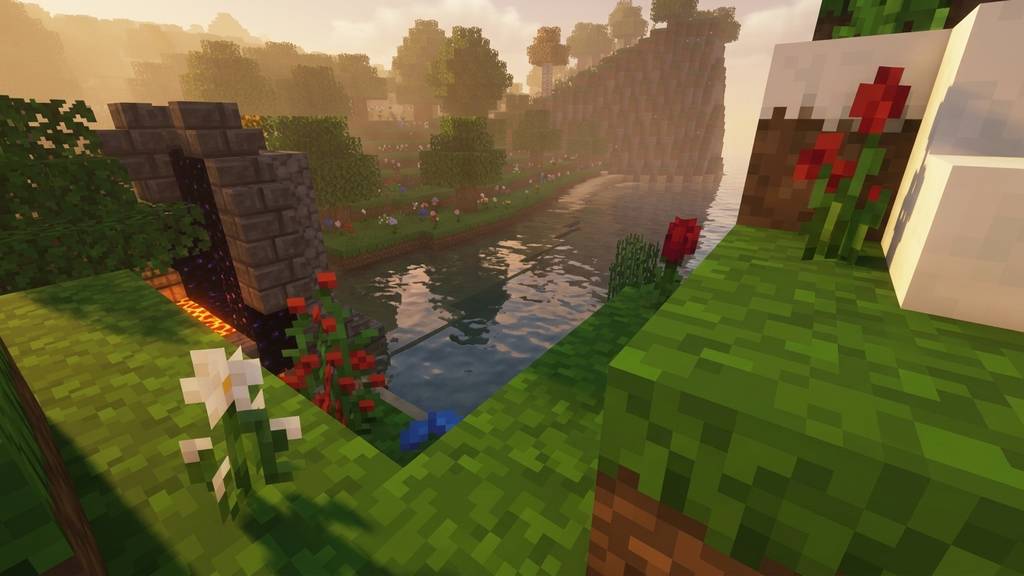
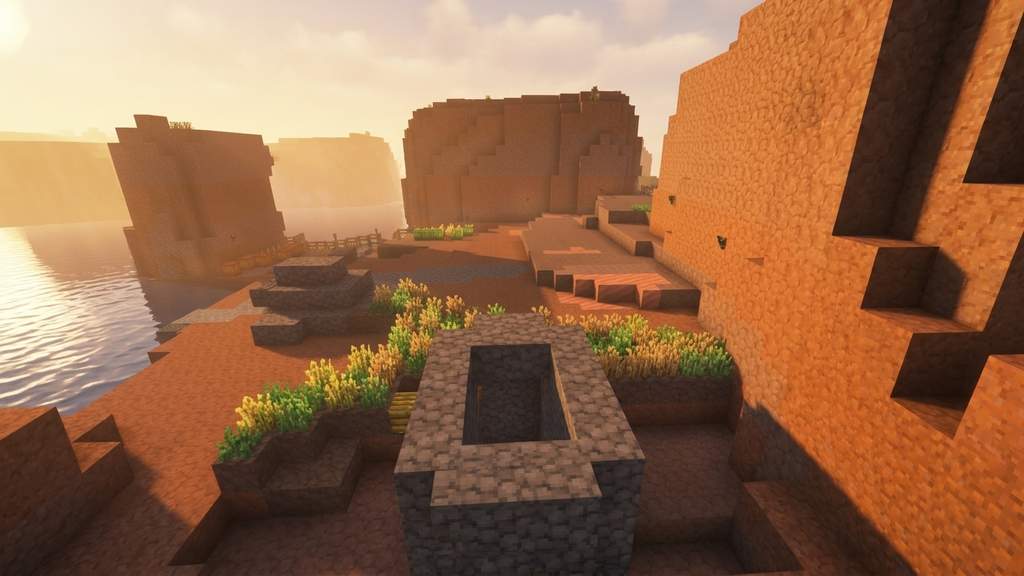
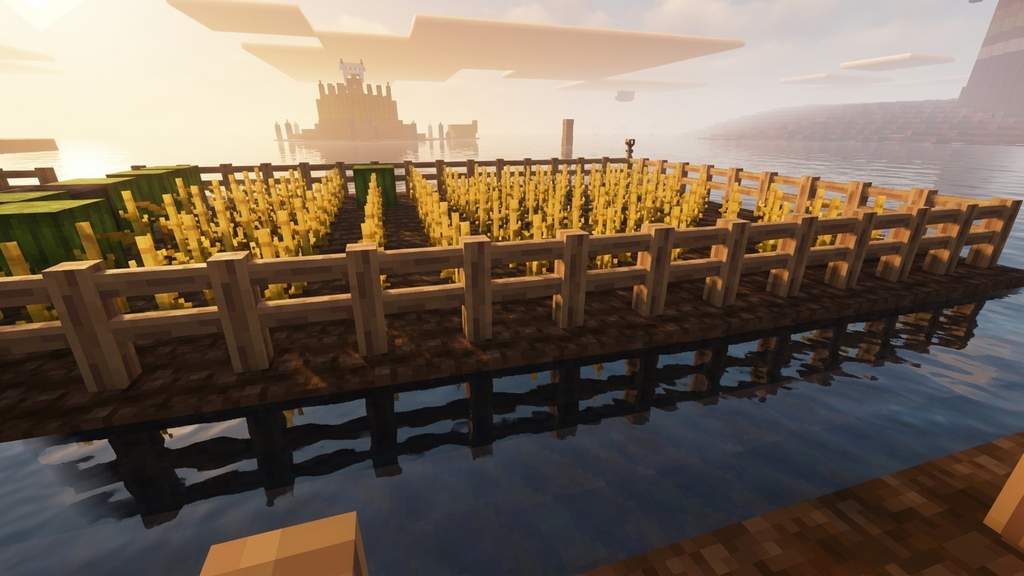
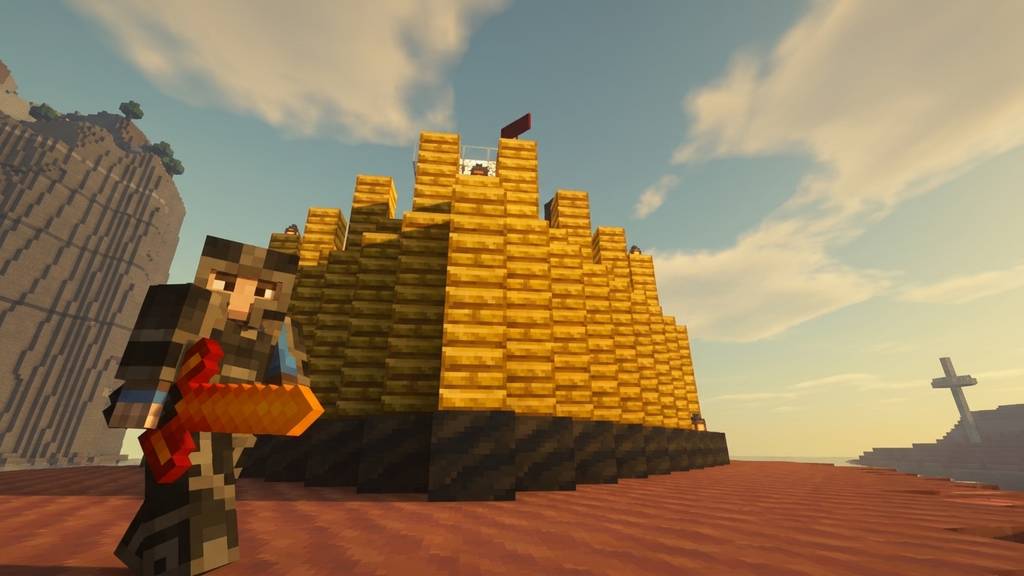
The Fundamental Unit
A voxel is a discrete portion of physical matter occupying a precise position within the world’s three-dimensional structure.
Different voxels possess different properties.
Some are soft and easily removed. Others are dense, durable, transparent, fluid, combustible, conductive, or otherwise specialized. Their appearance is only one indication of their nature; their physical properties determine how they behave when exposed to tools, forces, heat, water, gravity, or other materials.
- A voxel of soil behaves differently from a voxel of stone.
- A voxel of wood behaves differently from a voxel of metal.
- A voxel of glass behaves differently from a voxel of water.
- Yet all of them share the same fundamental principle:
they occupy discrete units of space and can become part of larger structures.
This is what makes the Voxel World fundamentally different from the continuous matter found in RW.
A mountain does not merely look blocky.
It is actually constructed from countless individual units of material.
A World Built from Material
The inhabitants of the Voxel World do not generally think of voxels as an extraordinary phenomenon.
To them, wood is simply wood, stone is stone, and soil is soil.
They may understand their practical properties without understanding the deeper nature of the system that produces them.
- A miner does not need to know why stone exists as discrete cubic units in order to break it apart.
- A builder does not need to understand the mathematical structure of the world to place blocks of stone.
- A farmer does not need to understand the world’s underlying digital nature to cultivate soil.
- The strange physics of the Voxel World has become ordinary to its inhabitants. It’s normal for them.
Mining
Mining is one of the most important activities in this world because the environment itself functions as an enormous repository of usable materials.
- A rock face can be dismantled one voxel at a time.
- Soil can be removed to expose the layers beneath it.
- Mountains can be excavated.
- Caves can be expanded.
- Entire underground networks can be created by removing material.
The process is not simply destructive.
When a material is successfully extracted, it can often be recovered and reused.
A piece of stone removed from the ground does not necessarily cease to exist. It can become a usable material, allowing the inhabitants to transform the original landscape into tools, buildings, defensive structures, roads, furnaces, storage areas, and countless other constructions.
Mining therefore represents a fundamental cycle within the Voxel World:
environment → extraction → material → transformation → construction.
The landscape is simultaneously the world’s natural environment and its largest source of raw materials.
Materials and Their Properties
Different materials possess different levels of usefulness.
- Wood can be harvested from trees and transformed into structural components, tools, containers, fuel for cooking and other objects.
- Stone can be extracted from the ground and used for construction, tools, fortifications, furnaces, and more durable structures.
- Metallic ores may be found underground, usually embedded within larger masses of stone. These ores can be extracted, processed, and transformed into useful metals to construct tools.
- Rare minerals can possess properties that make them valuable for advanced crafting or unusual constructions.
- Glass can be produced from appropriate mineral materials and used to create transparent structures.
- Organic materials can be obtained from plants and animals.
- Combustible materials can provide heat and light.
- Water and other fluids behave according to their own rules and can interact with the terrain, agriculture, creatures, and structures.
The important principle is that materials are not merely collected for their appearance. They form the vocabulary from which almost everything in the world can be constructed.
Crafting
The inhabitants have developed a systematic method of transforming raw materials into increasingly complex objects.
This process is commonly referred to as crafting.
Crafting is not magic, although to an outsider it might sometimes appear almost magical.
Raw materials are combined according to specific patterns and proportions to produce useful objects.
Wood can become boards and structural components.
Those components can become tools.
Tools allow more efficient extraction of other materials.
Those materials can then be processed into stronger tools.
Stronger tools allow access to previously inaccessible resources.
Those resources can be transformed into still more sophisticated equipment.
This creates a continuous technological progression based not on factories or industrial machinery, but on the intelligent rearrangement of the world’s fundamental materials.
The system is remarkably efficient because the distinction between resource and construction material is often very small.
A material extracted from the environment can frequently be transformed directly into something useful.
Reuse and Transformation
One of the most unusual properties of the Voxel World is the degree to which matter can be repurposed.
A forest can become a village.
A mountain can become a fortress.
An underground deposit can become tools and weapons.
A field can become a settlement.
A settlement can eventually become an enormous construction composed of thousands or millions of individually placed voxels.
The inhabitants are therefore not merely living within their environment.
They are constantly rebuilding it.
The distinction between nature and architecture can become difficult to maintain.
A natural mountain may be excavated into a mine.
A mine may become a settlement.
A settlement may be surrounded by walls.
Those walls may eventually become part of a much larger city.
The original landscape is gradually transformed into something new without necessarily losing the fundamental materials from which it was made.
The Physics of the Voxel World
The world’s physics are consistent, but they are not identical to the physics of RW.
Gravity exists, but not every material behaves exactly as it would in the Real World.
Solid terrain can remain suspended in configurations that would be impossible under conventional structural physics.
Large masses of earth or stone can sometimes exist without collapsing.
Fluids follow their own simplified rules.
Fire behaves according to the world’s particular physical laws.
Plants grow according to processes that are recognizable but often remarkably efficient.
Objects can occupy discrete positions and maintain forms that would be structurally impossible in a continuous physical environment.
The world is therefore not physically arbitrary.
It simply operates according to a different set of physical assumptions.
Those assumptions are so consistent that its inhabitants can build an entire civilization around them.
Time and the Natural World
The Voxel World possesses recognizable cycles of day and night.
During daylight, the wilderness can appear peaceful.
Forests, plains, mountains, rivers and villages form an enormous interconnected landscape.
At night, however, parts of the world become considerably more dangerous.
Creatures adapted to darkness emerge from wilderness, caves and other locations, making exploration beyond protected settlements increasingly hazardous.
Light therefore has practical importance.
It is not merely decorative.
Artificial illumination can define the boundaries between safe and dangerous spaces, particularly underground.
This contributes to one of the world’s most distinctive rhythms:
Exploration by day, preparation and survival by night.
The Underground World
What exists beneath the surface is almost as important as what exists above it.
The apparently simple landscape hides enormous underground regions.
Miners can descend through layers of stone, discovering increasingly valuable resources, natural caverns, underground water, rare materials, abandoned structures, and dangerous creatures.
The deeper regions of the world can become almost completely disconnected from the peaceful surface.
A person can begin the day standing in a quiet village and, after descending through a narrow mine shaft, find themselves in an enormous subterranean environment with no obvious connection to the world above.
The underground is therefore not simply a source of minerals.
It is another part of the world waiting to be explored.
Construction
Because voxels are the fundamental units of the environment, construction is extraordinarily flexible.
A structure can be built by placing individual units of material exactly where they are needed.
Simple shelters can be created in minutes.
More ambitious builders can construct houses, farms, bridges, towers, castles, underground bases, monuments, roads, defensive walls, and entire settlements.
There is effectively no single architectural style.
The material available, the creativity of the builder, and the physical rules of the world determine what can be created.
A civilization capable of manipulating voxels on a large scale could theoretically transform enormous portions of the landscape.
The world is therefore both environment and building material.
Creatures and Life
Life in the Voxel World follows the same unusual physical logic.
Animals and other creatures inhabit the landscape as naturally as plants and terrain.
Some are passive.
Some can be domesticated or used as resources.
Others are dangerous and actively threaten inhabitants.
Their bodies may appear to follow the same geometric principles as the rest of the world, yet they behave as living organisms.
This raises one of the great mysteries surrounding the Voxel World:
Are its living creatures constructed from voxels in the same fundamental way as the rest of the environment?
If the answer is yes, then the distinction between matter and life in this world may be far less significant than it is in RW.
Perhaps voxels are not merely the building blocks of objects.
Perhaps they are the building blocks of life itself.
A World That Can Be Rebuilt
The most remarkable property of the Voxel World may ultimately be neither its creatures nor its landscapes.
It is the fact that its inhabitants can physically modify reality itself.
They do not merely build on top of the world.
They can remove portions of it.
They can replace them.
They can combine its materials.
They can reshape mountains, redirect water, clear forests, excavate underground spaces, construct settlements and create entirely new environments.
A person can take pieces of the natural world, transform them, and use them to construct an artificial world of their own.
In this sense, every builder becomes a small-scale creator.
The boundary between discovering the world and creating the world is almost nonexistent.
A Different Kind of Reality
To someone accustomed to RW, the Voxel World may initially appear primitive.
Its technology is limited.
Its civilizations are generally pre-industrial.
Its architecture often resembles medieval fantasy.
Its inhabitants rely heavily on manual labor, agriculture, mining, crafting, and exploration.
But this interpretation misses the most important fact.
The Voxel World possesses a form of physical manipulation that would be extraordinary even by the standards of advanced technology.
Its inhabitants can dismantle the substance of the world and reconstruct it according to their own designs.
They simply do not regard this as extraordinary.
It is the normal condition of existence.
Visitors and the Laws of the Voxel World
A visitor entering the Voxel World does not bring the physics of their original reality with them.
Once inside, they become subject to the laws of the world they have entered.
This applies to Toykind as well.
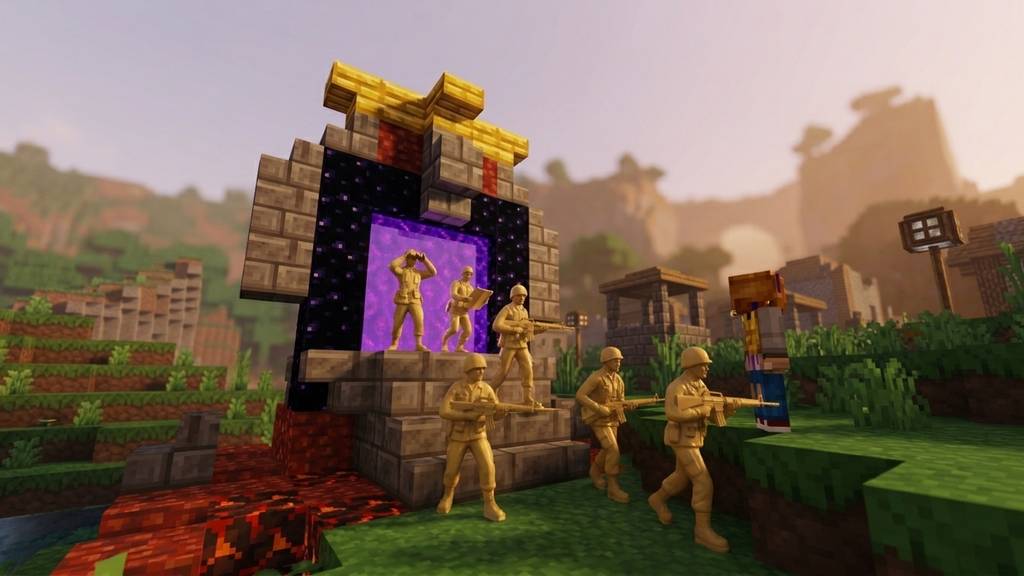
An Army Man entering the Voxel World would still possess their identity, memories, intelligence, and personality, but their physical existence would be governed by the voxel-based reality surrounding them.
The same would apply to any other physical toy.
Their interaction with terrain, gravity, materials, fluids, fire, tools, creatures, structures, and other physical phenomena would follow the rules of the Voxel World.
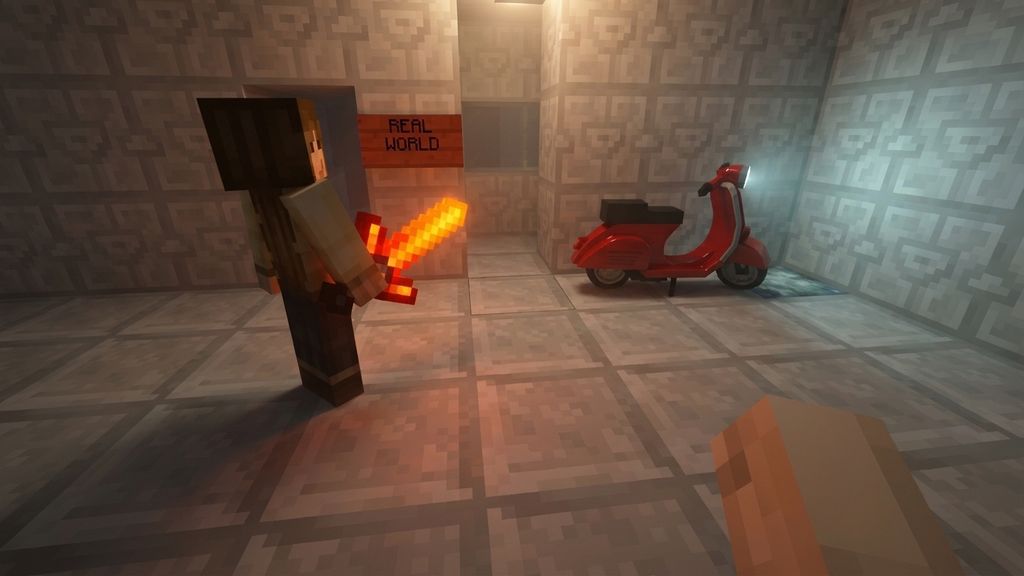
Whether the visitor retains their original physical appearance or undergoes some form of voxel-based translation is still unknown.
Either way, the world itself has the final say over how physical reality behaves within its boundaries.
A soldier made of molded plastic may enter as a physical object from another world, but once inside, he is no longer operating under RW’s physical rules.
He is operating under the rules of the voxels.
Portals and Digital Translation
Access between the Voxel World and other realities can occur through digital portals, similar in principle to the portals already encountered by Army Men when traveling into Digital Worlds.
These portals do not simply open a physical doorway between two locations.
They operate by translating physical existence into digital information.
When a physical being enters such a portal, the matter composing the individual is effectively converted into a digital representation containing the information necessary to reconstruct that individual within the destination world.
The process is therefore less like walking through a door and more like being translated from one form of existence into another.
A physical Toykind entering a digital portal may be broken down into information, transmitted through the digital environment, and reconstructed once the destination is reached.
The reverse process is also theoretically possible.
A digital entity could potentially be translated into physical form if an appropriate portal or reconstruction system existed.
This is consistent with the portal technology already encountered by Army Men, where a physical individual can enter a digital environment and later return to physical reality.
However, the Voxel World introduces an additional complication.
Once a visitor has entered, the laws of the Voxel World take precedence.
The visitor’s existence must be translated into a form compatible with the world’s voxel-based physics.
An Army Man, for example, may enter the Voxel World as a physical plastic soldier, but once inside, gravity, movement, interaction with materials, damage, construction, and every other physical process affecting him are governed by the laws of the Voxel World.
The portal therefore does not merely transport a person.
It establishes a temporary bridge between two fundamentally different physical systems.
Whether the visitor is converted into voxels, represented through another compatible digital structure, or somehow remains physically distinct while being governed by the world’s rules remains unknown.
The inhabitants themselves may not possess the knowledge required to explain the process.
They only know that the portals work.
The Great Unknown
Nobody knows exactly what the Voxel World is.
It may be one enormous digital reality.
It may be a collection of related worlds.
It may contain countless independent regions, instances, or environments.
It may be generated continuously.
It may have existed long before anyone from outside discovered it.
It may even be only one part of a much larger system of digital realities.
What is certain is that it is not merely a representation of a world.
For those who inhabit it, it is their world.
And at its deepest level, everything within it appears to depend upon one extraordinary principle:
Voxels are the fundamental units from which reality is built.
Portals and Other Realms
The Voxel World is not necessarily limited to the environment of its surface and underground regions.
Scattered throughout the world are structures and phenomena capable of opening portals to other environments.
These portals are not all identical. Different portal structures appear to connect the Voxel World to different realms, each governed by its own environmental conditions, materials, creatures, and physical characteristics.
Some destinations may resemble altered versions of the Voxel World itself. Others can be radically different environments, following rules that would be impossible on the surface world.
The inhabitants generally understand these portals through observation and tradition rather than through a complete scientific explanation. They know that certain structures can function as gateways, but the exact nature of the places beyond them remains poorly understood.
From the perspective of the Army Men, these portals bear a striking resemblance to the dimensional gateways they have encountered elsewhere in the Toyverse. They appear to provide a means of translating or transporting an individual from one environment into another, although the exact mechanism may differ from portal to portal.
What makes the portals particularly significant is that nobody knows exactly how many alternate realms are accessible through them.
There may be only a small number of known destinations.
There may be many more that have never been reached.
Some may be inaccessible under normal circumstances.
Others may require particular conditions, materials, structures, or locations before they can be activated.
It is even possible that some portals do not always lead to the same destination.
The full network of these realms remains unknown.
More importantly, there is no certainty that all of these destinations belong exclusively to the Voxel World.
It is possible that some portals connect to completely different regions of the Digital World.
There is even speculation that, under the right circumstances, a portal could provide access to worlds outside the Digital World entirely.
Could one of them lead to the Real Wold?
Could another connect to Plastic World?
Could there be a route to some other Toykind world that has not yet been discovered?
Nobody knows.
The existence of portals therefore raises a much larger possibility: the Voxel World may not be an isolated digital reality, but one point within a much larger network of worlds.
For its inhabitants, these gateways are mysterious entrances to places beyond their known reality.
For outsiders, they may represent something even more significant: evidence that the boundaries separating the different worlds are not as absolute as they appear.
Hawk’s Diary
“When I first appeared in the Voxel World, my initial experiences convinced me that I was the absolute center of the universe. The terrain unfolded before my eyes, and I found myself immersed in a pristine, seemingly tranquil wilderness, completely devoid of tools, shelter, or food. In those first few minutes, it felt like a blank slate. I followed the fundamental survival cycle common to any such world: I chopped down my first tree, crafted wooden tools, and threw together a makeshift shelter to protect myself before nightfall… barely surviving that first night. It was an entirely new world to me; I had never heard of it before. This opening chapter made me feel like the creator, the very first inhabitant, and the undisputed protagonist of a story that was only just beginning to be written.
However, this illusion of isolation and primacy shattered abruptly as soon as I decided to explore the world. First, I ventured underground, where I discovered an abandoned mine. In that precise moment, the atmosphere of the world shifted completely. I was no longer a settler in an uncharted land; I had become an intruder, walking upon the ruins left by someone else.”
Hawk’s diary notes that this shift in perspective occurs because the mines cannot be explained away as a mere quirk of the world’s natural, algorithmic generation. As you delve deeper, you encounter elements that clearly imply prior intent:
- Tunnels, expertly excavated and reinforced with wooden beams.
- Railway tracks, laid out logically for the transport of materials.
- Chests, left forgotten in the darkness and filled with resources that someone had gathered and stored away.
The presence of these tangible remnants transforms an ordinary cave into a living archaeological site. Like the visitor, you are no longer discovering a brand-new world; you are walking in the footsteps of an event (or a society) that existed long before your arrival. SOMEONE ELSE WAS THERE. The visitor to the Voxel World is forced to come to terms with a reality… Uncomfortable and fascinating: you are not the beginning of the story; you are simply the one who came after.
Clues in the Surfaceworld and on the surface
The disturbance that began underground did not take long to manifest in the sunlight. Hawk’s journal notes:
“There is no need to look for ghosts in the machine or resort to local myths to understand the mystery of this place; the true anomalies are in plain sight, scattered across the surface of the Surfaceworld. Upon emerging from the tunnels and exploring the outer crust of this voxelated world, the sense that someone had walked these paths before became undeniable.
My steps first led me to settlements that defied my solitude: villages. At first glance, they appeared to be oases of normalcy:
- Structured houses and laid-out paths connecting the homes.
- Organized crops and workstations designed for efficient production.
- Native inhabitants moving about with a functional routine, entirely unaware of my arrival.
But the true unease returned when I stumbled upon the vestiges…” (of what the journal describes as silent catastrophes.)
“I found exact replicas of these settlements, but completely ‘zombified’. They were ghost towns with dilapidated houses, paths overgrown with weeds, and cobwebs choking the interiors. The Voxel World never hands you a scroll explaining what transpired in those dark corners. True to its nature, the environment merely presents the stark aftermath of a tragedy, leaving you to imagine the causes.
My bewilderment only grew when I stumbled upon the ruins of ancient pathways. Partially buried under the weight of eons, these structures serve as the ultimate puzzle for any explorer.”
In his notes, Hawk points out that this world employs a form of reverse storytelling: in a conventional chronicle, you first meet the characters and only later discover their works; Here, you unearth pottery shards, incomplete foundations, and paths that lead nowhere… with no clue as to who their creators might have been.
“The final blow to my understanding of the surface was the discovery of ruined portals. Yes, portals! Like those in Plastic and Real World. This wasn’t merely some medieval hut, worn down by the passage of time; it was the skeleton of an incomprehensible technology: an amalgam of dark blocks and strange materials that looks like once served to connect entire dimensions.”
The destroyed portal screams a truth that Hawk’s journal underscores with insistence: something was once whole; someone once mastered space and time… and now, only a useless remnant remains.
“We arrived too late to witness the golden age, but just in time to inherit the ruins.”
Colossal Structures and Alternative Dimensions
The scale of this hidden past ceased to be a mere mystery of buried pathways, becoming instead a monumental and intimidating truth the moment exploration required descending into the deepest depths or crossing dimensional thresholds. Hawk’s journal documents that the true weight of the Voxel World’s history is not measured in scattered blocks, but in the vastness of its colossal complexes.
“Far beneath the surface, where sunlight is a forgotten myth and the ‘Deep Dark’ devours every sound, I stumbled upon a void. Yet, this was no ordinary void left by a natural cavern. Before me lay an Ancient City: a structure of titanic proportions, buried under tons of stone. It is no mere ruin; it is an entire subterranean metropolis.
It features monumental corridors, solemn buildings, and towers that scrape against the rock ceiling… all defined by an architecture so symmetrical and organized that it defies any notion of chance. And yet, it lies deserted. A colossal city, designed to house thousands, now completely silent.”
Hawk’s notes coolly distinguish facts from speculation: the undeniable truth is that the city exists and stands abandoned. Everything else remains a series of questions that the Voxel World refuses to answer, using that very absolute void to cultivate a stifling sense of intrigue. But the underground held an even more unsettling secret: the Strongholds.
“The Strongholds hidden beneath the Overworld completely shattered my preconceptions. As I traversed their stone-brick corridors, their cells, and their vast, dusty libraries, I reached the central chamber—a room suspended over lava that housed a portal to the “End”.
It was a direct blow to my ego as an explorer. I hadn’t discovered the existence of another dimension through my own ingenuity; I had merely stumbled upon a gateway that someone else had already designed, constructed, and prepared for passage. Someone else knew the path to the End long before I even existed on this plane.”
Hawk notes that this discovery strips the visitor entirely of their role as the creator or conqueror of the environment. You cease to be the king of the world, forced instead to accept that you are nothing more than a late-arriving tourist. This realization was further confirmed upon crossing the threshold into the Nether, proving that this other dimension, too, was not some blank canvas waiting to be claimed.
“The Nether is no barren wasteland that sprang into existence just to await my arrival; it was already teeming with its own life and its own historical traumas. In that basalt-filled hellscape, I encountered sprawling fortresses and colossal bastions. The latter are no mere crude decorations: they are massive, highly organized infrastructures, defended by armies of Piglins and structured with treasure chambers and defensive walls that served specific military and residential functions.”
The journal concludes this section with a warning against jumping to hasty conclusions: it would be both too easy and fundamentally incorrect to attribute all these mega-structures to a single, fallen empire. The Voxel World is far more complex. They could represent distinct cultures, forgotten wars, or eras separated by millennia—civilizations that never even knew of one another’s existence, now unified only by dust and abandonment.
Layers of History and the Role of the Imagination
The immensity of the colossal structures posed a new enigma, one that Hawk’s journal quickly recorded: time in this universe does not move in a single direction, nor does it belong to a single narrative. As he ventured further, the environment began to reveal that its past was not written in a closed book, but rather accumulated in layers—demanding that the visitor’s own mind connect the dots. The obvious conclusion: there had been visitors in the past—travelers who, like him, had visited this world—but there might also be travelers from the Voxel World visiting other realms, or perhaps even groups that migrated to other worlds long ago.
“One discovery shattered any attempt to calculate the age of this world in a linear fashion: the fossils. Deep within the deserts or across the ‘valleys of souls’ in the Nether, monumental ribcages and gigantic skulls—composed entirely of bone blocks—emerge from the ground. These are neither temples nor factories; they are the organic remains of titanic creatures that no longer roam the surface.
The mathematical equation is crushingly simple: for a fossil to exist, a life had to begin, develop, die, and remain buried for eons beneath the weight of the blocks. We arrive only at the very end of that biological cycle.”
In his notes, Hawk observes that the Voxel World deliberately avoids providing an official chronology. Instead, the world prefers to superimpose layers of history—much like real-world locations, where a medieval settlement might be built atop Roman ruins, which in turn lie over tools from the Stone Age. In this landscape, a ruin could easily be a thousand years younger than the mine that lies beneath it.
“The archaeology mechanics in this place reinforce an overwhelming sense of temporal displacement. When you use your brush on gravel or suspicious sand, you aren’t merely scavenging for a useful item; you are unearthing a shard of broken tableware—a fragment of pottery adorned with an ancient pattern.
In the real world, an archaeologist doesn’t stumble upon an intact empire complete with an explanatory manual; they find fragments and attempt to reconstruct the full picture. The Voxel World operates in much the same way: it compels you to piece the story together in reverse. You encounter the creation without ever knowing the creator.”
The journal notes that this design shifts the entire burden of narrative onto the explorer. The world grants you absolute freedom in how you perceive your surroundings: you might enter an abandoned mine and view it solely as a convenient source of wood and iron—or you might pause before a twisted rail and wonder who pulled the trigger that led to the evacuation of that tunnel.
“Two travelers could stand before the very same Ancient City and emerge with entirely different realities in their minds. One might imagine a magical empire wiped out by the Warden; another might envision various nomadic tribes seeking refuge from the surface at different points in time; a third might simply ignore these questions and loot the chests. And the most unsettling part is that, within the logic of this world, none of them is wrong.”
Conclusion: The Newcomers as Part of the Cycle
The journey through the strata of the Voxel World finds its destination not in a definitive answer, but in a revelation regarding the explorer’s own identity. Hawk’s journal concludes with a blend of humility and wonder, realizing that the mystery persists—not due to a flaw in the design, but because the enigma itself is the true driving force of this universe.
“If someone were to demand an entirely honest answer as to what exactly transpired in this world before my arrival, the only valid response would be to confess that we do not know. And perhaps, we were never meant to know.
We know the structures were there before we took the Portal to the Voxel World; we know of the existence of mines, destroyed portals, fortresses, and monumental fossils. But we don’t know how the pieces of the puzzle fit together. The Voxel World doesn’t possess a perfectly ordered past, but rather the chaotic remnants of many broken histories. That makes that world feel infinitely older than any number of days or figures visited.”
Hawk’s notes suggest that gaps in narrative are crucial. When a chronicle explains absolutely everything, the imagination dies; conversely, when you’re given only disconnected fragments, your mind works tirelessly to fill in the darkness. That’s why these voxelated ruins remain magnetic after so many years: not because they conceal a secret answer waiting to be discovered, but because they never quite manage to give you one.
“Yet, the most unsettling discovery of my entire expedition did not occur within an Ancient City or the bastions of the Nether. It happened when I looked at my own hands—and at the blocks I had placed to build my base.
I realized that we—the newcomers—are also leaving behind those very same traces. When I raise a stone wall, design an automated farm, or build a city from the ground up, I am engaging in the exact same behavior as those forgotten civilizations. I am altering the environment.” “I am leaving a physical trail on the map.”
Hawk’s journal concludes with a reflection that redefines the purpose of exploring this world, transforming the visitor’s solitude into an eternal connection with the past of the Voxel World.
“The terrain doesn’t change; what changes is the perspective of the one who walks it. At the end of the day, my current refuge will be tomorrow’s ruin for the next sailor who appears on this shore without tools. I am not the owner of the world, nor its first architect, nor the chosen hero of a prophecy. I am simply the next in line. I am the next to leave something behind.”
Behind the scenes:
Voxel World is heavily based on Voxelibre and its game engine, Luanti, both of which are, in turn, strongly influenced by Minecraft. Luanti is an open-source, free game engine designed for voxel-based video games, remaining legally distinct from Minecraft.