
Known across multiple battlefields as “The Orange Man”, is one of the most unusual figures ever molded within the Plastic World

Officially, he is nothing more than a standard G1 infantry unit belonging to the Orange Army. Unofficially, he is something far more difficult to define.
There are no clear records explaining when his designation stopped being relevant and his name began to circulate. At some point, soldiers simply stopped referring to him as a unit and started referring to him as a presence.
“The Orange Man” is not a rank and it is not a title granted by command… It is something that emerged on its own. And once it appeared, it never went away…
Army Alignment

Carl Ray operates under the Orange Army, a faction that rarely commands attention in large-scale conflicts. They are not known for overwhelming force, strategic dominance, or technological advantage. More often than not, they are overlooked. Carl Ray is the opposite of that.
Within a force that is frequently ignored, he stands as something impossible to ignore. His existence alone shifts the perception of the entire army. Where others see a minor faction, those who have encountered him see a variable they cannot account for.
The Orange Army does not rely on him. But his presence ensures they are never dismissed entirely.
Personality
Carl Ray is a man of very few words. His personality is defined not by what he says, but by what he does. And more importantly, by what happens around him.
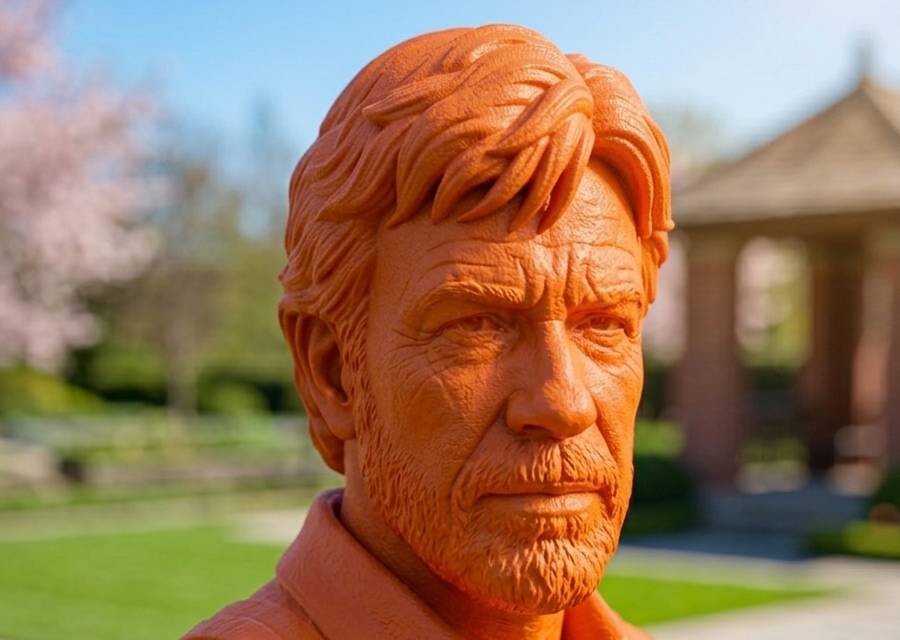
He carries himself with complete certainty. There is no hesitation in his movement, no visible doubt in his decisions. He does not question outcomes, and he does not appear concerned with probability.
If something needs to be done, he does it. There is a calmness to him that borders on unnatural. Even in the middle of active combat, surrounded by chaos, his behavior remains steady and controlled. He does not react emotionally. He does not escalate. He simply advances.
There is no visible need for recognition. He does not seek attention, yet attention follows him regardless. Others speak about him constantly, often exaggerating, often speculating, but he never confirms or denies anything. He allows the stories to exist.
Combat Behavior
Being an orange belt in several forms of martial arts, Carl Ray’s combat style is direct, efficient, and overwhelmingly physical. While he is fully capable of using standard-issue weaponry, he does not depend on it. And ironically, he completely despises Gun Fu (a martial art that combines hand-to-hand combat with the use of firearms).
Close combat is where he becomes most effective. His movements are precise, controlled, and minimal. There is no wasted motion. Each action serves a purpose, and each encounter ends quickly. Opponents rarely have time to react, let alone adapt.
He does not fight like a soldier trying to win. He fights like the outcome has already been decided.
There are multiple reports of him engaging enemies without taking cover, without retreating, and without adjusting his pace under pressure. None of these behaviors seem to put him at risk. If anything, they appear to work in his favor.
Early Records


Carl Ray’s earliest appearances do not suggest anything extraordinary. He was deployed as part of standard Orange infantry units, operating within expected parameters during the late Great World War.
That changed during an early engagement against Tan forces during the Tanic-Greeno conflicts.
During the first Tan invasion of the Orange Nation, the defense operation failed. Communications were lost. His entire unit was declared inactive. But several hours later, Carl Ray exited the combat zone alone.
There were no visible signs of damage. No indication of injury. No explanation for what had occurred inside. But the opposing force in that area had been completely neutralized.
This was the first moment where reports began to deviate from standard documentation. His name started appearing separately from unit logs, often accompanied by uncertainty, incomplete data, or direct contradictions.
Although there are never any enemy witnesses left to testify, painted messages have been found that say “Ray was here.” It remains a complete mystery whether he is the author or not.


Emergence of the Legend
Over time, Carl Ray became less associated with structured deployments and more with situations that should not have had survivable outcomes: He appears where he is not assigned. He intervenes where no support was expected. He resolves conflicts that had already been considered lost.
No command structure officially directs him. No system reliably tracks him… And yet, he is consistently present at critical moments. This is where the stories begin.
The Orange Stories
Although his legendary status belongs to the ’80s and ’90s (RWT), and he has now been forgotten (young Army Men don’t even know who he is), his stories have survived the passage of time in the form of metaphors.
Since the Orange Nation is a nation about which little is known (given the lack of general interest) among Orange soldiers, Carl Ray is no longer discussed as a regular unit… but a Legend, a myth. He is spoken about through a collection of statements, observations, and accounts that blur the line between report and myth.
Some of the most repeated claims include:
- He does not take cover; the battlefield reshapes around him.
- Weapons do not run out of ammunition in his hands.
- He has cleared fortified positions without firing a single shot.
- Opponents hesitate before engaging him, even when they have the advantage.
- Time seems to stretch in his favor during combat.
None of these statements are officially verified. None of them are dismissed either. But they persist because no one has been able to disprove them.
Presence and Effect
Carl Ray does not behave like a leader, yet his presence has a measurable impact on those around him.
Units that fight alongside him report:
- Increased confidence
- Reduced hesitation
- A sense of inevitability
He does not give orders. He does not coordinate. But once he is present, doubt tends to disappear… not because he explains anything, but because his actions remove the need for explanation.
Later Years

As time progresses, Carl Ray does not deteriorate in the way typical G1 units do. Instead, his behavior becomes even more refined.
He moves less, yet accomplishes more. He speaks less, yet is understood more clearly. He engages less frequently, yet with greater impact.
Aesthetically, he underwent changes, especially in his physique. Because of this and other signs, the orange-clad news tabloids have theorized that Carl underwent the Super Soldier program… but when this information was requested to the Green Army, there was no statement, nor is there any declassified documentation on the matter.
There is a noticeable shift in how he approaches conflict. Earlier encounters show a more direct and constant engagement style. In later records, he appears only when necessary, intervening at precise moments.
It is as if he has learned not just how to fight… but when not to. He no longer feels like part of the battlefield. He feels like something the battlefield revolves around.
Legacy
Carl Ray’s legacy is not built on documented victories alone, but on the way he is perceived across the Plastic World.
To the Orange Army, he is a symbol of relevance… proof that even the most overlooked force can produce something unmatched.
To opposing factions, he is an inconsistency. A variable that cannot be predicted, measured, or contained. His existence challenges structure, expectation, and logic.
He is not the strongest unit ever created. He is not the most advanced. He is not the most strategic. And yet, outcomes continue to favor him.
Final Observation
There are no confirmed records of Carl Ray being defeated. There are, however, numerous reports that end abruptly the moment he becomes involved. No conclusions. No follow-up data. Just silence.
Orange Man is not a rank. It is not a title granted by command. It is something that emerged on its own. And once it appeared, it never went away.

Behind the scenes:
Of course, there’s no need to specify that this character pays homage to Chuck Norris. Originally, he was going to be Green… but we decided to prioritize orange, since he was basically a redhead (and redheads actually have orange hair) and redheads need representation too LOL.
Its physical base is Sarge Hawk’s body. The helmet is a fairly common one, since the idea is that he doesn’t use it much.


Green color renders during development (before changing his color army to Orange)


Evolution from common plastic soldier to Super Plastic Soldier