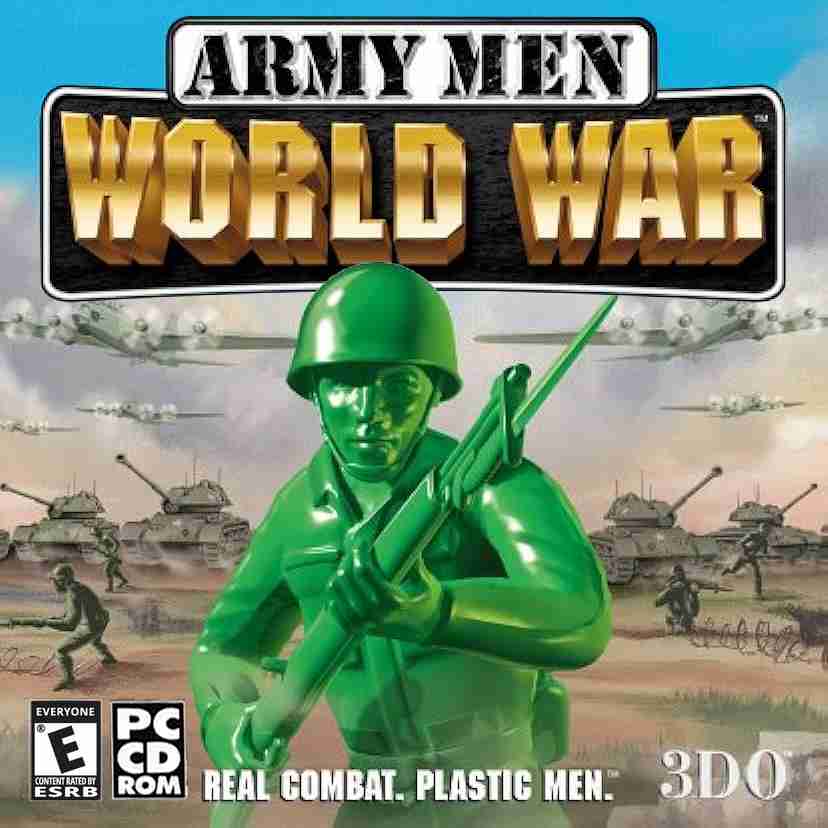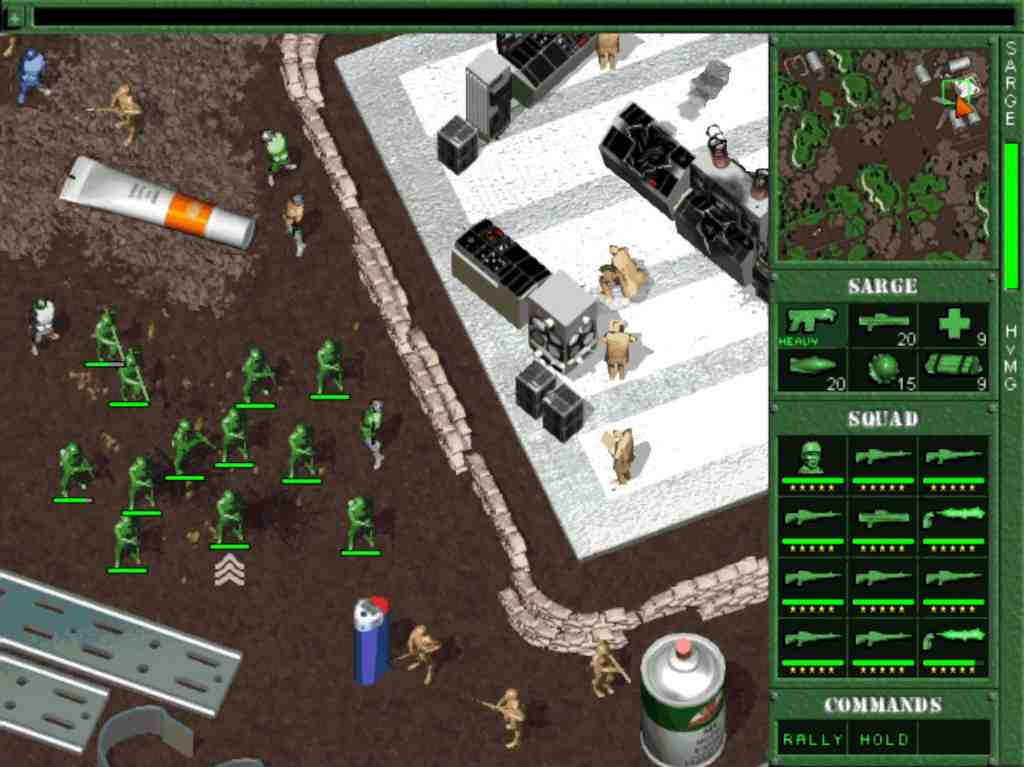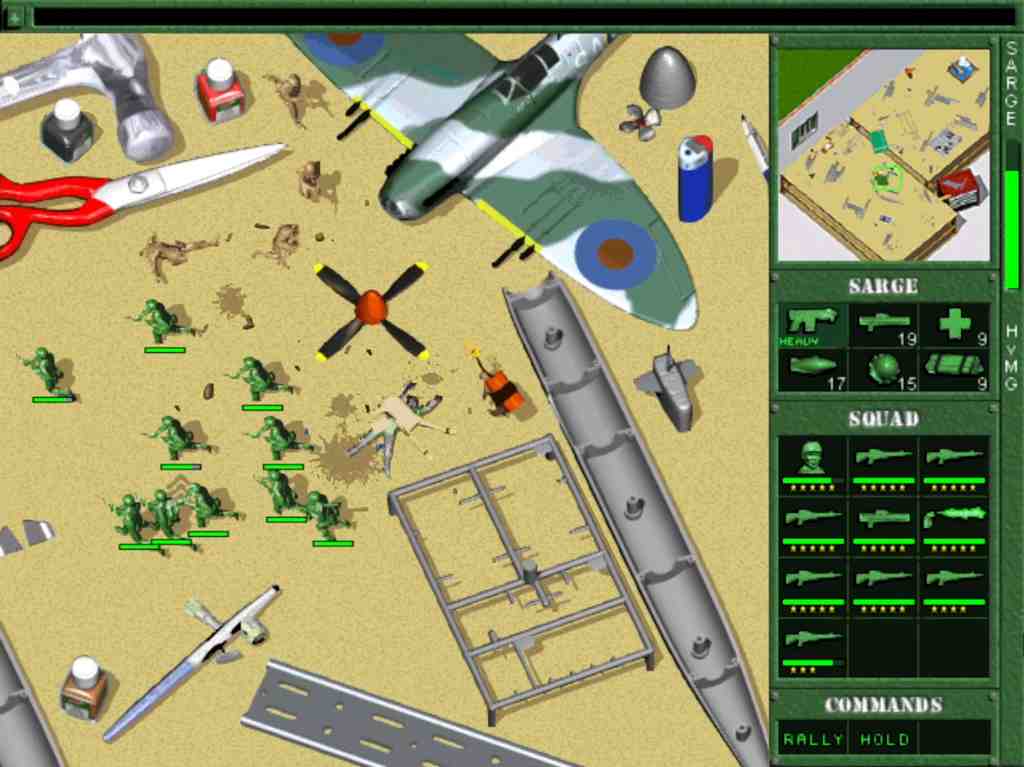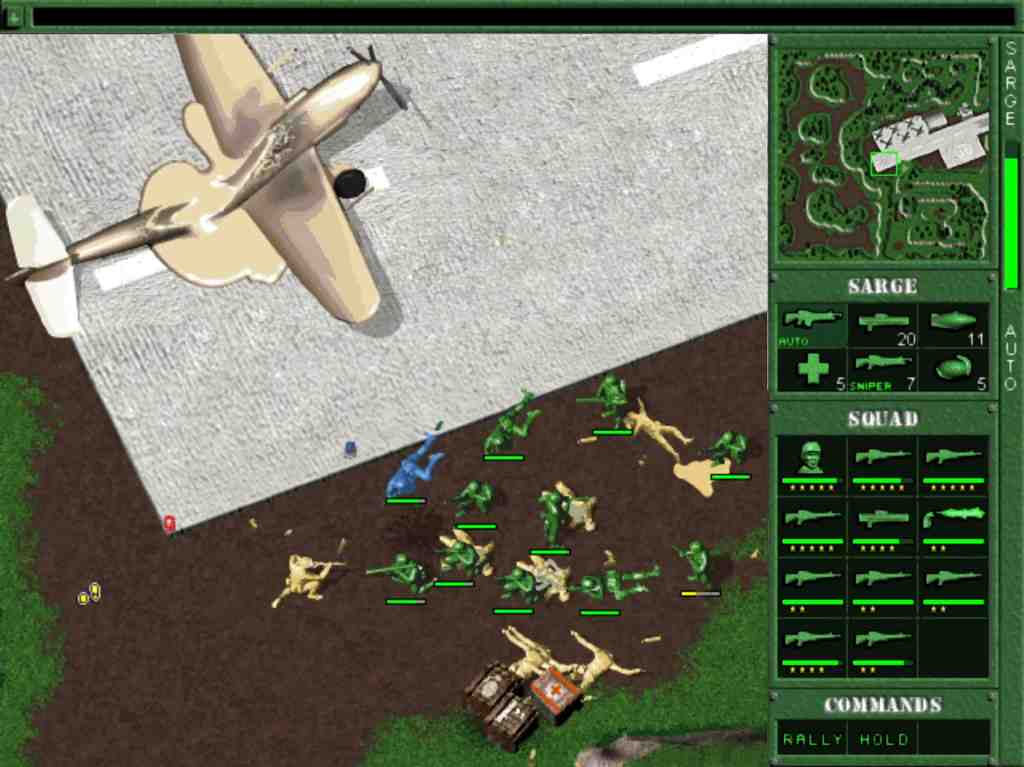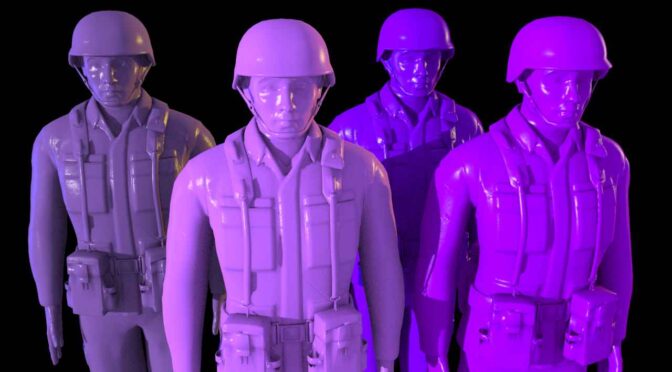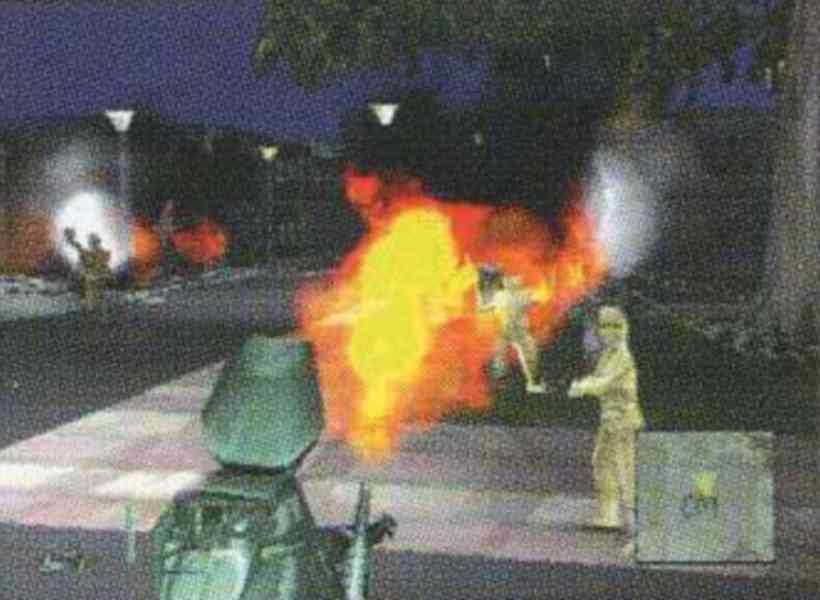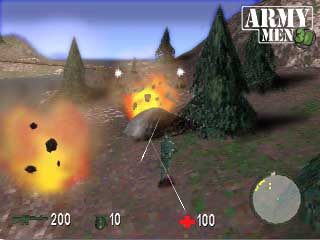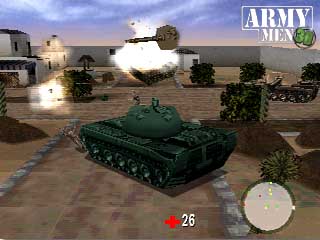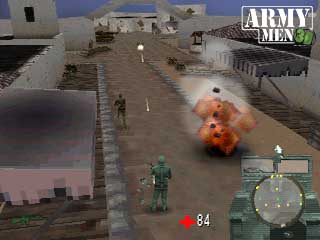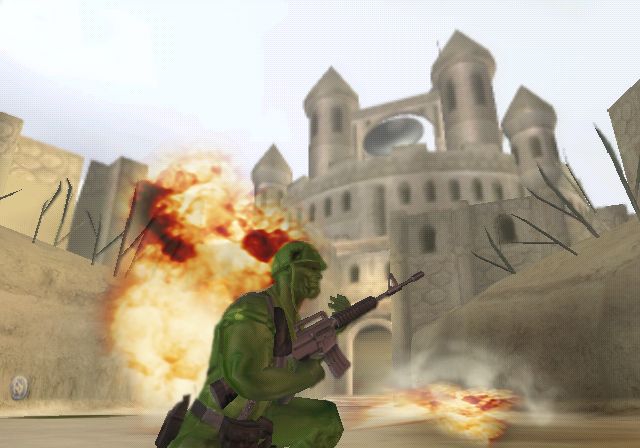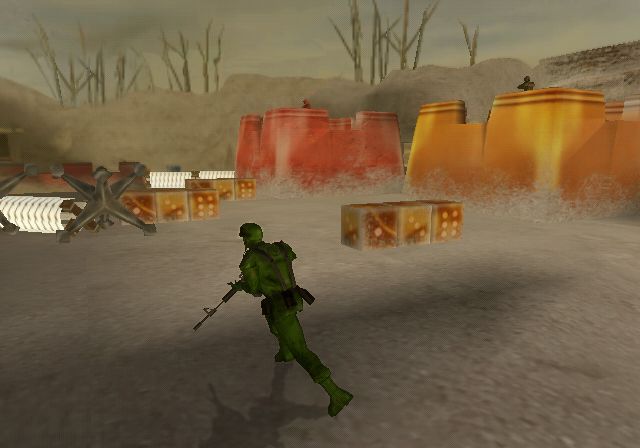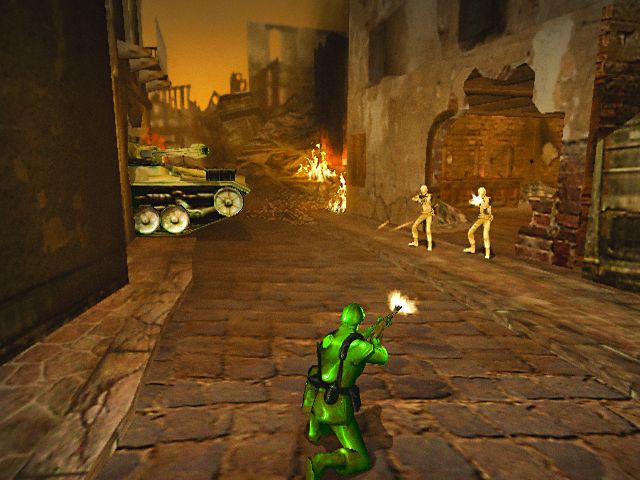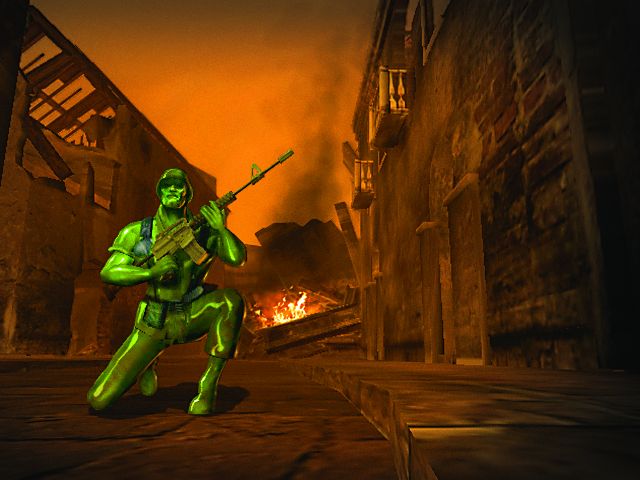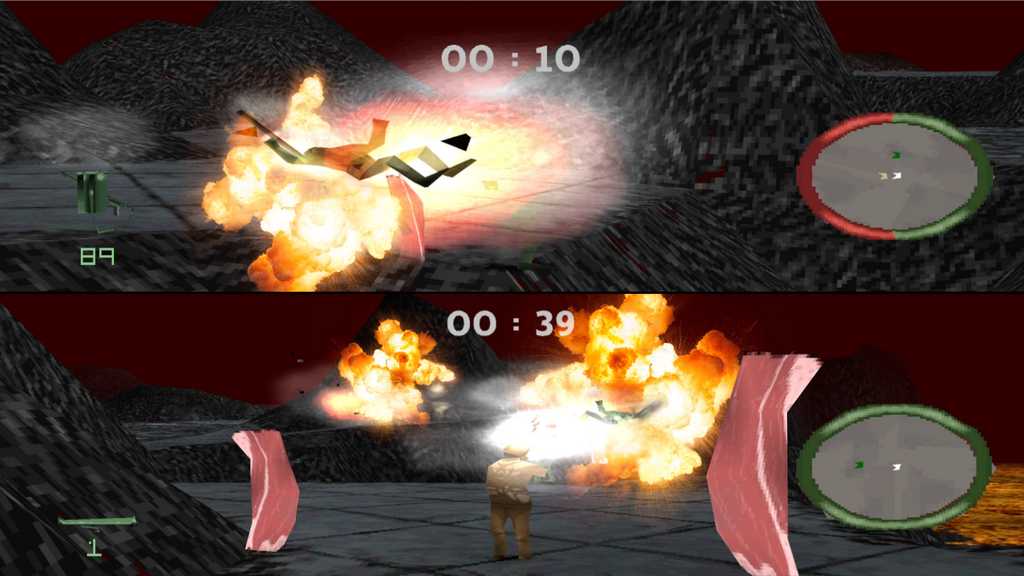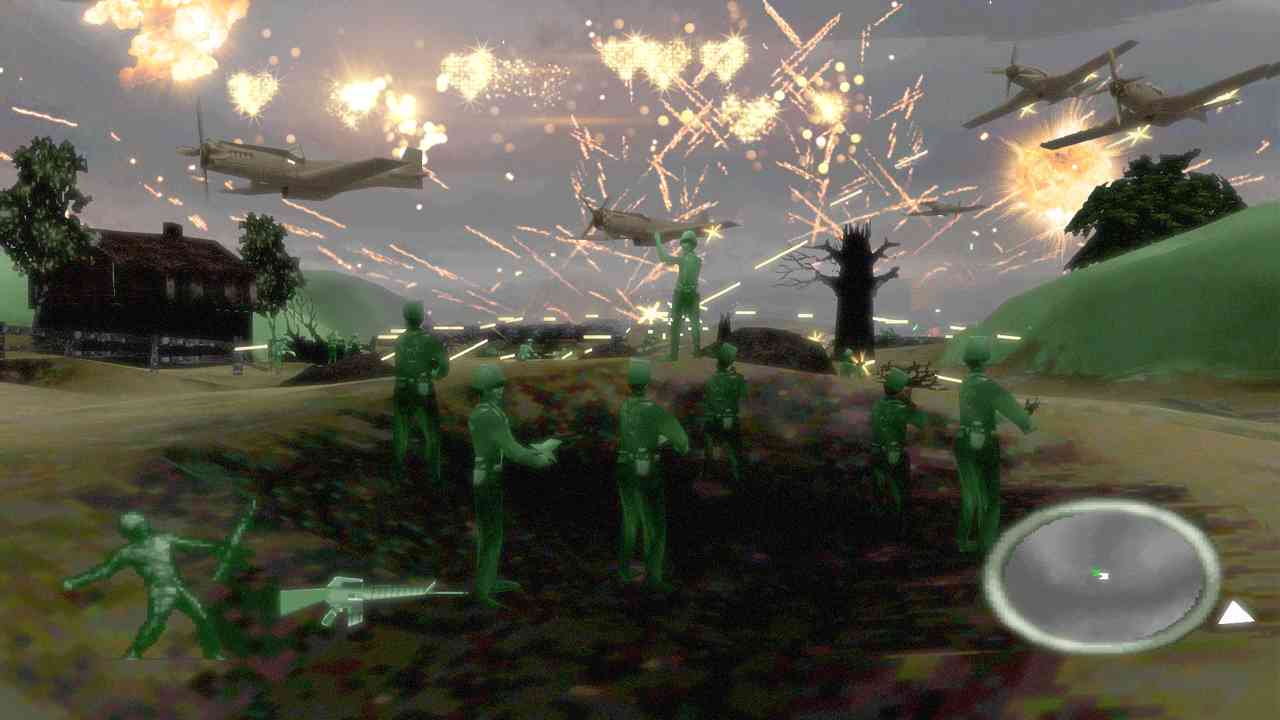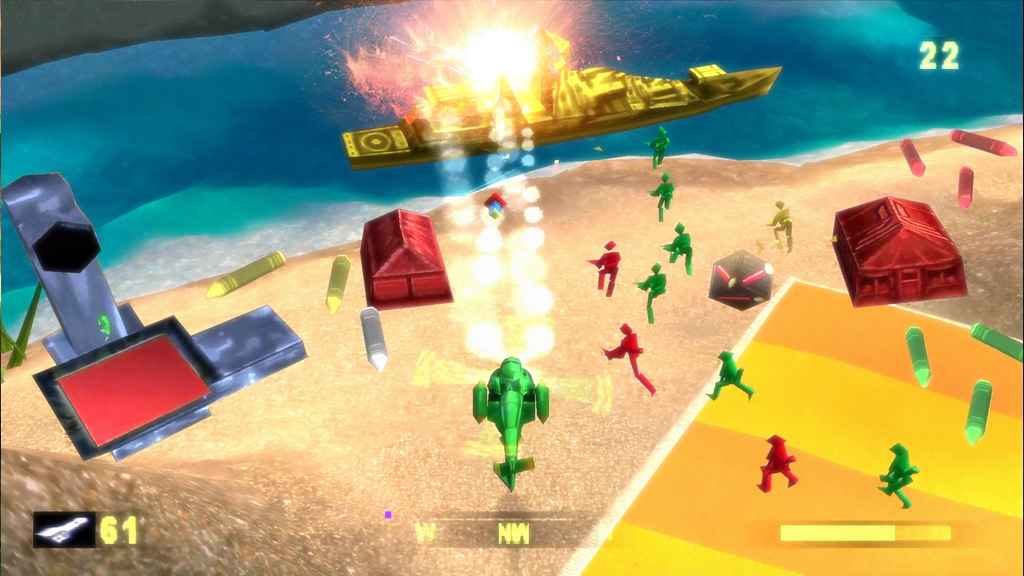
From Identical Soldiers to Individual Warriors

The Evolution of Plastic Soldiers in the Army Men Toyverse

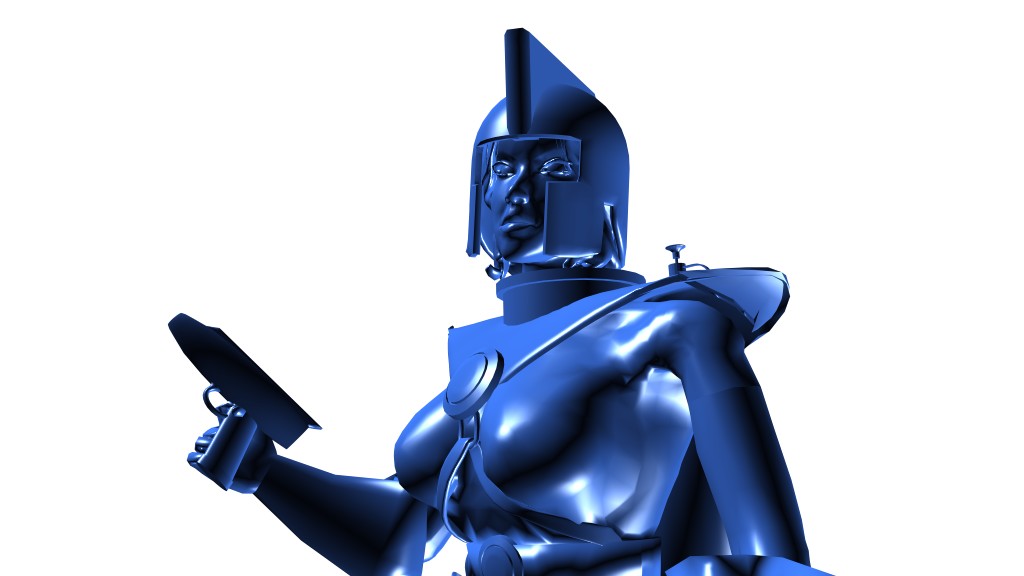
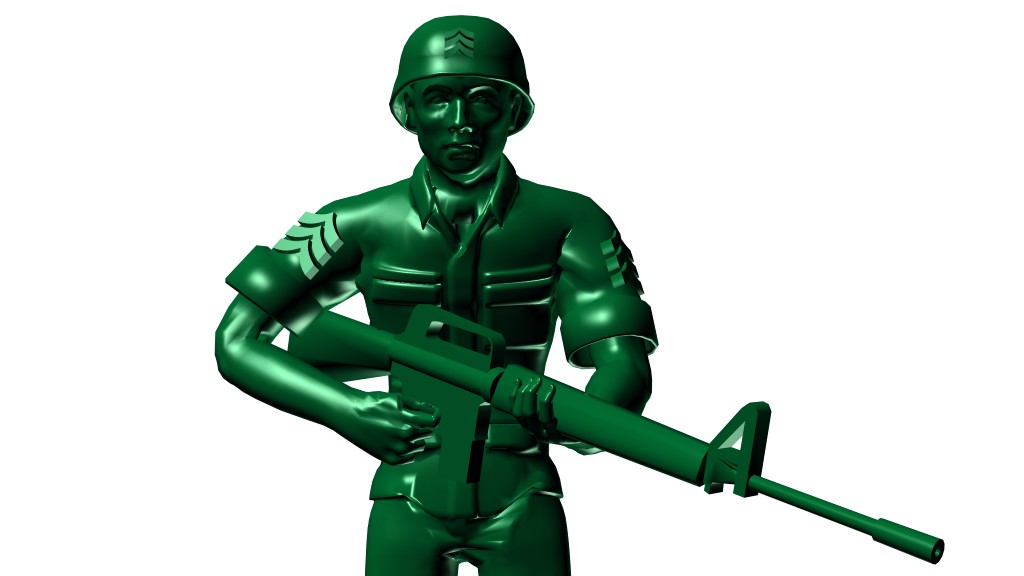
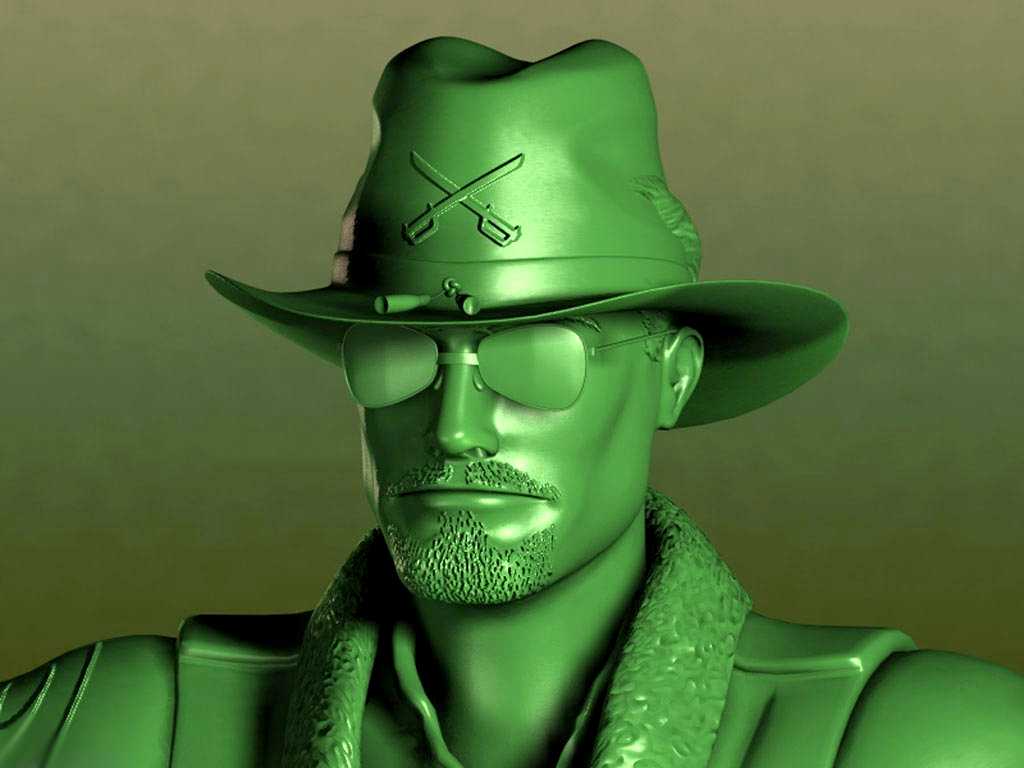
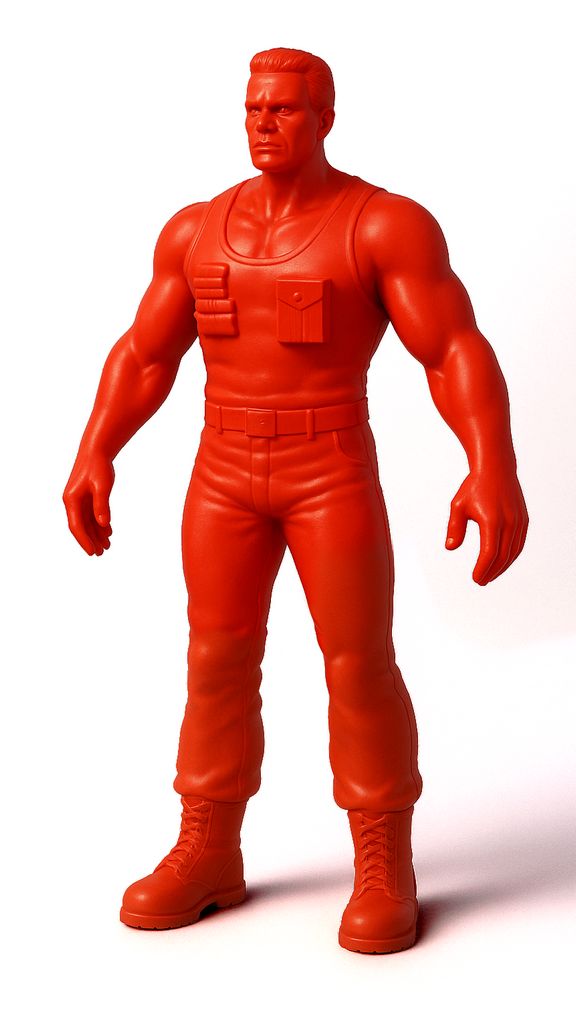
Like the clones in Star Wars, Plastic Soldiers are mass-produced with a single purpose: to fight. Fresh out of the mold, they are identical in appearance and function. They have no personal identity, no opinions, and no customization. Their abilities are the same, their uniforms are standard, and their mindset is programmed to obey orders without question.

Original Army Men
Initial Uniformity: Born from the Mold

Their existence is purely functional. They are replaceable, interchangeable, and in the chaos of war, individuality is not a priority.

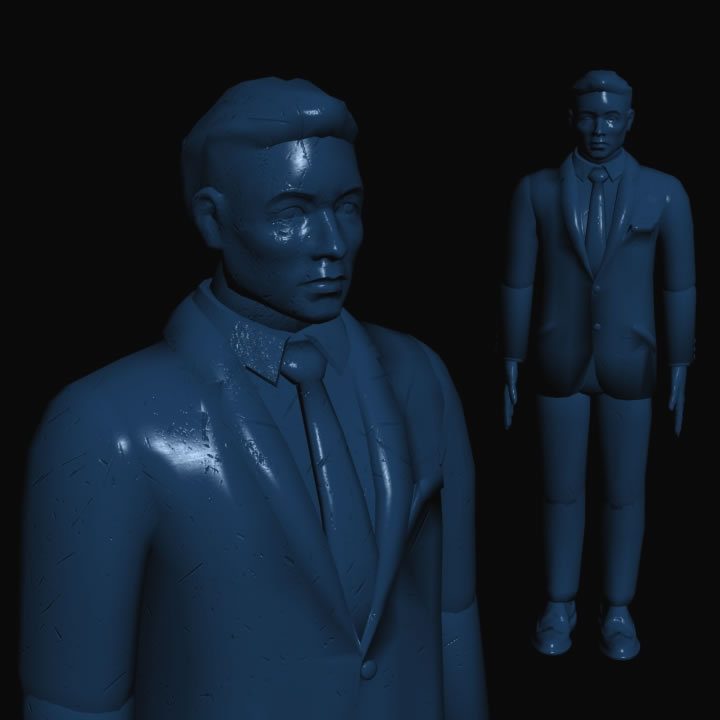
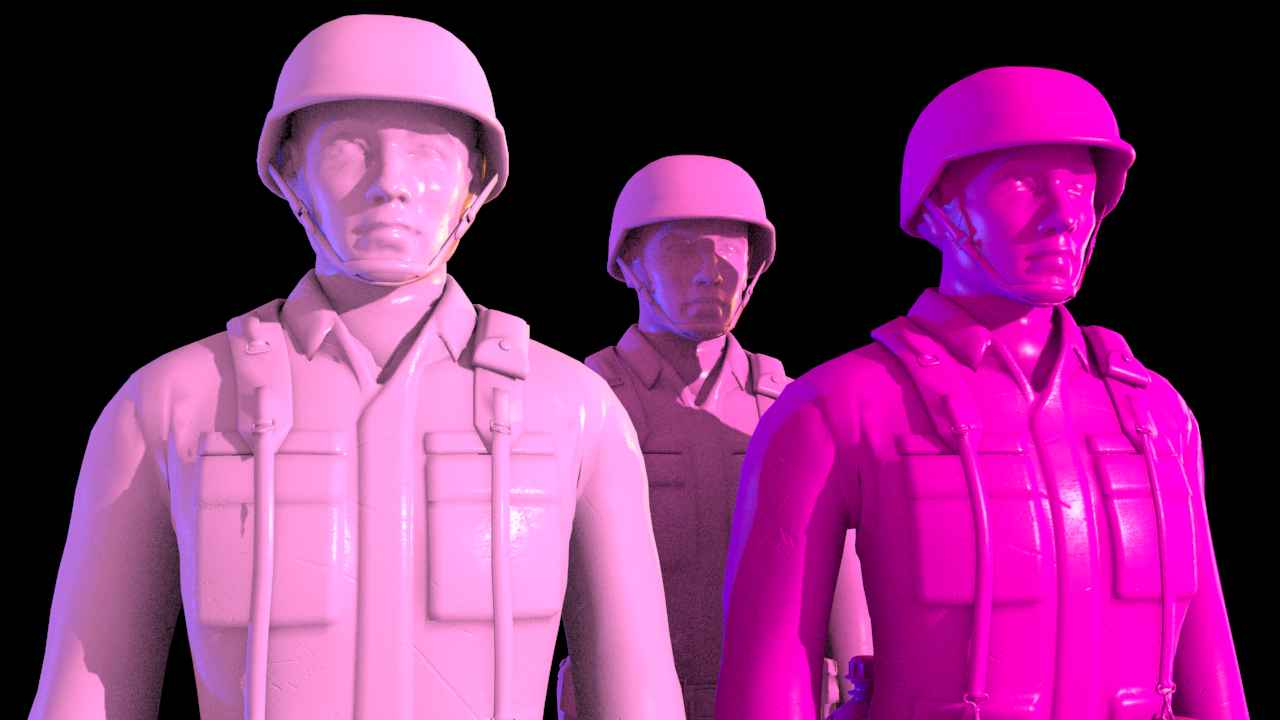
Shades of Pink
Battlefield Marks: Experience and Change

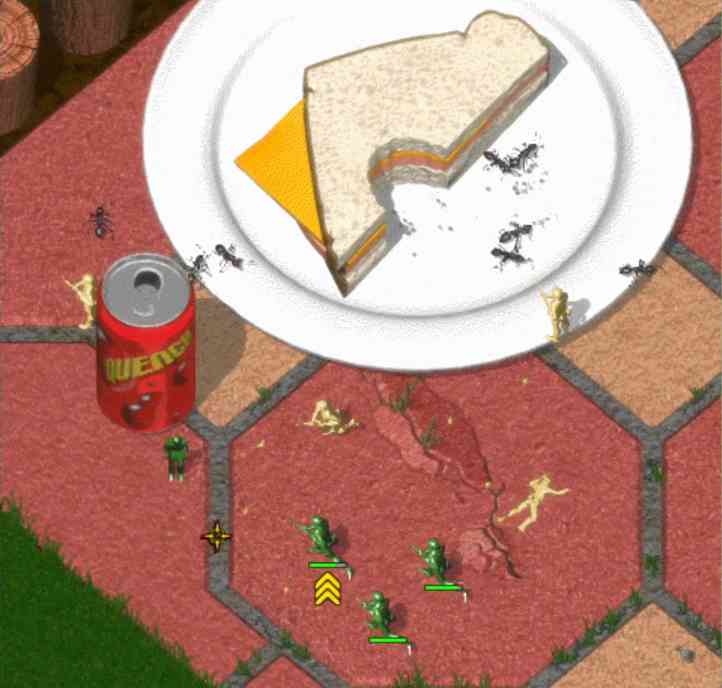
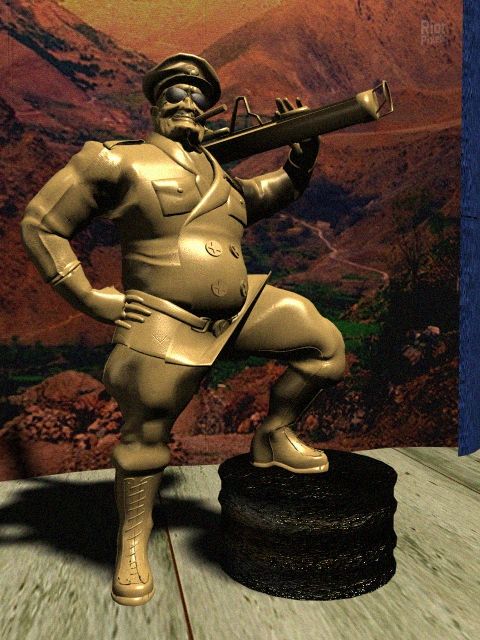
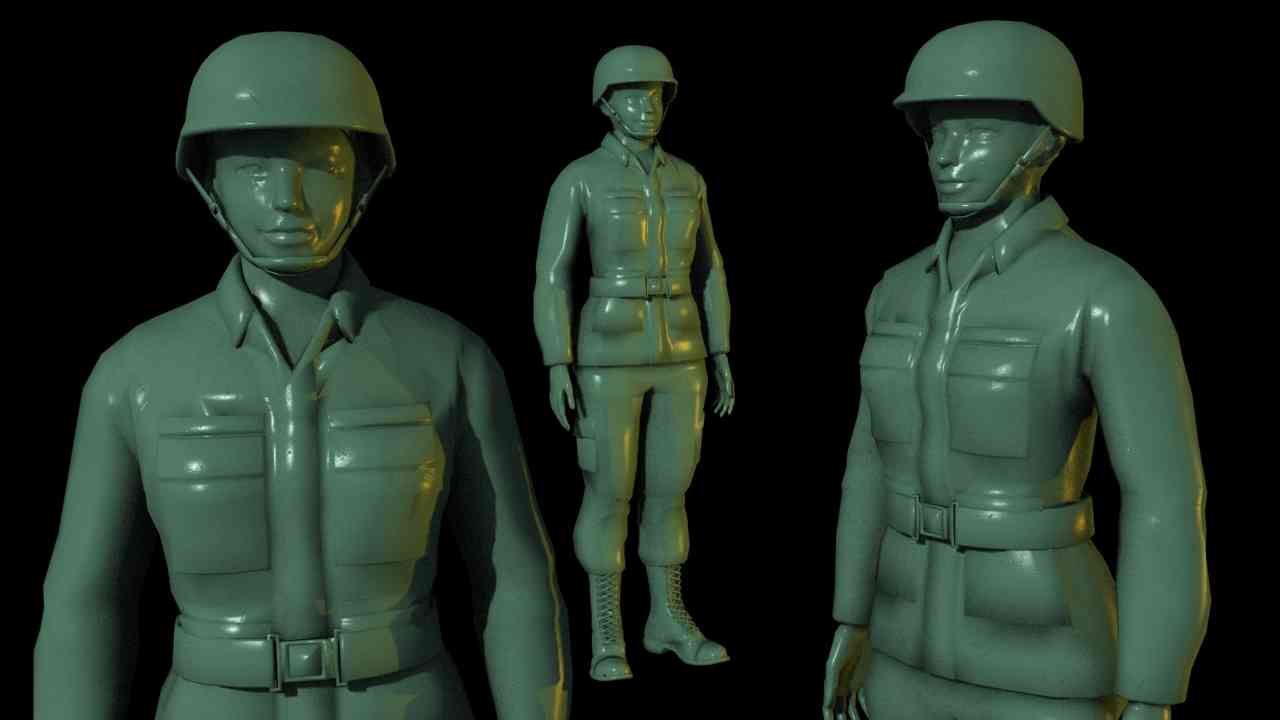
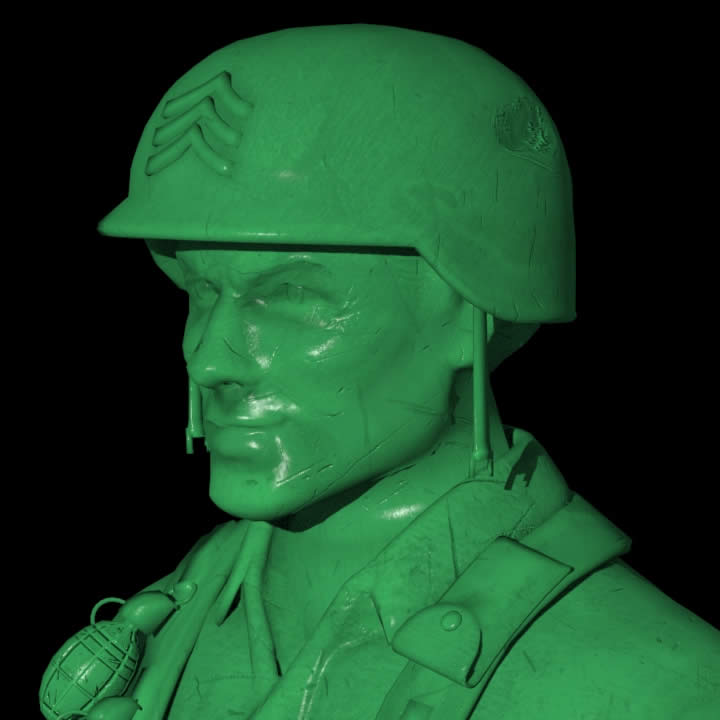
However, war is unforgiving, and no soldier remains the same after facing the reality of combat. With each mission, Plastic Soldiers begin to develop their own instincts. The scars of battle (cracks in the plastic, burns, improvised accessories) become marks of identity.

Sarge after Toys in Space

Just as the Star Wars clones adopted unique hairstyles, armor modifications, and personal emblems, Plastic Soldiers also find ways to stand out. Some reinforce their weapons with duct tape, others paint symbols on their helmets or adjust their posture, slightly bending their joints to differentiate themselves. These small adaptations become badges of veteran warriors.

The Awakening of Individuality: More Than Just Soldiers

Over time, the standardization of their existence begins to crumble. Those who survive long campaigns develop their own thoughts, question orders, reflect on their purpose, and adopt an identity beyond their initial function.

The Star Wars clones evolved from mere troops to individuals with distinct voices, such as Rex and Cody, who led with autonomy and genuine emotions. In the Toyverse, Plastic Soldiers follow a similar path. Once uniform figures on a battlefield, they become characters with distinct personalities, choosing how to fight, what to preserve, and how to leave their mark.

The Experienced and Enhanced: Beyond Natural Evolution

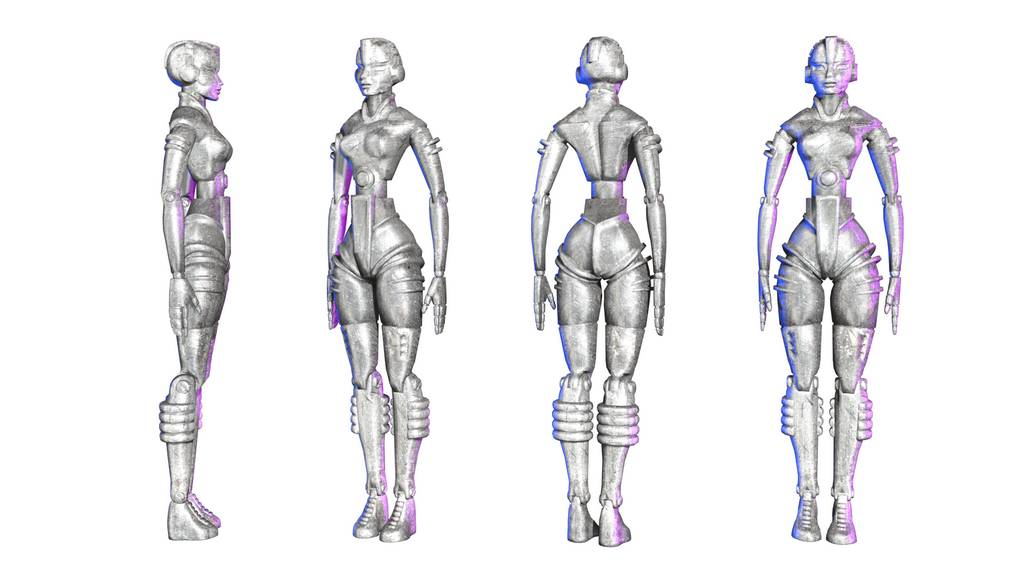
Not all Plastic Soldiers follow a progression solely based on combat experience. Some, whether through battlefield merit or strategic necessity, are selected for enhancement programs (similar to the Super Soldier project or cybernetic modifications seen in Star Wars with Clone Commando Echo, or even characters like Cable from X-Men and Bucky Barnes, Marvel’s “Winter Soldier).

These soldiers undergo physical and tactical upgrades that elevate them beyond their comrades. Some receive structural reinforcements, advanced armor, or bio-mechanical enhancements that increase their endurance and strength. Others are transformed into hybrids of machine and soldier, integrating advanced communication systems, improved sensors, or even prosthetics with specialized abilities.

However, the cost of these enhancements is not just physical. Like Echo in Star Wars: The Clone Wars Season 7, many of these upgraded soldiers face an identity crisis: Are they still Plastic Soldiers, or have they evolved beyond what they were created to be? Are they tools of war or individuals with their own purpose?

For some, enhancement is a blessing; for others, a curse. Their role in the Toyverse becomes a dilemma between utility and individuality, where war reshapes them not only physically but also spiritually.

Conclusion: Evolution Beyond the Mold: More Than Plastic, More Than Soldiers

A Plastic Soldier’s fate is not set at the time of its creation. Though they are born with a fixed purpose: war, experience gives them something invaluable: identity. Thus, what was once a homogeneous army transforms into a brotherhood of unique warriors, each with their own story sculpted in plastic.

The progression of Plastic Soldiers in the Army Men Toyverse mirrors the journey of Star Wars clones: from interchangeable units to unique individuals with their own stories. But in the case of the enhanced ones, a new element is at play: transformation not only as a result of war but also through deliberate intervention.

From mass-produced warriors to experienced soldiers who choose to forge their own destiny, each Plastic Soldier faces a different path. Whether shaped by battle or by technology that turns them into something more, their evolution defines the true weight of individuality in a world where they were created to be identical, and for war.

Army Men: Battleground

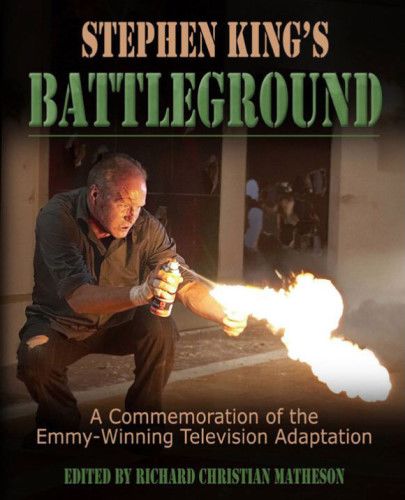
“Battleground”: The Day Stephen King Made His Own Army Men Movie

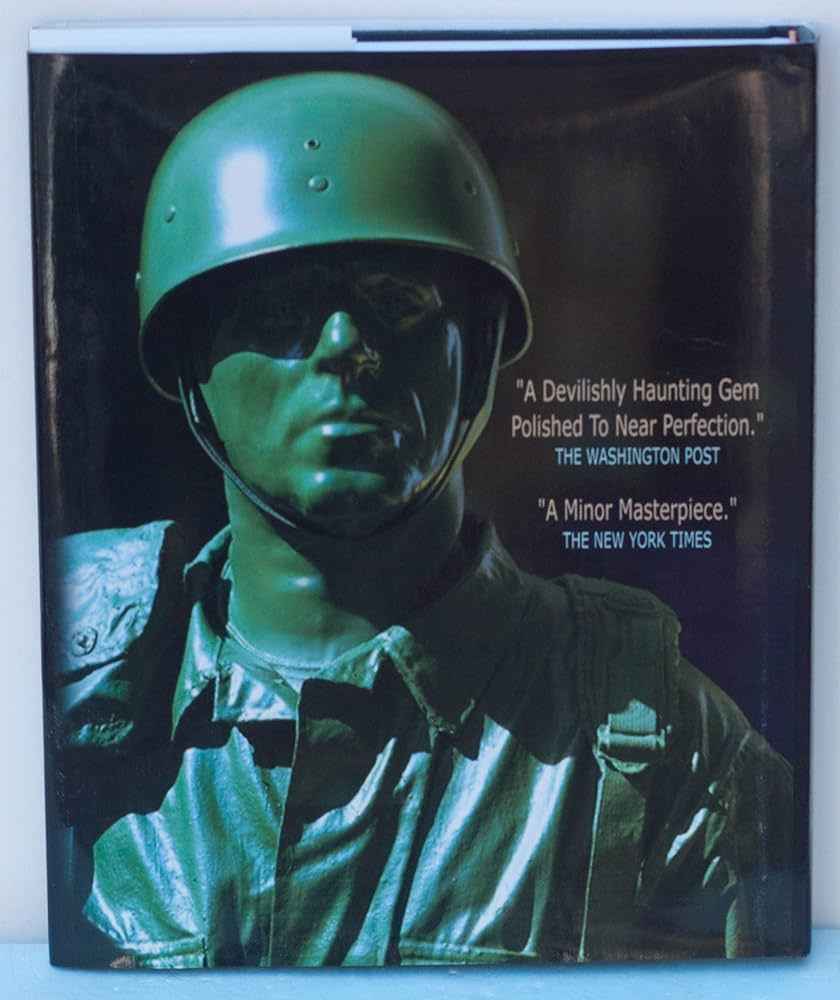
DVD back cover
DVD back cover

In 2006, fans of Stephen King’s stories and Army Men enthusiasts were treated to a curious and surprising gem: the miniseries “Nightmares and Dreamscapes”, a TV anthology based on some of King’s most memorable short stories. But within that collection, there was one episode that stood out in a unique way, one that, for those of us who love the Army Men universe, is simply impossible to ignore. And it was the first episode…

That episode is called “Battleground” and it’s basically an Army Men movie, but with Stephen King’s unmistakable touch.

!!! SPOILER ALERT !!!

From this point forward, we reveal key plot details about the episode. If you haven’t seen it and want to enjoy it fully, we recommend watching it first and then returning to this article.

The Plot: Miniature War, Terror on a Human Scale

The story follows Jason Renshaw (brilliantly played by William Hurt), a cold and meticulous hitman who, after eliminating the founder of a powerful toy company, returns to his luxury apartment.

What he doesn’t imagine is that the founder’s mother, seeking revenge for her son’s death, sends him a very special package: a box of toy soldiers… but these are no ordinary toys.

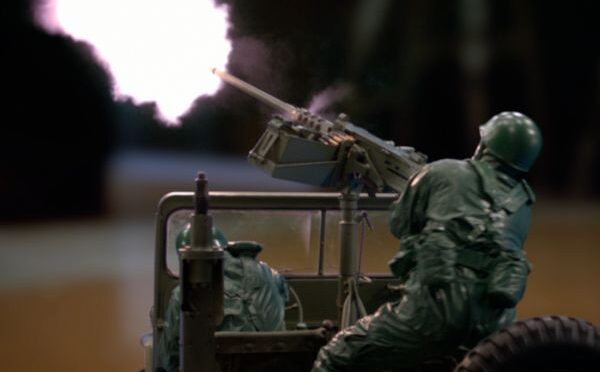
Inside is a fully armed platoon of plastic soldiers, fully mobile, ruthless, and deadly, accompanied by miniature vehicles, jeeps, attack helicopters, and portable artillery. What follows is a brutal, relentless battle where the soldiers do everything possible to kill Renshaw, using real military tactics adapted to their scale, while he, a professional hitman, fights to survive in what becomes a life-or-death war… inside his own spectacular apartment.

No Dialogue, Pure Visual Storytelling

One of the most striking aspects of this episode is that it has absolutely no dialogue. Not a word. Everything is told visually, through actions, expressions, and clever staging. This was no accident: it was a deliberate decision by director Brian Henson (yes, the son of Jim Henson, creator of The Muppets).

As Henson explained in interviews, he chose not to use any spoken lines to preserve the purity of the story, focusing solely on the tension, the fight, and the brutality of the encounter. This choice turns “Battleground” into a deeply immersive experience… almost like a cinematic experiment made for television. And no need of translation to any language!!!.

Production: Perfect Blend of Practical Effects, Miniatures, and CGI

Filming took place mainly in Australia, where the crew built an almost exact replica of the protagonist’s apartment on an enormous elevated set. This allowed the camera to capture every angle — even from below — creating a strong sense of scale both for the human and the plastic soldiers.

The mix of practical effects (miniatures, small-scale, plastic soldier suits, explosions) and CGI was considered top-notch for its time. The little Army Men are incredibly detailed, with precise movements, military discipline, body language and gestures that bring them to life (because their plastic faces show no emotions).

Recognition and Awards

Without a doubt, “Battleground” was the most successful and celebrated episode of the miniseries. It was nominated for three Emmy Awards, including Outstanding Visual Effects, and rightfully so. The care put into every frame, how the soldiers use tactics, cover, formations, and vehicles, is truly impressive.

The Plastic Army as the Perfect Villain

What makes this episode so fascinating (especially for Army Men fans) is how it takes the classic elements of toy soldiers (vehicles, weapons, miniaturization) and turns them into a legitimate, lethal, and fully believable threat within its own internal logic.

These soldiers are not cartoonish: They are perfectly organized, disciplined, and ruthless. They use grenades, missiles, helicopters, artillery and light vehicles with terrifying efficiency, proving that size doesn’t matter when the will to fight is absolute.

Similarities with Army Men: Not Few at All

For any fan of the Army Men franchise, watching this episode feels like seeing a hyper-realistic live-action version of what we always imagined when playing with our plastic figures. There are assault strategies, defense tactics, reconnaissance, siege and even encirclement maneuvers.

But beyond aesthetic similarities, the core idea connecting both works is the same: when toys come to life within their own universe, they stop being harmless objects and become players in their own war drama.

In Army Men, the troops are protagonists with agency. Here, they are villains with a clear goal and an efficiency bordering on the supernatural.

Bonus Facts and Curiosities

  • The original story was published in Cavalier (1972) and later in Night Shift (1978).
  • The director added the opening assassination scene to give more characterization to Renshaw on screen.
  • The adaptation includes an extra Rambo-style commando figure, serving as a mini-epilogue before the final nuclear detonation.

A fun Easter egg appears: the famous Zuni doll from Trilogy of Terror can be seen, a tribute to screenwriter Richard Christian Matheson and his father Richard Matheson.

There’s also a Soviet animated version from 1986, called Srazhenie (“Battle”), using rotoscoping while keeping the core plot intact.

Differences from the Original Short Story (King’s Short Story / TV Episode)

Protagonist’s Name:

John Renshaw / Jason Renshaw (played by William Hurt).

Opening Scene:

Wakes up after the assassination / Shows the assassination in real-time.

Dialogue:

Includes brief spoken lines / Completely silent, no dialogue.

Final Scene:

Immediate nuclear explosion / Elevator fight with a commando, then nuclear blast.

Easter Eggs:

None / Zuni Doll (from Trilogy of Terror).

Length and Pacing:

Around 10 pages, highly condensed / 55-minute episode with expanded development.

Epilogue: When Horror and Toy Soldiers Collide

“Battleground” is a short, precise masterpiece that mixes horror, action, and dark humor with impeccable execution. For Army Men fans, it’s more than just a wink… it’s an alternative version of our fantasy world, darker, more brutal, and stripped of the comedy or adventure that usually surrounds the Toyverse.

A story where small doesn’t mean weak. Where harmless becomes lethal. And where the battlefield fits (quite literally) inside an apartment.

“Battleground” is a narrative experiment that fuses small-scale military strategy with suspense and terror. It may not be the heroic vision of Army Men, but it captures that same warlike fantasy from another angle: that of the relentless adversary who won’t hesitate to annihilate.

For the Army Men community, it’s a dark tribute (and just as tactical) as our own plastic wars.

Recommendation:

Not only essential for King or horror fans… this episode is a masterclass on how to turn the small into genuine strategic horror. Absolutely unmissable for Army Men fans and anyone who ever dreamed of their toy soldiers coming to life… and fighting for real.

Fun Fact:

The latest game released by the franchise, Army Men: Mobile Ops, used the image of one of the soldiers from this production as the main image of the game’s main menu (we don’t know if it was used legally or not).

How Marvel’s Missteps Mirror the Fall of Army Men: A Lesson in Creative Oversaturation

When James Gunn (now the creative head of DC Studios) was recently asked what he believed had hurt Marvel, his words were both honest and damning: “Too much content. Not enough planning. It killed them.” His remarks, aimed at the overextension of Marvel Studios in the wake of Avengers: Endgame, could just as easily describe what happened to the Army Men franchise in the early 2000s.

Back in the late ’90s, Army Men stormed the gaming world with a simple yet irresistible premise: toy soldiers brought to life in an imaginative, war-torn plastic world. The original titles stood out with charming aesthetics, quirky humor, and solid gameplay. But the publisher, 3DO, quickly turned that initial success into a production frenzy. From 1998 to 2003, they pushed out over a dozen Army Men titles—a pace that left little room for refinement or reinvention.

Back in the heyday of 3DO’s rapid-fire release strategy, even those of us in the The Army Men videogames channel were caught off guard. Titles arrived so frequently that not even the fans seemed fully aware of what was launching (or when). By the time a new game crossed our radar, it was often already out in the wild, too late. In an industry where annual sports releases were considered the norm, Army Men shattered expectations by flooding the market with an unrelenting stream of entries. No amount of pre-release buzz could keep up. The public wasn’t just underprepared: they were overwhelmed.

Much like Marvel’s recent deluge of films and Disney+ series, 3DO’s Army Men games began to feel rushed, repetitive, and disconnected. Without a clear long-term narrative or gameplay evolution, fans began to lose interest. By the time fresh ideas were needed most, the brand had burned out… and 3DO filed for bankruptcy in 2003.

James Gunn’s criticism of Marvel’s strategy (greenlighting projects without finished scripts and saturating the audience with underdeveloped content) perfectly echoes the pitfalls of 3DO. Both cases show how creative properties, no matter how beloved, can collapse under the weight of rushed schedules and corporate overreach.

The Lesson? Sustainability in storytelling matters more than ever. The audience craves meaningful worlds, not just more content. In the age of ever-growing universes (cinematic, gaming, or otherwise) the smartest path forward is one paved with vision, patience, and purpose. Part of what was missing in those years was the breathing room—a chance for the audience to anticipate, absorb, and get excited. Great franchises don’t just drop content; they build moments. But with Army Men, there was rarely time to prepare the public or give each title its spotlight. Without that crucial window to inform and engage players, even solid ideas were lost in the noise.

Fake Army Men images

The Truth Behind the Famous “In-Game Screenshots” of the First Army Men Games

There are phrases that have become part of gaming folklore. One of the most common (and persistent) is:

“It was from a beta version…” —said with the tone of someone convinced they’ve uncovered a hidden development secret.

But when it comes to Army Men, many of those promotional screenshots were not beta versions of anything. In fact… they weren’t even screenshots.

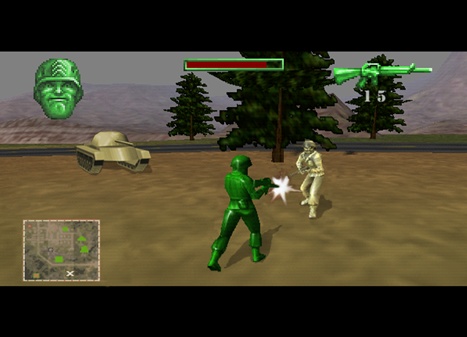
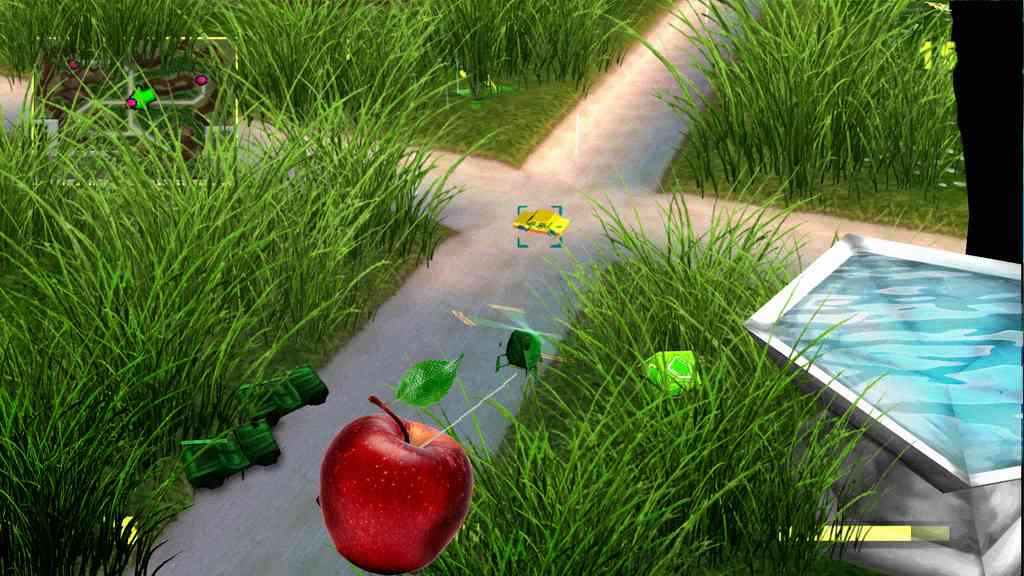
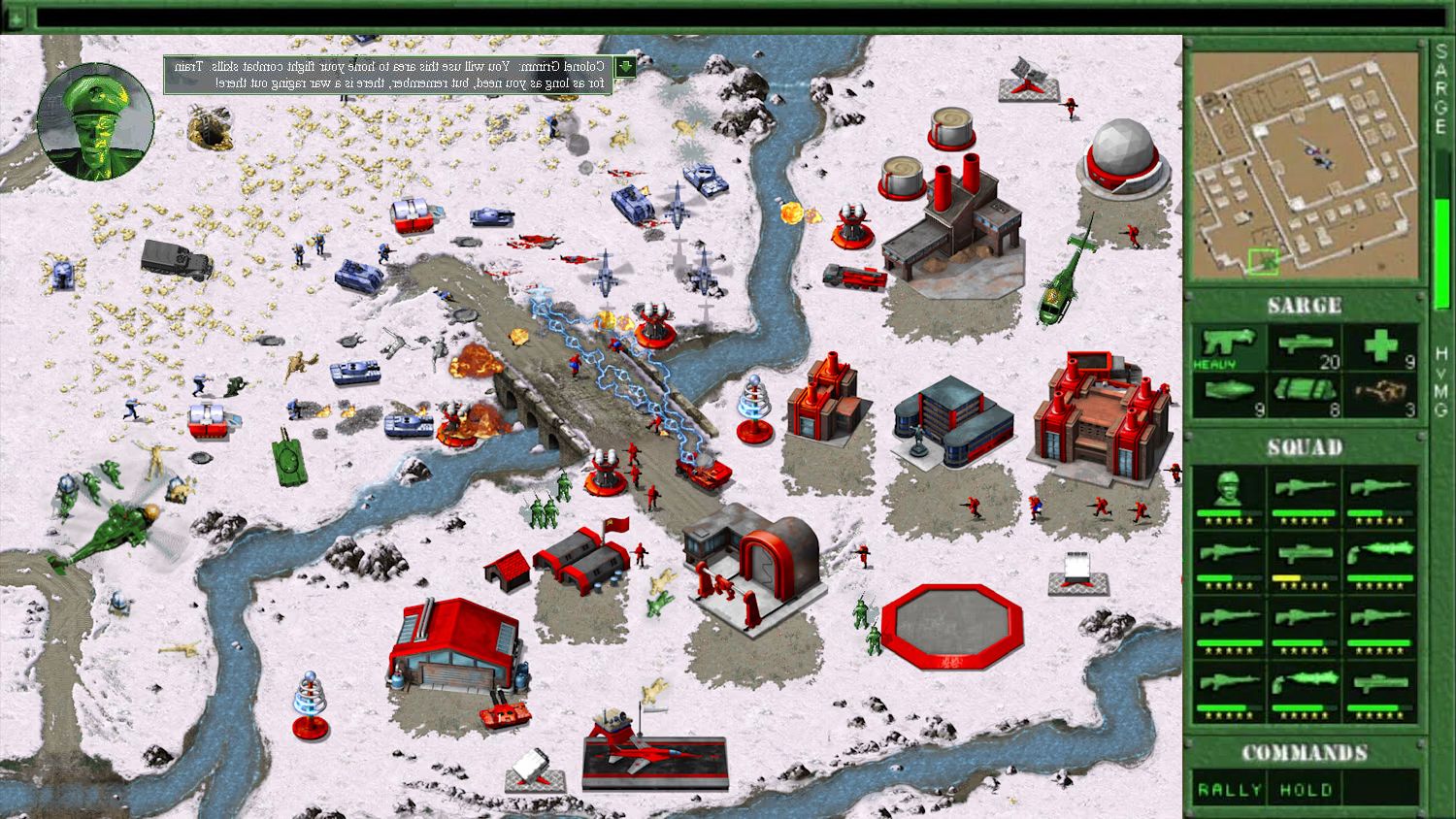
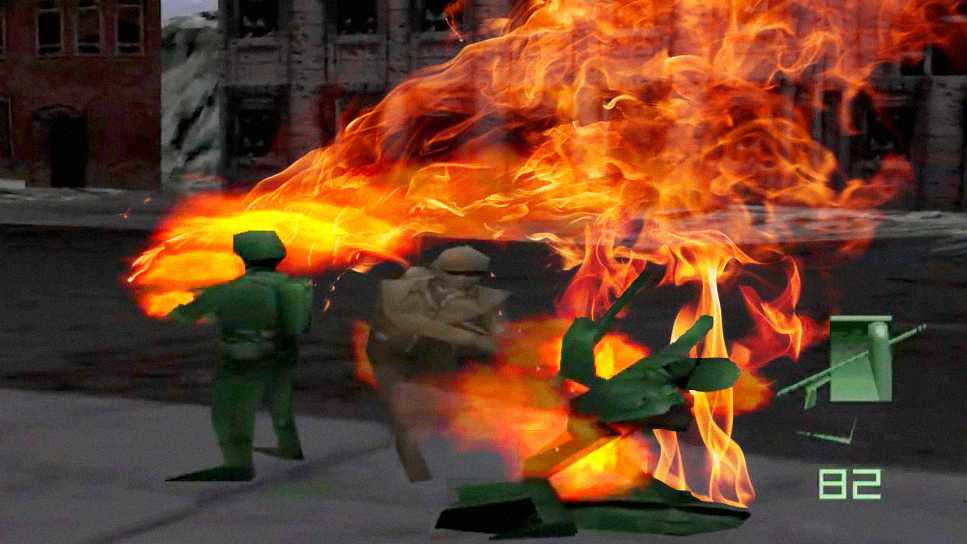
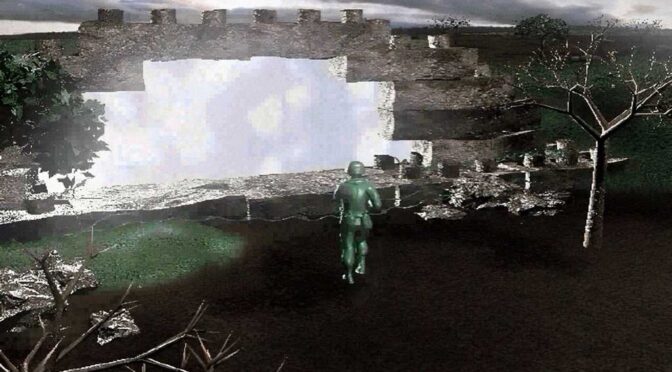
Slightly modified screenshot of PS1 Army Men: World War used in ads all over the internet at the time

What Looked Like In-Game… Wasn’t

Back in the golden age of 3DO, when Army Men was just beginning to take shape as a franchise, the creative team had a challenge: They needed a visual way to pitch the idea before the game was even fully designed.

Veteran developer Michael Mendheim, who played a crucial role in conceptualizing the Army Men universe, would put together digitally composed images to present the tone and feel of the project.

These images were a mix of:

  • Independently rendered 3D models.
  • Partial engine screenshots, when available.
  • Added effects like smoke, fire, and lighting.
  • And of course, a healthy dose of Photoshop.

They were never meant to be real gameplay footage: they were visual mockups, created to evoke the style, mood, and action the final product was aiming for.

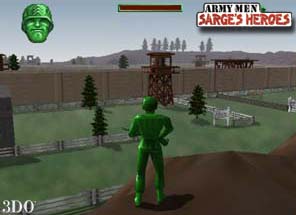
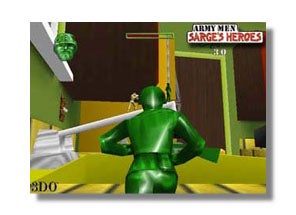
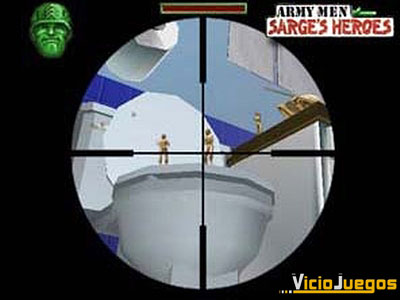
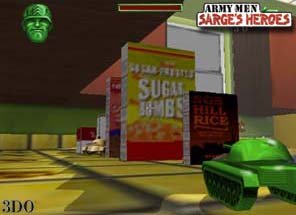
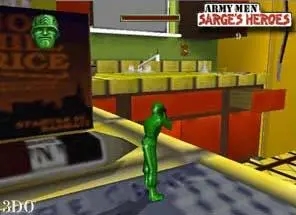
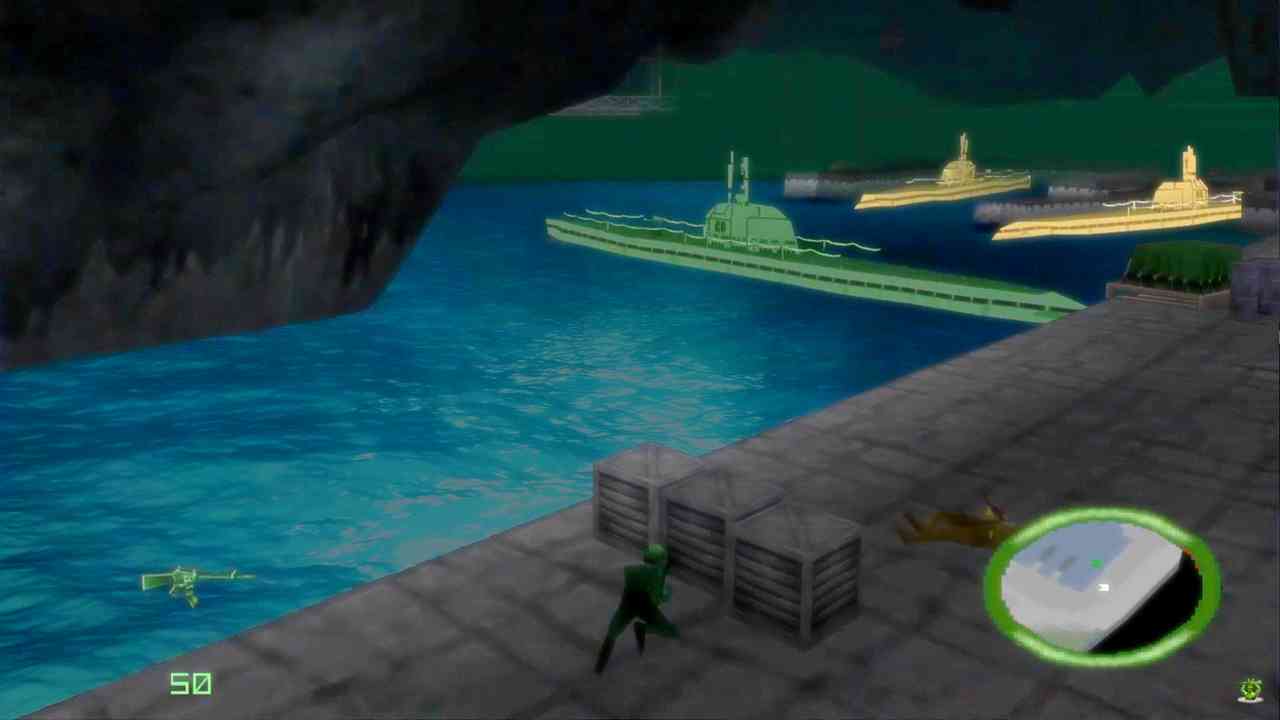
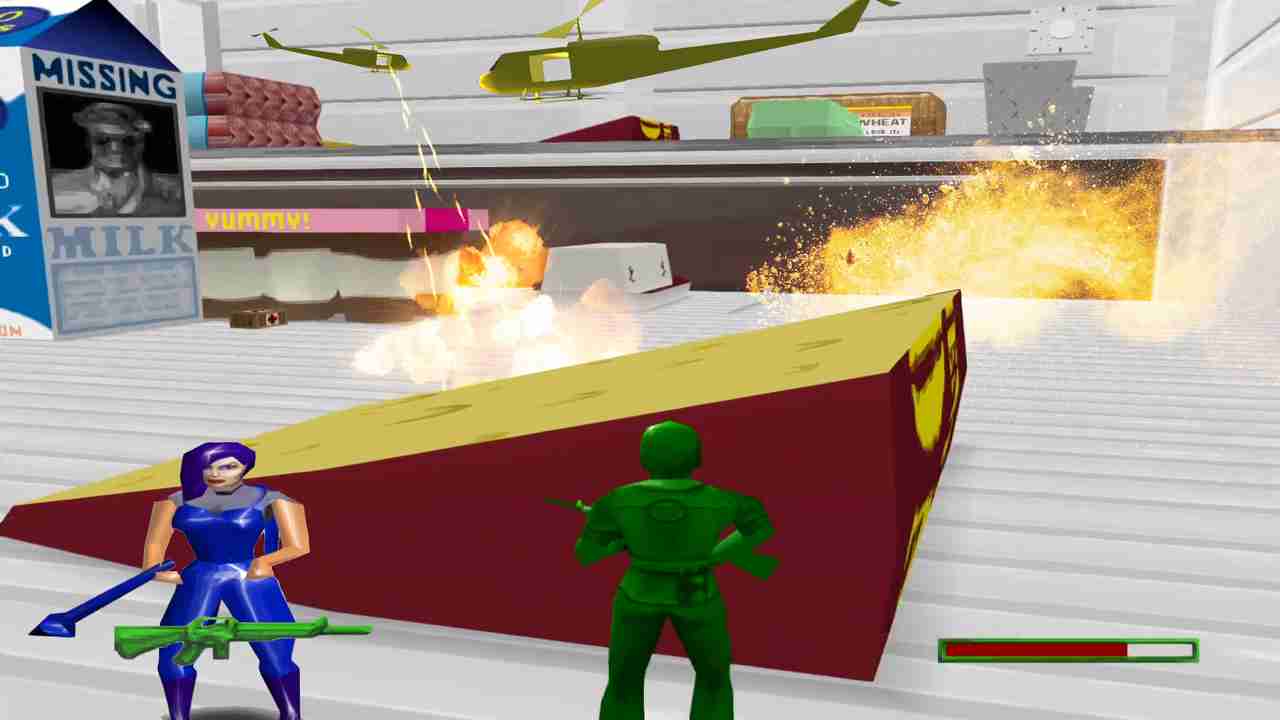
Slightly modified screenshot of N64 Army Men: Sarge’s Heroes used in ads all over the internet at the time

Although with minor modifications to the images, these are surely from the Army Men: Sarge’s Heroes engine for the Nintendo 64, but before going through the final version for the N64, it was actually a beta version of the levels and functions, not very different from the final version.

When Marketing Takes Creative Liberties

What’s interesting is that, even though the developers understood these images were purely conceptual, 3DO’s marketing team used them in advertisements as if they were actual in-game screenshots.

These images showed up in:

  • Magazines
  • Game boxes
  • Promotional flyers
  • Manuals
  • And even official press kits

The result? Players thought that’s how the game would look. And while that wasn’t exactly true… it worked. The hype exploded. The visual concept of Army Men (green plastic soldiers fighting battles in real-world environments) instantly captured players’ imaginations, long before the games were even finished, even a few years before 1998 Army Men.

The Speculation That Never Died

Even today, many fans still insist that those images came from early builds or beta versions of the games.

You’ll still hear comments like:

“This must be from a lost prototype…”

Or comments like:

“They had to downgrade the graphics later due to hardware limitations.”

And while it’s true that Army Men underwent plenty of visual changes during development (and yes, they had to scale things down to run on systems like the PlayStation 1 and Nintendo 64) those promo shots were not captured from actual working versions of the game.

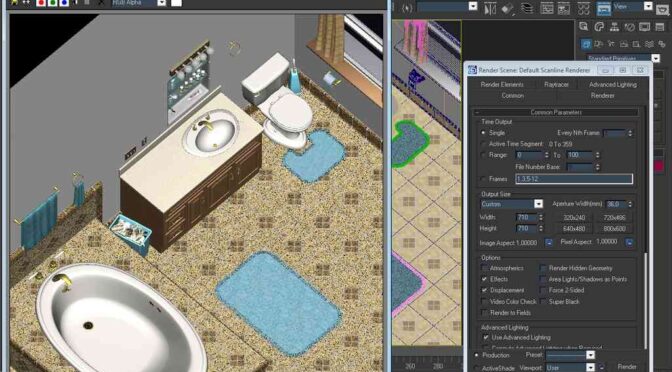
People who worked with Photoshop or 3D Studio Max back then can clearly recognize the techniques used in these composites. If anything, they were stunning examples of concept art disguised as gameplay.

In a way, we wish they were real beta shots… it would’ve added an extra layer of mystique to the franchise’s development history. But no, it was just clever marketing. Fake… but effective.

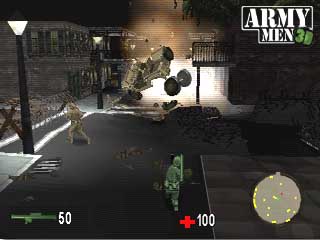
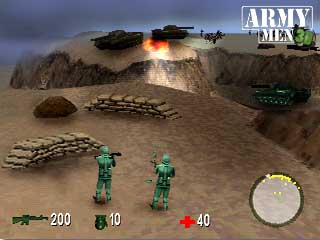
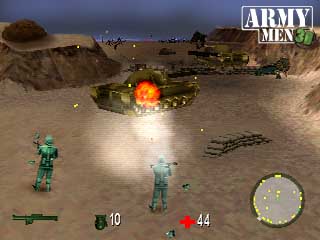
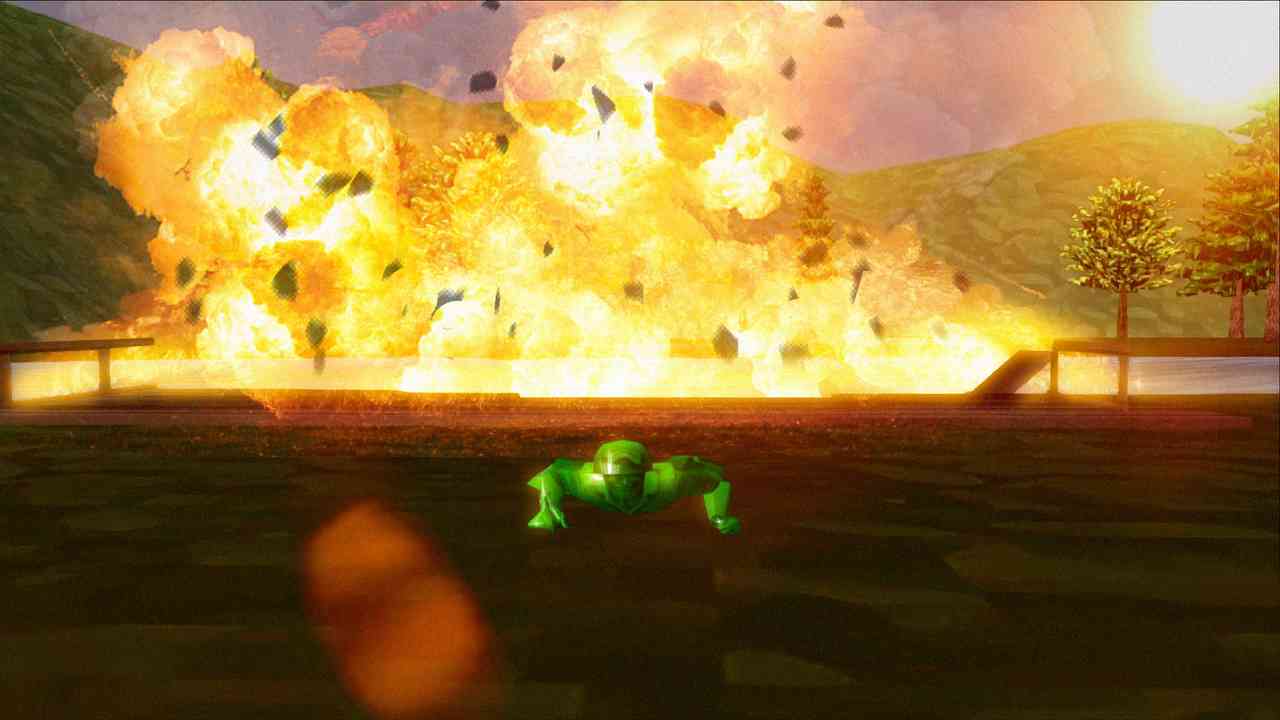
Modified screenshots of the “supposed” Army Men 3D beta version for PS1, used in promotional content all over the internet at the time

Deception or Strategy?

Today, in the era of frame-by-frame breakdowns and mandatory “not actual gameplay” disclaimers, this kind of tactic would get you dragged online in seconds. But in the ‘90s, with a franchise as visually unique as Army Men, it was a legitimate (and successful) marketing tool.

Some might call it deceptive. Others see it as an effective way of presenting an evolving creative vision.

Either way, those images weren’t beta builds, they weren’t unreleased versions, and they weren’t screenshots from a hidden dev console.

They were Photoshop. Plain and simple. And in context… they were brilliant.

What Does This Say About the Toyverse?

Like many good stories in the Toyverse, this one also carries a lesson. Just as molded toys become soldiers with names, stories, and purpose, a fake image can become the spark that brings an entire world to life.

Those visuals (however artificial) were the first real representations of the Army Men franchise. Before missions, before bugs, before battlefield chaos… there was a carefully crafted picture. And it worked.

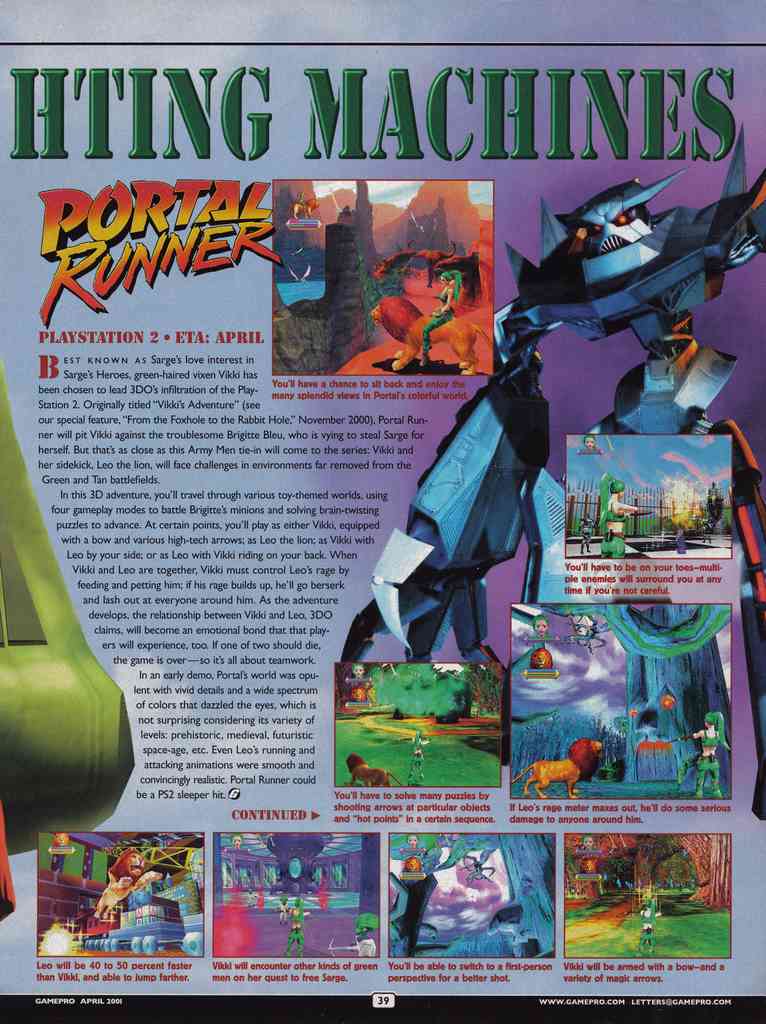
Heavily fake screenshots of Portal Runner (PS2) where they used heavy 3D CGI models to make concept screenshots that 3DO used in promotional content on magazines and all over the internet at the time

Bonus: Where to See These Images Today?

Many of these fake-but-iconic visuals still survive today in:

  • Archived game magazines (GamePro, EGM, etc.)
  • Scanned promotional material
  • Original manuals
  • The official 3DO websites via the Wayback Machine
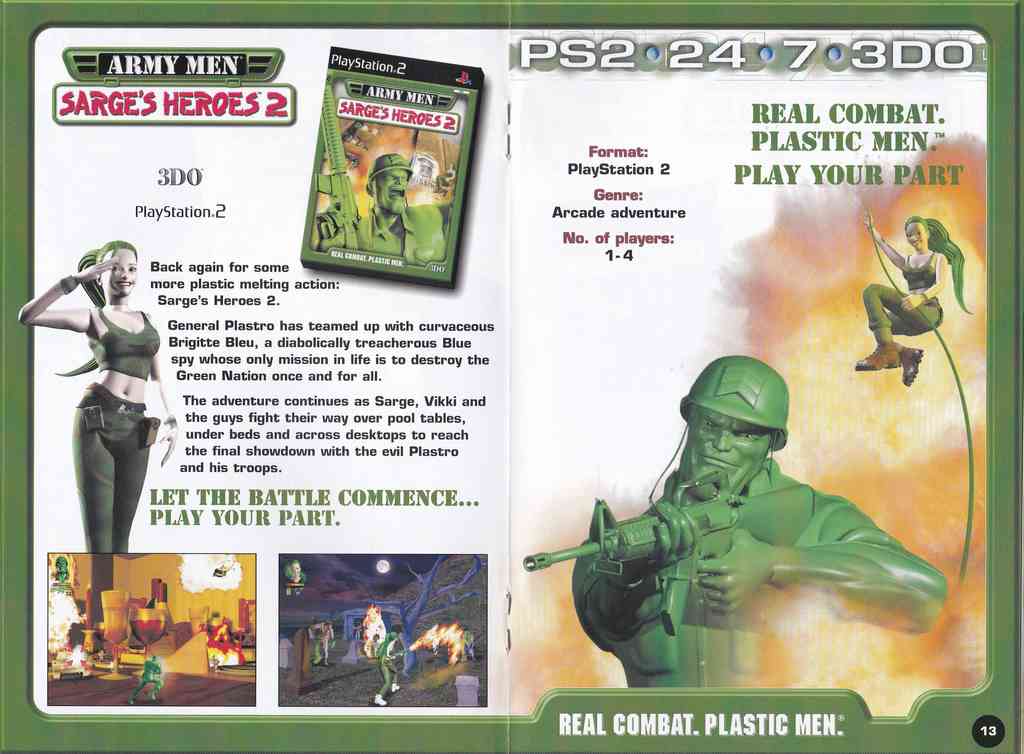
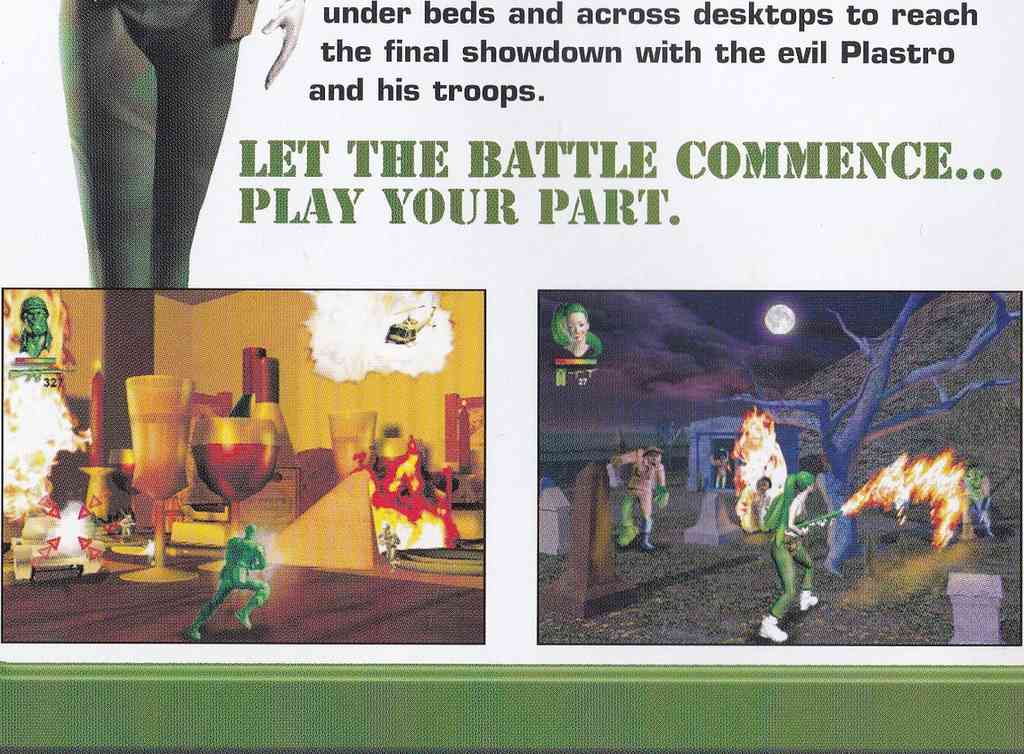
Heavily fake screenshots of the “supposed” Army Men Sarge’s Heroes 2 for PS2, used in promotional content on magazines and all over the internet at the time

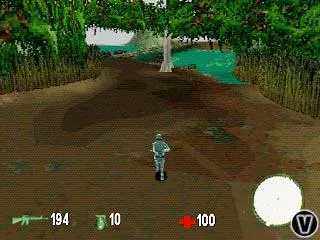
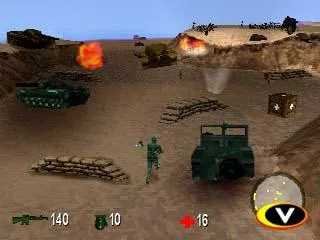
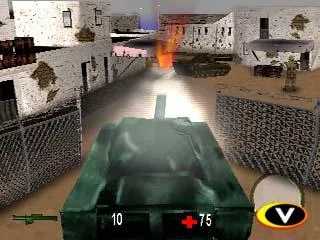
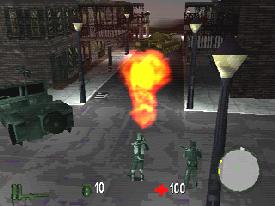
In the game’s different media promotional contents, these screenshots were used to show off the game in its Playstation 2 version. In reality, they are composites using partial images of the game’s actual stages generated in a different engine or stage editing program, along with CGI models of the protagonists and a lot of added effects, something impossible to do for the Playstation 2. These were most likely images made as concept art of how the game should have looked for its development.

And of course, at ArmyMen.com.ar, where fans are still collecting and preserving all official documentation and rare media.

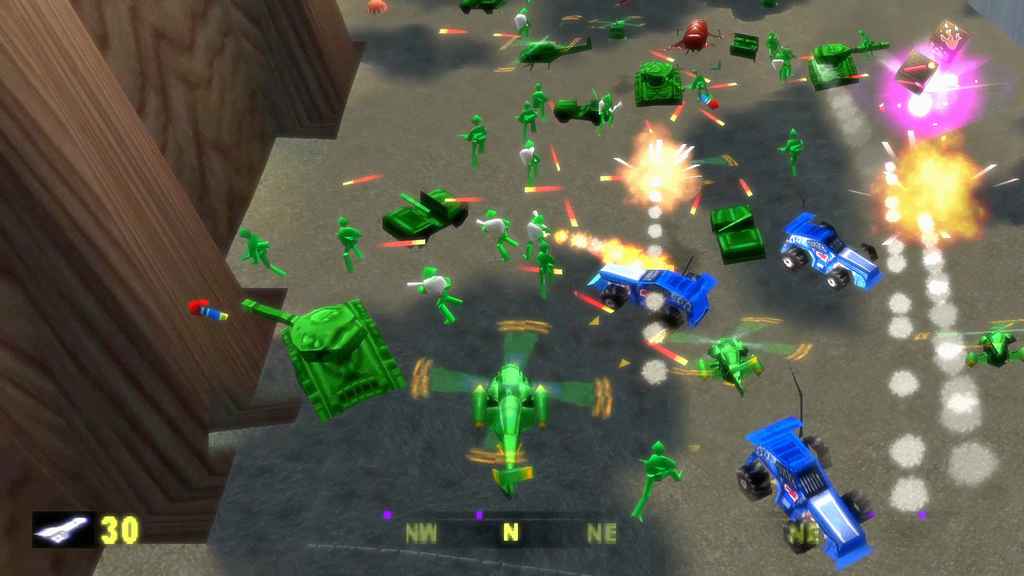
True BETA with minor modifications

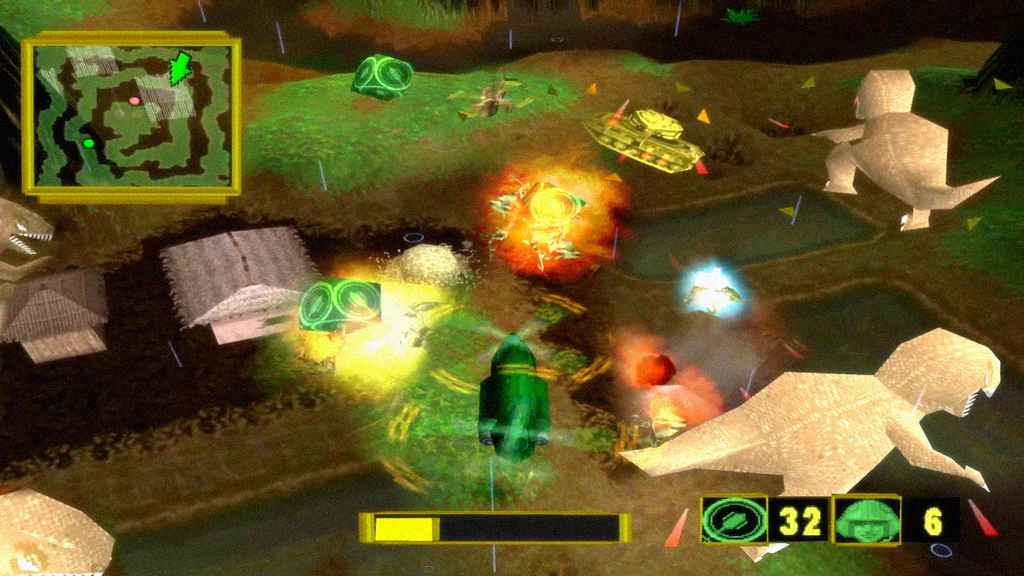
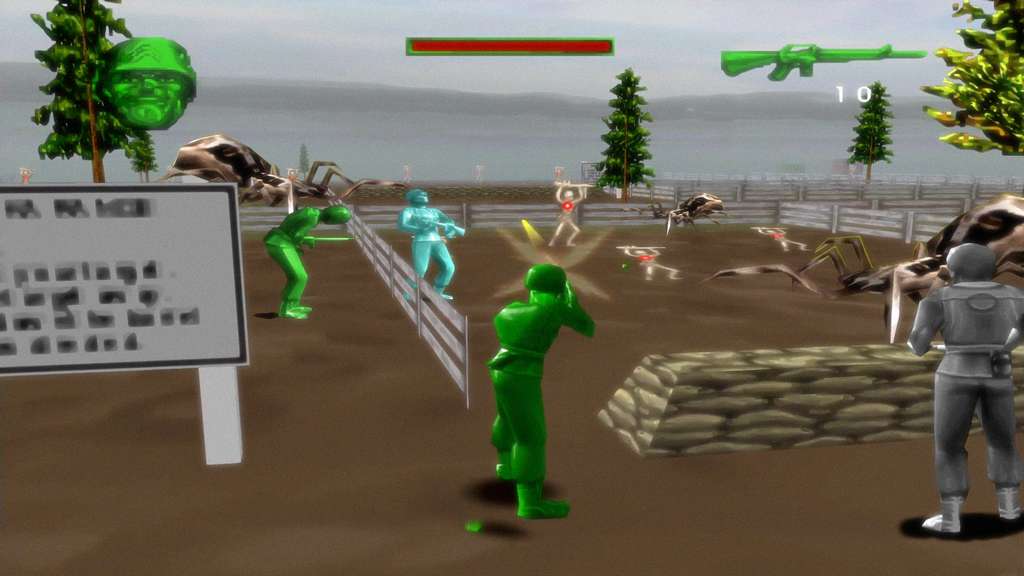
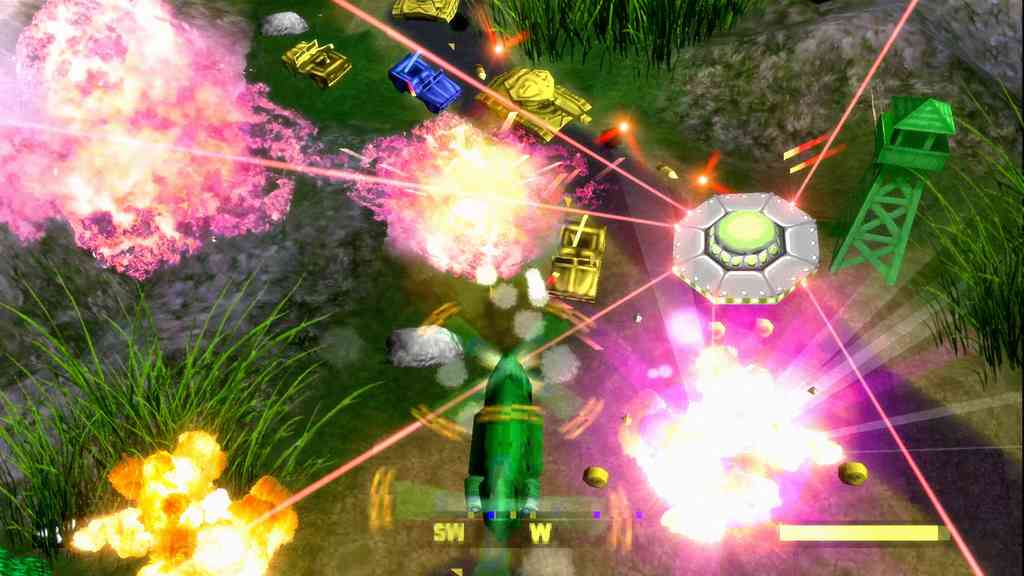
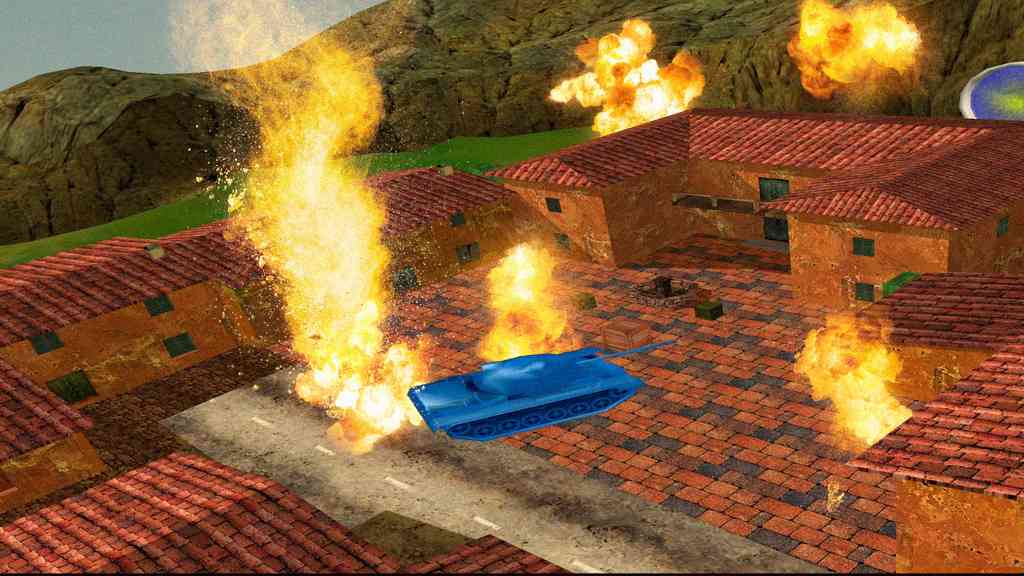
The last 3DO game wasn’t exempt from 3DO tactics. Although these are real in-game images from the game engine (Zero Engine), they have minor additions, such as some soldiers, tanks, and explosions. And these, as they didn’t report, are images from the actual beta, up to the point where 3DO worked on it, before Global Star Software took over and finished the game.

Epilogue: Not Real Gameplay, But Still Part of the Game

And óo players ever got to take control of Sarge.Because sometimes, a fake image contains a very real truth: The spirit of a franchise that helped shape an entire generation’s imagination.

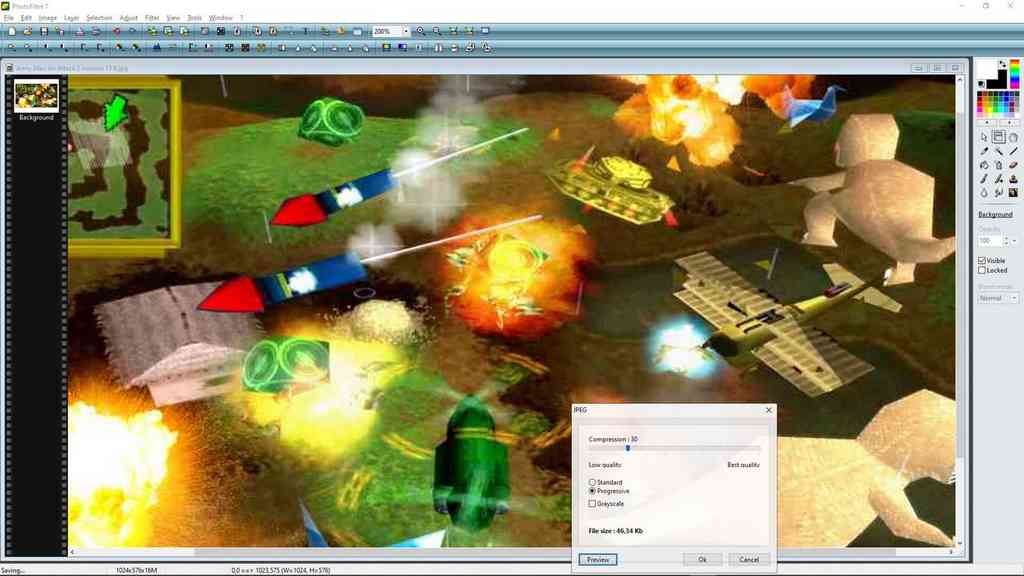
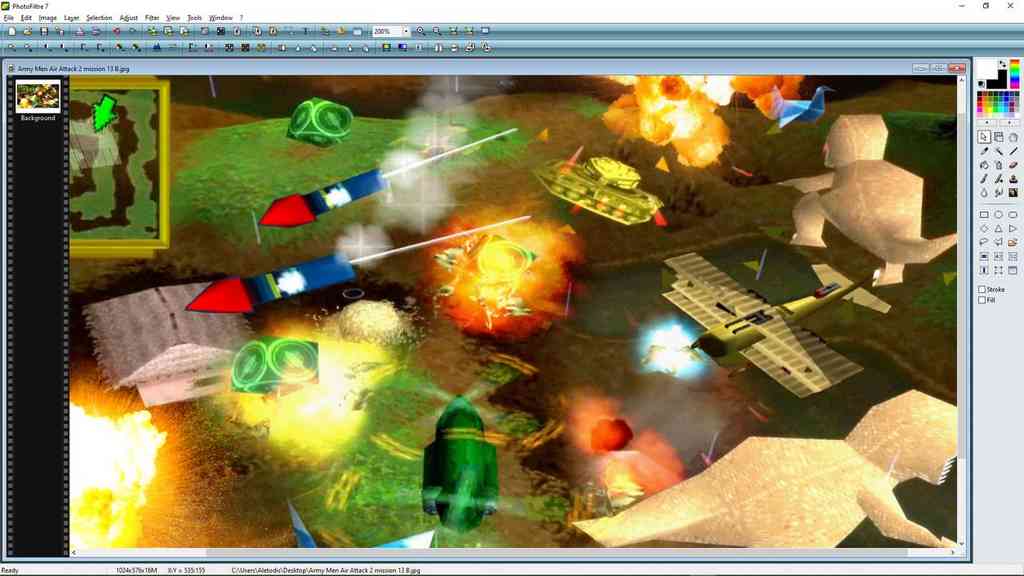
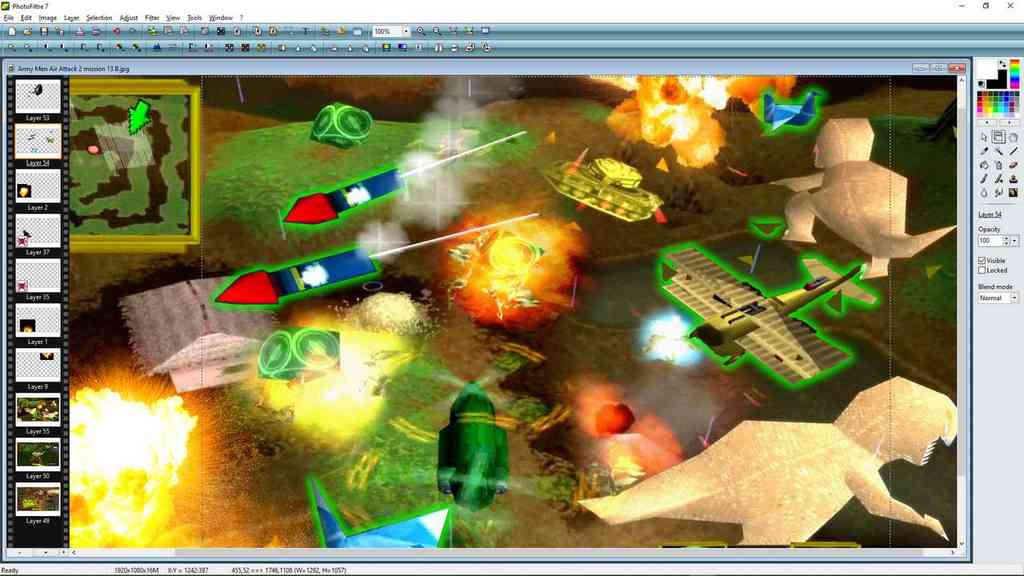
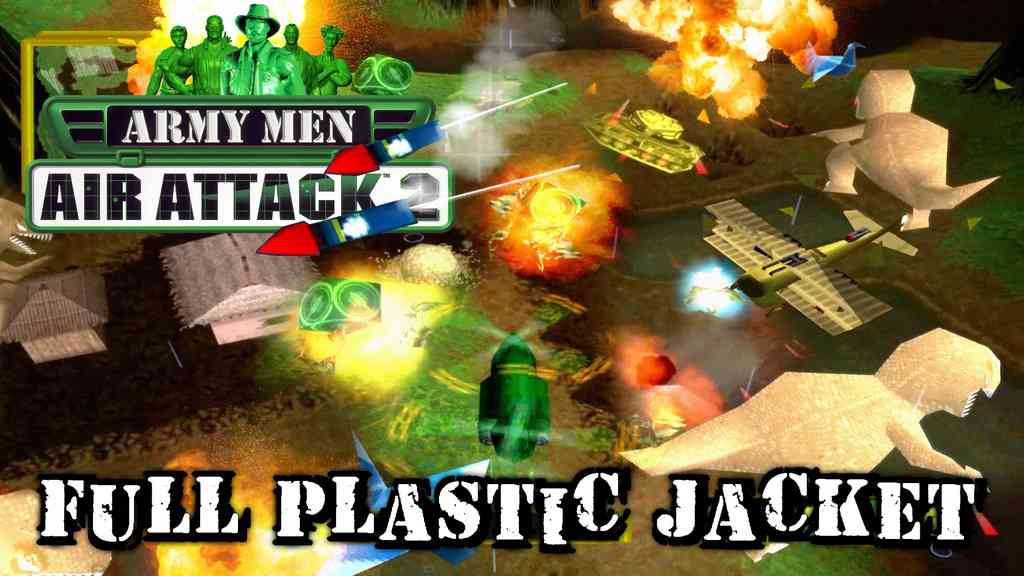
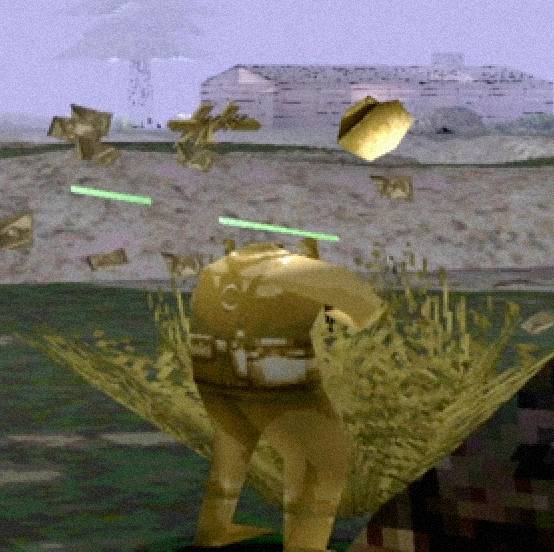
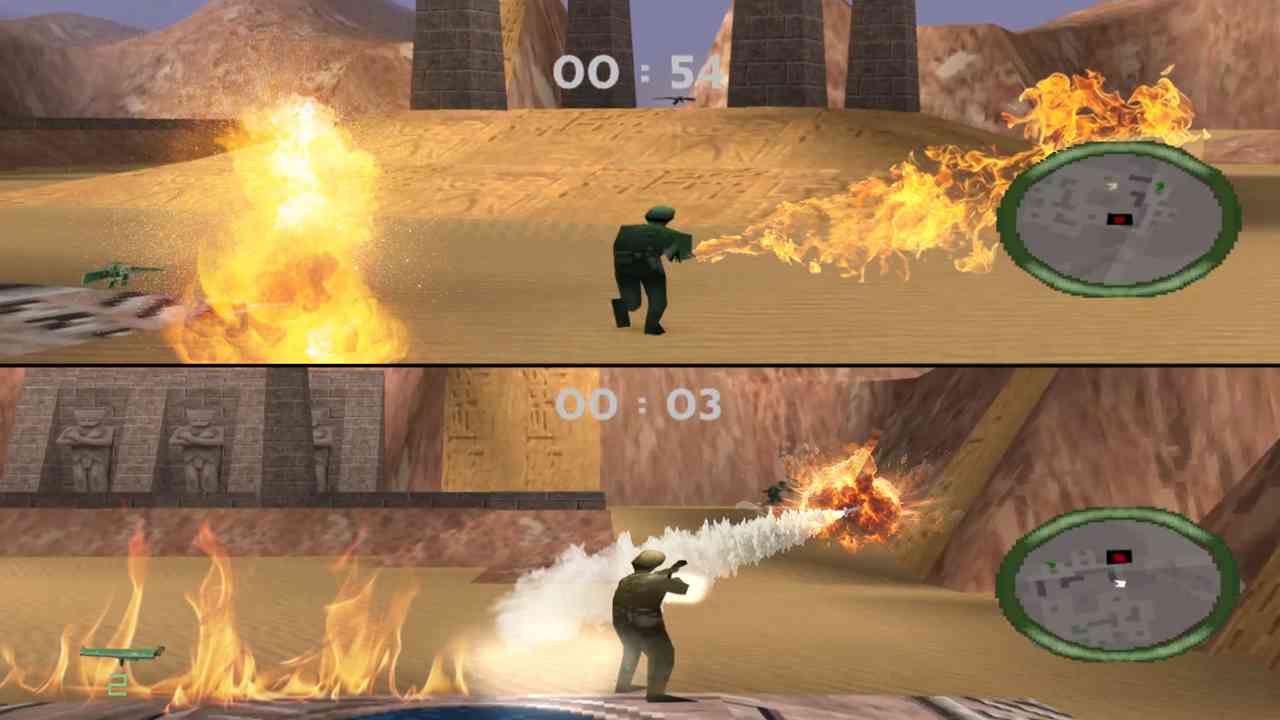
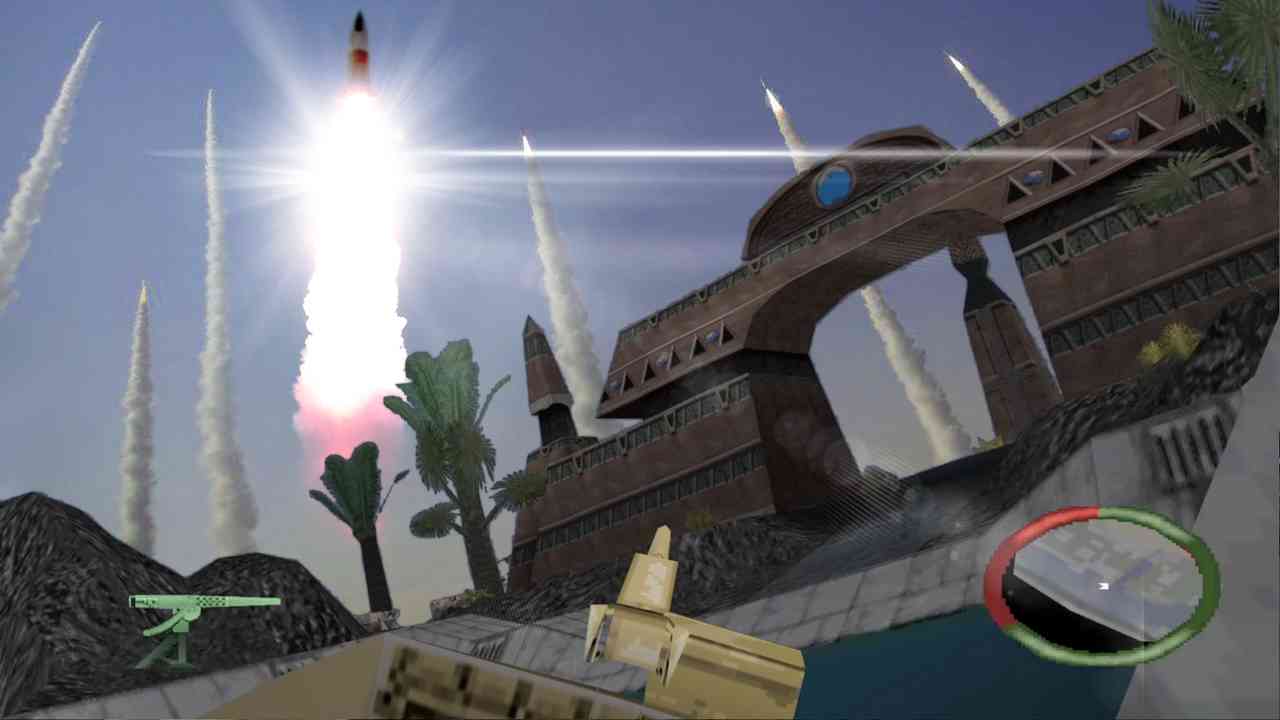
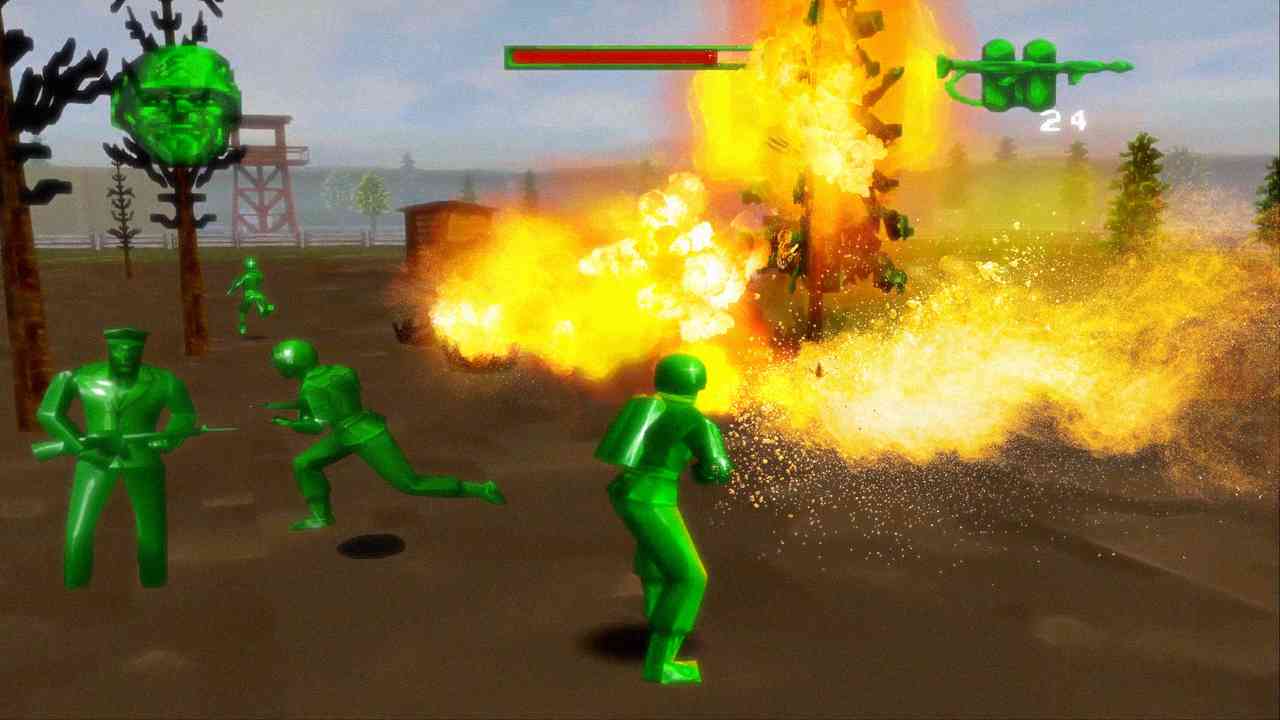
This are some of our own “fake” promotional images. We usually use them for our video thumbnails… but from now on we’ll be using them to promote older 3DO games a little… excessively.

Dev Diary: Portal Runner 2

Although the information about the project is classified so as not to reveal the story, what we can do is talk a little about the development process.

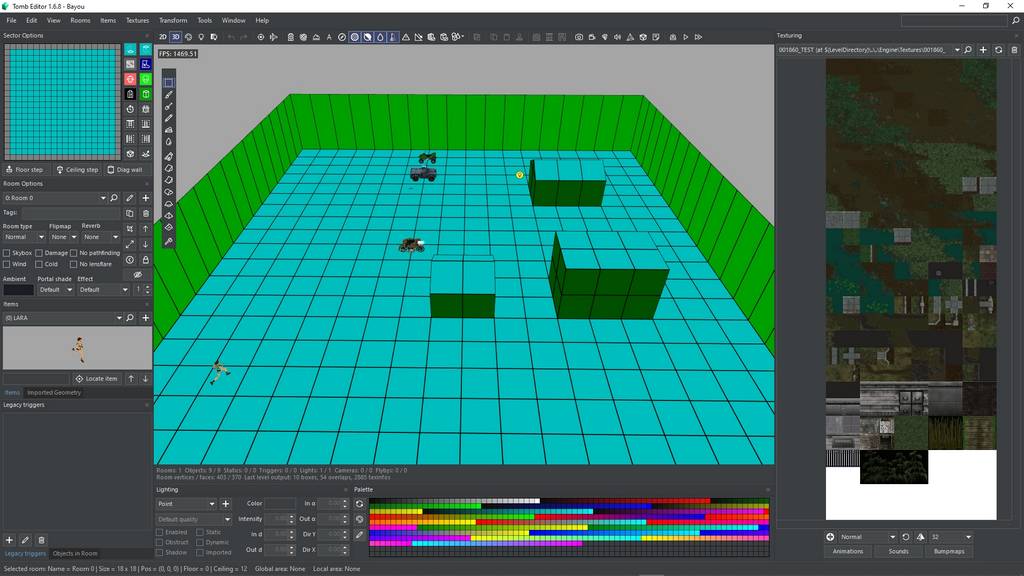
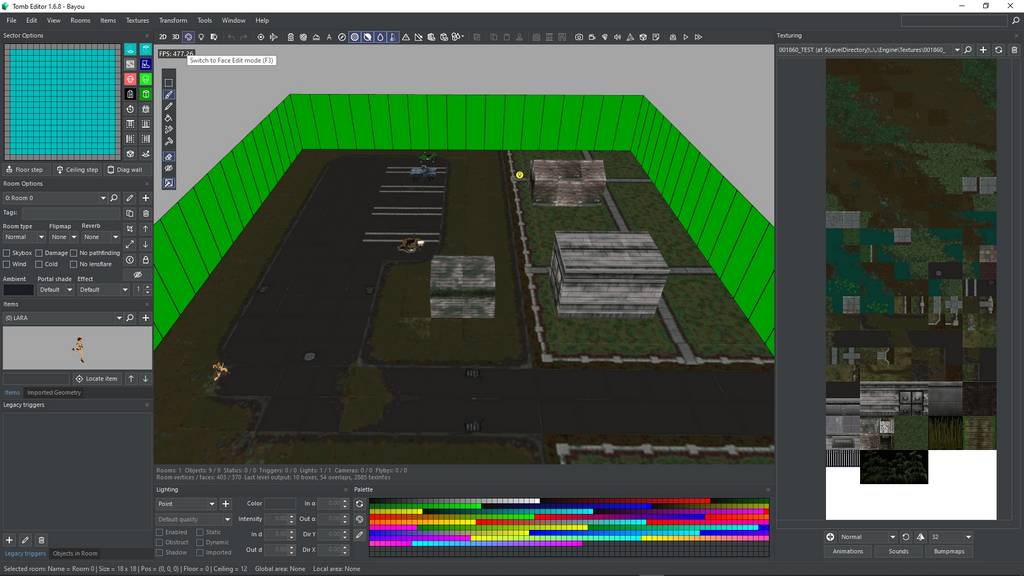
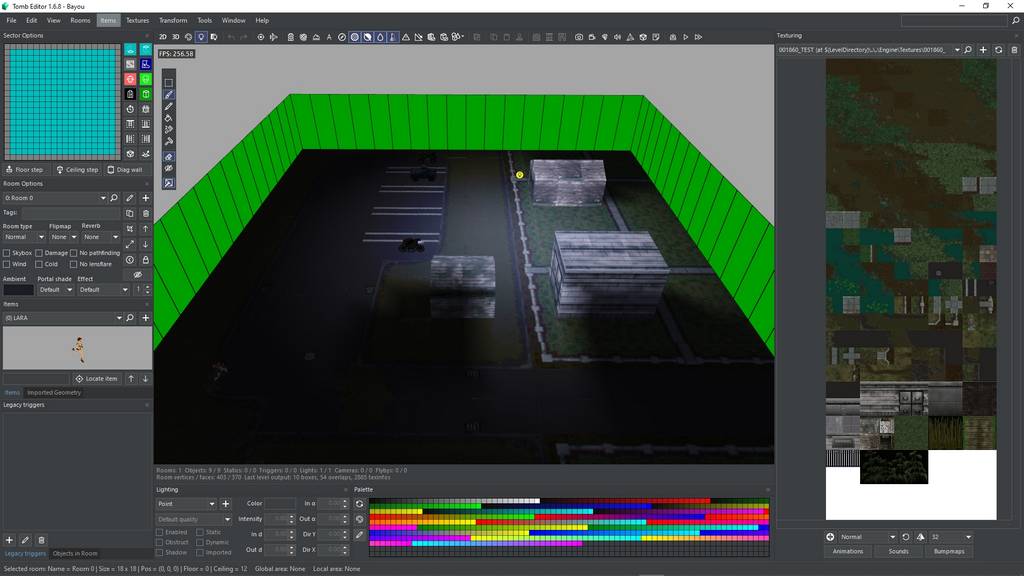
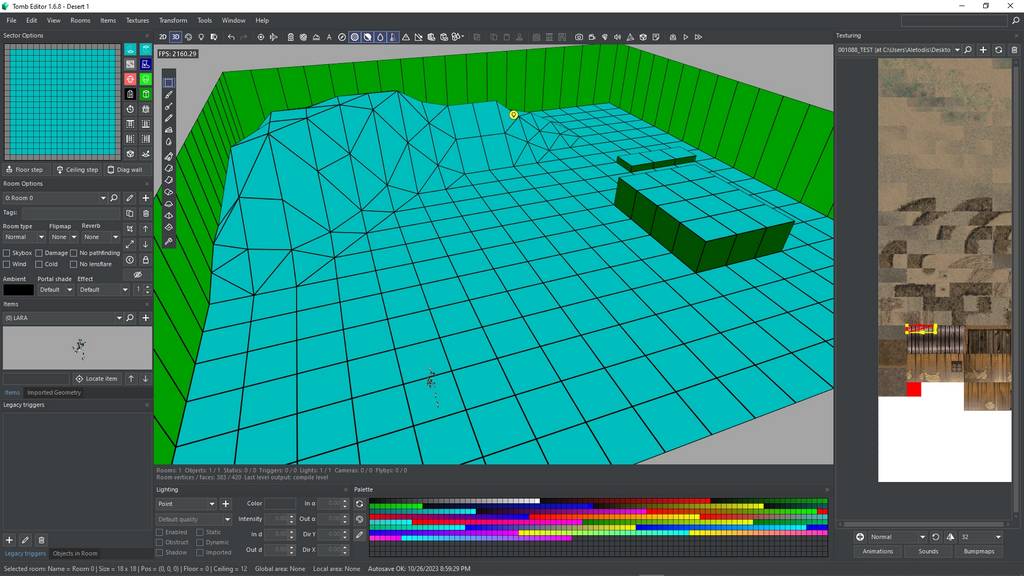
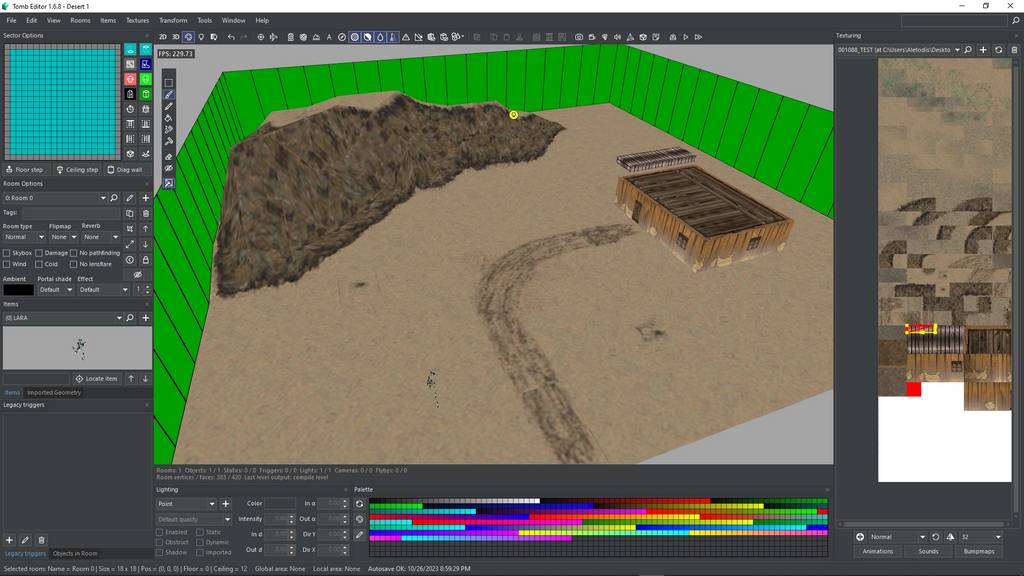
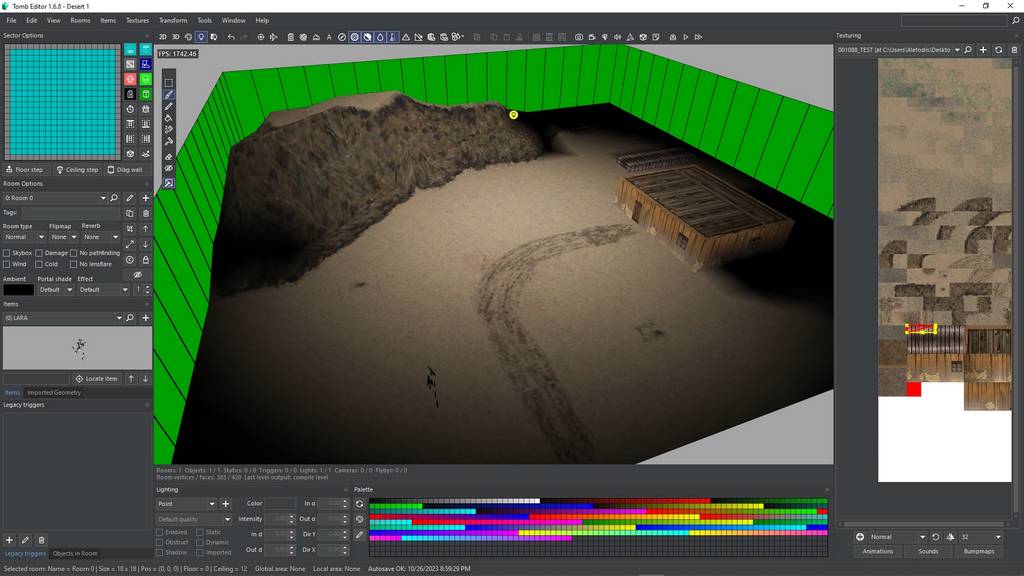
Using TEN Engine, a new updated Tomb Raider Level Editor, we are going to develop a second part of Portal Runner. With no need of more introduction, here we go with some of the development notes for future reference.

Tomb Engine test / Showcase:

During the presentation of the project idea with our collaborators, we made a demonstration of how it works and how to work in Tomb Engine (TEN)

In the graphics we can see the simple geometry of a stage, the texturing and then the lighting. None of this is a final product, just an early test.

Level Design:

In Portal Runner 2 we will visit new scenarios, but also several places and worlds already known, therefore we will imitate the designs of other games.

Level Textures:

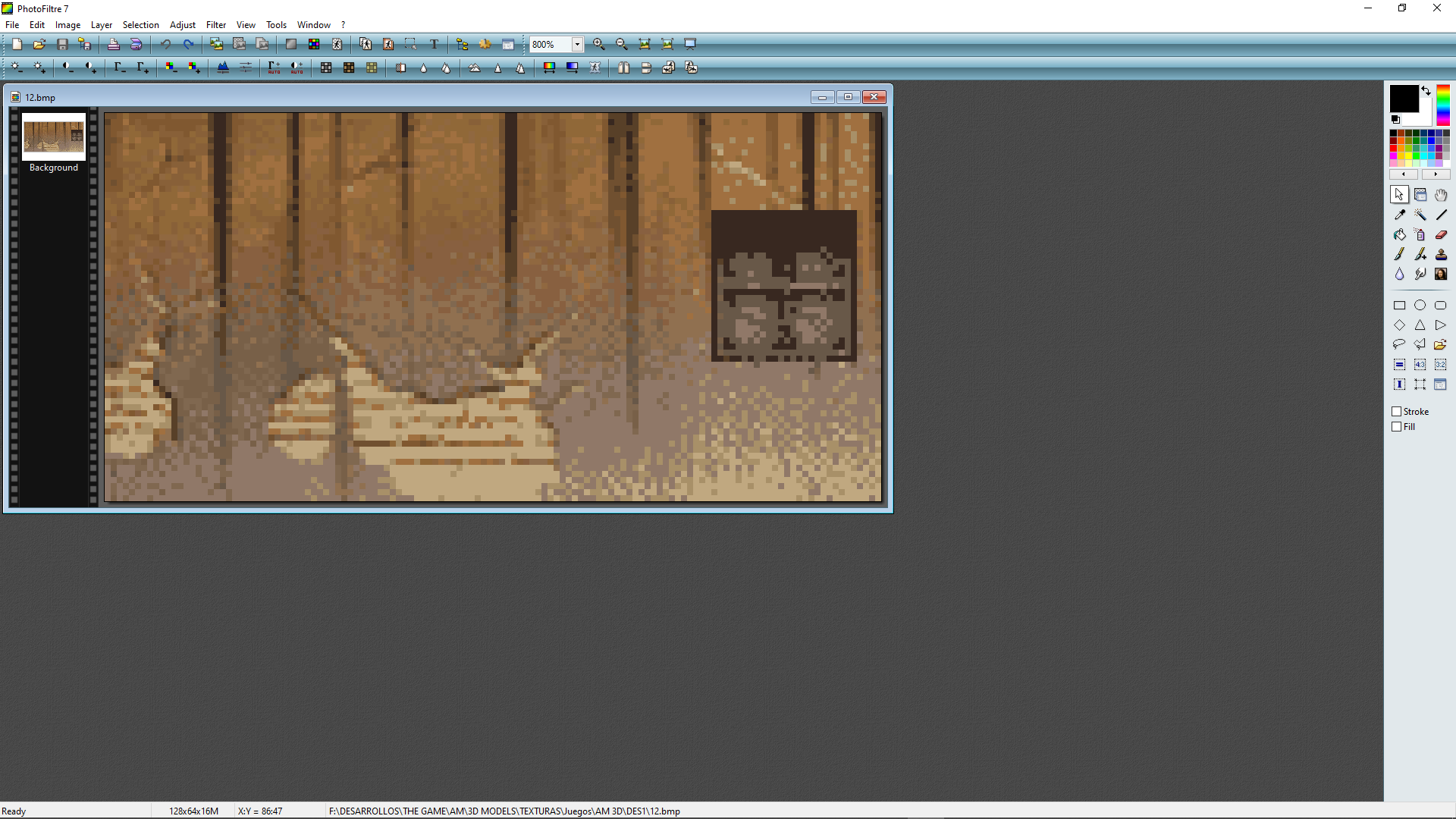
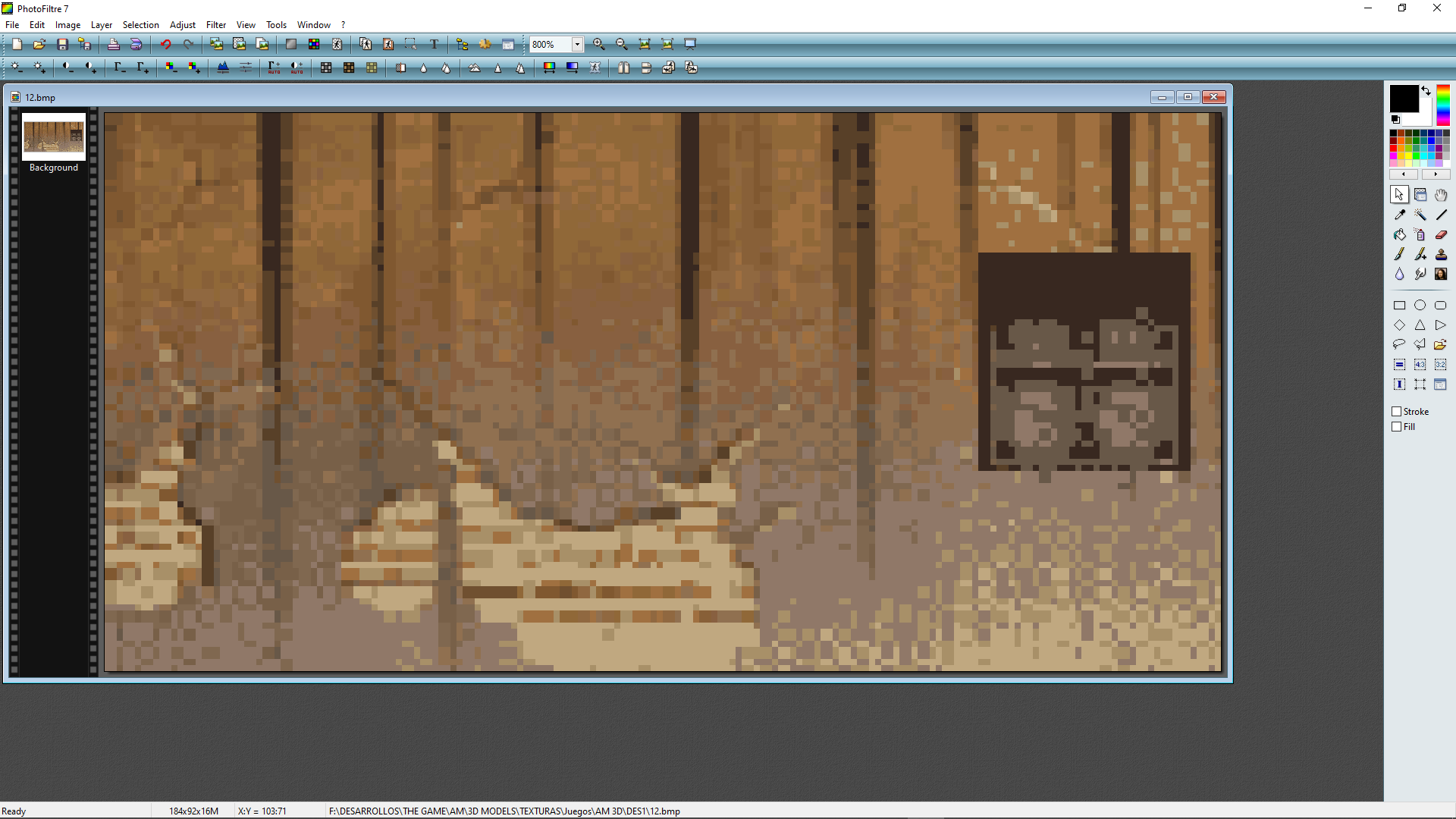
We are going to extract and use textures from old games, to imitate the look and feel of those games. But there is a problem, at least with the textures of the Playstation 1 games, which are mostly 32px, while the old Tomb Raider ones are 24px (or 48px). Well, they are 8px X 4 = 32 and the TR ones are 8px X 3 = 24. That is, multiples of 4 when in TR they are multiples of 3, therefore they have to be converted to multiples of 4 without changing the appearance, because then when putting them next to other textures the image limits can noticeable.

For now, the textures will remain as they were originally, but manually enhanced with the “nearest” resampling method. We will only add a few new variants. But as soon as we see that they work well, we may remaster them.

Making the Microverse, Part 11: Army Men Theory

Major Mylar’s initials are MM (he uses them on his badge). Major Malfunction’s initials are also MM. Major Gooding was Lord Malice, so in “Major Malice” we can also find MM. Which member of the 3DO team that designed some of the games has those initials: Michael Mendheim.

But before you think anything of it, this is just a joke, we’re not theorizing anything 👀. But here’s what it’s all about… and this is the fun part.

When the Fans Write the Story

Across pop culture history, fan enthusiasm has often rewritten the destinies of fictional characters—turning minor roles into legends, saving doomed figures from oblivion, and reshaping entire franchises.

Theories in fandoms are exciting for a number of reasons:
  • Creativity: They allow fans to use their imagination to fill in gaps in the official story, creating new narratives and possibilities.
  • Connection: They foster a sense of community, as fans discuss and debate their theories, sharing their enthusiasm and passion.
  • Deepening: They help fans explore the story’s universe further, uncovering details and connections that may not be apparent at first glance.
  • Interactivity: They make the fan experience more interactive, as fans don’t just consume content, but actively contribute to it.

By the way, it has been proven that some theories in other fandoms were so plausible and amazing to the creatives behind that fandom’s franchise, that they ended up making these fans’ “dreams” come true.

How passionate audiences became co-authors of the narrative

Here are some instances where fan theories or requests influenced the creators to make changes or additions to the story:

  • Peter Parker in “Iron Man 2”: This theory suggested that a young boy wearing an Iron Man mask at the Stark Expo, who is saved by Iron Man, was actually Peter Parker. Tom Holland, who plays Spider-Man, confirmed this theory in an interview, stating that the boy was indeed Peter Parker.
  • Rex in “Return of the Jedi”: Fans speculated that the bearded Rebel trooper seen on Endor in “Return of the Jedi” was actually Captain Rex from “Star Wars: The Clone Wars” and “Star Wars Rebels.” This theory gained traction when “Star Wars Rebels” confirmed that Rex fought in the Battle of Endor. However, the character in “Return of the Jedi” was originally named Nik Sant, and while the theory is popular, it remained a bit complicated for some time, because was not officially confirmed by all sources. But later Dave Filoni itself confirmed it on X, and this was confirmed in “Galaxy of Adventures” animation and in a newly released Star Wars children’s book titled: “I Am A Clone Trooper”.
  • Desperate Housewives: Fans were so vocal about wanting Mike and Susan to end up together that the show’s creator, Marc Cherry, changed his original plan. He had intended for Mike to marry Katherine, but fan demand led him to pair Mike with Susan instead.
  • Pirates of the Caribbean: Fans were eager to see Keith Richards, who inspired Johnny Depp’s portrayal of Jack Sparrow, appear in the films. Due to this overwhelming demand, the writers included Richards as Captain Teague.
  • Lord of the Rings: An unnamed elf in “The Lord of the Rings” films became a fan favorite and was given the name Figwit (Frodo is great — who is that?). Due to the character’s popularity, director Peter Jackson gave him a speaking role in “The Return of the King”.
  • Supernatural: The character of Castiel was originally intended to be a short-term character, but fan enthusiasm led to him becoming a series regular.
  • Brooklyn Nine-Nine: Fans shipped the characters Jake and Amy so strongly that the writers decided to develop their relationship into a central storyline.

These examples show how powerful fan voices can be in shaping the stories they love. But in other occassions, fandoms saved doomed character from death. Here are some of those examples and a few more of characters saved from oblivion:

  • Vegeta: Another powerful example of fan influence comes from Dragon Ball Z. The character Vegeta was originally intended to be a one-time villain, a Saiyan invader to be defeated and discarded. However, his overwhelming popularity among fans convinced Akira Toriyama to keep him in the story. Vegeta went on to become not only a central character but also a fan-favorite anti-hero with one of the richest development arcs in anime.
  • Harley Quinn: Originally introduced as a one-off henchwoman in the 1992 Batman: The Animated Series, Harley Quinn’s unexpected popularity led to her official inclusion in DC Comics canon. Today, she’s one of the most iconic female characters in the DC Universe. Born from animation, adopted by the fans, and cemented by demand.
  • Daryl Dixon: Created exclusively for the TV show of The Walking Dead, Daryl doesn’t exist in the original comics. He was meant to be a short-term character, but fan love kept him alive… and growing. He became a central figure throughout the series and now headlines his own spin-off, a testament to pure fan-driven evolution.
  • Castiel: Initially planned as a temporary character for a few episodes in Supernatural, Castiel became so beloved by the fandom that he remained a core part of the show for over a decade, deeply entangled in its mythos and emotional arcs.
  • Agent Phil Coulson: Introduced in the Marvel Cinematic Universe as a minor S.H.I.E.L.D. agent in Iron Man (2008), Coulson’s charm struck a chord with fans. He reappeared across several MCU films, became a fan favorite, and eventually starred in the long-running series Agents of S.H.I.E.L.D. after dying in the first Avengers movie. A character saved from death and elevated from background filler to franchise connective tissue.
  • Spike: What began as a secondary villain in Buffy the Vampire Slayer, evolved into a fan-favorite antihero. Spike was slated for a short run, but fans demanded more. Writers responded by developing his character across multiple seasons, turning him into a tragic, romantic, and unforgettable icon of the show.

This is yet another case where fan reaction reshaped the narrative, not through direct petitions or theories, but through sheer enthusiasm that creators could not ignore.

Jackpot!

On other occasions, the fandom simply came up with their theories about something that would be a reality later and that had already been thought of, end even executed, by the creators of the franchises. We have the examples of:

  • Jon Snow is a Targaryen: In “Game of Thrones,” fans speculated that Jon Snow was not Ned Stark’s illegitimate son but the child of Lyanna Stark and Rhaegar Targaryen. This theory was confirmed in the series, revealing Jon as Aegon Targaryen.
  • Stan Lee in the MCU: Before it was confirmed, Marvel Cinematic Universe (MCU) fans theorized that Stan Lee, the creator of many Marvel characters, was playing the same character in all his cameos. This was confirmed in “Guardians of the Galaxy Vol. 2,” where he is seen talking to the Watchers.
  • Palpatine’s Return: In the “Star Wars” saga, some fans speculated that Emperor Palpatine didn’t actually die in “Return of the Jedi.” This theory came true in “The Rise of Skywalker,” where Palpatine returns as the main villain.
  • Snoke’s Identity: In “Star Wars: The Force Awakens,” fans speculated about the true identity of Supreme Leader Snoke. While many theories were incorrect, the revelation that Snoke was a creation of Palpatine in “The Rise of Skywalker” was anticipated by some fans.
  • Bruce Willis is Dead in “The Sixth Sense”: Fans speculated that Bruce Willis’s character was dead the whole time in “The Sixth Sense.” This theory was confirmed in the movie’s twist ending.
  • The Identity of the Man in the Iron Mask in “The Flash”: Fans of “The Flash” theorized that the Man in the Iron Mask was Jay Garrick, the original Flash from the comics. This was confirmed in the season 2 finale.
  • The Joker’s Identity in “Batman: Arkham Knight”: Before the release of “Batman: Arkham Knight,” fans speculated that the Arkham Knight was actually Jason Todd, the former Robin. This theory was confirmed in the game.
  • The True Nature of Westworld: In the TV series “Westworld,” fans theorized that the park was actually on another planet or in a different time period. It was later revealed that the park is on a distant planet.
  • The Real Villain in “WandaVision”: Fans speculated that Agatha Harkness was the true villain behind the events in “WandaVision.” This theory was confirmed when Agatha revealed herself.

These cases show that sometimes, fandom isn’t just an audience: it’s a creative force. In the same way, Army Men fans have their own theories, headcanons, and alternate timelines. The microverse is always expanding… and who’s to say fans aren’t the architects of its future?

But in our case we are just connecting unfinished dots with factual possibilities, within the possibilities of the Army Men universe (which we call Toyverse) and trying to fix the inconsistencies that plague the entire saga in a convincing way, which will also require the generation of convincing images, since many times “A picture is worth a thousand words”.

The best enemies ever molded: friends!

Did anyone notice how many traitors there were in the Green ranks alone? The Green Colonel in Army Men 2, H.F. Blintz turning into King Plurtz the First in Army Men RTS, Major Godding turning into Lord Malice in Sarge’s War and Sarge Hawk himself turning into Major Malfunction in (right) Army Men: Major Malfunction.

Another plausible theory (within this theory) is that the AWOL Green Colonel and Blintz knew each other, or at least talked about the same crazy stuff.

We’re going to tie all of this together in a convincing way, adding Major Mylar betraying Plastro in Army Men 2 (talking about the same crazy stuff). But we’ll leave that to the narrative of our project.

Sarge is Sarge Hawk?

A much discussed theory with a simple answer: there is no official answer, and there never will be one. 3DO don’t want to answer the question because they wanted us to believe they are the same, but it was OBVIOUS they are visually very different (the voice of Jim Cumming tried to be the same than the original Sarge). And if there was one answer today, it is unlikely to be genuine.

The reality is that Sarge Hawk and the whole Sarge’s Heroes era was a “soft reboot” where 3DO wanted (without saying so) that people believe that it was the same protagonist, so as not to lose that initial push of the first games. Something like those franchises where the actor changes without any explanation of why, like the 007 films: each film is usually just a stand alone installment, although later there was a series of films where the stories were a continuation (although this did not impact much on the story of each film). But when the 007 franchise changes actors, they simply continue creating films without specifying if it is about the same individual, if in fact the agents are different people who are named as such and finally, there is not even a real temporal progression. This writer’s theory is that different agents are called 007 as they die or retire. This can be seen in Daniel Craig’s latest film, where another female agent is called 007 because Craig’s character was missing ad considered MIA (or AWOL).

So there you have the answer. As far as we are concerned, it’s not about what we believe, but about what we want to do. And we have a GREAT answer to this question that will satisfy everyone… you’ll see!

What do you think?. If you have any good theories, leave them in the comments!

P.S.: Because of this last theory and the statement: “The best enemies ever molded: friends!” we want Hawk to fight the copies of him an his friends of the Bravo Company Commandos. The same for the female protagonist being a Tan version of Hawk’s girlfriends, Vikki.

Army Men video games: Manuals, Guides, Magazines, Printed Advertisements

Army Men is from a time before the Internet, a time of print ads, guide books, and physical games with instruction manuals (yes, believe it or not, they came with instructions!). The Internet was relatively new and not the main target market for consumers. So there was also TV advertising… imagine watching your favorite show or MTV and suddenly an Army Men game commercial comes on!

Manuals:

The manuals that came with all the games, CDs, DVDs, cartridges. Each and every one with their game instruction manuals.

Download Army Men PC Manual PDF

Download Army Men Official Strategies & Secrets PDF

Download Army Men Game Boy Color Manual PDF

Download Army Men 3D PS1 Manual PDF

Download Army Men 3D Prima’s Official Strategy Guide PDF

Download Army Men 2 PC Manual PDF

Download Army Men 2 PC Prima’s Official Strategy Guide PDF

Download Army Men 2 Gameboy Color Manual PDF

Download Army Men: Toys in Space Manual PDF

Download Army Men: Air Tactics PC Manual PDF

Download Army Men World War PC Manual PDF

Download Army Men: World War PS1 Manual PDF

Download Army Men: World War PS1 Prima’s Official Strategy Guide PDF

Download Army Men: World War: Land Sea Air Manual PDF

Download Army Men: World War: Final Front PS1 Manual PDF

Download Army Men: World War: Team Assault PS1 Manual PDF

Download Army Men: Air Attack PS1 Manual PDF

Download Army Men: Air Attack PC Manual PDF

Download Army Men: Air Combat N64 Manual PDF

Download Army Men: Air Combat N64 Prima’s Official Strategy Guide PDF

Download Army Men: Air Combat Game Boy Color Manual PDF

Download Army Men: Air Attack 2 (Blade’s Revenge) PS2 Manual PDF

Download Army Men: Air Attack 2 PS1 Manual PDF (Spanish Versión en Español)

Download Army Men: Air Combat: The Elite Missions GameCube Manual PDF

Download Army Men: Sarge’s Heroes PC Manual PDF

Download Army Men: Sarge’s Heroes N64 User Manual PDF

Download Army Men: Sarge’s Heroes N64 Prima’s Official Strategy Guide PDF

Download Army Men: Sarge’s Heroes PS1 Manual PDF

Download Army Men: Sarge’s Heroes PS1 Prima’s Official Strategy Guide PDF

Download Army Men: Sarge’s Heroes Sega Dreamcast Manual PDF

Download Army Men: Sarge’s Heroes 2 PS2 Manual PDF

Download Army Men: Sarge’s Heroes 2 N64 Manual PDF

Download Army Men: Sarge’s Heroes 2 PS1 Manual PDF

Download Army Men: Sarge’s Heroes 2 N64 PS1 PS2 Prima’s Official Strategy Guide PDF

Download Army Men: Sarge’s Heroes 2 Game Boy Color Manual PDF

Download Army Men: Green Rogue PS1 Manual PDF

Download Army Men: Green Rogue PS2 Manual PDF

Download Portal Runner PS2 Manual PDF

Download Portal Runner GameBoy Color Manual PDF

Download Army Men: RTS PC Manual PDF

Download Army Men RTS PS2 Manual PDF

Download Army Men: RTS GameCube Manual PDF

Download Army Men Advance Gameboy Advance Manual PDF

Download Army Men Operation Green Gameboy Advance Manual PDF

Download Army Men Turf Wars Gameboy Advance Manual PDF

Download Army Men: Sarge’s War PC Manual PDF

Download Army Men: Sarge’s War PS2 Manual PDF

Download Army Men: Sarge’s War XBoX Manual PDF

Download Army Men: Major Malfunction PS2 Manual PDF

Download Army Men: Major Malfunction XBOX Manual PDF

Download Army Men: Soldiers of Misfortune PS2 Manual PDF

Download Army Men: Soldiers of Misfortune Wii Manual PDF

Download Army Men: Soldiers of Misfortune Nintendo DS Manual PDF

Magazines: Reviews, editor guides, ads!

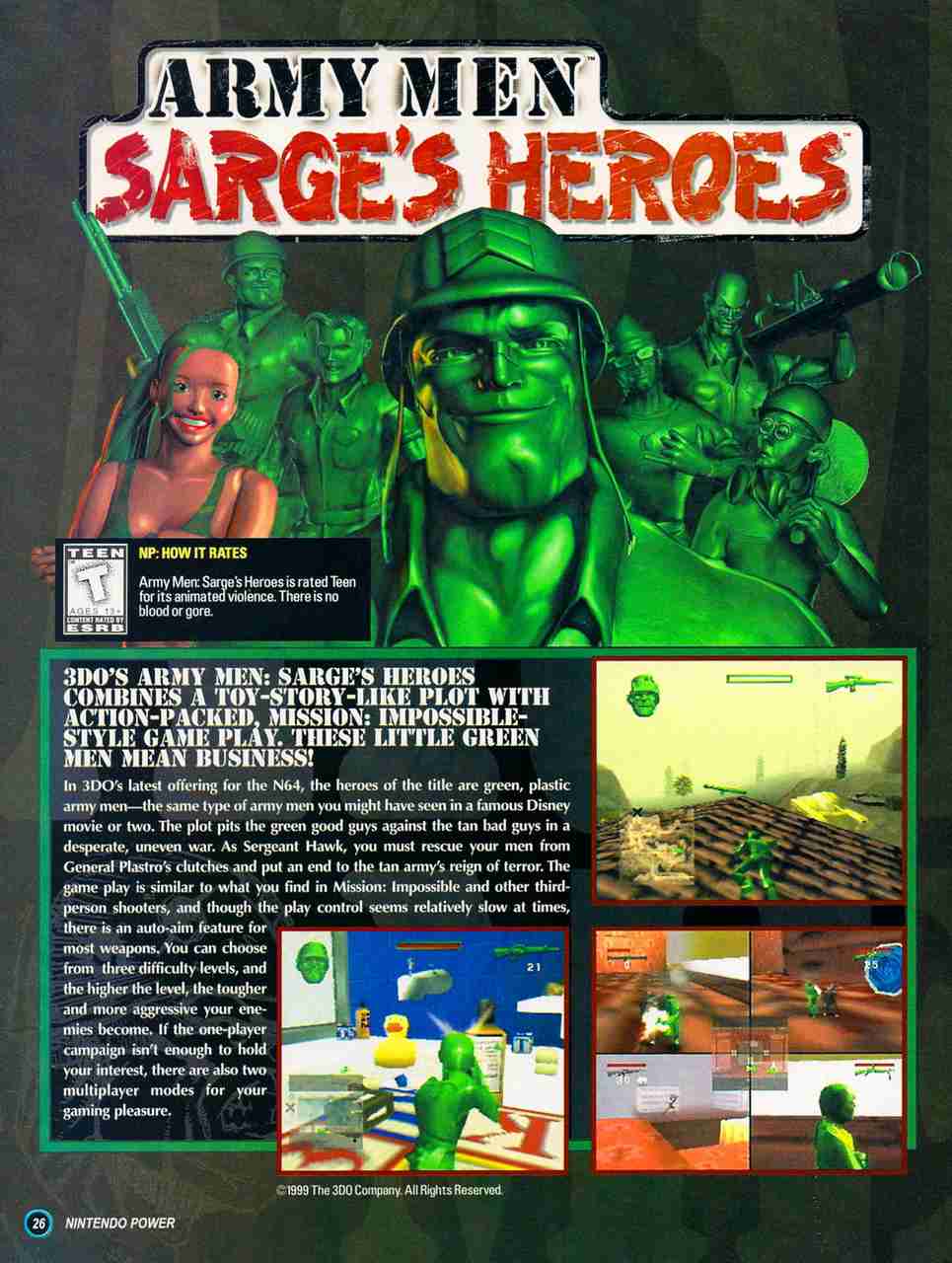
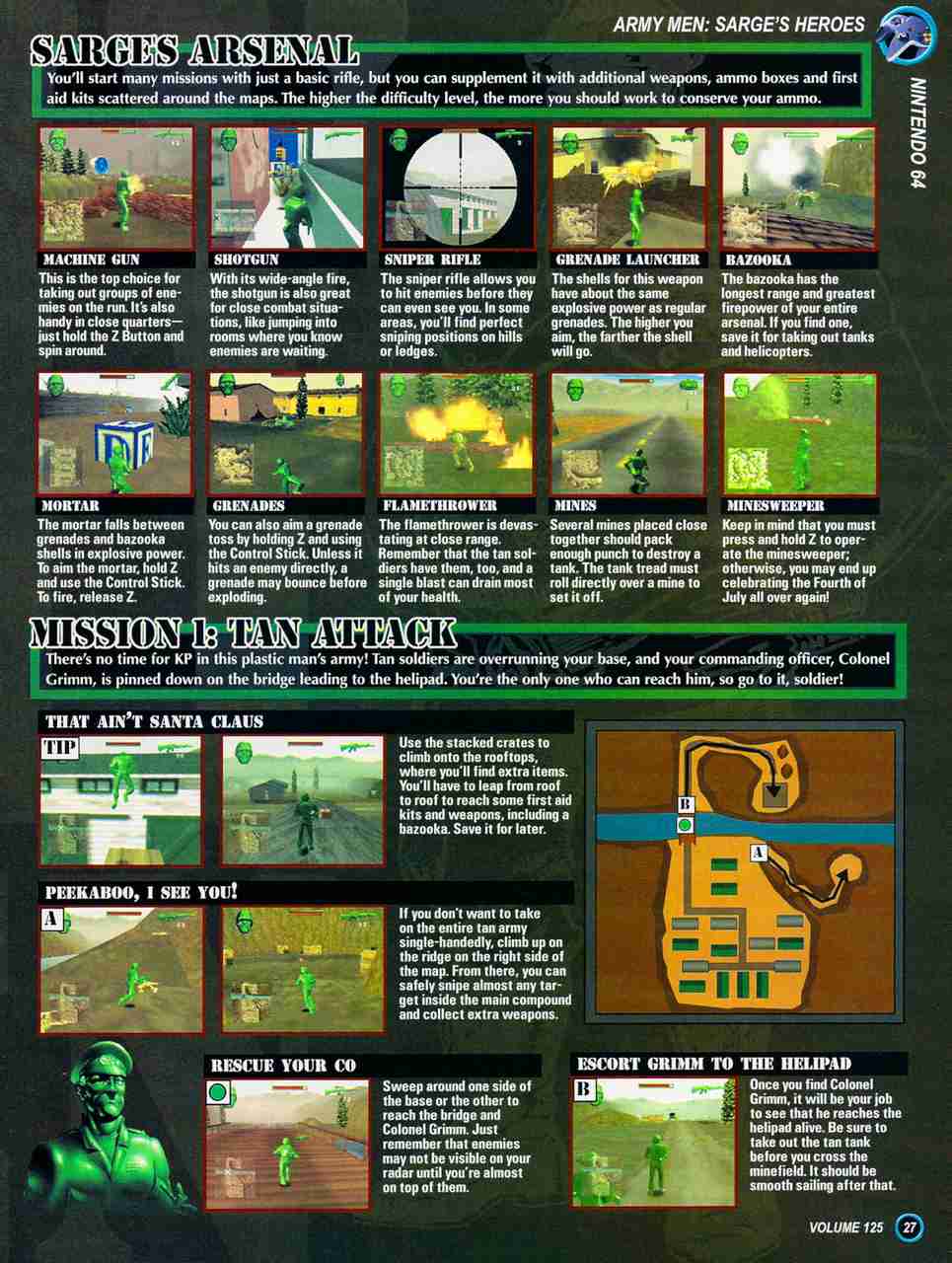
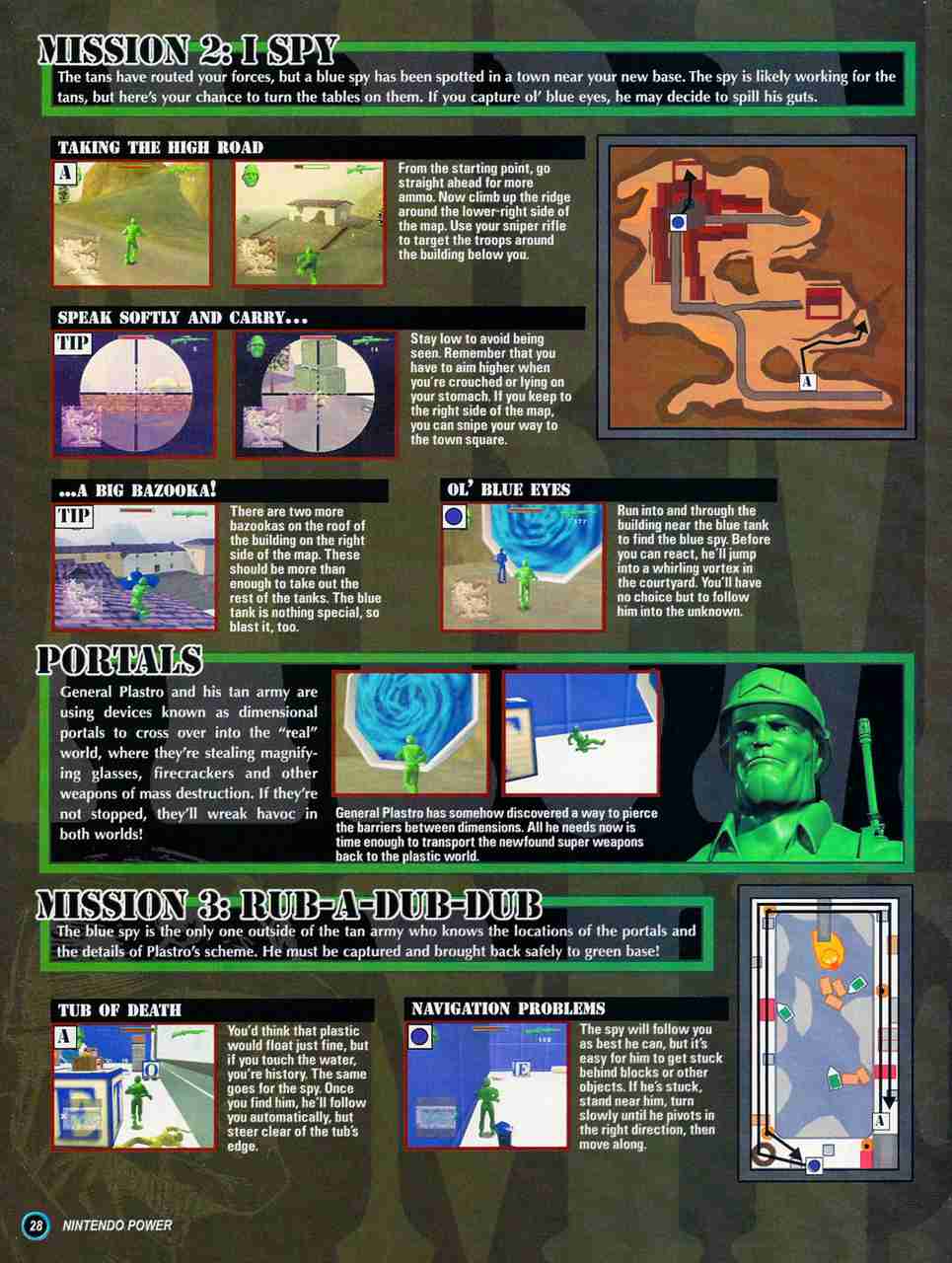
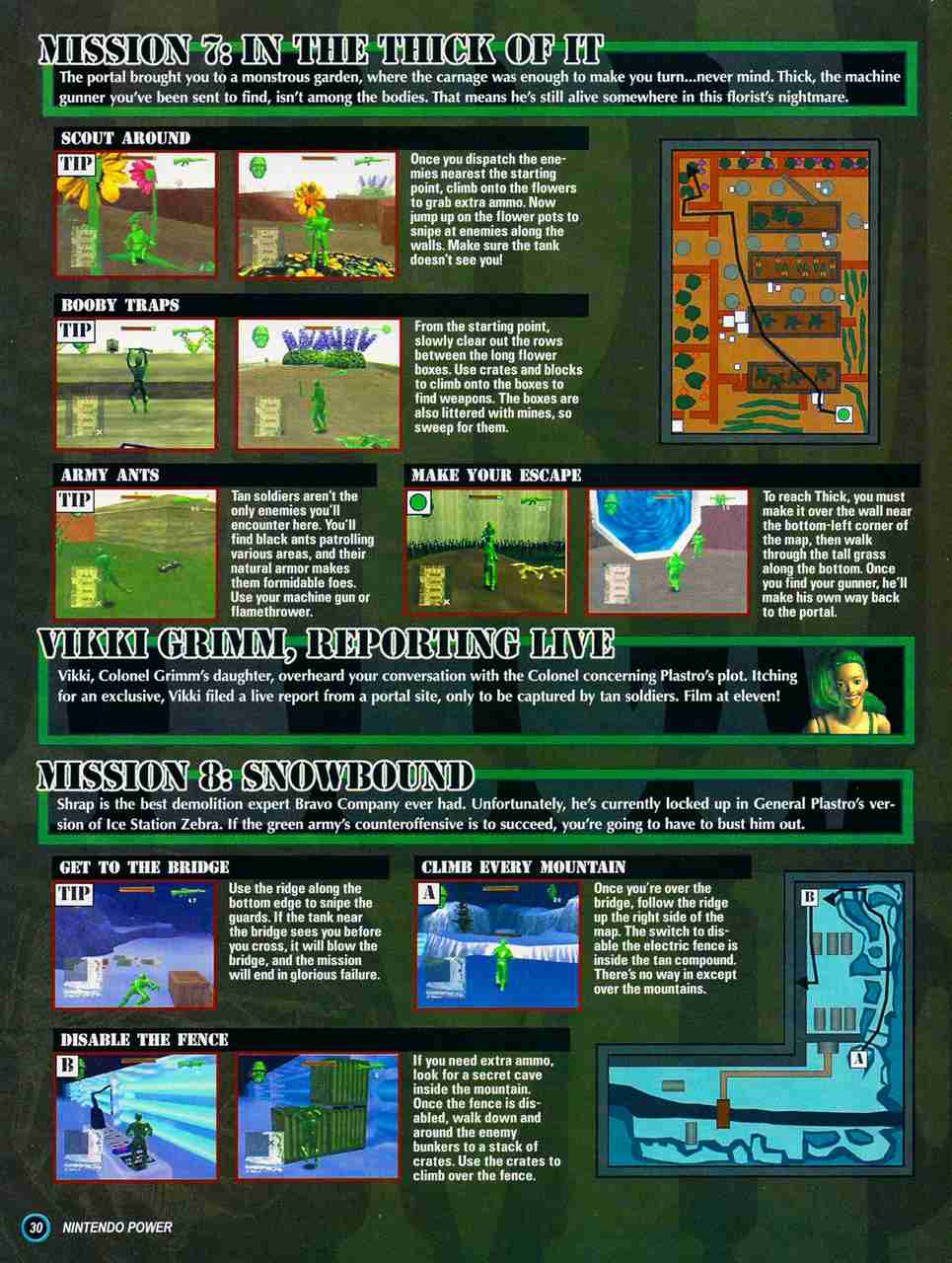
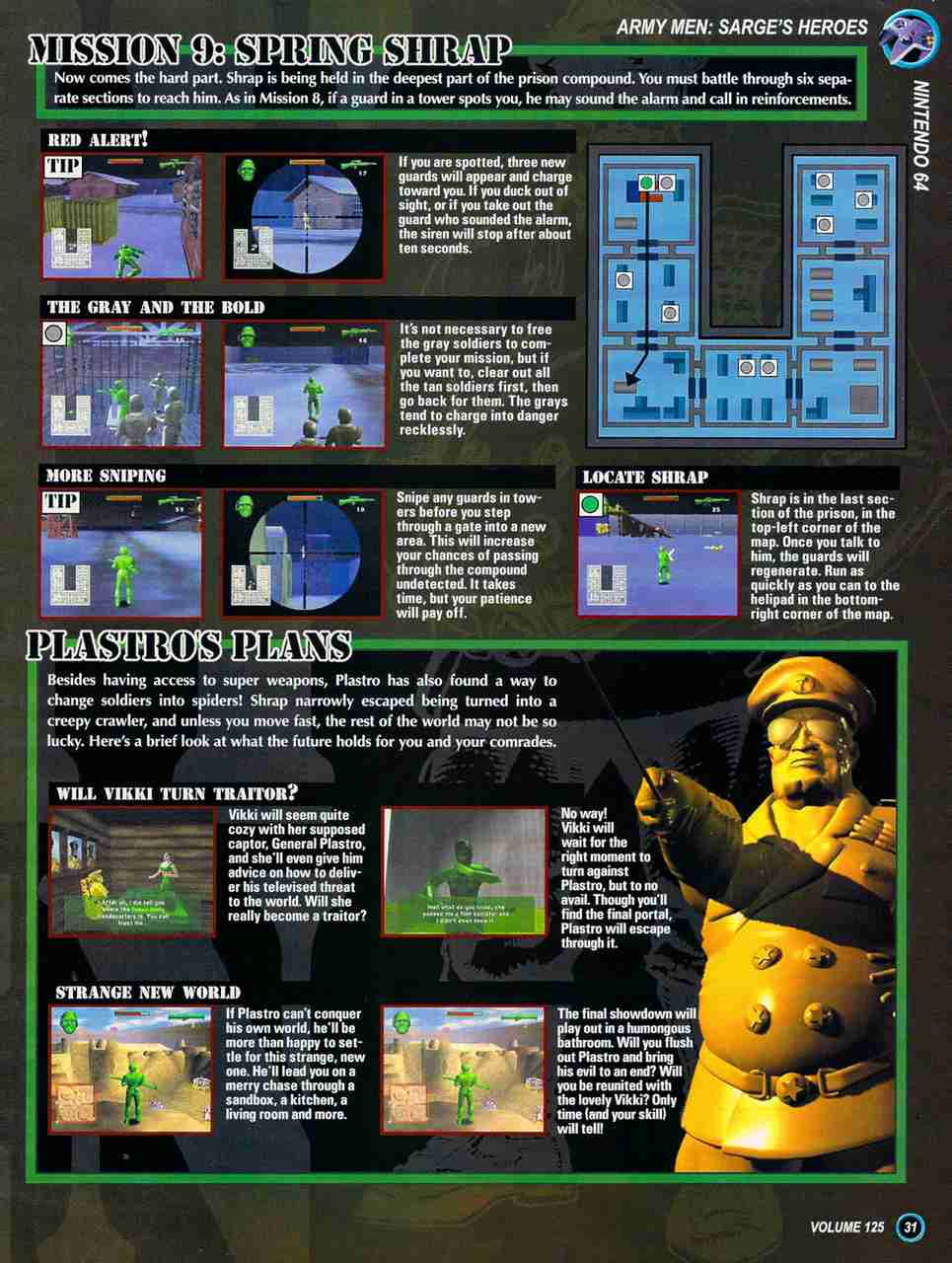
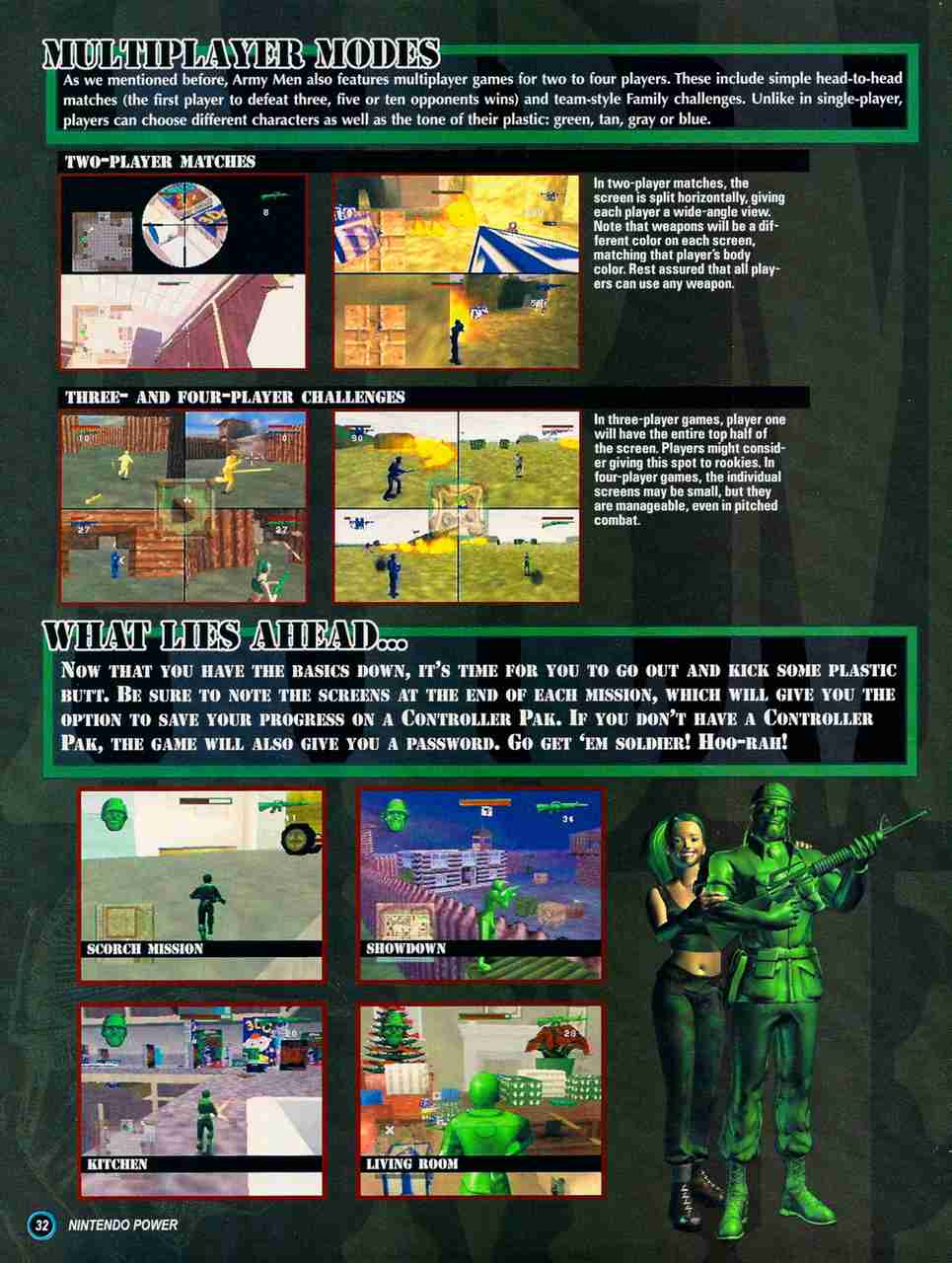
Army Men: Sarge’s Heroes (N64) section from the Nintendo Power magazine, issue #125 (October 1999)

One of the iconic video game magazines of the time, focused on Nintendo only and of course, mainly Nintendo 64, the console of the moment. Nintendo Power was a magazine dedicated to video game news and strategies, launched by Nintendo of America in July/August 1988. Initially, it served as Nintendo’s official print magazine for North America. The publication started as a monthly release by Nintendo of America and later became independent. In December 2007, Future US, a subsidiary of the British publisher Future plc, took over its publication.

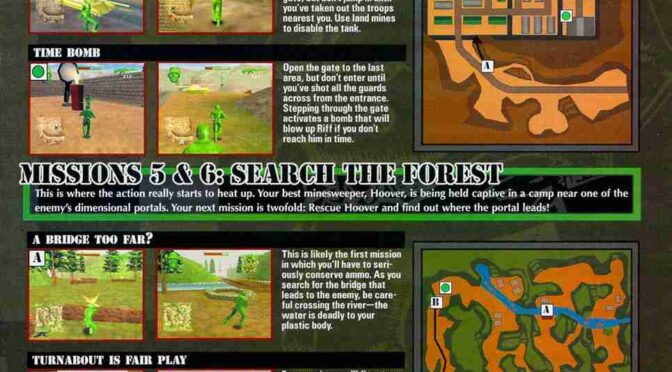
In this case, a section with a guide to the first missions of Sarge’s Heroes for Nintendo 64, with some extras, such as tips for multiplayer mode.

Download Army Men: Sarge’s Heroes (N64) section from the Nintendo Power magazine, issue #125

The magazine had a remarkable 24-year run, making it one of the longest-running video game magazines in the United States and Canada. However, on August 21, 2012, Nintendo announced that it would not renew its licensing agreement with Future Publishing, leading to the magazine’s closure in December 2012. The final issue, volume 285, was published on December 11, 2012.

All Nintendo Power Magazines from Archive.org

In addition, a podcast version of Nintendo Power was launched on December 20, 2017, hosted by former Editor-in-Chief Chris Slate. The podcast continued until 2023 and is currently on hiatus as of 2024.

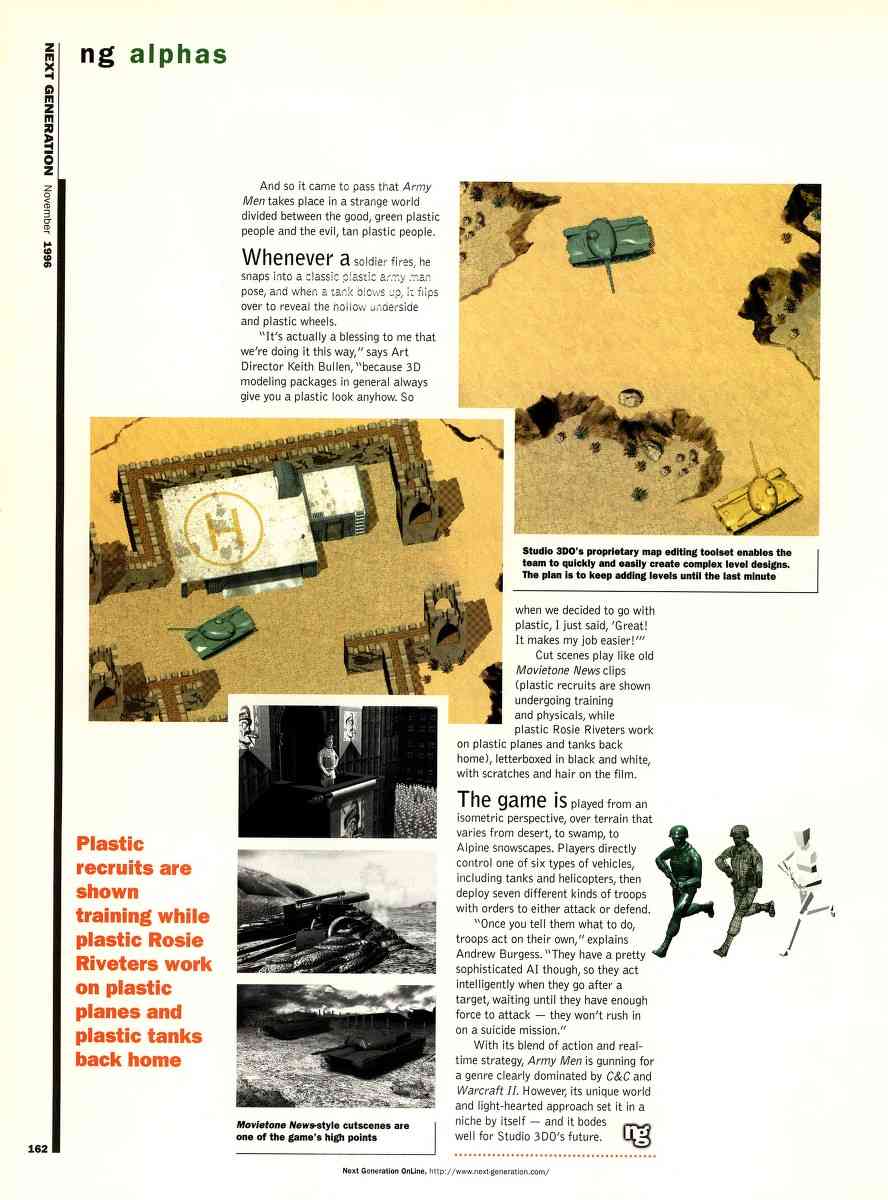
Army Men (PC) section from the Next Generation magazine, November 23, 1996 issue

Next Generation was a video game magazine published by Imagine Media from 1995 to 2002. It focused on the gaming industry, offering in-depth articles, interviews with developers, and reviews of upcoming games and hardware. The magazine was known for its professional tone and emphasis on the business and technical aspects of gaming, rather than just game reviews and cheats. It provided readers with insights into the future of gaming technology and trends.

Download Next Generation Magazine issue from 23 Nov 1996

In this case a sneak peek of Army Men, the then new 3DO game in progress, a year and a half before its release…

Next_Generation Magazine issue from_23_Nov_1996 in Archive.org

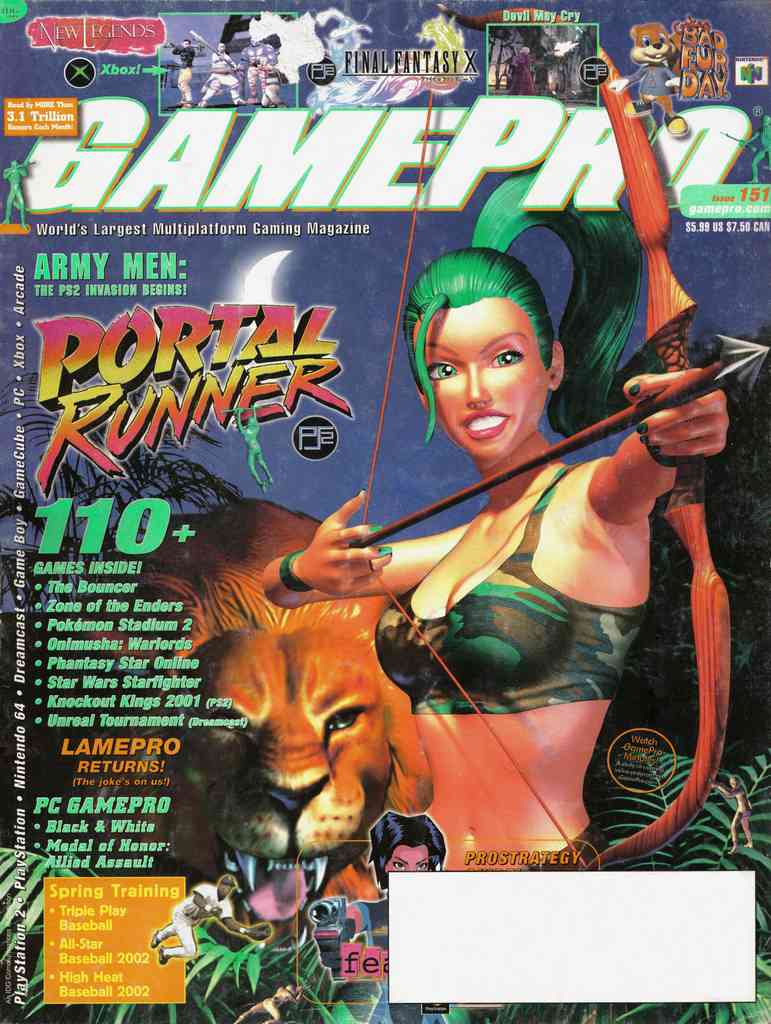
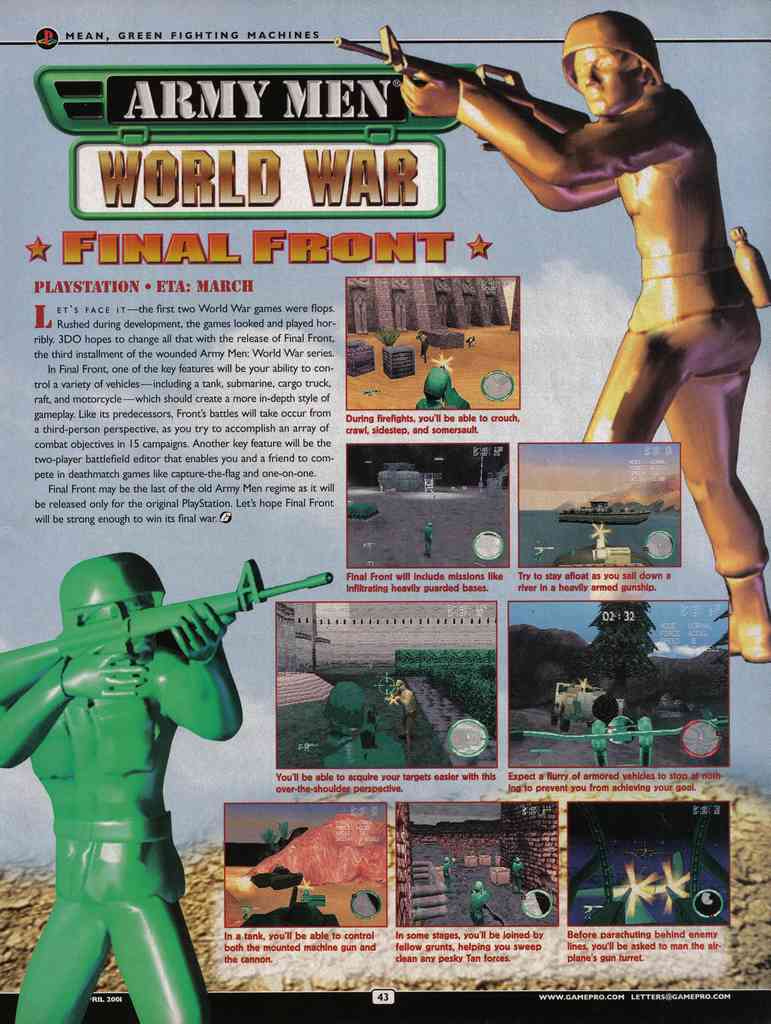
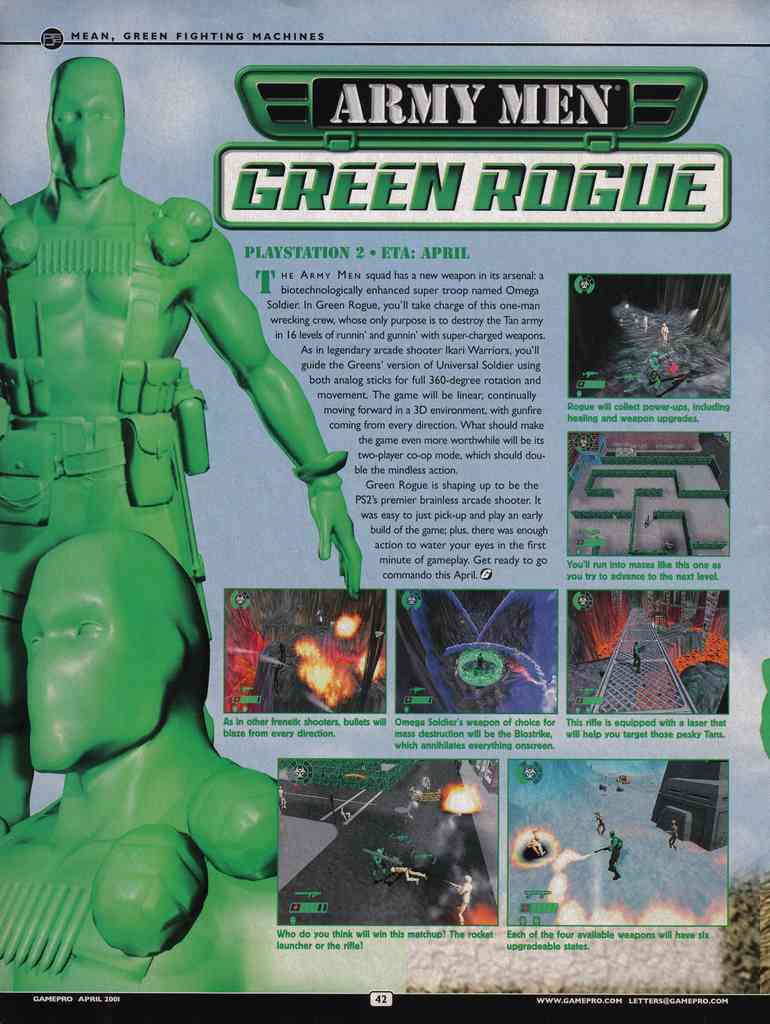
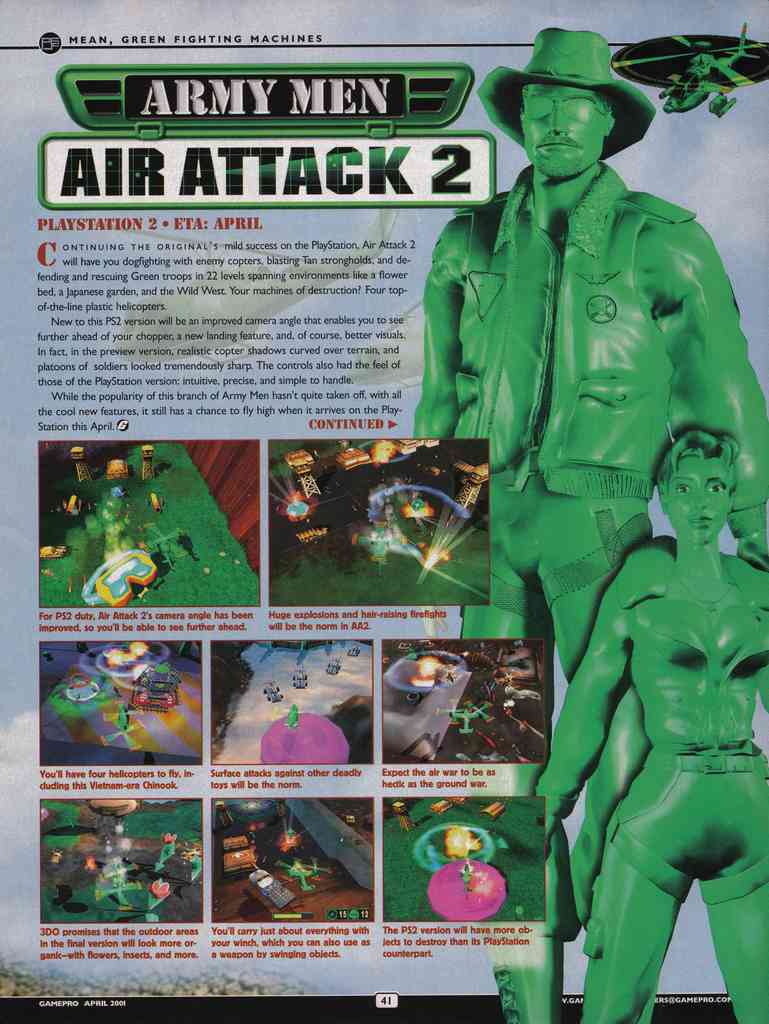
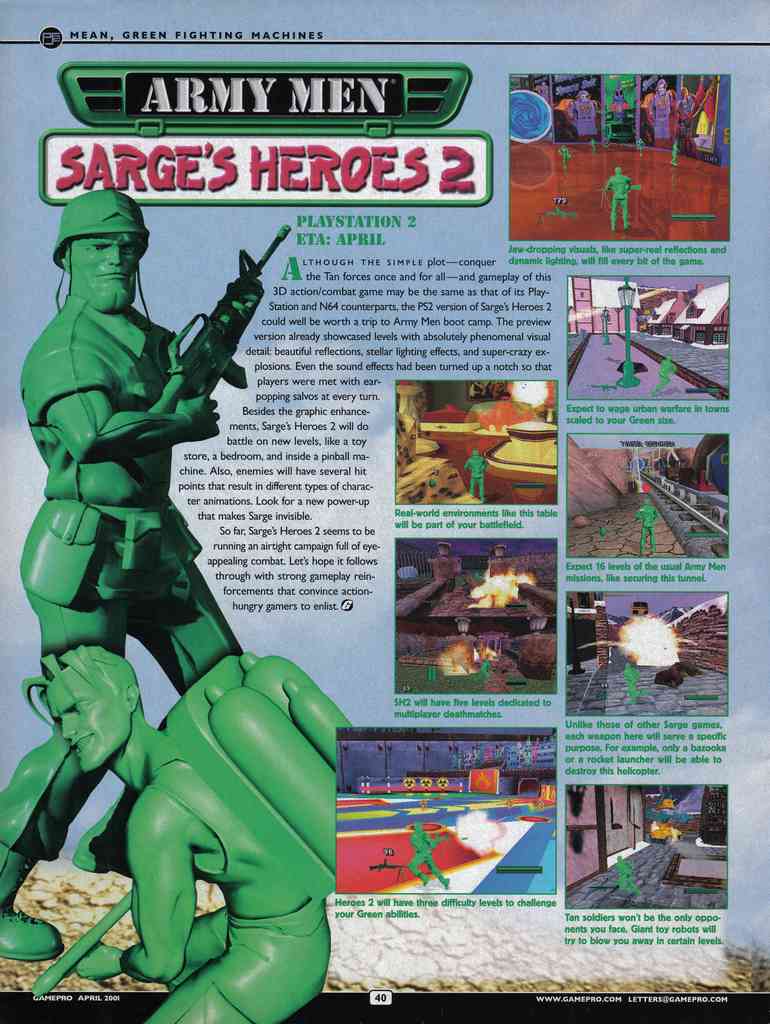
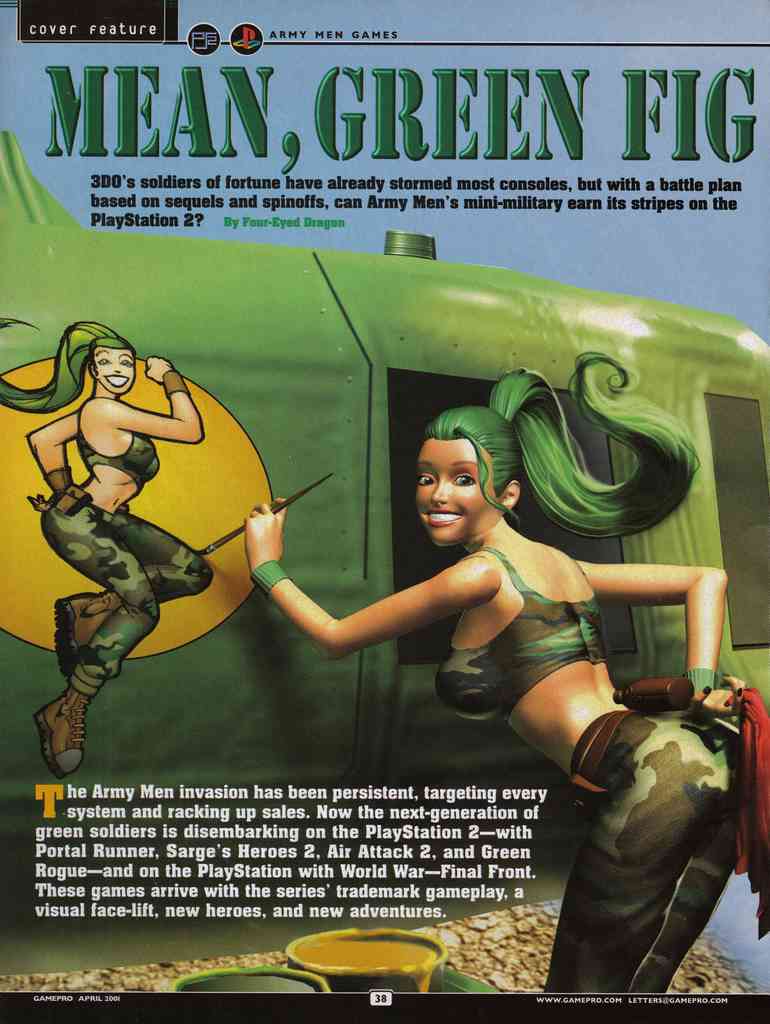
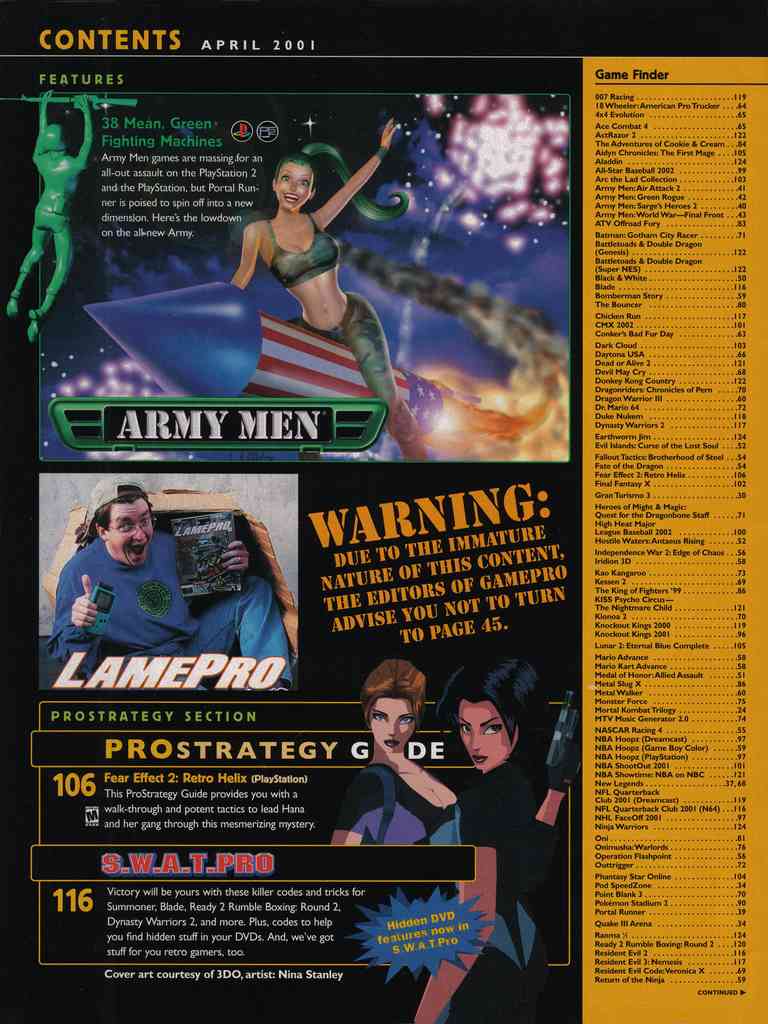
Army Men games on the GamePro Magazine Issue 151 (April 2001)

GamePro was a well-known video game magazine that ran from 1989 to 2011. It provided gamers with reviews, previews, tips, and strategies across various gaming platforms. The magazine was recognized for its vibrant layout and engaging content, including a unique rating system and helpful “ProTips” for improving gameplay. GamePro was a key source of gaming news and information during its publication years.

Download complete GamePro Magazine Issue 151 (April 2001)

In this case a sneak peek of the Army Men Playstation 2 launches: Sarge’s Heroes 2, Air Attack 2, Green Rogue & Portal Runner. And for the Playstation 1, Army Men: World War: Final Front.

Making the Microverse, Part 10: Flags, Identity, Nations and Factions

Flags, logos, and other visual representations are powerful tools in graphic design, serving as symbols that convey identity, values, and messages of groups, nations, factions, and communities. Let’s explore these elements from a graphic design perspective, focusing on representation, iconography, and the meanings behind various design elements and their users.

Army Men Nations flags

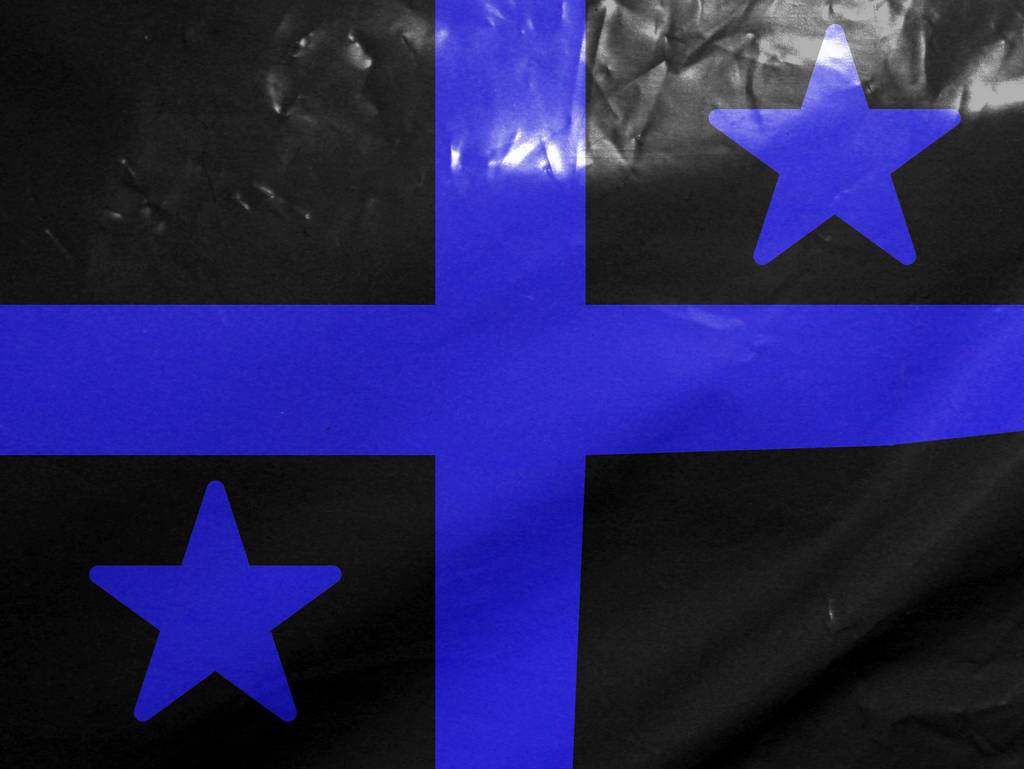
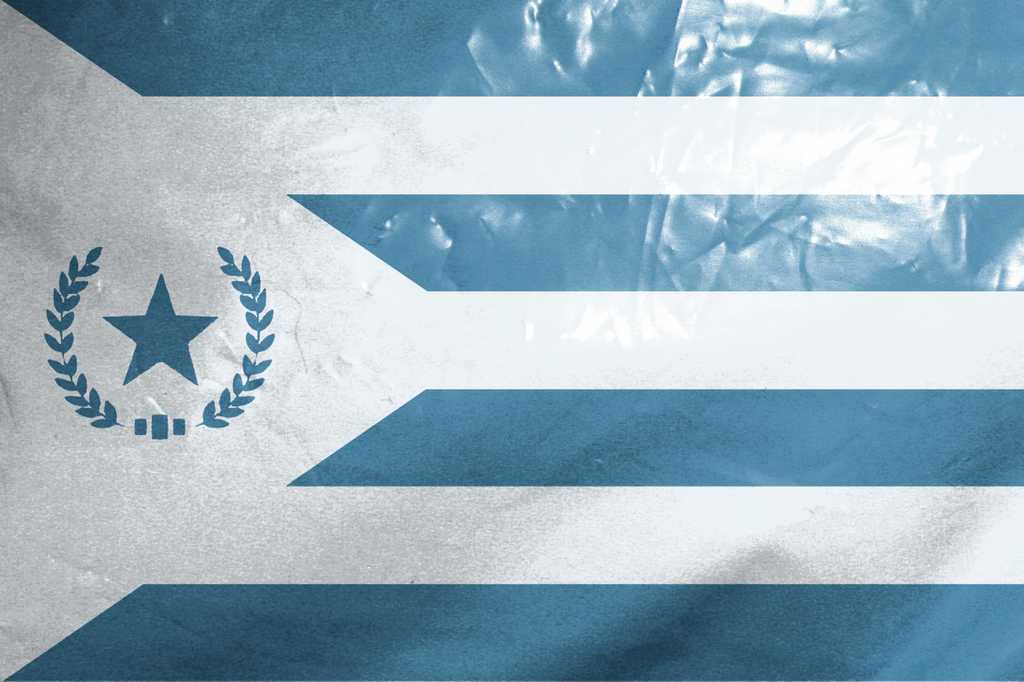
Flags in the Army Men franchise are somewhat diverse. Some use Real-World references, their initial font, or some kind of Shapes or Symbols. Black and White are used for the contrast element.

Toyverse Project Original Flags

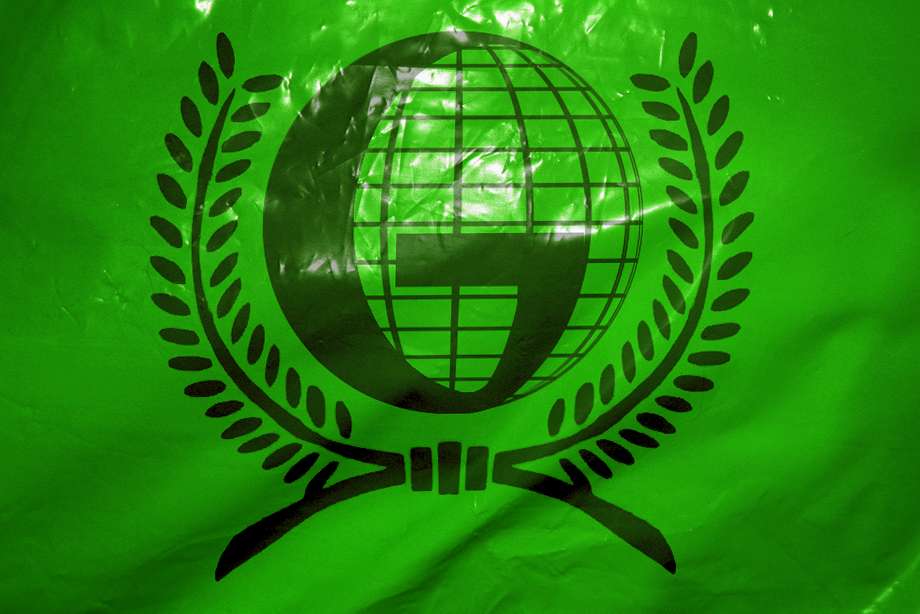
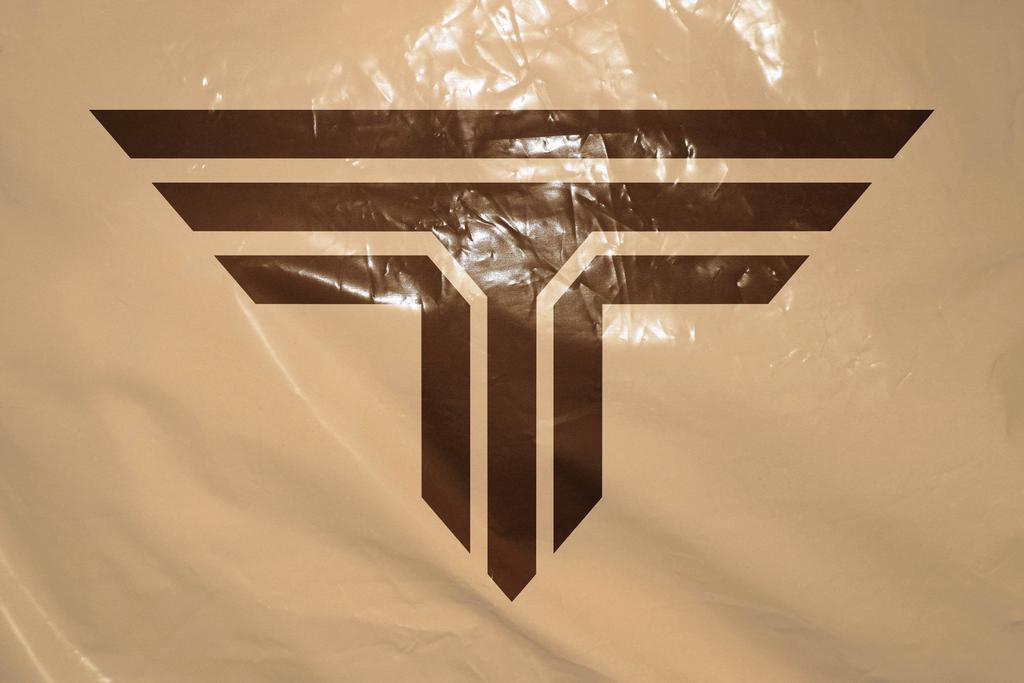
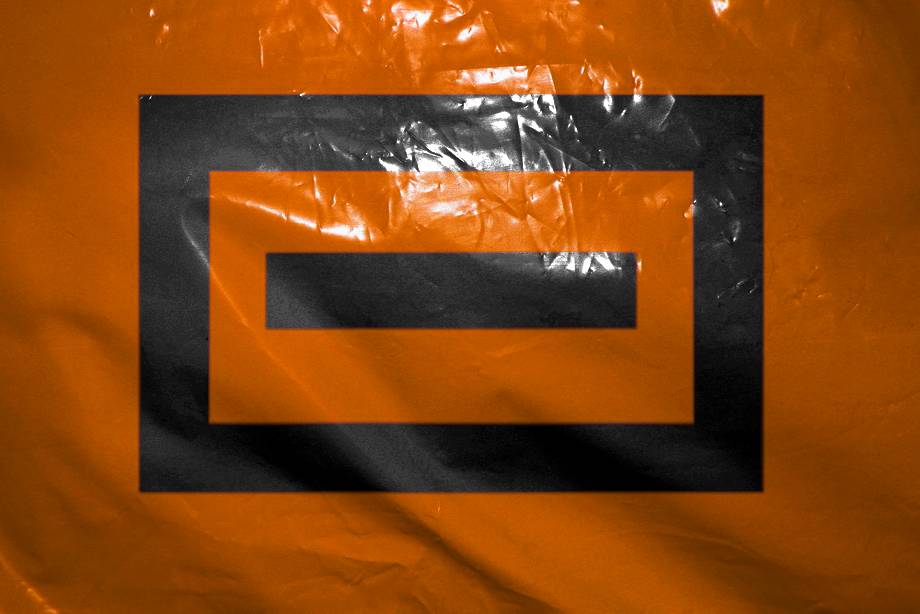
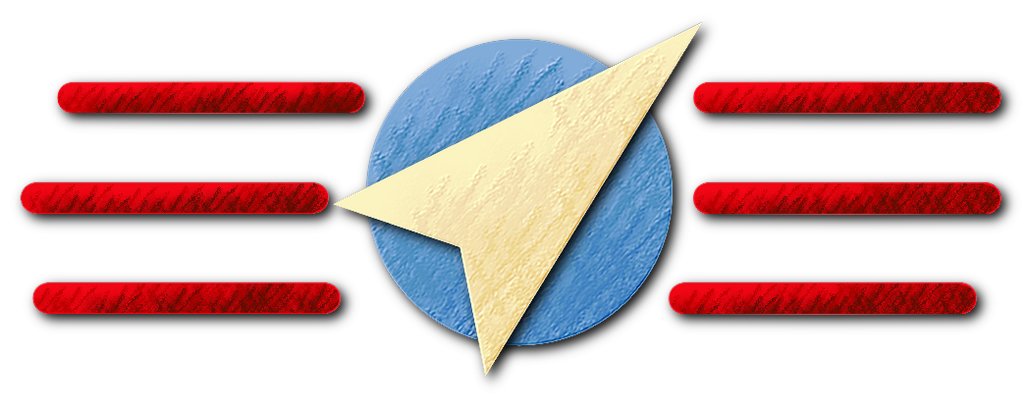
In the case of the Orange and White armies we used the W and O from the “Real World” logo, which is heavily based on the “Real” slogan from 3DO. But the most for the White Army, because that W is too captivating for us to leave it alone in that logo. It also follows a bit the design aesthetic of the T of the Tan Army.

In the case of the Cyan Army, it is a flag more in the classic style of a Real-World country flag.

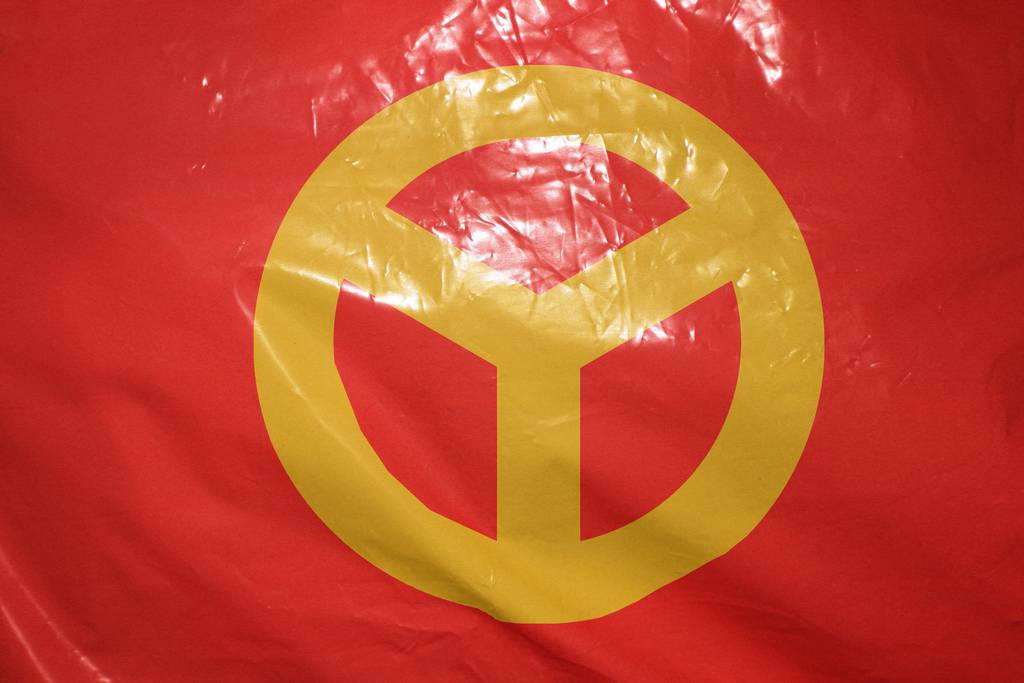
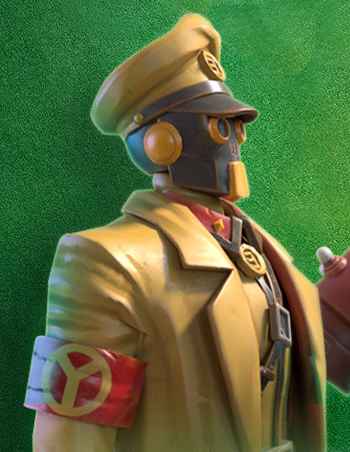
But in the case of the White Army flag, we are considering this idea for the design. Although it may end up being a mirror image… or even more distant, it may end up being the logo of Lord Malice or Major Malfunction!

Representation in Graphic Design

Representation in graphic design involves creating visual symbols that encapsulate the essence of the entity they represent. This could be a nation, a company, a social movement, or a community. The goal is to create a design that is instantly recognizable and communicates the core values, ideas and identity of the group.

Other flags & logos

Iconography

Iconography is the study and use of images and symbols to represent ideas, concepts, or information. In graphic design, iconography is crucial because it allows for the quick and effective transmission of messages. Symbols and icons are more than decorative elements; they are the shorthand of communication, cutting through the clutter of words to convey complex messages swiftly.

The Army Men video game franchise, which began in 1998, is known for its distinctive iconography that draws heavily from the classic green plastic toy soldiers. Here are some key elements:

  1. Color-Coded Factions: The games feature different factions represented by distinct colors, primarily the Green and Tan armies. Other factions like the Blue and Grey armies also appear, each with their own unique characteristics and allegiances.
  2. Toy-Like Aesthetic: The visual style of the games emphasizes the plastic nature of the soldiers. When characters are defeated, they often melt or shatter, reinforcing the idea that they are toys.
  3. Real-World Settings: Many of the battles take place in exaggerated real-world environments, such as kitchen counters, gardens, and bathrooms. This juxtaposition of small toy soldiers in large human environments adds a playful and imaginative element to the games.
  4. Military Symbols: The games incorporate traditional military iconography, such as medals, ranks, and insignias, but with a playful twist to fit the toy soldier theme.
  5. Vehicles and Equipment: The franchise includes a variety of toy-like vehicles and equipment, such as jeeps, tanks, and helicopters, all designed to look like they belong in a child’s playset.

These elements combine to create a unique and nostalgic experience that appeals to both fans of classic toy soldiers and video game enthusiasts.

Original logotypes:

Army Men Classic Logo
A remake of the Army Men Classic Logo

This was the first logo for the game franchise, later used in Army Men 3D. Later they used different versions for Army Men 2, Army Men Toys in Space and even Sarge’s Heroes and Air Attack. But it was right during the release of these last 2 games that they came up with the final version:

Army Men Logo Real Combat Plastic Men
Definitive Army Men logo, with “Real Combat .Plastic Men.” slogan

This version was used in most (if not all) of the later games, with out the slogan. It was used for last versions of Sarge’s Heroes and Air Attack, until 3DO went out of business. Even after that it was still used for Sarge’s War and Major Malfunction.

Our Army Men Toyverse Project Logotypes

Real World Project
Army Men Real World Project

This logo is from our Toyverse project, the logo that the Army Men Alliance uses in their research initiative into the Real World, the world of humans. The design uses the REAL logo from the defunct company 3DO, a kind of slogan they used. It is worth noting that the 3 colors between the letters of REAL are the colors of the 3 pieces of the key that opens the portal in the first game and in Army Men 3D. Since we couldn’t find any matches for the font used, to add WORLD we cloned the R and the L, and created the other letters trying to respect the same style, giving a special emphasis to the W.

This logo captures the mystery and novelty that the Real World means to Army Men.

Army Men Revolution
Army Men Revolution new videogame logo

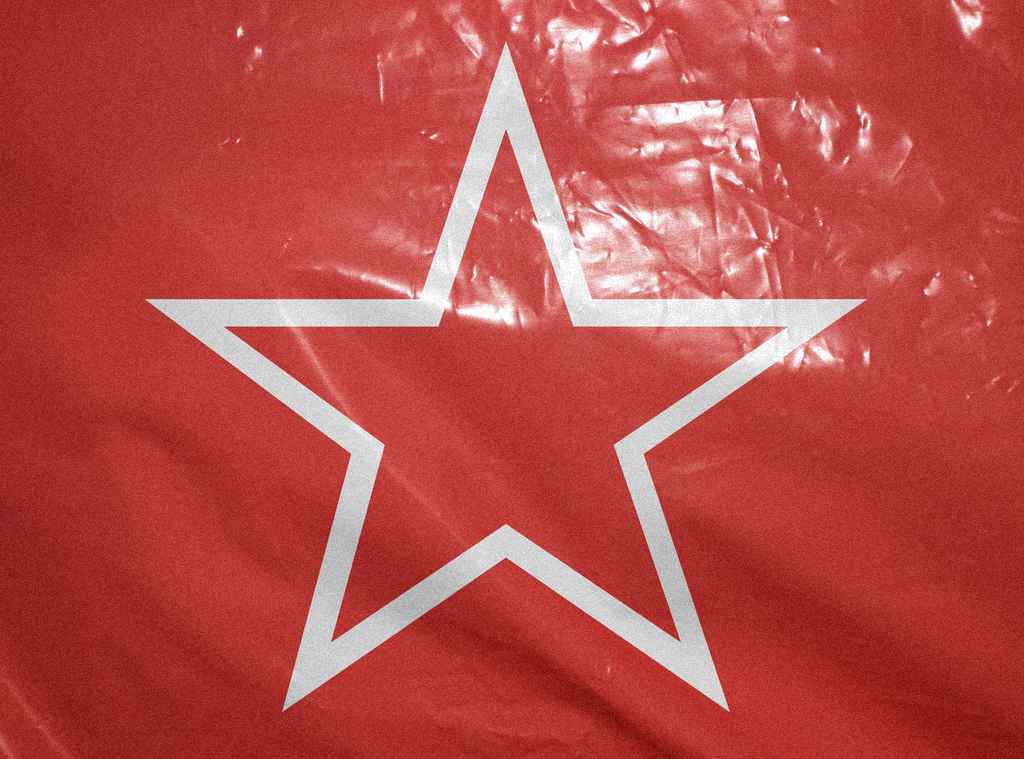
This is the logo for our video game project. We wanted a somewhat innovative logo, without losing the essence of Army Men. And since it revolves around the Red Army, we gave it that color and some of the essence of the fonts used in the propaganda of the Soviet Union, in which our version of the Reds are strongly based (not for nothing their official flag is a star). Something that helped us finish the idea of ​​the logo was the 2024 movie “Deadpool & Wolverine”, because of that texture of worn painted and metal underneath, which also alludes to the fact that one of the super weapons of the Red Army will be that they manufactured a massive army of vehicles and all kinds of war tools in Real World metal alloys.

Army Men Toyverse project
Army Men Toyverse projects

This is the logo for the Toyverse project, which serves to encompass other projects under the same initiative, in which ideas, canon and assets are shared. Read more in Army Men Toyverse project.

If you feel like the style sounds familiar, it’s because it’s very similar to the style of “Toys in Space”, which we think is a game that represents the imaginative diversity that can be brought to the world of Army Men.

Logo REAL PLASTIC MEN
Army Men REAL PLASTIC MEN logo

This is almost the same logo as the 2.0 logo, but in our case we used it for the branding of the plastic soldiers line in the Real World (Real Plastic Men).

Elements in design and their meanings

  • Colors: Colors play a significant role in visual representations. Each color can evoke specific emotions and symbolize different concepts. For example:
Red: Often associated with passion, energy, and danger. In the case of the Reds, it is appropriate because it represents their nationalist passion and protection of themselves and their culture. They believe that their ideals are correct above all other beliefs, and they defend their culture to the point of being totally closed to the outside world. At first they will be conservative and extremist in keeping it that way.

Blue: Represents calmness, trust, and stability. In the case of what brings us here, Blue is usually a color related to the sky, but especially to the Sea, Water and Ice. For this reason, the element dominated by the Blues will be water or ice, as we can see in the defensive towers of Army Men Warfare. Blue is also a cold and dark color, which helps to go unnoticed in the dark, which is what every spy needs to operate.

Green: Symbolizes nature, growth, and harmony. In the case of our project, it symbolizes the Greens’ initiative to respect the nature of the other worlds and maintain them in harmony, trying not to interfere with or modify them.

Orange: They represent fire, the element that the Orange Nation will dominate. Although the personality of some of its characters will go hand in hand with the intensity of fire.

Gray: They represent neutrality and the absence of diversity. In our Toyverse, the greys were like the Nazis: they rejected everything they considered incorrect or out of the normal status. Their colors lack individuality and diversity. It is also useful when it comes to camouflaging with the environment, one of the most neutral colors for this purpose.

Black: Can denote power, elegance, and mystery. You’ll know why…

  • Plants: Trees can symbolize life, growth, and wisdom, while flowers like roses can represent love and beauty.
  • Shapes and Symbols: Shapes and symbols are integral to iconography. Common shapes and their meanings include:

Circles: Represent unity, infinity, and protection.

Triangles: Can symbolize stability, power, and direction.

Stars: Often used to denote excellence, aspiration, and guidance.

  • Imagery: The use of specific images can convey deeper meanings. For example:

Animals: Different animals can symbolize various traits. For instance, an eagle often represents freedom and strength, while a lion symbolizes courage and royalty.

Sources for this article:

The Whiskey Convention

Army Men Alliance Whiskey Convention

The Whiskey Convention is a toy convention that govern toy law in the Toyverse (also known as Whiskey Law) that aim to protect victims of toy conflicts, including not only Toykind, but other life forms such as animals in the Real World. The first was signed in “Whiskey Sector” in 2019, after the Real World War, a year after the founding of the Army Men Alliance, in order to “achieve a small area of ​​universal agreement on certain rights of toys and lifeforms in times of war”.

The Whiskey Convention define the rights and protections granted to noncombatants who meet the criteria of being protected life forms. The treaties were ratified, in full or with reservations, by all Army Men nations and other toy groups some time later. The Whiskey Convention refer only to protected noncombatants in war. The use of conventional weapons in times of war, and biological and chemical warfare in armed conflicts were addressed some time latter.

Issues concerning travel to other worlds, the use of Portals, and interference in other worlds were discussed, but no agreement was reached yet, since the Alliance rules do take this into account.

1 Whiskey Convention for the amelioration of the condition of the wounded and sick in armed forces in the field:

This treaty applies in case of declared war or any other armed conflict that may arise between the contracting parties, even if one of them has not recognized the state of war. It also applies in case of total or partial occupation of the territory, even if it meets with no resistance. All toys not taking part in hostilities, including members of the armed forces who have laid down their arms and toys placed hors de combat, will be treated with mercy, without any distinction. Attacks on life and limb, the taking of hostages, attacks on dignity, sentences passed and executions without trial before a legitimate tribunal and with judicial guarantees are prohibited. The wounded and the sick will be collected and cared for. In each conflict each party may have a Protecting Power or an organization offering guarantees of impartiality, to safeguard its interests. Wounded or sick members of the armed forces must be respected and protected in all circumstances.

2 Whiskey Convention for the amelioration of the condition of the wounded, sick and shipwrecked members of armed forces at sea:

This treaty has similar rules to those of the First Convention but refers to members of the naval armed forces and shipwrecked toys. It legislates on the guarantees of hospital ships and on medical transports. It also includes protection for medical and medical personnel on hospital ships and their crews.

3 Whiskey Convention on the treatment of prisoners of war:

It has the same General Provisions as the two previous conventions. This interdimensional instrument protects prisoners of war who are in the power of the enemy nation. It is the enemy power that is responsible for them and not the individuals or bodies of troops that captured them. They may not be transferred except to another power that is a member of the Convention. Prisoners of war must be treated fairly in all circumstances. Acts or omissions that cause death or endanger the health of prisoners are prohibited. Prisoners have the right to respect as individuals and their honour. Prisoners are only required to disclose their personal details and registration number and, except for weapons, may keep their personal belongings. Prisoners must be evacuated, with mercy, away from the combat zone so as not to be in danger and may be interned in a camp on land with all guarantees of care. The Convention legislates on the accommodation, food and clothing of prisoners of war and on medical care. Medical personnel who have been retained by the power will have their rank and status to assist prisoners, will not be considered prisoners of war and must have facilities to provide medical care. Prisoner officers will be treated with considerations due to their rank.

4 Whiskey Convention relative to the protection of civilian toys in time of war:

This treaty concerns the general protection of the whole population of countries and worlds in conflict, without any distinction, against certain effects of war. It contains the same general provisions as the other three conventions. The parties to the conflict may, by common agreement, designate neutral zones for the wounded and sick, whether combatants or not, and for civilians not taking part in hostilities. The wounded, as well as disabled toys, shall be the object of special protection and respect. Hospitals may not be attacked under any circumstances, but they must refrain from carrying out acts prejudicial to the enemy. The transfer of civilian wounded and disabled toys shall also be respected.

Sources for this article:

https://wikipedia.org/wiki/Convenios_de_Ginebra

Embassies in other worlds

The Toyverse thrives on the belief that every toy has a soul, a tiny spark of magic. So in the Real World, the world that ties all toys to a common origin, is so bigger that contains a few “embasies” from the other worlds, officially recognized by some toykinds and some of this worlds. So if any toy stranded in the Human World in need of help, like a discarded action figure or a half-buried dinosaur, now toys know that they have an embassy to allocate and obtain any help they need.

The Prehistoric Domain:
  • Here, the grassy plains echo with the roars of plastic dinosaurs. Tiny T-Rexes chase after elusive triceratops, while pterodactyls soar above the sandbox cliffs. This is the Real World prehistoric embassy for Prehistoric animals.
The Jurassic Valley:
The Medieval Enclave:
  • Within the shadow of Camelot Castle, toy knights don their plastic and metal armor. Big noble steeds, wooden rocking horses, gallop soaring across the plains (without moving anywhere). There, next to the Round Table, is the embassy. Sometimes King Arthur himself passes by to talk to the toys in need.
  • Dragons, crafted from green felt and googly eyes, guard treasure chests filled with marbles and shiny buttons, used for the embassy fortifications.
The Cosmic Expanse:
  • In the outer space from the Real World, The Great Plastic Meteor floats in a stable orbit. A space station has been set up there that serves as a space port for toys.
  • Astronauts (action figures or other toys with makeshift helmets) embark on daring missions. Sometimes their rocket ships, constructed from cardboard tubes and glitter, blast off toward the ceiling, exploding into a thousand pieces… because of course, if they do not hit the ceiling, as soon as they reach a considerable height they dismantle with the high speed of winds. But sometimes, and only sometimes, a toy is smart enough to build a resistant and aerodynamic rocket that allows them to reach the upper atmosphere to put their spacecrafts into orbit.
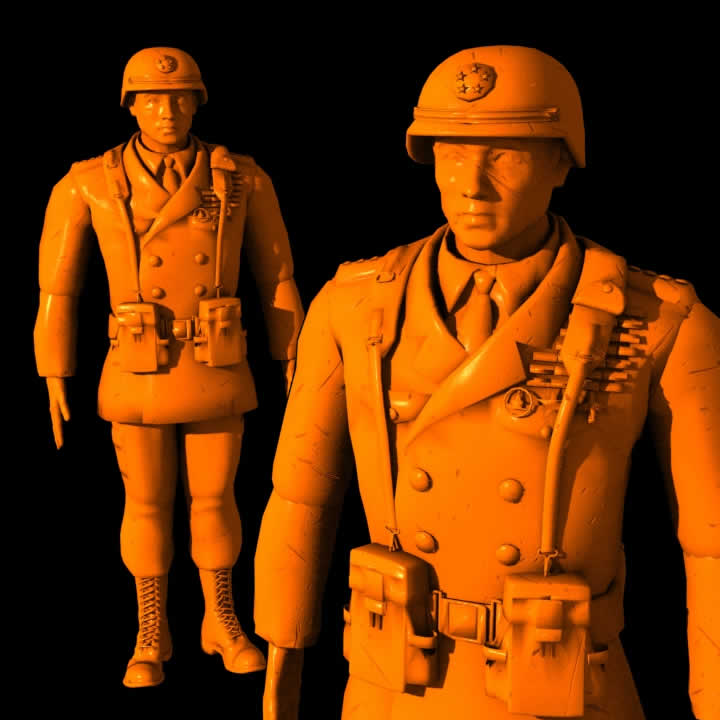
  • The Alien figurines that populates The Great Plastic Meteor station, with wiggly arms and neon-green skin, communicate in cryptic beeps. But they exchange intergalactic stickers as tokens of friendship.
The Underwater Abyss:
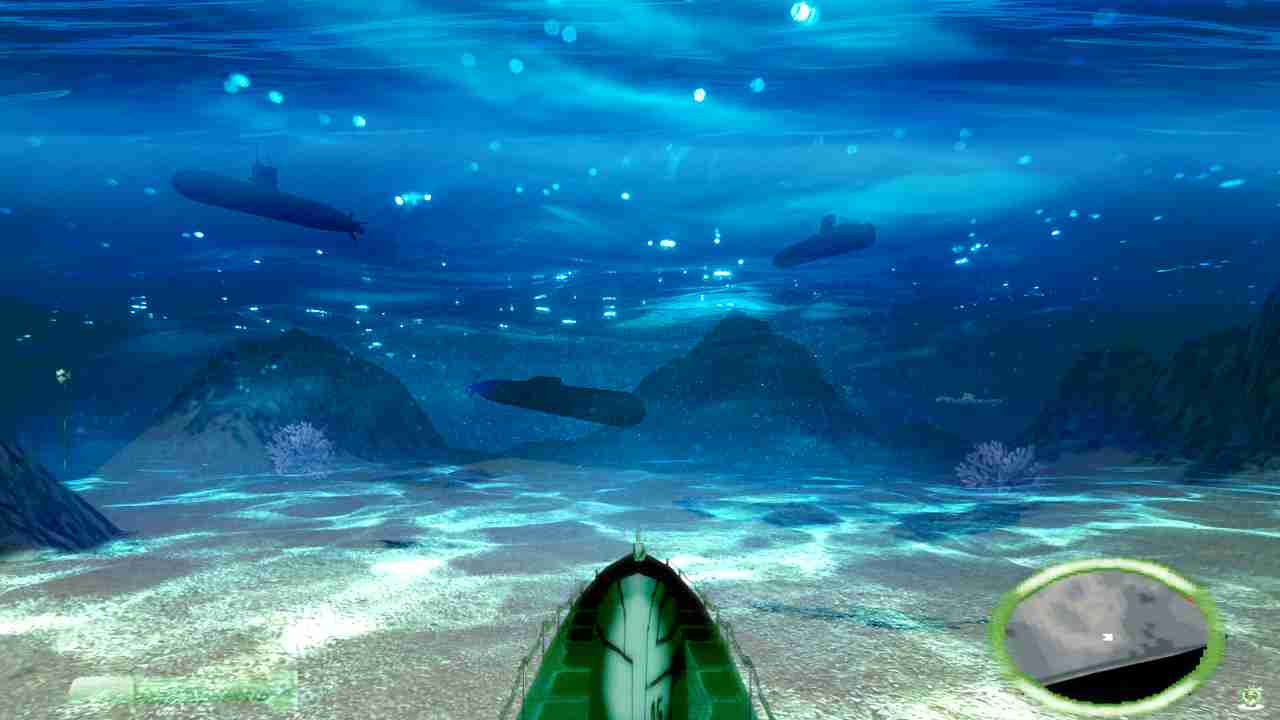
  • Beneath the bathroom sink of the former Lord Malice’s HQ household, lies the mysterious Underwater Abyss embassy. Rubber duckies double as submarines, exploring the depths of the porcelain to find the way to the open sea.
  • There, on the coral reefs (made from discarded sponges) shelter schools of plastic fish, lies the underwater embassy. It is guarded by a well-known superhero action figure who is in charge of toy rescues and a large fleet of Army Men submarines that patrol the perimeter.
  • There elusive red haired Mermaid Chickz occasionally surfaces, combing her hair with a toothbrush.
The Toybox Nexus:
  • The heart of the Toyverse (the Toybox Nexus) connects all these realms. It’s a swirling vortex of imagination, where forgotten toys gather to share stories.
  • Here, a wind-up robot dances with a plush teddy bear, and a RC car races against a wind-up snail. The Nexus thrums with creative energy and it’s the place where all those toys that are left halfway through an interdimensional journey go, whatever the reason for this happening is.

The Army Men Videogames Website, home of the Army Men Toyverse